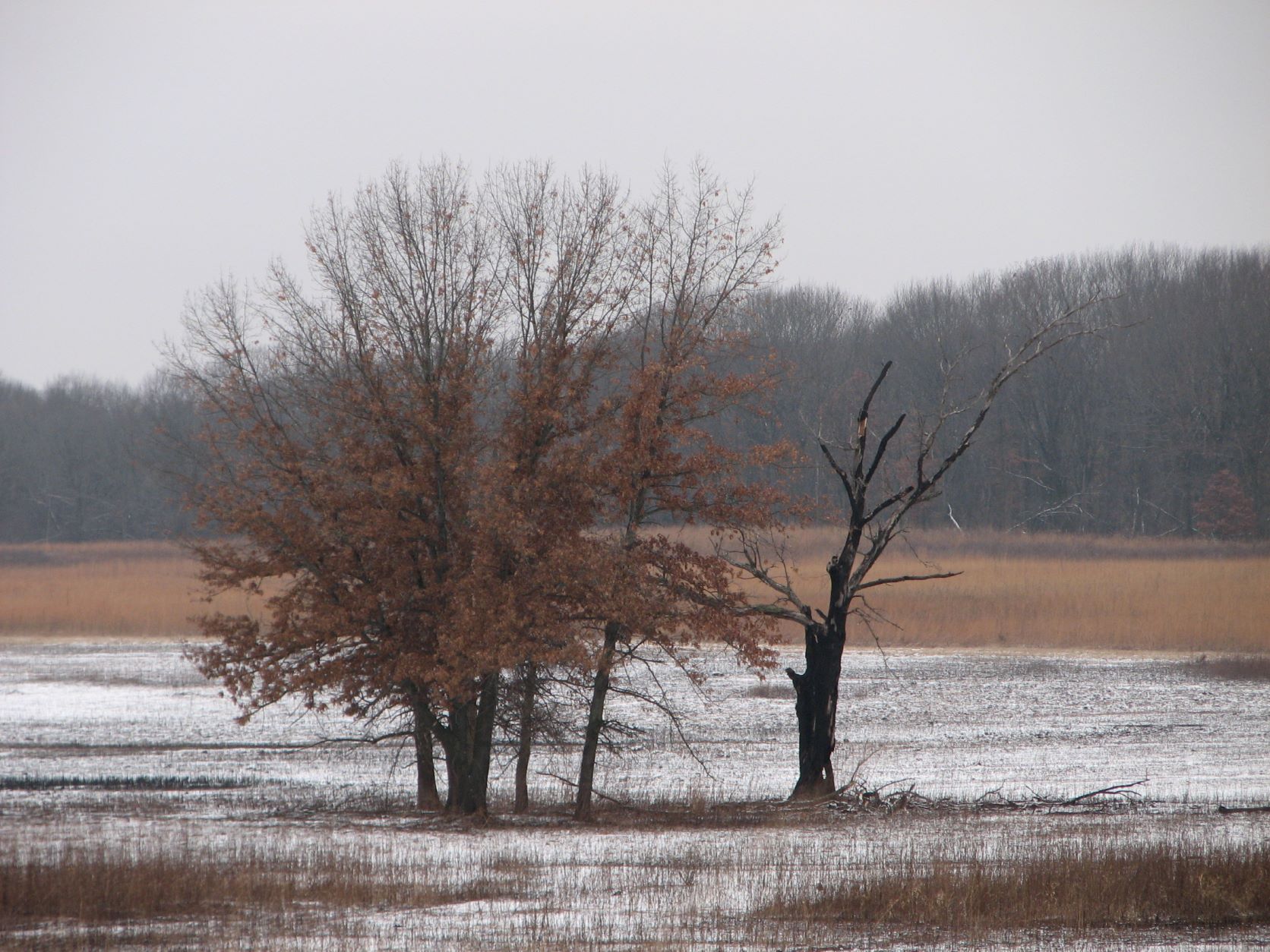
Barrington Park Campgrounds is one of the best remaining examples of savanna in the Barrington Area. Citizens for Conservation had been managing the site. They control invading woody species and conduct prescribed fire to return this missing ecosystem process back into several area preserves.
Summary
Map
Pretty Pictures
Erigeron philadelphicus and comparison images from August to May of area under spreading oak tree limbs.
Gray Dogwood Control
Foliar treating gray dogwood has led to off-target impacts that could be avoided with a different type of application.
Comparative Views From “New Work Area”
“Sprouting Area”
Sweet Joe Pye weed (Eutrochium purpureum) has been mostly eliminated from the area where herbicide was applied to buckthorn foliage. A patch of bellwort was able to recover, and wild hyacinth appears to not have been impacted.
Comparative Views From Burn Scars
Burn scars in different aspects and positions on the ridge are experiencing different trajectories of vegetation development. Around burn scar ‘number four,’ staghorn sumac has been significantly reduce by what appears to be deer browsing.
Earlier Posts
Map
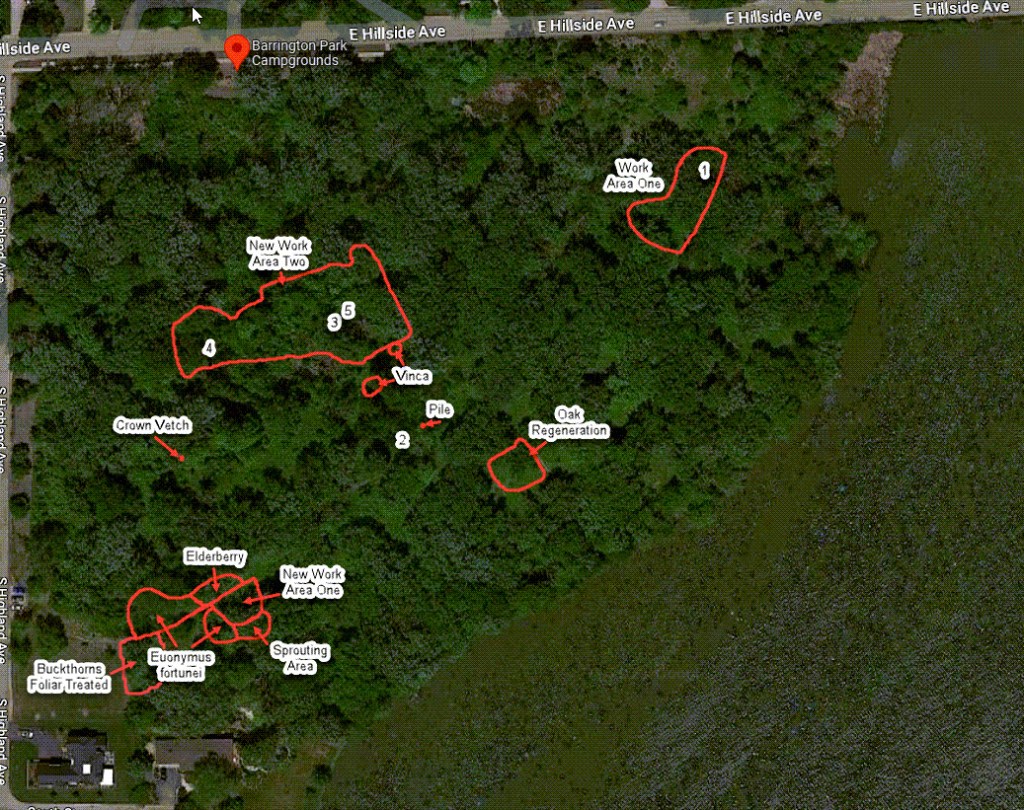
Retrieved March 4th, 2023 from https://www.google.com/maps/place/Barrington+Park+Campgrounds/@42.1455259,-88.1265641,348m/data=!3m1!1e3!4m12!1m6!3m5!1s0x880fa6cdbbac8449:0xcbc5978e564c5443!2sBaker’s+Lake+Nature+Preserve!8m2!3d42.1394023!4d-88.1169354!3m4!1s0x880fa19f5e854c9f:0xef0f9c158f1a286d!8m2!3d42.1466518!4d-88.1264455?hl=en
Pretty Pictures

Erigeron philadelphicus

Spreading Oak Tree On 6/26/2023
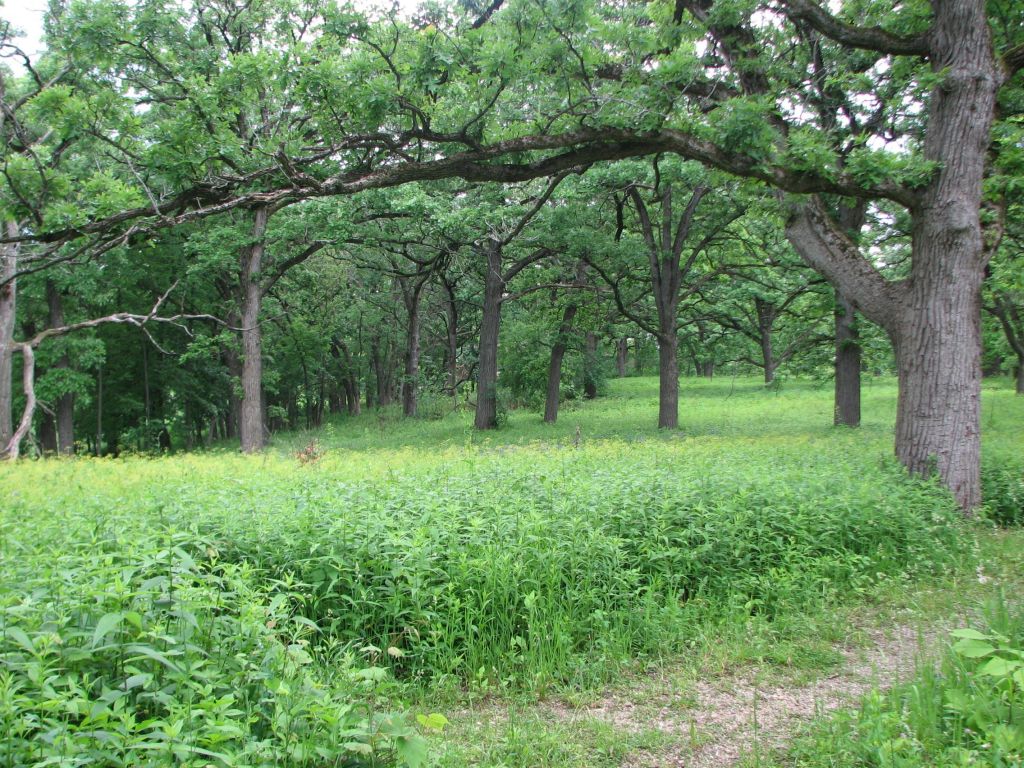
Spreading Oak Tree On 5/27/2024 With Lots of Flowering Yellow Pimpernel (Taenidia integerrima)
Gray Dogwood Control

The foliage of this gray dogwood was treated with herbicide sometime this spring. Rain splashing the herbicide off the gray dogwood foliage has significantly impacted this colony of bellwort (Uvularia grandiflora).

This is another example of foliar application to gray dogwood impacting quality native savanna species. I see starry campion (Silene stellata), yellow pimpernel (Taenidia integerrima), and other species impacted by this herbicide application technique.

A gray dogwood clump whose foliage was treated with herbicide. The invasive wintercreeper (Euonymus fortunei) underneath has been heavily impacted along with sweet Joe-Pye weed (Eutrochium purpureum).

This image was taken on 8/8/2023. I took this image to show the treated gray dogwood and the damaged horse gentian (Triosteum species). At the time, I had thought this horse gentian would survive as mentioned in the “Baker’s Lake, Barrington Park Campgrounds, 6/26/2023 and 8/8/2023” post.
However, I searched where I remember seeing this horse gentian multiple times and was not able to relocate it on 5/27/2024. I think the herbicide splashed off the gray dogwood by rain was enough to kill this infrequent-quality plant. The area where this plant had been located is now a patch of non-native grasses.
I met the person who did the above applications and suggested trying to apply glyphosate to frills around stems. This gives more effective control than cut stump application (by getting more herbicide into the plant) while preventing the off-target damage that occurs with foliar application.
Comparative Views From “New Work Area”

View South 8/8/2023

View South 5/27/2023
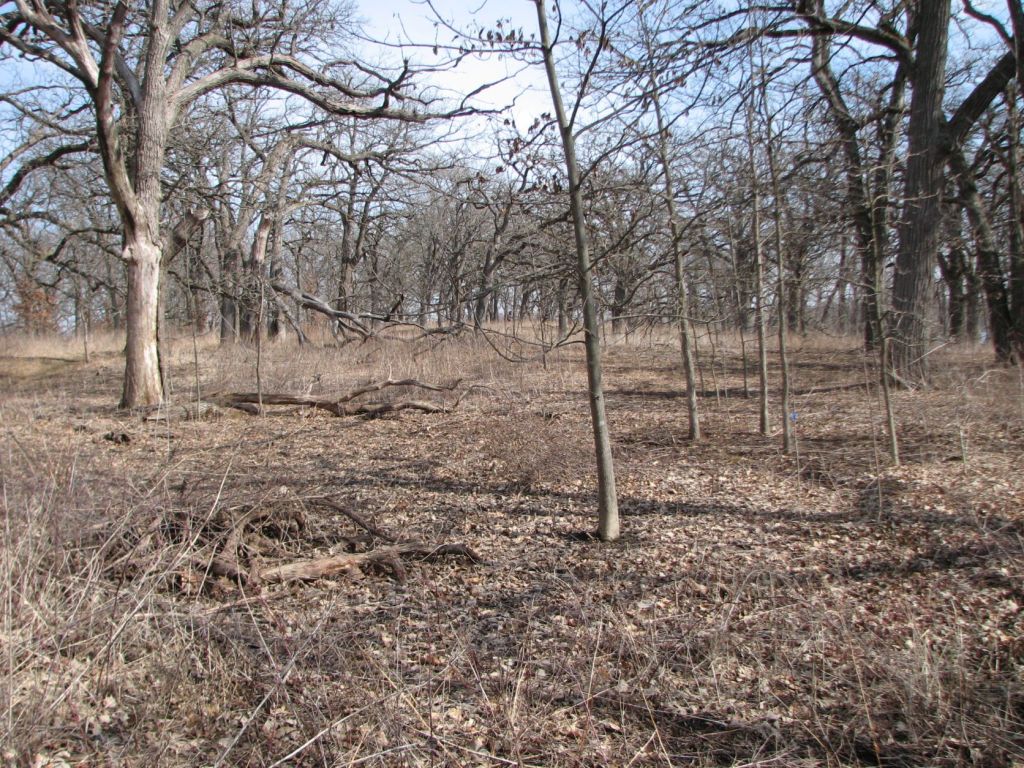
View East 4/4/2023

View East (in front of hickory) on 8/8/2023

Same View as “View East 4/4/2023” but on 5/27/2024

Closer view of vegetation showing wild geranium that has established where common buckthorn was cut and had stumps treated with herbicide.
“Buckthorns Foliar Treated”
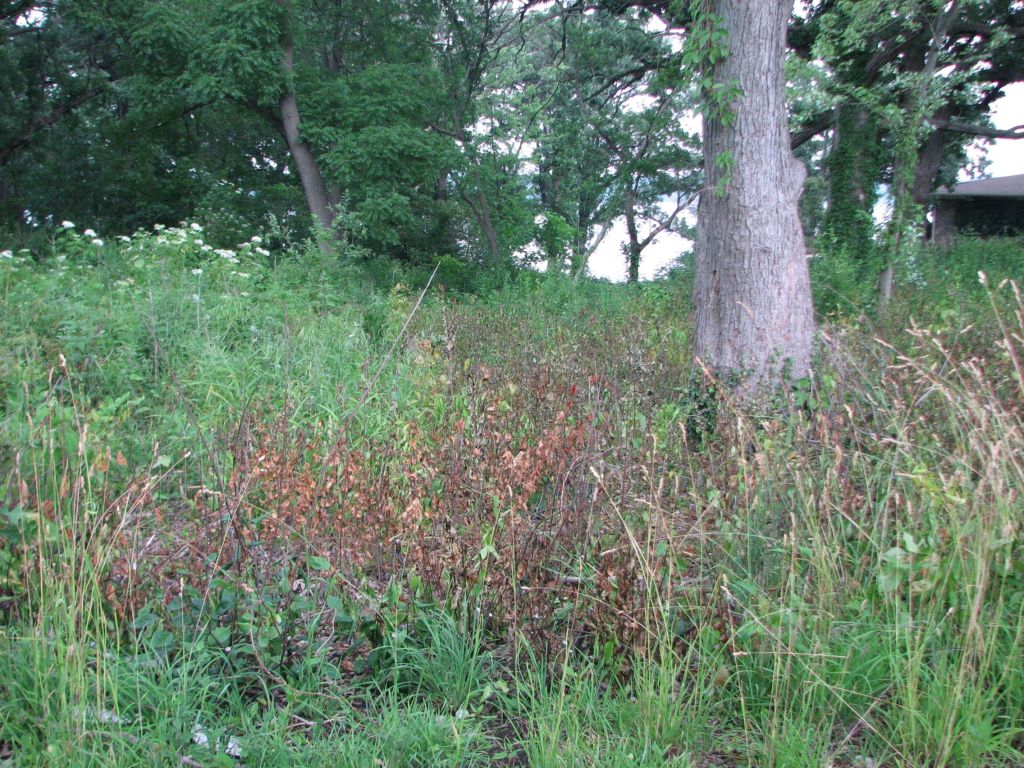
6/26/2023 Common buckthorn that had herbicide applied to the foliage.

6/26/2023 Different view of above application area.
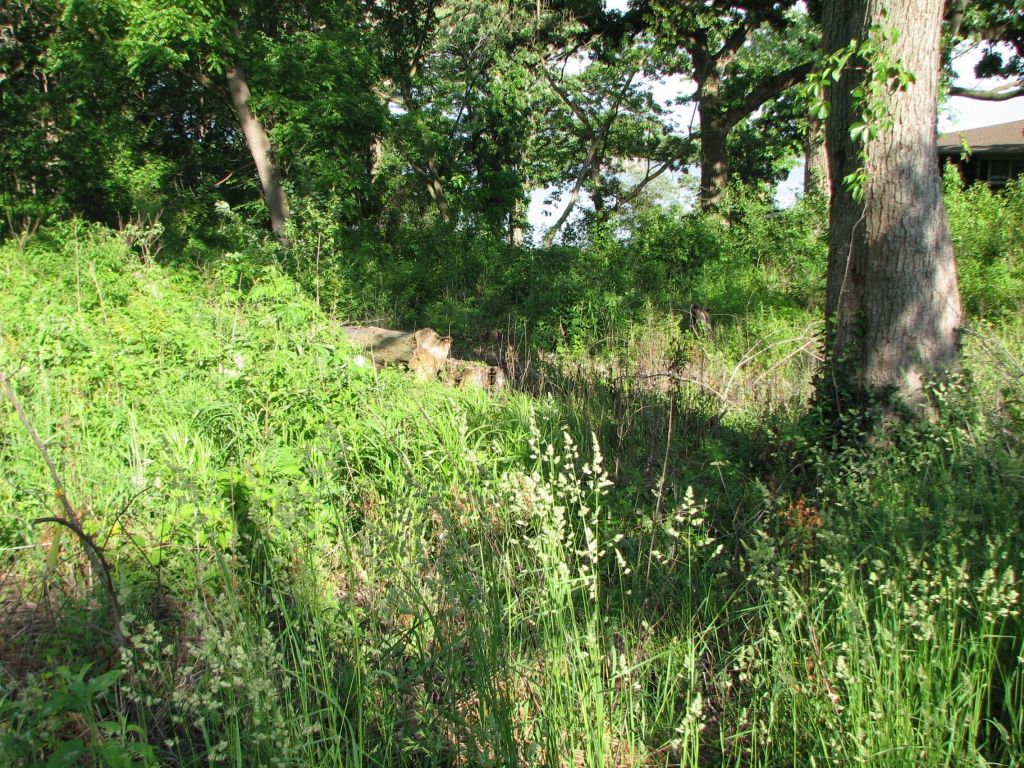
5/27/2024 Same view as first image of “Buckthorn Control Area” 11 months later.

8/8/2023 View from fallen tree.

5/27/2024 Same area as above. The common buckthorns that survived last year’s herbicide treatment were hit again this spring. Most of the sweet Joe Pye weed did not survive the first application to common buckthorn foliage. The ground is covered in wild hyacinth leaves (Camassia scilloides) that do not look impacted by this spring’s herbicide application.
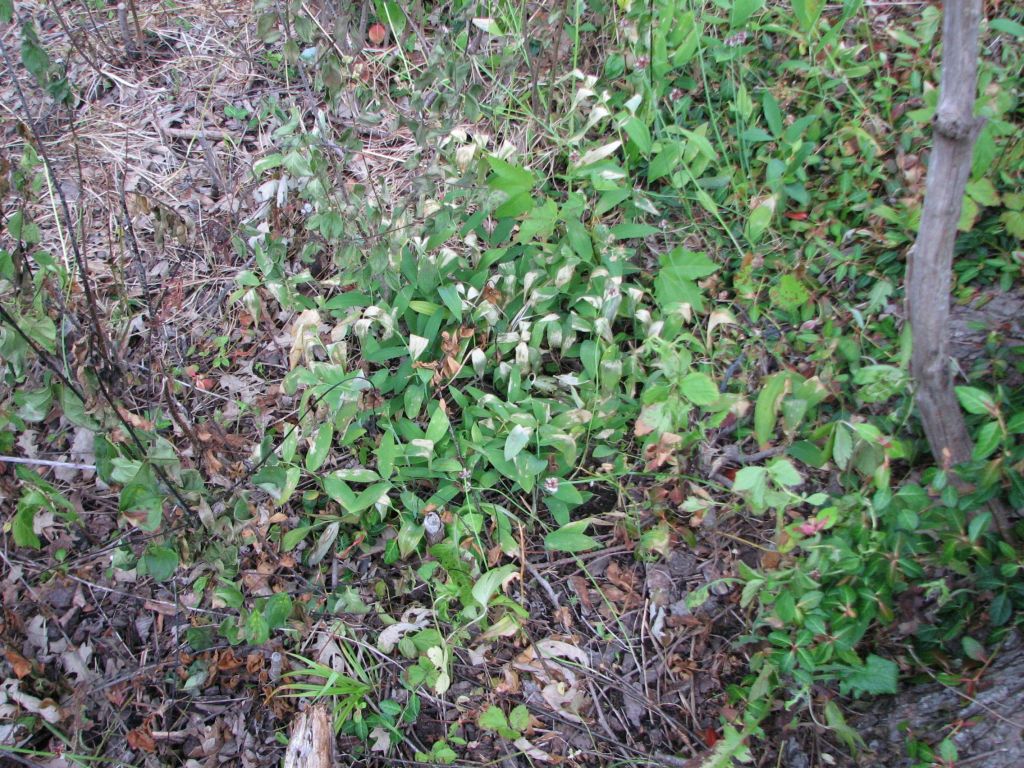
Herbicide impacted bellwort on 6/26/2023.

5/27/2024 I thought the above clump of bellwort was the same as the herbicide damaged clump from the image labelled “Herbicide Impacted Bellwort on 6/26/2023.” However, looking closer at the images it is apparent they are from different locations. Consequently, I don’t know if the herbicide damaged bellwort recovered.
Comparative Views From Burn Scars
Burn Pile One
These are images from different directions of the burn scar labelled Burn Pile One from this visit and the post titled “Baker’s Lake, Barrington Park Campground, 6/26/2023 and 8/8/2023.” On this visit giant ragweed (Ambrosia trifida) is not visible around the burn scar. This could be because these pictures were taken in spring versus late summer.

North on 6/26/2023
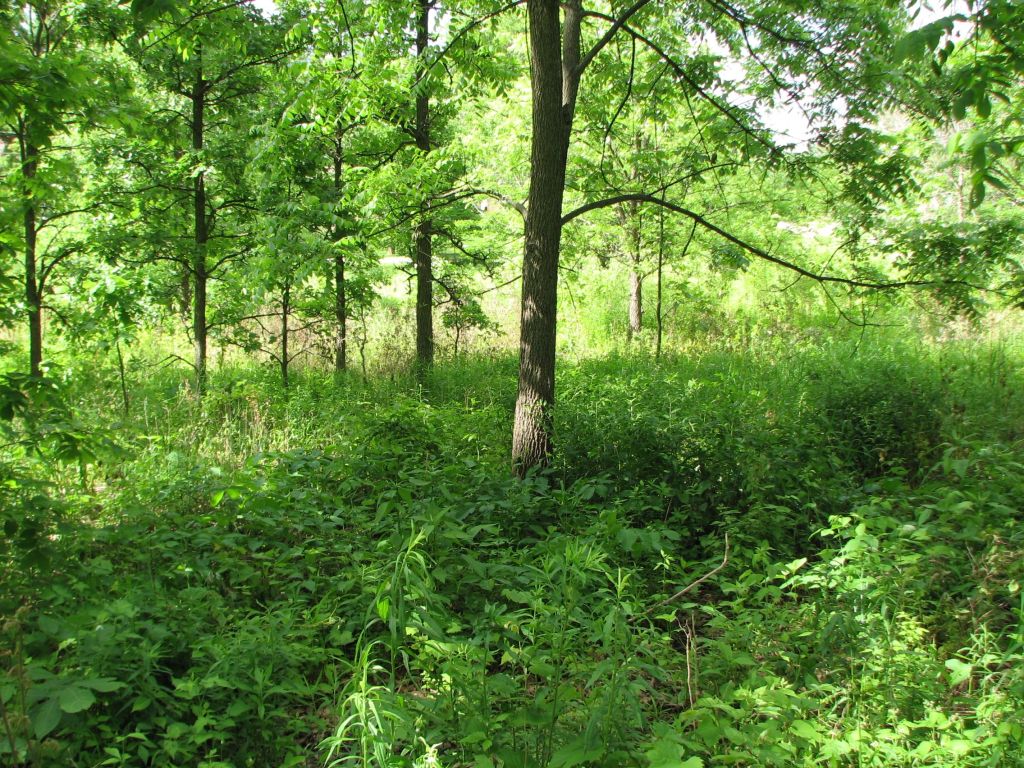
North on 5/27/2024
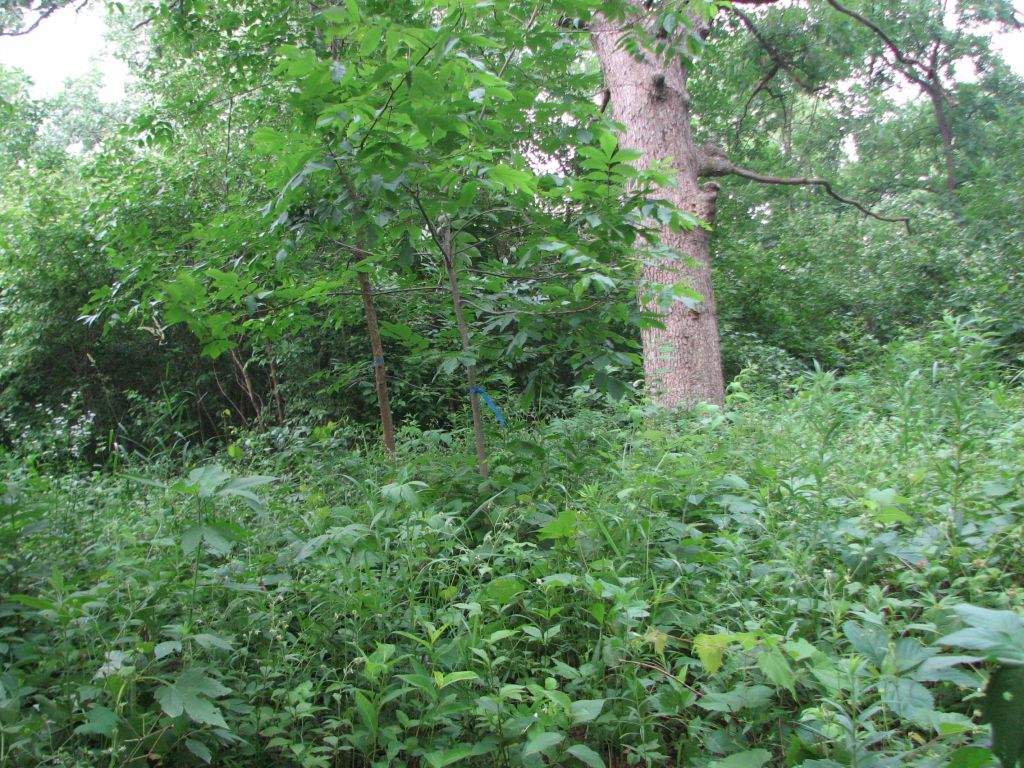
East on 6/26/2023
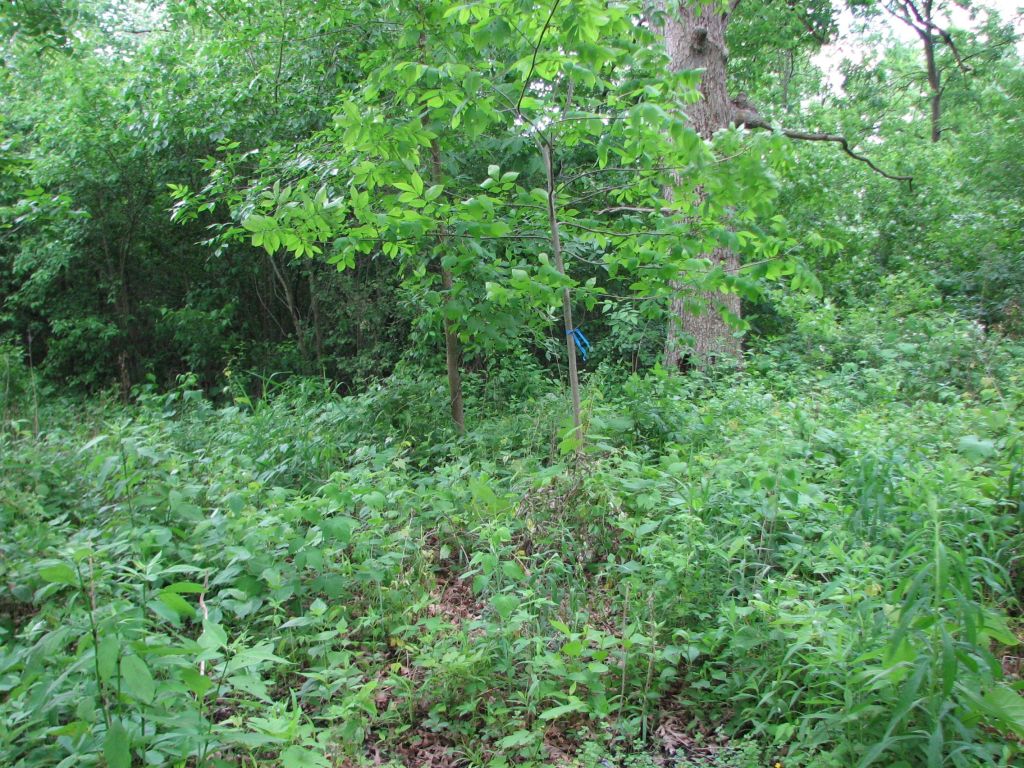
East on 5/27/2024

West on 6/26/2023
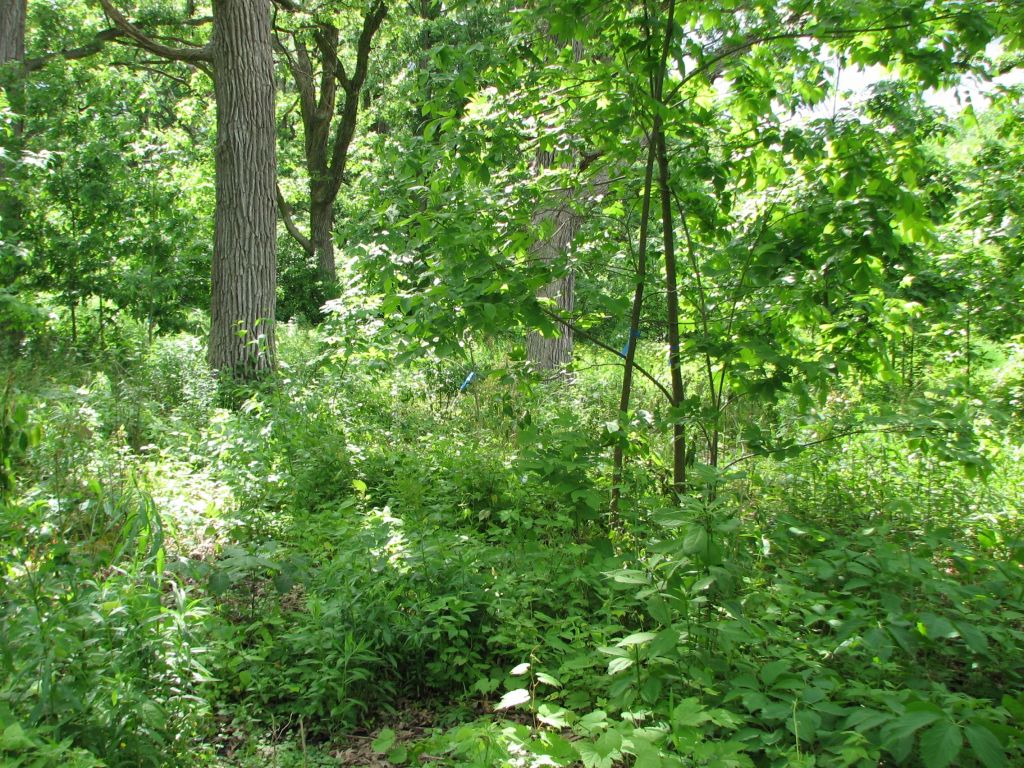
West on 5/27/2024
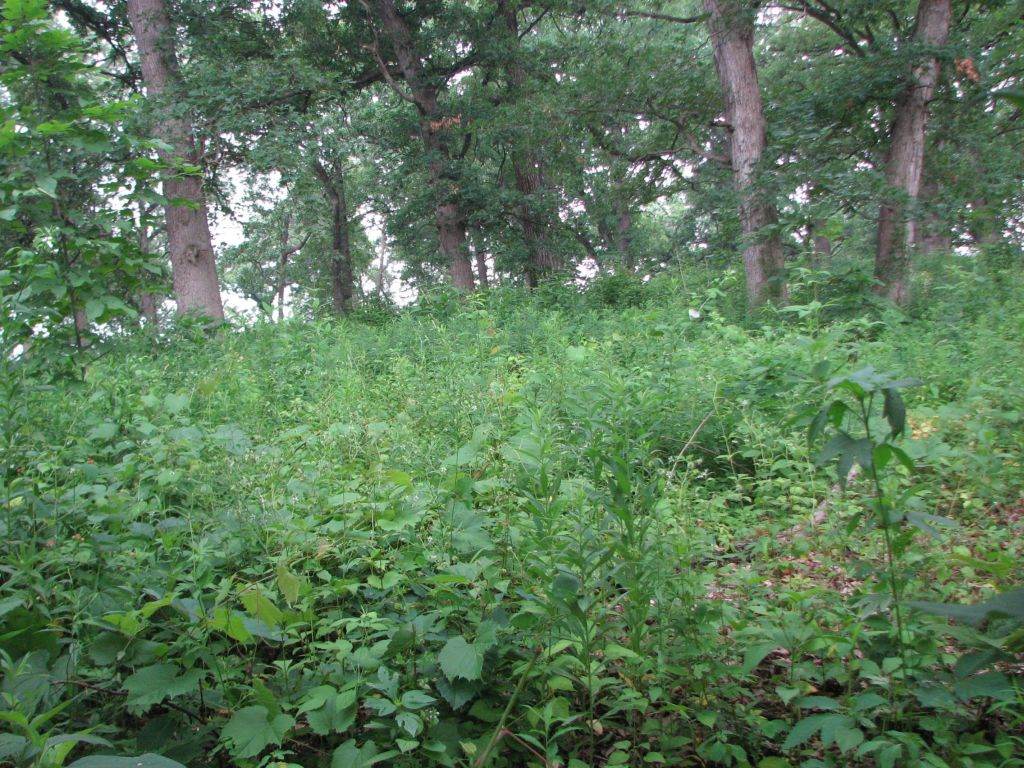
South on 6/26/2023
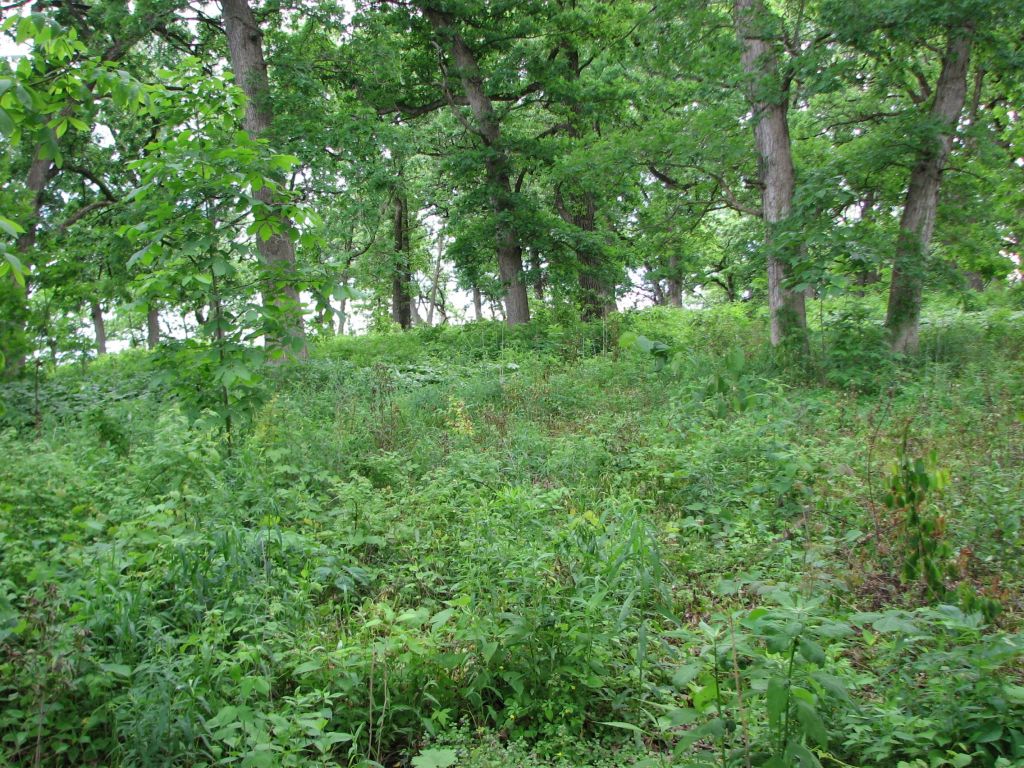
South on 5/27/2024
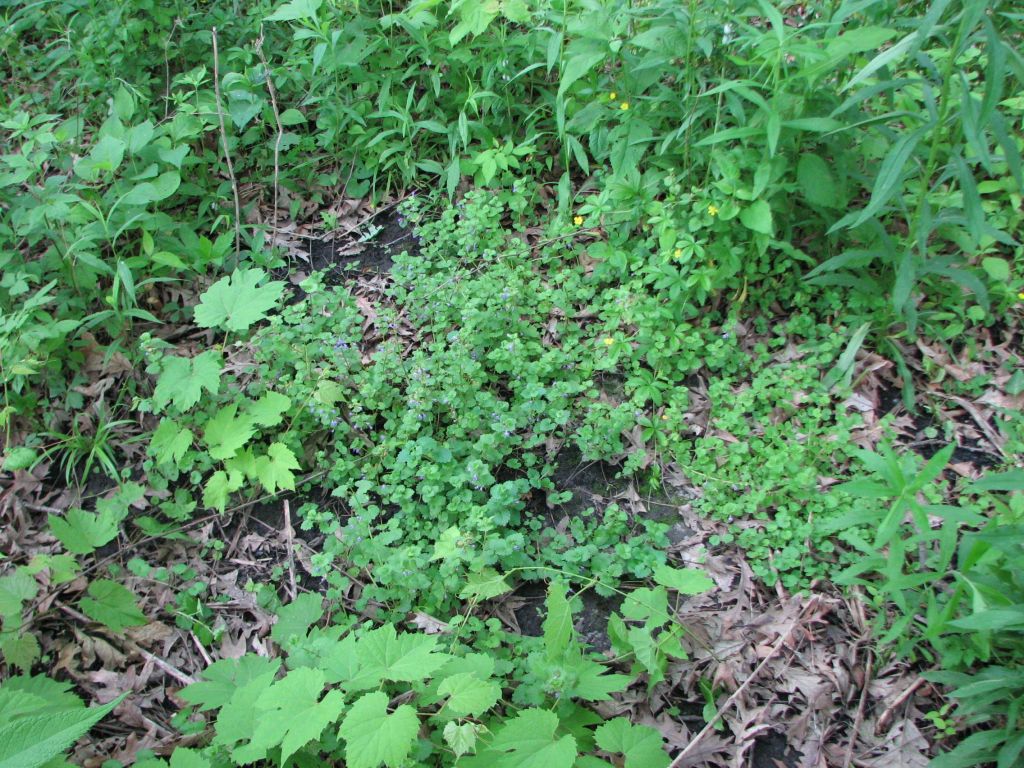
This is an image of the burn scar on 5/27/2024. This is a little over a year after this burn scar had been created. It has been colonized by creeping Charlie (Glechoma hederacea). I saw this happen to a burn scar on the north slope of Langham Island too.
Burn Pile Two
Notice in the below images from 2024 the visible holes in the vegetation where gray dogwood received a foliar application of herbicide the previous year.
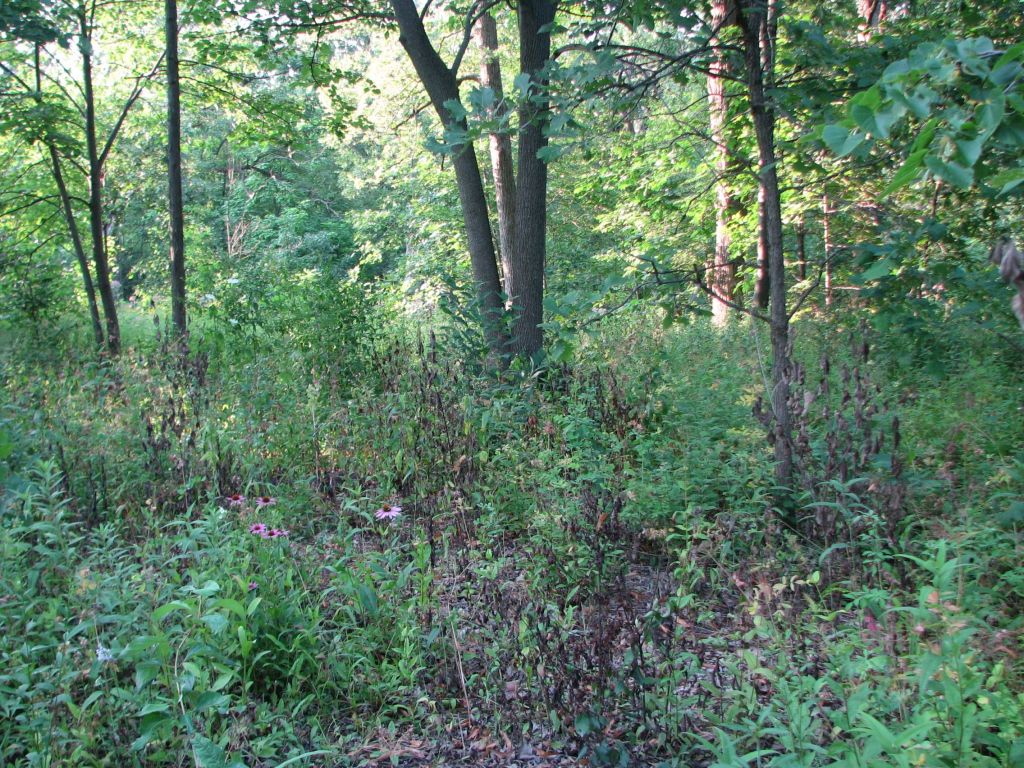
North 8/8/2023
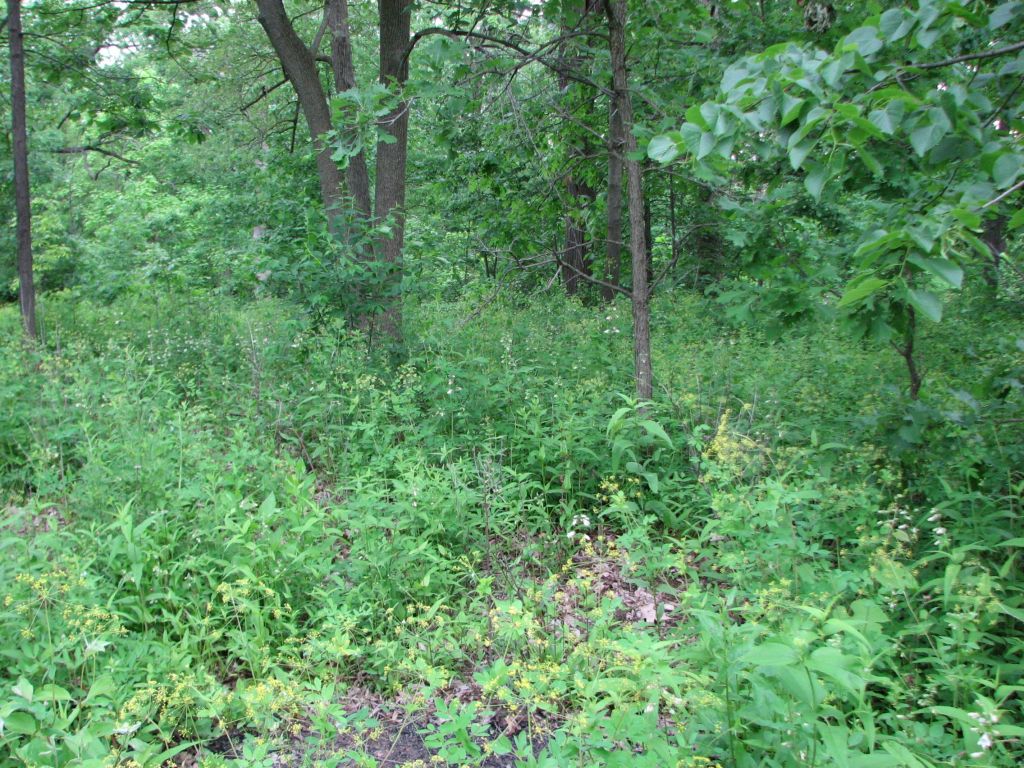
North 5/27/2024

East 8/8/2023

East 5/27/2024
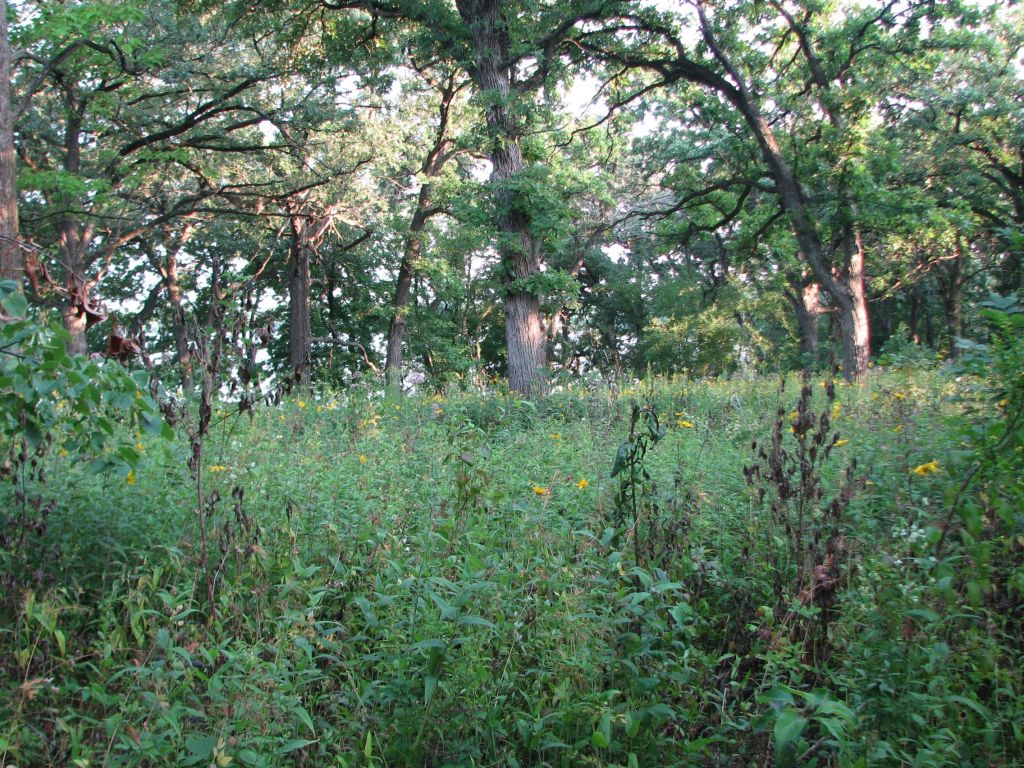
South 8/8/2023
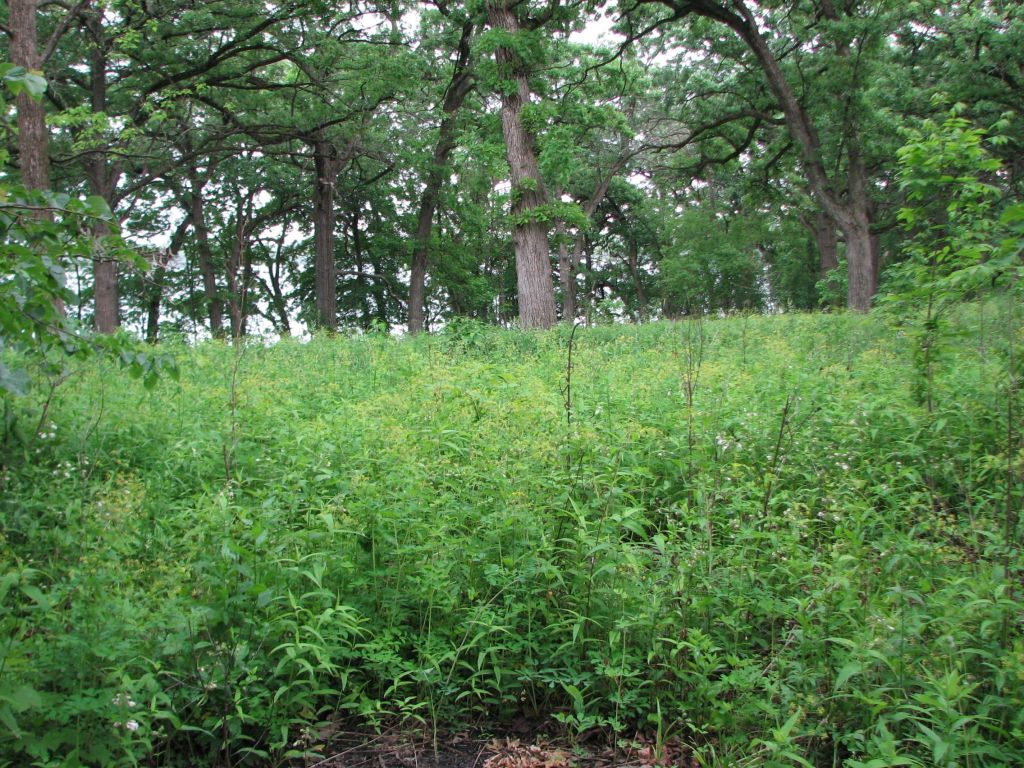
South 5/27/2024

West 8/8/2023
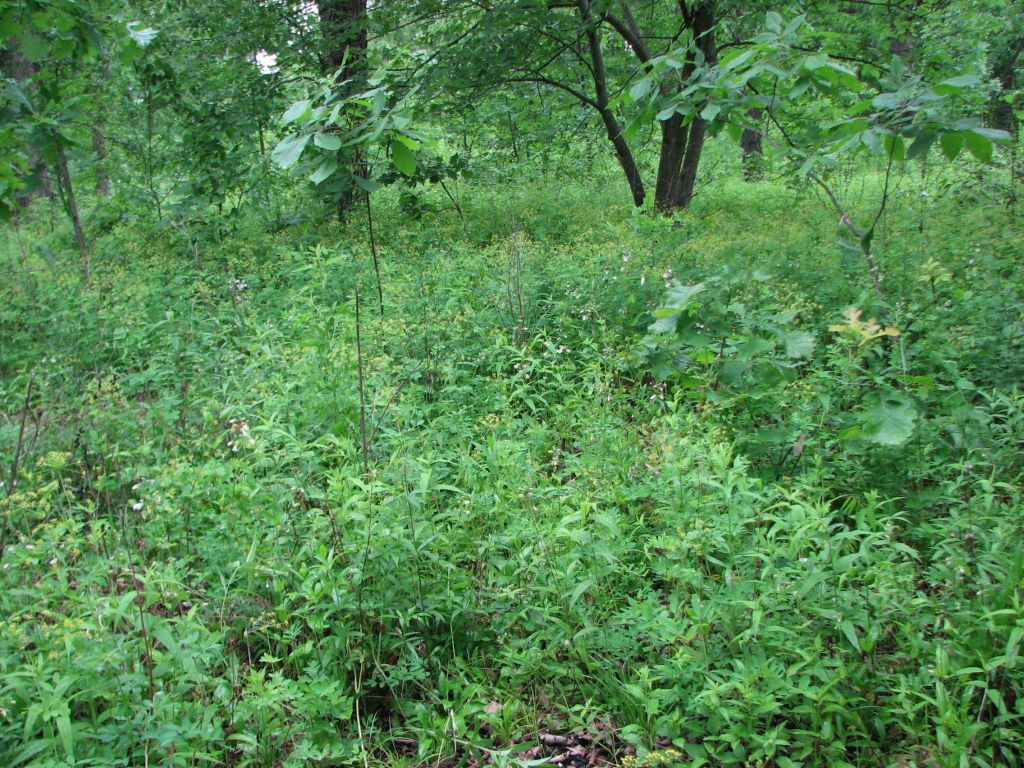
West 5/27/2023

Burn Scar – There are yellow pimpernel seedlings (Taenidia integerrima) growing in this burn scar. This burn pile had consisted of some larger logs since basswoods were cut in this area. The initial recovery in this burn scar may be the best I have seen for a pile that was burned on the ground (versus on a pile of snow) and consisted of some larger logs. I think this good recovery may be because this burn scar was up on the crest of the ridge where conditions are drier, and soil has not developed deeply. Plants toward ridge crests would be expected to have adapted to mineral soils. These plants are better able to recolonize burn scar locations. It is likely invasive species are not establishing because they are not able to tolerate the dry conditions up on the ridge crest.
Burn Pile Three

North 8/8/2023
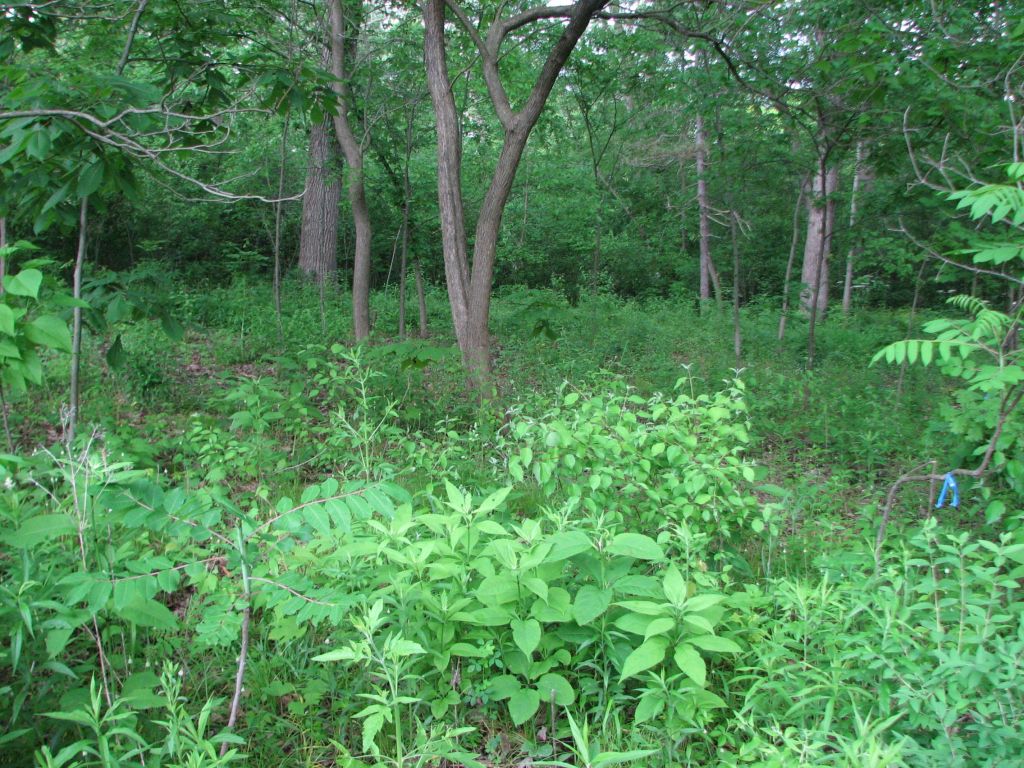
North 5/27/2024
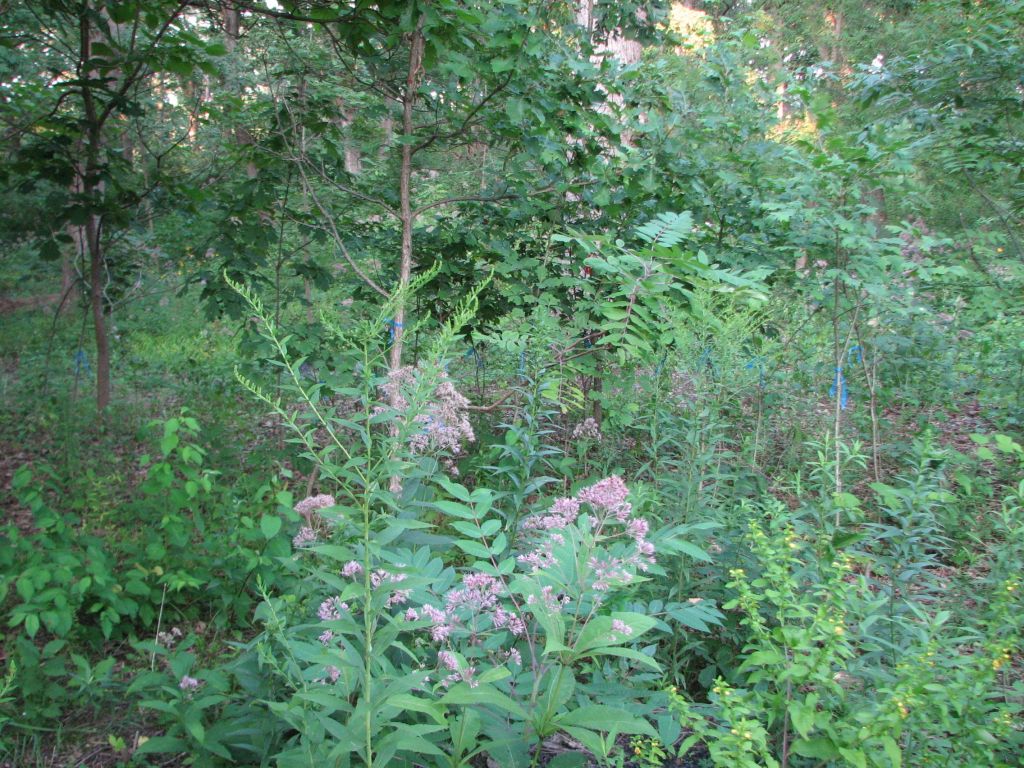
East 8/8/2023
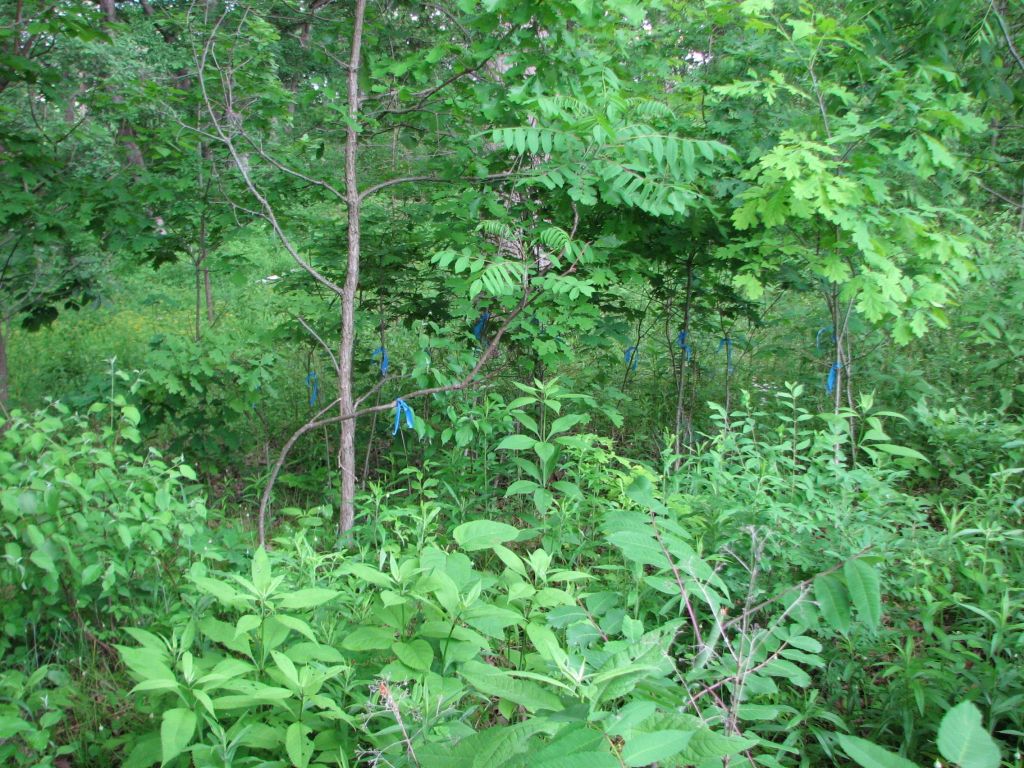
East 5/27/2024

South 8/8/2023

South 5/27/2024

West 8/8/2023
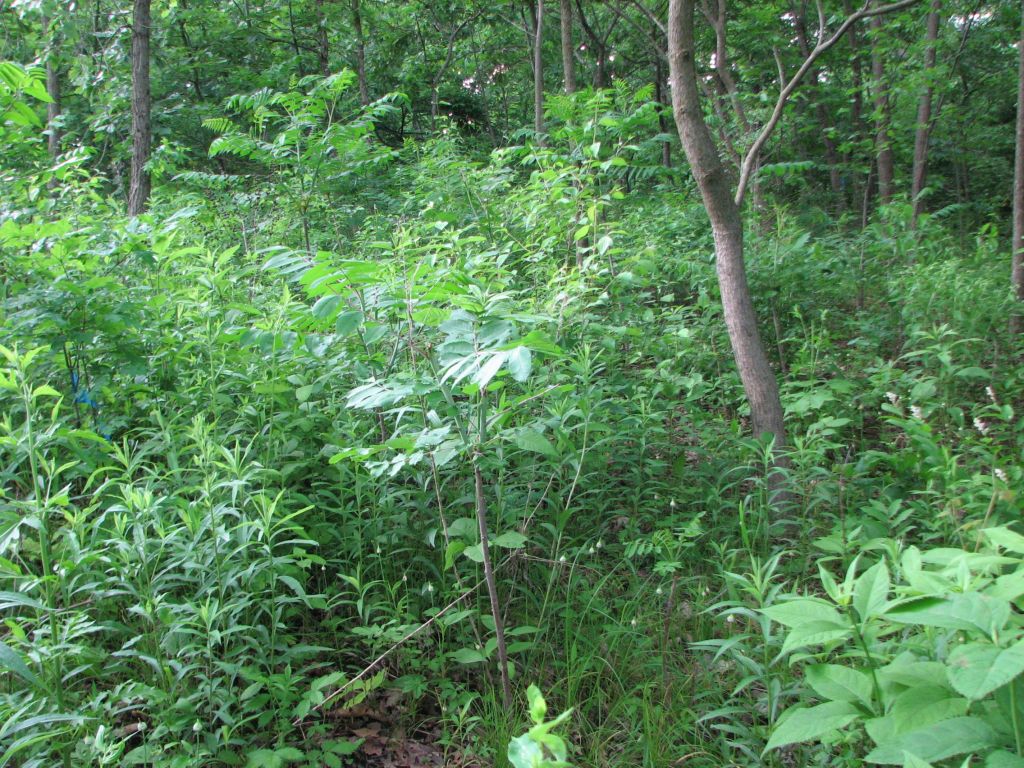
West 5/27/2024
Burn Pile Four
In the below images, notice that there is much more staghorn sumac (and it is larger) in the 2023 images compared to the 2024 images. I saw the staghorn sumac had received significant browsing (presumably from deer) reducing it.

North 8/8/2023

North 5/27/2024

West 8/8/2023

West 5/27/2024 Someone took the Barrington Campgrounds name literally. This park used to be a church day camp.

South 8/8/2023

South 5/27/2024

East 8/8/2023
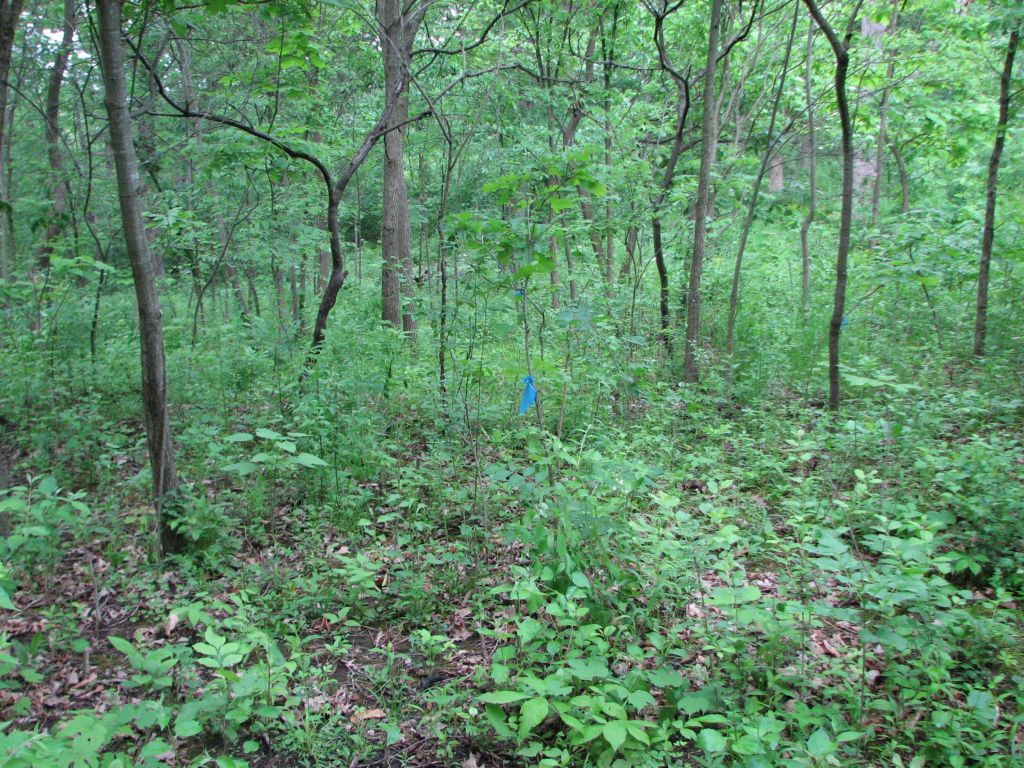
East 5/27/2024
Burn Pile Five
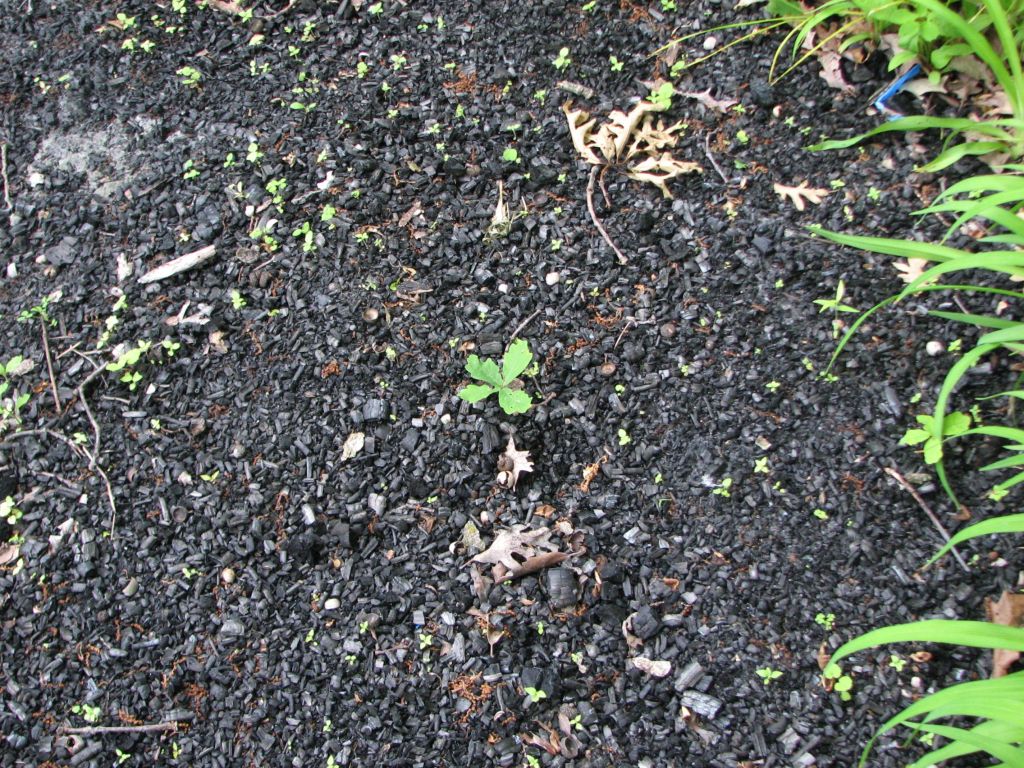
This burn pile was where thin gray dogwood stems were burn last winter. There was a lot of oak reproduction in this park. However, I was surprised to see an oak seedling growing in a burn pile that was created just the previous year. Gray dogwood stems tend to be thin. They burn quickly not causing as much damage to the soil as burning thicker logs.
 Stewardship Chronicles
Leave a comment