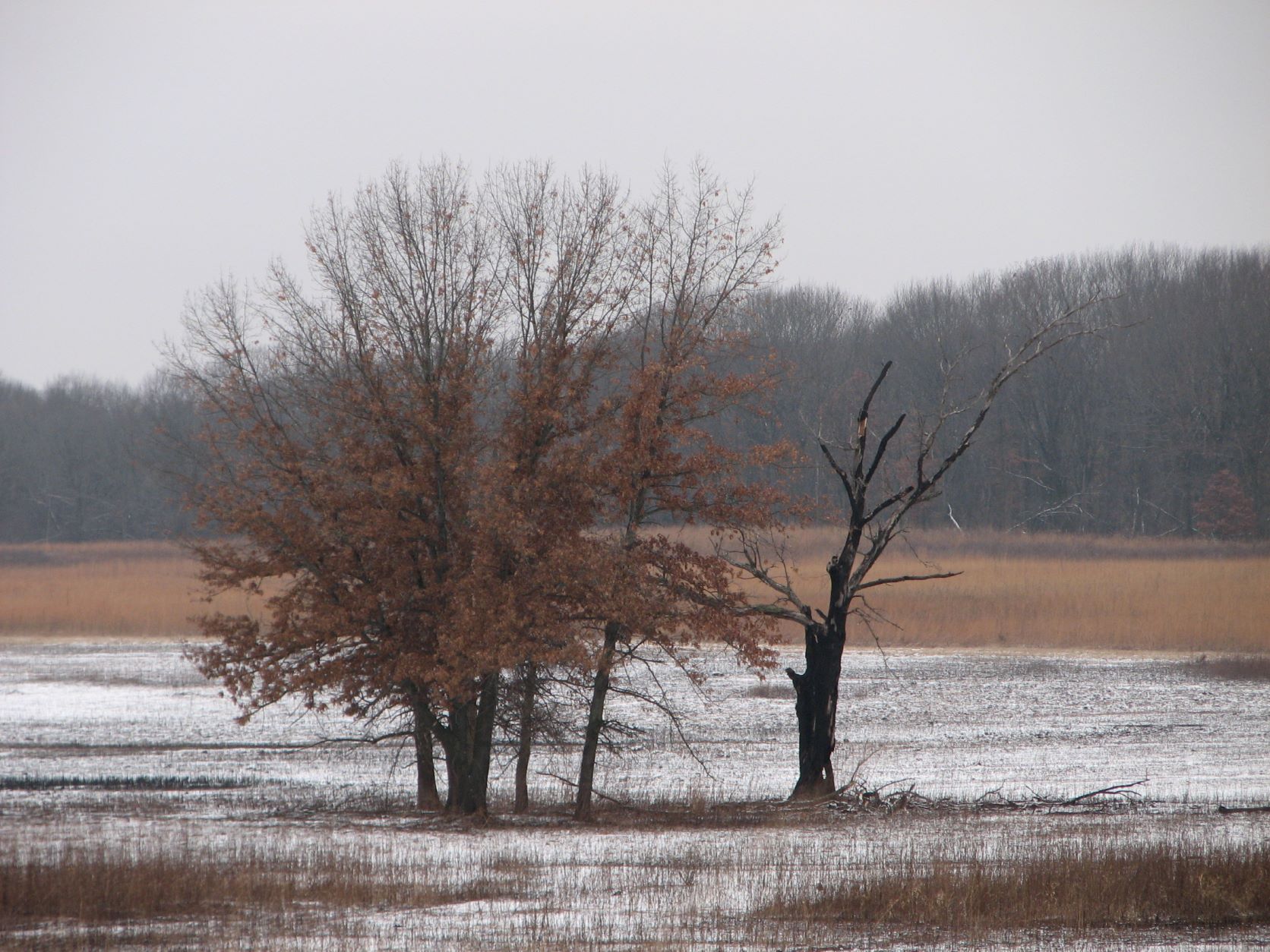

Retrieved January 18th, 2023 from https://www.google.com/maps/search/poplar+creek/@42.0566564,-88.2035896,1396m/data=!3m1!1e3
North of Shoe Factory Road
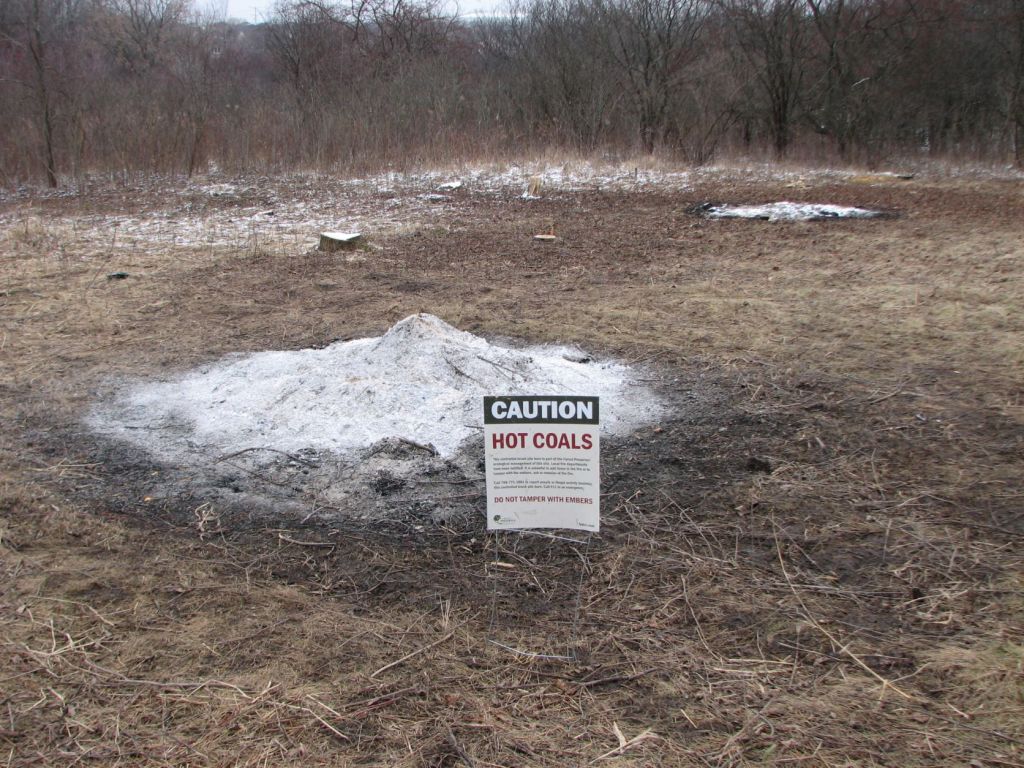
The next day the brush piles have burned to ash.
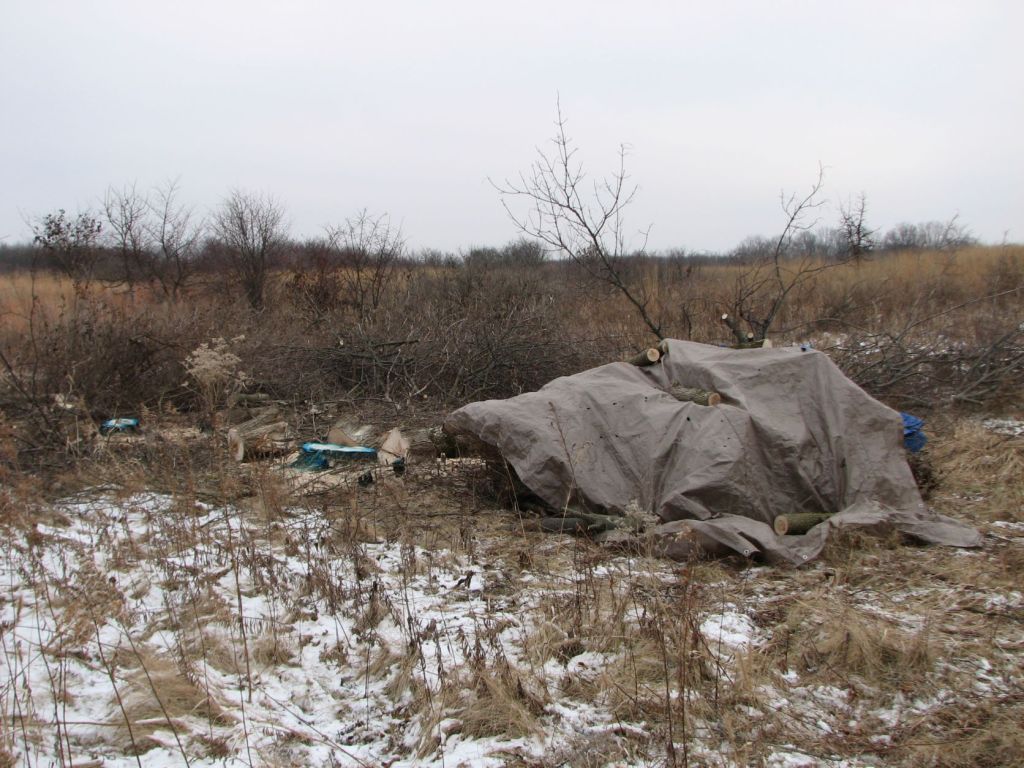
There are brush piles covered by tarps near the bicycle path so they will be easy to burn later.

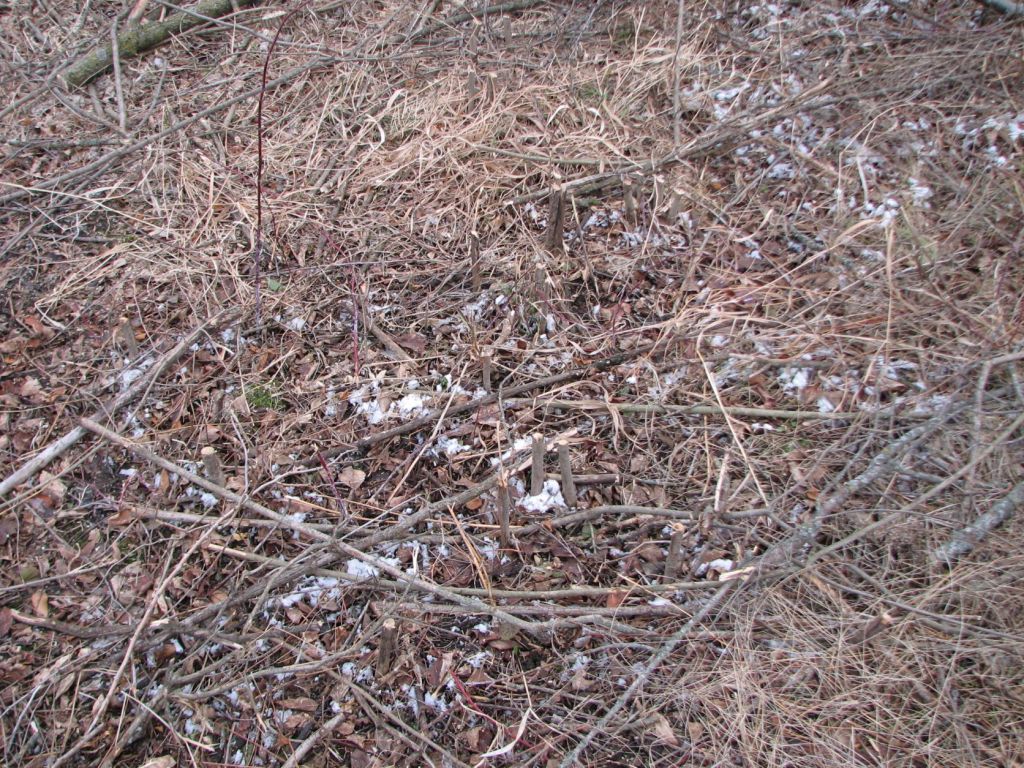
Some stumps had herbicide applied. Since the bark was covered, in addition to the cambium, and the temperature was near or below freezing it is likely triclopyr ester in basal oil was used.

Other stumps did not get herbicide applied. I counted 38 larger stumps that were treated. I also counted 28 larger stumps that were not treated. I made a crude map so next year I can see how many of the treated stumps were killed. I also included smaller stumps, but I could not include on my crude map all the untreated grey dogwood stumps.

This image shows a few grey dogwood stumps in the foreground that have been treated with herbicide.

However, a lot of the gray dogwood were not treated with herbicide. This makes determining effectiveness of an herbicide application difficult.
This is my crude map of the work area. I drew it in a pocket notebook. What is shown are scans from the notebook put side by side. The larger dark shapes are the either brush piles covered with tarps or burn scars. The small circles are cut trees or larger buckthorn. Small dots are smaller woody stumps like gray dogwood. If an “X” was put over the shape, this was to designate the stump did not get treated.

East of Shoe Factory Road Prairie Nature Preserve
Below is an existing brush pile east of the Shoe Factory Road Prairie Nature Preserve.

This existing brush pile is even further east of the Shoe Factory Road Prairie Nature Preserve near Shoe Factory Road.
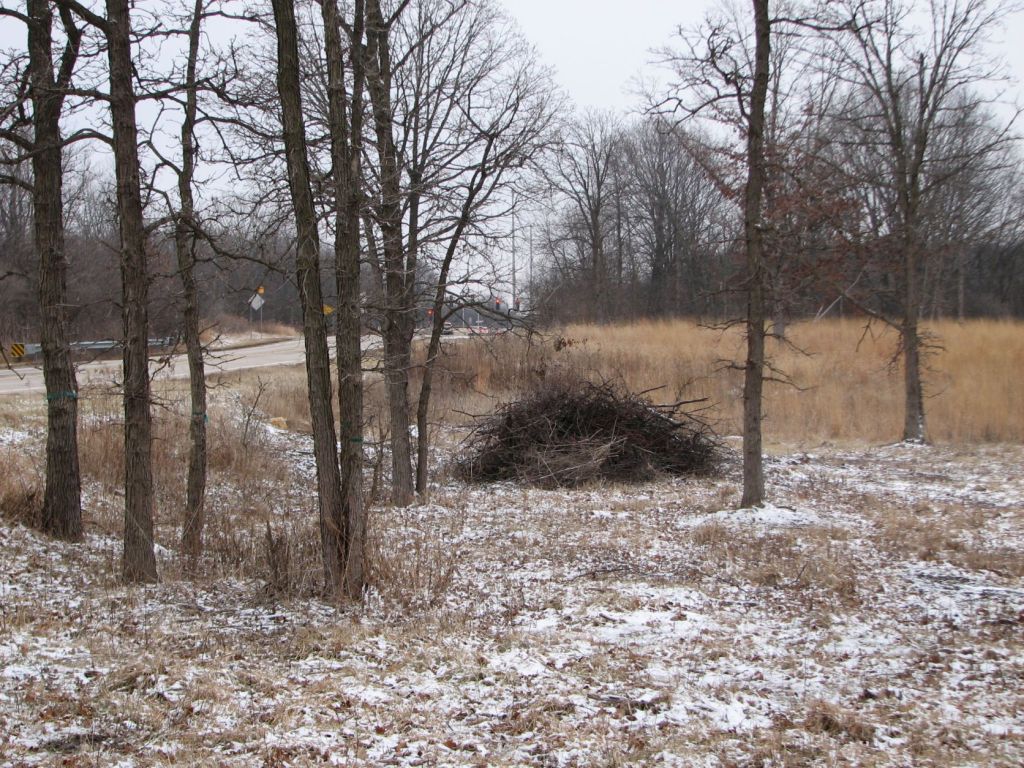
Area between Carl R. Hansen parking lot and the Shoe Factory Road Prairie Nature Preserve where trees and brush have been removed to expand the main prairie to the northeast.
This image shows Asian bush honeysuckles that have been mowed, likely during the growing season with the goal of preventing other weeds from setting seed.
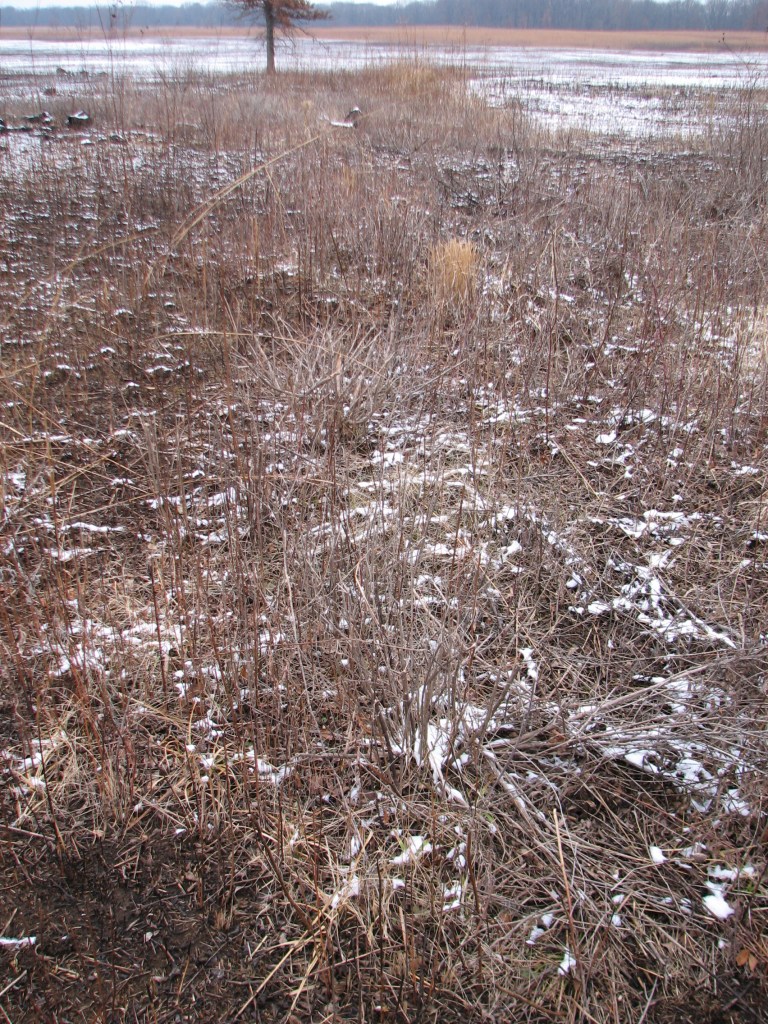
This image shows Asian bush honeysuckles that were cut at ground level. This was probably done when trees were cleared from this area. Many woody species sprout vigorously when cut. After brush mowing, the ideal time to treat Asian bush honeysuckle with herbicide is in April after they have sent up green sprouts, but before other species have started growing. This timing will minimize the impact to other species from the vapors of triclopyr ester. In years when the prairie is not burned, triclopyr ester in basal oil can be applied throughout the entire dormant season. However, fire has likely top killed these bushes so at this point cutting them to the ground and treating the stumps would be the best course of action.

Along the bike path north of the Carl R. Hansen parking lot.
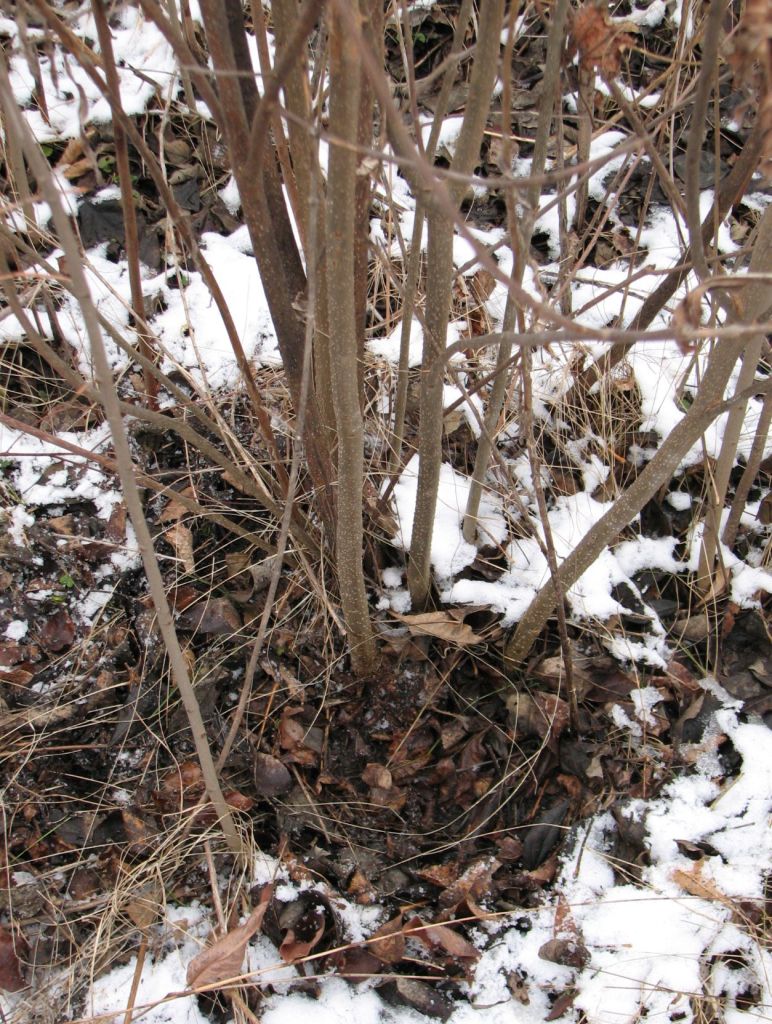
I went back to the area where I showed a picture of a multi-stemmed buckthorn that was cut on my last post. I returned to this area to look for stumps from larger trees. I found some ash that had been cut and sprouted like the buckthorn. However, they were not very large. It is likely the multiflora rose is just taking advantage of the lack of fire in this brush and bramble filled location rather than colonizing where a tree has died. I have seen multiflora rose growing around where an oak had died, was later cut, and then removed in the Carl R. Hansen Woods. When a tree dies in the woods, invasive species tend to take advantage of the increase in light.
In this brush and bramble filled location I saw Dasistoma (Seymeria) macrophylla. Since this more conservative species is present, it might be worth applying herbicide carefully when controlling invasive species in this patch of brush and brambles.
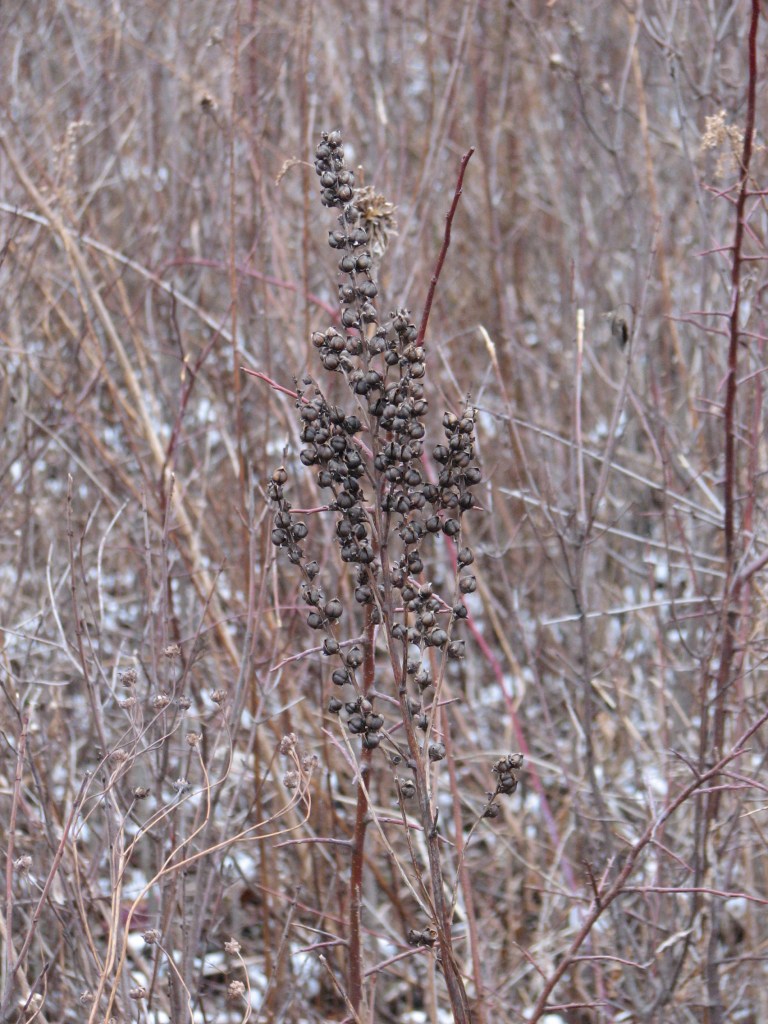
Here is a wider view of the brush and bramble with three Dasistoma visible. I have treated areas that were even thicker with multiflora rose. I used a long-handled paint roller to reach into the brambles to apply triclopyr ester in oil to the base of the shrubs. The next year the shrubs died, became brittle, and were easy to trample down to the ground with my foot. I then kept applying further and further into the patch each year. Cutting, then treating, would allow the job to get done in one season. However, there is so much to do that I tend to just keep pushing the front of the invasive species back.

Proselytizer on the corner of route 59 (Sutton Road) and Golf Road. This intersection is in the middle of Poplar Creek Forest Preserve.

Corrections
The post was changed on 10/18/24 to reflect the name is Shoe Factory Road Prairie Nature Preserve and not Shoe Factory Road Nature Preserve.
 Stewardship Chronicles
Leave a comment