Points of interest are numbered, and the target area visited is outlined in red.
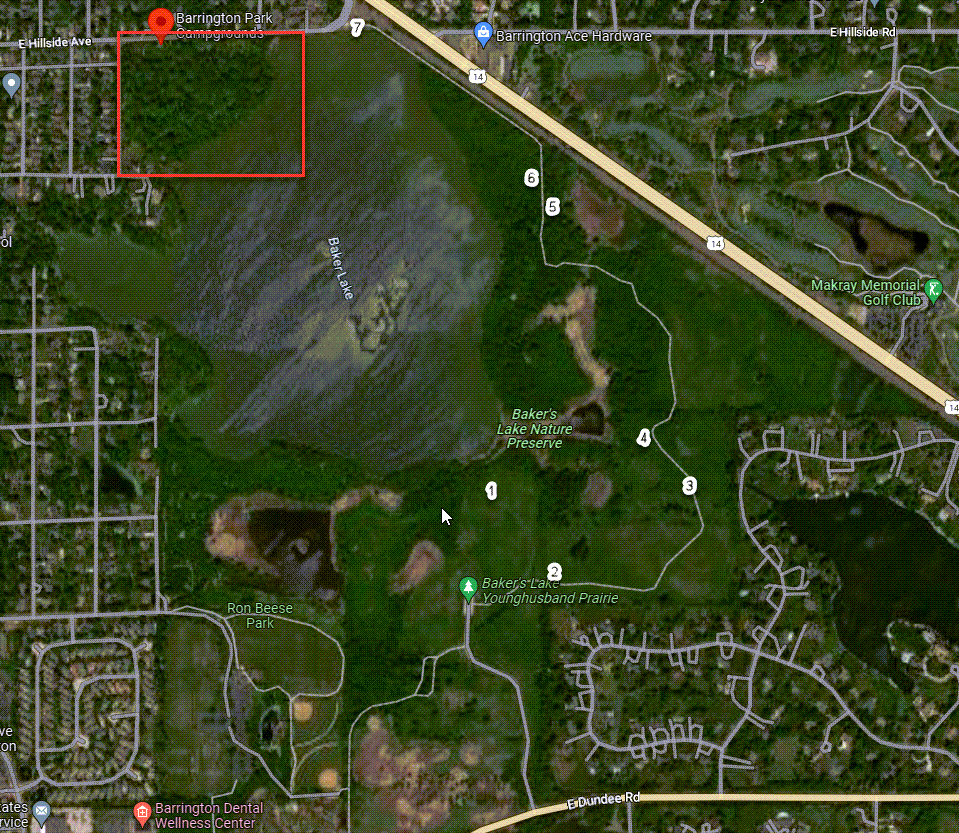
Retrieved March 4th, 2023 from https://www.google.com/maps/place/Barrington+Park+Campgrounds/@42.1391686,-88.1216888,2344m/data=!3m1!1e3!4m12!1m6!3m5!1s0x880fa6cdbbac8449:0xcbc5978e564c5443!2sBaker’s+Lake+Nature+Preserve!8m2!3d42.1394023!4d-88.1169354!3m4!1s0x880fa19f5e854c9f:0xef0f9c158f1a286d!8m2!3d42.1466518!4d-88.1264455?hl=en
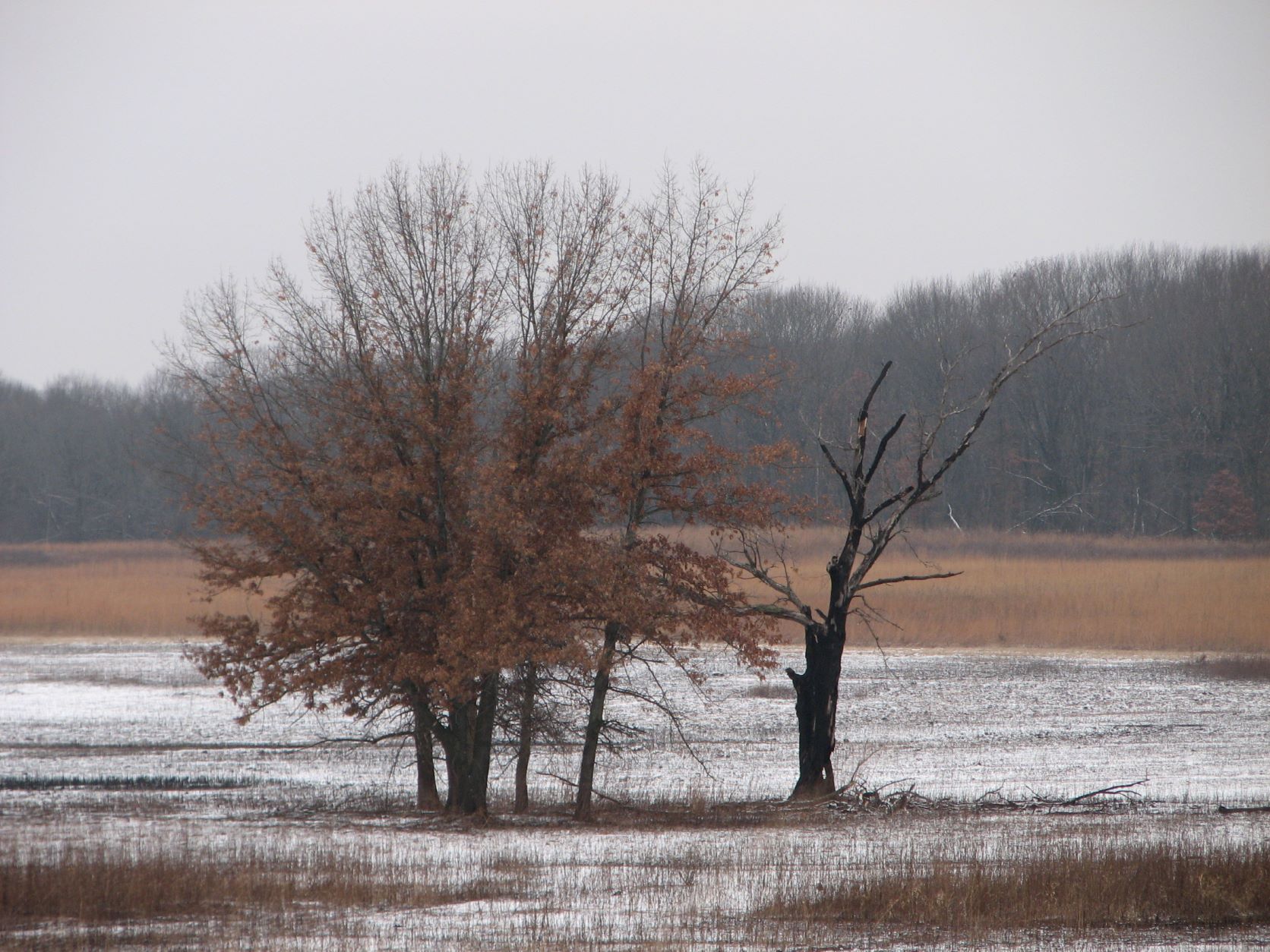
Point of Interest One: Lookout from South Side of Lake.
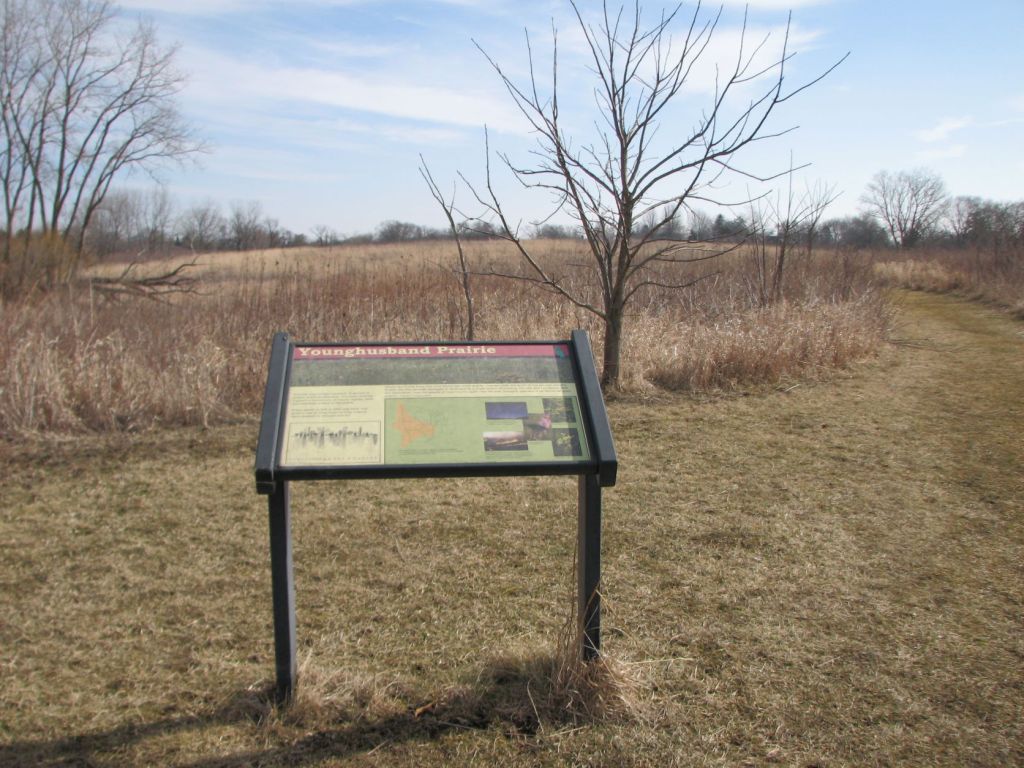
Point of Interest Two: Sign for Younghusband Prairie This is a prairie reconstruction.
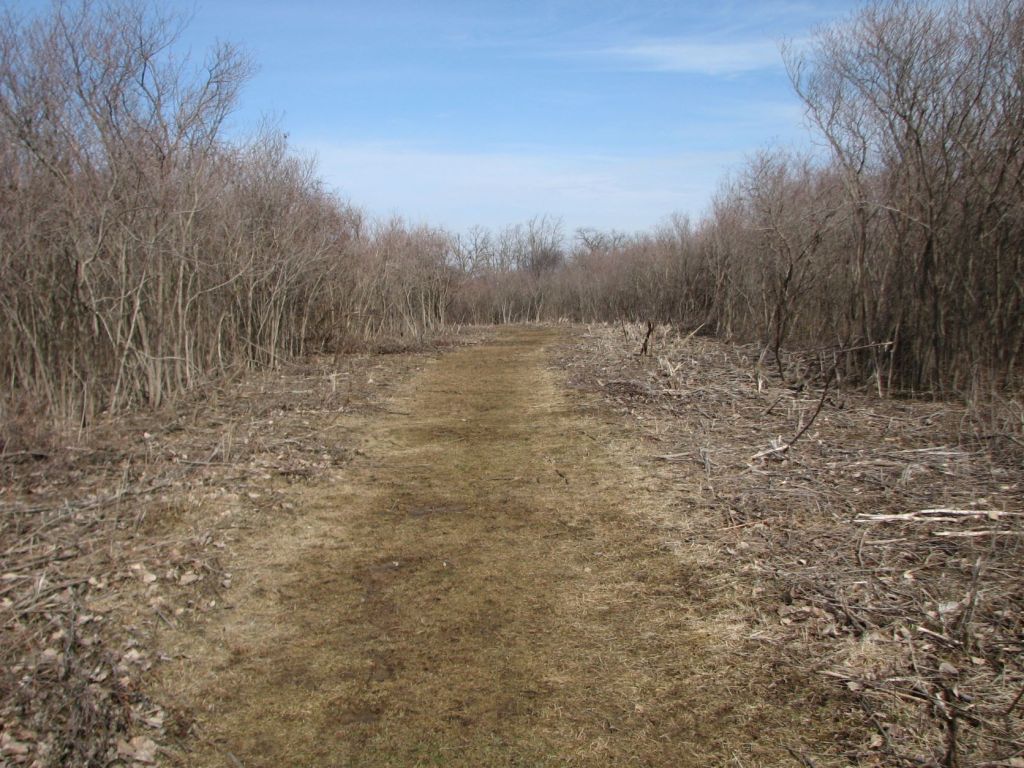
Point of Interest Three: Brush Mowing Along Trail.
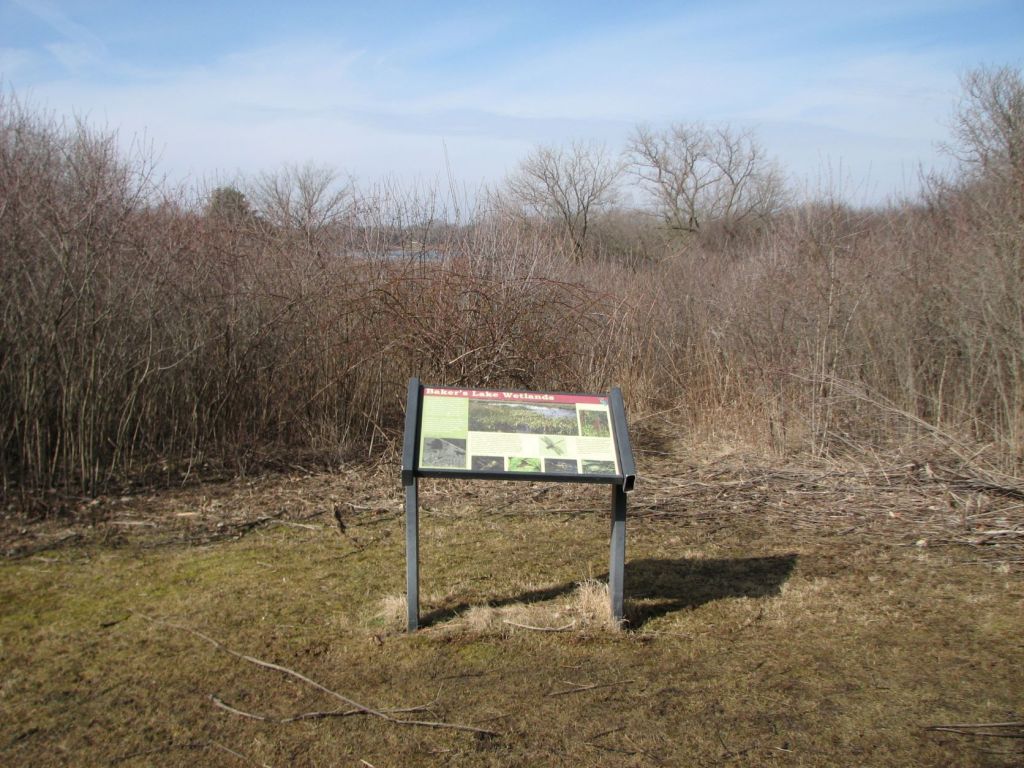
Point of Interest Four: Baker’s Lake Wetland Sign
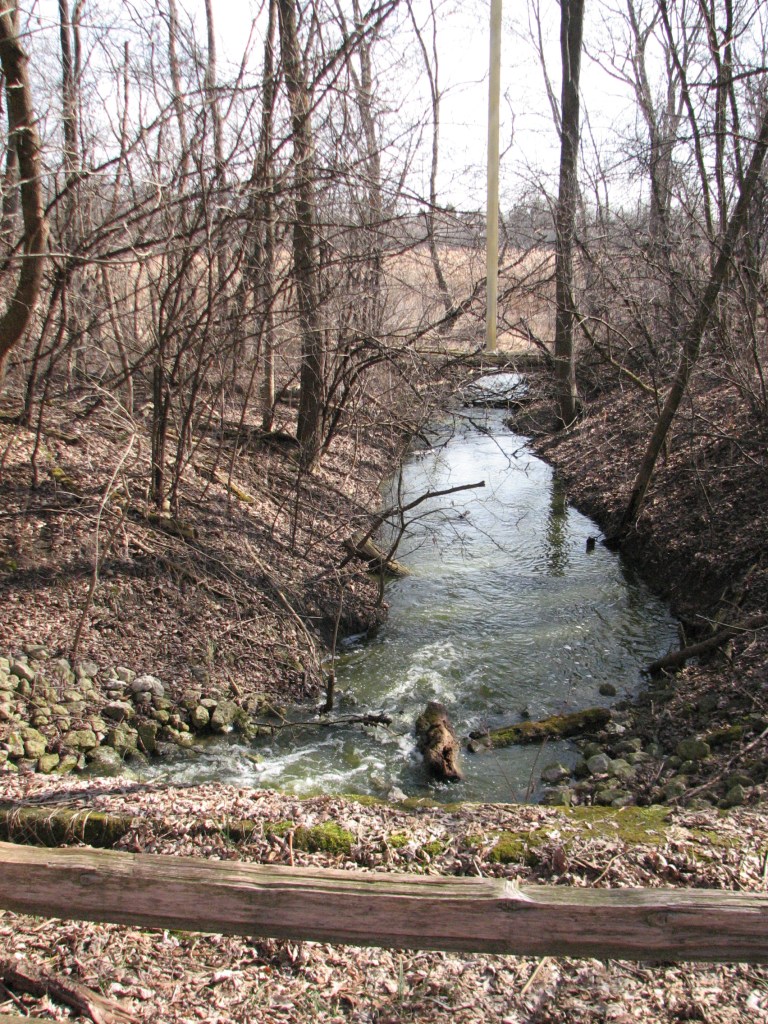
Point of Interest Five: Outlet from Baker’s Lake. The water is unusually green.
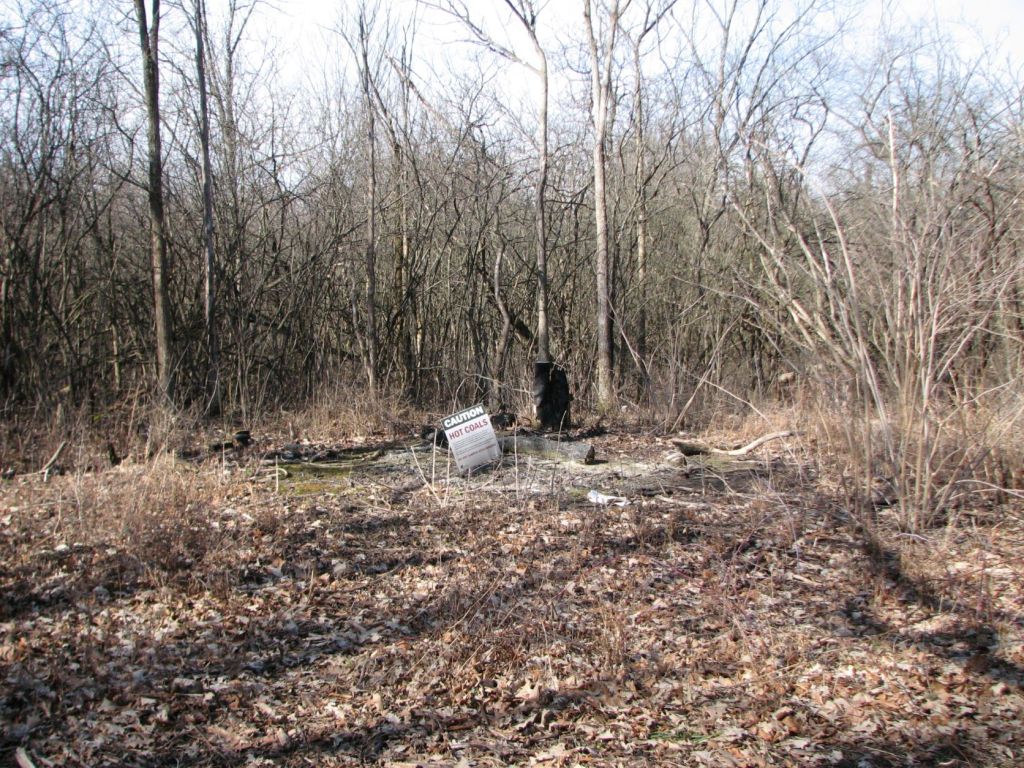
Point of Interest Six: Random burn pile along trail. It makes me wonder what they were doing.
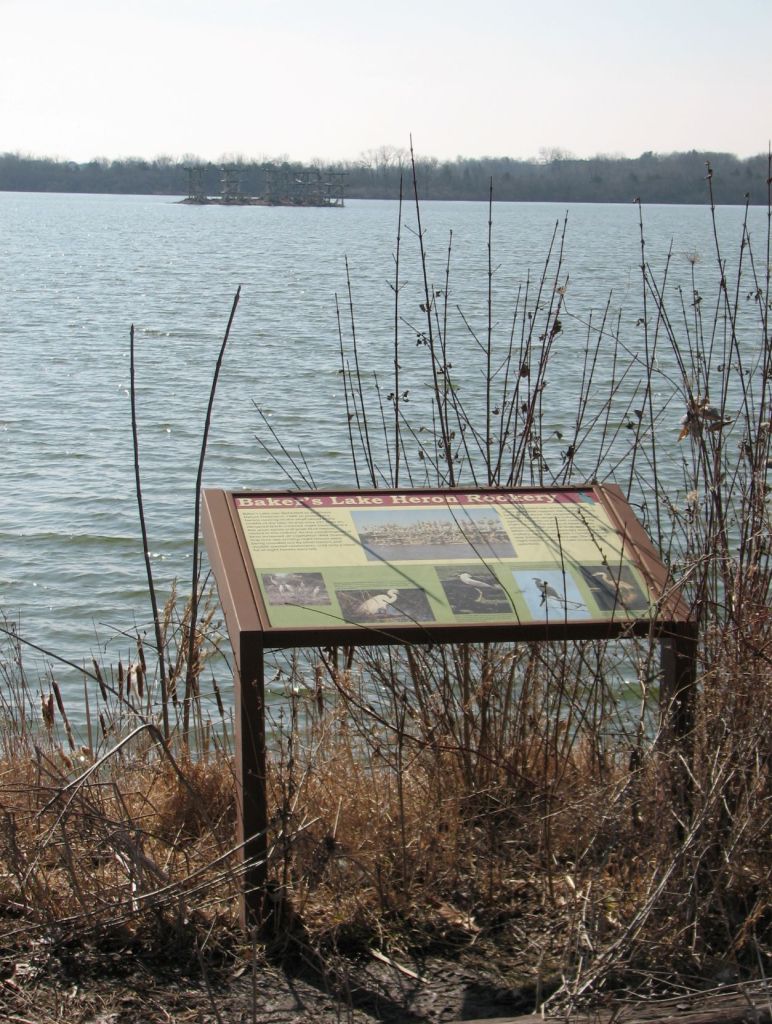
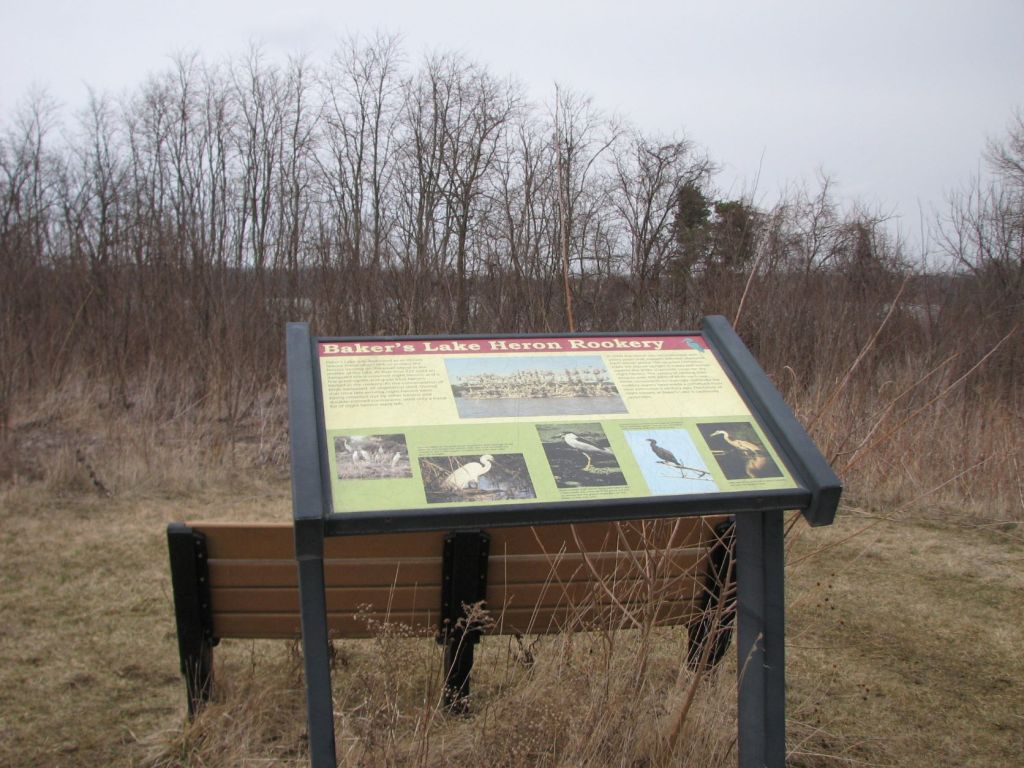
Point of Interest Seven: Baker’s Lake Heron Rookery Sign
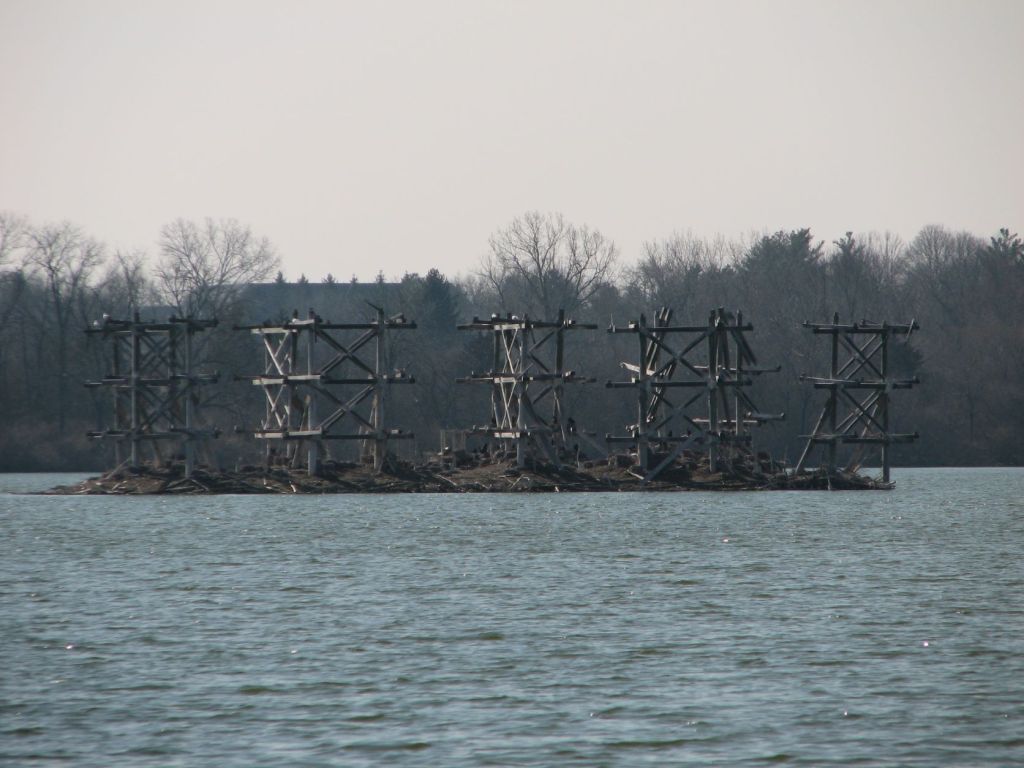
Point of Interest Seven: Closeup of Heron Rookery.
Barrington Park Campgrounds
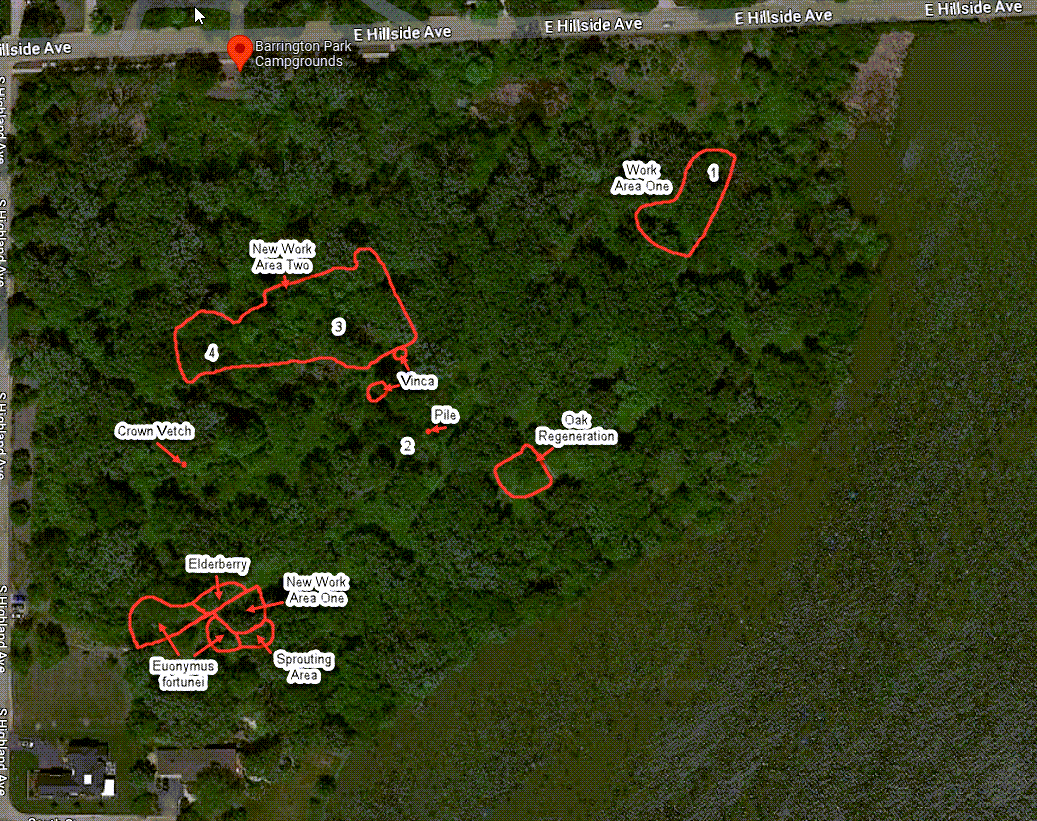
Retrieved March 4th, 2023 from https://www.google.com/maps/place/Barrington+Park+Campgrounds/@42.1455259,-88.1265641,348m/data=!3m1!1e3!4m12!1m6!3m5!1s0x880fa6cdbbac8449:0xcbc5978e564c5443!2sBaker’s+Lake+Nature+Preserve!8m2!3d42.1394023!4d-88.1169354!3m4!1s0x880fa19f5e854c9f:0xef0f9c158f1a286d!8m2!3d42.1466518!4d-88.1264455?hl=en
The burn piles are numbered, and areas of interest are outlined in red with labels.
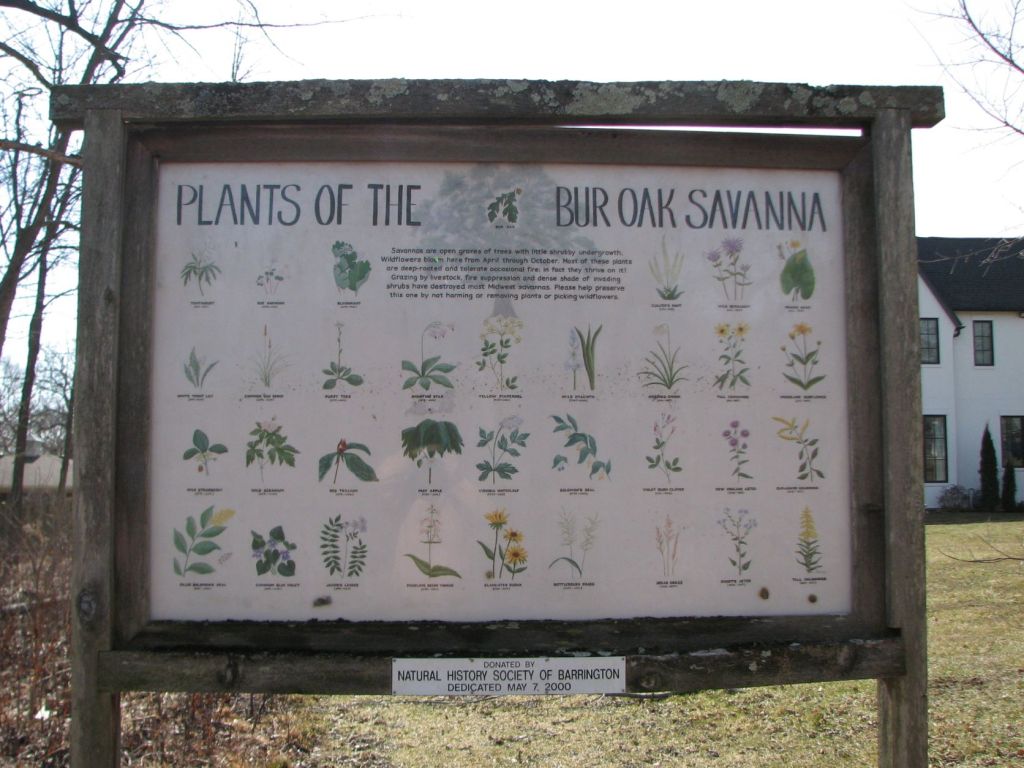
Sign at western entrance off Highland Avenue.
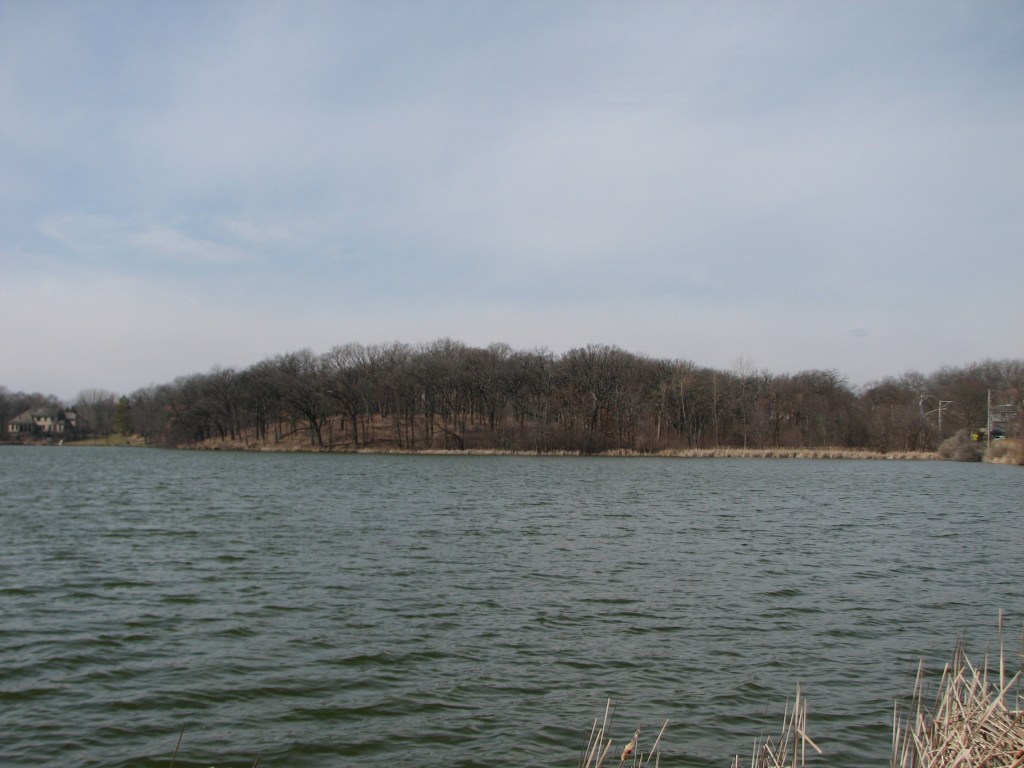
Barrington Parks Campground from a distance.

Barrington Parks Campground Closer View
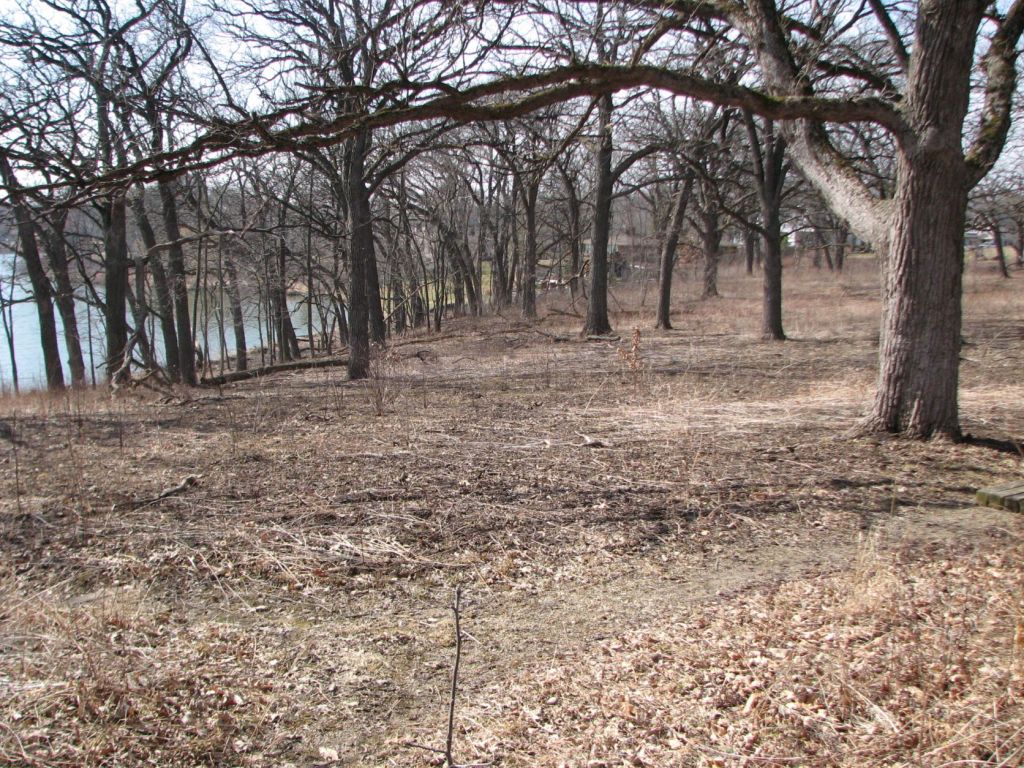
Young burr oaks under mother oak adjacent to spur trail down to lake.
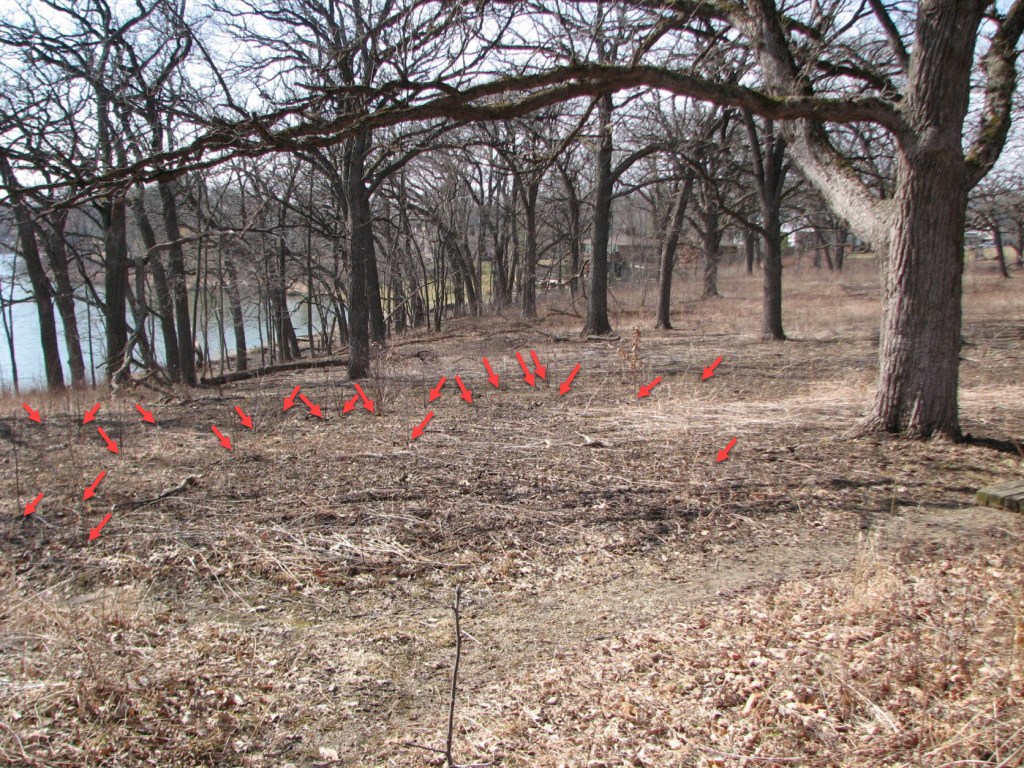
Above image with arrows pointing to young oaks.
Burn Pile One
The application of herbicide around this old burn pile was exceptional. I saw little if any sprouting of cut stumps.
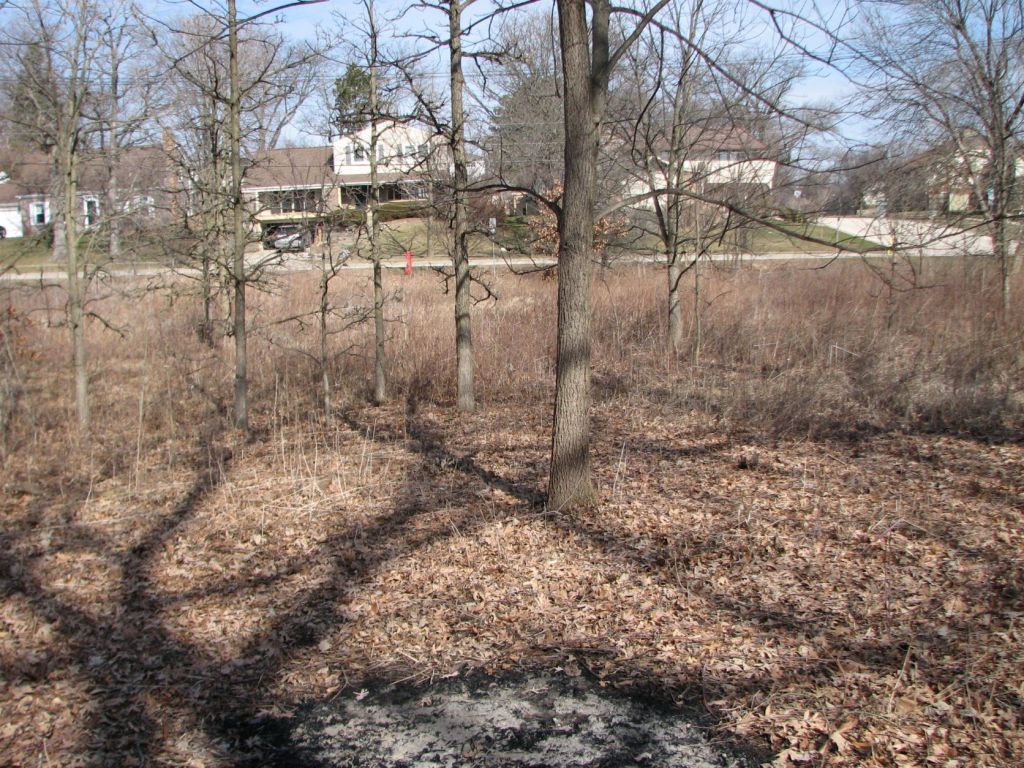
Looking North
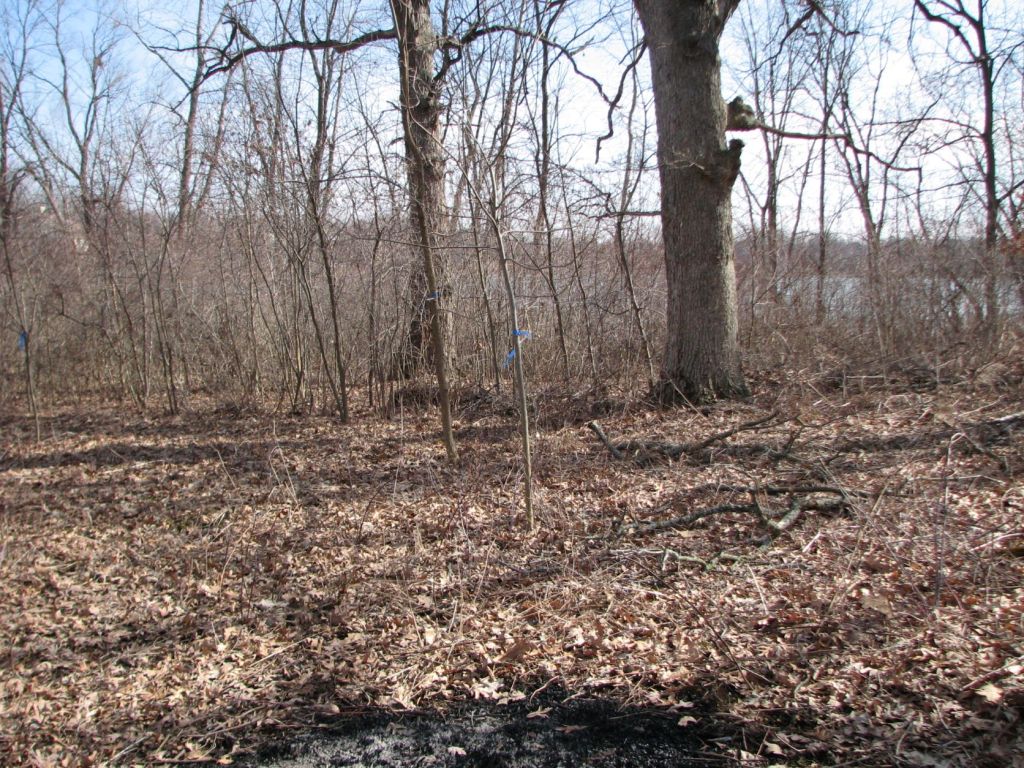
Looking east toward area not yet cleared of invasive species.
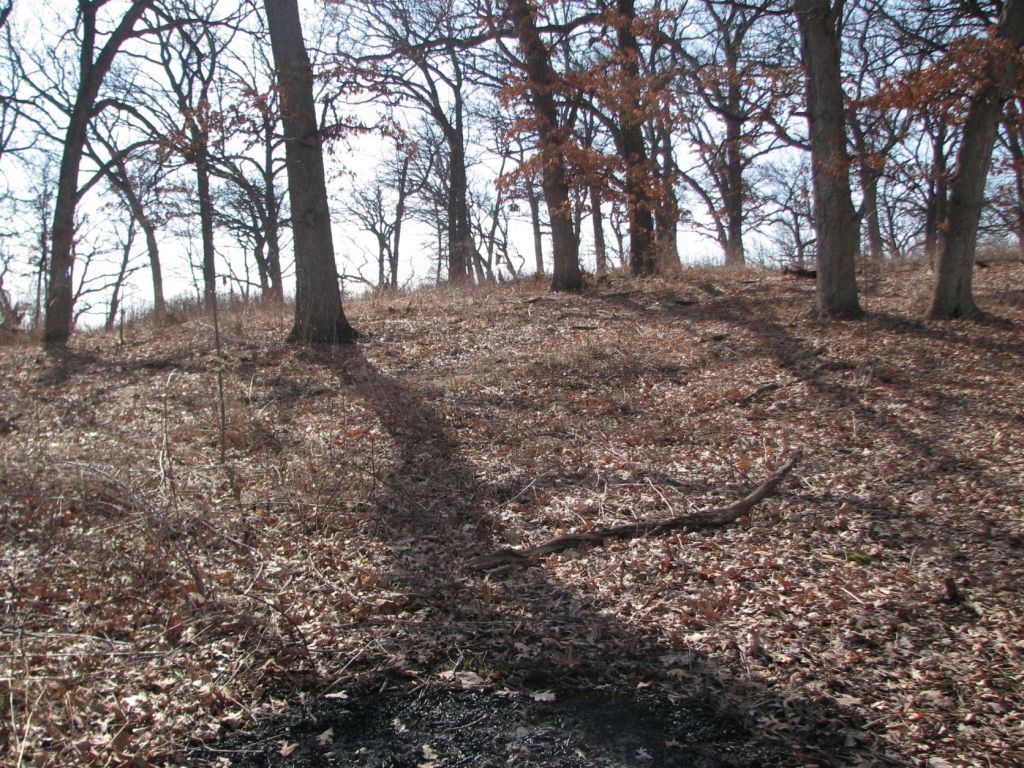
Looking South
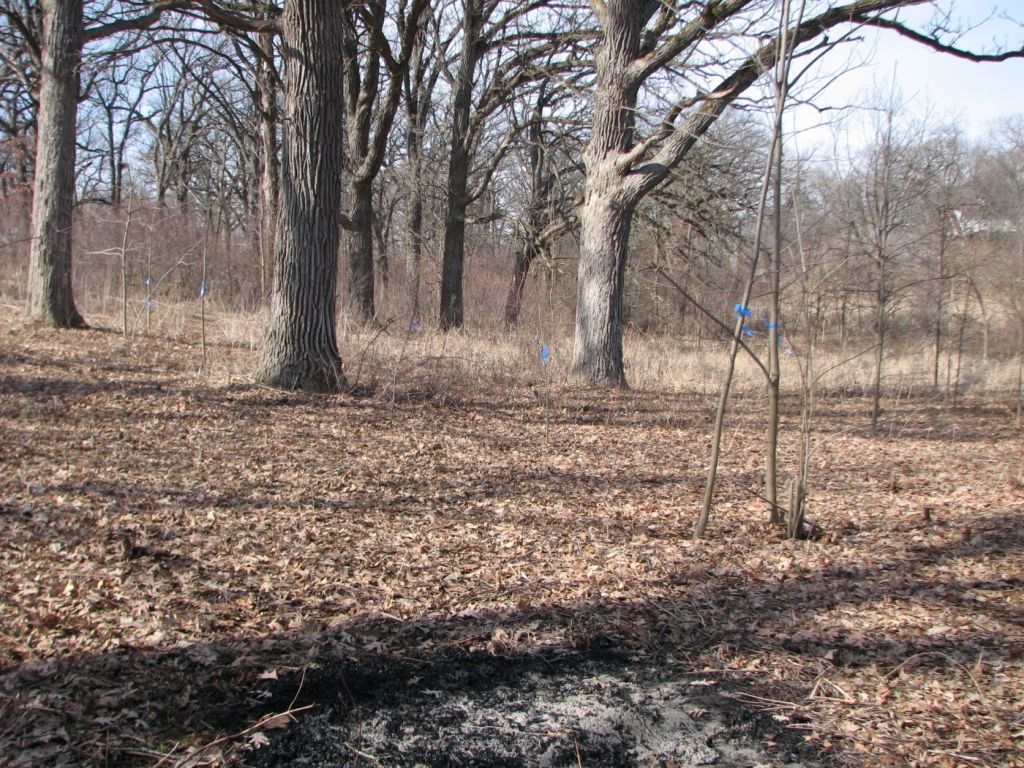
Looking West
Burn Pile Two
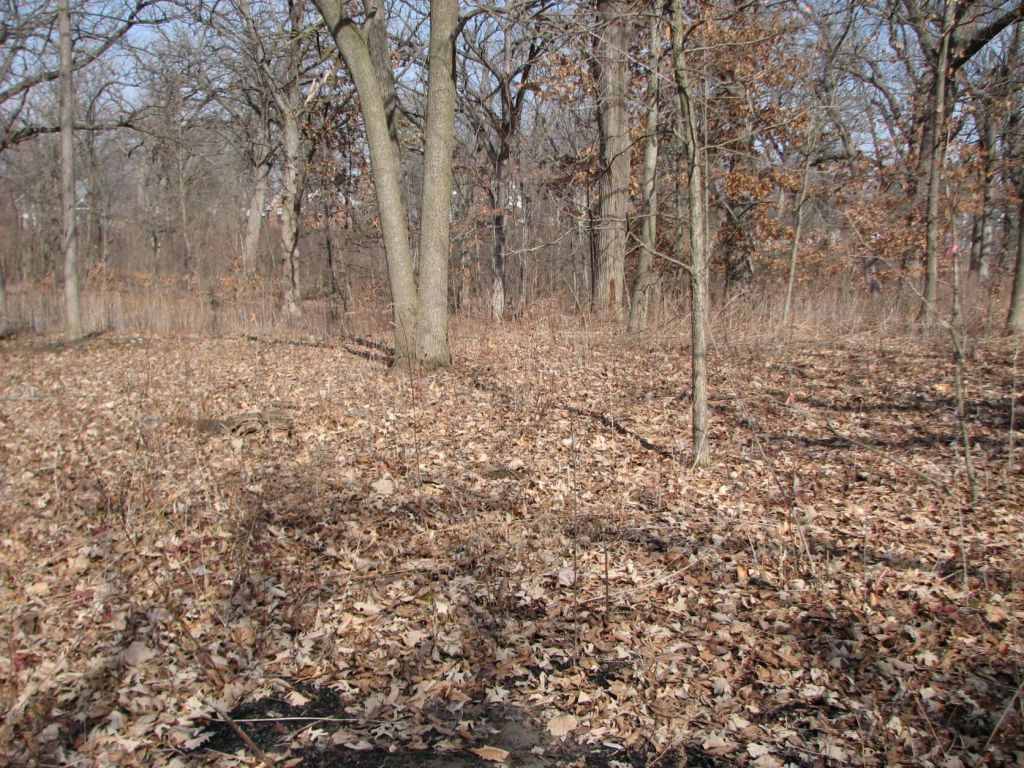
Looking North
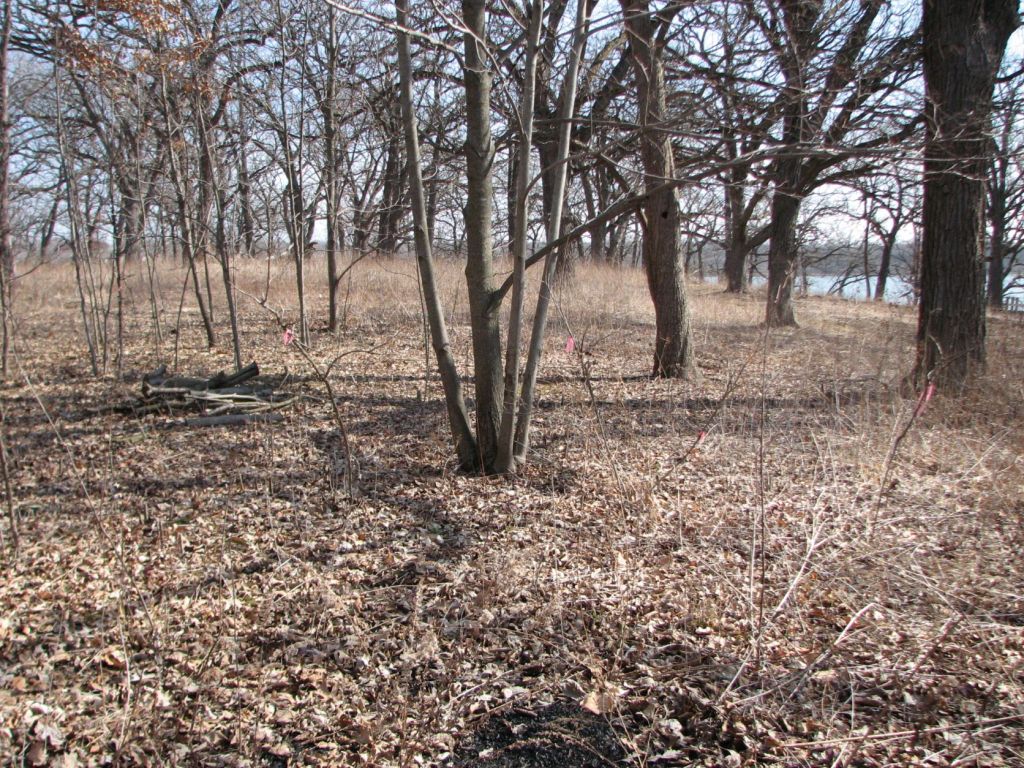
Looking East
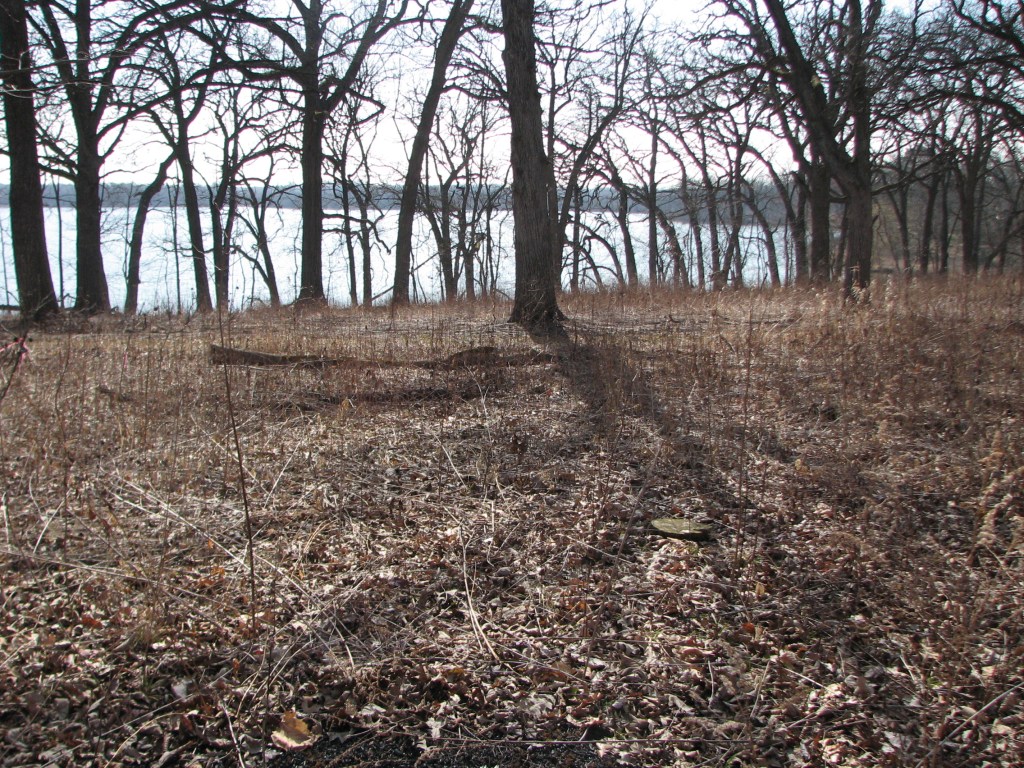
Looking South
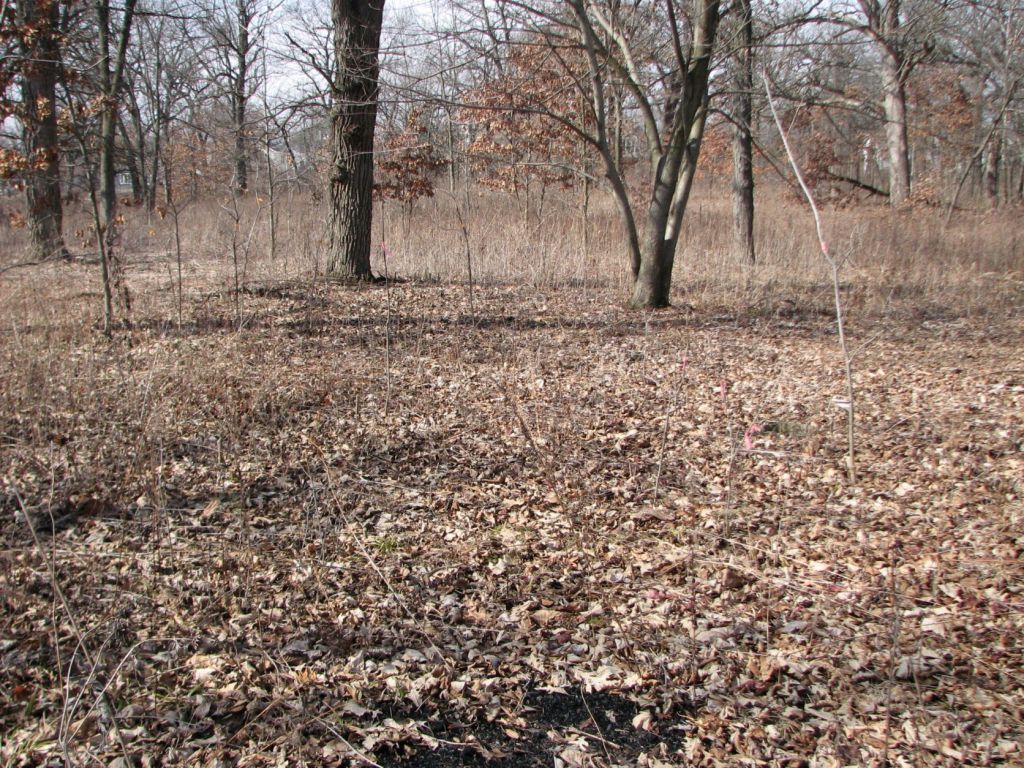
Looking West
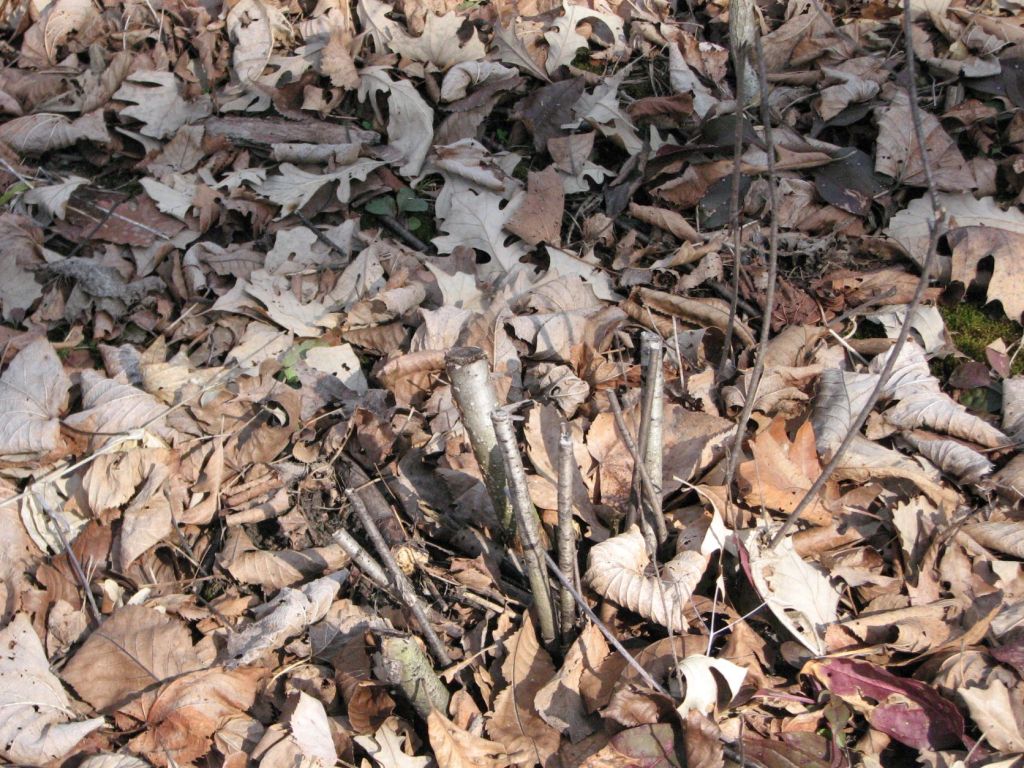
The application of herbicide around this burn pile was very good. The above buckthorn sprouted, but the sprouts are dead. This was likely because follow up work had occurred.
New Work Area One
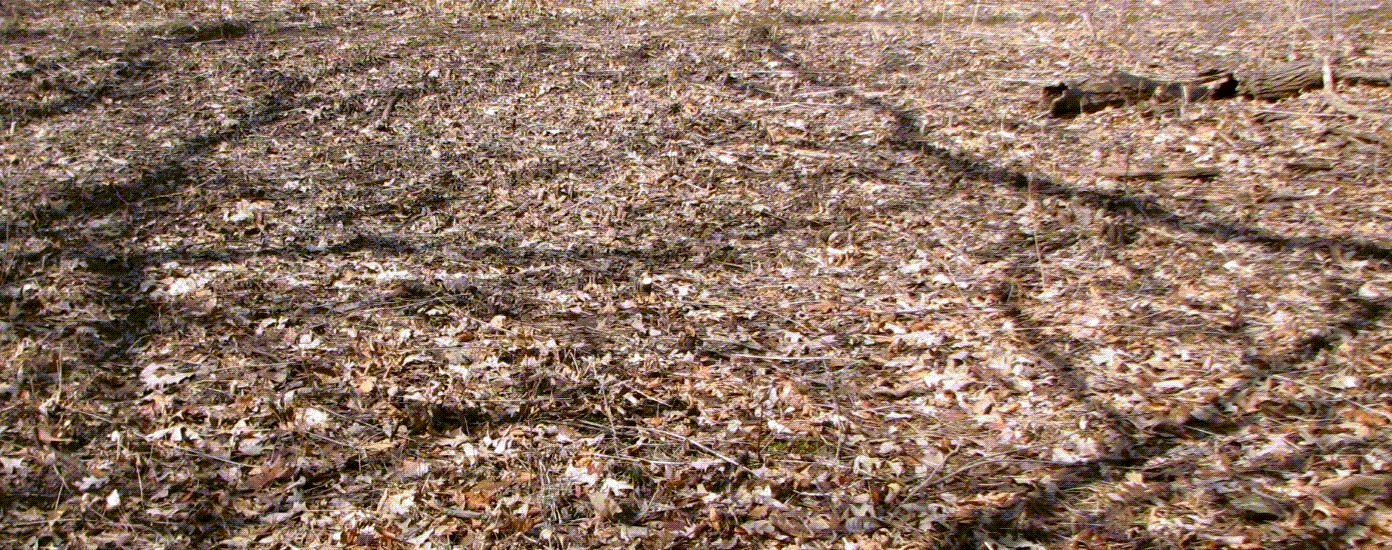
The work area looks clean. The stumps are cut low and are hard to see. I will be able to determine if the herbicide application was effective next fall.
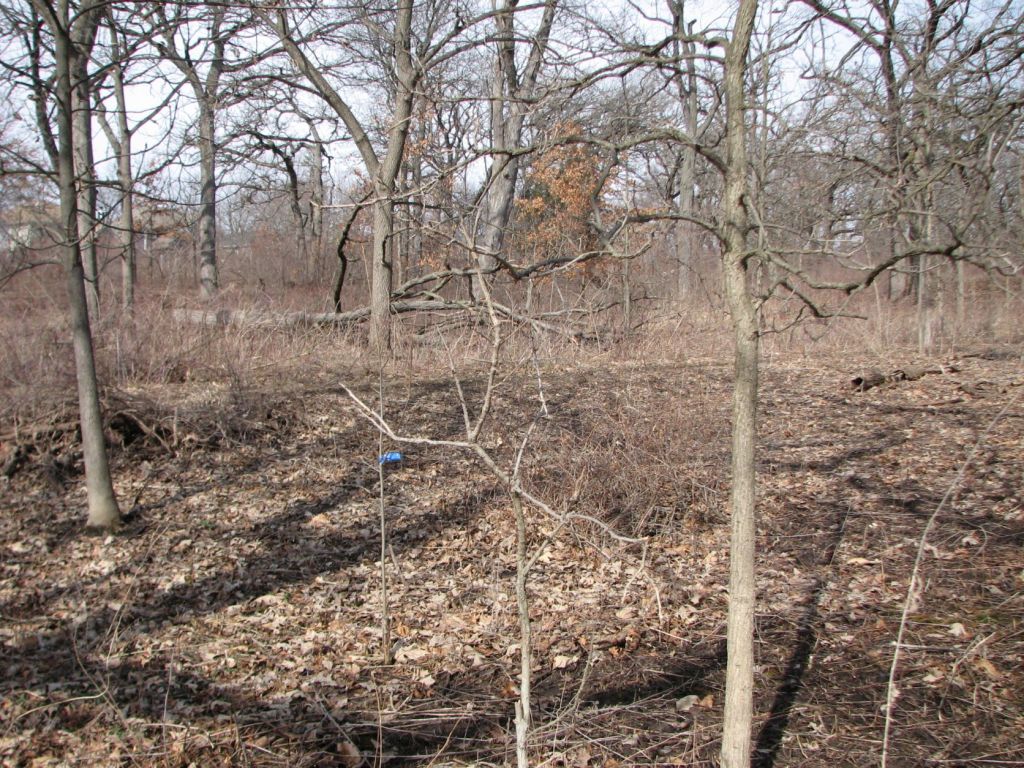
New Work Area One looking north. I could not tell if the wood piled on the left side of the image was an old burn scar. Likewise, I was not sure if the cut multiflora rose in the center was piled on an old burn scar.
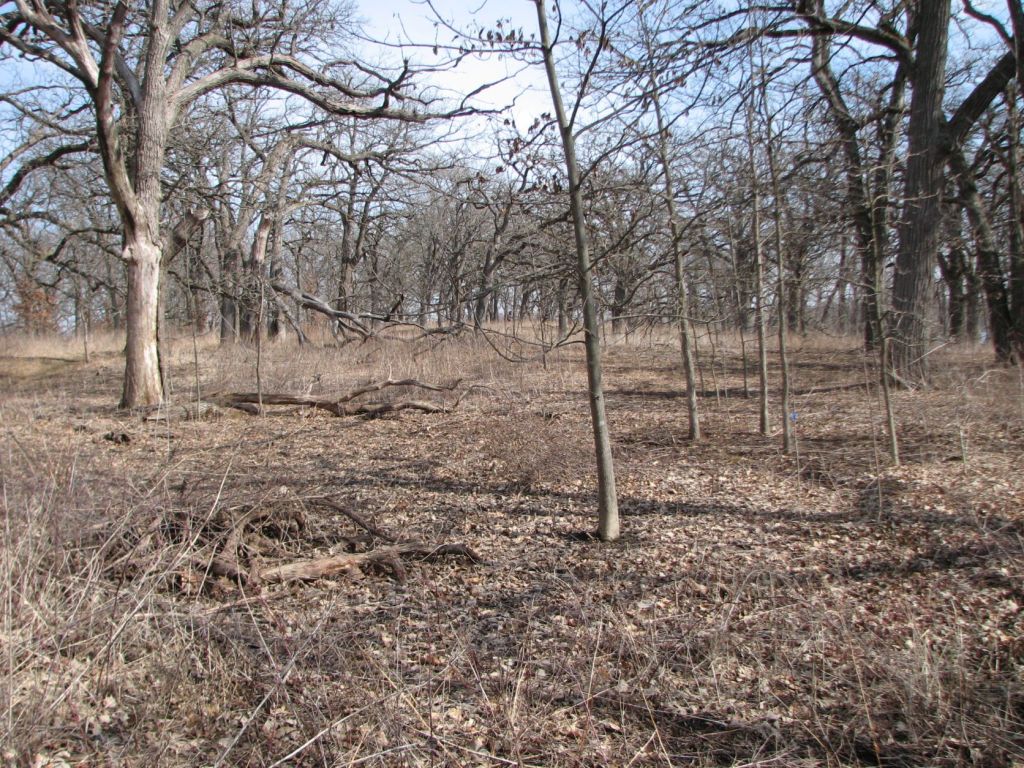
New Work Area One looking east.
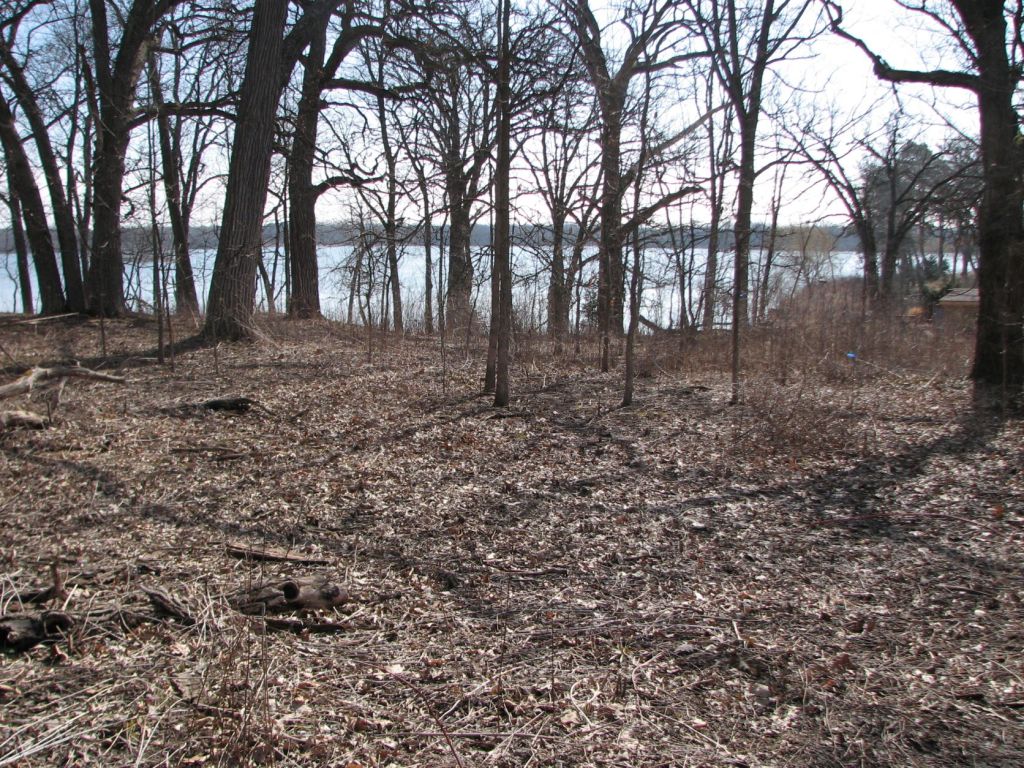
New Work Area One looking South.
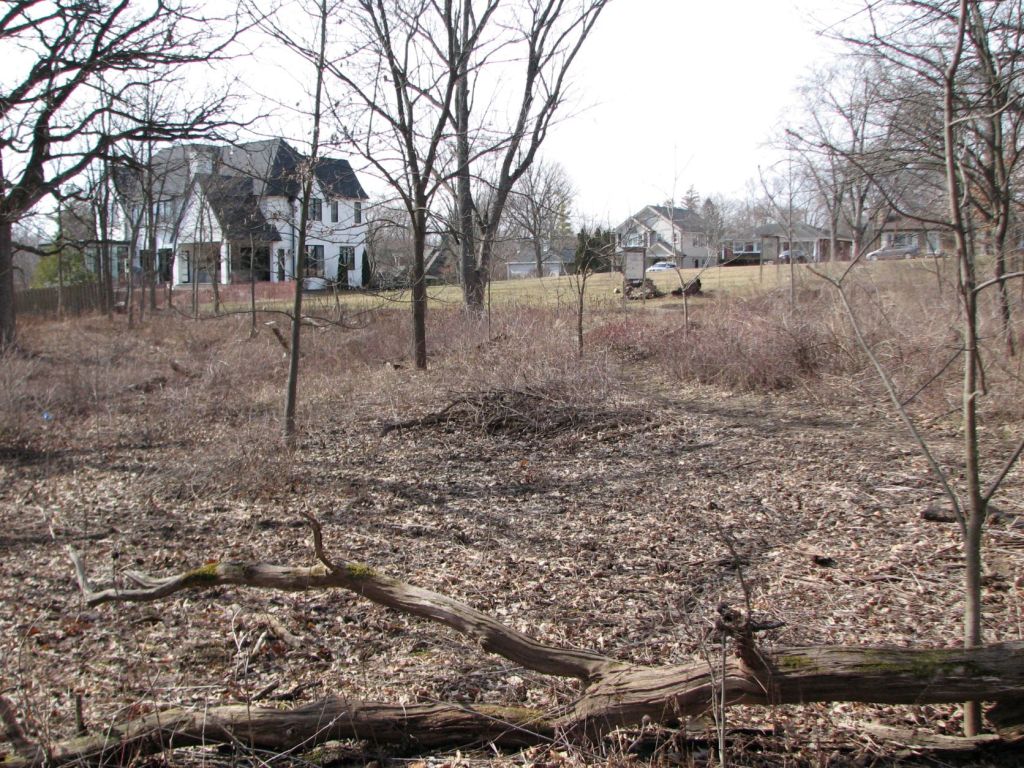
New Work Area One looking west toward entrance off Highland Avenue.
Sprouting Area
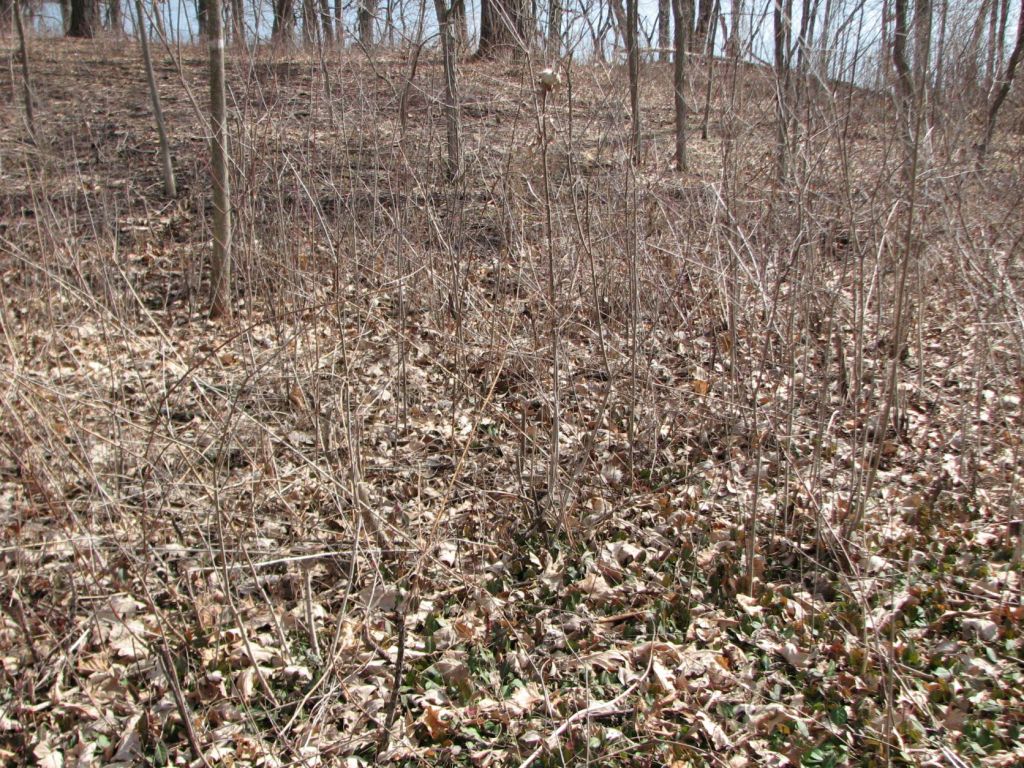
Southeast of the area labelled New Work Area One, almost all the cut brush has sprouted. It is possible too little herbicide was applied or it was not applied at all.
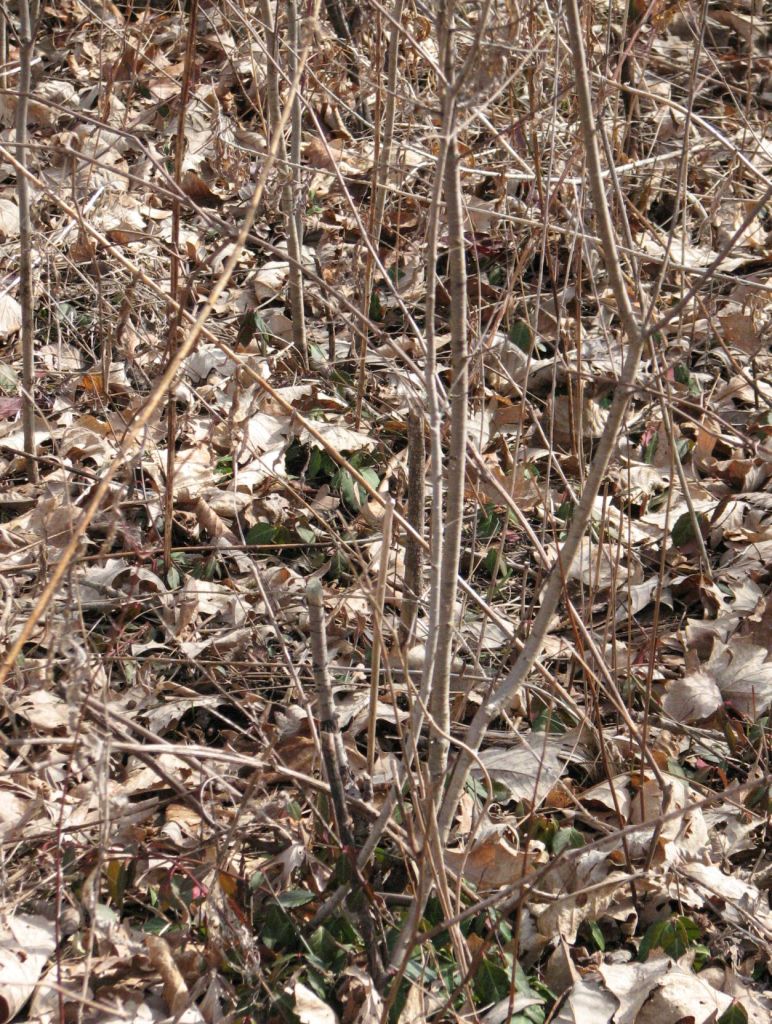
This is a closeup of the image above showing the high cut stumps sprouting. These stumps were likely cut high because of snow. Triclopyr ester in basal oil (trade name Garlon 4) will kill high cut stumps if enough herbicide is applied to the cut and/or along the stem. The concentration we tend to use of glyphosate, 25 percent active ingredient, likely would not kill stumps cut this high. If high cut stumps are going to be treated then 41 percent, or even 50 percent, glyphosate could be used to get a more successful treatment on high stumps.
Euonymus fortunei
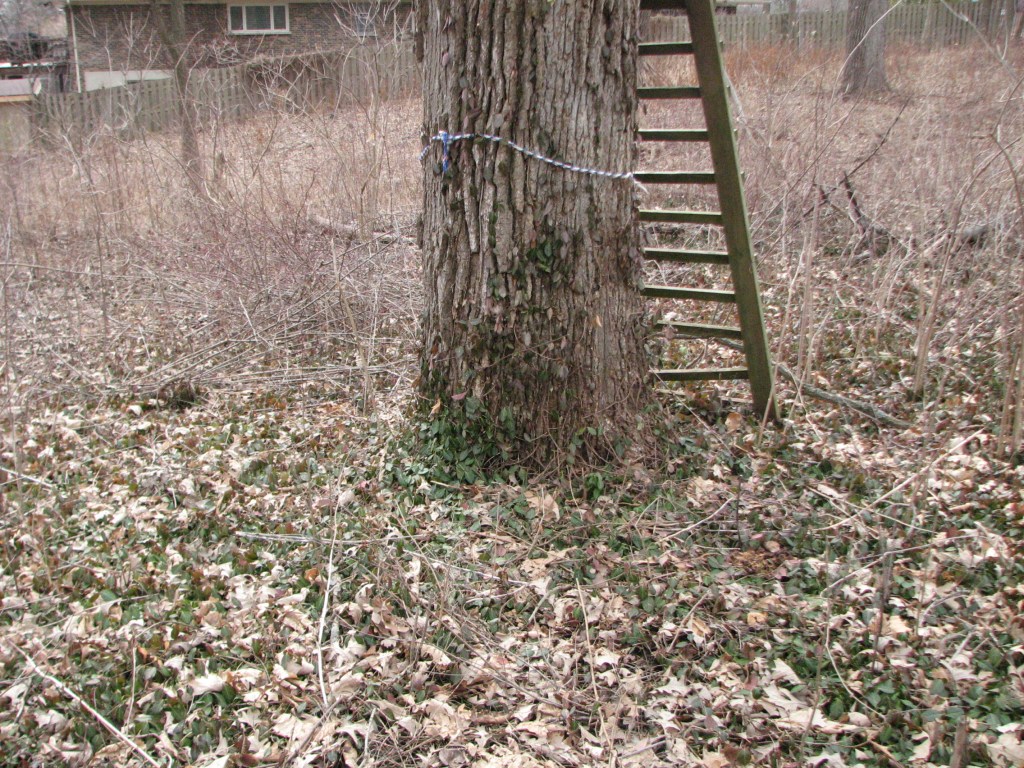
This is invasive Euonymus fortunei. This is the patch southwest of the area labeled “New Work Area One.” As the map shows, there is also a large area covered with this species north of the trail from the entrance off Highland Avenue. I have never worked on controlling this species.
Elderberry
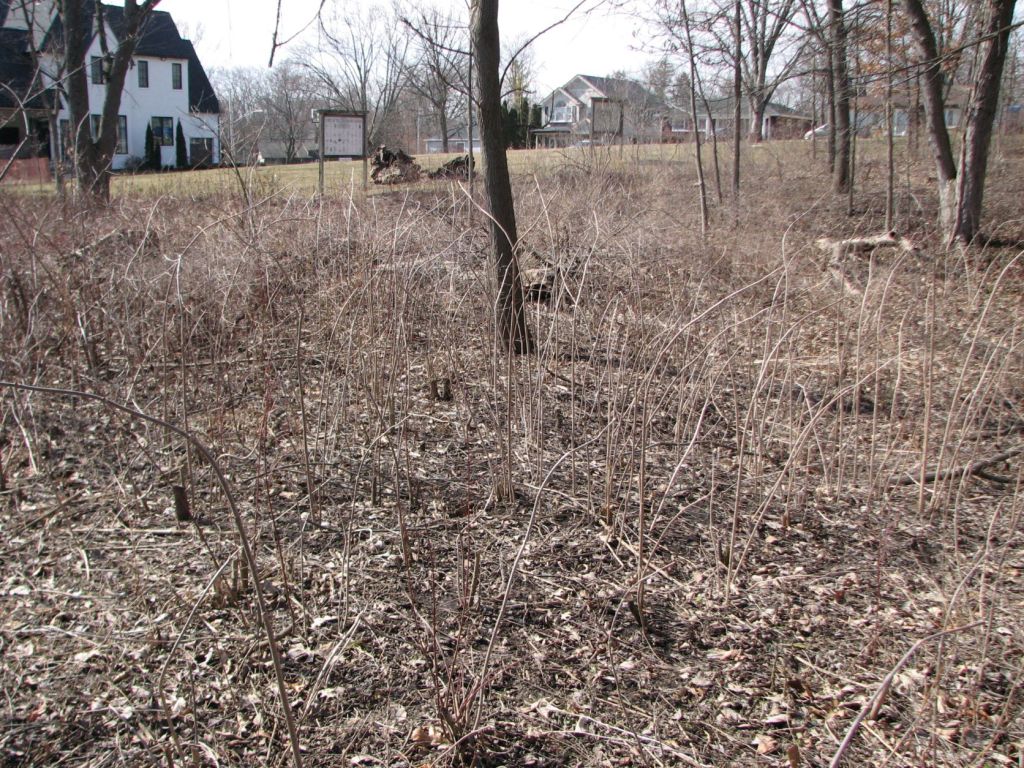
These are sprouting elderberries in the area labeled on the map ‘elderberry.’ There are also sprouting buckthorn and Asian bush honeysuckle in this patch. It is likely either herbicide was not applied or too little was applied. In my home garden, elderberries grow in the worst places. My experience has been you cannot kill them with glyphosate. I don’t target this native species when applying herbicide in natural areas. However, when I accidentally treated one with triclopyr ester in basal oil, trade name Garlon 4, it appeared to have been killed by this herbicide.
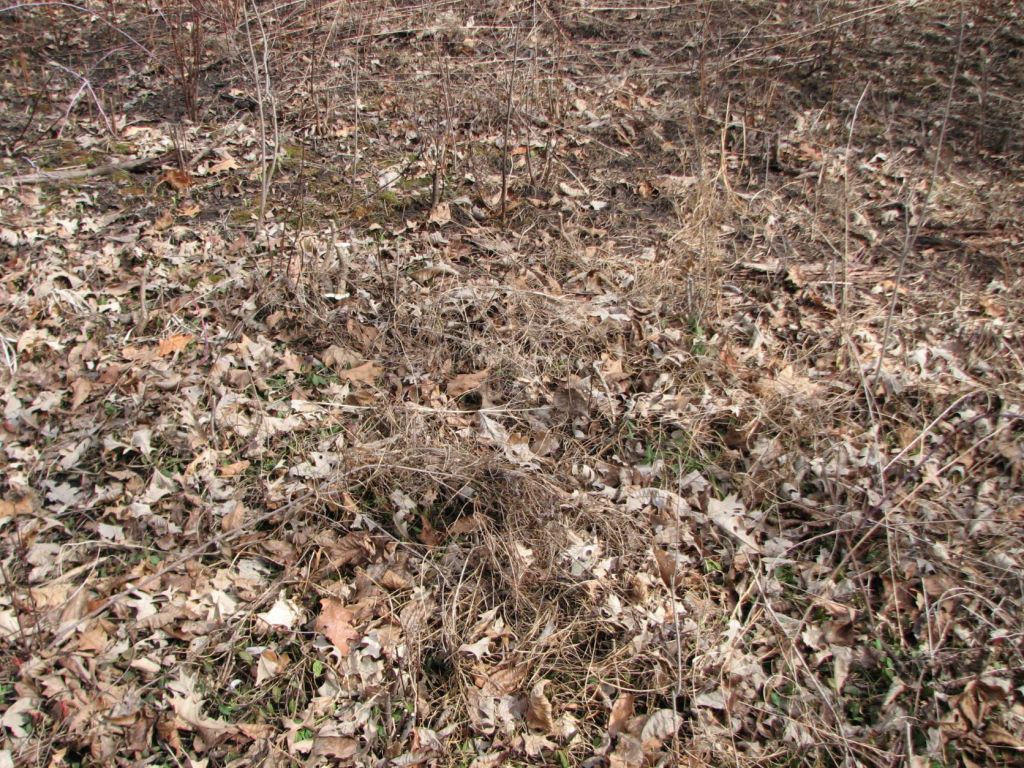
This is crown vetch. It is hard to tell from the picture. I recognized the dead stems and looked at the base to see the telltale compound leaves emerging. Crown vetch will spread everywhere. I handwipe four percent active ingredient foaming glyphosate on crown vetch and it kills them.
Vinca
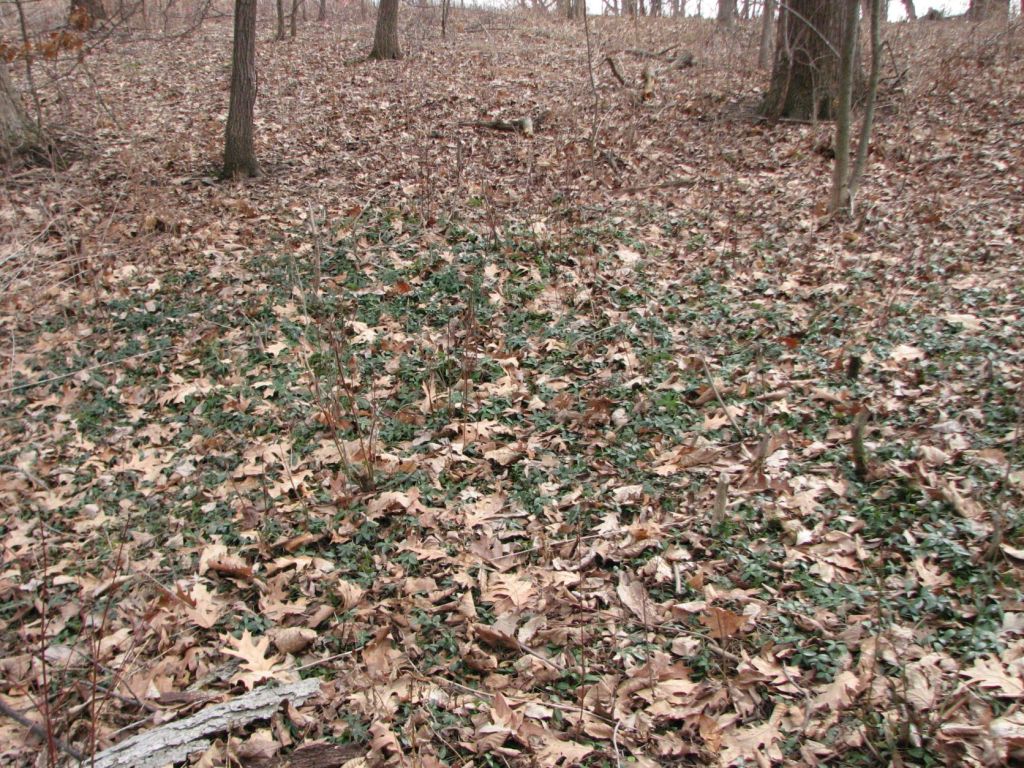
This is the larger of the two patches of Vinca minor shown on the map. I have pulled up Vinca, but I do not have experience using herbicide to control it. People say fire helps keep it in check. I do not know if this is true. Like the Euonymus fortunei, I have seen Vinca minor spread and take over almost everything.
New Work Area Two
Burn Pile Three
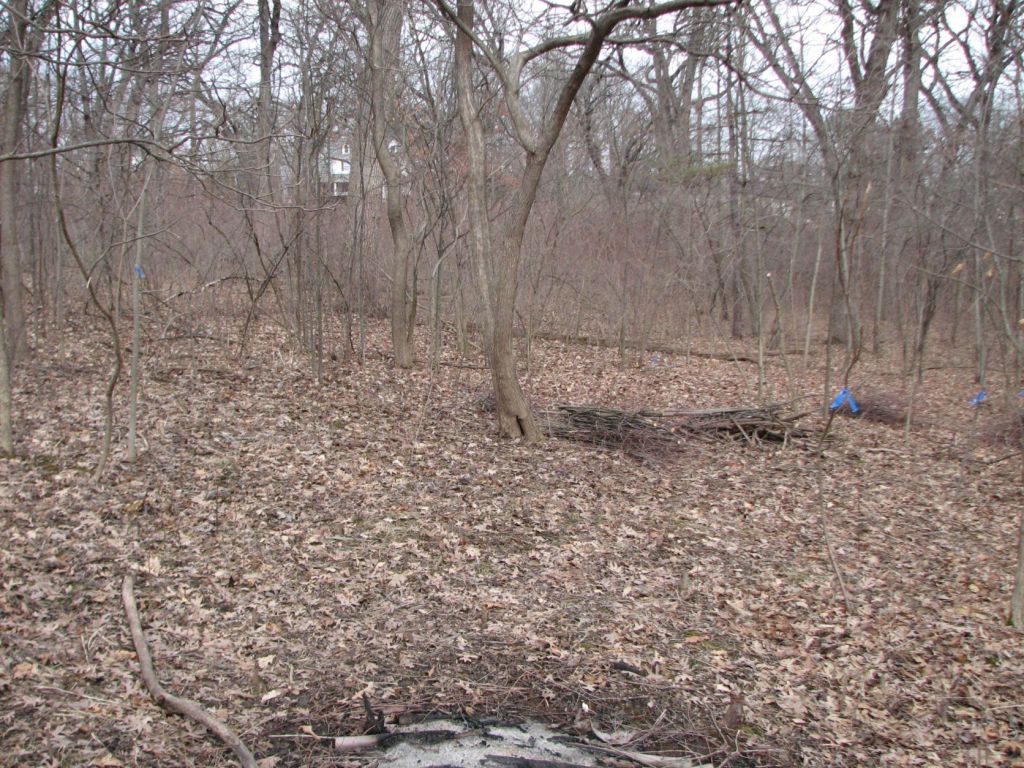
Looking North
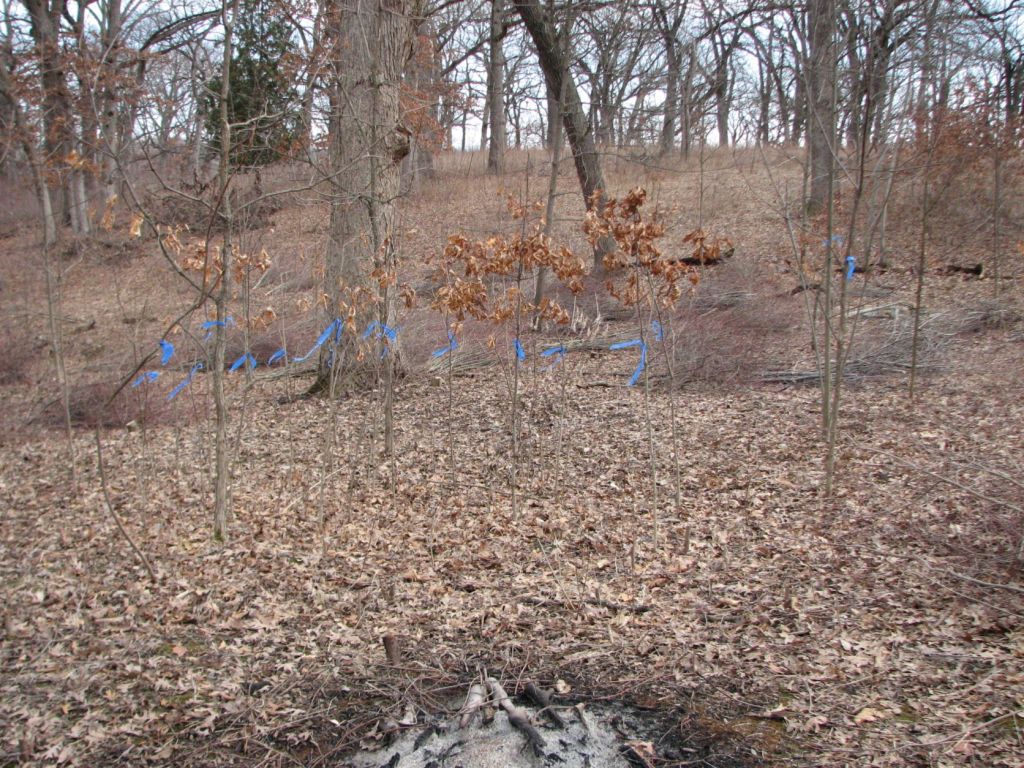
Looking East
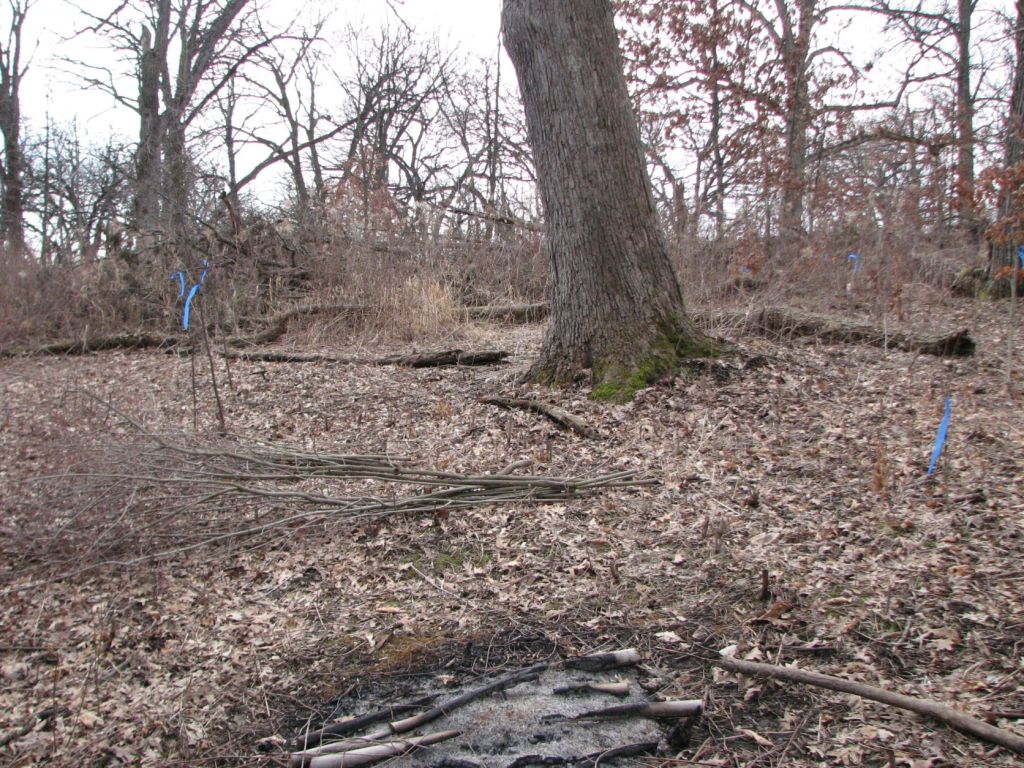
Looking South
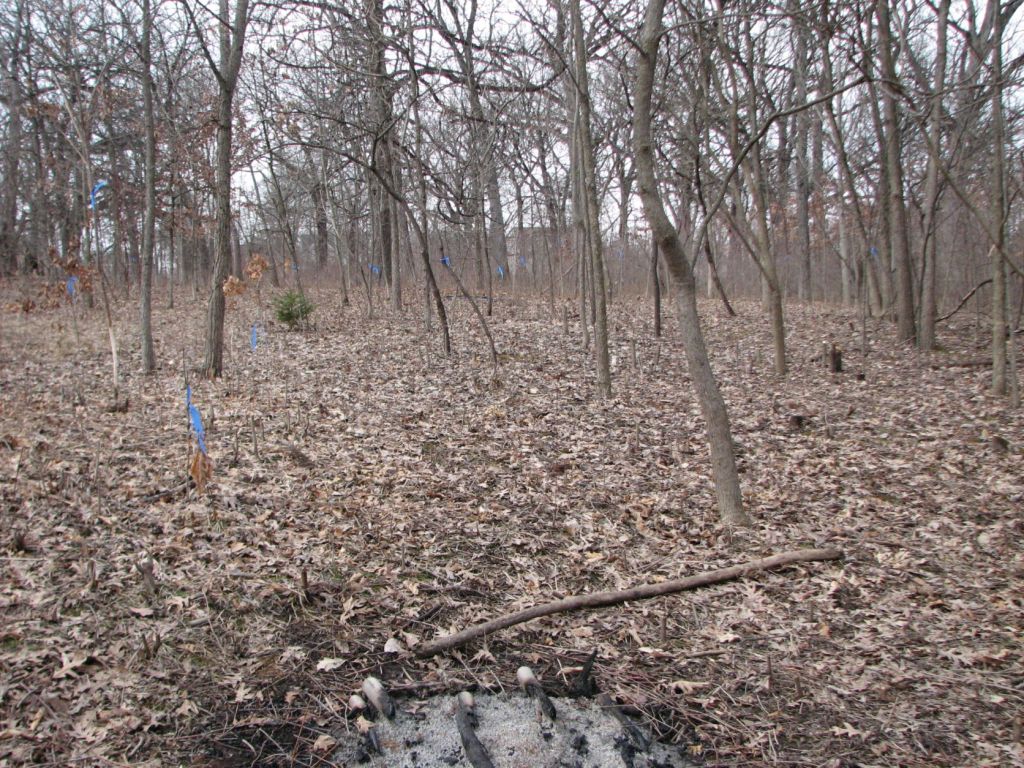
Looking West
Burn Pile Four
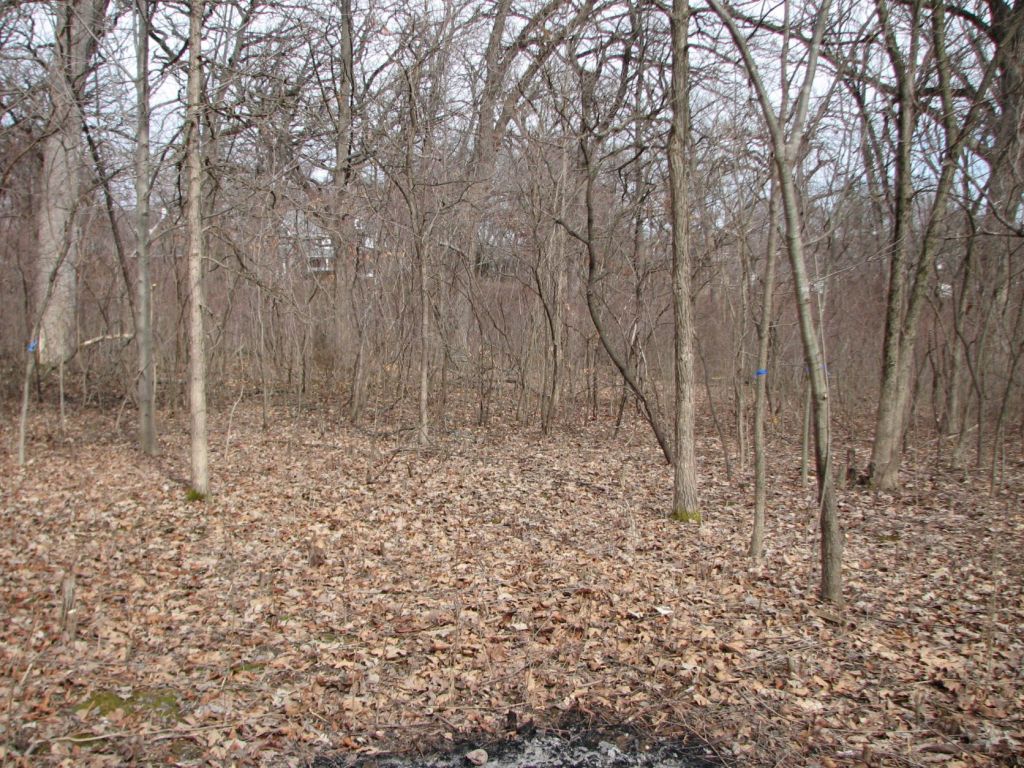
Looking North
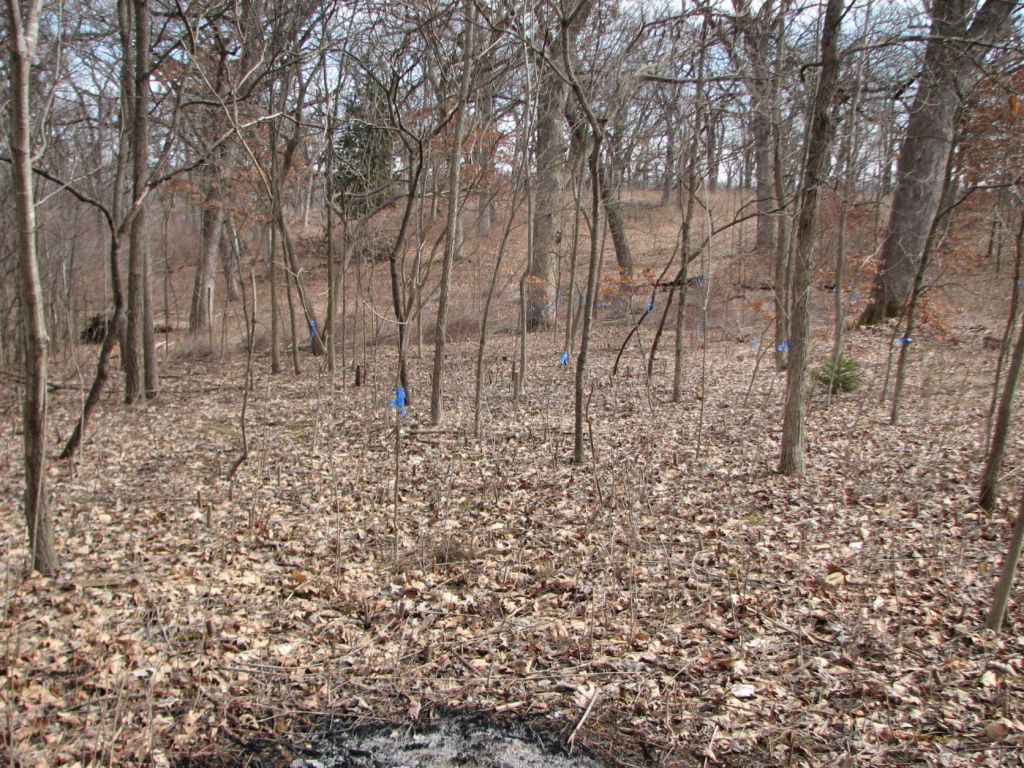
Looking East
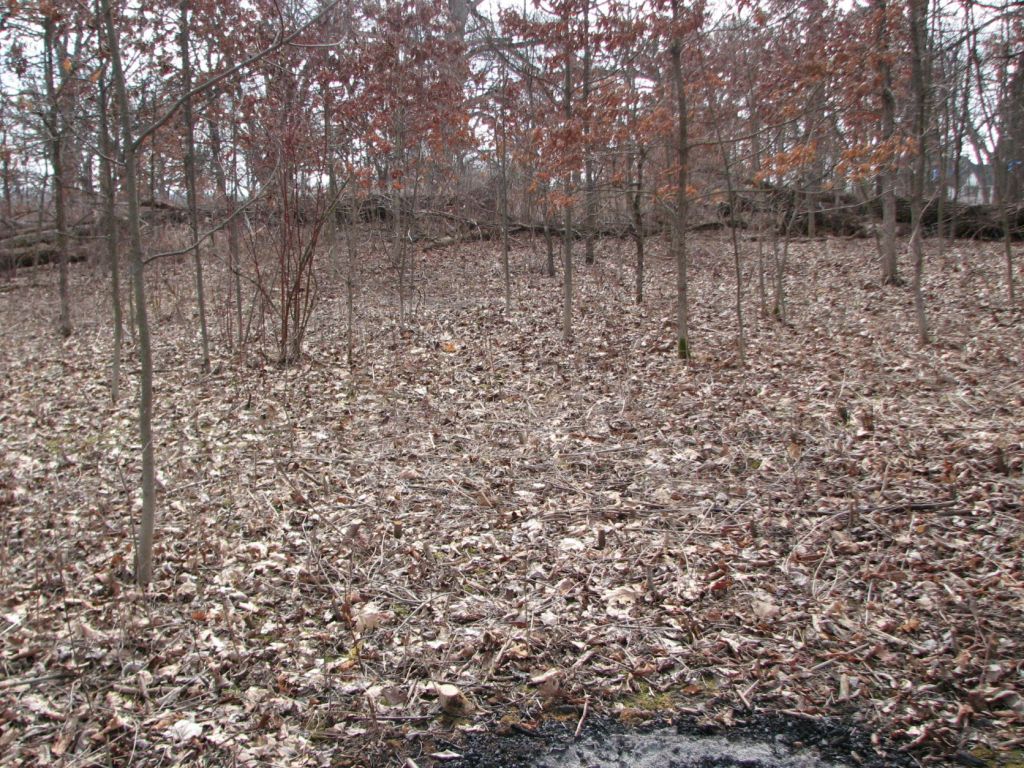
Looking South – lots of nice young oaks.
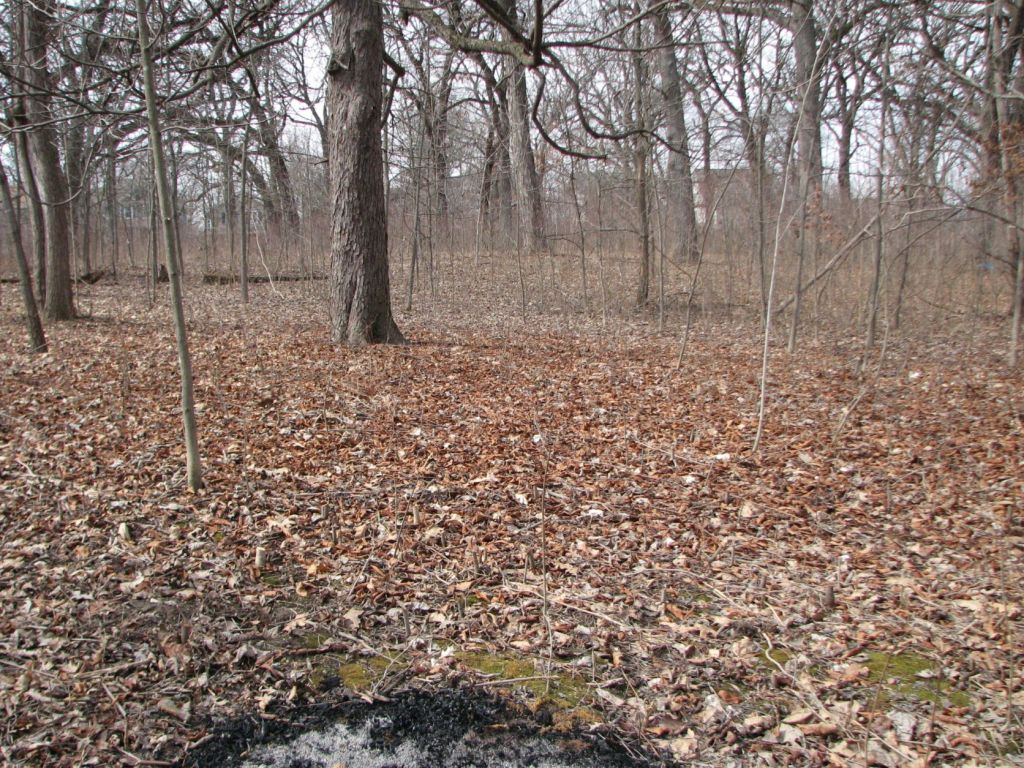
Looking West
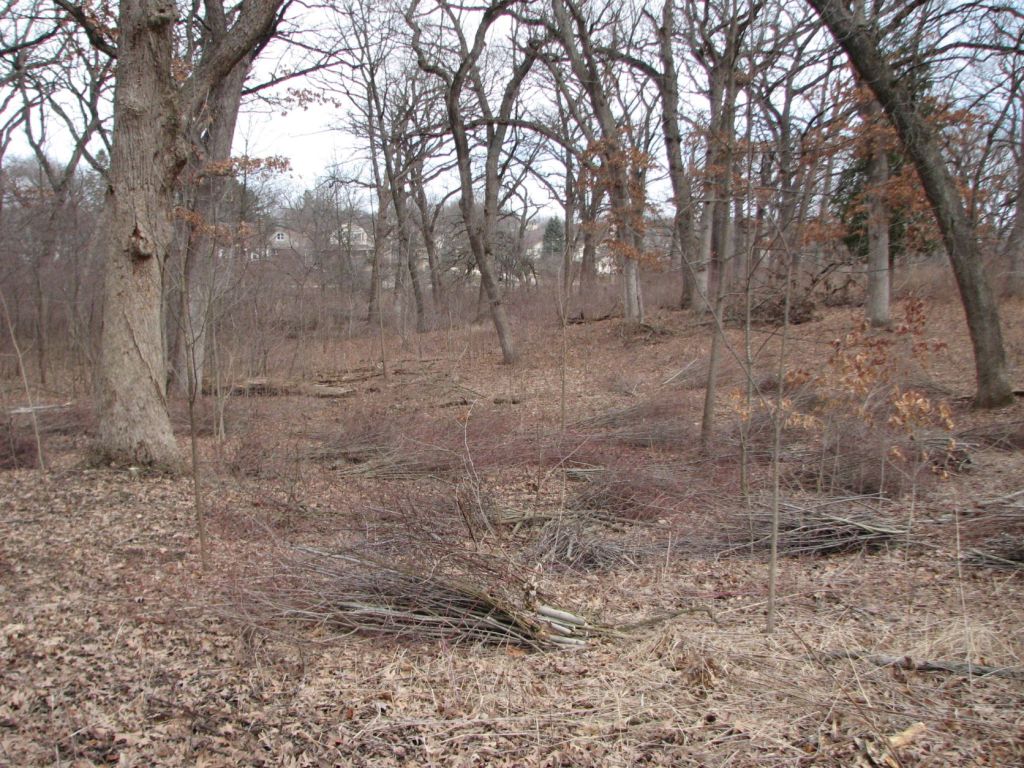
This is a view of piled stems that are ready to haul to a fire.
 Stewardship Chronicles
Leave a comment