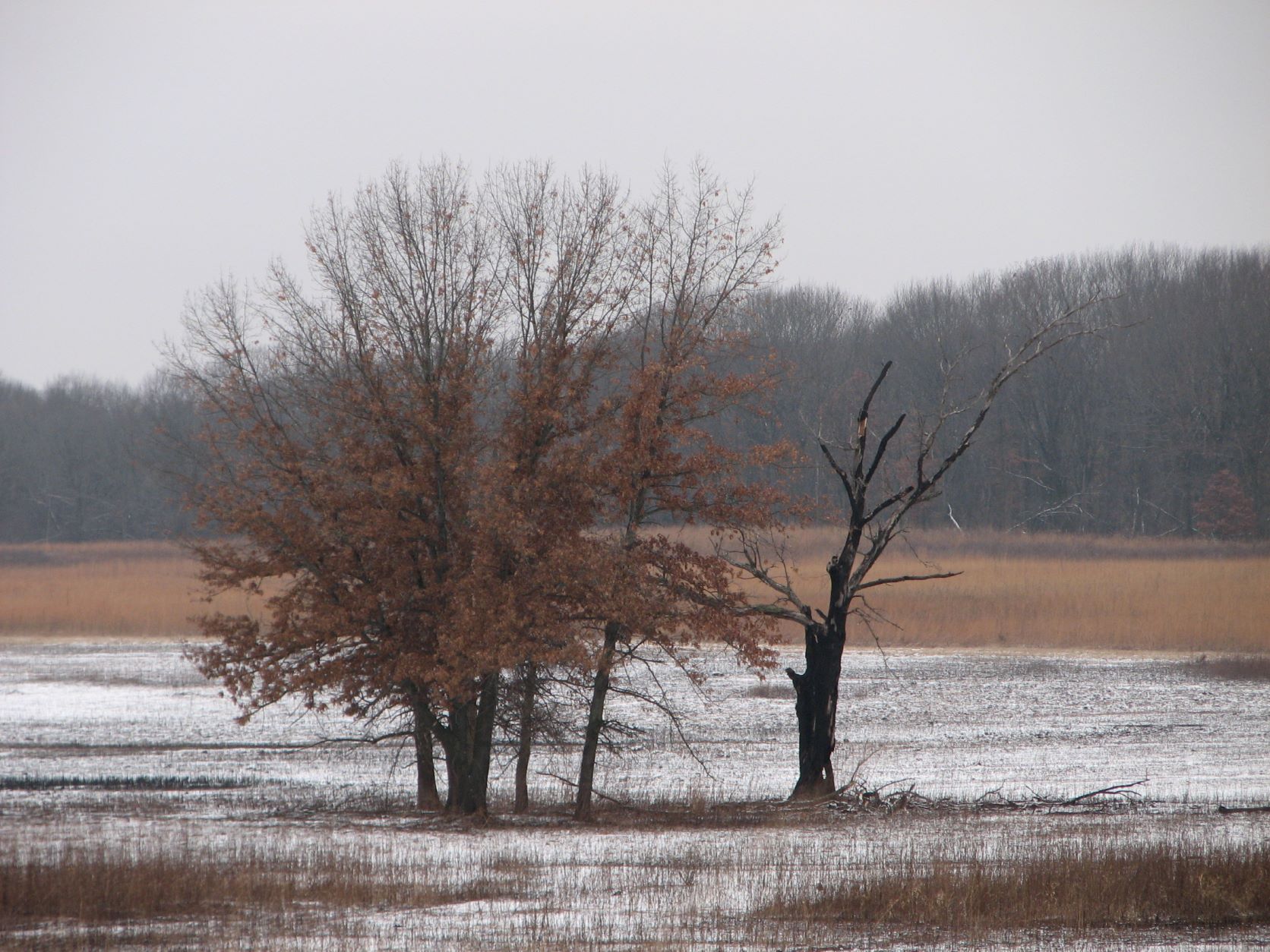
The images in this post were taken at Henry Terada Park in Schaumburg.
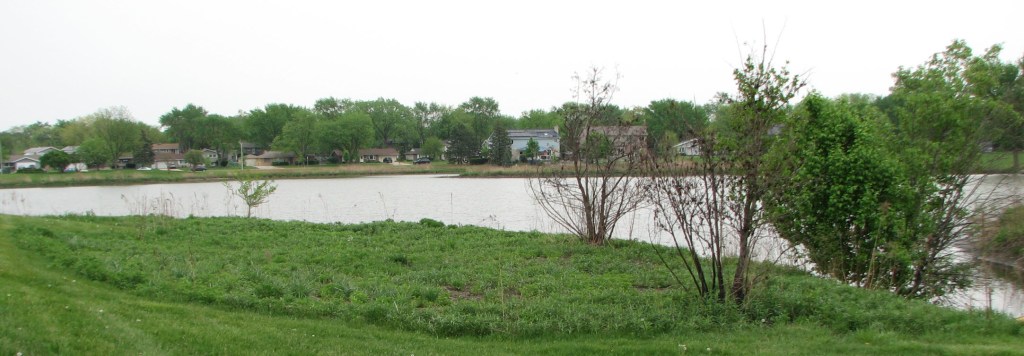
Dry Mesic Area

The two most common plants are wild bergamot and spiderwort. The bergamot shows impacts from herbicide vapor drift. In this case, probably 2-D and dicamba used to control lawn weeds in nearby areas. However, I was still able to find wild bergamot seedlings. I had not noticed nearby areas of lawn in the park being treated in the past. Possibly, some of the below mentioned species will not persist if spraying herbicide to control weeds continues.
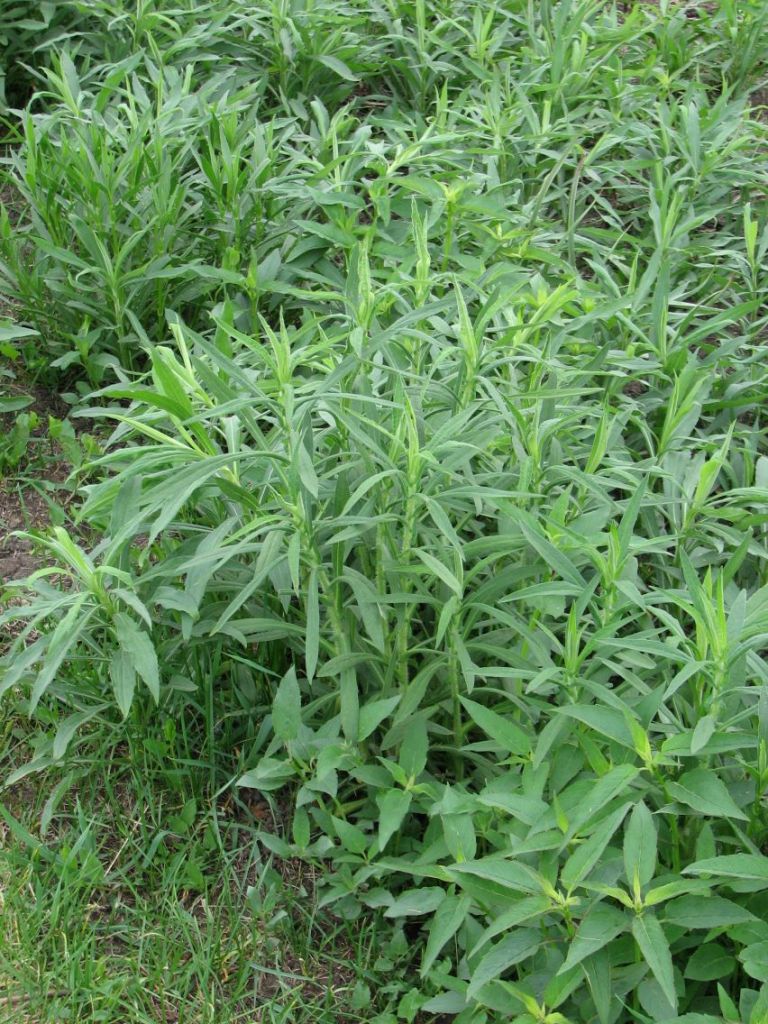
This is a New England aster in the dry-mesic area. In the wet-mesic area New England aster is a co-dominant with tall goldenrod. It is so frequent and grows so tall in the nutrient enriched conditions that it has been likened to an invasive species.
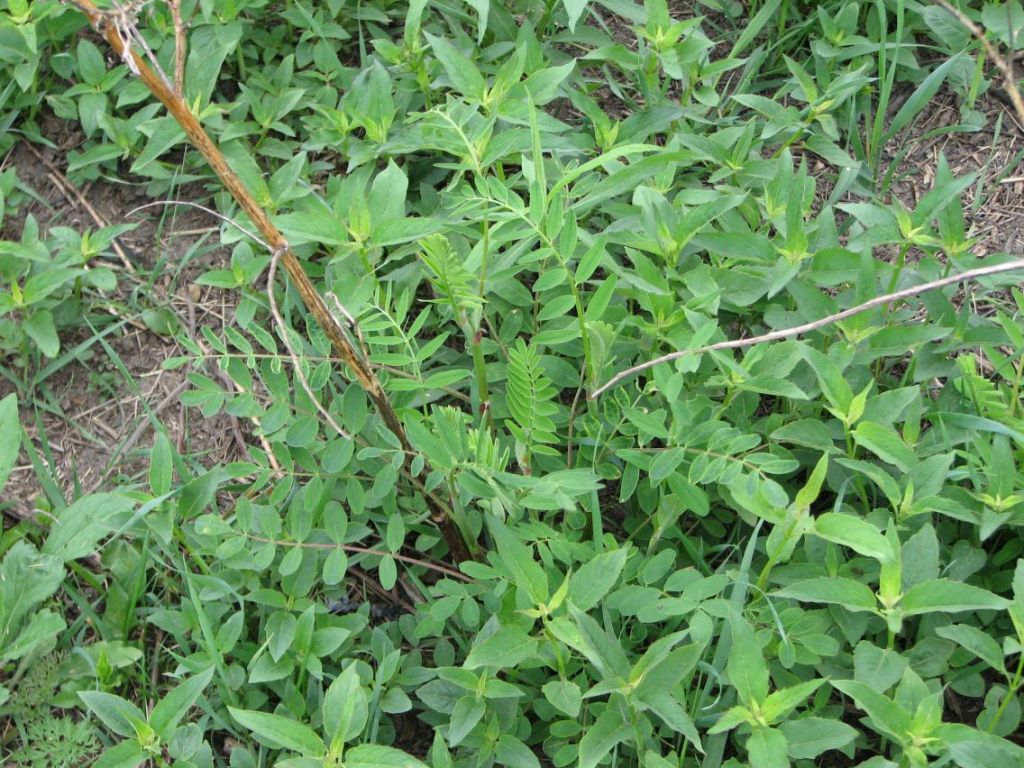
Canada Milkvetch has grown from seed and has several plants doing well. This also has herbicide damage visible on the leaves.
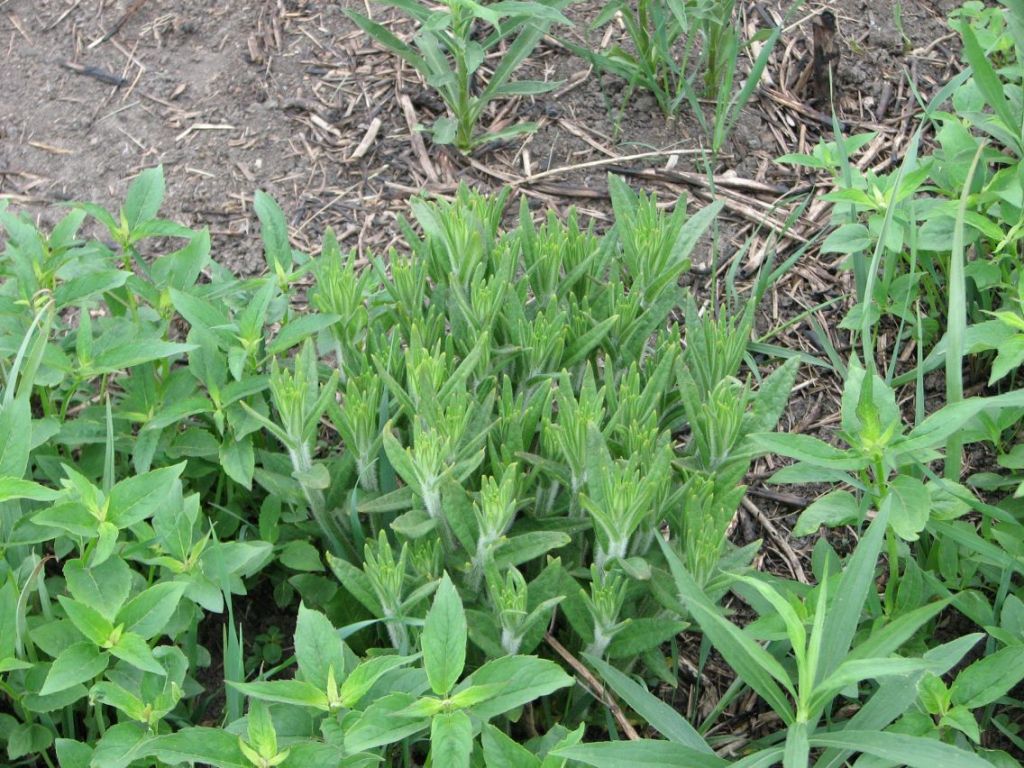
There are several planted butterfly milkweeds continuing to do well.
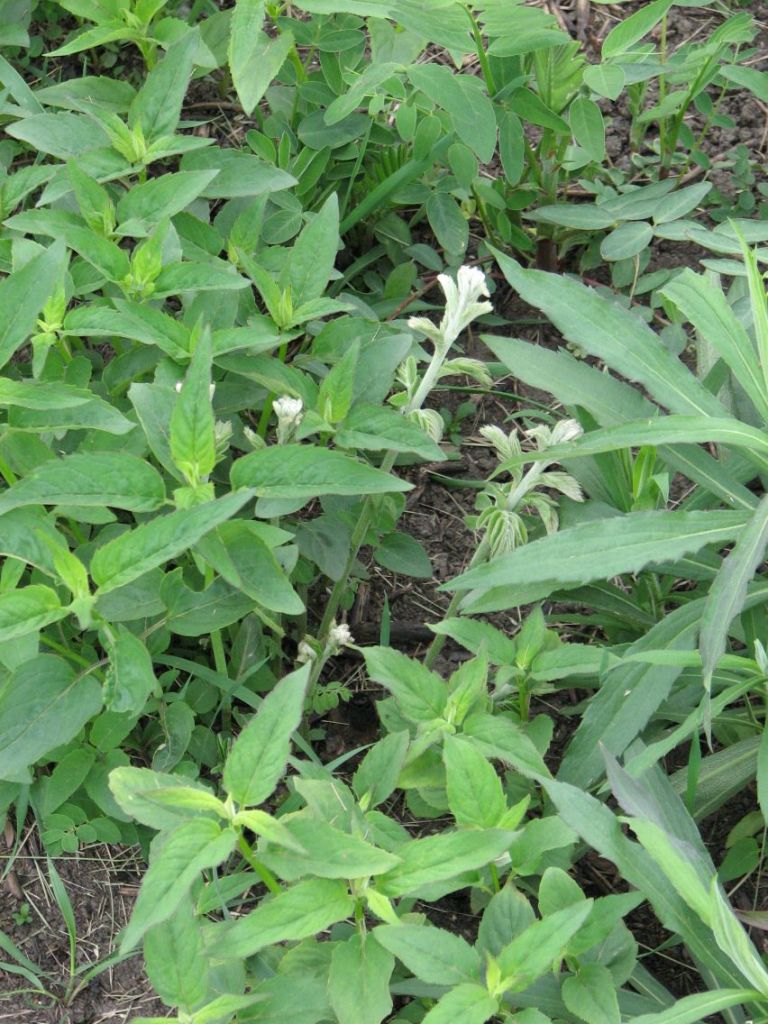
On the driest part of the slope near the edge, lead plants have persisted from planting. There are also several pale purple coneflowers surviving in the driest area. However, they are small compared to ones in my garden and in remnant prairie. An image of pale purple coneflower is not included because the picture I took was out of focus.
After Note: I returned on 6/13/2023 and did not see any pale purple coneflowers blooming. Even on the driest slope of this planting, the vegetation has grown too rank for this species. Likely, the pale purple coneflowers will be completely shaded out by the taller vegetation in the near future.
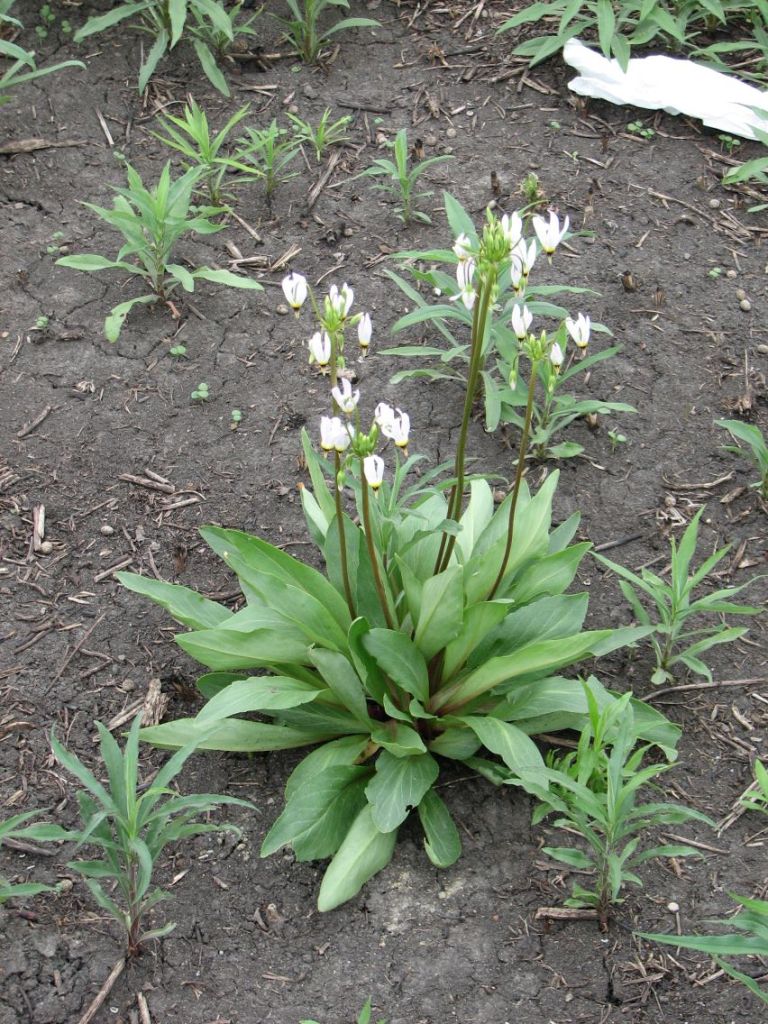
I only found one of the planted shooting stars remaining.
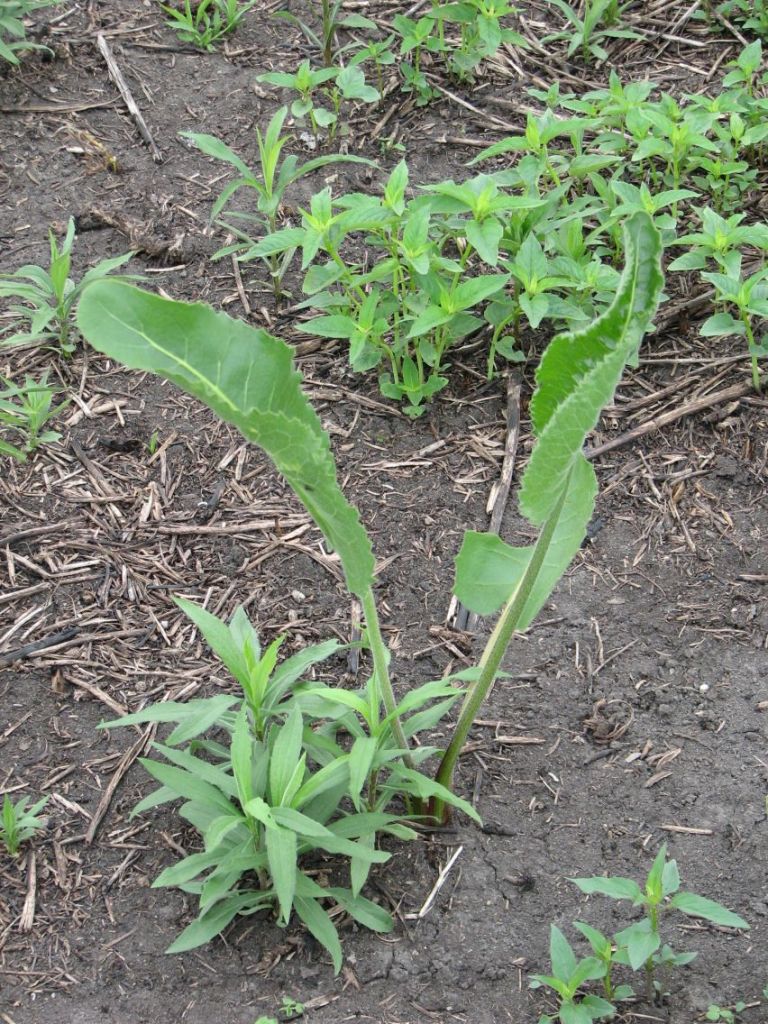
I also found only one prairie dock.
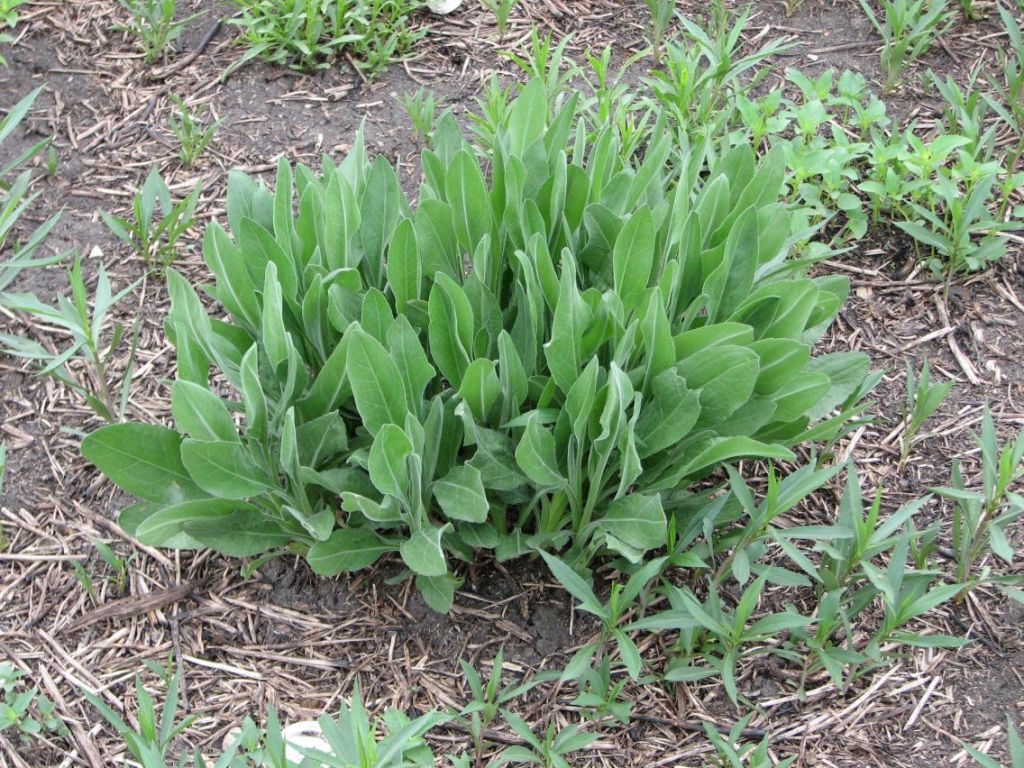
Finally, I found one stiff-leaved goldenrod.
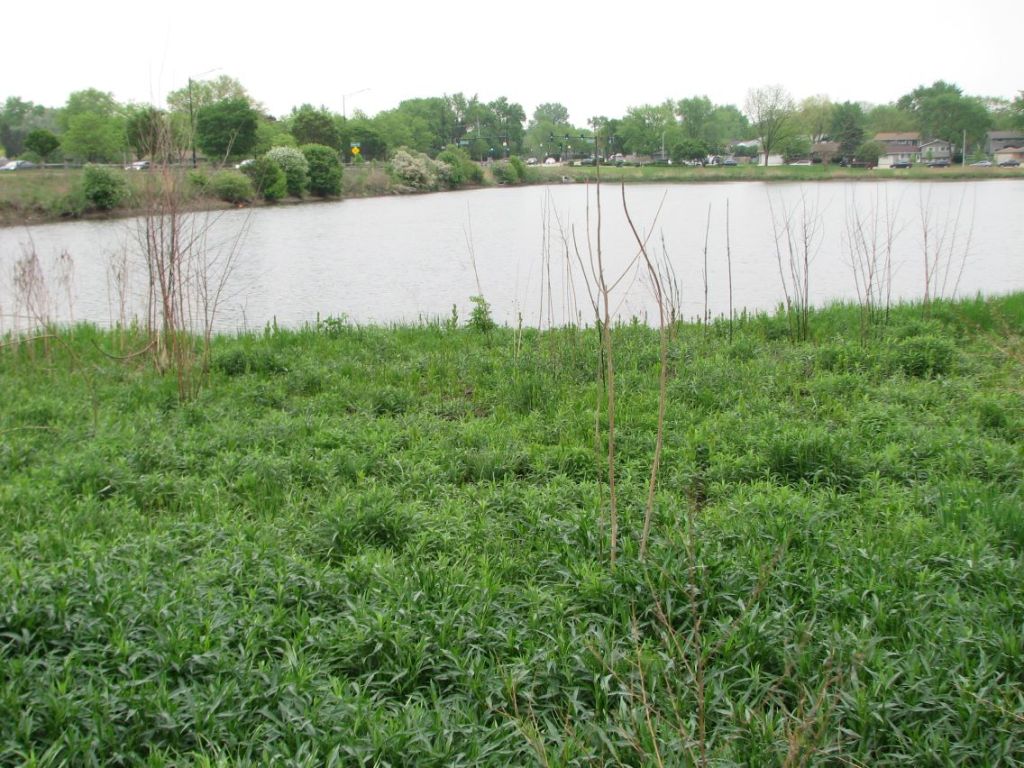
This is the mesic to wet-mesic area.
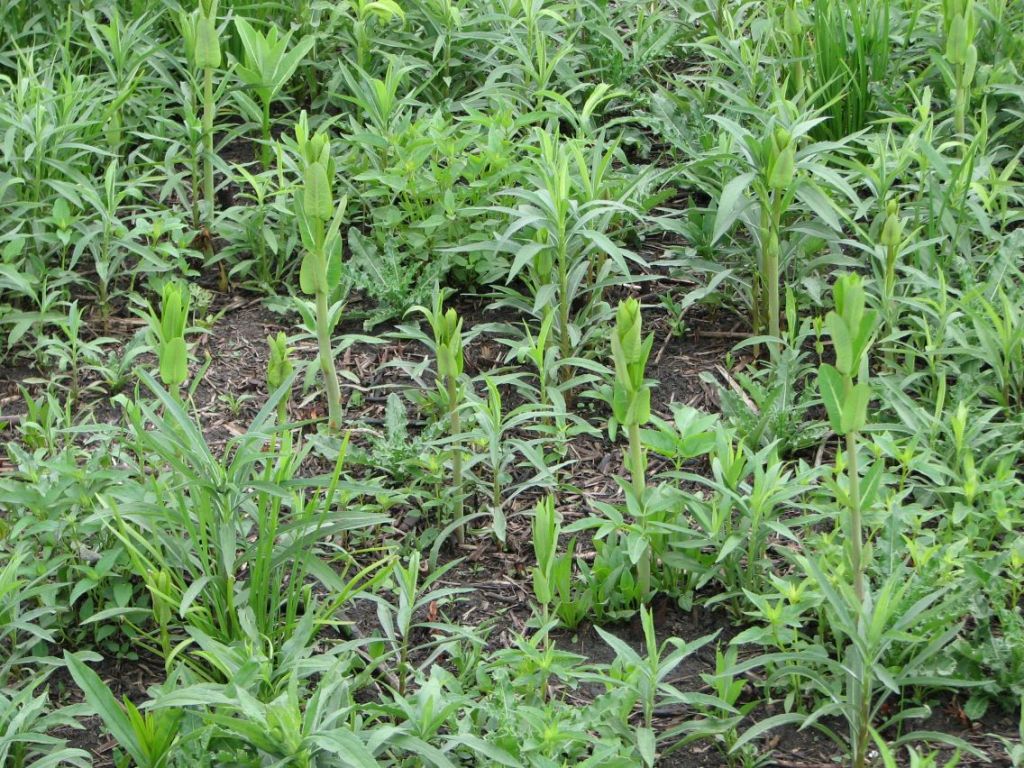
There is a lot of dogbane. This was not planted but came from seed that blew into the location from other nearby populations on previously disturbed ground.
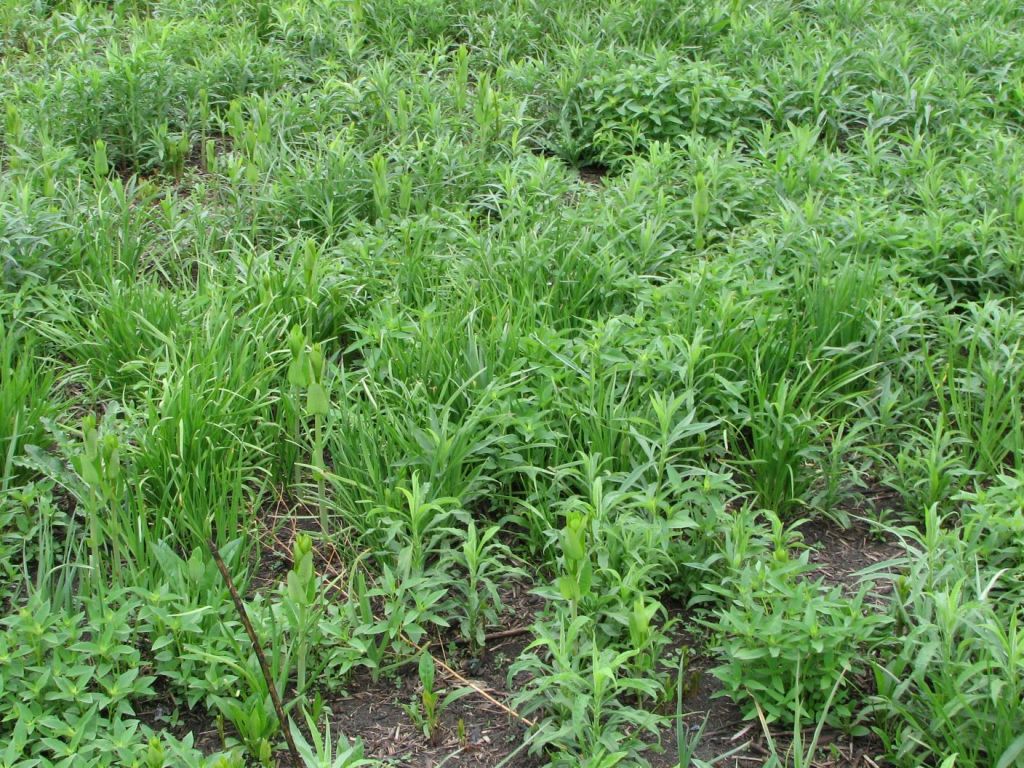
These are nodding onions. They were planted and are doing well. They have been able to survive the herbicide treatment targeting the field thistles and tall goldenrod.
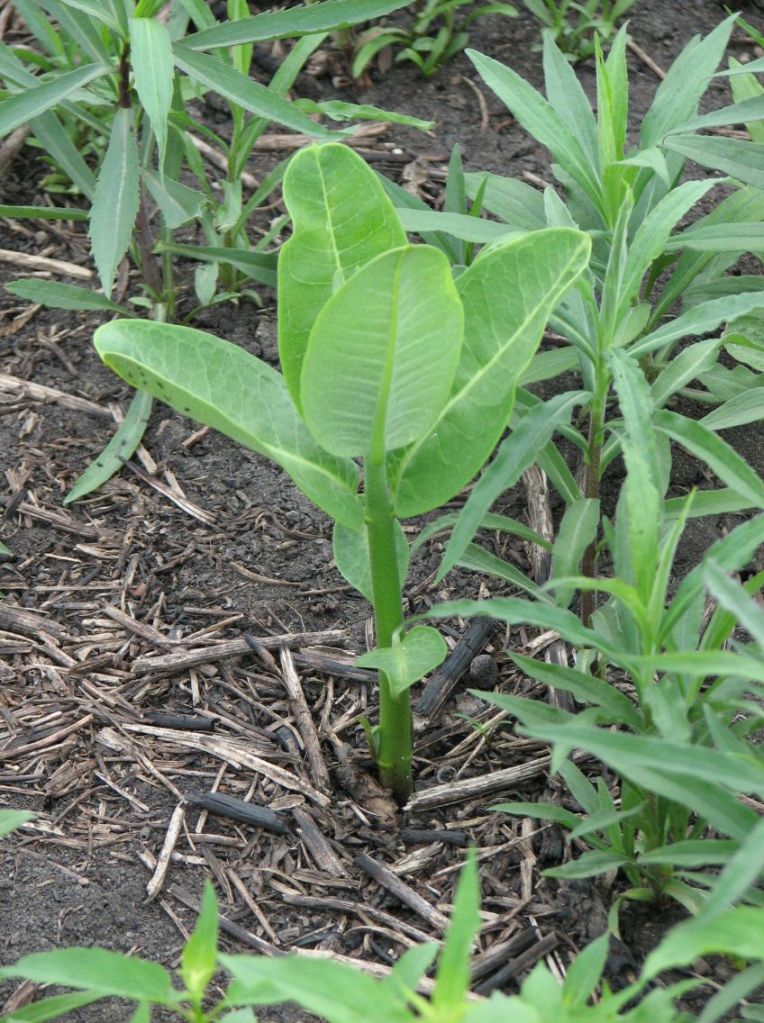
This is common milkweed. Like dogbane, it also likely blew into the planted area from other nearby locations.
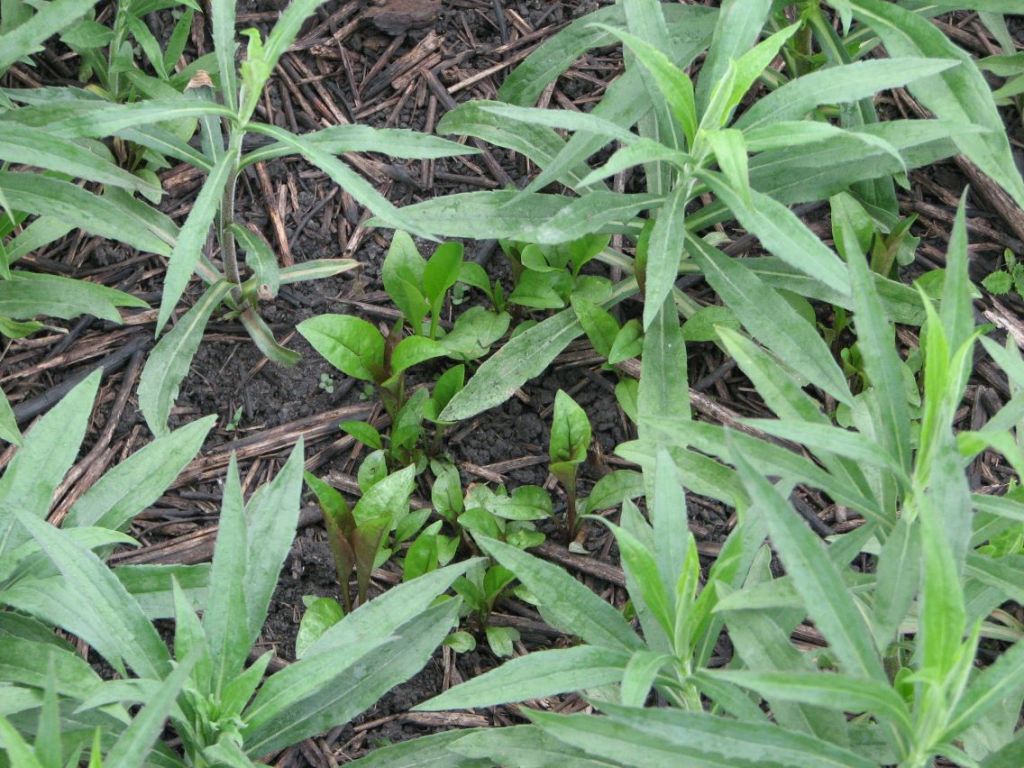
The foxglove beards tongue has persisted from planting and appears to be reproducing.
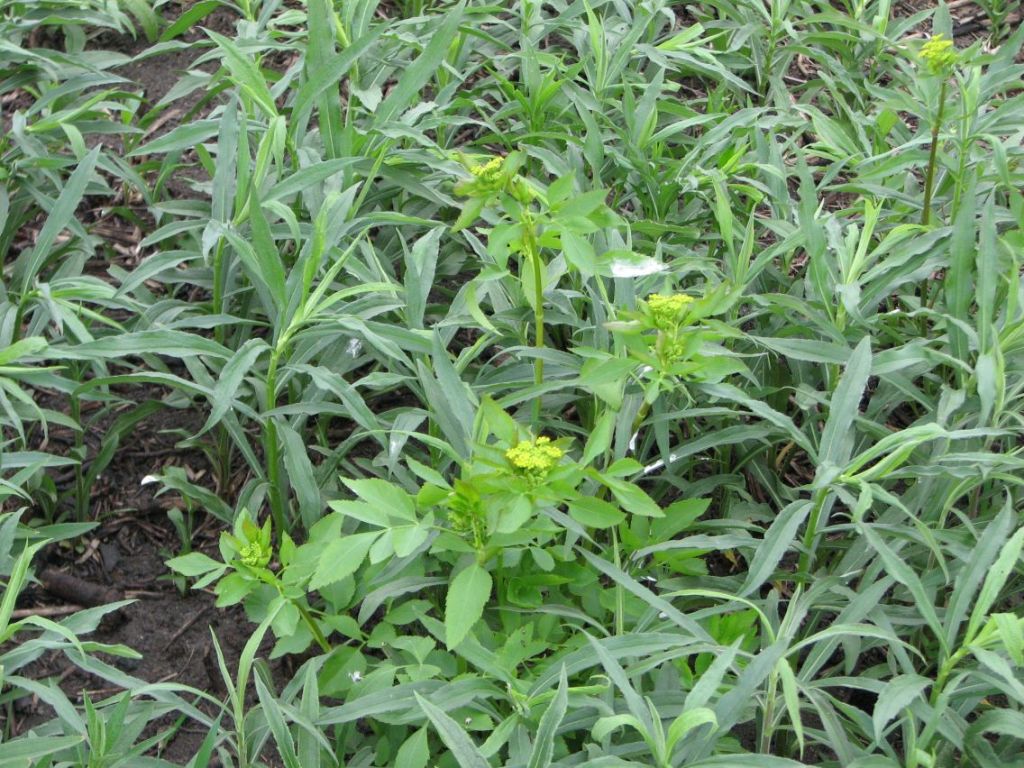
Golden Alexander has grown from seed. It can be found in areas of the planting without too much competition.
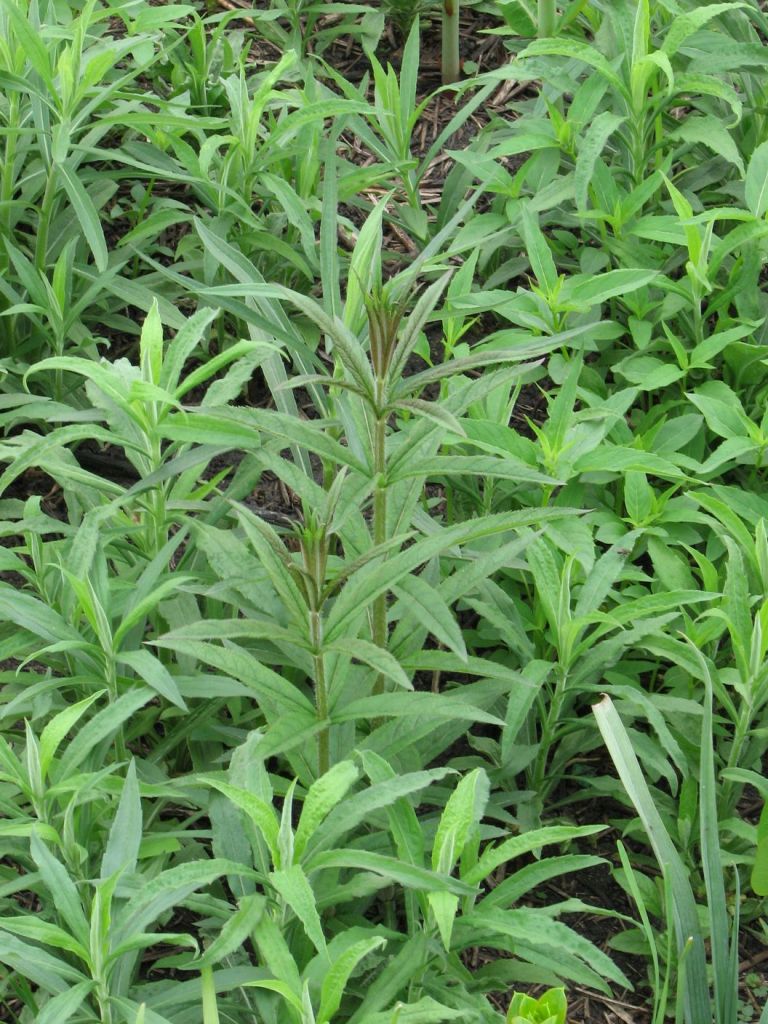
Culver’s root has persisted where it was planted.
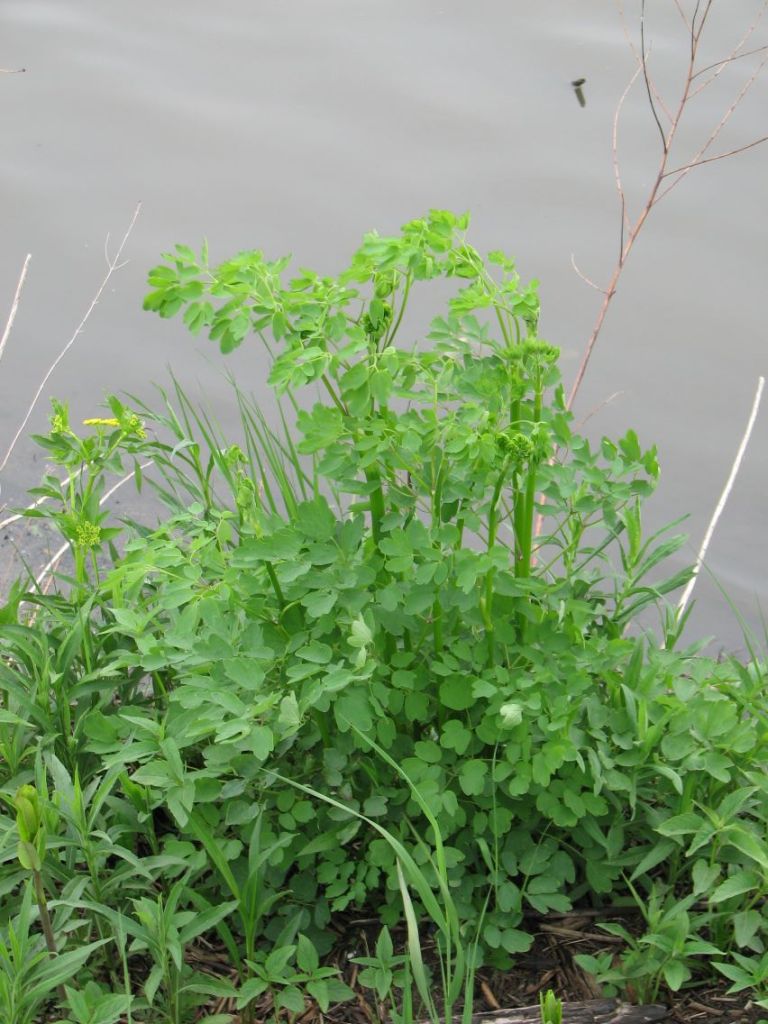
Meadow rue is frequent.
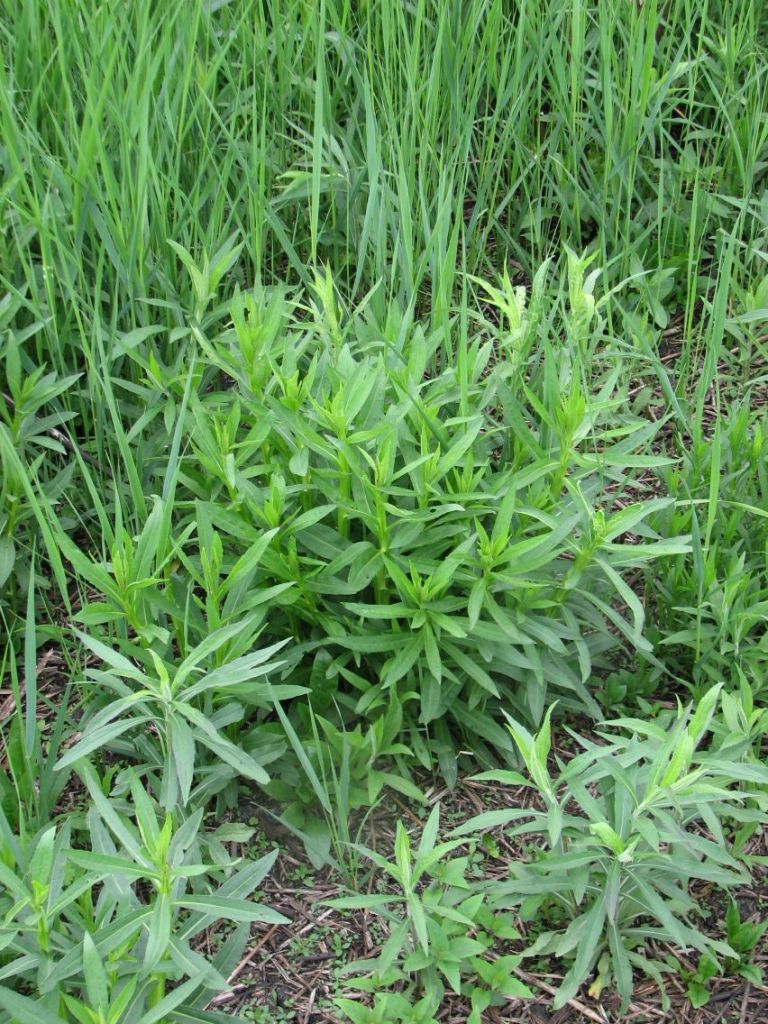
Helenium is doing well and appears to have new individuals that established from seed.
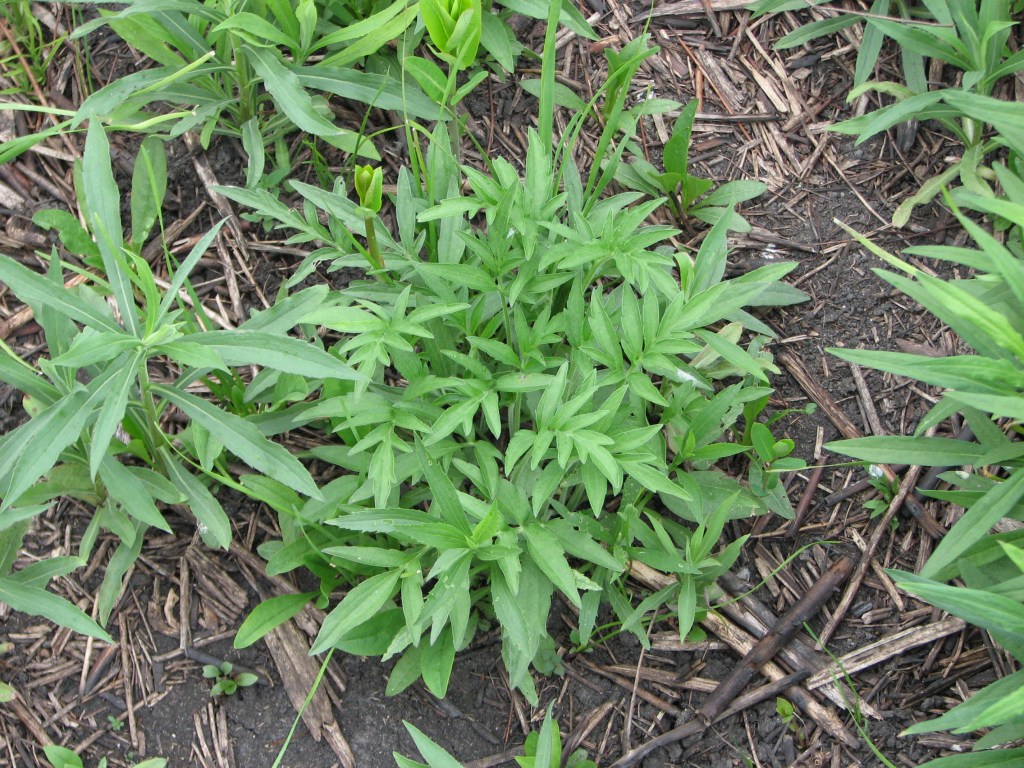
A few green-headed coneflowers remain. They grow tall enough to hold their own with the New England asters and tall goldenrod.
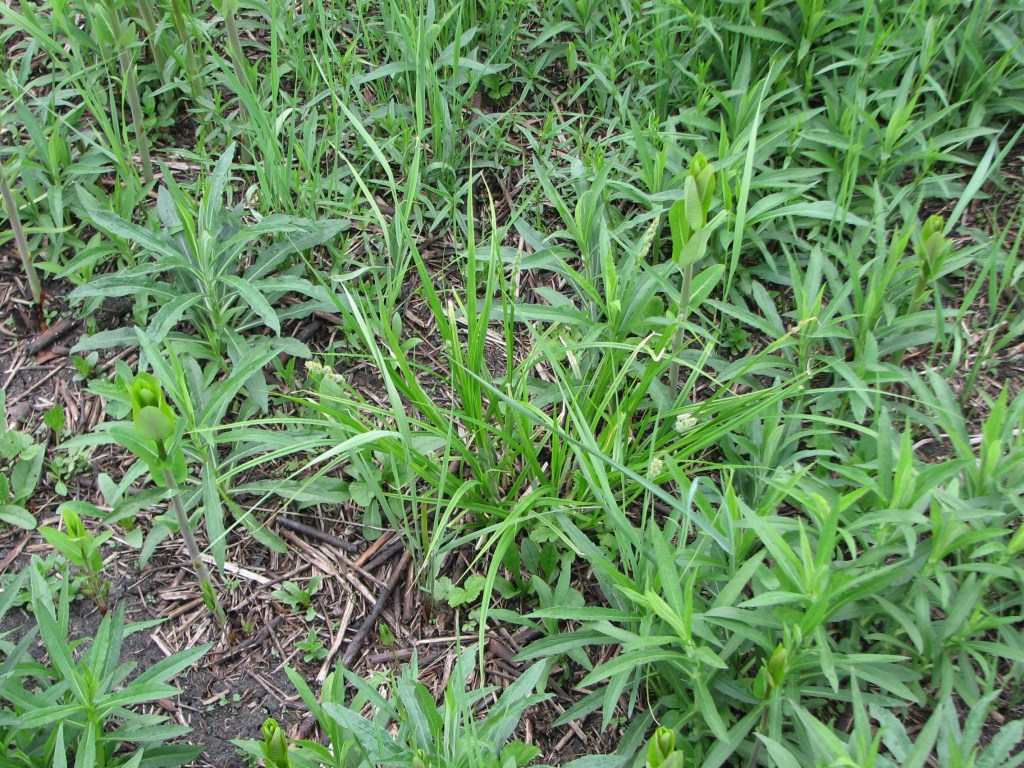
Fox sedge does well near the pond edge where it experiences occasional flooding.
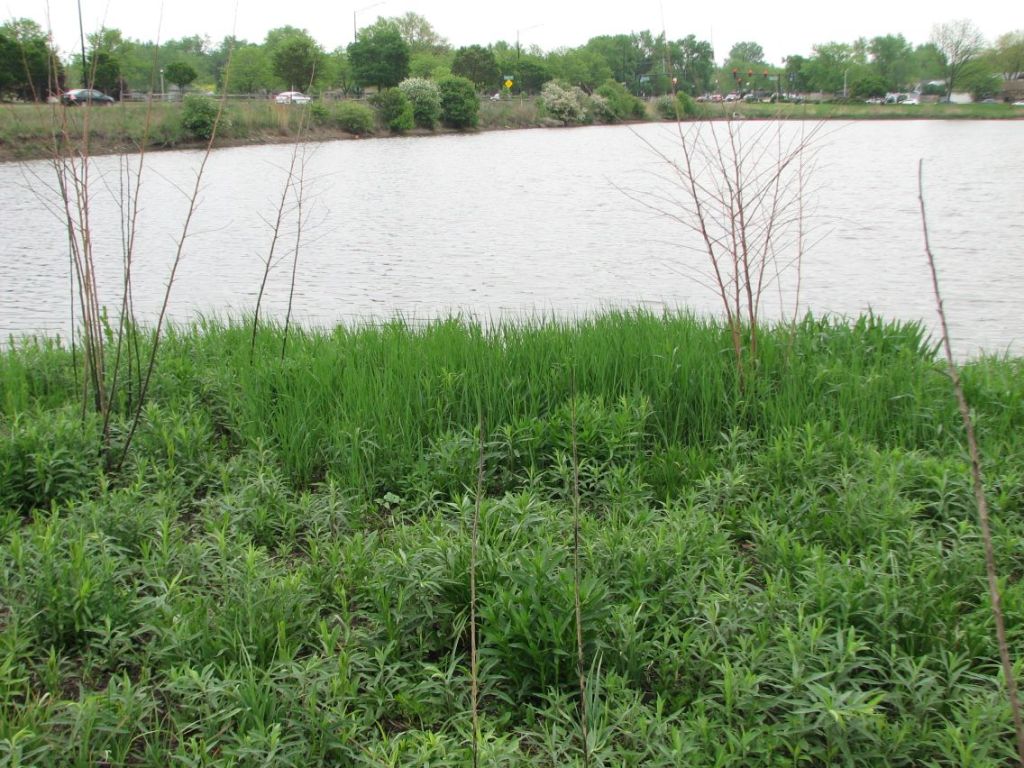
Blue joint grass also grows well along the edge of the pond too.
Weeds
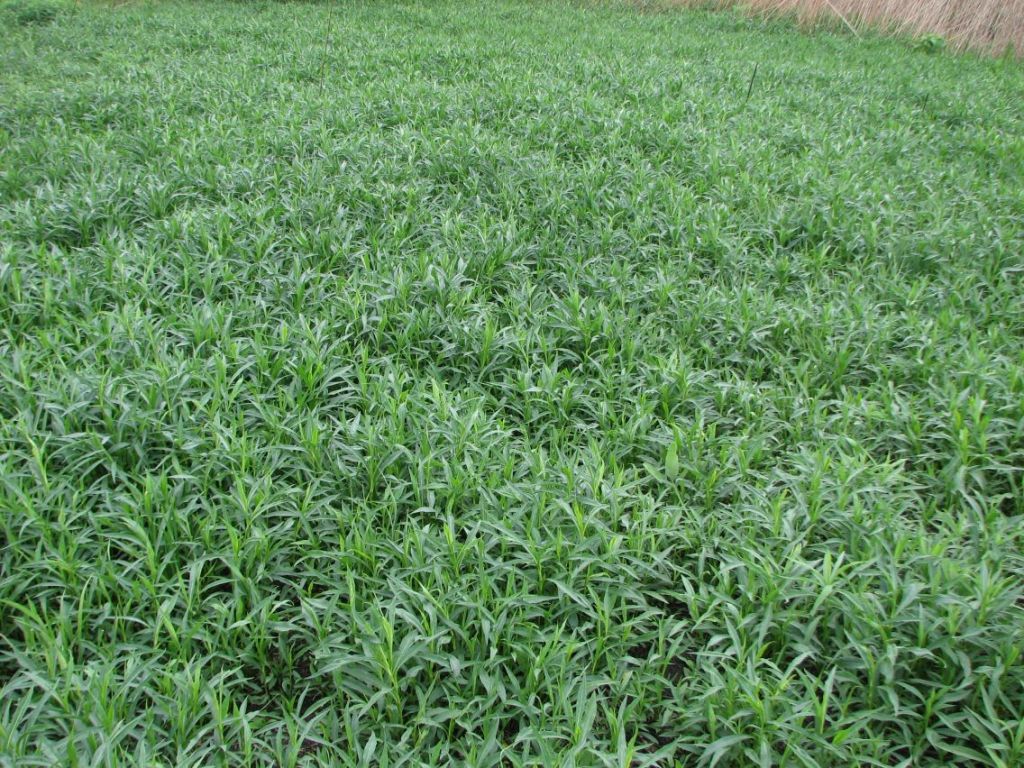
Panicled Aster is native but has formed an almost complete monoculture in the mesic areas just above the high flood mark. Nutrient enrichment is likely causing this problem.
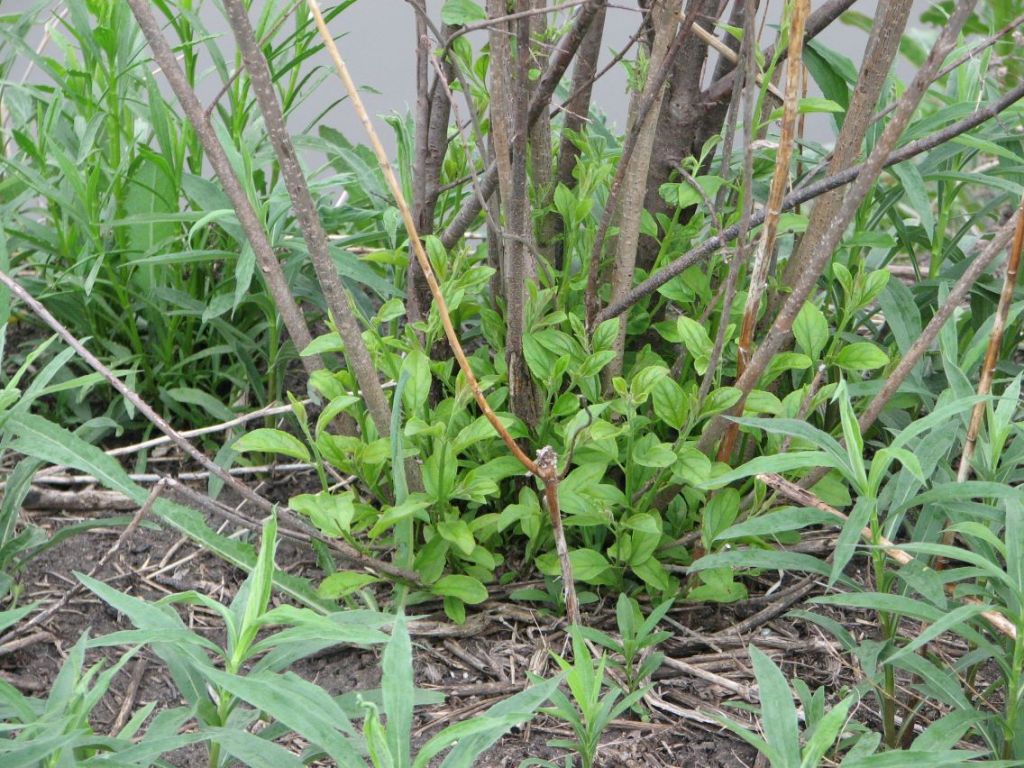
The prescribed burn killed common buckthorn back to the ground.
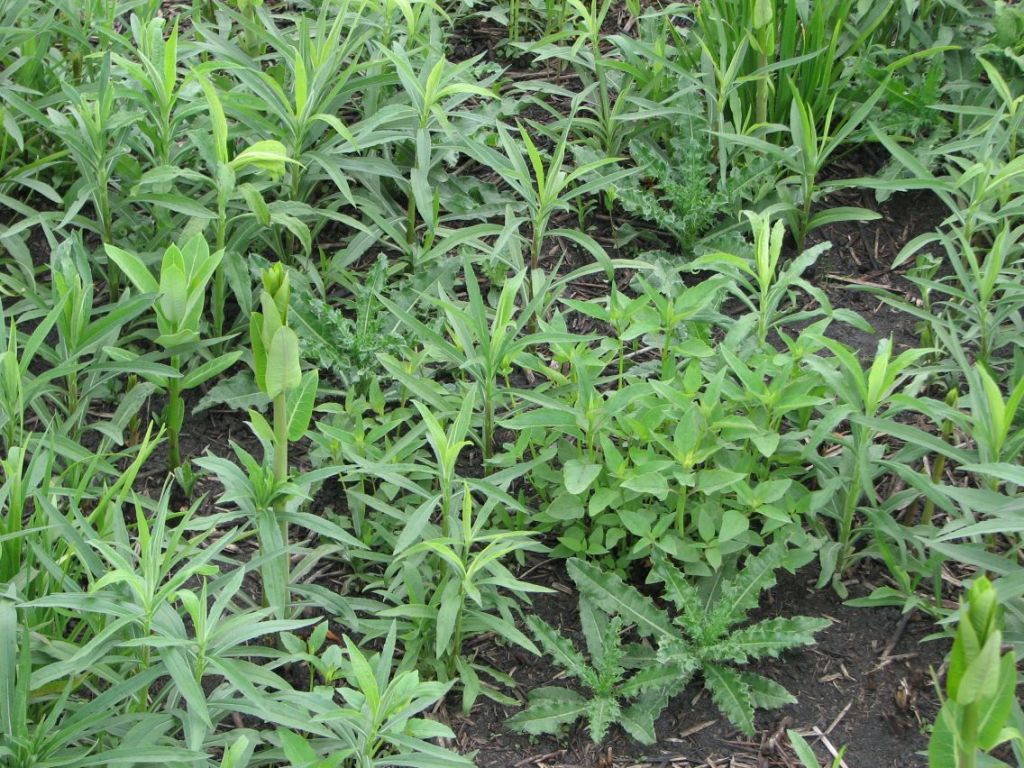
Field Thistle still grows abundantly in areas with more diversity (both wet and dry) that were not completely dominated by tall goldenrod or panicled aster.
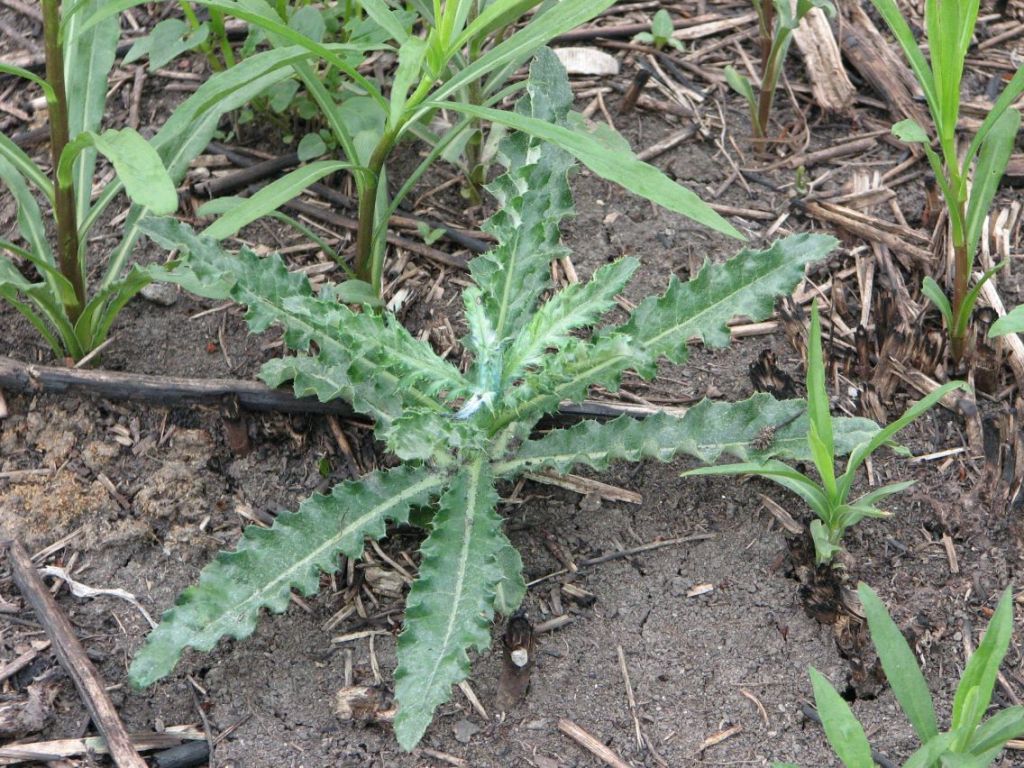
I saw a patch of field thistle had been treated with herbicide in the buffer between the dry-mesic area and the pond. They have been treating thistle in these plantings for years. This suppresses them, but does not get rid of them.
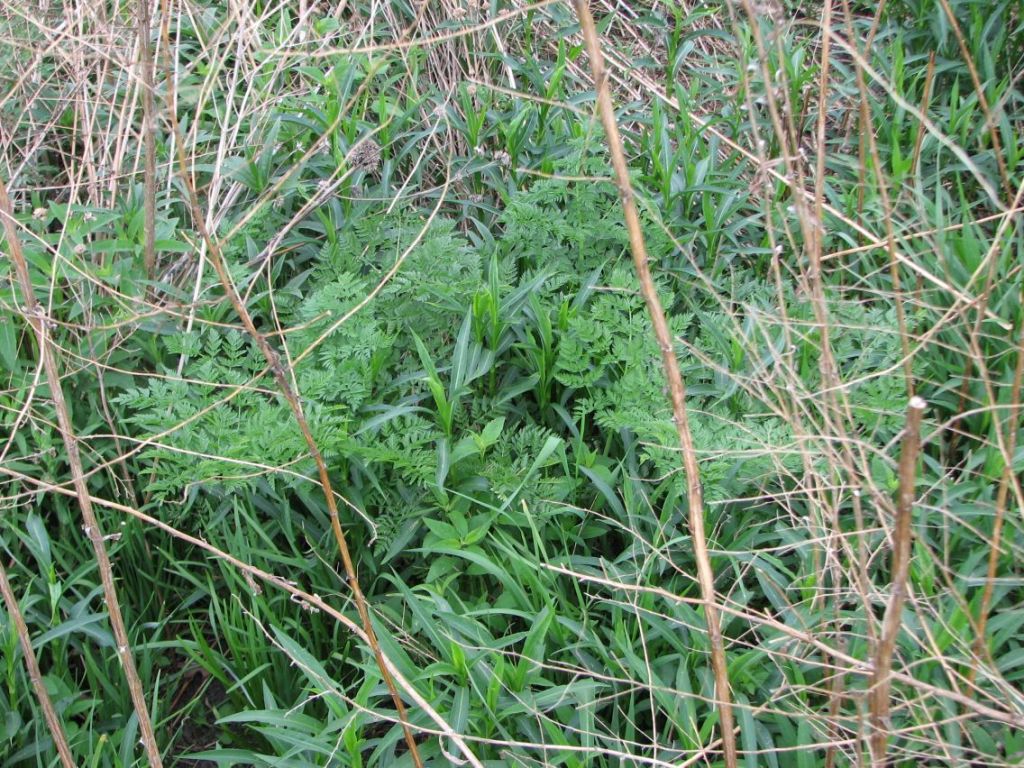
This nasty plant is poison hemlock. I sent an email to inform the park district about this years ago, but nothing was done. It has spread since that time.
 Stewardship Chronicles
Leave a comment