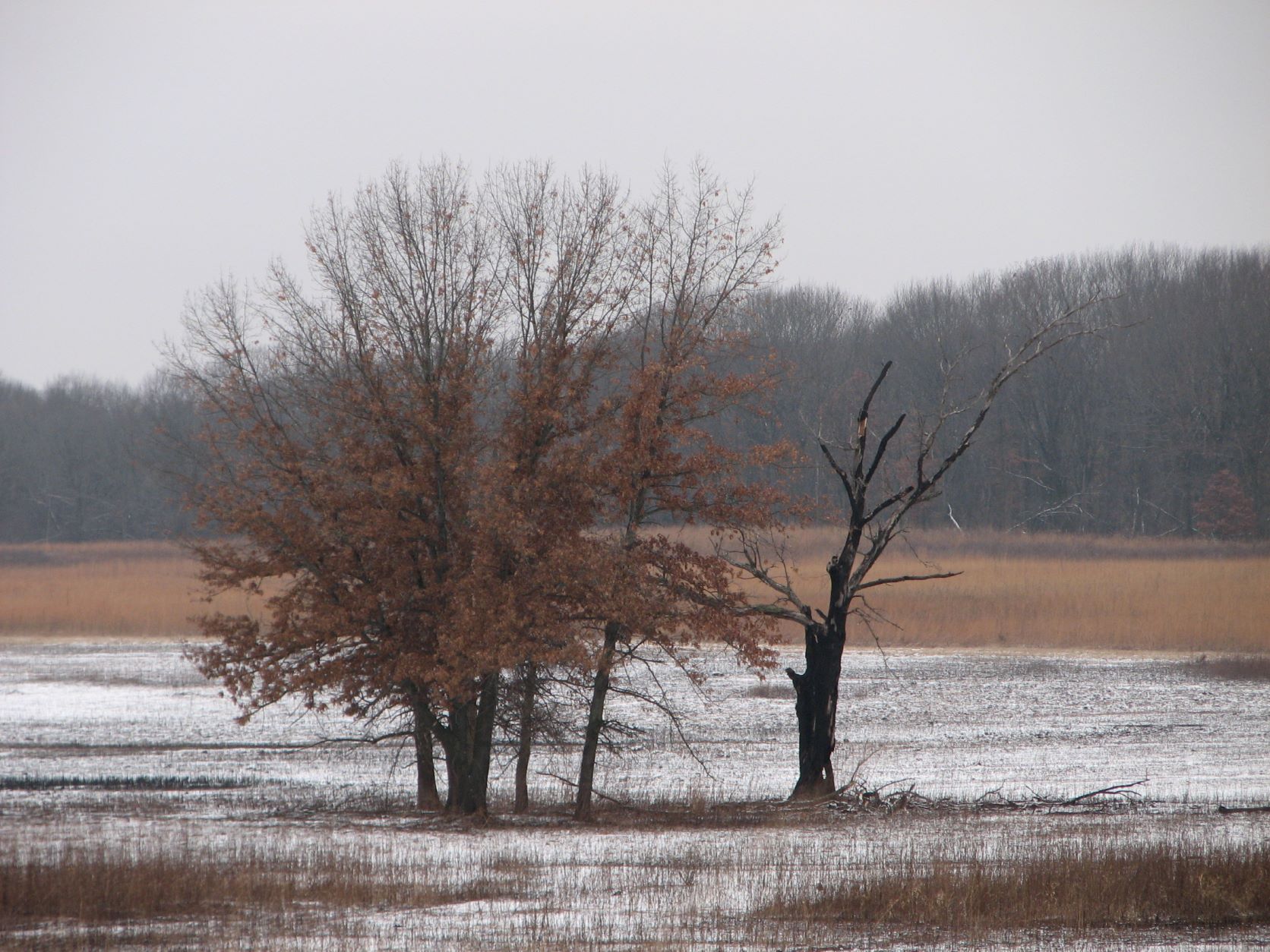
“Middlefork Savanna has frequently been described as the best example of mesic or black soil savanna in Illinois …”
https://dnr.illinois.gov/inpc/area.area2lakemiddleforksavanna.html
Summary
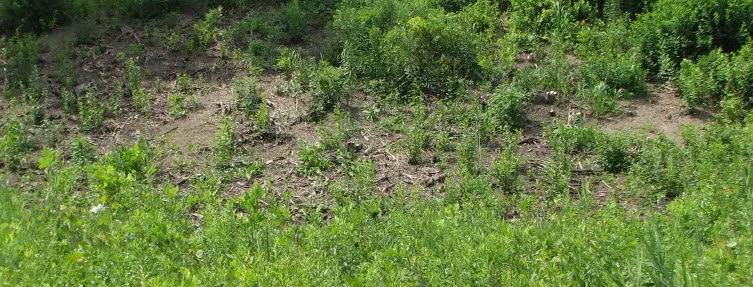
Comparative views of the work area after the workday and three months later are shown. Difference in application effectiveness across the work area are visible and attributed to there being numerous applicators applying herbicide.
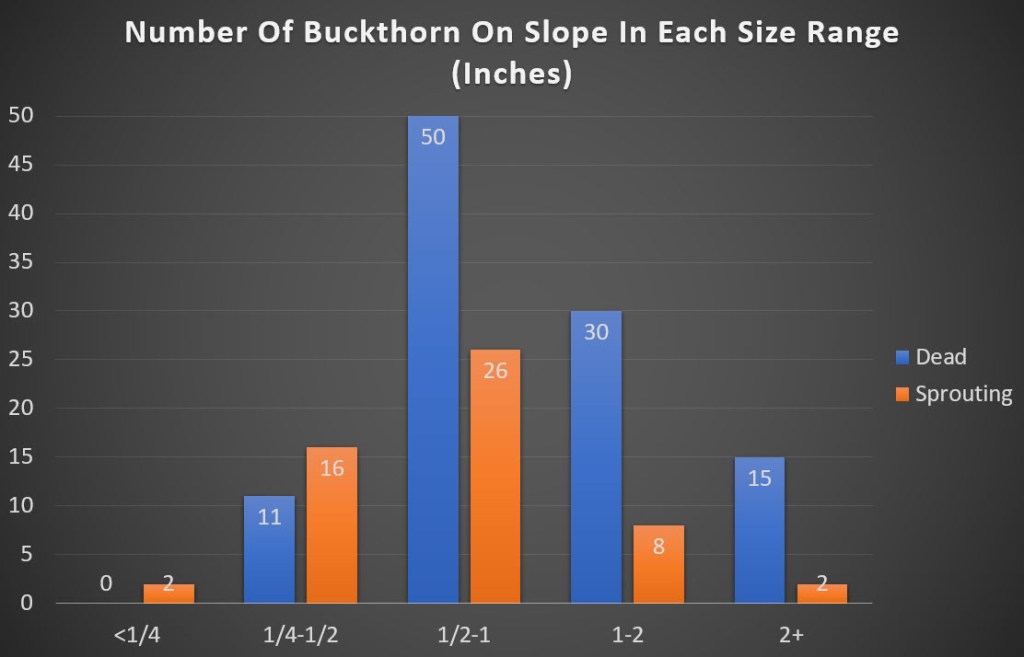
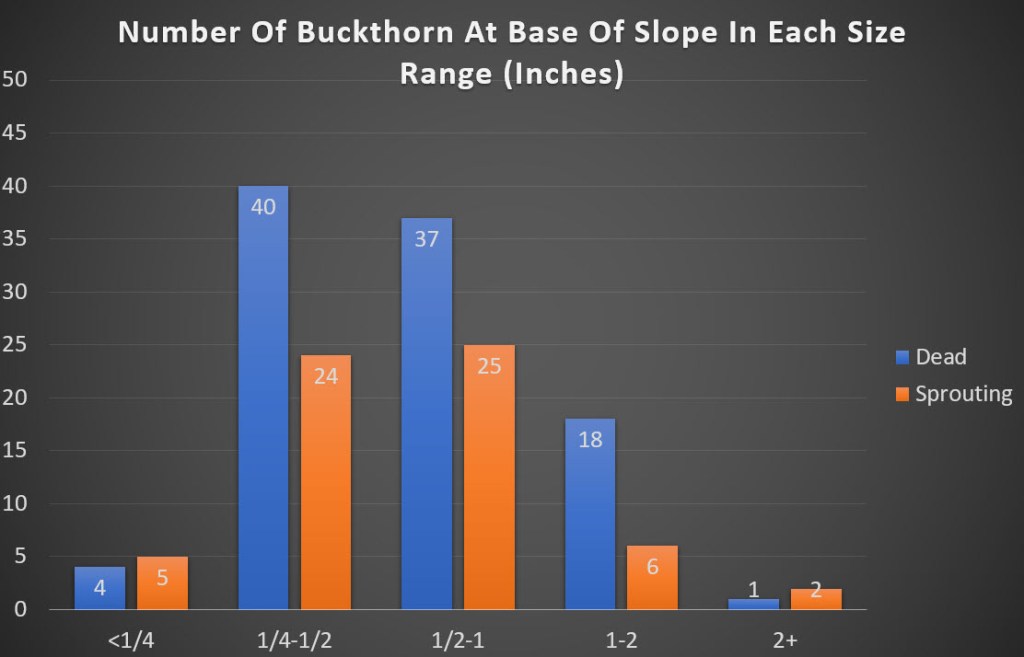
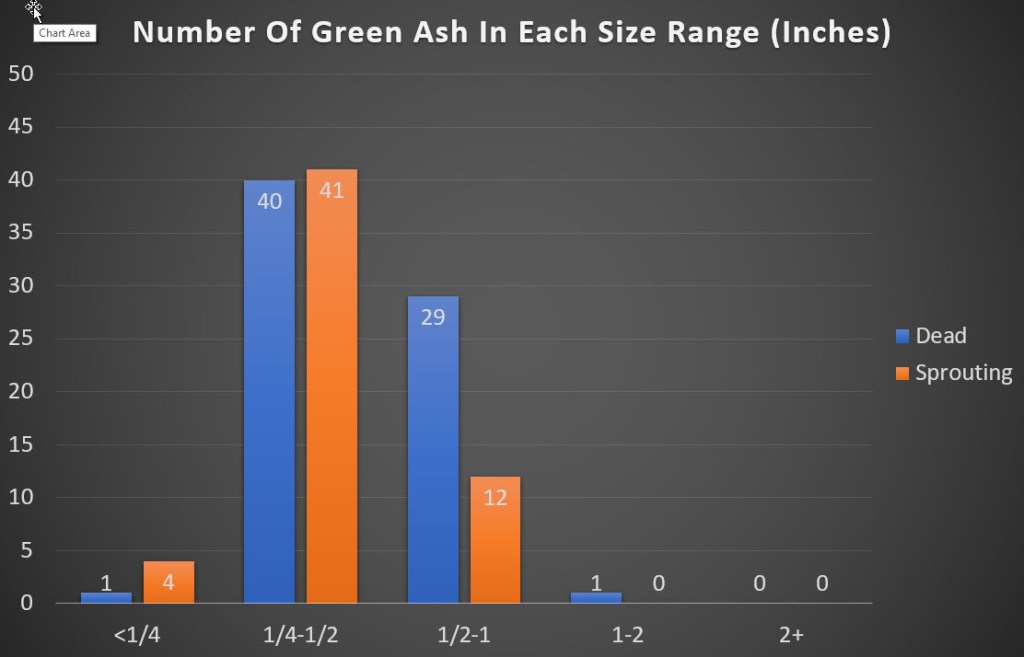
Charts are presented measuring herbicide application effectiveness. A chart for buckthorn on the slope. A chart for buckthorn at the base of the slope. And a chart for green ash.
Views are presented of a previous work area showing the growth of vegetation between visits. The vegetation developing in an old burn scar is shown.
A view from near the entrance to the preserve post burn and three months later shows vegetation growth. An image of an Asian bush honeysuckle sprouting after the fire is shown.
Link to previous post is given.
Views of Work Area
Work Area 4/22/2023
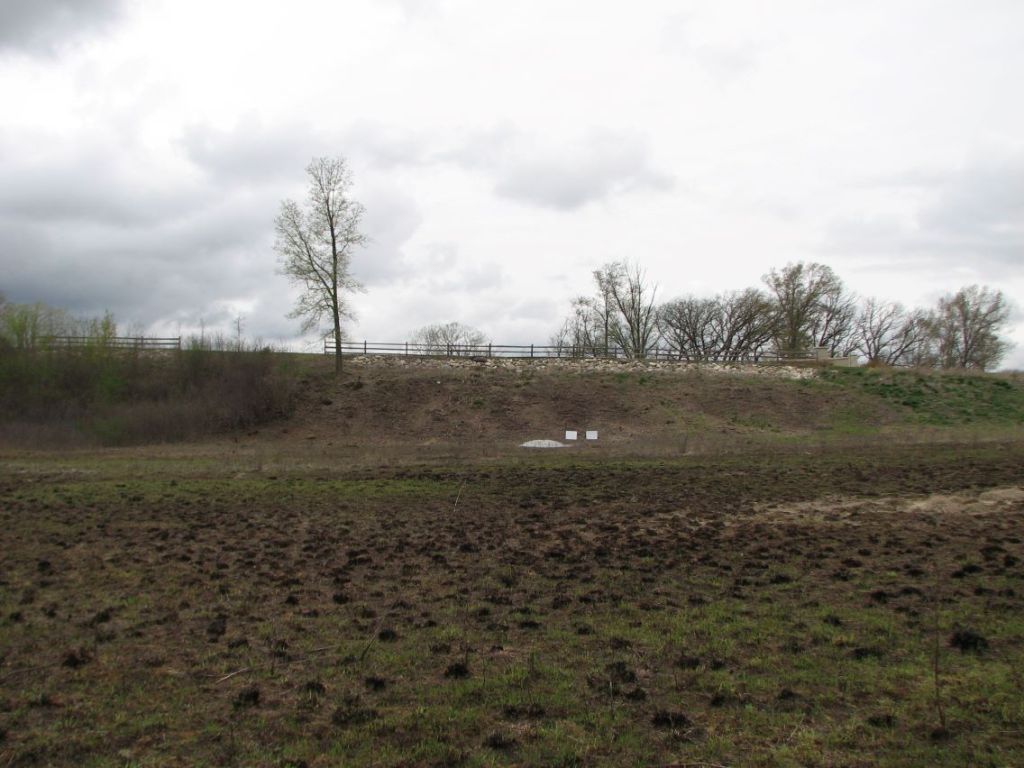
Work Area 7/22/2023
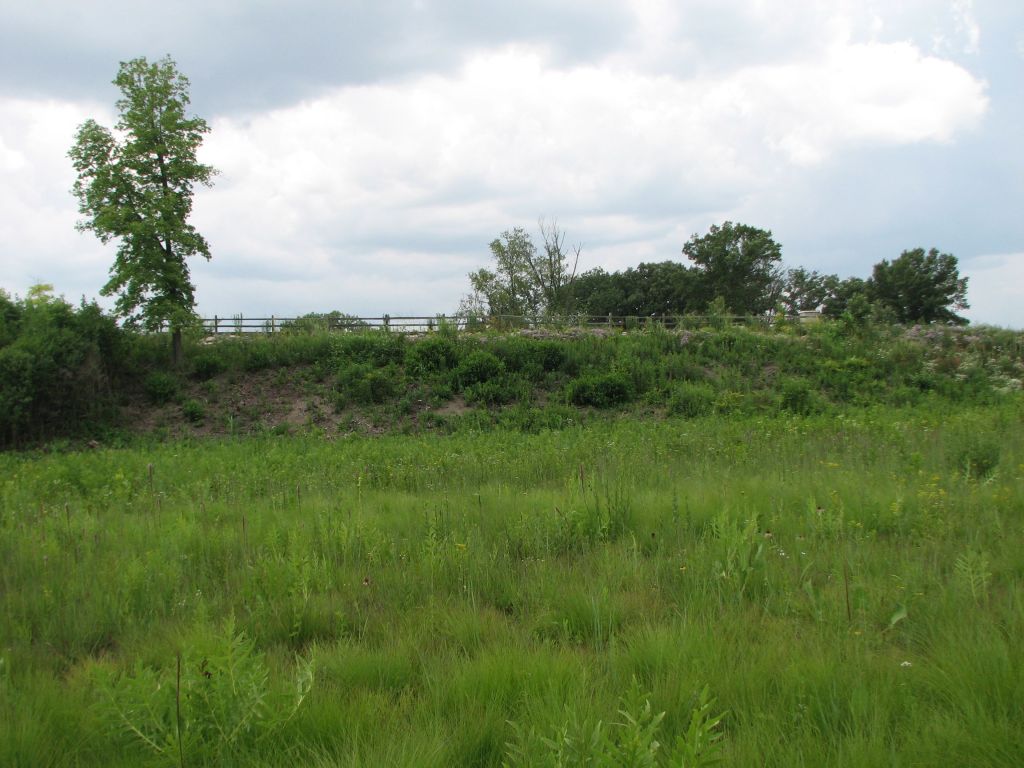
Closer View of Middle Part of Work Area 4/22/2023

Closer View of Middle Part of Work Area 7/22/2023
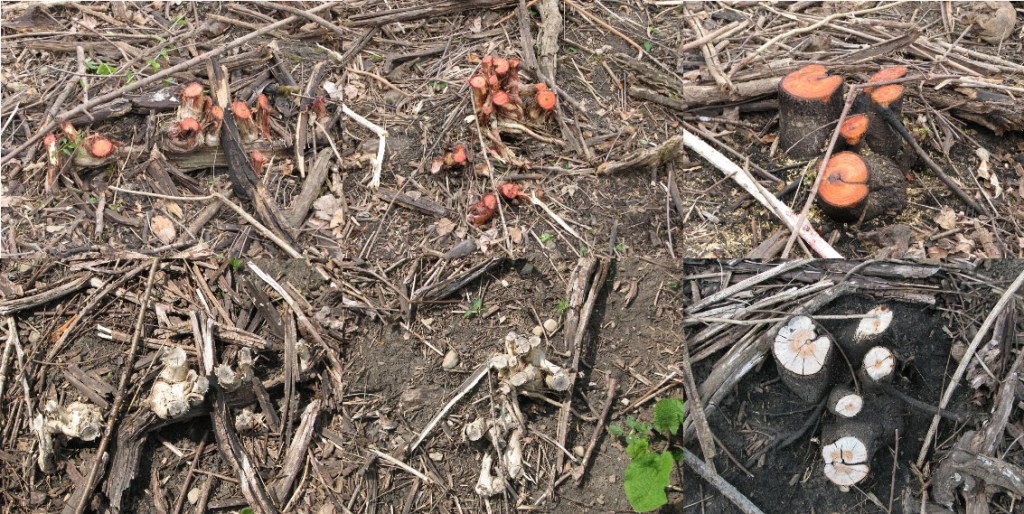
Composite image of Asian bush honeysuckles and a common buckthorn that were treated with triclopyr ester in basal oil. All the treated stumps in this image happened to be killed. Many of the larger Asian bush honeysuckle and common buckthorn were not killed by the herbicide application. The difference probably depended upon who was applying herbicide since a strip through the middle of the work area (left to right) had better control than further up slope or down slope (see above images).
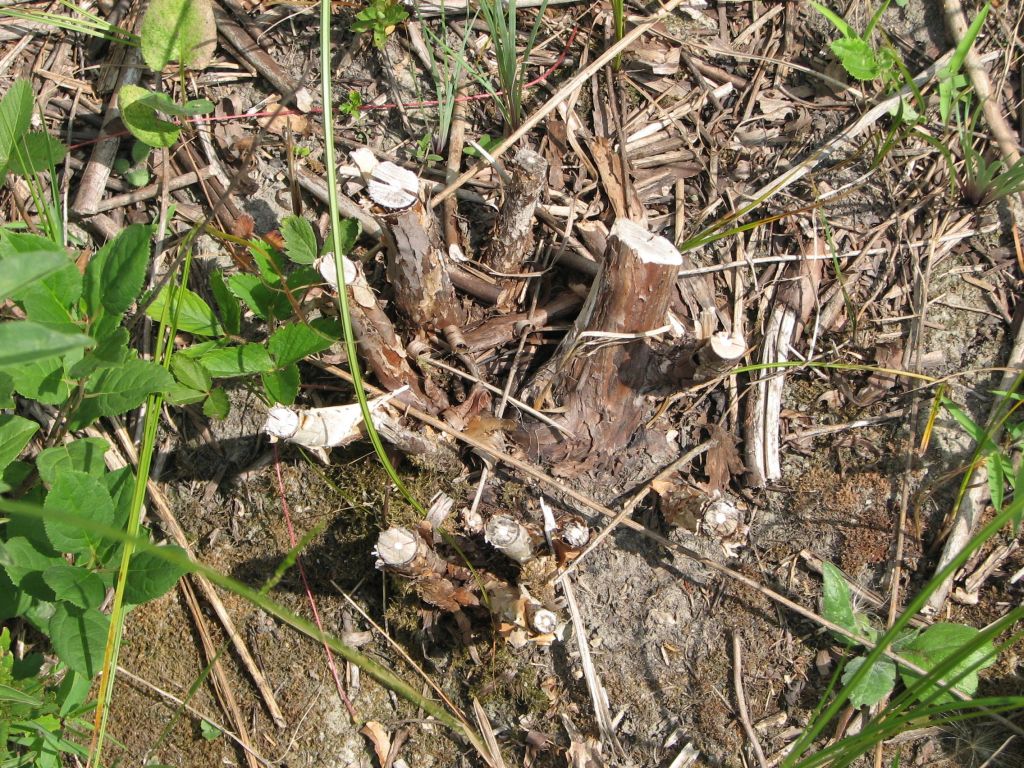
One of the many multiflora roses treated in the quality prairie vegetation moving away from the base of the slope. This multiflora rose was killed with no visible impacts to adjacent vegetation. Multiflora rose is particularly susceptible to triclopyr ester in basal oil. However, this is still very good work with no damage to adjacent vegetation that is visible. See the 4/22/2023 post for an image of some of a few of the multiflora rose after being treated.
Charts
There was better control of the buckthorn on the slope. This was likely due to differences between herbicide applicators.
The base of the slope had more smaller buckthorn. This is likely because the base of the slope was toward the edge of the dense woody vegetation.
There were lots of small green ash (1/4 to 1 inch in diameter).
The percent control could be improved. Please compare with the chart on the post Bluff Spring Fen Preliminary Results. At Bluff Spring Fen the control rate was 84 percent for 1/2 to 1 inch diameter buckthorn improving further as diameter increased. At Middlefork Savanna 66 percent control was the highest achieved in the 1/2 to 1 inch size class. There was not as much improvement as diameter increased compared to the Bluff Spring Fen data.
Previous Work Areas
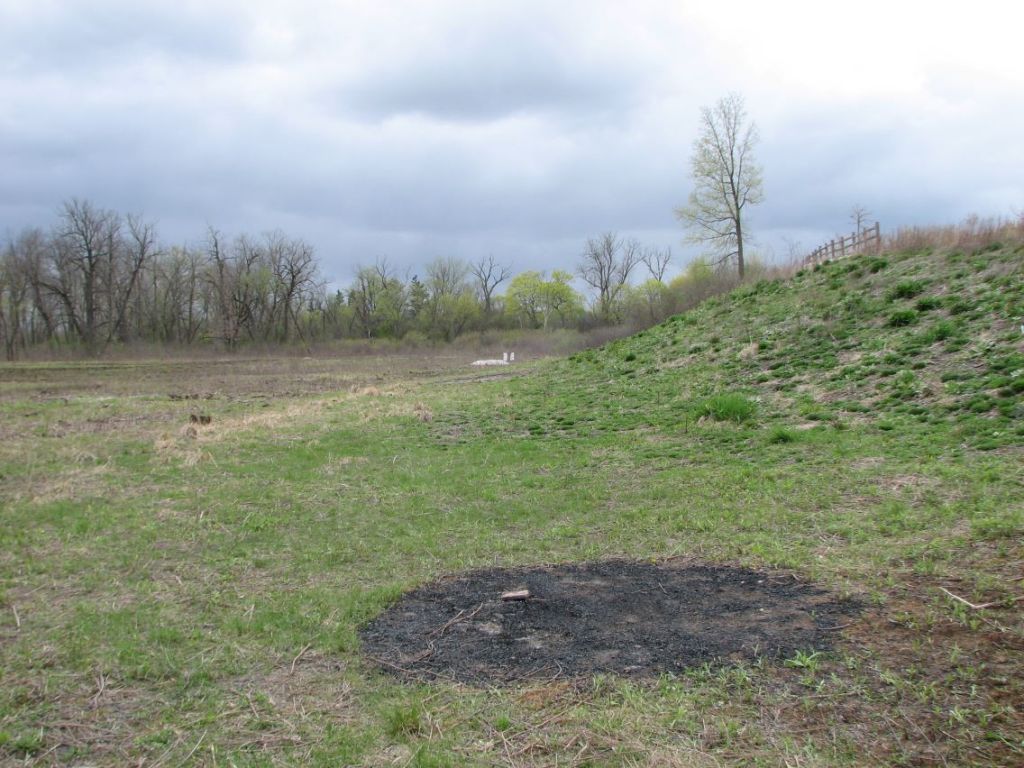
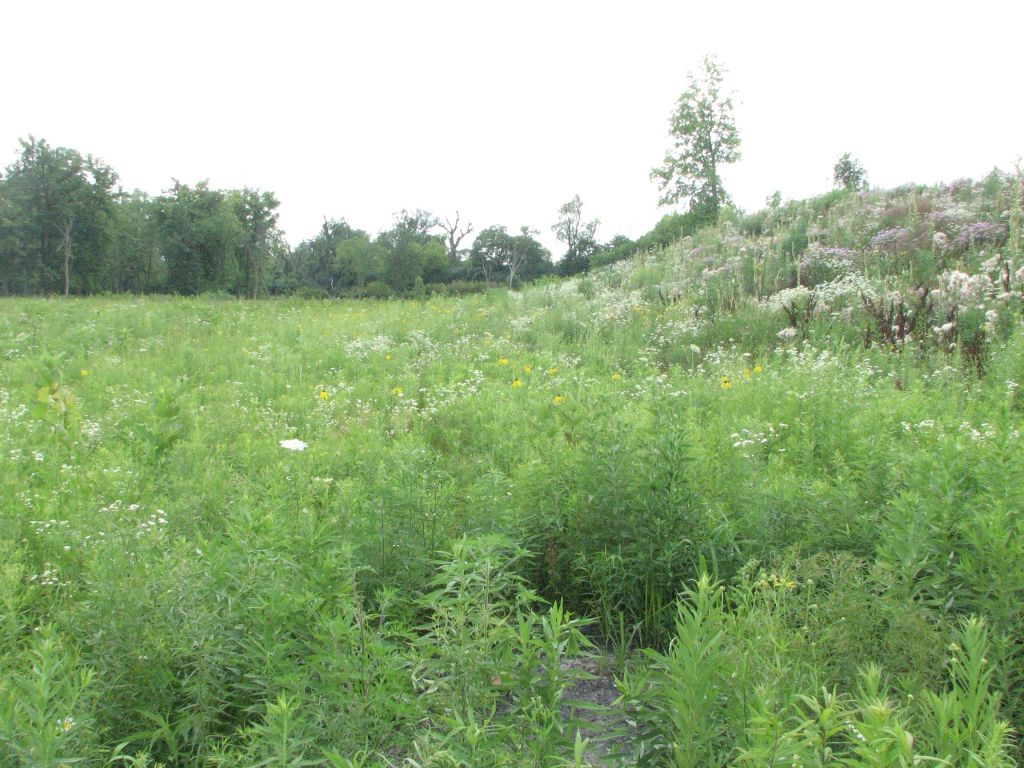
The view of an old burn scar near the intersection of the trails looking toward the work area in the distance. Photo taken on 4/22/2023.
The same view as above but taken on 7/22/2023. The slope on the right has typical early successional vegetation like wild bergamot. I also noticed a lot of common mullein on this slope. I only see common mullein where herbicide has recently been applied.
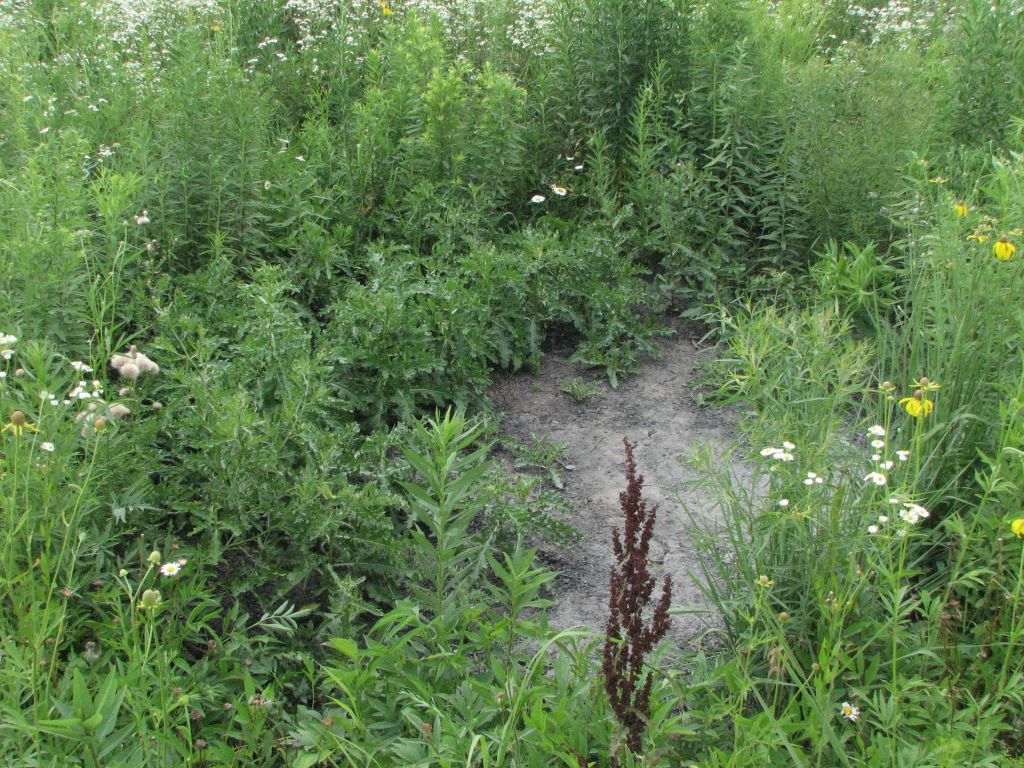
This is an image of one of the old burn scars. Around the edges, field thistle is now growing.
Fire Impacts
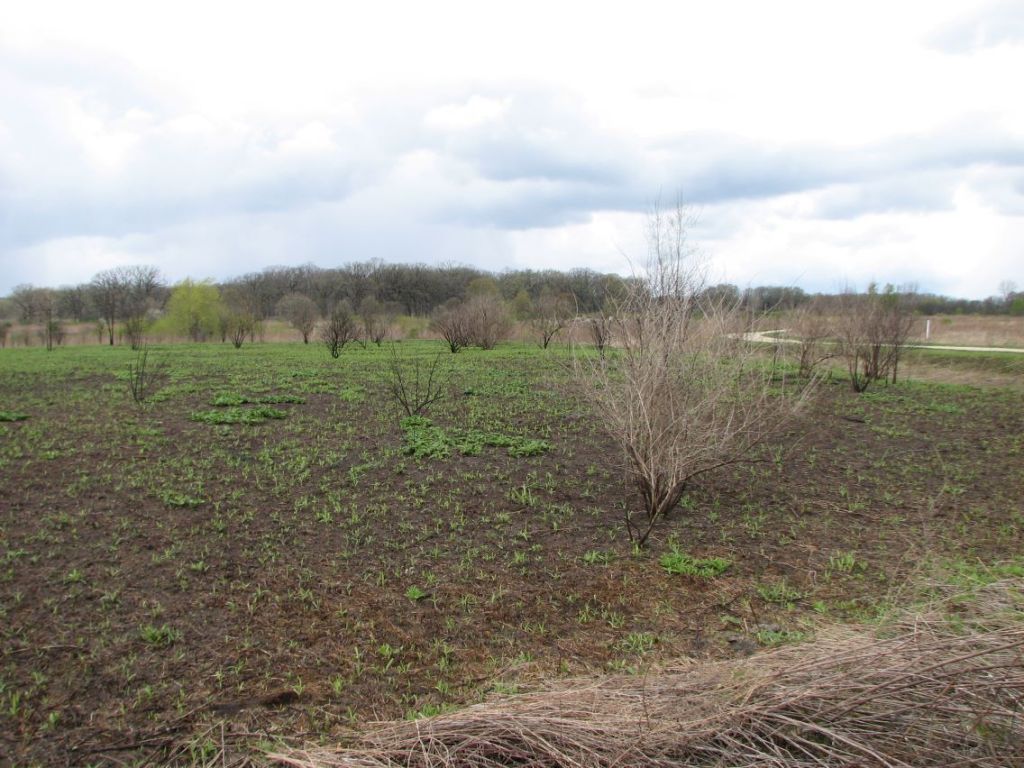
This is a view near the entrance on 4/22/2023 showing shrubs after fire.
This is the same view as above but on 7/22/2023.

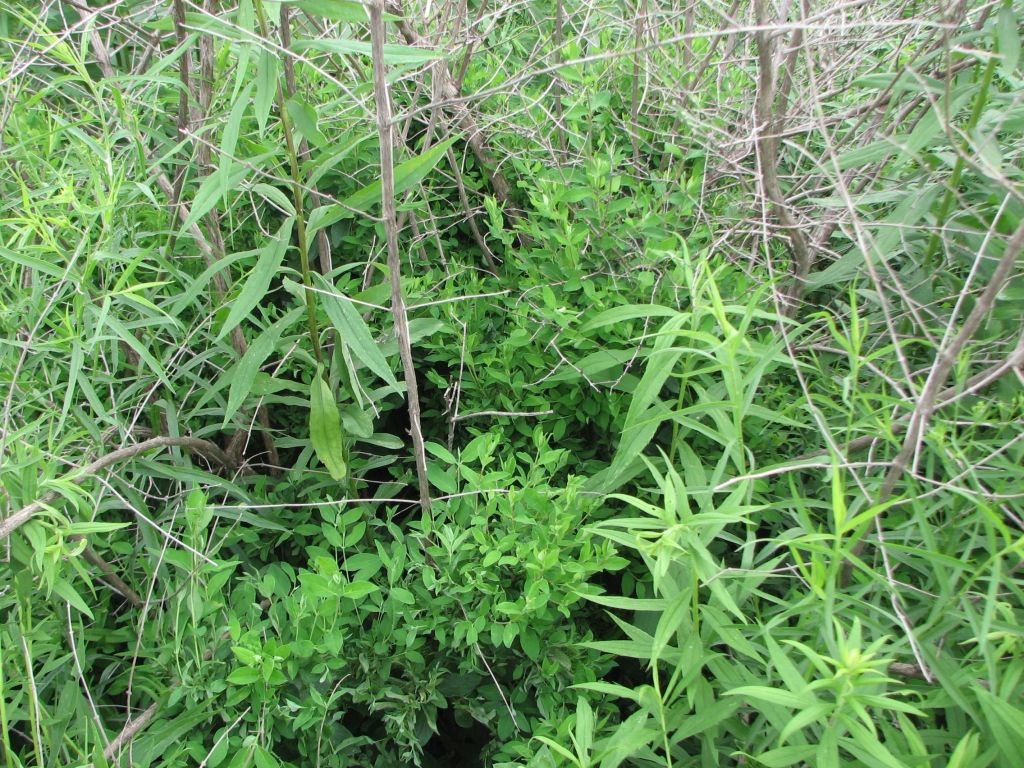
I walked out into the thick vegetation to the first Asian bush honeysuckle that is visible in the above images. This Asian bush honeysuckle was killed back to the ground by fire. The below image shows it has sprouted and how much it has grown in just one growing season.
 Stewardship Chronicles
Leave a comment