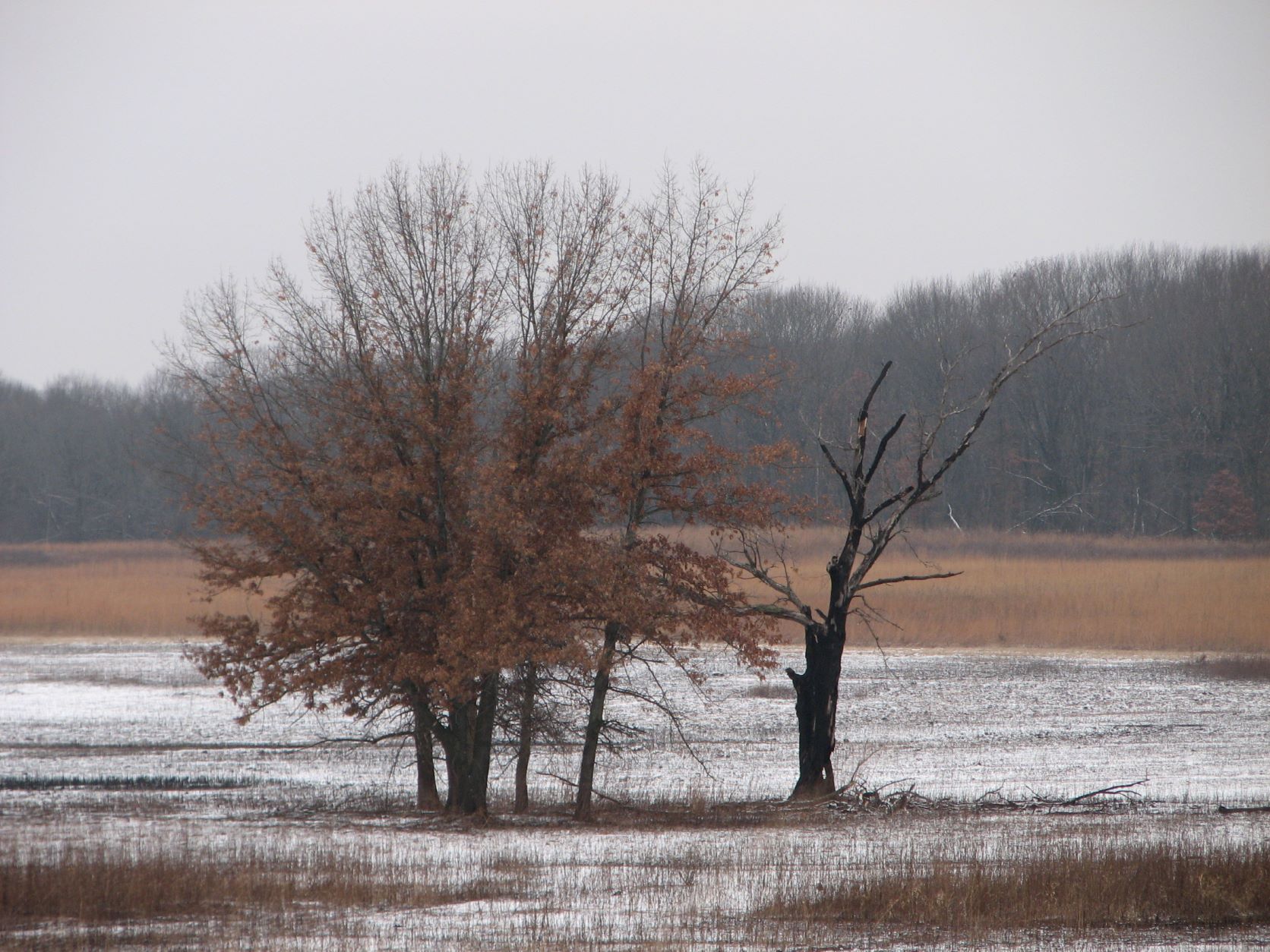
In this post, I visit Healy Savanna. Healy Savanna has prairie areas on top of the ridge, savanna areas into the oak trees, and on the steep eastern facing slope woodland species.
Healy Savanna can be accessed by hiking north from the Beverly Lake parking lot. The Beverly Lake parking lot is known for illicit activity. Therefore, I suggest visiting in a group. A map of the area can be viewed on the previous post, “Spring Creek On 1/14/2023.”
Summary
Prairie Species on Top of Ridge
Image of prairie reconstruction that developed well along with a description of location.
Invasive Species Control
Images from after the 1/14/2023 workday and taken on 8/16/2023 showing the contrast. Discussion on herbicide application effectiveness.
Images of a chokecherry on 1/14/2023 and after having been cut and having herbicide applied.
Brush Mowing
Images showing Asian bush honeysuckle, common buckthorn, and autumn olive growth after having been mowed along with discussion.
Brush Piles
Brush Piles from this past winter along with images from after they had been burned. Current images of an old burn scar that filled with common reed (Phragmites australis). Images of burn scars at ‘The Corridor.’
Prairie Species on Top of Ridge

The best areas are on top of the ridge where prairie species grow on the steep slope just above the oak trees. These were seeded years ago and have developed well.
Invasive Species Control
Work Area
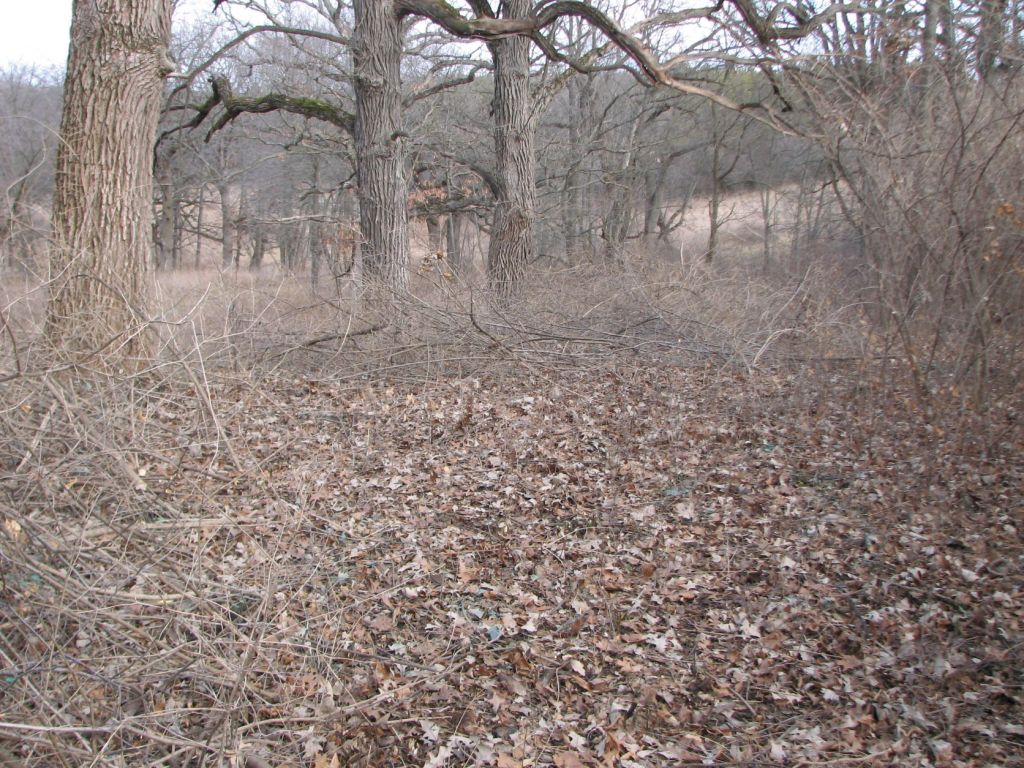
After the workday on 1/14/2023.
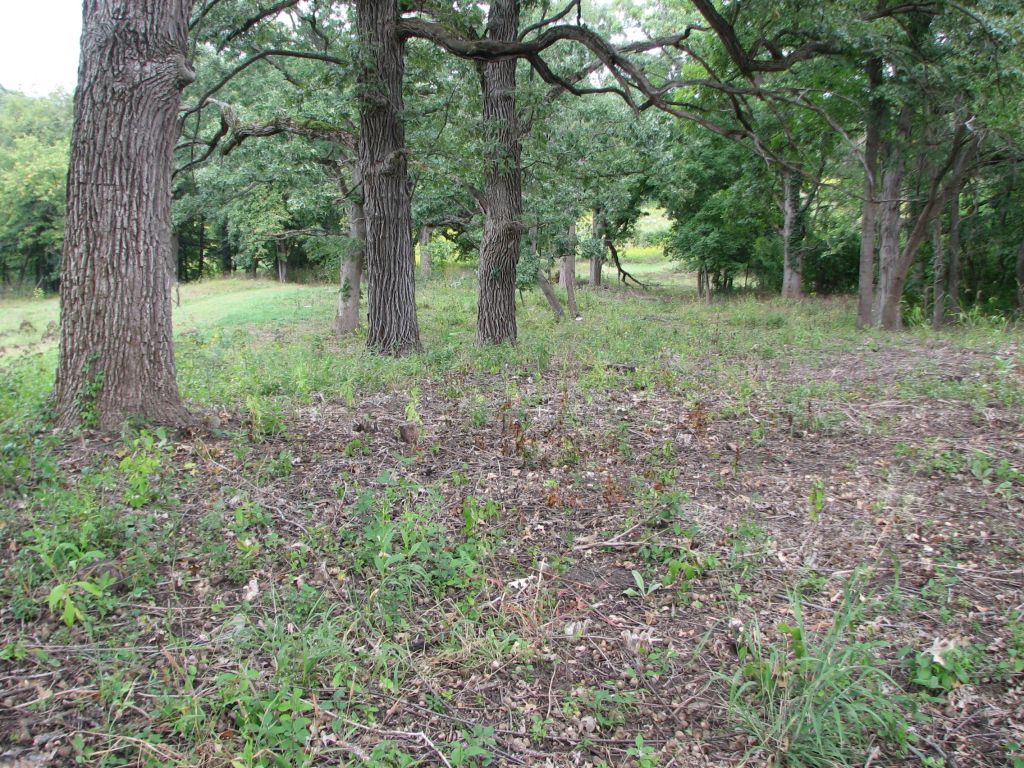
The same view on 8/16/2023.
Asian Bush Honeysuckle
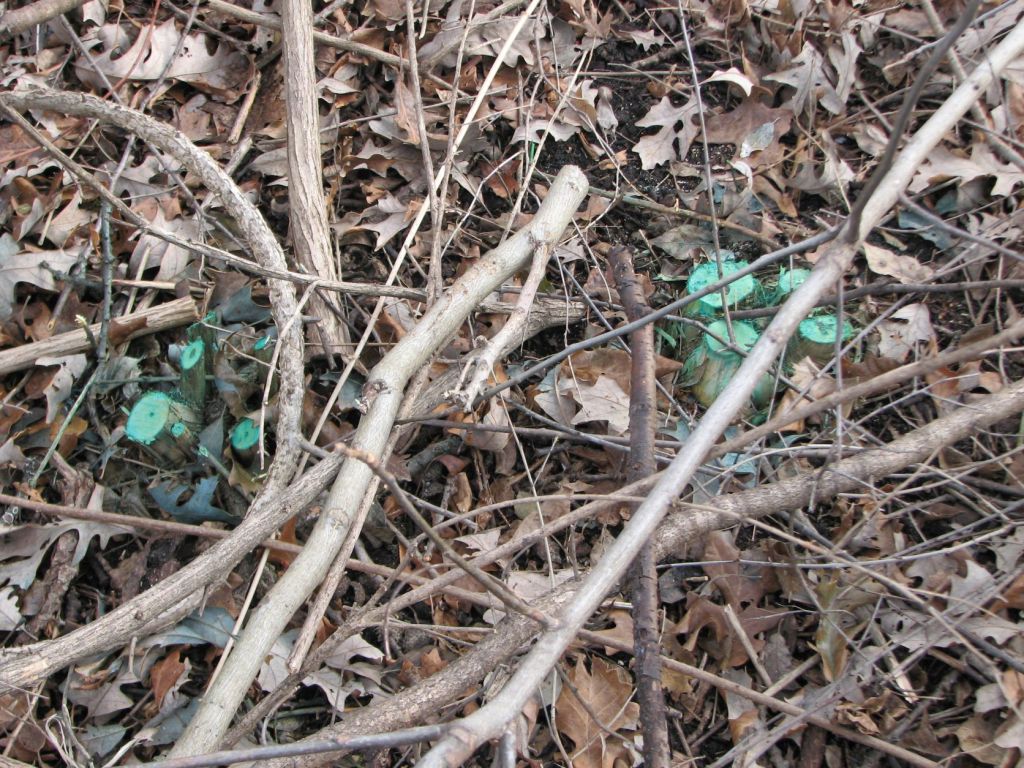
Asian bush honeysuckle stumps after herbicide had been applied on 1/14/2023.
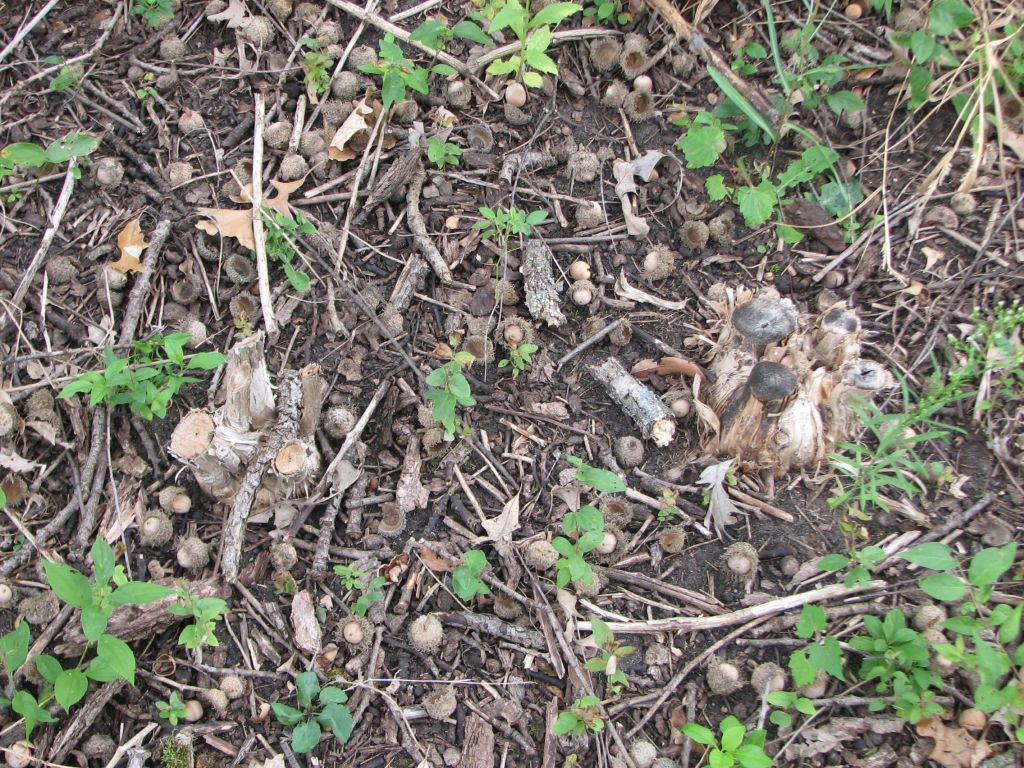
Asian bush honeysuckle stumps on 8/16/2023.
One Asian Bush Honeysuckle and Three Common Buckthorn Stumps
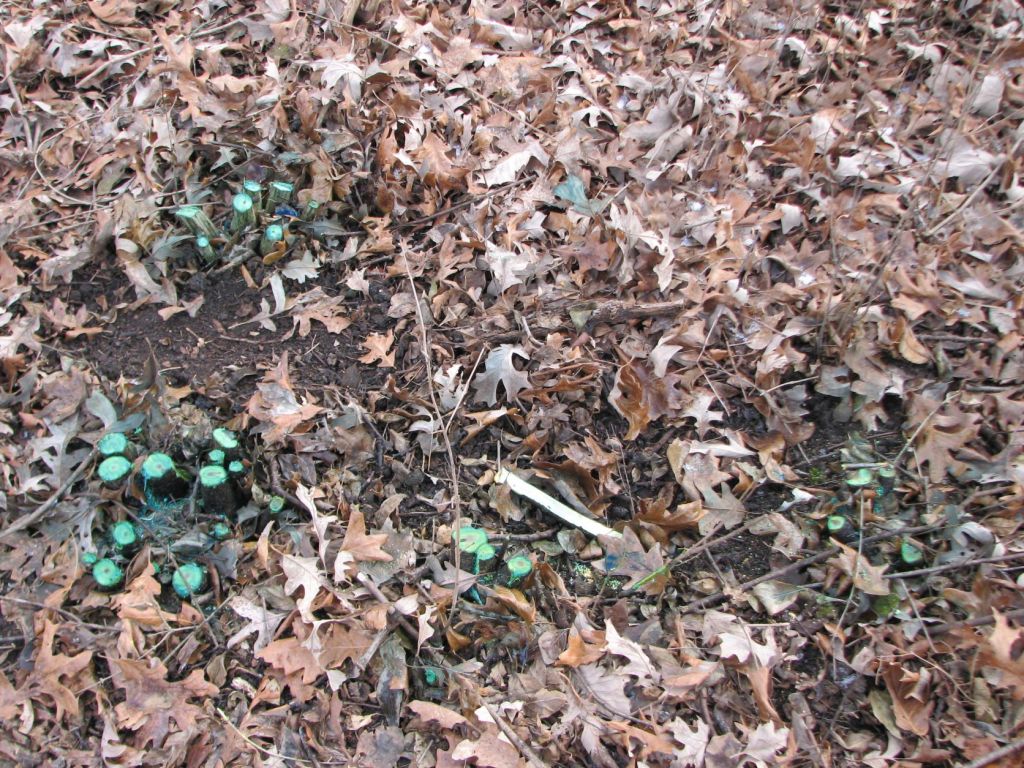
Asian bush honeysuckle and common buckthorn stumps after herbicide had been applied on 1/14/2023.
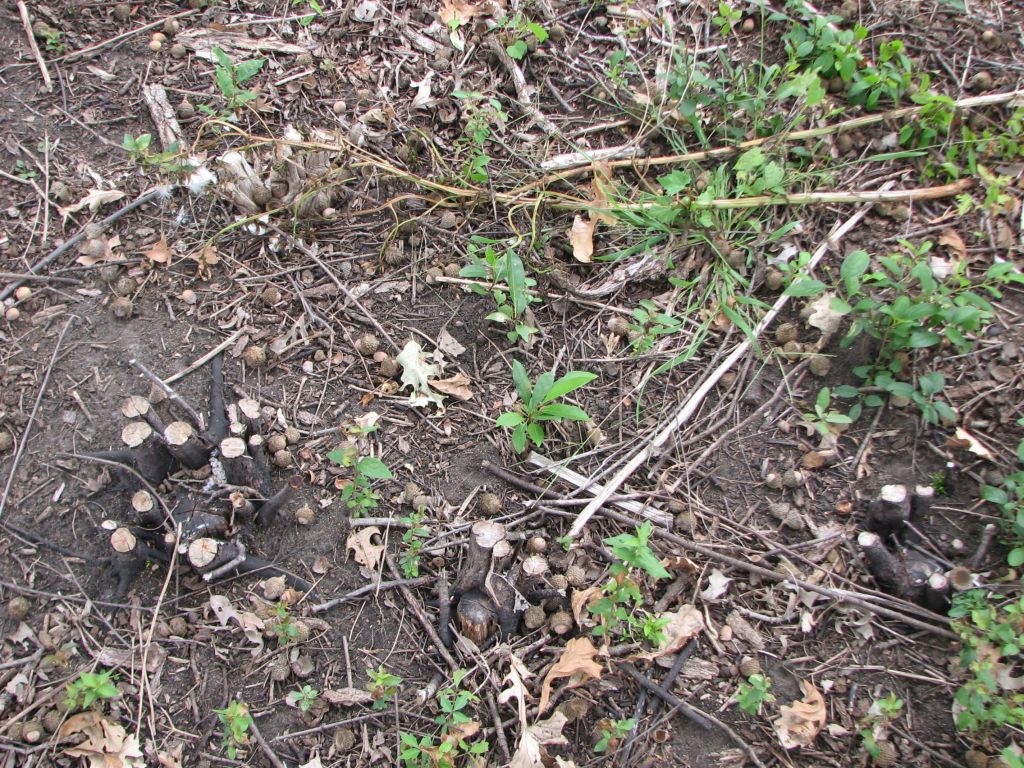
Asian bush honeysuckle and common buckthorn stumps on 8/16/2023.
Discussion
The herbicide application was the most effective I have observed to date. I did not make a chart because it was not worthwhile. I only saw one stem sprouting from one of the Asian bush honeysuckle stumps. The Spring Creek Stewards may be small in number, but their herbicide application gave the best result I have seen. Not only did they achieve a near perfect rate of control, but I also do not see the “ring-of-death” around treated stumps that is so common after triclopyr ester in basal oil has been applied.
In the images, a lot of Asian bush honeysuckle and common buckthorn seedlings are visible. I saw patches in the work area where the Asian bush honeysuckle and common buckthorn seedlings had all been killed. I don’t know what method was used to control woody invasive species seedlings. I control them by gently moving my mini-paint roller back and forth in a rocking motion to apply triclopyr ester in basal oil to about an inch of length on both sides of stems. If this is done in the dormant season, when rain is not forecast for at least four days (more is better), then off-target impacts can be avoided.
Native Casualty
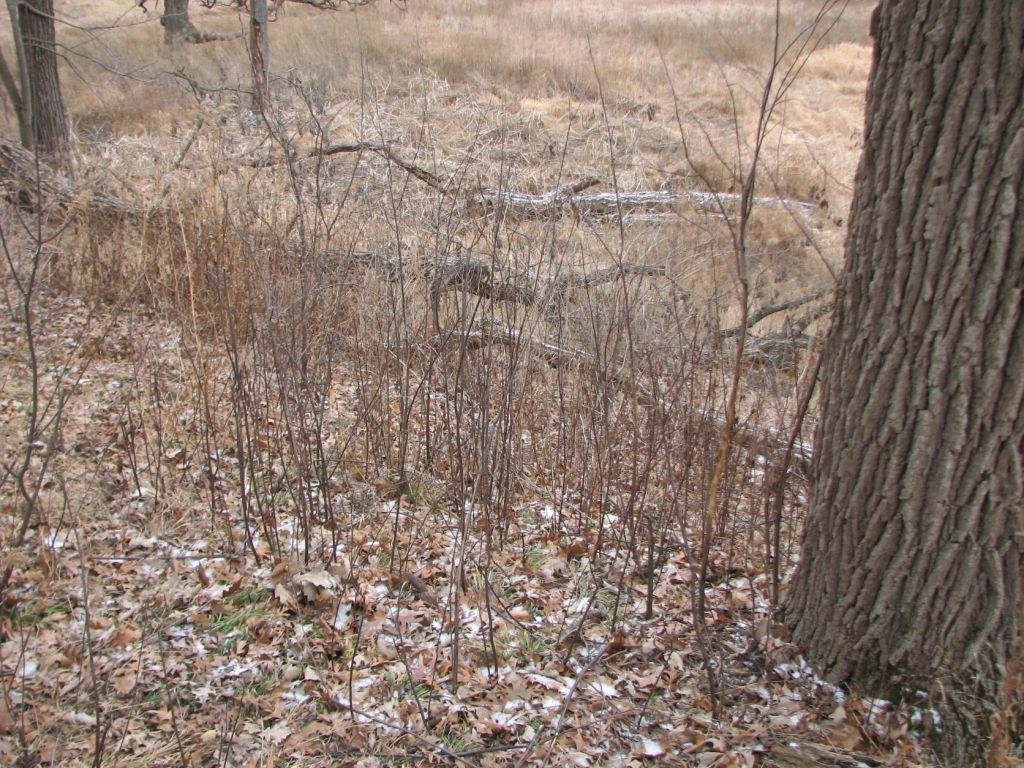
A chokecherry (Prunus virginiana) on 1/14/2023. I had physically removed all garlic mustard, buckthorn seedlings, and other small invasive species from this area in 2015.
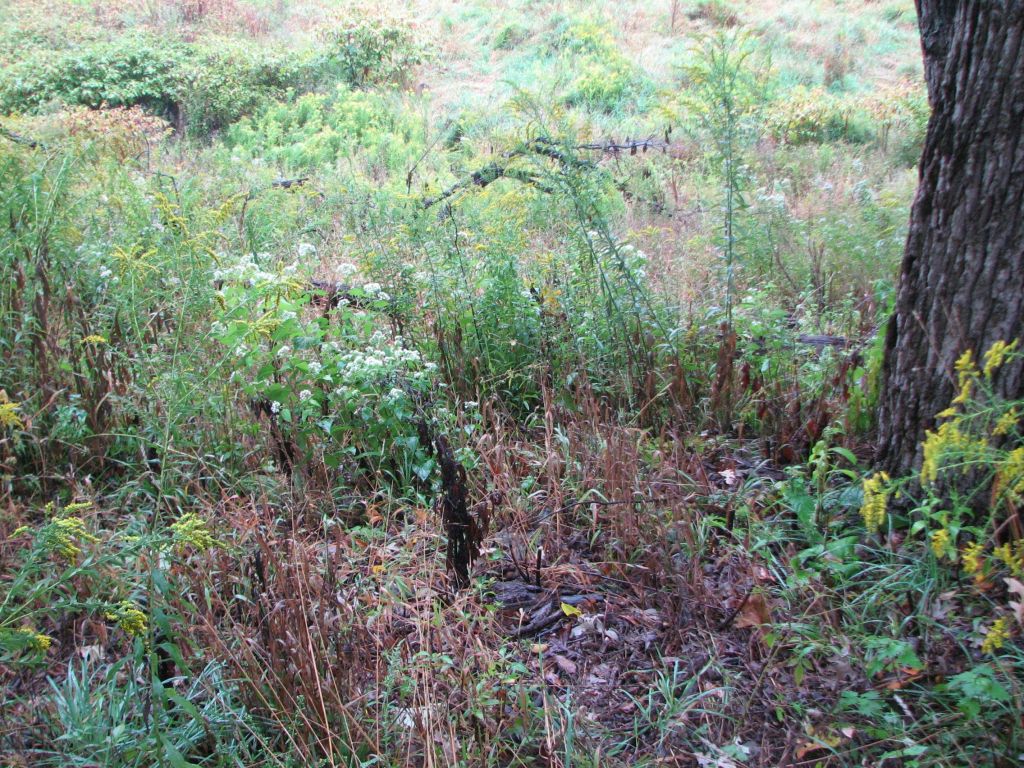
What remains of the same chokecherry on 8/16/2023. It had been cut and herbicide was applied to the stumps. This chokecherry had survived the stewards cutting, removing, and burning all the surrounding common buckthorn and Asian bush honeysuckle. This chokecherry then survived broadcast spraying to kill common buckthorn and Asian bush honeysuckle sprouting stumps and seedlings in all the surrounding area. Spraying was not done in this small patch. I had removed all the common buckthorn and Asian bush honeysuckle seedlings so there was no need to spray. This year, the chokecherry’s luck finally ran out. I almost cried when I saw what had been done.
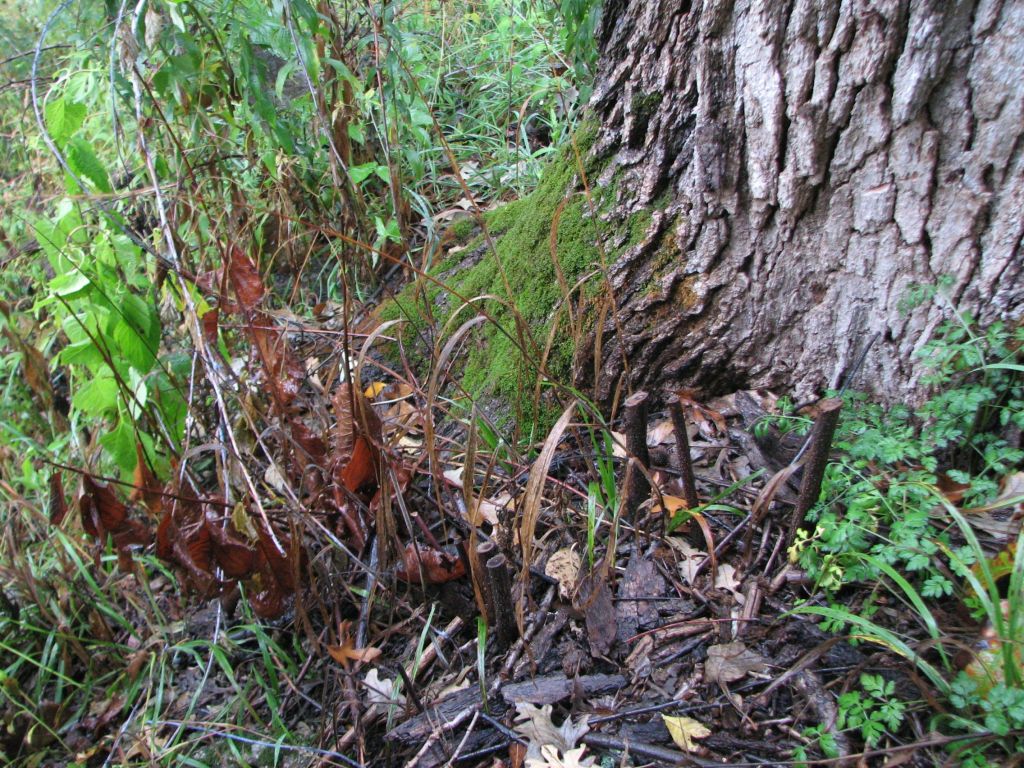
A closer view of part of the chokecherry that was cut and had herbicide applied to the stumps. After a few stumps sprouted, the leaves on the sprouts were sprayed with herbicide. It did not just get hit once; it was hit a second time. This area was full of woodland sedges, woodland grasses, and spring ephemerals. Now it just looks like a weedy mess.
SSE Facing Slope on North Side of Healy Savanna
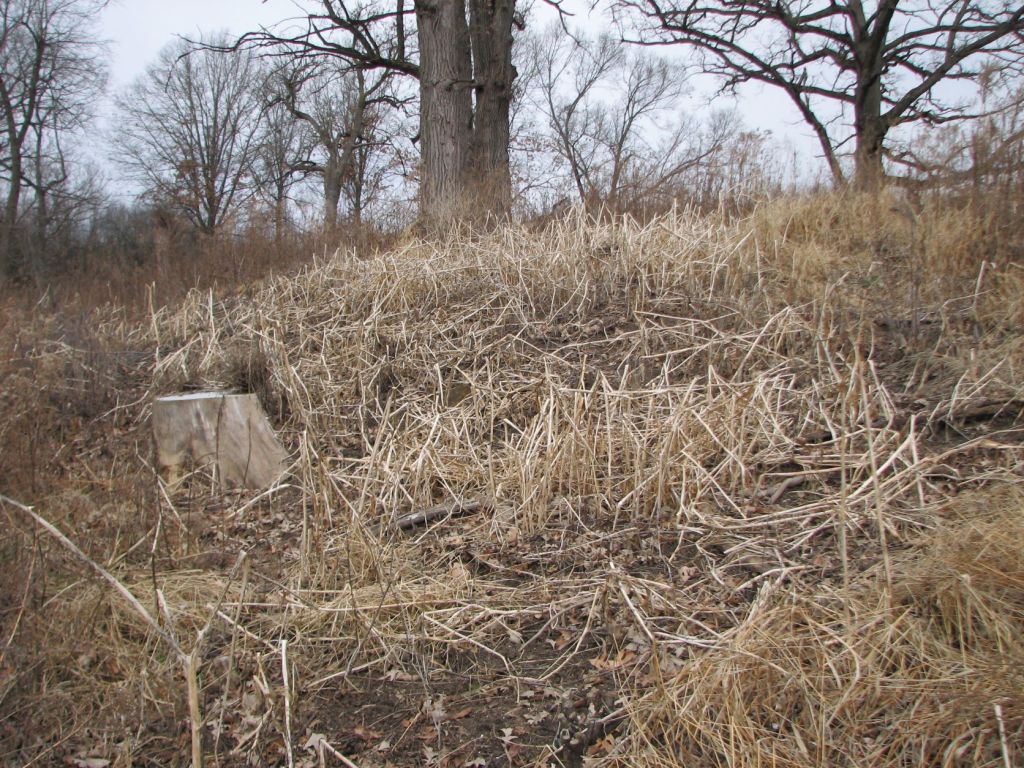
Area taken over by pokeweed (Phytolacca americana) on 1/14/2023.
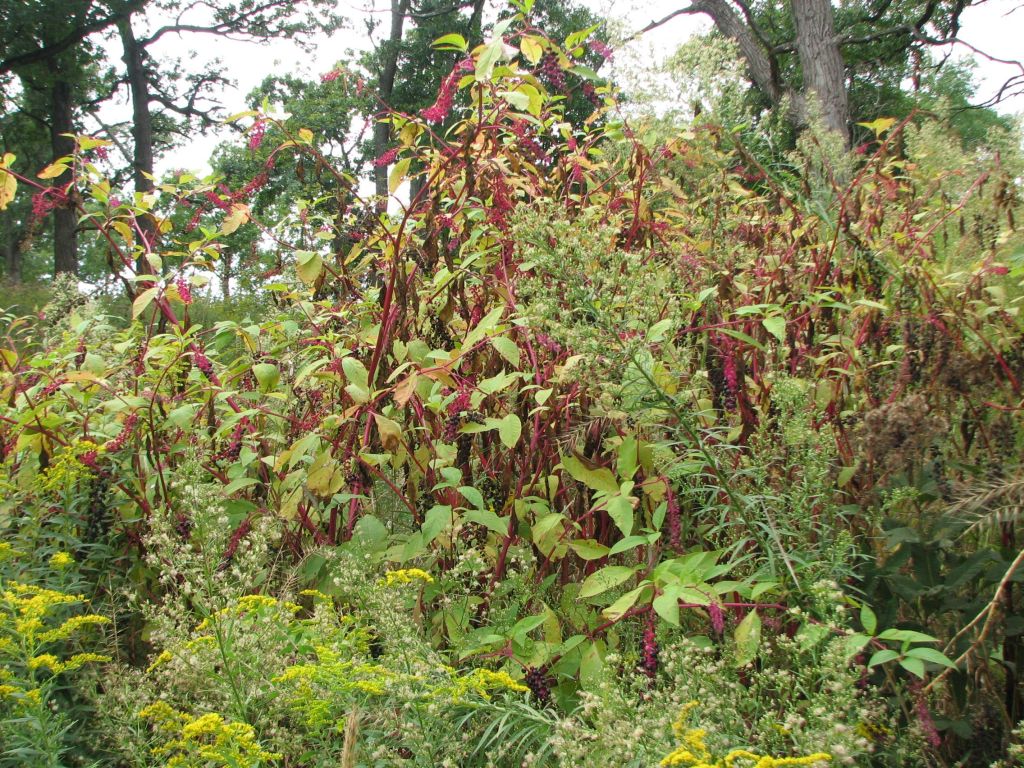
Area taken over by pokeweed on 8/17/2023.
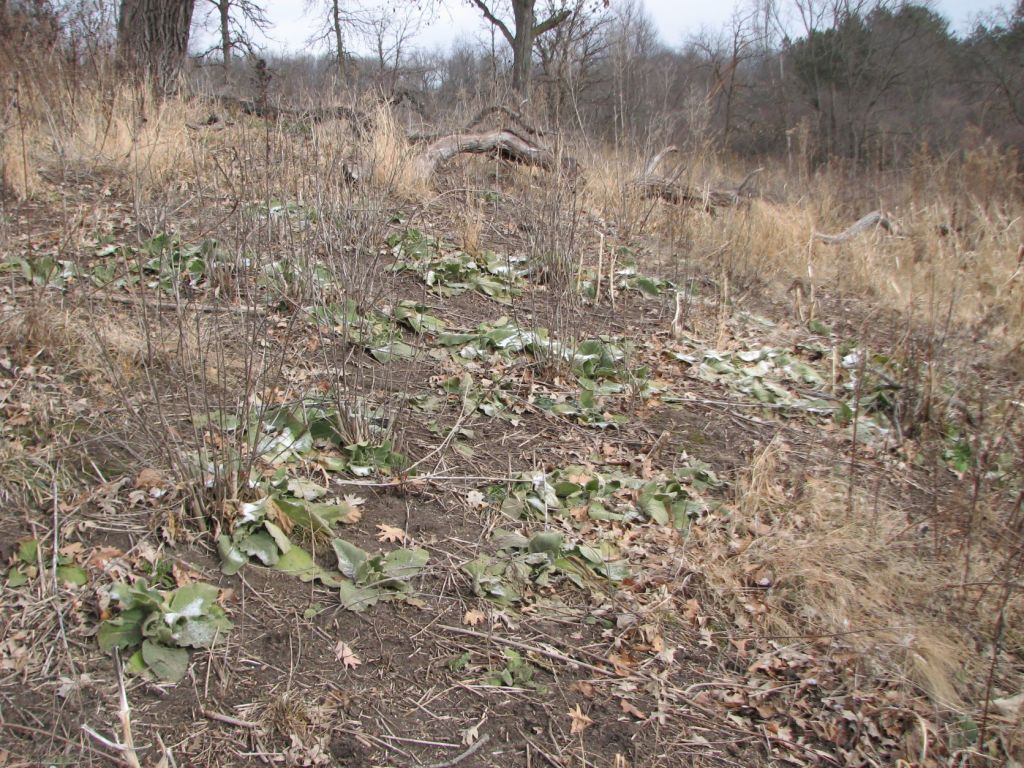
Area where invasive woody sprouts were sprayed that now has lots of common mullein (Verbascum thapsus). Image taken on 1/14/2023.
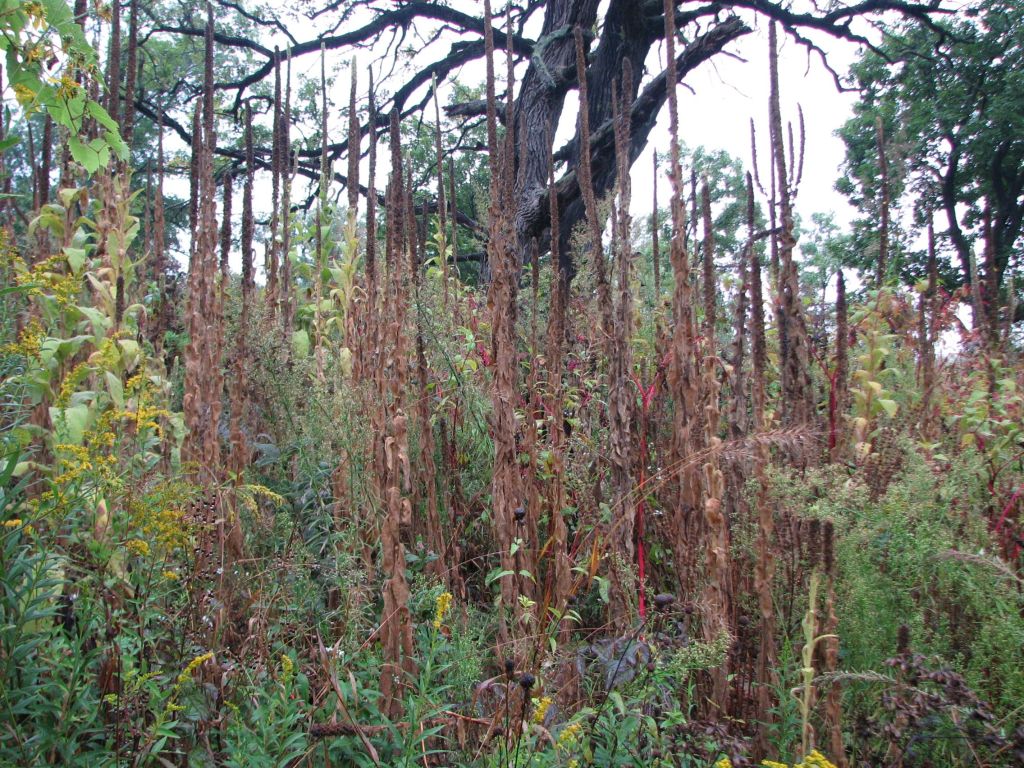
Common mullein on 8/17/2023.
Brush Mowing
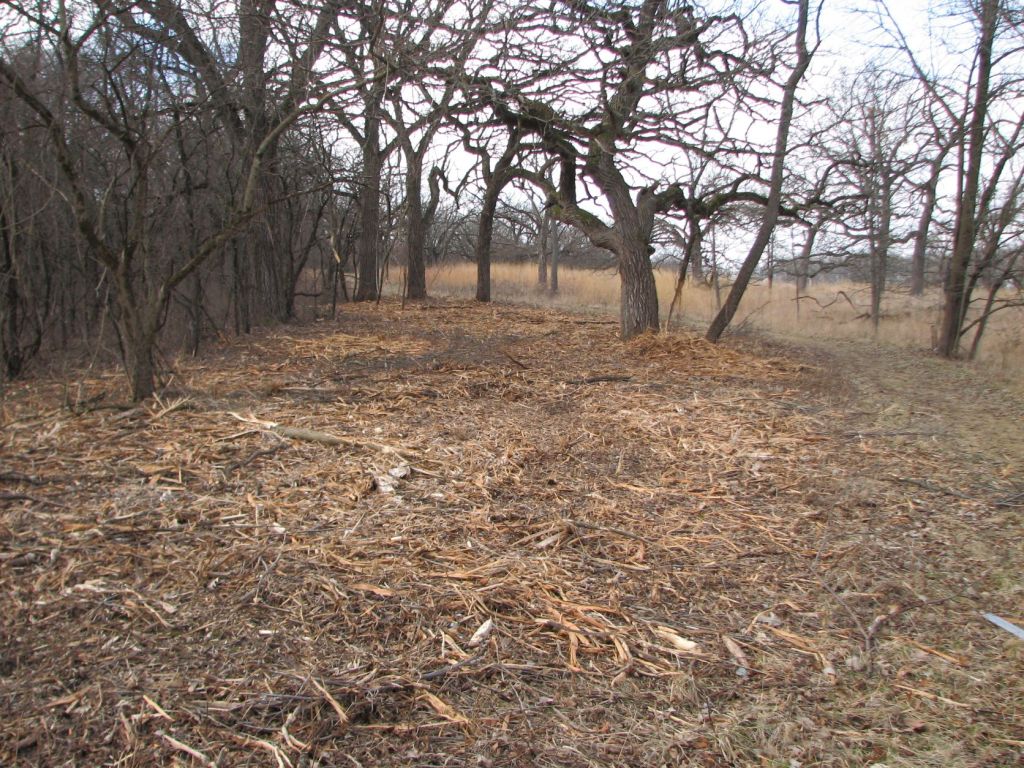
A view of an area on 1/14/2023 after it had received brush mowing.
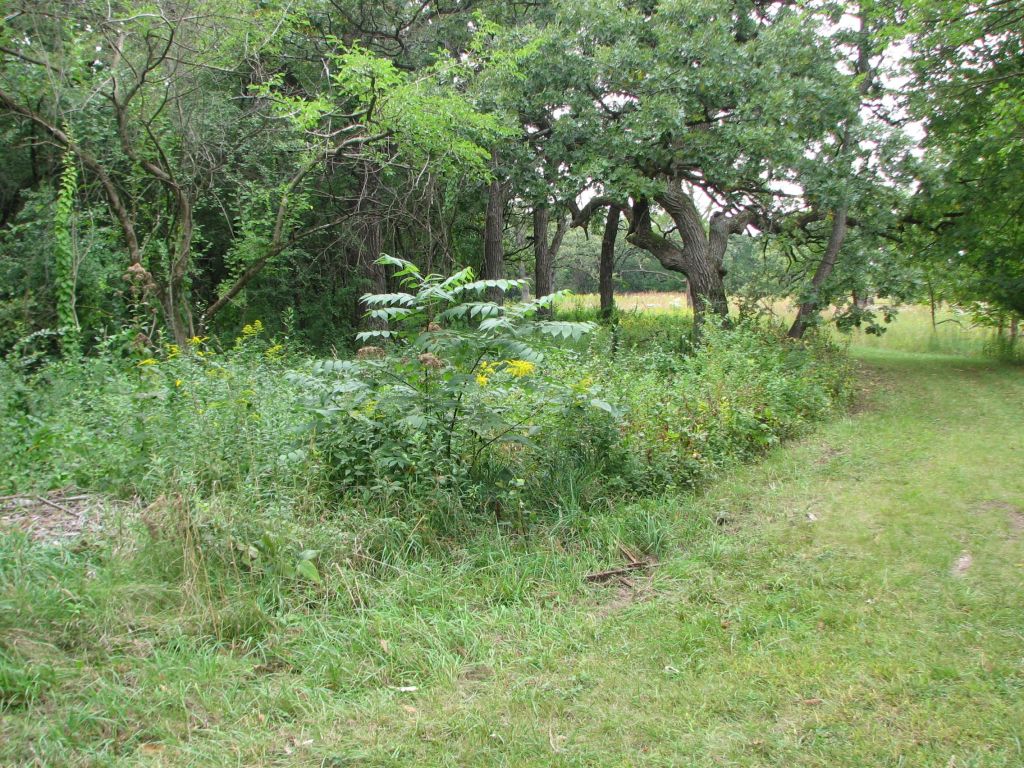
A view of the same area on 8/16/2023.
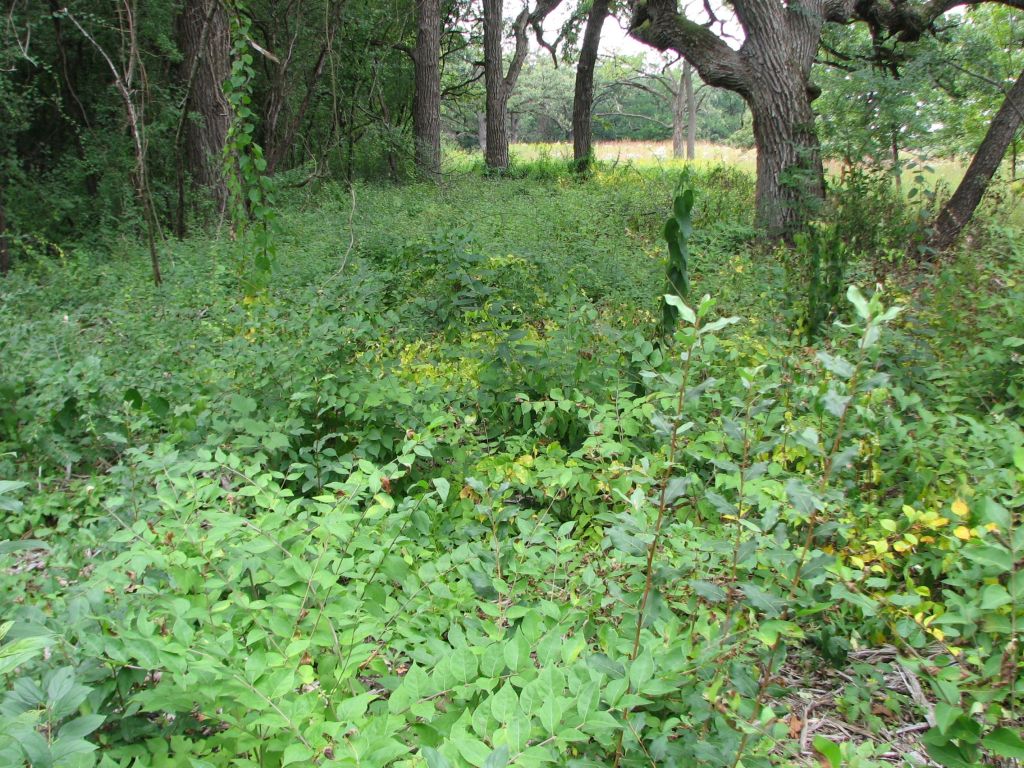
A closer view of the area on 8/16/2023.
Discussion
The Asian bush honeysuckle, common buckthorn, and autumn olive all have sprouted and now have more stems than before brush mowing occurred. Each stem must be treated for control to be effective. Increasing the number of stems means more work when control is done. I do not have a favorable opinion of people who do brush mowing and do not apply herbicide before the woody invasive species’ sprouts have had a chance to grow into multi-stemmed monsters.
Brush Piles
Healy Savanna
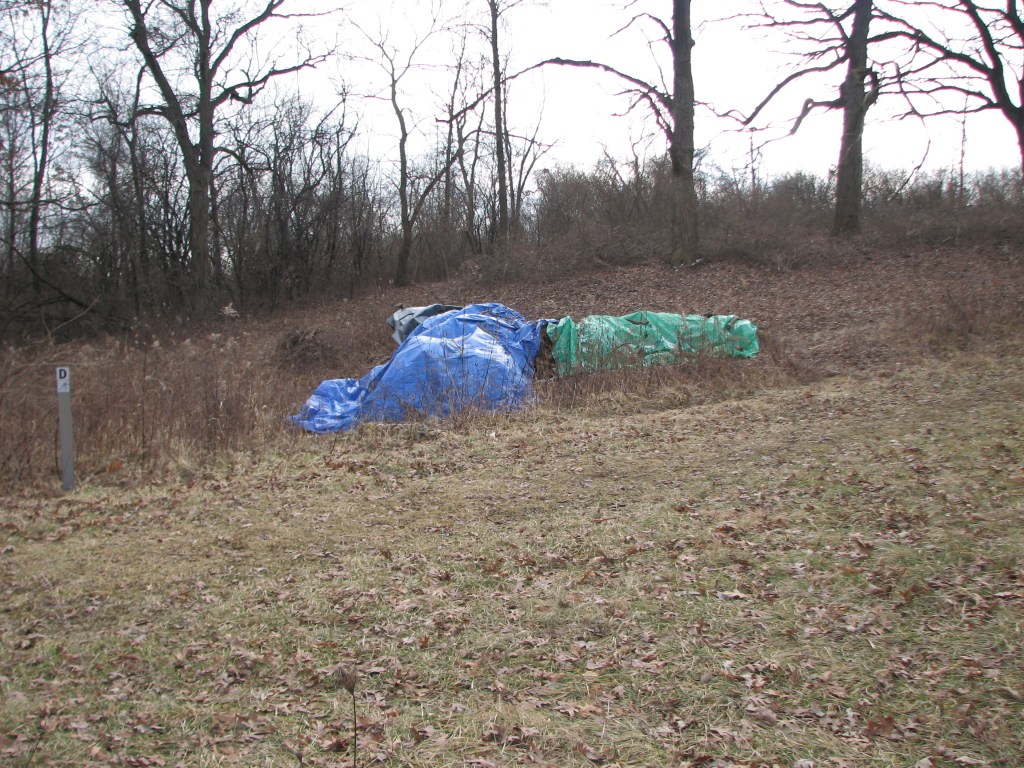
Brush piles on 1/14/2023.
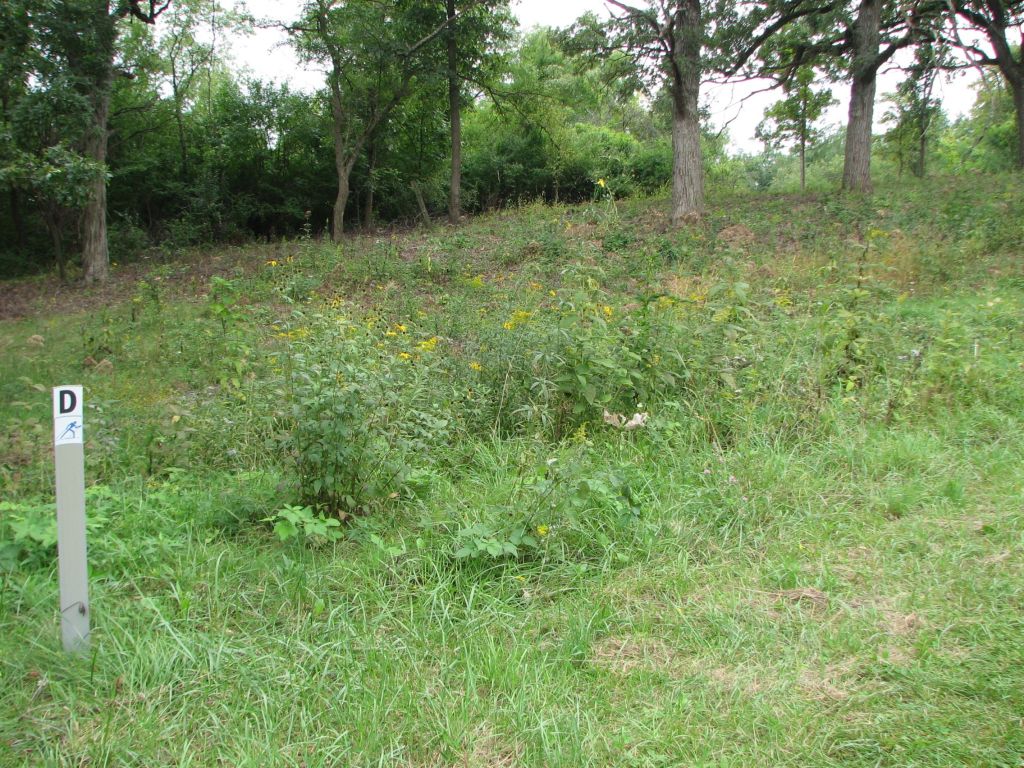
Same area on 8/16/2023 after brush piles had been burned.
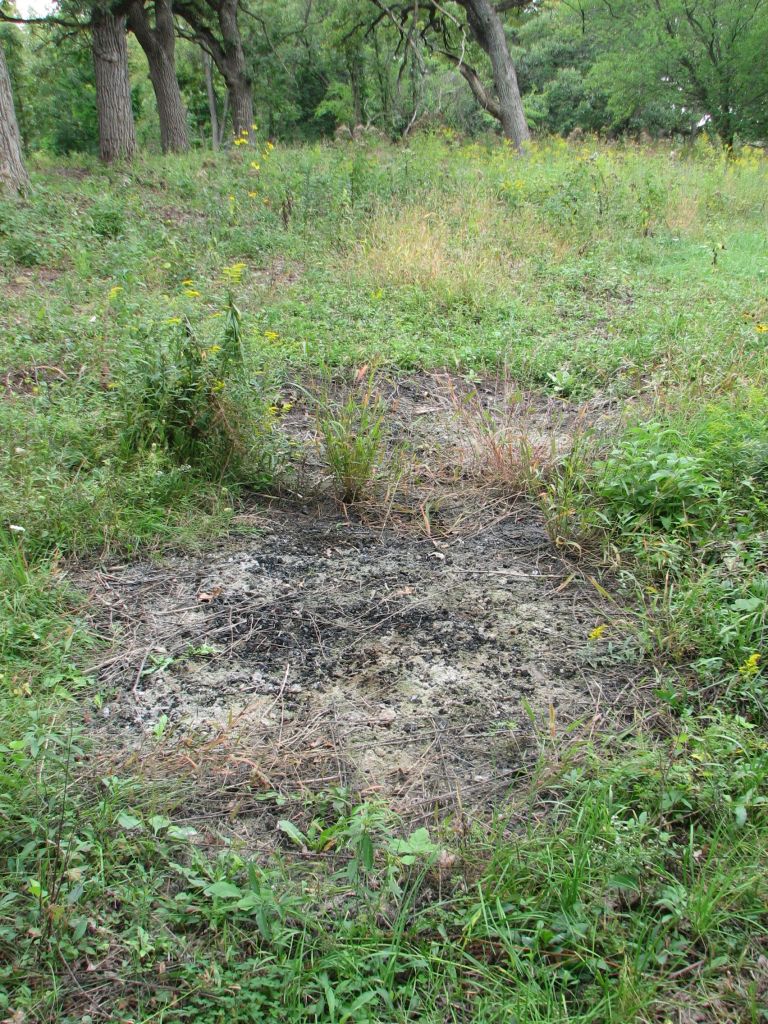
View of burn scar.
Old Burn Scar at Healy Savanna
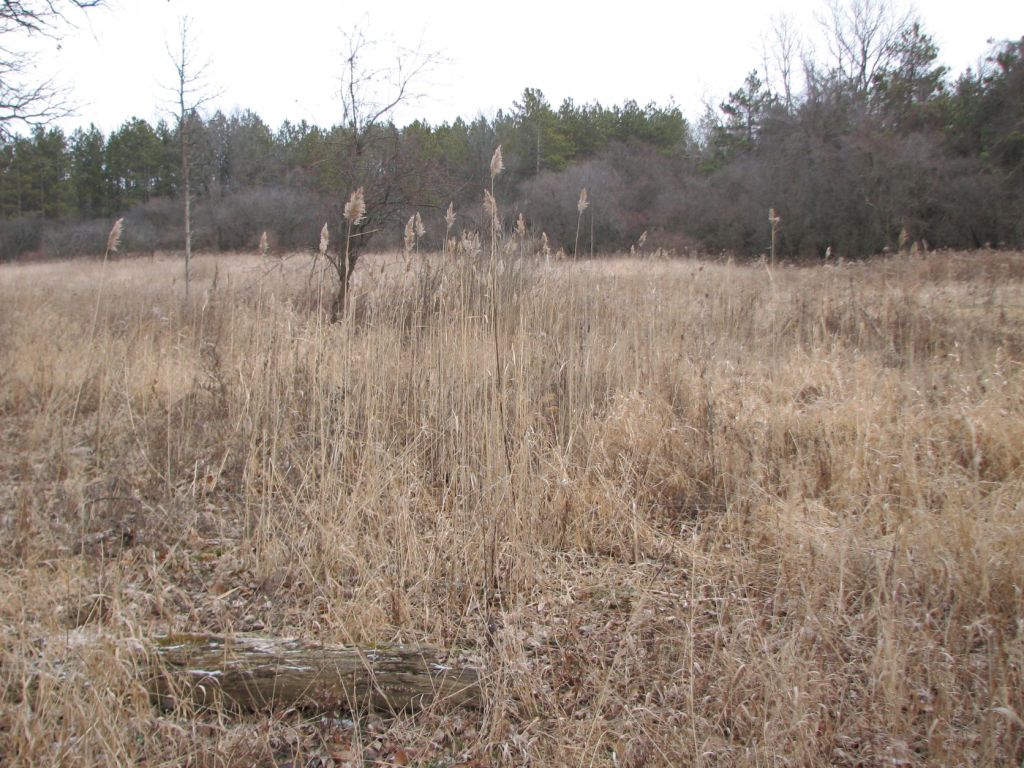
This is an old burn scar that was a pile of ash six years ago that has since turned into a patch of common reed (Phragmites australis). Image taken January 14, 2023.
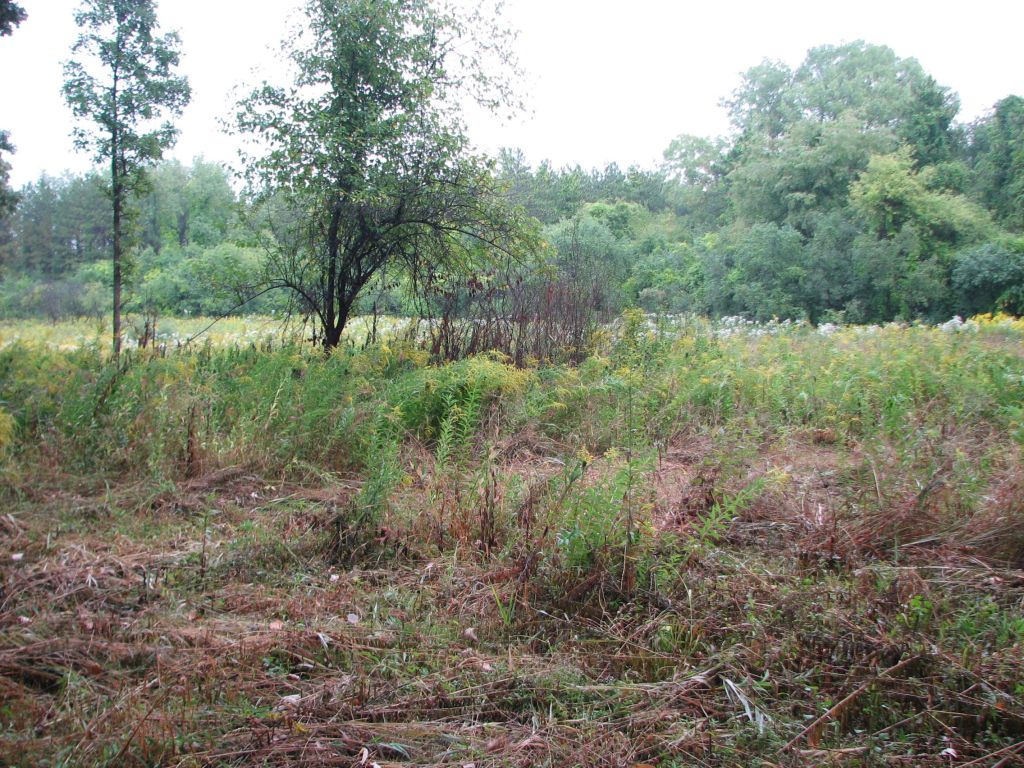
The same old burn scar on 8/17/2023. It had been mowed.
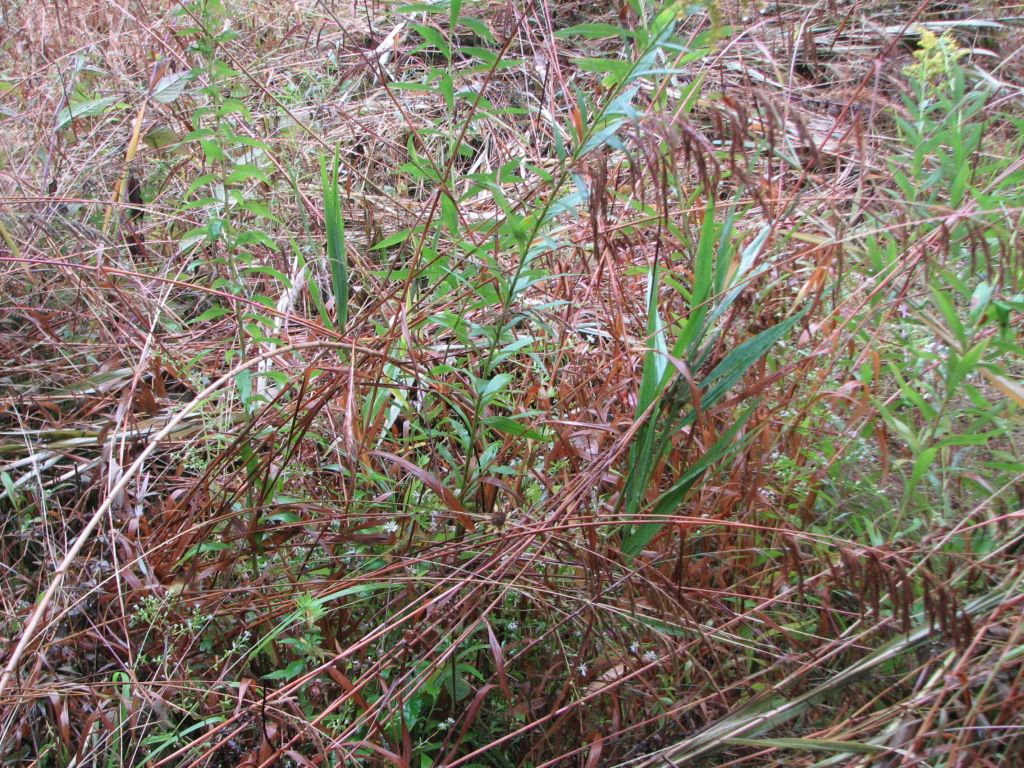
A closer look shows the common reed is still present.
The Corridor
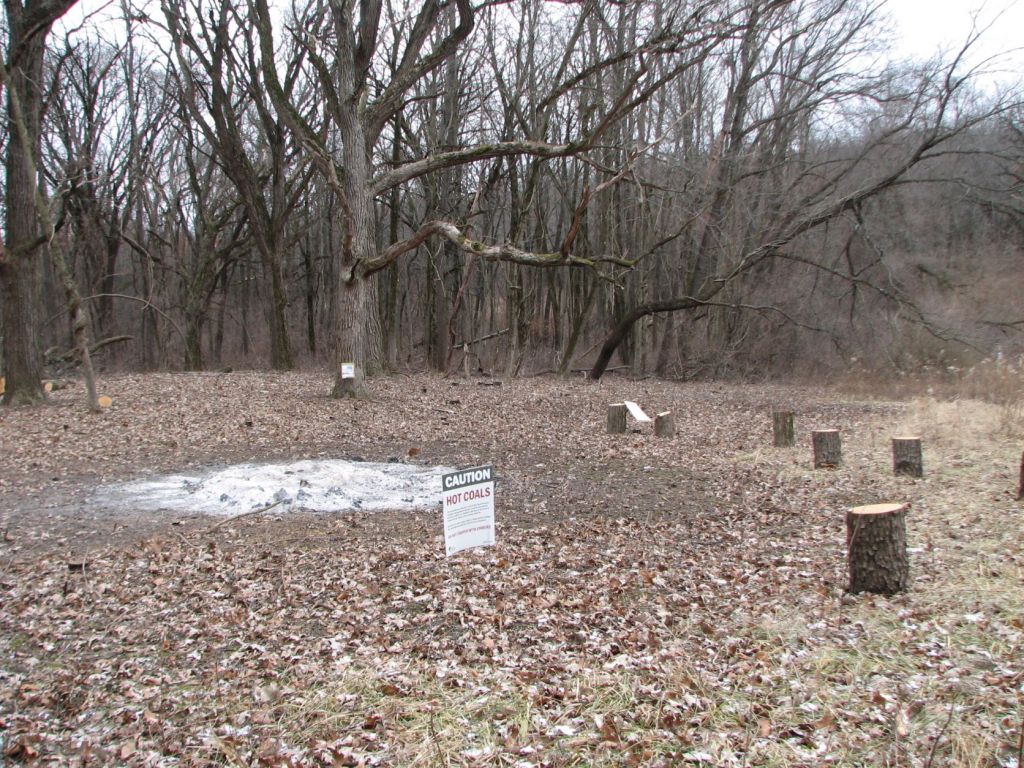
View on 1/14/2023.
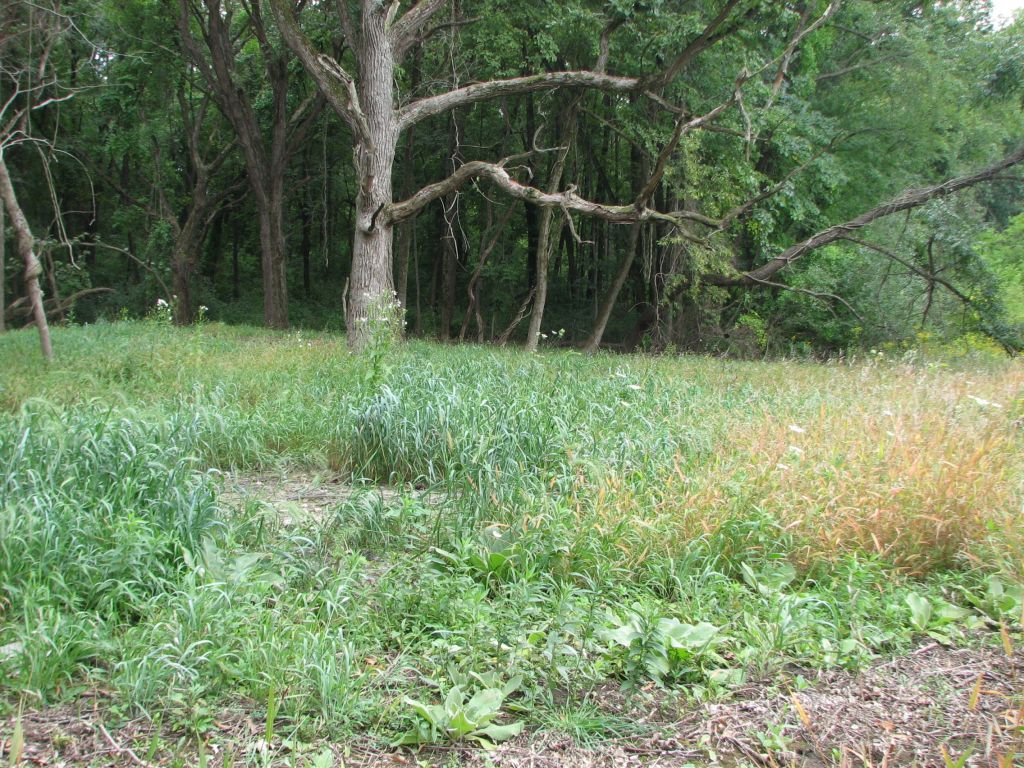
View on 8/16/2023.
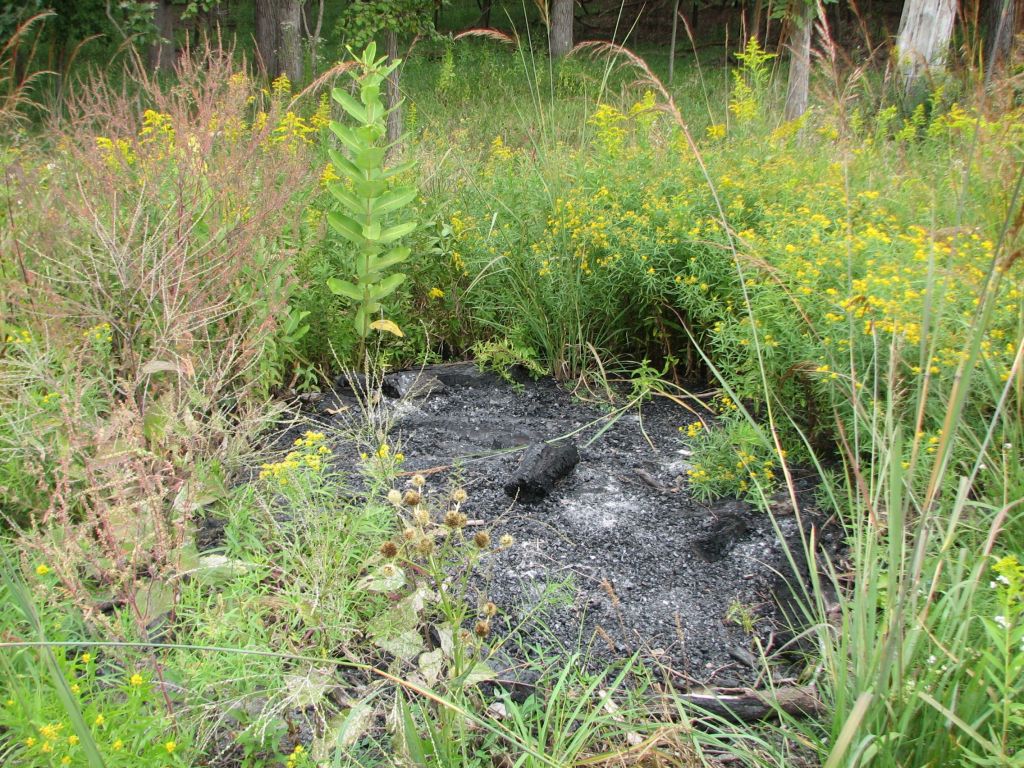
Burn scar south of the corridor on the edge of the 160.
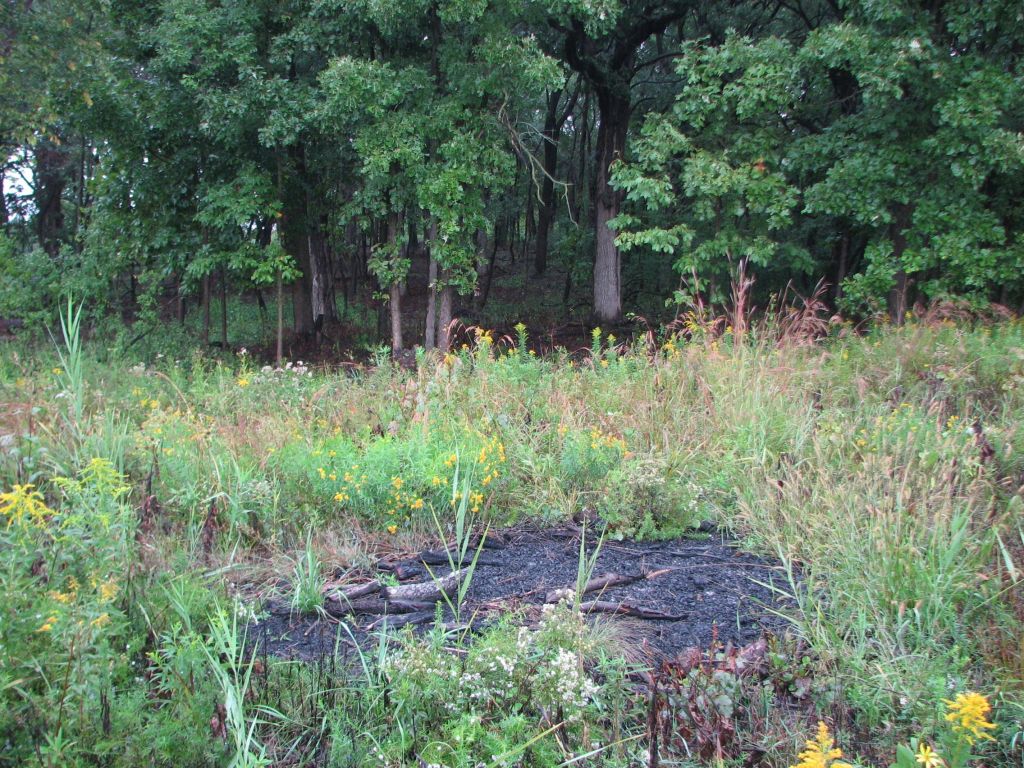
Second burn scar south of the corridor on the edge of the 160.
I do not have a positive view of piling and burning wood. If the wood was left it would decompose given time. The impact on the soil from burn scars is much longer lasting.


 Stewardship Chronicles
Leave a comment