Summary
Introduction
Chart
Images
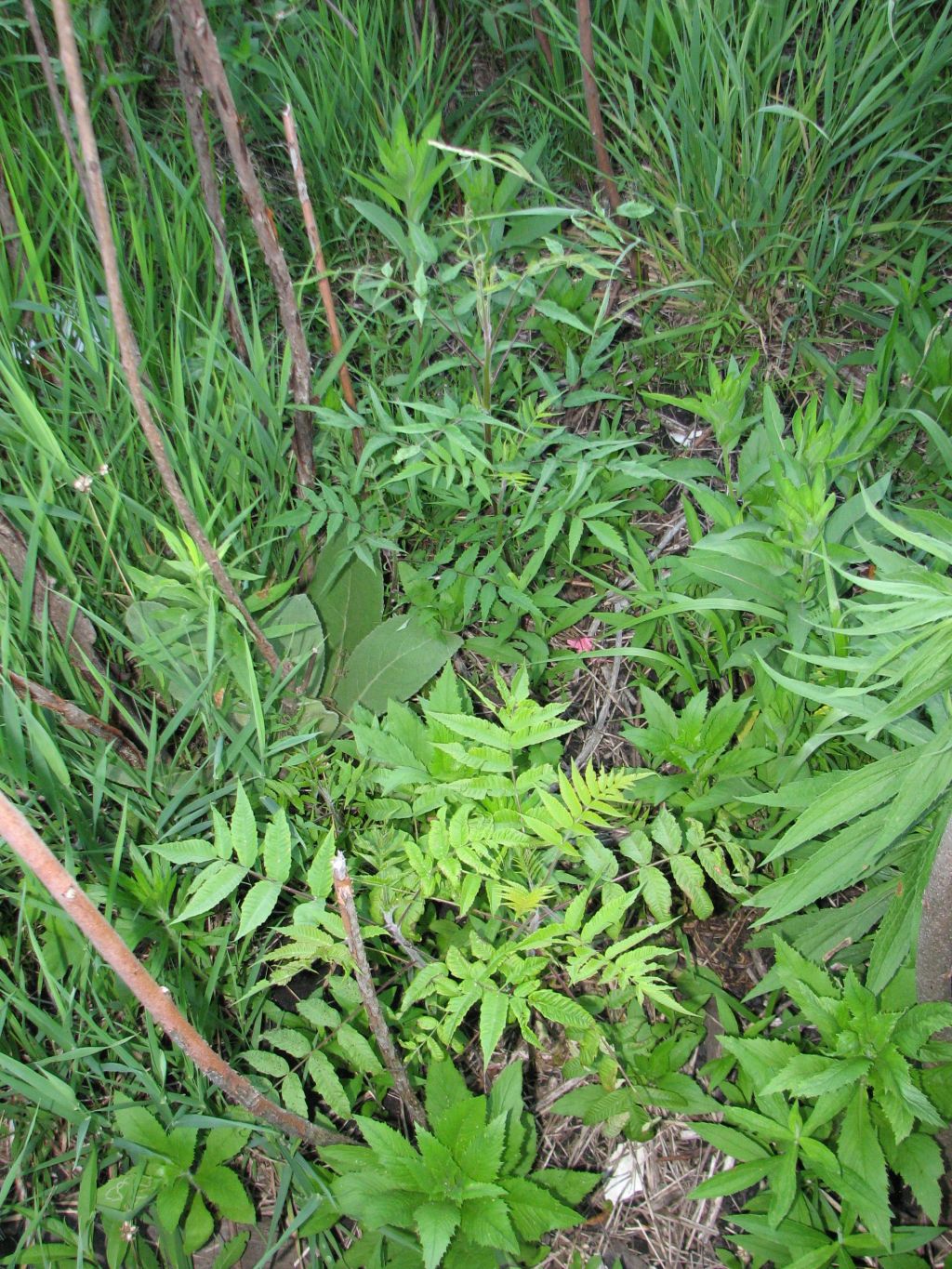
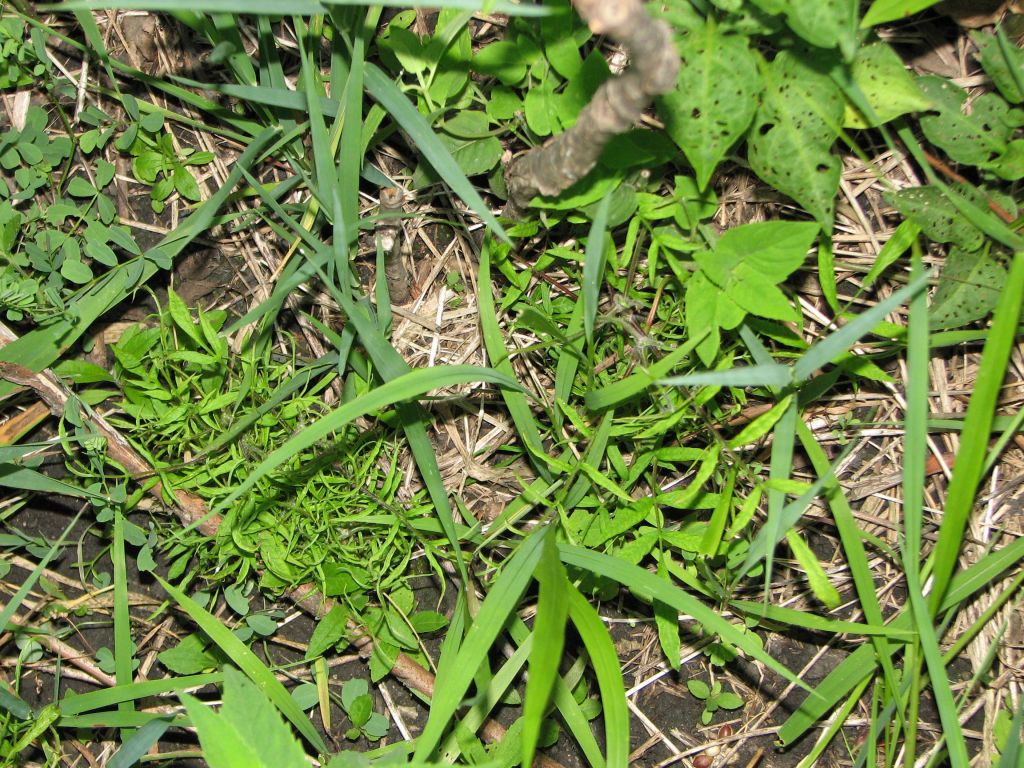
Work area and examples of sprouting staghorn sumac are shown.
Discussion
Conclusion
Future Work
Treatment Dates, Stems Frilled and Treated, and Sprouts Observed 6/30/24
This is the count of dead stems located in a surveyed work area and the count of sprouts found that were used to make the chart.
Introduction
On various dates from fall into winter, frills (cuts around the stem) were made to staghorn sumac stems. Glyphosate (41 percent active ingredient) was applied to the frills. I then counted the number of sprouting stems versus dead stems in an area treated on each date.
On November 5th, I did the additional step of cutting the stems to see if this changed the effectiveness of the herbicide application.
Chart
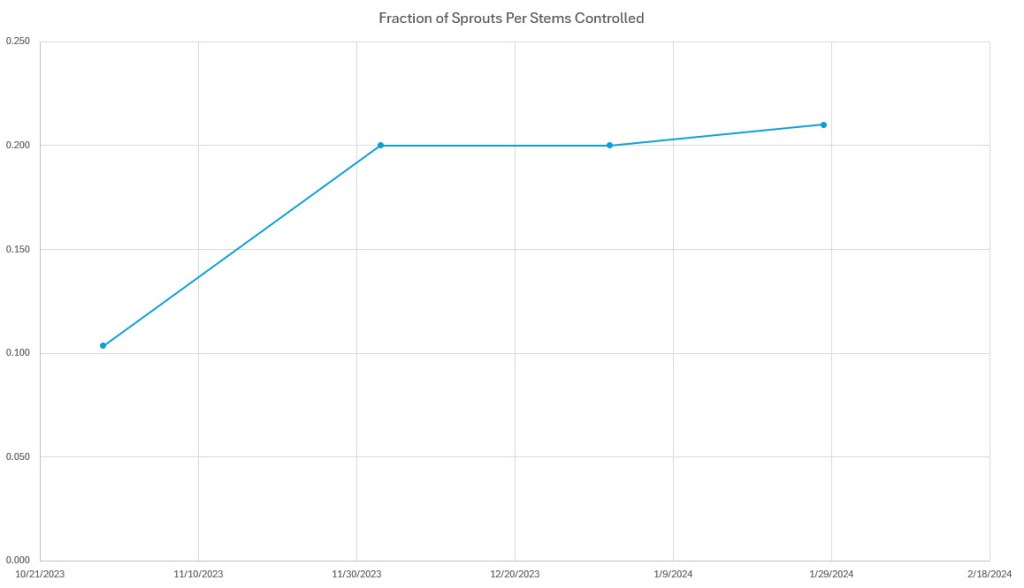
The chart does not include data points from November 5th or December 17th. On November 5th, 2023, I trialed an additional step of cutting the stems. The treatment on December 17th, 2023, had a lot of sprouting in an area where only 31 stems were treated and therefore was removed as an outlier. See discussion for possible reason.
Images
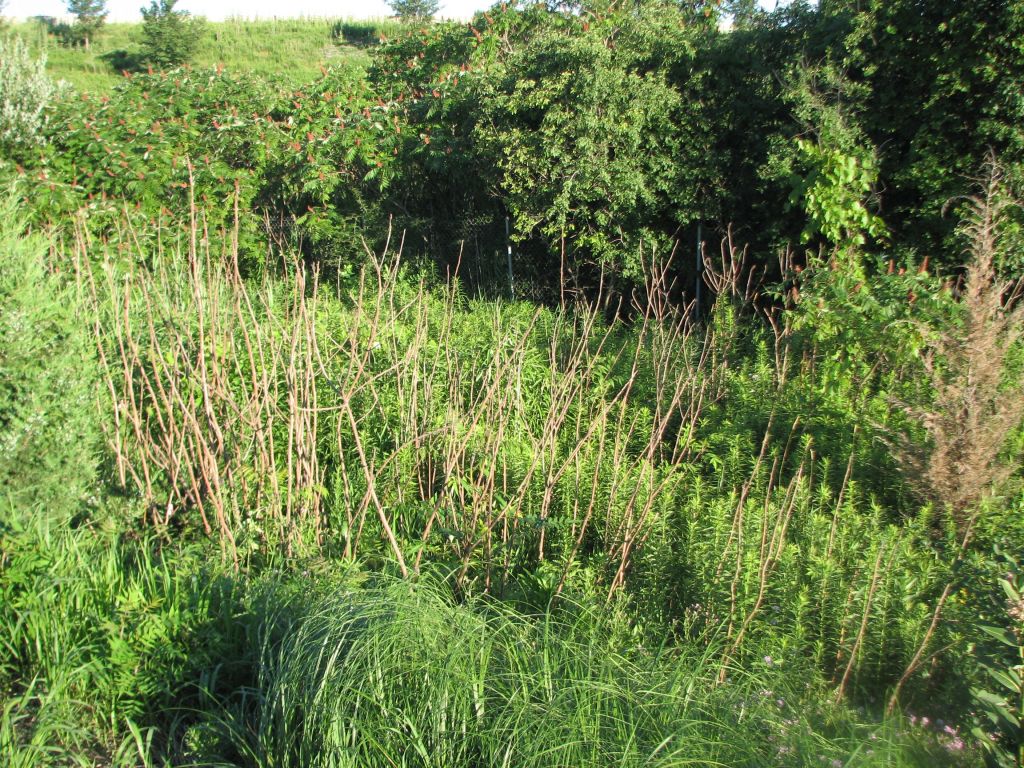
Part of an area where staghorn sumac was controlled. Some stems on the right side of the image missed being treated. The staghorn sumac in the background is across a fence on another property.
Sprouts in area where control occurred in January.
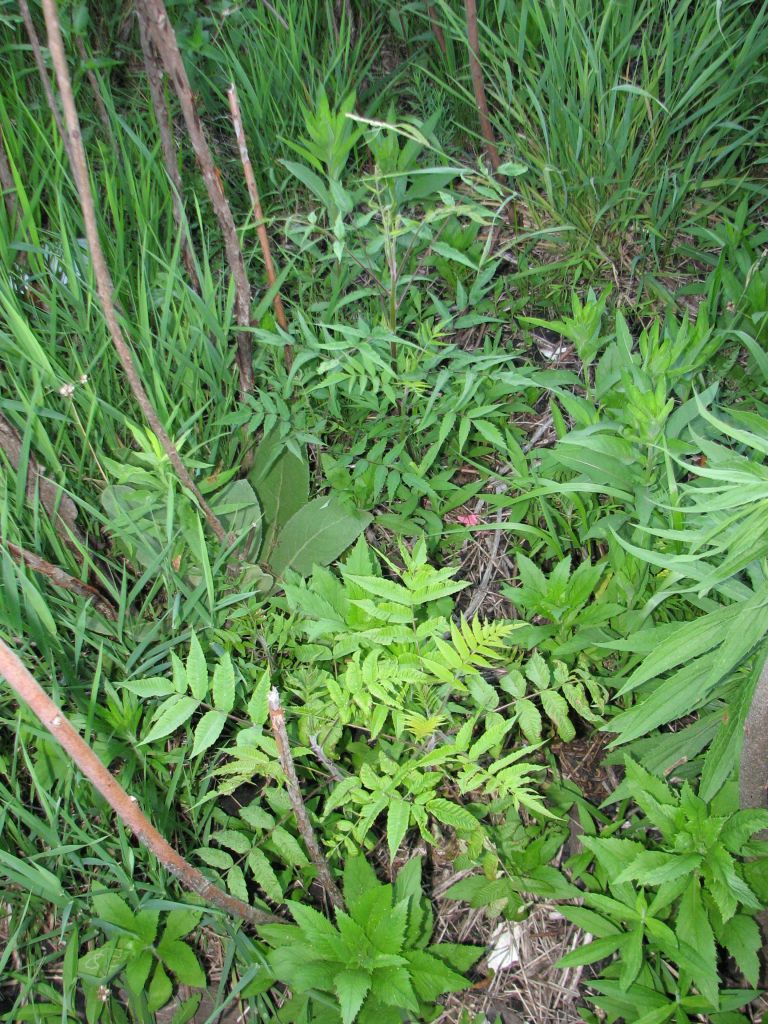
Sprouts heavily affected by the herbicide application.
Added on 9/29/2024: The heavily damaged sprouts shown below are now gone. It can be assumed they were killed by the herbicide. In contrast, many sprouts that were able to grow taller have survived. A survey will have to be done again to see if there are any changes from the sprouts that died from the herbicide application after the original survey was done.
Discussion
The number of “sprouting stems” (combined both tall and heavily impacted by herbicide) per “stem that had been killed by the herbicide treatment” increased as fall progressed into winter.
The least number of sprouts per controlled stems was on November 5th. This is when the additional step of cutting the stems before creating a frill and applying herbicide was done as a test. Only one sprout was located on the edge of where this work was done. This treatment option has the potential to result in the best control and will receive trials on an expanded number of stems in the future.
The data point from December 17th was not included on the chart. I considered this data point to be an outlier and removed it. I am unsure of the reason for the high number of sprouts in this area. Possibly, it was due to control work done during a previous year when a lower concentration of herbicide was applied. Having previously applied enough herbicide to kill the stems, but not the roots, could have caused the increased sprouting response observed in this part of the area.
Conclusion
I recommend applying glyphosate concentrate to frills around staghorn sumac stems earlier in the fall. By late fall into winter the number of sprouting stems increases. Control still can be done in winter; it just won’t be as effective.
Applying glyphosate concentrate to frills made around cut stumps was the most effective. This year, I will trial this technique on a larger number of stem to see if this method can better prevent sprouting.
Further Work
On November 21st, 2020, I applied 41 percent and 26 percent active ingredient glyphosate to frills around staghorn sumac stems. The clone I treated with 41 percent active ingredient glyphosate not only had complete control of the sumac, but damage was visible to untreated black raspberries in the treatment area. The edge of a different clone treated with 26 percent active ingredient glyphosate had good control. At that time, I decided to use 26 percent active ingredient glyphosate going forward. However, results from a treatment on 1/1/2023 led me to increase the concentration to 41 percent active ingredient glyphosate for the treatment covered in this blog post.
When done earlier in fall, the results of the 2023/2024 dormant season applications of 41 percent glyphosate met my goal of 90 percent control. However, I am disappointed with the results given my previous treatment at this concentration having resulted in complete control and even appearing to be more herbicide than was necessary.
I am aware of two possible reasons the 2023/2024 results were less effective. The first is the treated clone had part of it treated with a lower concentration of herbicide previously. The second is only part of the clone was treated with herbicide because the remainder of the clone was on the other side of a property line.
In the future, I should treat an entire clone, which had not previously been treated with herbicide, to see if I can repeat the success of my application from 2020.
Treatment Dates, Stems Frilled and Treated, and Sprouts Observed 6/30/24
October 29th: Applied Herbicide to 105 Stems on this date. Area surveyed for sprouts had 29 large dead stems. Two large sprouts and one small sprout located.
November 5th: Applied Herbicide to 30 Stems (these were cut as a test). One small sprout on edge of treatment area.
December 3rd: Applied Herbicide to 20 Stems. One Large sprout and three small sprouts located.
December 17th: Applied Herbicide to Frills on 31 stems. Fourteen large to medium sprouts located.
January 1st: Applied Herbicide to about 100 stems. Twenty large sprouts located.
January 28th: Applied Herbicide to about 100 stems. Twenty-One large sprouts located.
 Stewardship Chronicles
Leave a comment