Websites with information about the preserve are included below.
https://www.orlandgrassland.org/
https://volunteer-fpdcc.givepulse.com/event/414052-orland-grassland-stewardship-volunteer-days
https://fpdcc.com/places/locations/orland-grassland/
https://dnr.illinois.gov/inpc/lwr-display.orland-grassland%C2%A0.html
Summary
Map
Images From Site
1. Meeting location according to FPCC volunteer website.
2. Sign at Old Farm Road Trail entrance.
3. View beyond cable gate at Old Farm Road Trail entrance.
4. Looking toward Bobolink Hill.
5. Looking up Bobolink Hill from low ground.
6. Looking west from crest of Bobolink Hill.
7. Sentinals watch the intruder (me).
8. My camera was not fast enough to focus on what I think was a Northern Harrier.
9. Miscanthus sinensis near crest of Bobolink Hill. I only saw it in this area. I believe it might have spread vegetationally after being planted near a previous farm house. All that remains of the farm house now is the foundation.
Images of Work (Not From Workday)
10. First area I came upon where invasive species had been removed when traveling east on Old Farm Road Trail.
11. Closer view of first area where invasive species had been removed when traveling east on Old Farm Road Trail.
12. View of burn scar looking north of second area where invasive species had been removed when traveling east on Old Farm Road Trail.
13. View of burn scar looking east of second area where invasive species had been removed when traveling east on Old Farm Road Trail.
14. View of burn scar looking south of second area where invasive species had been removed when traveling east on Old Farm Road Trail.
15. View of burn scar looking west of second area where invasive species had been removed when traveling east on Old Farm Road Trail.
16. Third area where invasive woody species had been removed when traveling east on Old Farm Road Trail.
17. Forestry mowing under oak trees where Old Farm Road Trail meets the bike path on the east side of the preserve.
Images of Workday Location
18. Close view of workday area.
19. View of workday area with three separate ash piles visible. The ash piles are in the foreground, left of the pile of logs in the wetland, and right of the pile of logs in the wetland.
20. Distant view of workday area looking towards the north.
21. Distant view of workday area looking towards the east.
22. Distant view of workday area looking towards the south.
23. Distant view of workday area looking toward the west.
Discussion
Map
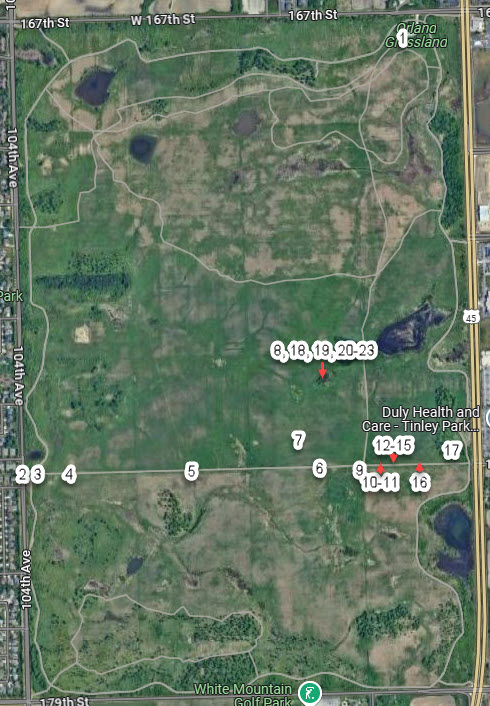
Retrieved February 2nd, 2025 from Google Maps. (n.d.) https://www.google.com/maps/search/orland+grassland/@41.5735693,-87.8724199,3252m/data=!3m2!1e3!4b1?entry=ttu&g_ep=EgoyMDI1MDIwMi4wIKXMDSoJLDEwMjExMjM0SAFQAw%3D%3D
Images From Site
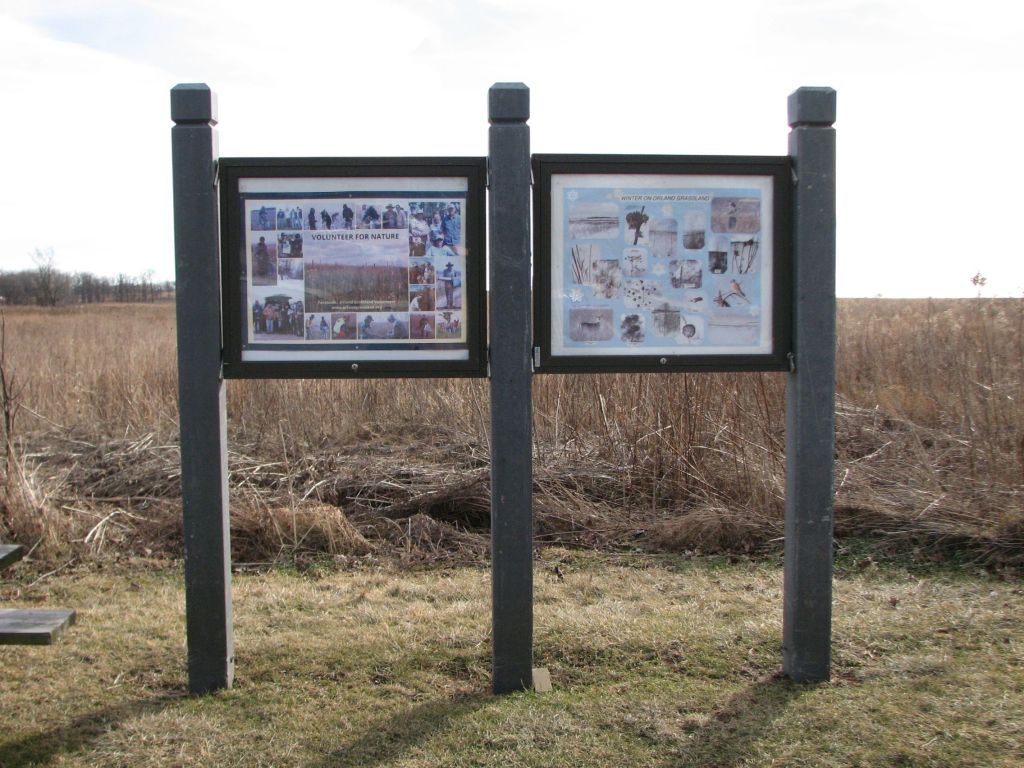
1. Meeting location according to FPCC volunteer website.
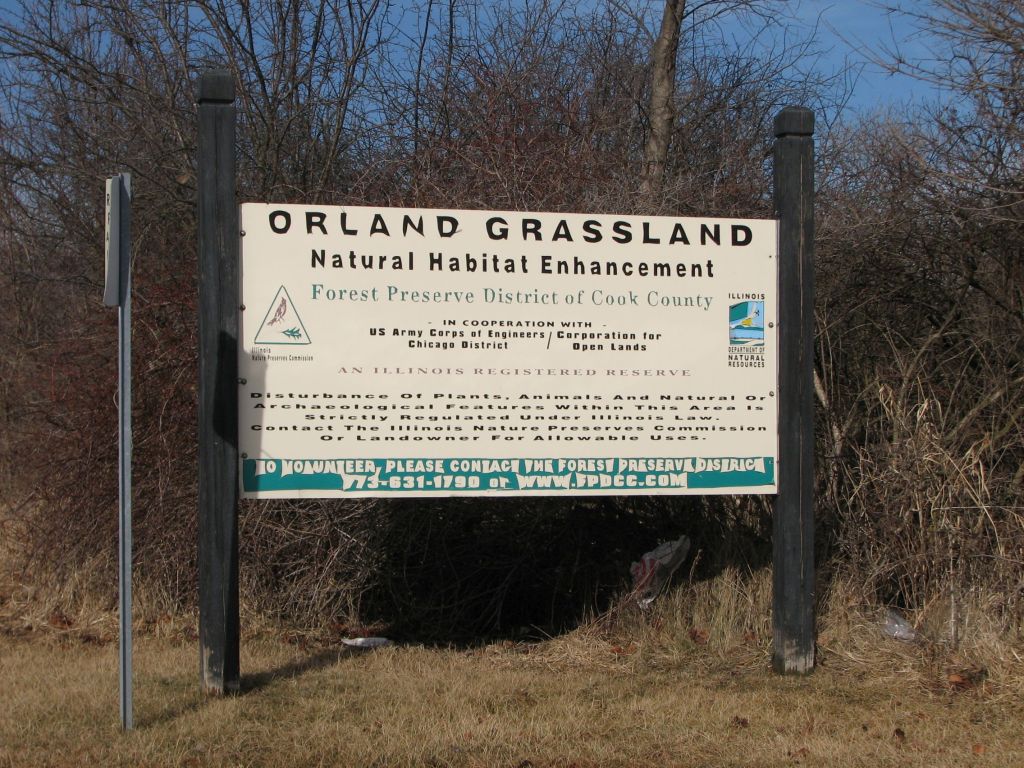
2. Sign at Old Farm Road Trail entrance.

3. View beyond cable gate at Old Farm Road Trail entrance.

4. Looking toward Bobolink Hill.

5. Looking up Bobolink Hill from low ground.
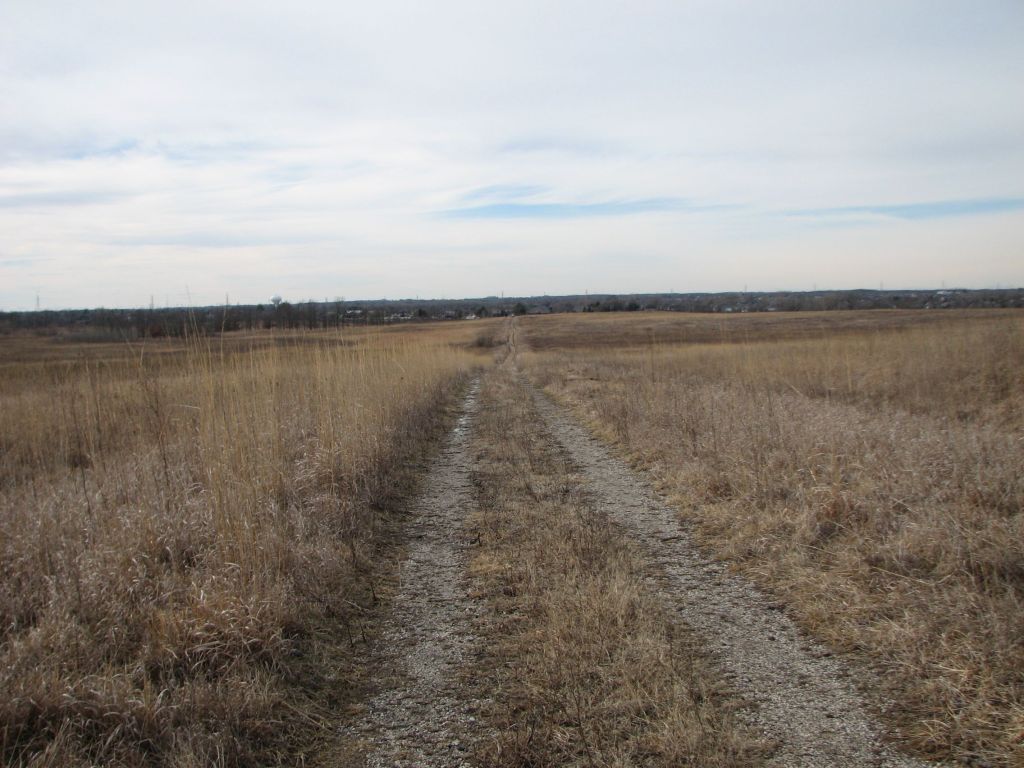
6. Looking west from crest of Bobolink Hill.

7. Sentinals watching the intruder (me).

8. My camera was not fast enough to focus on what I think was a Northern Harrier.

9. Miscanthus sinensis near crest of Bobolink Hill. I only saw it in this area. I believe it might have spread vegetationally after being planted near a previous farm house. All that remains of the farm house now is the foundation.
Images of Work (Not From Workday)
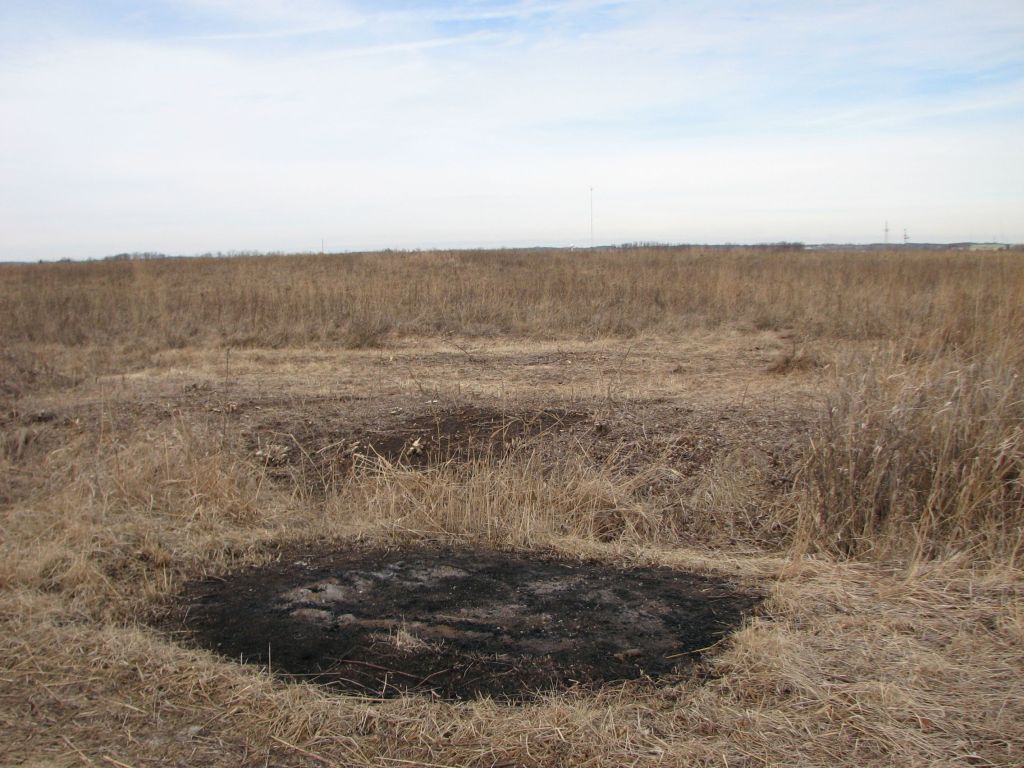
10. First area I came upon where invasive species had been removed when traveling east on Old Farm Road Trail.

11. Closer view of first area where invasive species had been removed when traveling east on Old Farm Road Trail.

12. View of burn scar looking north of second area where invasive species had been removed when traveling east on Old Farm Road Trail.

13. View of burn scar looking east of second area where invasive species had been removed when traveling east on Old Farm Road Trail.

14. View of burn scar looking south of second area where invasive species had been removed when traveling east on Old Farm Road Trail.
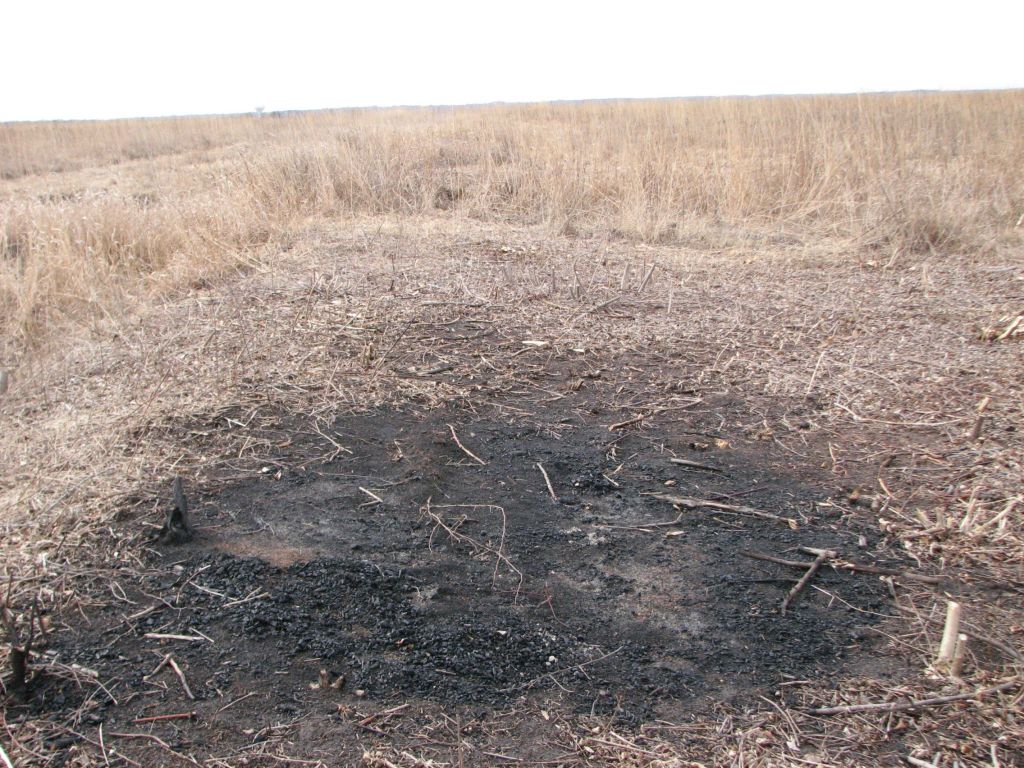
15. View of burn scar looking west of second area where invasive species had been removed when traveling east on Old Farm Road Trail.

16. Third area where invasive woody species had been removed when traveling east on Old Farm Road Trail.
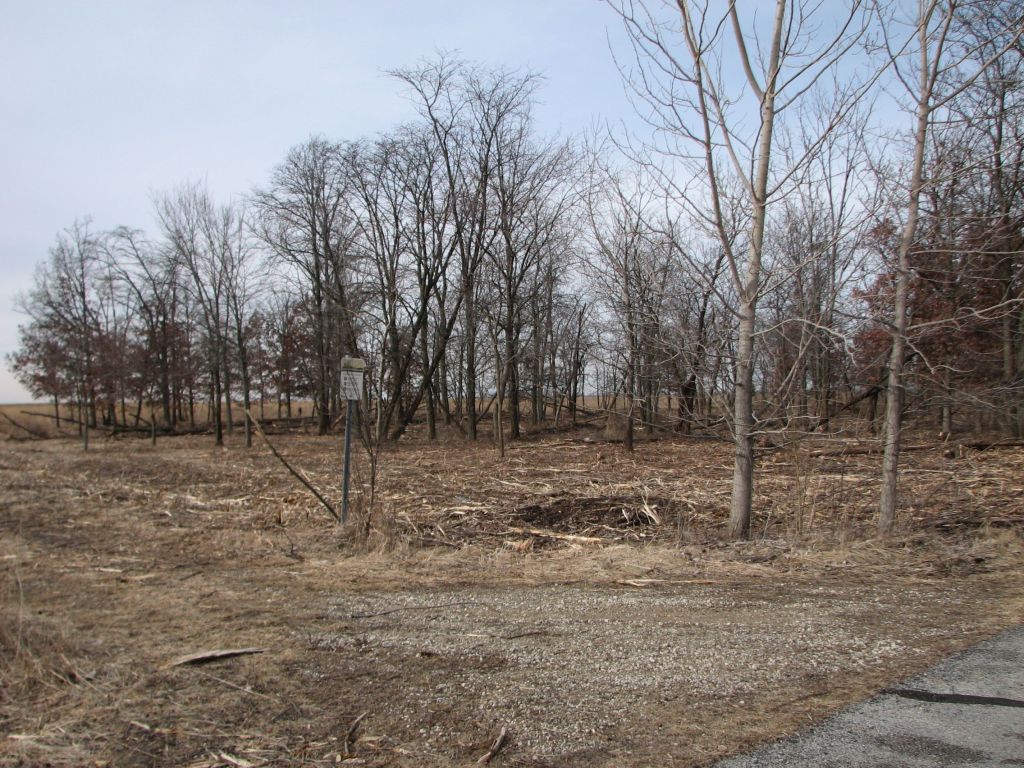
17. Forestry mowing under oak trees where Old Farm Road Trail meets the bike path on the east side of the preserve.
Images of Workday Location
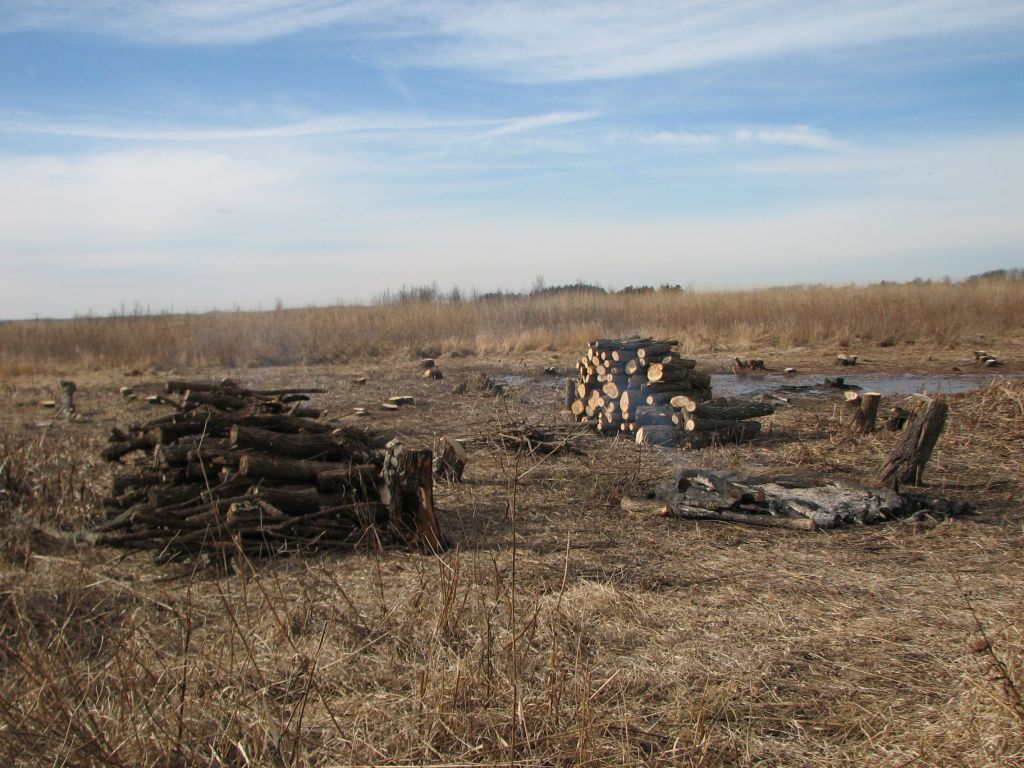
18. Close view of workday area.

19. View of workday area with three separate ash piles visible. The ash piles are in the foreground, left of the pile of logs in the wetland, and right of the pile of logs in the wetland.
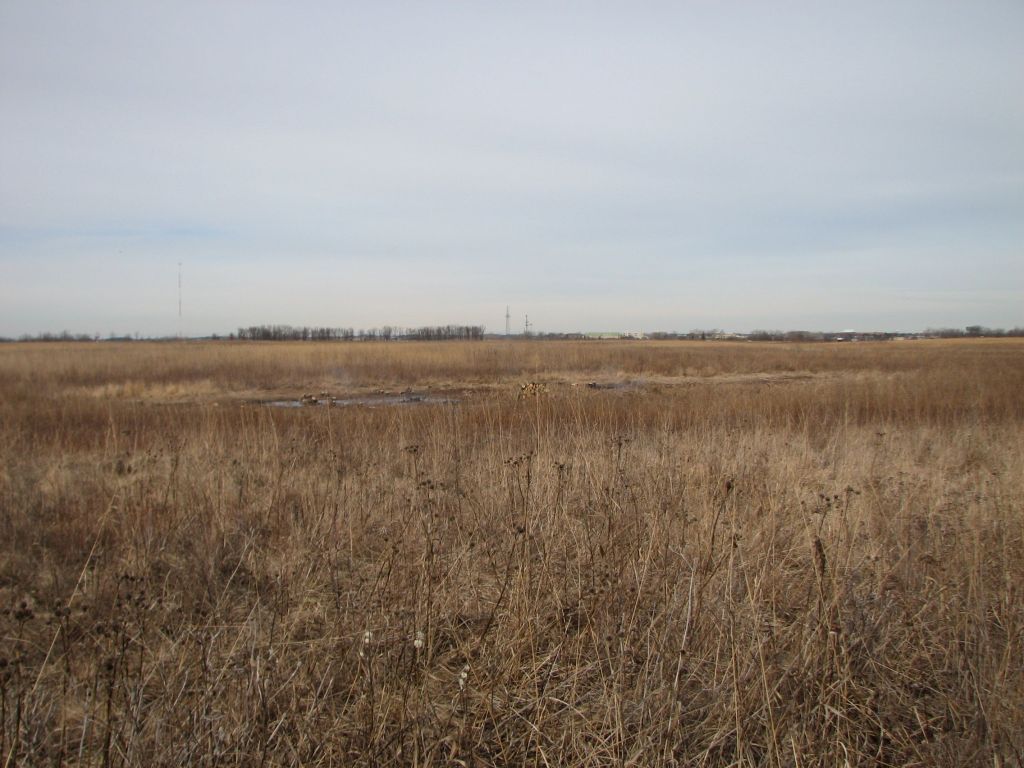
20. Distant view of workday area looking towards the north.

21. Distant view of workday area looking towards the east.
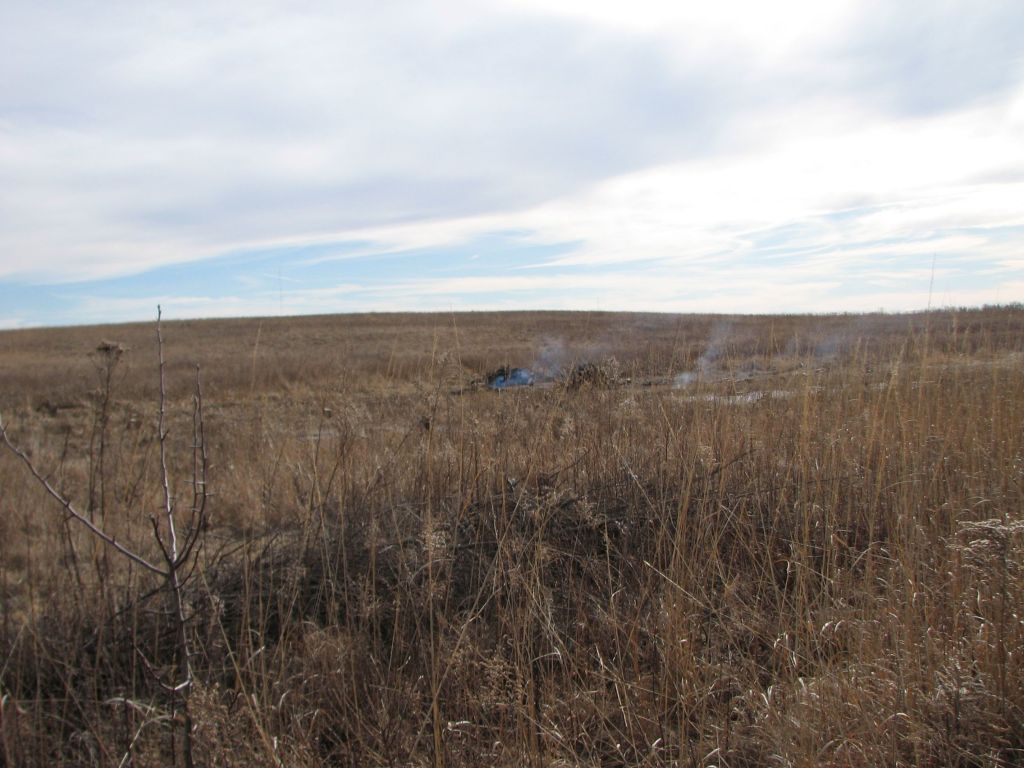
22. Distant view of workday area looking towards the south.

23. Distant view of workday area looking toward the west.
Discussion
The workday was not what I was expecting. I thought woody invasive species were going to be removed with loppers and saws. I was told other people are paid to do this work at Orland Grassland.
I went to the meeting location listed on the FPCC website. No one from the volunteer group came to the meeting location. It was only by chance a FPCC employee, who attends workdays, also came to the meeting site. This FPCC employee made a call to find out where the volunteers were working. I followed this employee to where the volunteer group was parked and to the workday location.
If you plan to attend workdays at this site, I suggest sending an email to the steward for details about where the volunteers will be meeting and to let her know to expect you.
At this workday, what I believe were native black willows (Salix nigra) were cut with a chainsaw. An attempt was made to burn the logs. The logs did not burn well because they were wet and green. Everything was wet because rain had occurred the night before. The logs mostly ended up being piled so they could dry. Dry logs from another location were moved to the wetland and piled. I don’t know why. Possibly the reason was it would be safer to burn a log pile in the wetland than the surrounding prairie.
This workday consisted of hauling logs and tending a fire. Hauling logs is too much for my back. If you are strong, healthy, and enjoy burning then these workdays are for you. Before attending workdays in the future, I will inquire about the type of work being done. I am unable to haul heavy logs. I do not like helping burn brush or logs because soil is damaged creating scars that tend to get colonized by invasive species.
The willows were being removed because they can create perches for predators that will drive away grassland birds. Herbicide was not applied to the stumps. If herbicide is not applied, then the willows will grow back. Willows are fast growing trees.
Willows do have wildlife benefits. Not only are willows a food source for many wildlife species, their early blooms are an important nectar and pollen source for numerous bees. See link below for details. These willows were removed because improving the habitat for rare grassland birds is the main objective at Orland Grasslands.
https://www.illinoiswildflowers.info/trees/plants/bl_willow.htm
 Stewardship Chronicles
Leave a comment