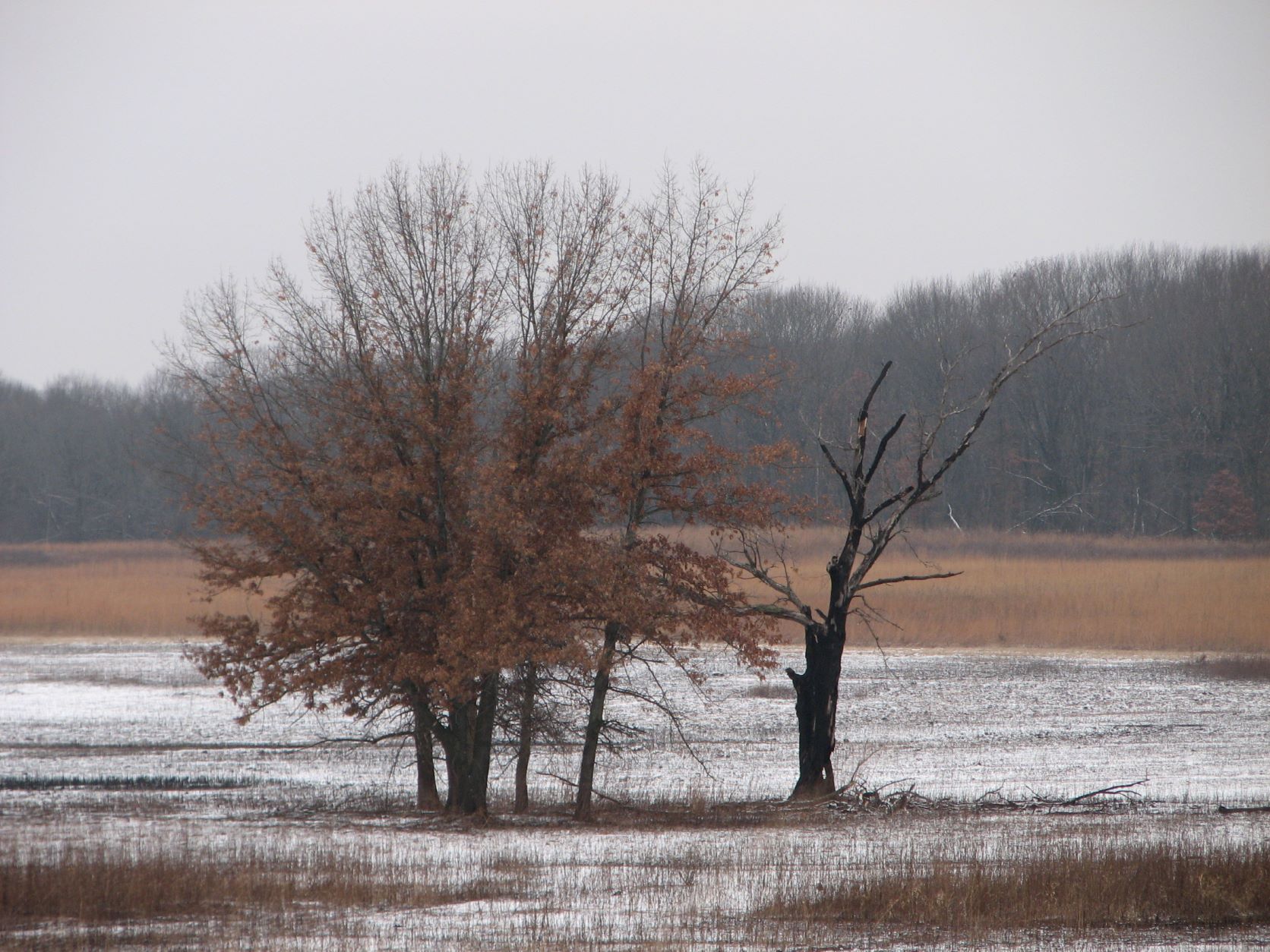
I visited Shoe Factory Road Prairie Nature Preserve last year. I took photographs of areas where gray dogwood, Cornus racemosa, had been mowed. I wanted to see how much impact the mowing had on these gray dogwoods the next year. These views are from along the trail that goes from the Carl R. Hansen Woods parking lot toward Shoe Factory Road Prairie Nature Preserve.
View of mowed area on 10/7/2024
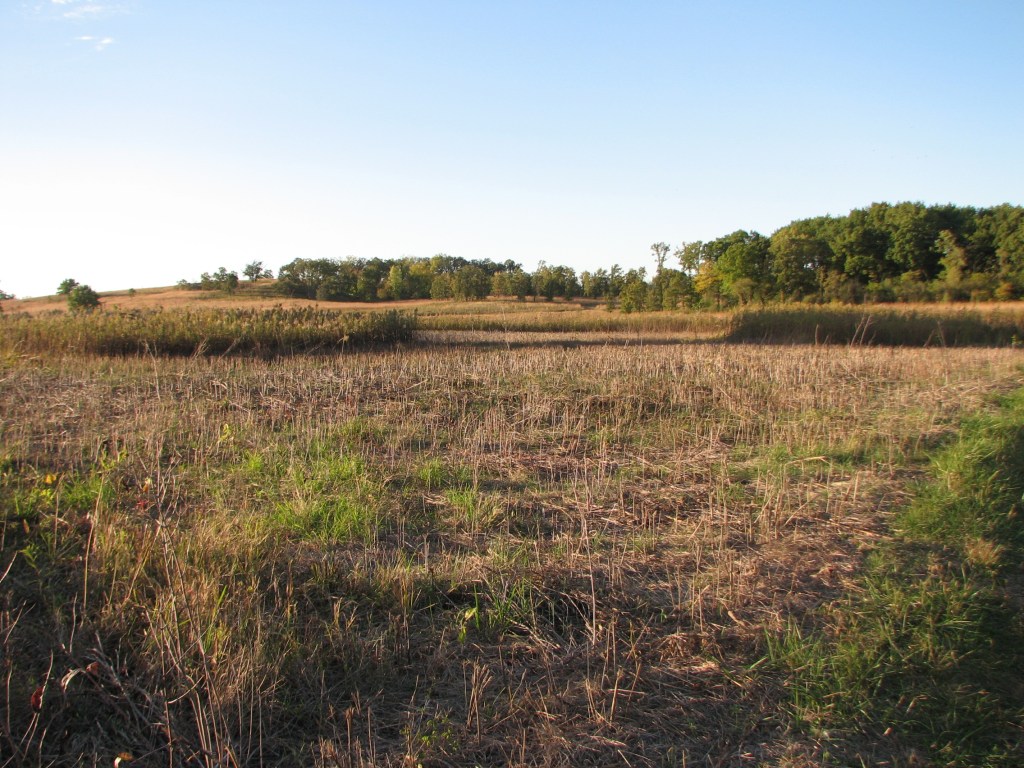
Same view on 8/12/2025

Closer view of mowed area on 10/7/2024
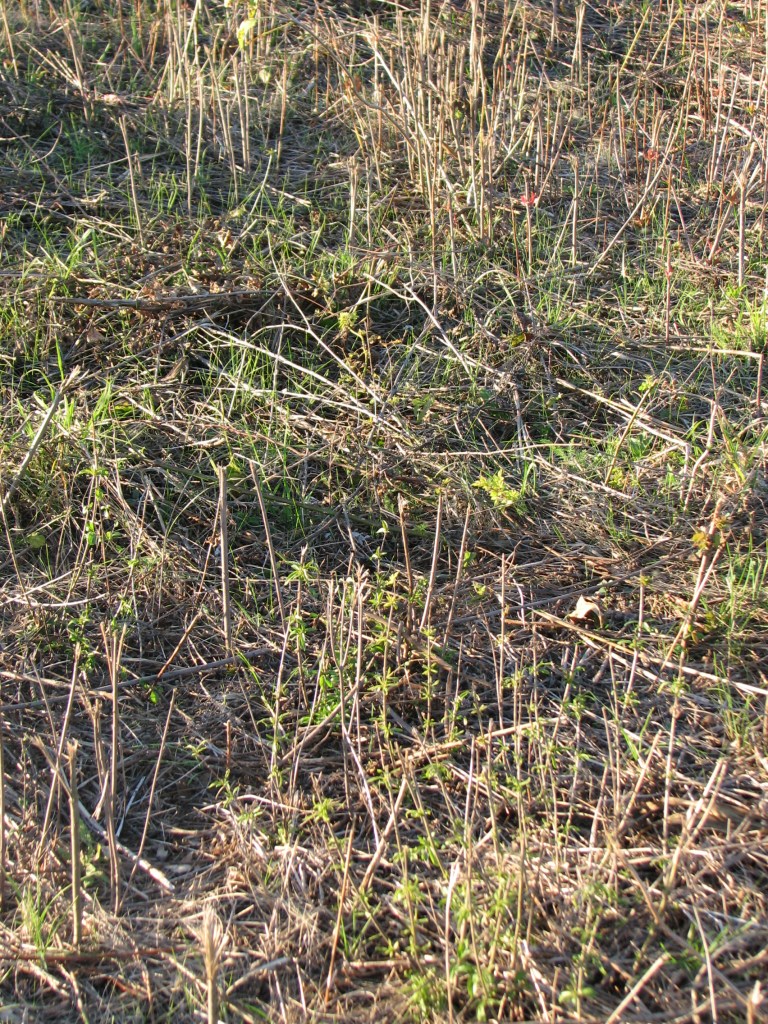
This is approximately the same location on 8/12/2025. A vehicle had been driven through the location.
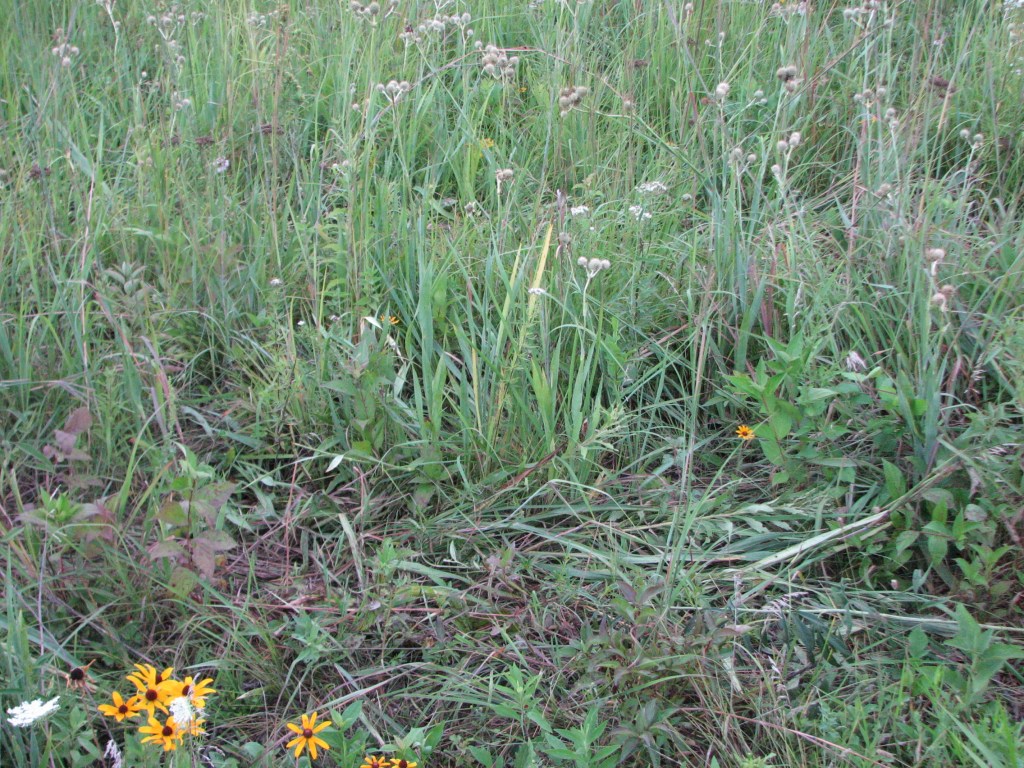
View looking into the mowed area on 8/12/2025, focusing on the abundant nodding onions (Allium cernuum).
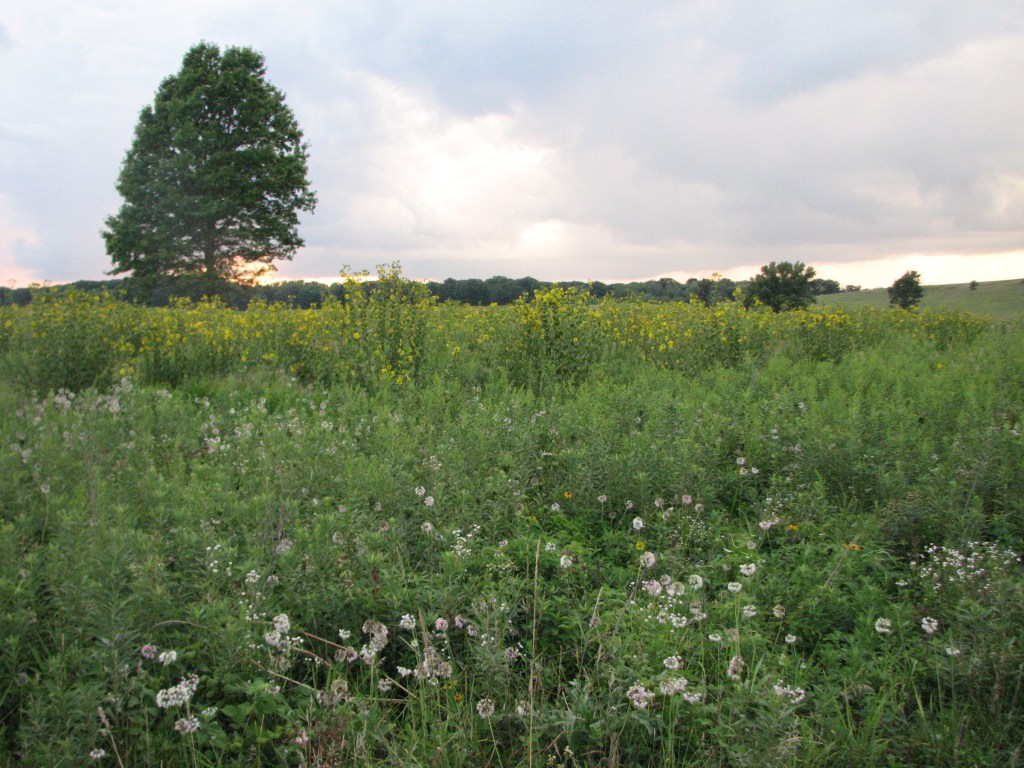
View looking into the mowed area on the opposite side of the trail. There are lots of black-eyed Susans (Rudbeckia hirta) where mowing occurred on this side of the trail.
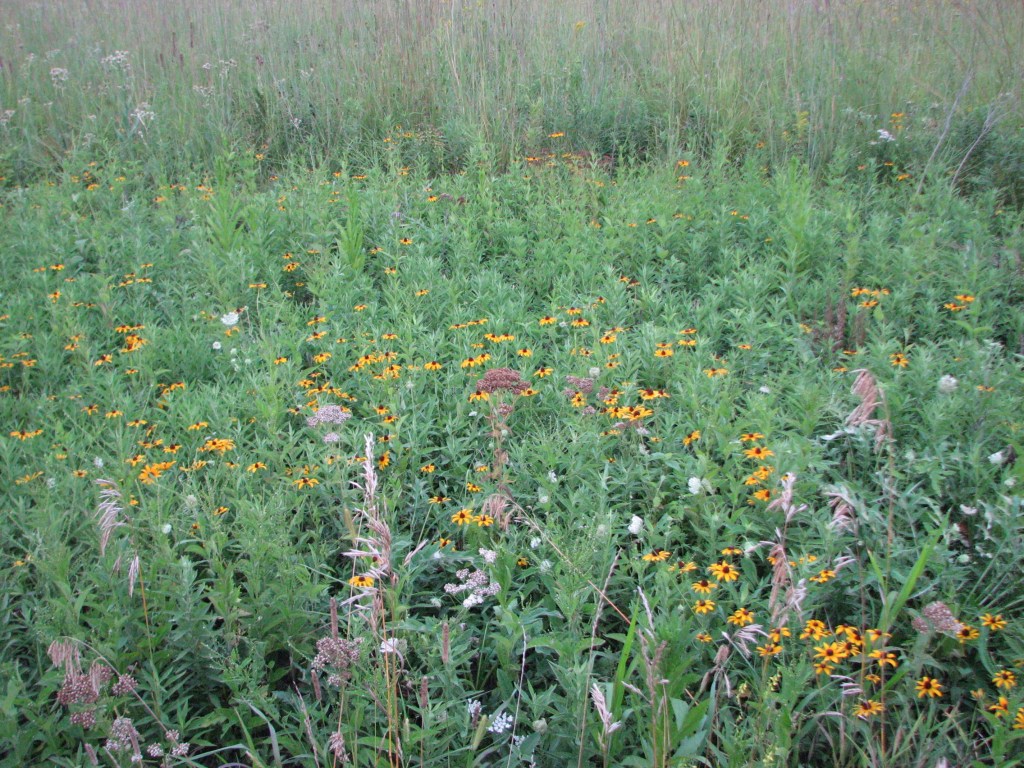
View of gray dogwood stumps. There were a lot of gray dogwood stumps with no evident sprouting. The stumps below have sprouting, but the sprouts are mostly over topped by the prairie plants.
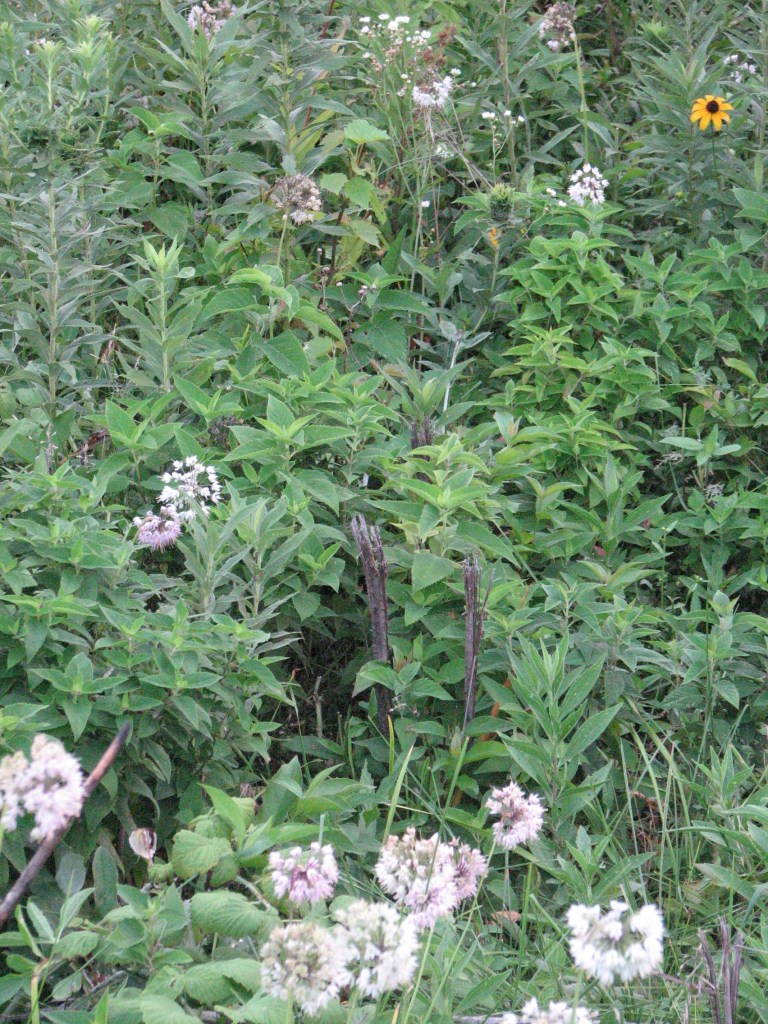
I spent years helping to cut gray dogwood during the dormant season. Stewards applied herbicide to the cut stumps. We would come back to find they had all sprouted. I am surprised at the success of summer mowing. Summer mowing provided superior control. It was more effective than cutting and applying herbicide to the stump during the dormant season. This method achieved results without all the effort. It appears periodic summer mowing of dogwood clones is all that is needed to achieve a high level of control.
Also, nodding onion and rattlesnake master (Eryngium yuccifolium) appear to be able to grow within gray dogwood clones. Black-eyed Susan would be a good plant to seed into gray dogwood clones. This should be done after the clones have been mowed.
 Stewardship Chronicles
Leave a comment