Contents
Map
Images From Site
Views
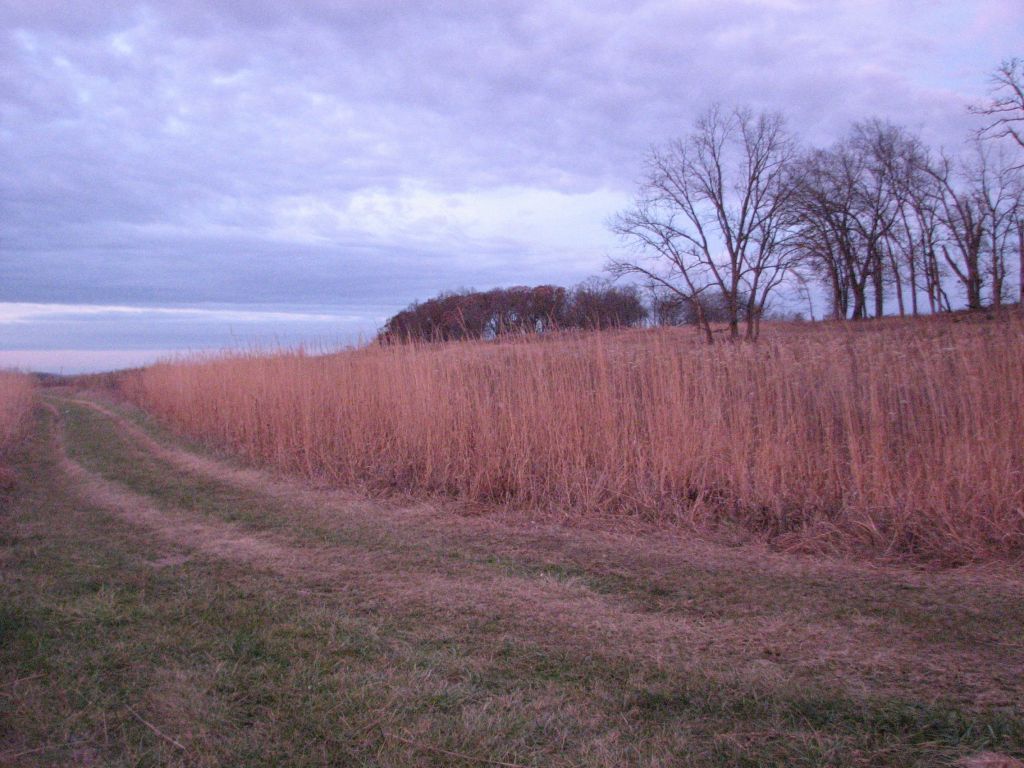
1. Prairie Grass Just After Sunset
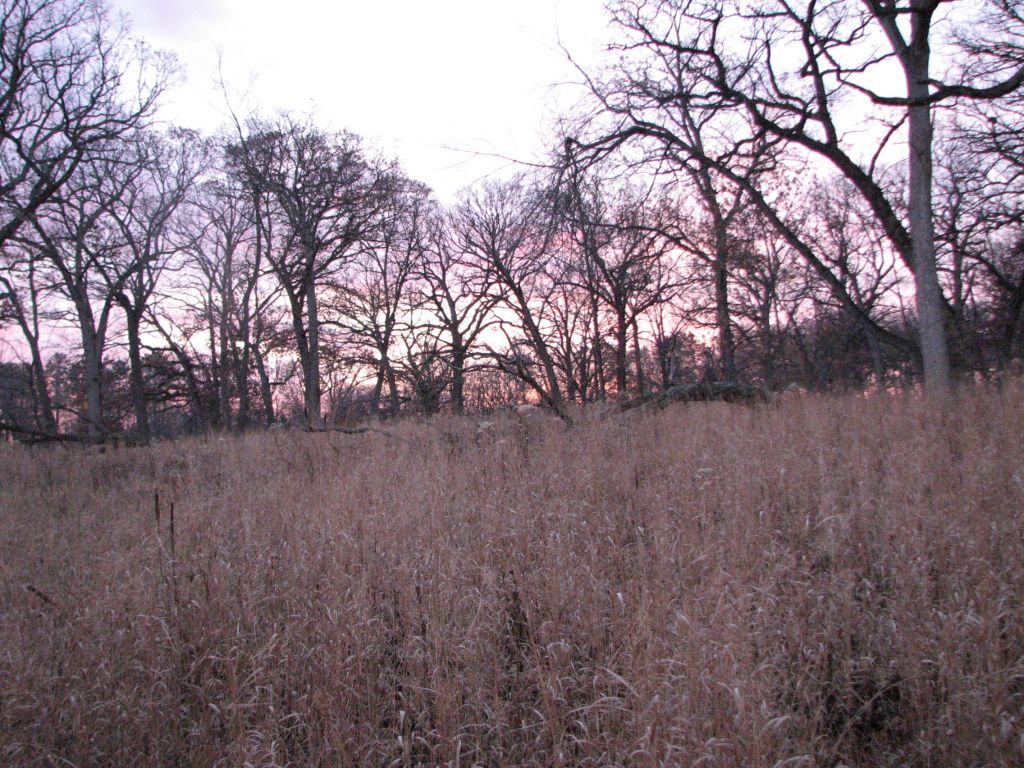
2. Sunset Through Oak Trees
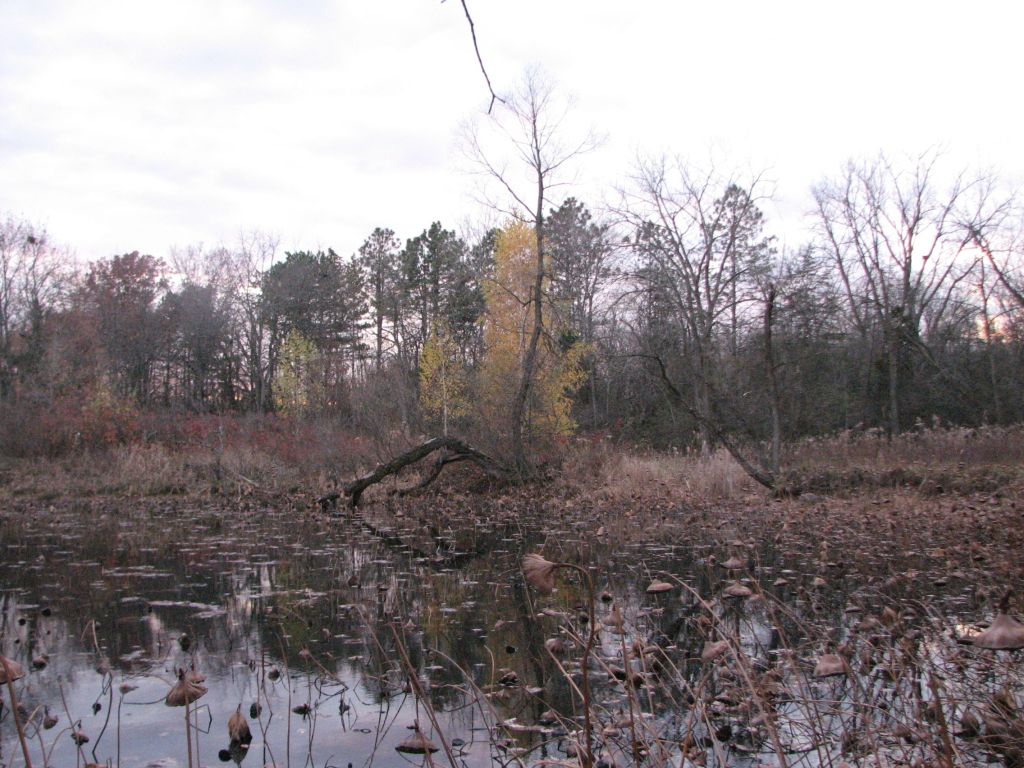
3. Late Fall Color of Birch (Yellow) and Raspberries (Red) with Lotus Seed Pods (Achenes) in Foreground
Burn Scar
4. Looking north of the southernmost burn scar on 2/15/2023.
5. Looking north of the southernmost burn scar on 11/22/2025.
6. Looking south of the southernmost burn scar on 2/15/2023.
7. Looking south of the southernmost burn scar on 11/22/2025.
8. Looking west of the southernmost burn scar on 2/15/2023.
9. Looking west of the southernmost burn scar on 11/22/2025.
10. Looking east of the southernmost burn scar toward hedge of arborvitae on 2/15/2023.
11. Looking east of the southernmost burn scar on 11/22/2025 toward where a hedge of arborvitae had been removed.
12. Leaves brushed away from the ground to show part of a burn scar. A plant growing in the burn scar, that was not growing in surrounding areas, is white clover (Trifolium repens).
13. Where a tree had fallen over, the upturned soil is now growing Yellow Toadflax (Linaria vulgaris).
Burn Scar and Black Tarp
14. Looking north of the burn scar and pile covered with black tarp on 2/15/2023.
15. Looking north of the burn scar and where the pile covered with a black tarp had been located on 11/22/2025.
16. Looking south of the burn scar and pile that was covered with a black tarp on 2/15/2023.
17. Looking south of the burn scar and where the pile covered by the black tarp had been located on 11/22/2025.
18. Looking west of the burn scar and pile covered with black tarp on 2/15/2023.
19. Looking west of the burn scar and where the pile covered with black tarp had been located on 11/22/2025.
20. Looking east of the burn scar and pile covered with the black tarp on 2/15/2023.
21. Looking east of the burn scar and where the pile covered with the black tarp had been located on 11/22/2025.
22. Full view of burn scar on 11/22/2025. I did not identify it, but I think the burn scar was colonized by Muhlenbergia schreberi (nimblewill). Woodland grasses are also present around the burn scar. They had been seeded into the area. These grasses are along with the omnipresent pasture grass, smooth brome (Bromus inermis).
Burn Scar and Blue Tarp
23. Looking north of pile covered with the blue tarp toward area where common buckthorn has not been removed on 2/15/2023.
24. Looking north of where the pile covered with the blue tarp had been located on 11/22/2025.
25. Looking east of the pile covered with the blue tarp on 2/15/2023.
26. Looking east of where pile with blue tarp had been located on 11/22/2025.
27. Looking south of the pile covered with the blue tarp on 2/15/2023.
28. Looking south of where the pile covered with the blue tarp had been located on 11/22/2025.
29. Looking west of the pile covered with the blue tarp on 2/15/2023.
30. Looking west of where the pile covered with the blue tarp had been on 11/22/2025.
31. Burn Scar in the previous location of the pile covered with the blue tarp on 11/22/2025.
Invasive Bush Honeysuckle
32. Small invasive bush honeysuckles (Lonicera species) that are common throughout the areas where work has occurred.
Discussion
Map
The area outlined in red is where I visited today. I believe work initially occurred in this area on January 29th, 2023. Since that time, more work has occurred. This can be seen by comparing the images included from the post “Poplar Creek 2/15/2023” with the images taken on 11/22/2025.

Google Maps. (n.d.). Poplar Creek Forest Preserve,
Retrieved February 15th, 2023, from https://www.google.com/maps/@42.0333077,-88.2129628,1174m/data=!3m1!1e3?hl=en
West of the horse trail.

Google Maps. (n.d.). Poplar Creek Forest Preserve,
Retrieved February 15th, 2023, from https://www.google.com/maps/@42.0324586,-88.2168312,147m/data=!3m1!1e3?hl=en
Images From Site
Views
1. Prairie Grass Just After Sunset
2. Sunset Through Oak Trees
3. Fall color of birch (yellow) and raspberries (red) with Lotus in the foreground. Some late season color holding on after many of the leaves had fallen.
Burn Scar
4. Looking north of the southernmost burn scar on 2/15/2023.

5. Looking north of the southernmost burn scar on 11/22/2025.
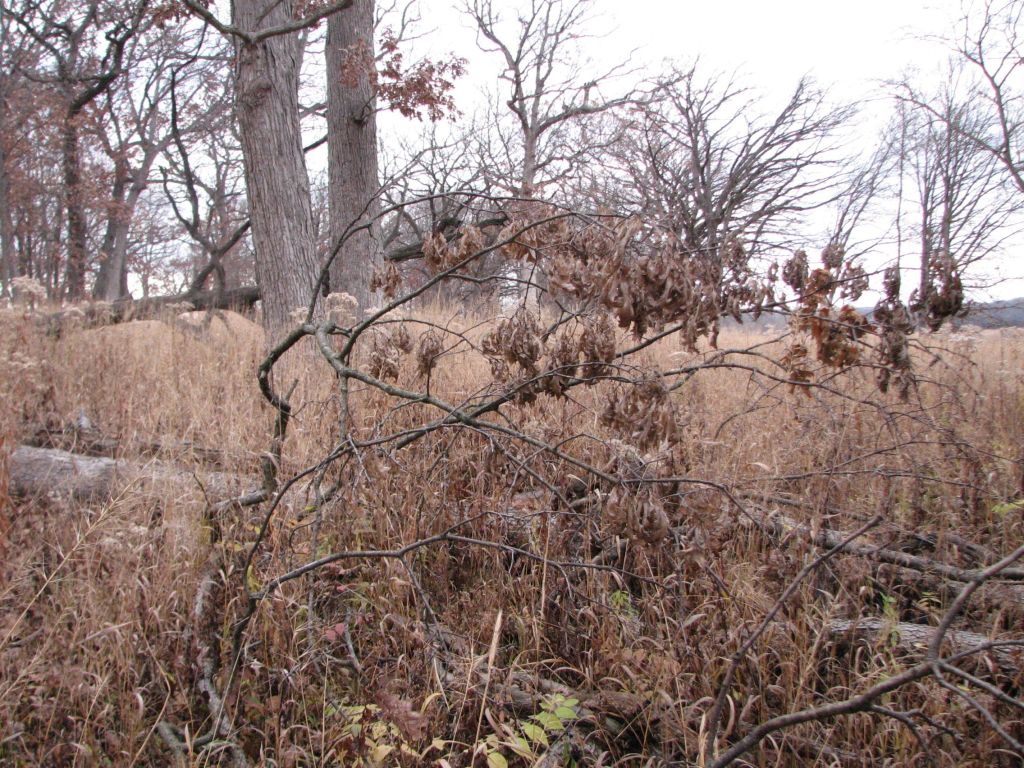
6. Looking south of the southernmost burn scar on 2/15/2023.
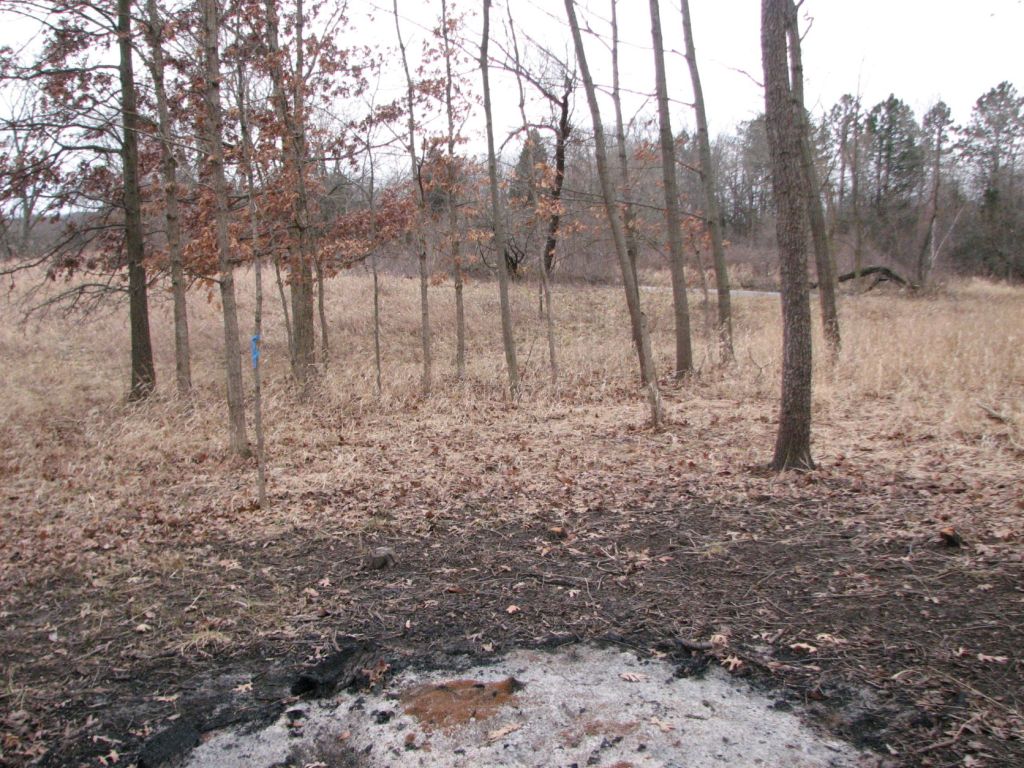
7. Looking south of the southernmost burn scar on 11/22/2025.

8. Looking west of the southernmost burn scar on 2/15/2023.
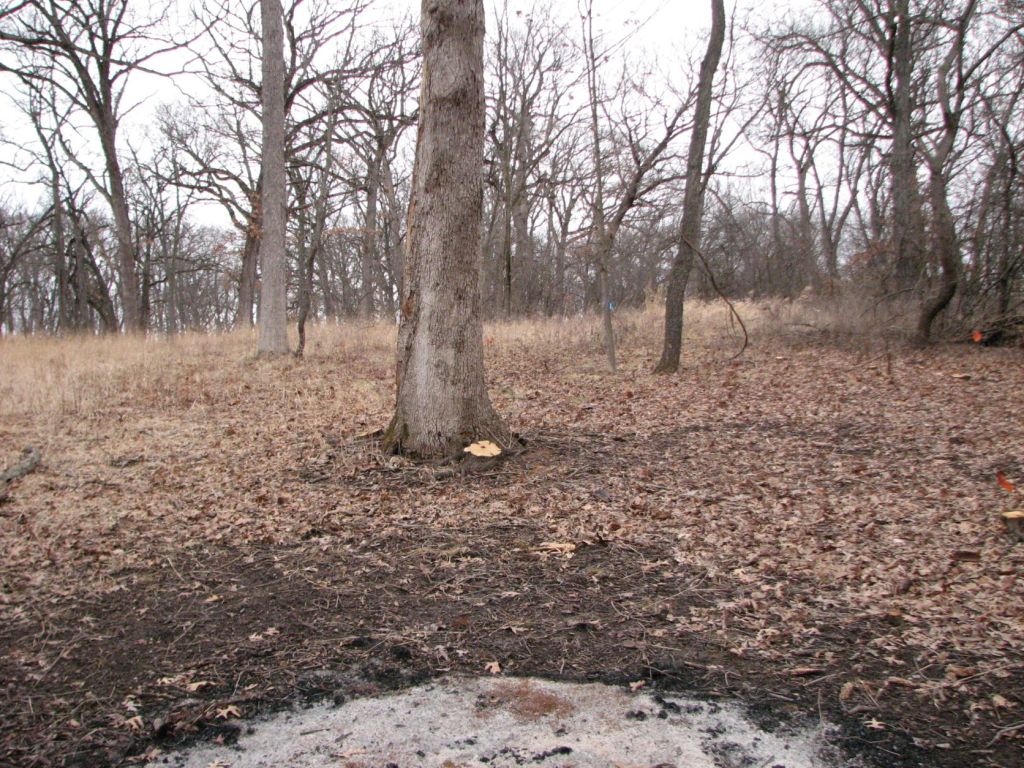
9. Looking west of the southernmost burn scar on 11/22/2025.

10. Looking east of the southernmost burn scar toward hedge of arborvitae on 2/15/2023.
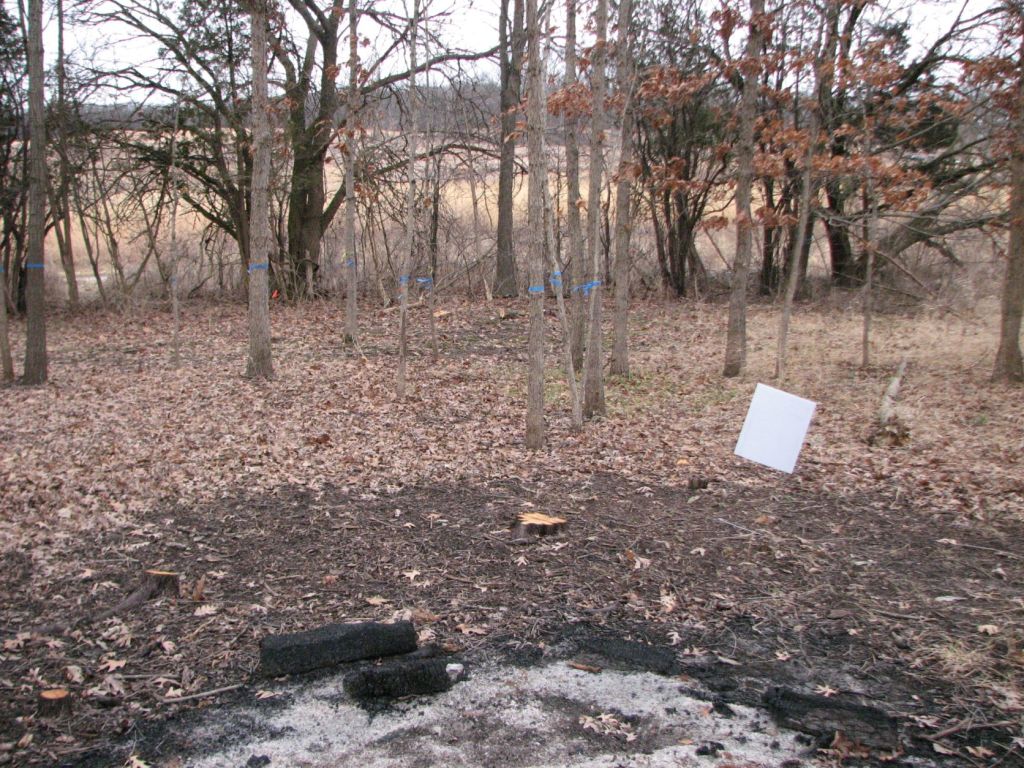
11. Looking east of the southernmost burn scar on 11/22/2025 toward where a hedge of arborvitae had been removed.

12. Leaves brushed away from the ground to show part of a burn scar. A plant growing in the burn scar, that was not growing in surrounding areas, is white clover (Trifolium repens).
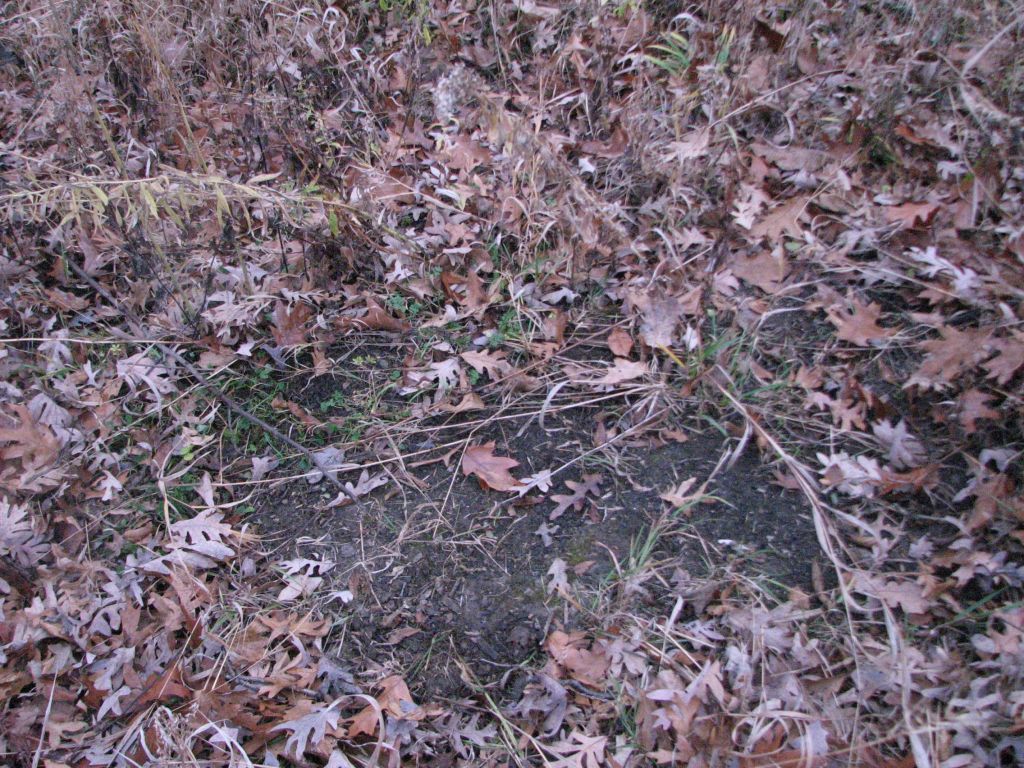
13. Where a tree had fallen over, the upturned soil is now growing Yellow Toadflax (Linaria vulgaris).

Burn Scar and Black Tarp
14. Looking north of the burn scar and pile covered with black tarp on 2/15/2023.
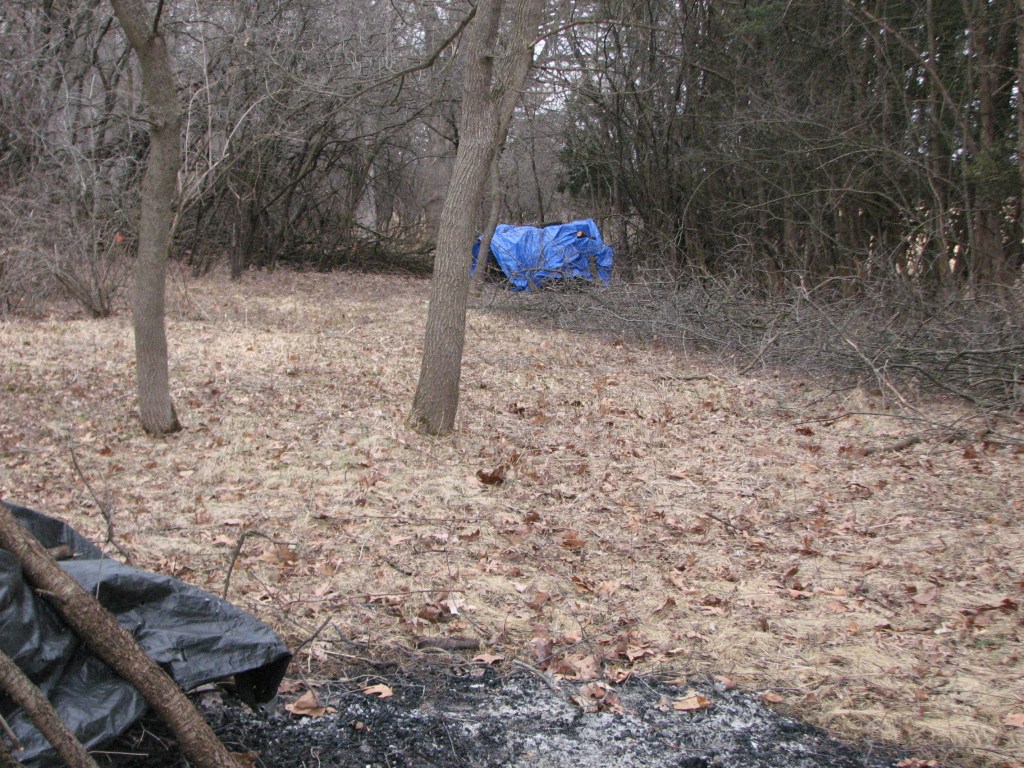
15. Looking north of the burn scar and where the pile covered with a black tarp had been located on 11/22/2025.

16. Looking south of the burn scar and pile that was covered with a black tarp on 2/15/2023.

17. Looking south of the burn scar and where the pile covered by the black tarp had been located on 11/22/2025.
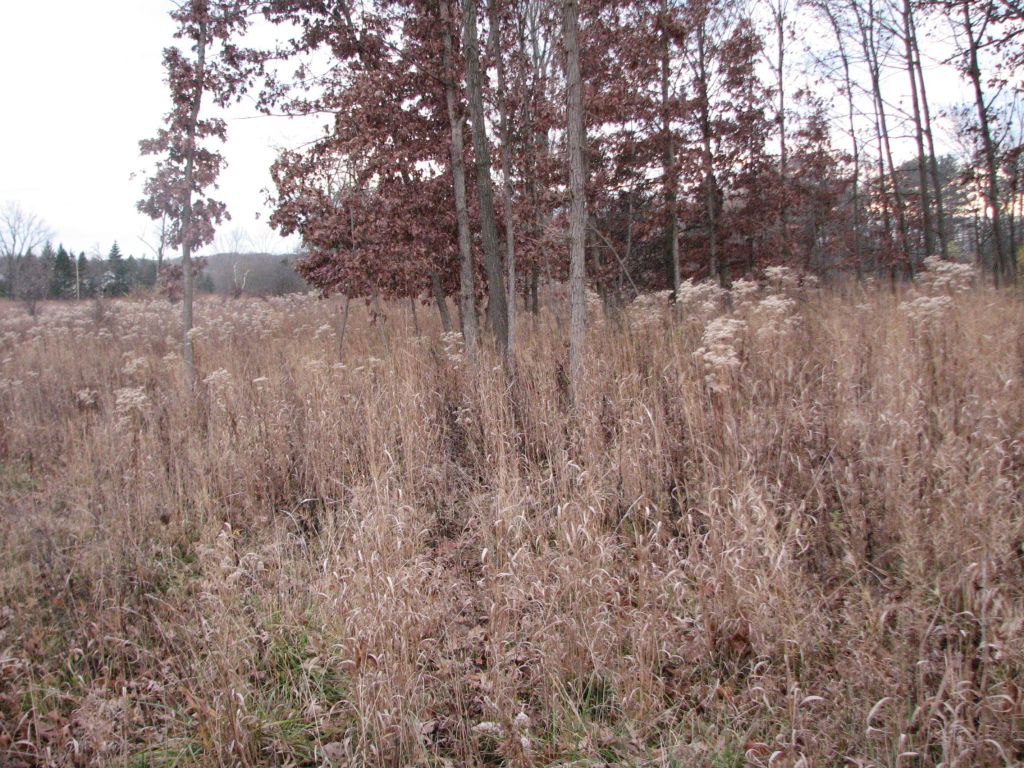
18. Looking west of the burn scar and pile covered with black tarp on 2/15/2023.
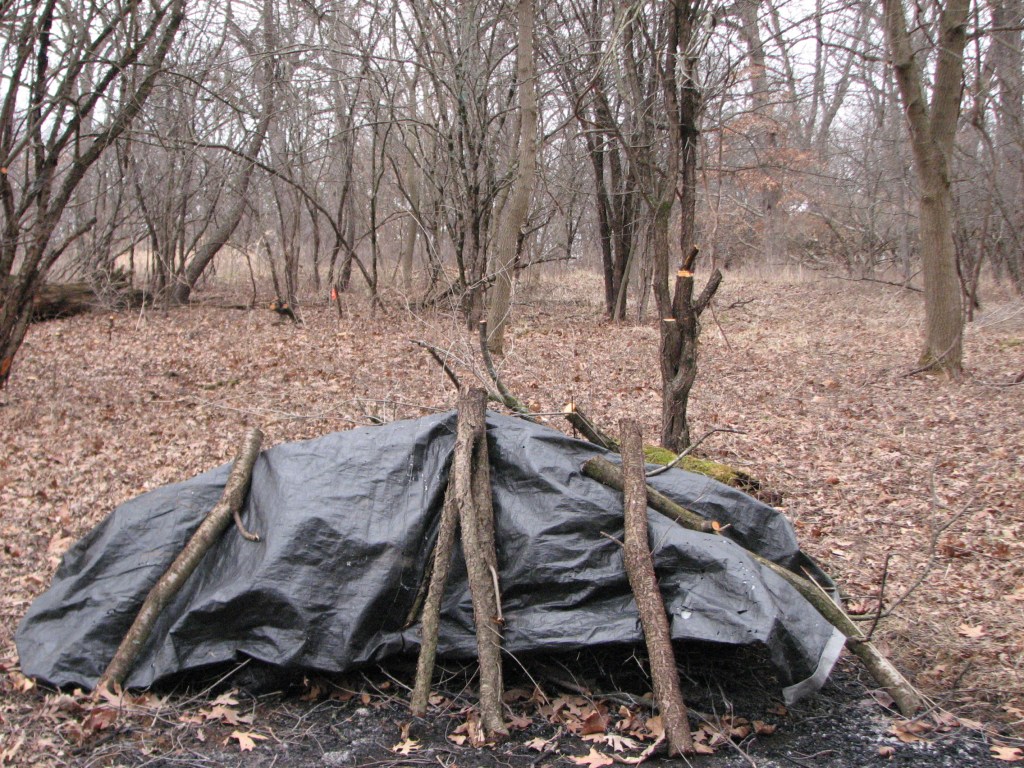
19. Looking west of the burn scar and where the pile covered with black tarp had been located on 11/22/2025.

20. Looking east of the burn scar and pile covered with the black tarp on 2/15/2023.

21. Looking east of the burn scar and where the pile covered with the black tarp had been located on 11/22/2025.
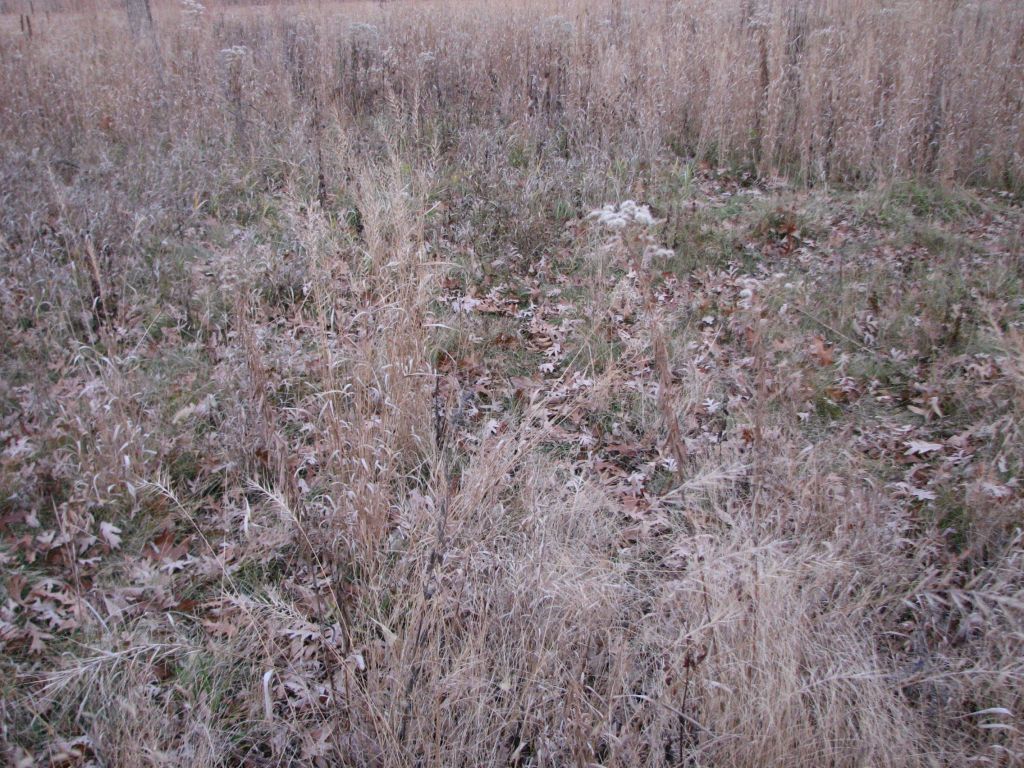
22. Full view of burn scar on 11/22/2025. I did not identify it, but I think the burn scar was colonized by Muhlenbergia schreberi (nimblewill). Woodland grasses are also present around the burn scar. They had been seeded into the area. The omnipresent pasture grass, smooth brome (Bromus inermis), is present as well.

Burn Scar and Blue Tarp
23. Looking north of pile covered with the blue tarp toward area where common buckthorn has not been removed on 2/15/2023.
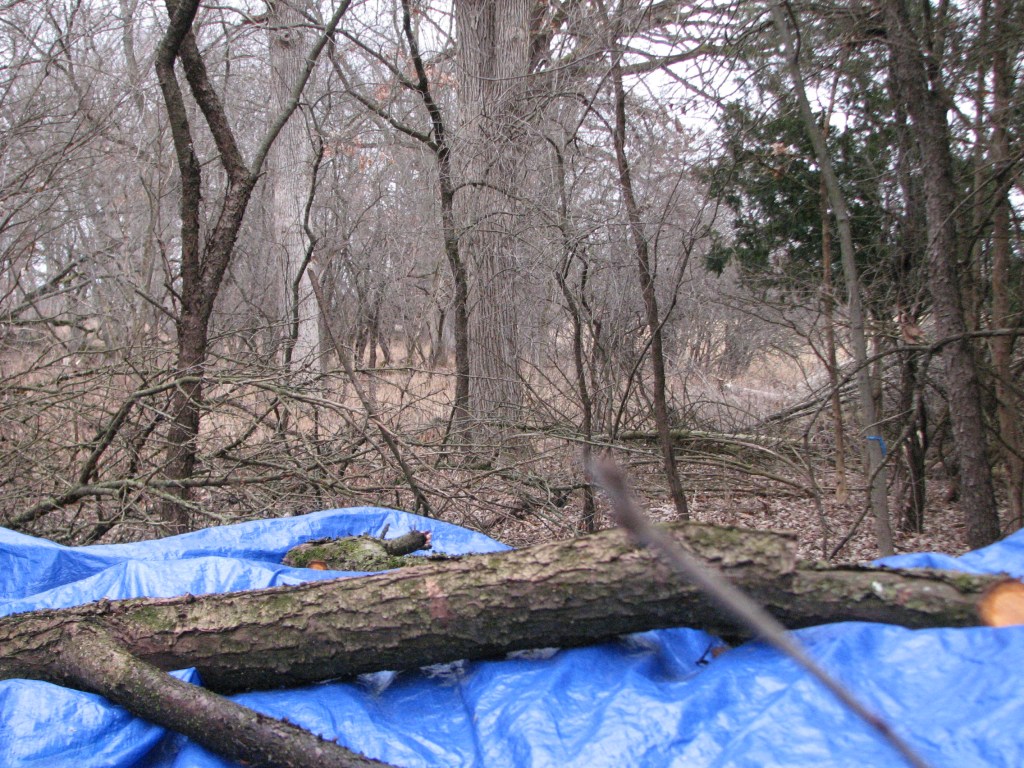
24. Looking north of where the pile covered with the blue tarp had been located on 11/22/2025.

25. Looking east of the pile covered with the blue tarp on 2/15/2025.
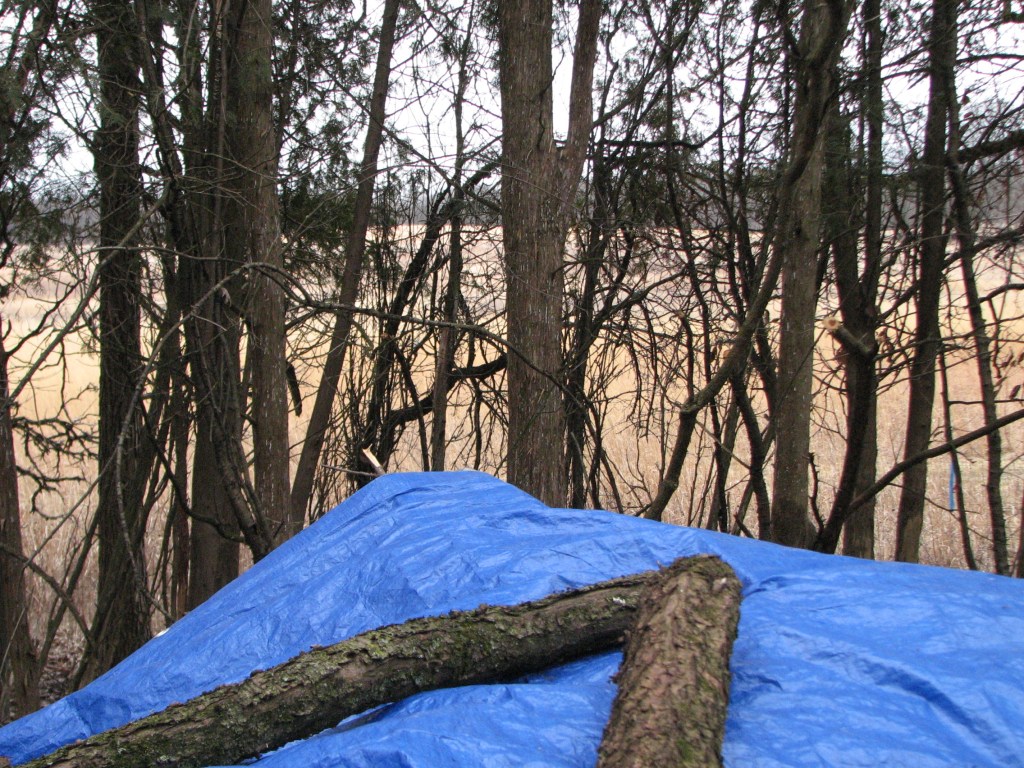
26. Looking east of where pile with blue tarp had been located on 11/22/2025.

27. Looking south of the pile covered with the blue tarp on 2/15/2023.
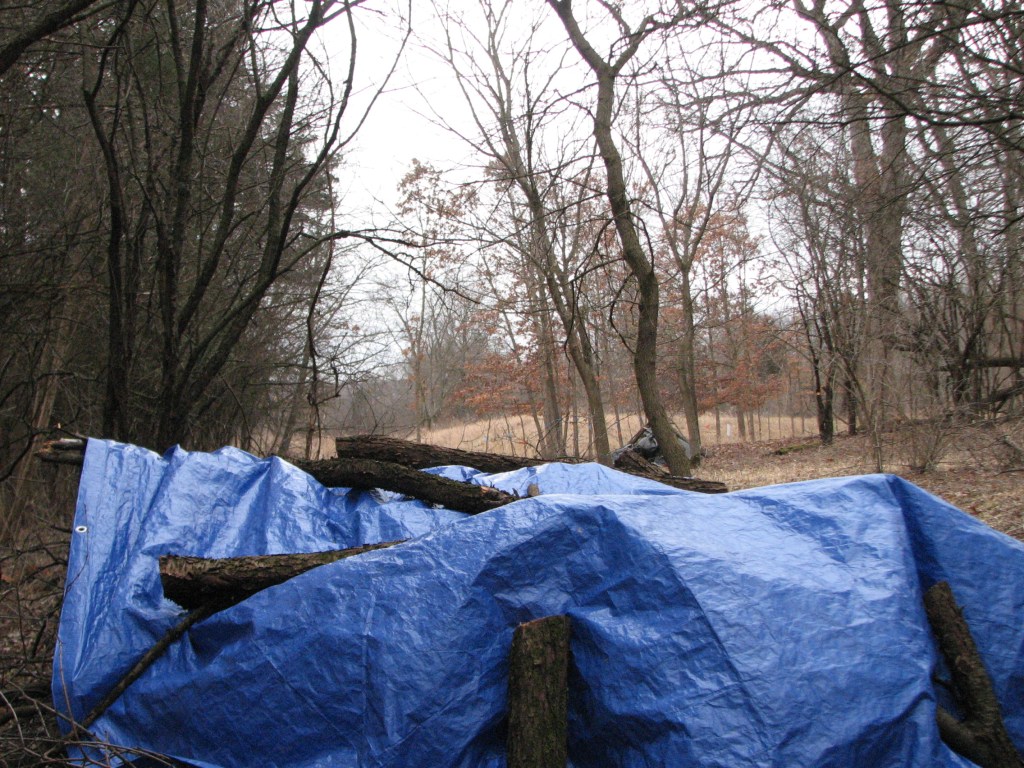
28. Looking south of where the pile covered with the blue tarp had been located on 11/22/2025.

29. Looking west of the pile covered with the blue tarp on 2/15/2023.

30. Looking west of where the pile covered with the blue tarp had been on 11/22/2025.
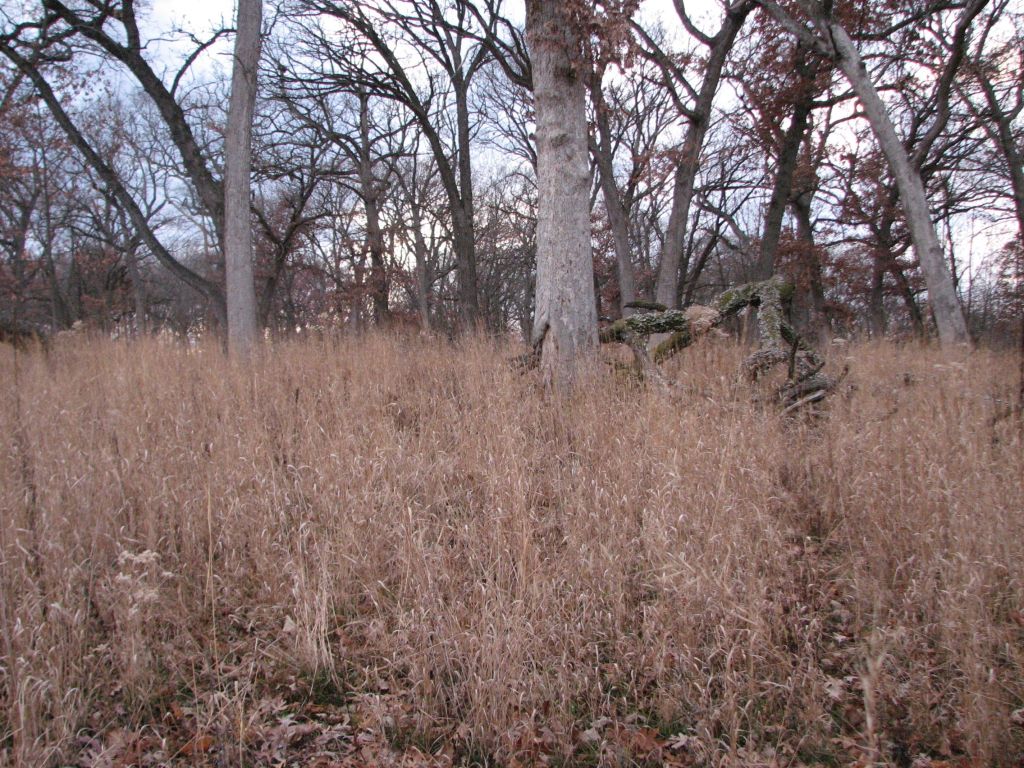
31. Burn Scar in the previous location of the pile covered with the blue tarp on 11/22/2025.

Invasive Bush Honeysuckle
32. Small invasive bush honeysuckles (Lonicera species) that are common throughout the areas where work has occurred.

Discussion
The work area has been significantly transformed in the last two years. Removal of common buckthorn, removal of trees, and spreading seed has allowed grasses and some flowers to increase. I only saw one conservative wildflower in this restoration area. The conservative wildflower I saw was American Gromwell (Lithospermum latifolium). Sometimes, restoration groups wait to spread seed of wildflowers. They do this until they have eliminated the dicot invasive species using dicot specific herbicides. Although, I do not know the stewards’ strategies or plans.
However, on my 7/2/2023 visit I did see where dense small invasive bush honeysuckle had been sprayed. When I looked in this area on my 11/22/2025 visit, I did not see any invasive bush honeysuckle.
I wish wood was not piled and burned. This leaves burn scars. I have yet to see a burn scar created in this manner recover fully. The location does not again equal the quality found in surrounding areas. In contrast, I have seen where wood chips directed into a natural area significantly increased the cover of quality native plants after several years.
For small invasive woody species, I like to use a tool to break the bond of their roots with the soil. This makes it easy to remove small invasive woody species roots and all. I use the tool and method, shown in the drawing in the following post.
Removing small woody invasive species is great for volunteers who do not have an herbicide license. When invasive bush honeysuckles are this small, soil disturbance is minimal. Soil disturbance is less than pulling up a large white sweet clover plant. Using a tool makes it easy to separate the root from the soil. People without herbicide licenses can manually remove small woody invasive species. This helps free up the time of people with herbicide licenses. This allows people with herbicide licenses to focus on invasive woody plants that are too large to be easily removed by the roots.

 Stewardship Chronicles
Leave a comment