Contents
Map
Introduction
Workday Location
1. Area cleared of common buckthorn ten years ago
Sumac Expansion
2. Expanding patch of staghorn sumac
3. Closer view
4. An even closer view
5. Sumac stems scorched by fire
Soil
6. Soil profile
Hickories Top Killed
7. Hickories that regrew after fire
Sedge
8. Carex albursina
Map
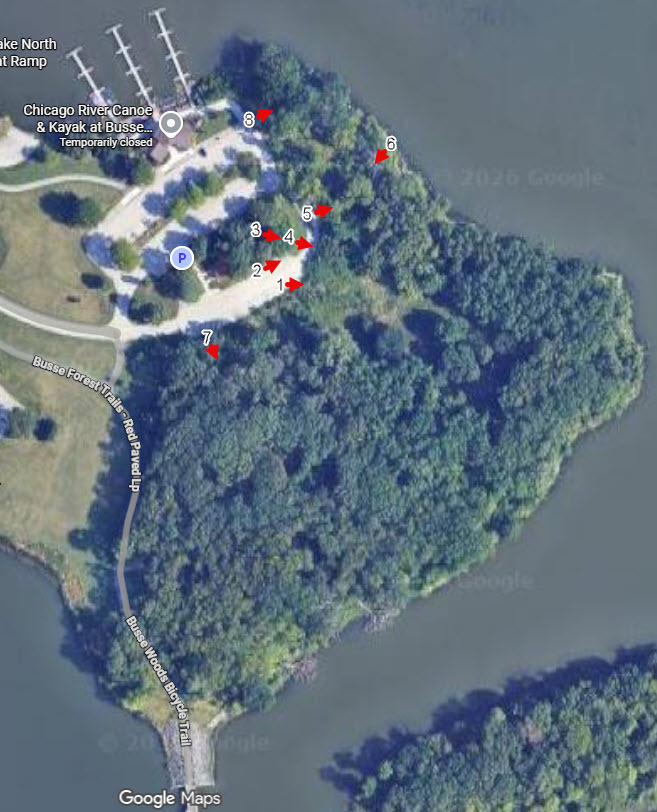
Retrieved January 14th, 2026, fromhttps://www.google.com/maps/@42.0233136,-88.0153665,480m/data=!3m1!1e3?entry=ttu&g_ep=EgoyMDI2MDExMy4wIKXMDSoASAFQAw%3D%3D
Introduction
The steward of the group at Busse Woods moved away ten years ago. A staff member for the Forest Preserves of Cook County tried to keep volunteer workdays going for more than a year. As far as I know, volunteer workdays no longer occur at Busse Woods. Although, work is being done. I do not know who is doing this work.
Update 2/13/2026: A long time volunteer emailed me to tell me that volunteer work at Busse Woods has been occurring for over a decade. I couldn’t find any information on workdays open to the public. The group doing the work must not be soliciting outside help. The work that I have seen occurring, is in areas that must have been considered a higher priority.
Workday Location
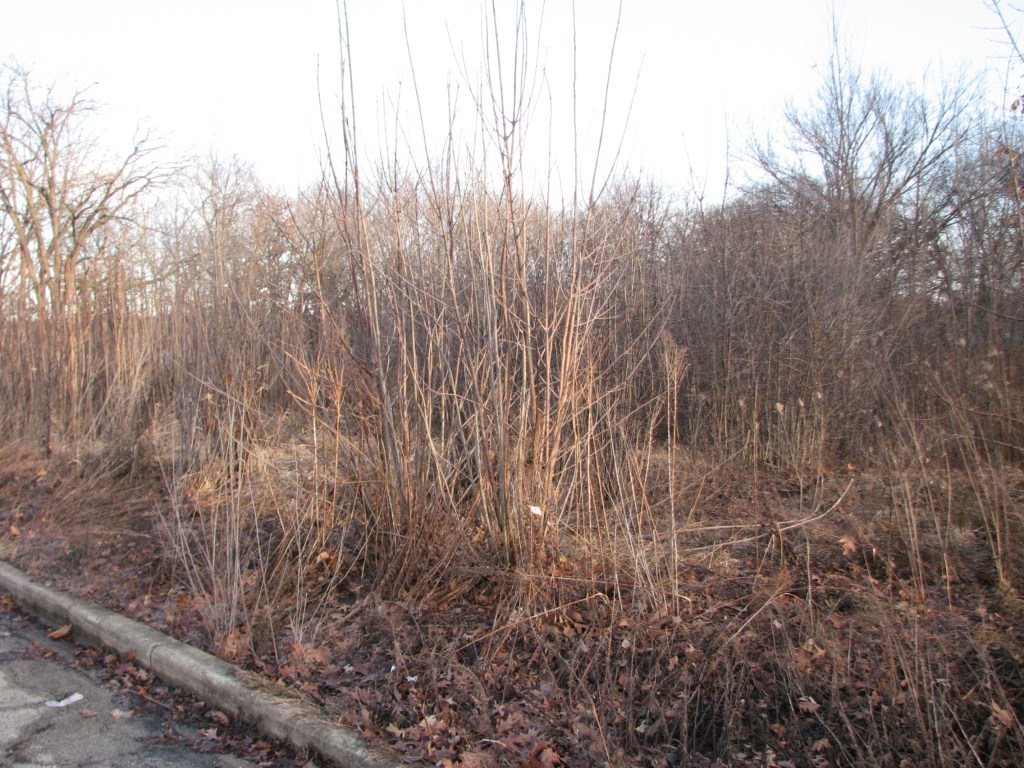
1. The image below is of an area that had been completely cleared of invasive woody species ten years ago. It appears not enough herbicide was applied. The woody species were not killed and sprouted. The multi-stemmed sprouting woody species have created a difficult to penetrate thicket.
Somewhere in the dense thicket of common buckthorn, behind the sprouting ash tree in the foreground, was a burn pile. I tried to find the old burn pile. However, I was unable to locate it.
Sumac Expansion
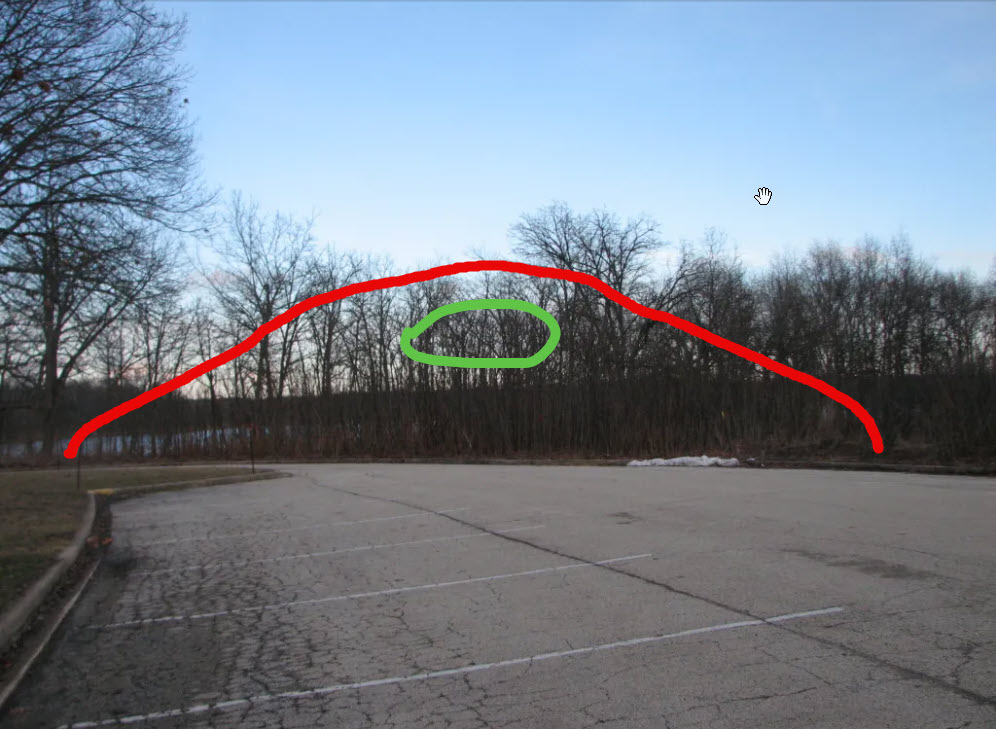
2. This is a patch of staghorn sumac. Ten years ago, the patch was about the size of the green circle. Now it fills the area under the red line.
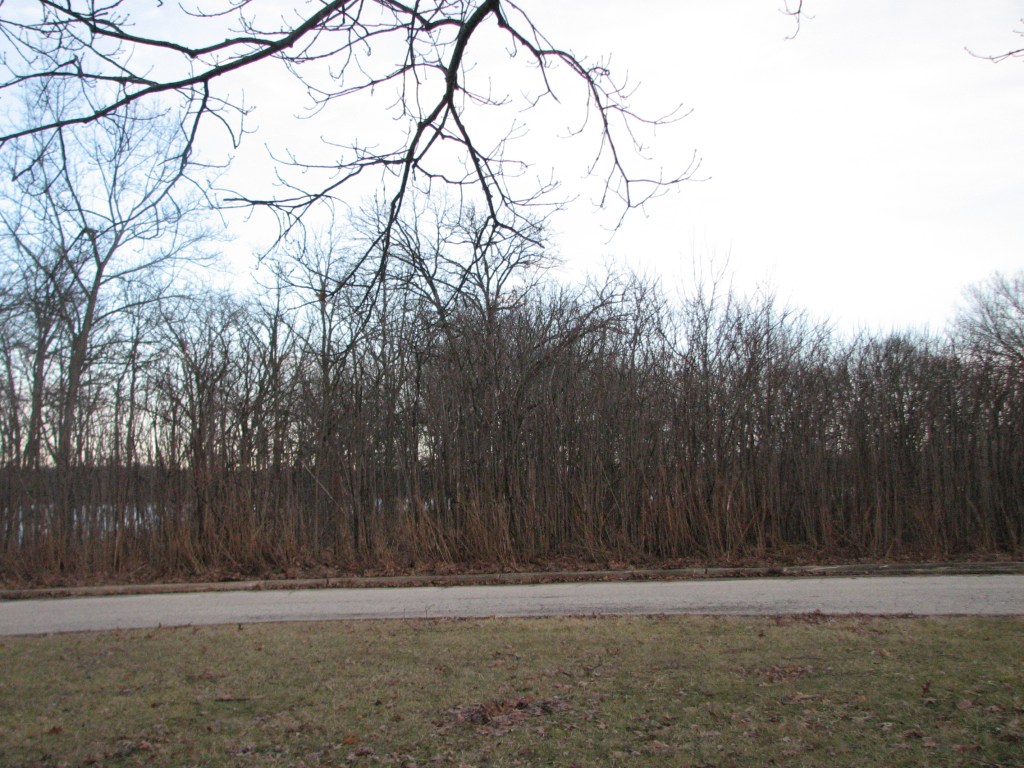
3. A closer view.
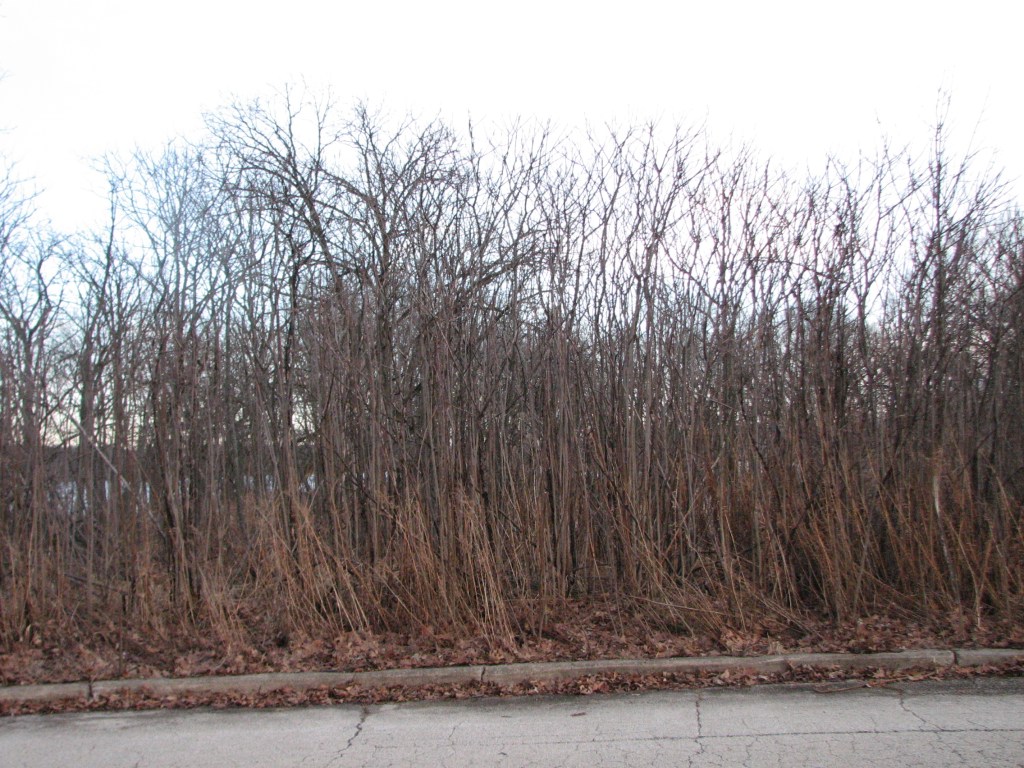
4. An even closer view.
5. View of sumac stems scorched by fire and new sprouts.

Soil
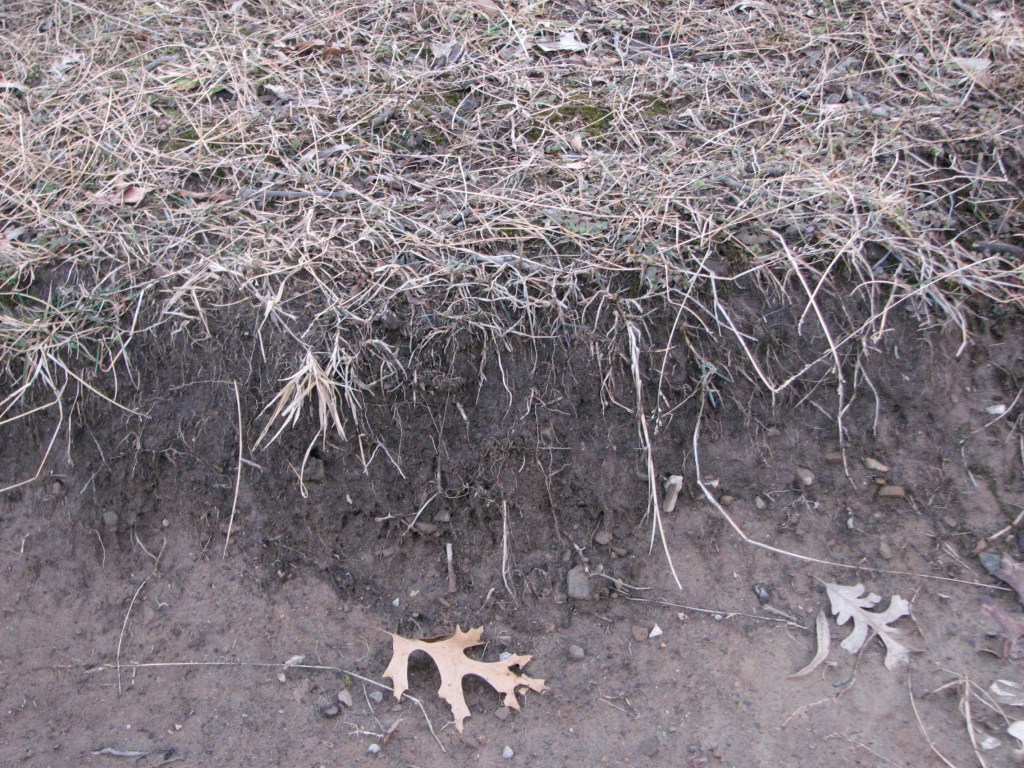
6. This is a view of the soil profile. It is visible on the upslope edge of a trail near the lakeshore. The soil on this slope is relatively thin over clay. Clay infiltrates water slowly. This is the reason more level areas of Busse Woods are what they call “flatwoods.” Words like “poorly drained” or “waterlogged” are used to describe flatwoods. Since water does not infiltrate well into clay, slopes can get very dry. This leads to very different vegetation types in close proximity.
Hickories Top Killed
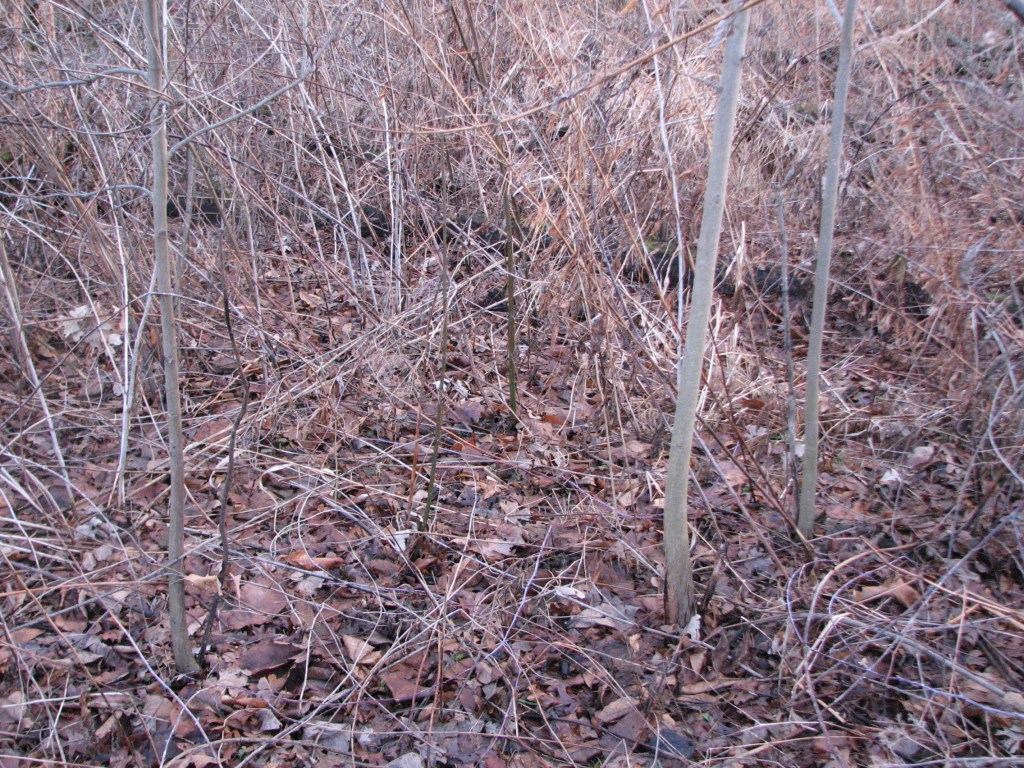
7. This is an image of hickories that had been killed back to the ground by fire years ago and regrew. Many people have reported shagbark hickories becoming over abundant in oak savanna and oak woodlands.
Sedge
8. This is Carex albursina, white bear sedge. I included it because I like sedges. I especially like the ones with wide leaves.

Discussion
The areas that were the center of activity for the workdays were not high quality. It was, and remains, mostly reed canary grass beyond the dense thicket of brush. Initially, I thought the steward had been given this area because he was new. However, there is quality vegetation in the woodlands surrounding where the center of workday activity occurred. Cut invasive species were hauled from the woods to the brush pile fire in the reed canary grass area.
I think it is important to see failures. The herbicide application was not sufficient to kill the invasive species. This is one failure. This occurs often. Groups then follow up by cutting and treating again. However, this did not occur because the site steward moved away. This is what restoration looks like when it fails.
 Stewardship Chronicles
Leave a comment