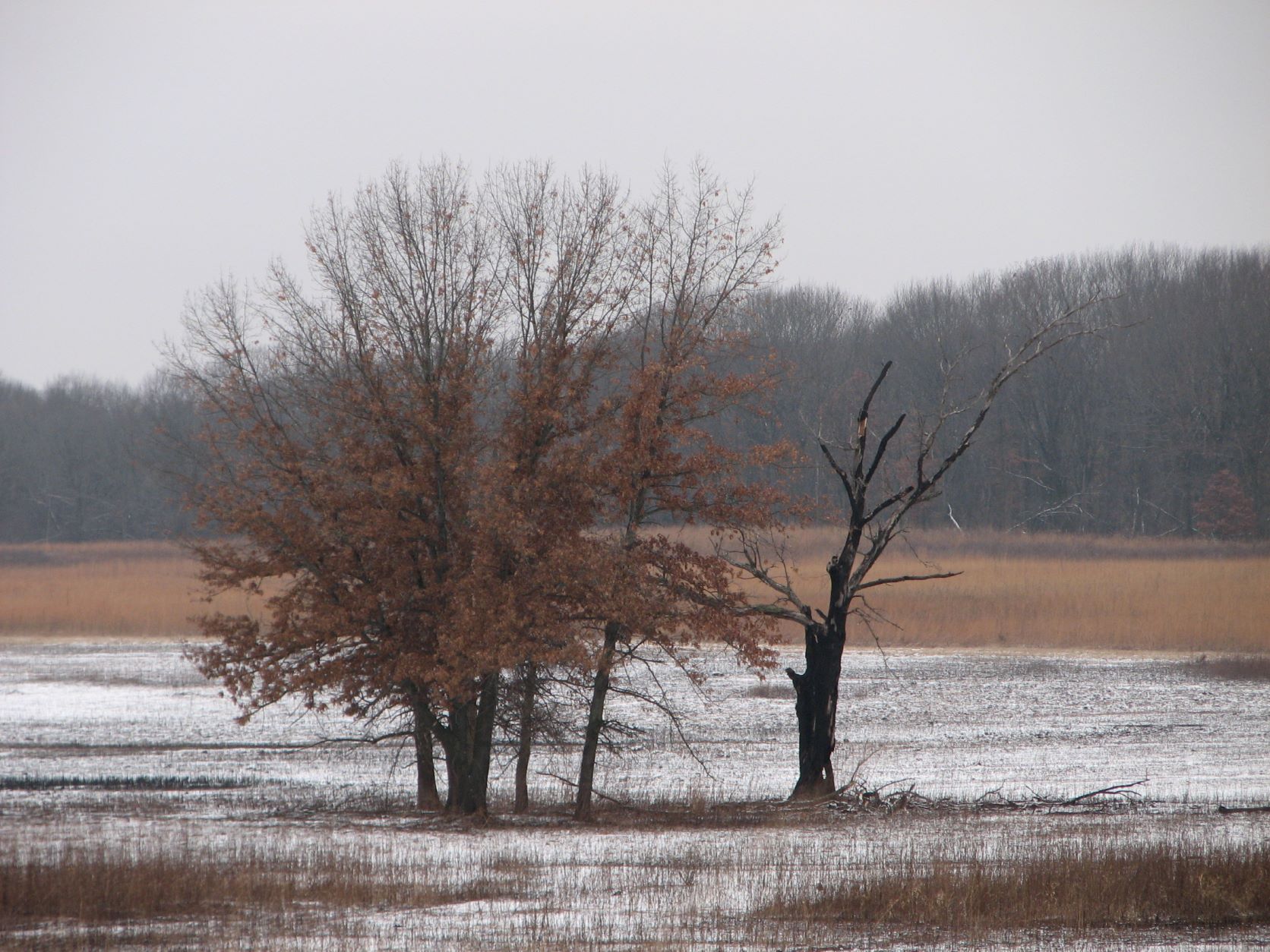

These are pictures from the last time I visited Langham Island on October 3rd, 2020. Langham Island is a long way from where I live and is difficult to access. Despite the water being low, when I tried to cross the river to the island, the water overtopped my boots. Without a boat, the island is only accessible during low water flows if you are willing to get wet.
The below pictures show what I saw when I got to the island.
The below invasive shrubs had been coated with herbicide. Much more herbicide than necessary was used. Herbicide can be seen on the ground.
https://www.facebook.com/LanghamIsland/
Added 1/19/2026 – The group at Langham Island had started applying herbicide more carefully and in appropriate amounts not long after this blog post was published. This can be seen in the above Facebook page.
In other locations, I have seen where excess herbicide applied in this manner has killed nearby native plants.
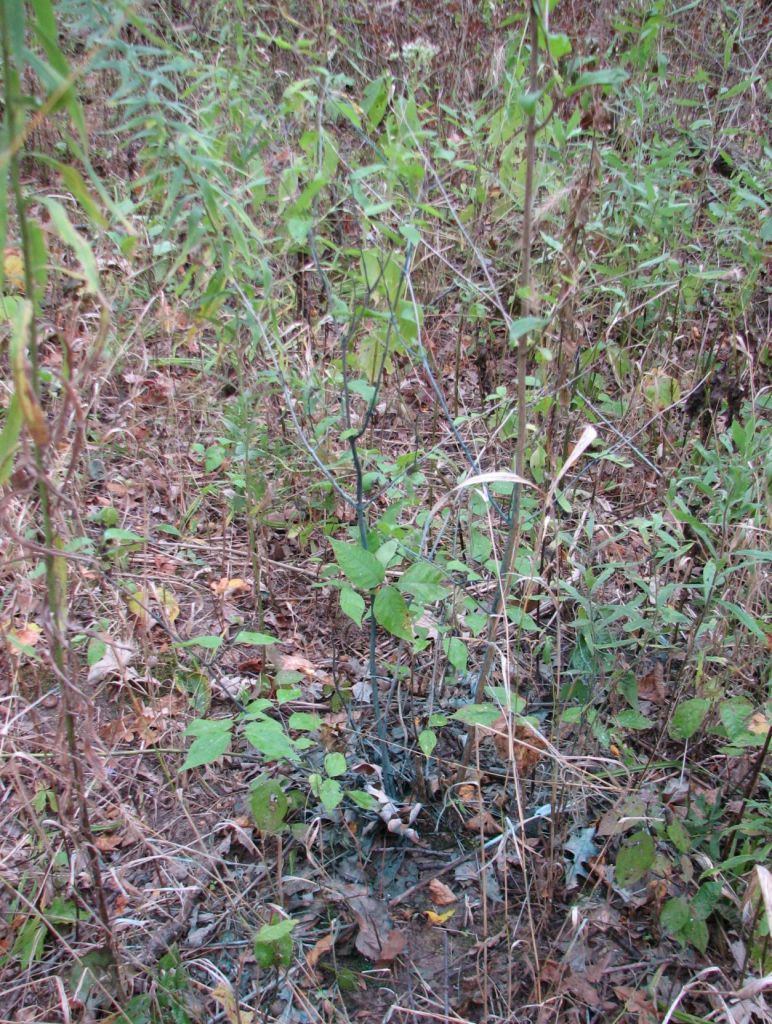
I have seen the vapors from herbicide kill adjacent plants even when the herbicide was applied in a careful manner, so the liquid herbicide never contacted adjacent plants. I marked herbicide vapor impacted plants with surveyor’s tape and the following year they did not appear. To prevent damage to adjacent plants, I now only apply triclopyr ester in basal oil during the dormant season. This is from the first hard frost usually at the end of October to sometime in March (depending on habitat).
Added 1/19/2026 – I have seen adjacent plants killed when careful basal bark application was done. I now believe the observations I attributed to vapors was caused by rain splashing herbicide off target plants onto non-target plants. See other blog posts like “Ring of Death,” “Ring of Death: 2023/2024 Season Application,” and “Getting Basal Bark Application Right.” I have yet to test impacts of vapors on adjacent plants after a growing season application when rain is not in the forecast for at least several days.
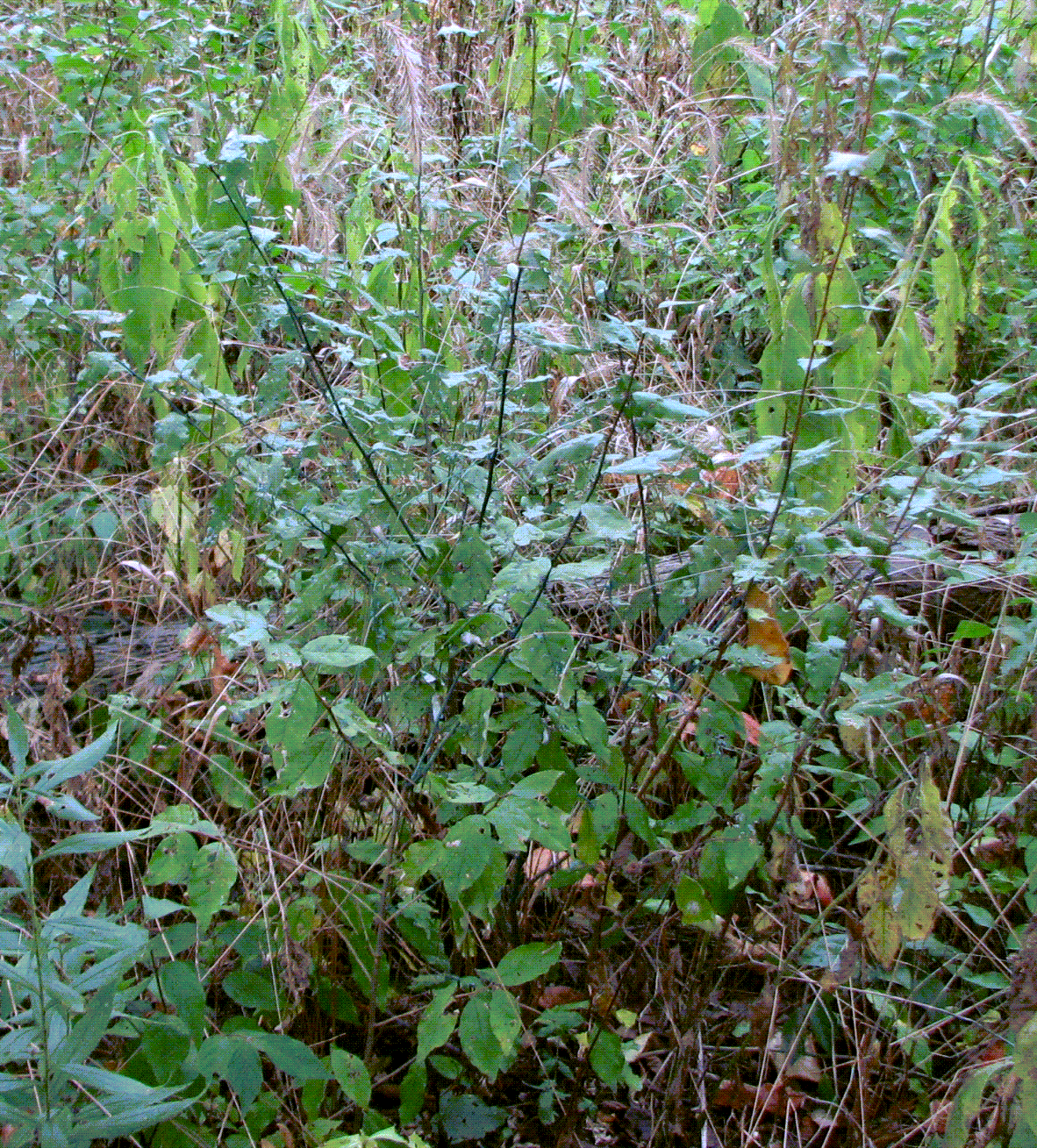
I volunteered occasionally at Langham Island over a five-year period. I had been physically removing seedling of Asian bush honeysuckle. However, I was prevented from continuing my work. I was told “It can disturb the soil creating opportunities for other invasives to become established.” I never saw an increase of weeds where I had physically removed small invasive species. The method I was using did less damage to nearby native plants than the way herbicide was/is being applied. When native plants are killed by herbicide, weeds often fill the open niche. In contrast, when I physically removed small woody invasive species, I saw the existing native plants doing better the following year.
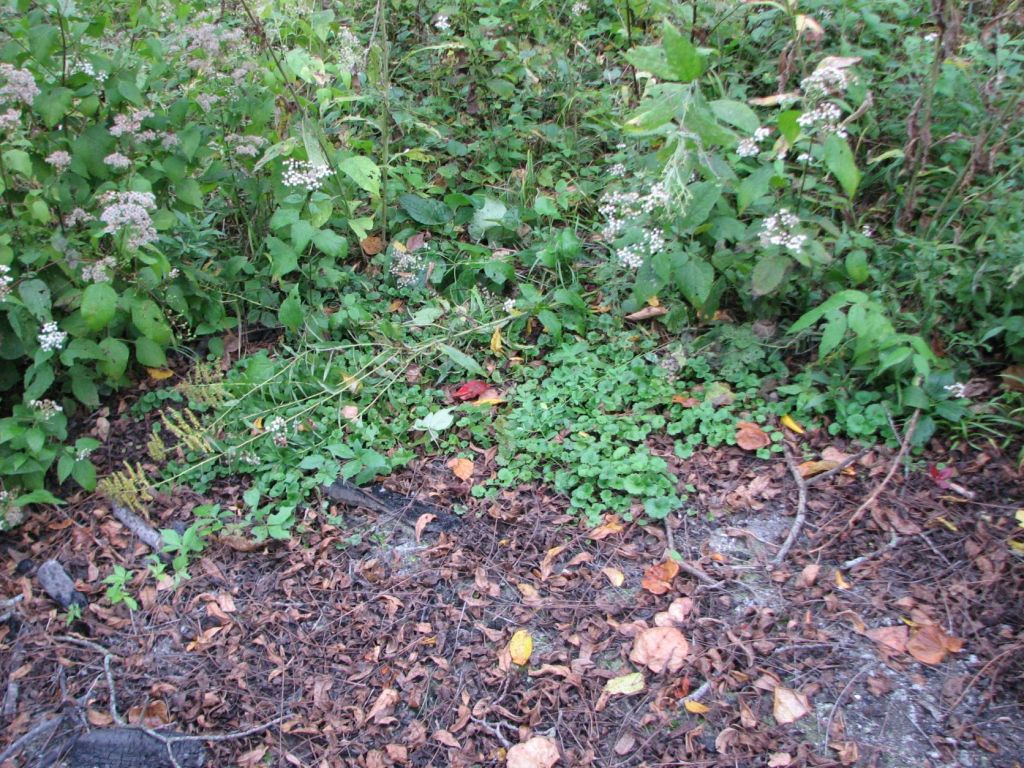
This is a burn scar on the north facing side of the island. The burn pile had killed all the quality vegetation. The burn scar is being colonized by creeping Charlie. I did not see creeping Charlie in any other location on the island. Physically removing small invasive woody species is not allowed but burning piles of wood is done at most workdays which then frequently becomes patches of weeds.
Here is another burn scar close to the south slope of the island. This is on the relatively flat ground where farming had occurred in the past. The past land use history of the flat ground means there are few conservative plants to be impacted by this burn scar. After getting the fire started, this burn pile was pushed along with a shovel. The volunteer was trying to heat the soil enough to cause the Kankakee Mallow to germinate. However, the volunteer tried to move the burn pile fast enough that the seeds were not killed. This is visible along the line from the burn scar in the front to the remaining unburned wood farther away.
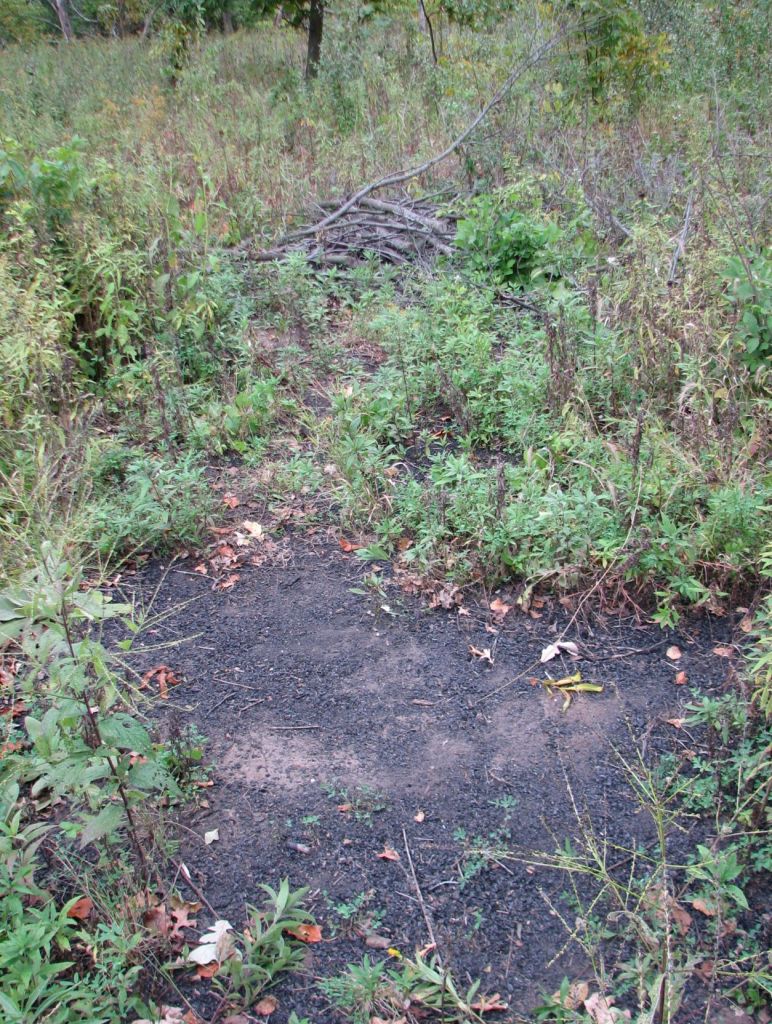
Unlike a few other “rolling bonfires,” no Kankakee Mallows germinated in this location. Instead, white sweet clover and weedy species popped up around the edges.

 Stewardship Chronicles
Leave a reply to Baker’s Lake, Barrington Park Campgrounds, 5/27/2024 (Draft) – Stewardship Chronicles Cancel reply