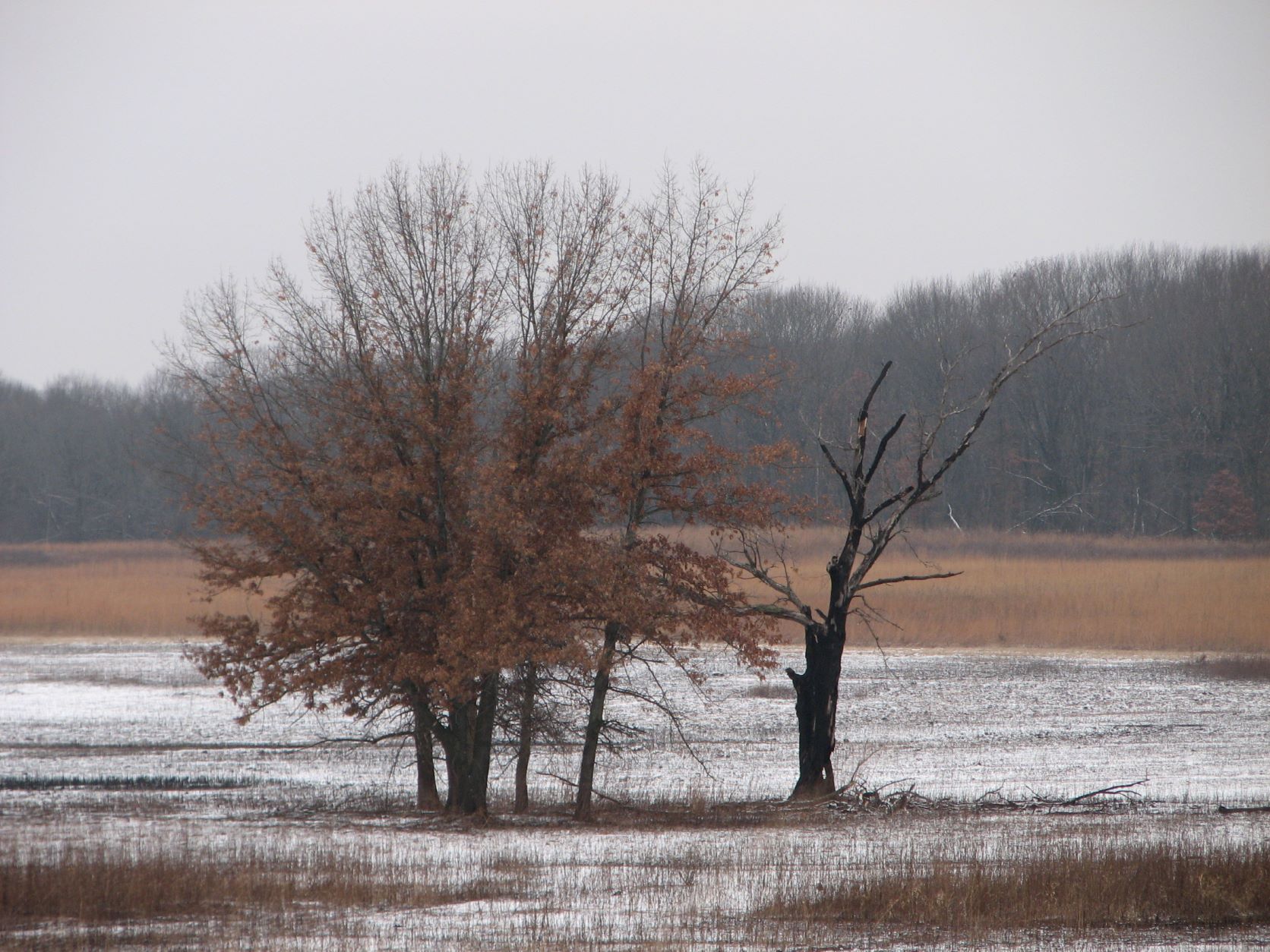
Today I revisited the area north of Camp Alphonse which I had wrote about on the post titled, “Deer Grove On 2/11/2023.” Triclopyr ester (Garlon 4) in basal oil had been applied to the cut surfaces of stumps with a mini-paint roller.

Retrieved February 12th, 2023 from https://www.google.com/maps/search/deer+grove+forest+preserve/@42.1394962,-88.0781362,246m/data=!3m1!1e3?hl=en
Walking to the 2/11/2023 Work Area

As I walked from the parking lot to the area shown on the map, I saw many multiflora roses that had been killed with little growing underneath.
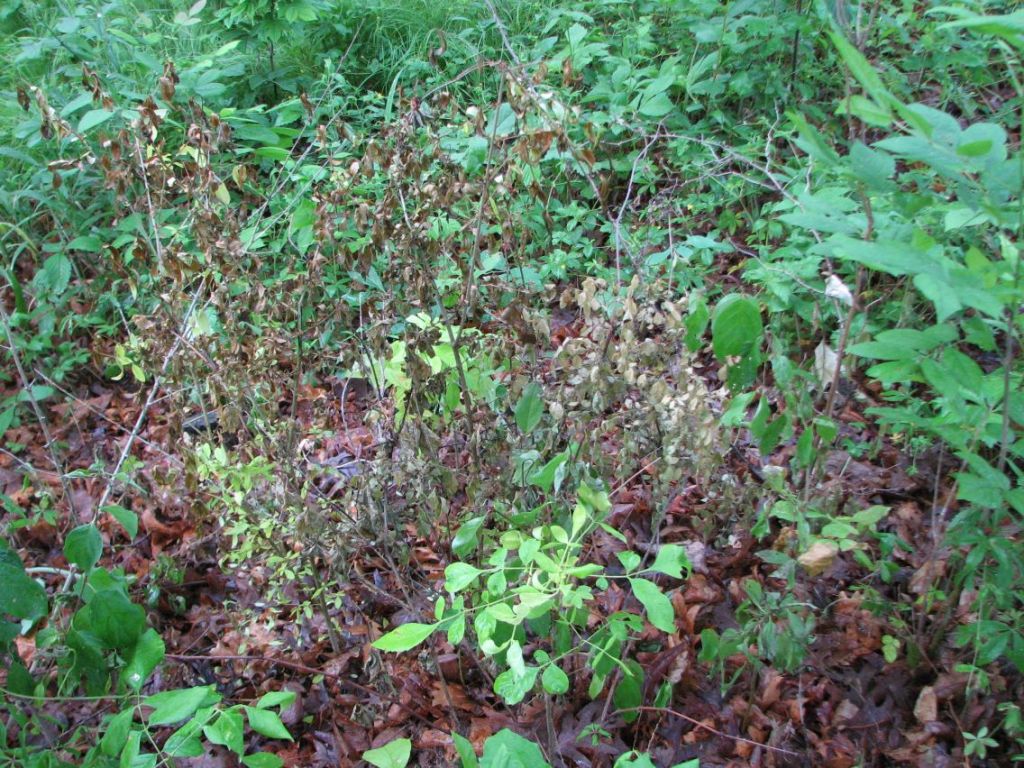
As I continued to walk, I saw more multiflora roses which had apparently received a foliar herbicide application. I am surprised foliar application would be used in an area with Nature Preserve protection. However, off target damage appeared minimal.

When I got to the 2/11/2023 workday area, I saw large patches of multiflora rose that had herbicide applied to the foliage.

In contrast to the foliar application at Deer Grove Forest Preserve, above is a picture from Nachusa Grasslands. On the left, I had applied triclopyr ester in basal oil to Asian bush honeysuckle, multiflora rose, autumn olive, and any other woody invasive species present. I had applied this herbicide to about six inches of stem length (four inches would probably had been enough), near the base of the plant, during the dormant season. On the right, control work had not yet occurred. Although this area was degraded by previously being pasture, you can see there is no dead zone under the treated plants.
2/11/2023 Workday Herbicide Application Around Western Burn Pile
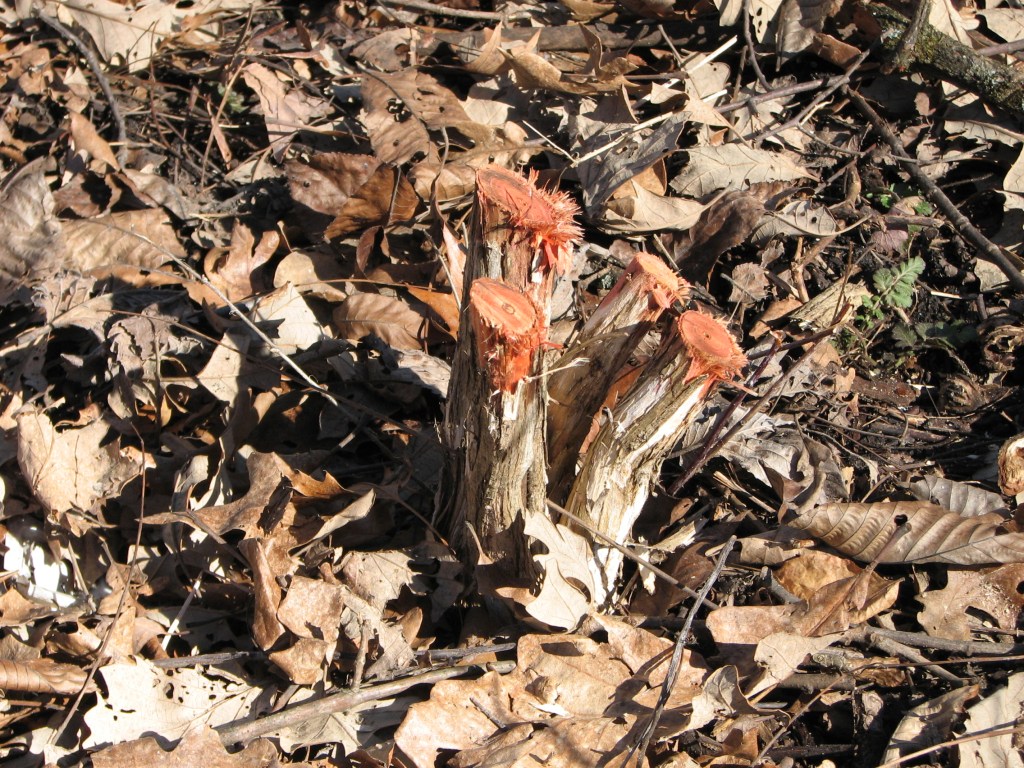
This is a photo taken on 2/11/2023 of an Asian bush honeysuckle stump that had herbicide applied.

This is the same Asian bush honeysuckle stump on 6/11/2023. It has sprouted. The sprouts show the impact from the herbicide application. My experience has been this stump will likely recover from the level of damage I see in this image.
Added 4/22/2025 – The below image shows that the above Asian Bush Honeysuckle is still alive and has survived the herbicide treatment. I broke one of the branches and it you can see the green color indicating this invasive shrub is alive. More herbicide needs to be applied during the first application to get effective control of Asian bush honeysuckle.
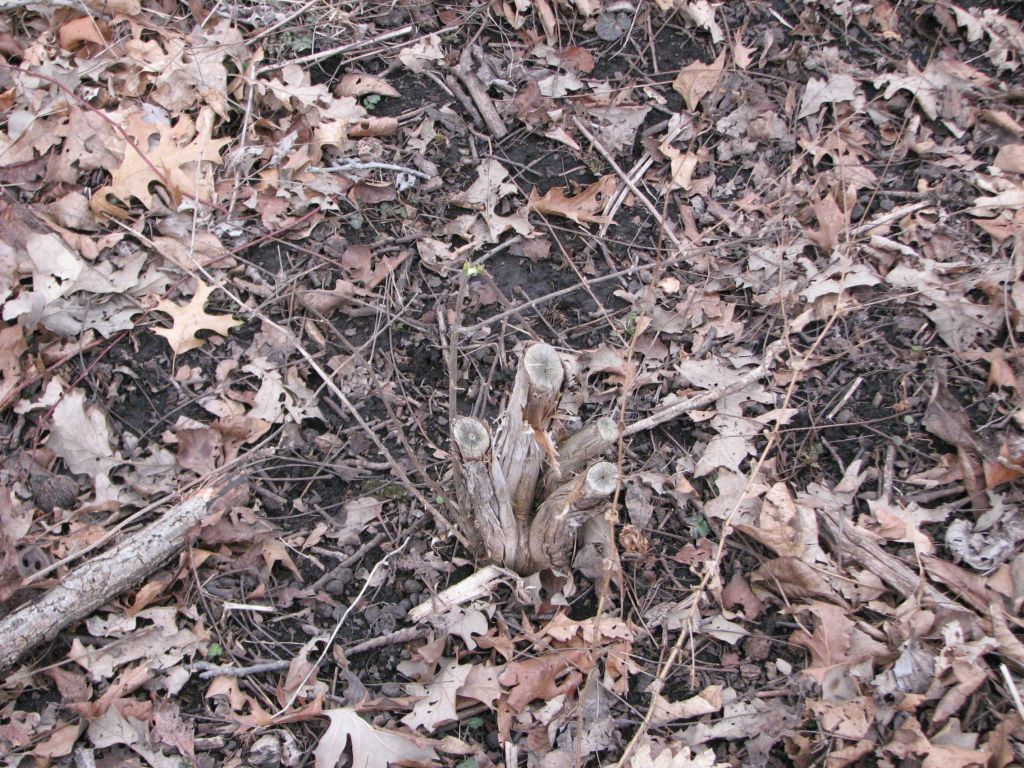
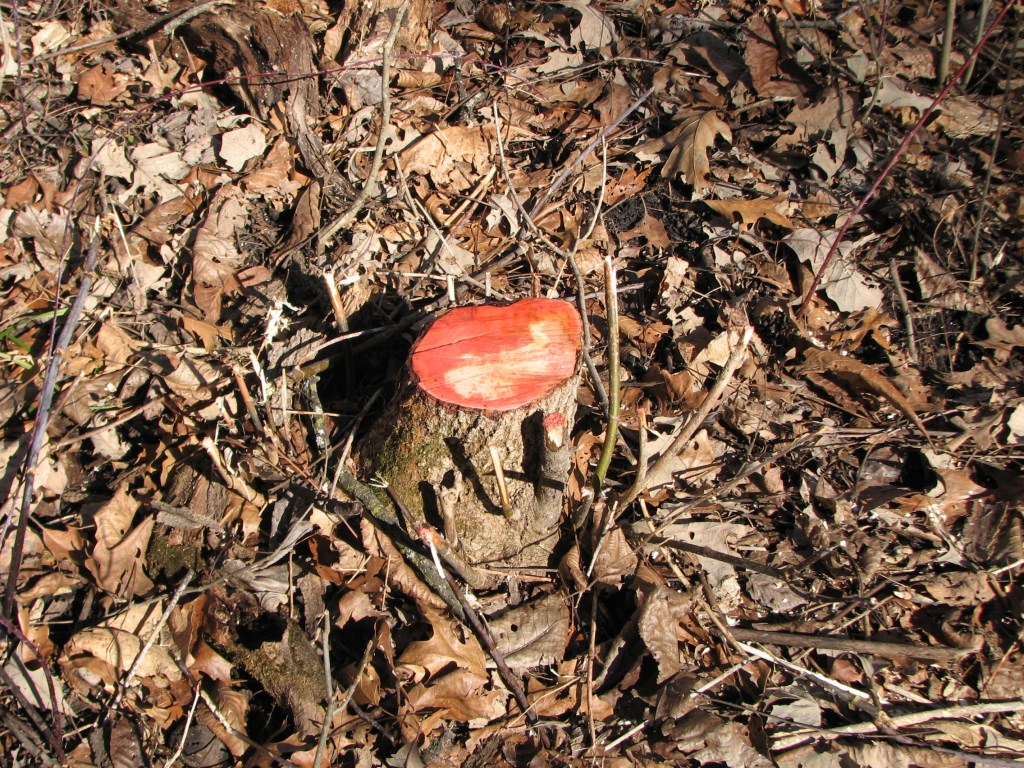
This is a photo taken on 2/11/2023 of what appears to be a box elder stump that had herbicide applied.

This is the same stump on 6/11/2023. It looks dead. Box elder appears to be particularly susceptible to triclopyr ester.
2/11/2023 Workday Herbicide Application Around Eastern Burn Pile

This photo shows numerous small stumps that were treated with herbicide around the eastern most burn pile on the 2/11/2023 workday. They look dead. The herbicide application was highly effective even though the stumps are cut rather high. This can be achieved when enough triclopyr ester is applied to stumps cut high, but not when the minimum concentration of glyphosate (about 25 percent for buckthorn) is applied to stumps cut high. Triclopyr ester is transferred farther within the plant. Glyphosate will only kill the stump down a distance proportional to the total amount of herbicide applied.
Off-target impacts are visible in the form of yellow colored foliage. I discuss this more, further down the page under the heading “Images taken on 2/11/2023 and then on 6/11/2023 from North, East, South, West of Burn Piles,” the heading “Eastern Burn Pile,” and the image titled, “South on 6/11/2023.”

The barberry bushes treated around the eastern most burn pile during the 2/11/2023 workday sprouted. The stems of these barberry bushes are much thinner than that of the small tree stumps. The fact that the stems of these barberry bushes are thin, they were cut high, and herbicide was only applied to the cut is probably the reason the herbicide application did not appear to have affected these invasive shrubs.
Update: When I visited again on 6/26/2023, the barberry bushes shown above and farther from the burn pile (see photo below) had their foliage sprayed with herbicide.
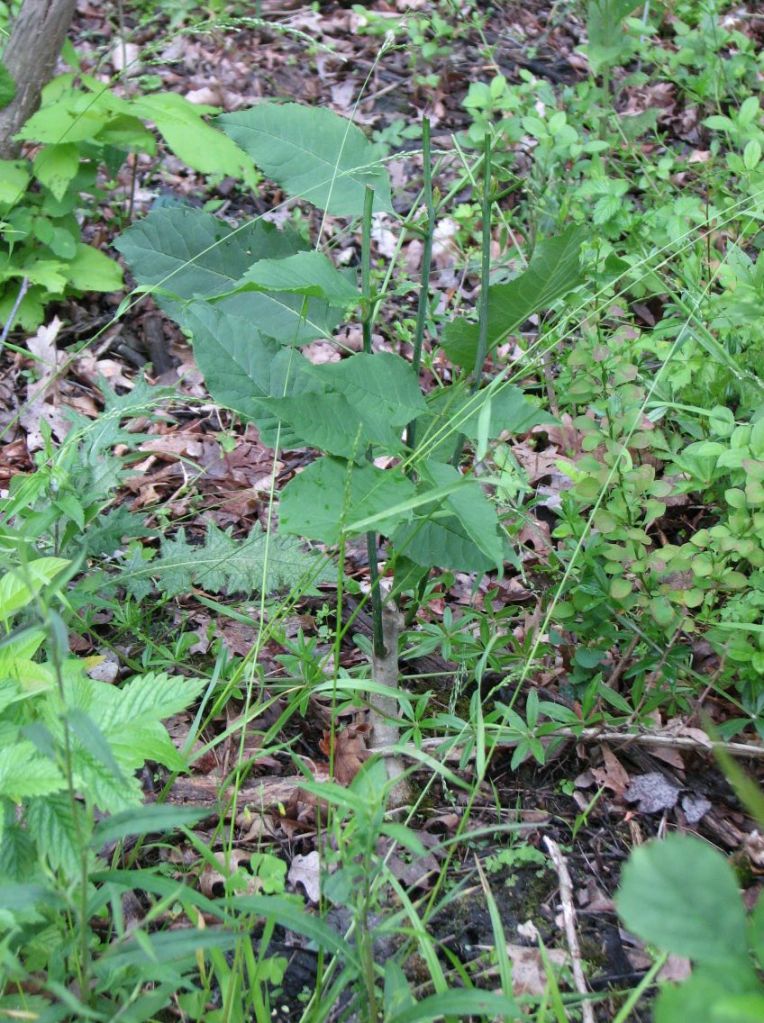
The herbicide application did not kill the numerous 3/4 inch or larger green ash.
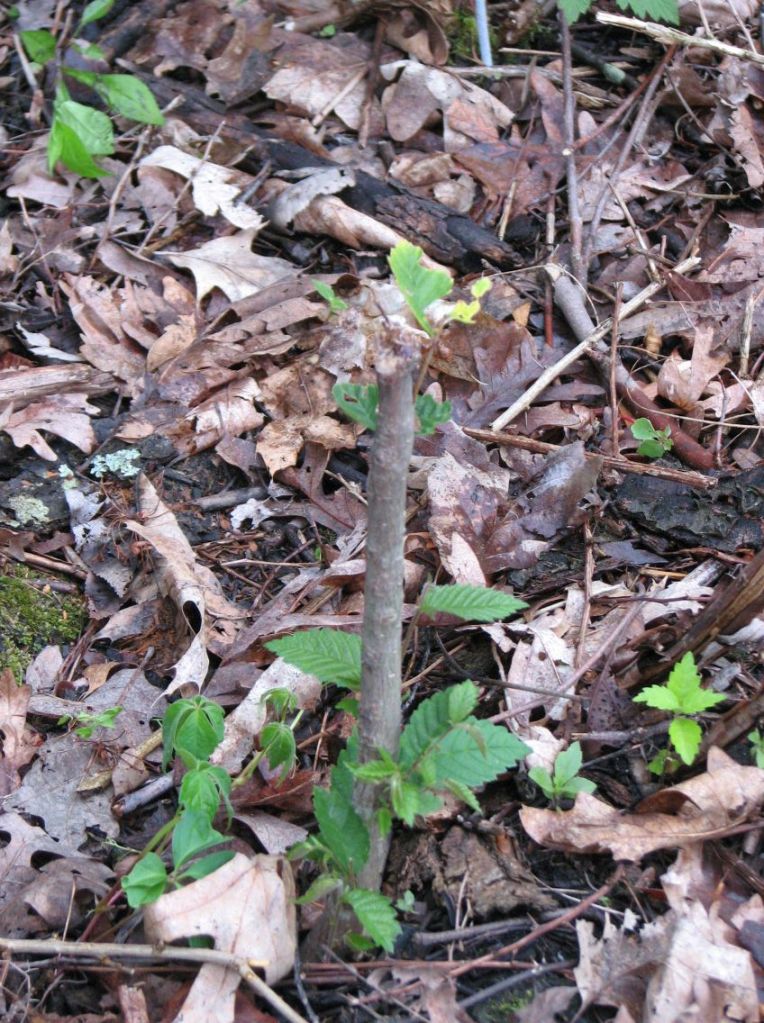
The herbicide application did not kill this elm.

This shagbark hickory was not killed by the herbicide application.
Farther From the Burn Pile

Unlike the small stumps, I found some large buckthorn stumps that were sprouting vigorously further from the burn pile. Likely, they were not treated with herbicide. Also visible is a sprouting green ash and sprouting barberry bushes.

Just south of the sprouting larger buckthorn stumps was this large buckthorn stump that was cut prior to the 2/11/2023 workday. This is how a buckthorn should look when sprouting after being treated with too little herbicide. Although, this stump probably had been treated with herbicide when the multiflora rose had herbicide applied.
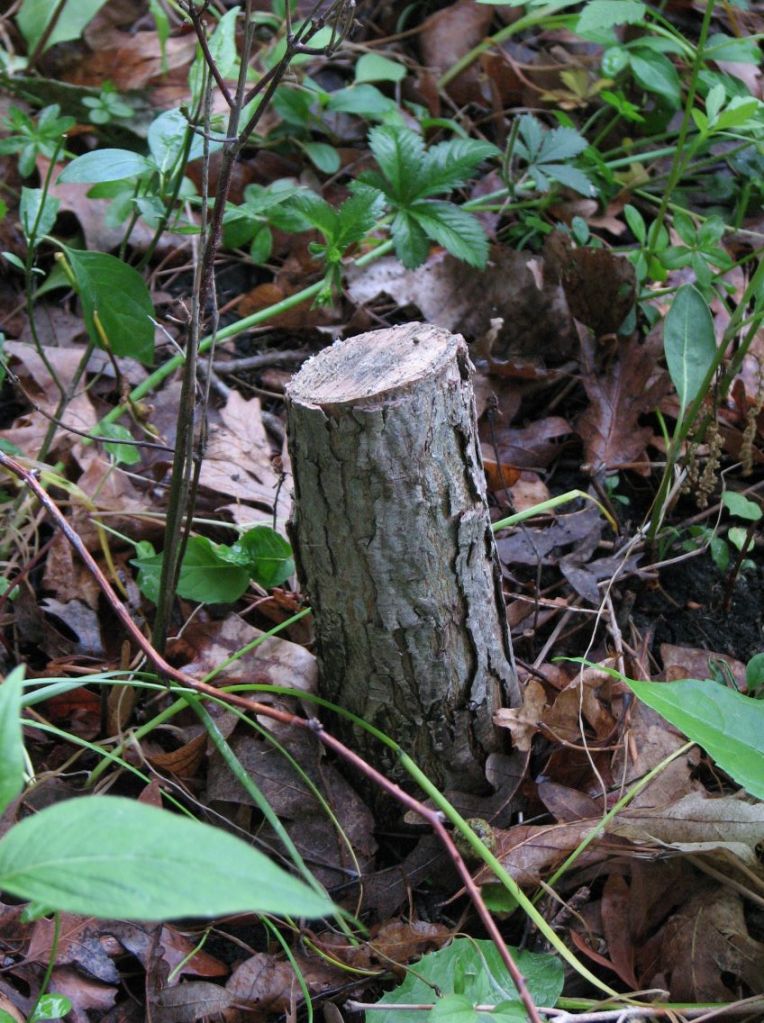
I had marked on my map that this stump was treated, it looks dead.
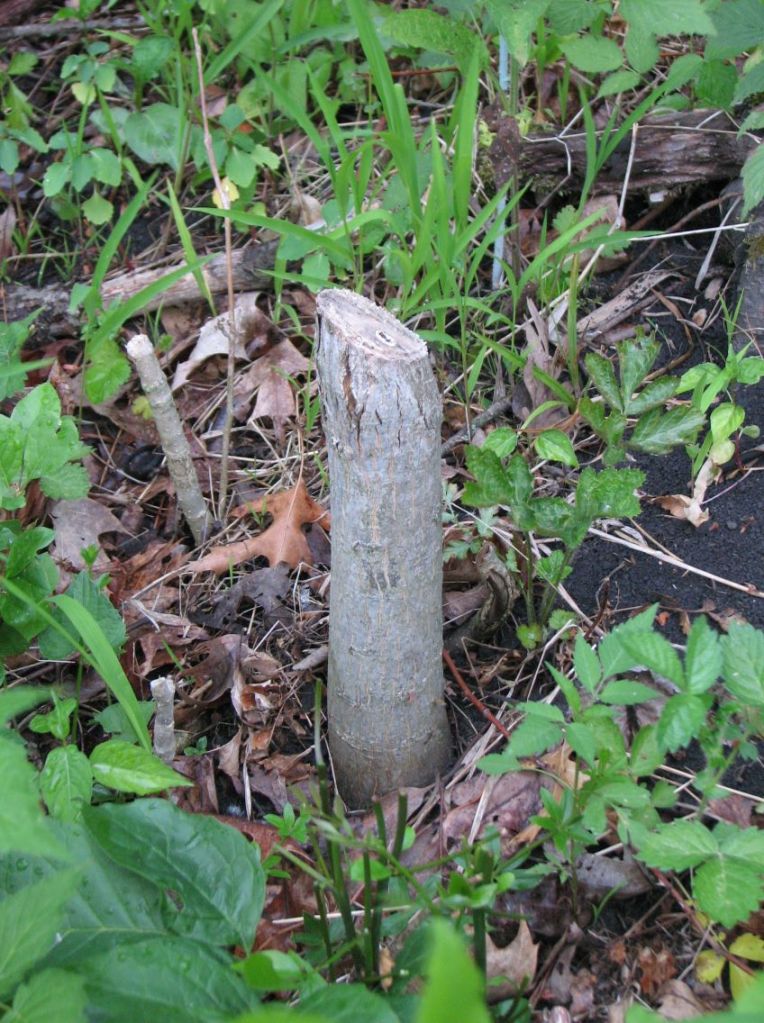
This stump, marked as being treated, also looks dead. However, when I looked closer, I could see sprouts starting to grow out of the base. This is the reason I must wait a full year before evaluating herbicide application results.

The treatment in this area appears to have successfully killed what appears to be a second box elder stump or possibly a larger green ash. My observations at Poplar Creek have convinced me box elder must be extremely susceptible to triclopyr ester.

Toward the wetland, reed canary grass was sprayed with herbicide. Since other plants appear unaffected, a grass specific herbicide must have been used.
Large Buckthorn Stumps Treated During a Previous Workday

I relocated the large buckthorn stumps that had been cut during a workday prior to 2/11/2023. I marked the dead stumps on the map with red and the stumps with some sprouting in green. Two out of the fourteen stumps were sprouting. This gives a control rate of 86 percent. This is close to my goal of 95 percent considering not enough stumps were counted to have a high degree of accuracy.
Images taken on 2/11/2023 and then on 6/11/2023 from North, East, South, West of Burn Piles
Western Burn Pile
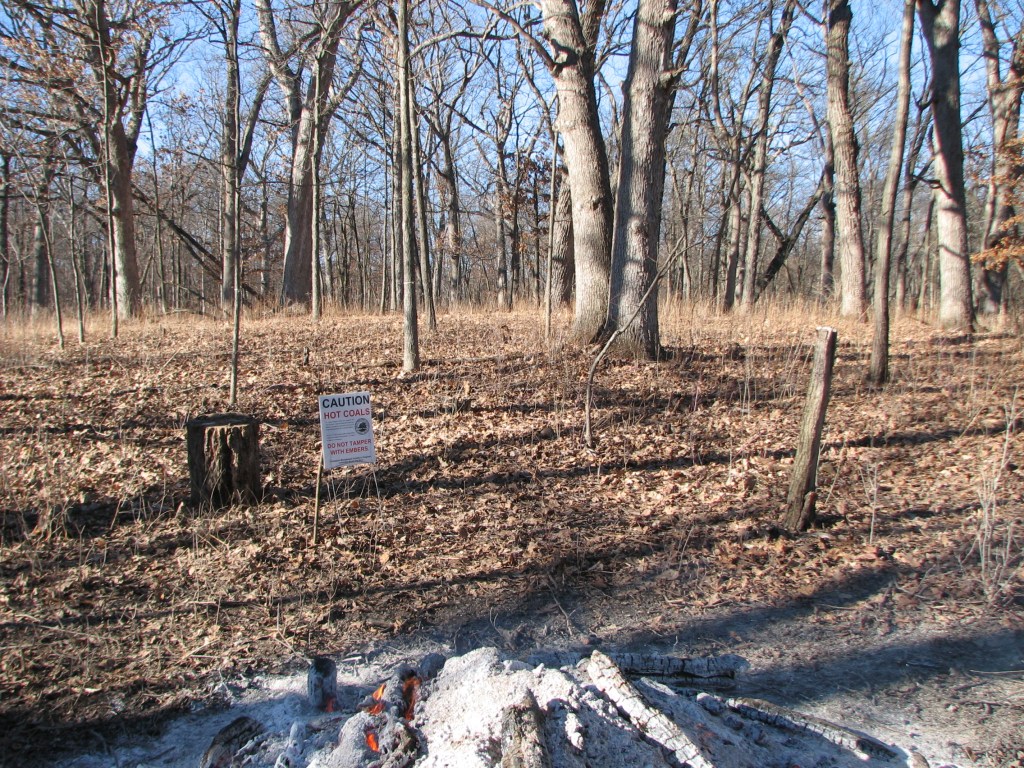
North on 2/11/2023

North on 6/11/2023
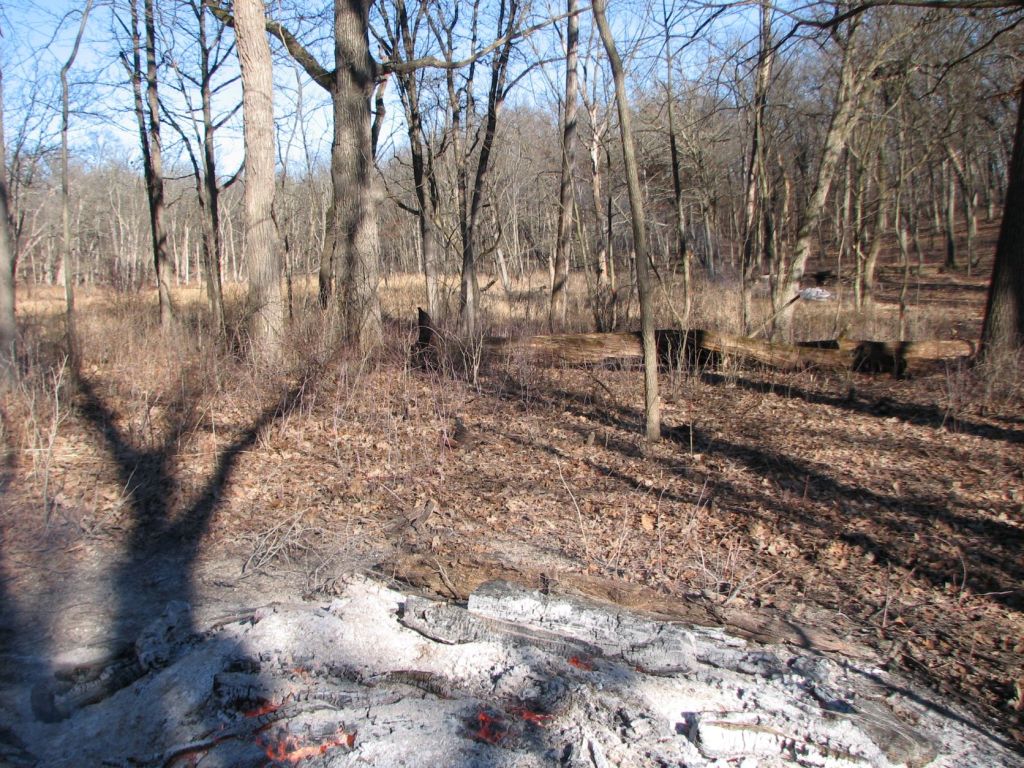
East on 2/11/2023
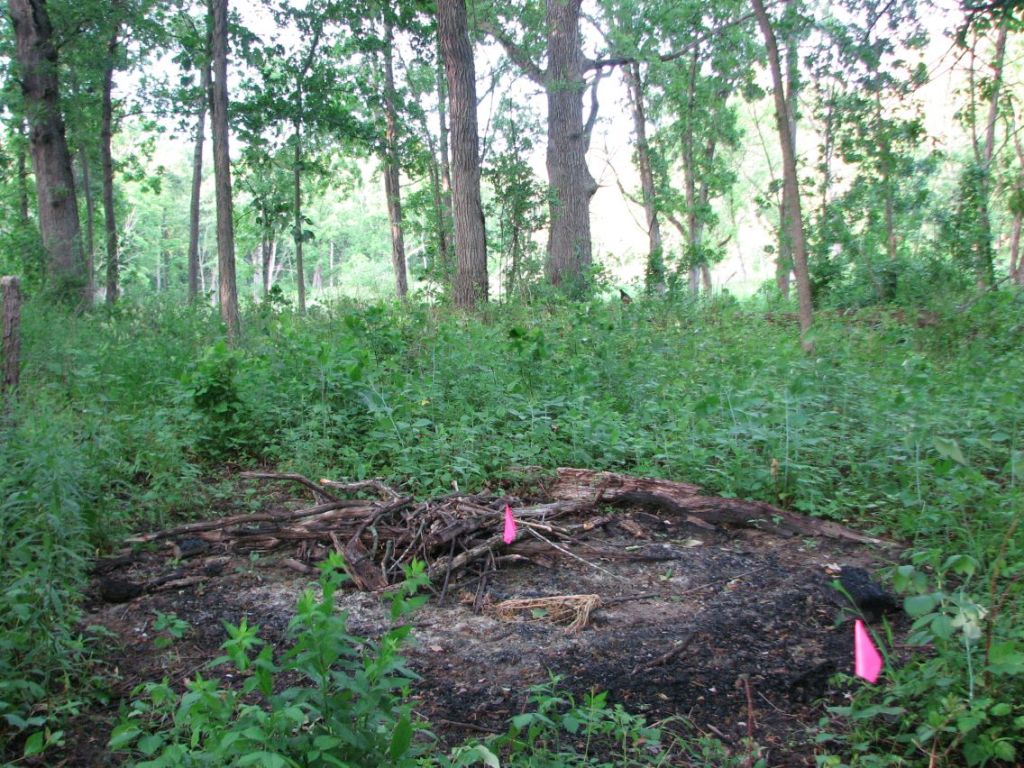
East on 6/11/2023

South on 2/11/2023
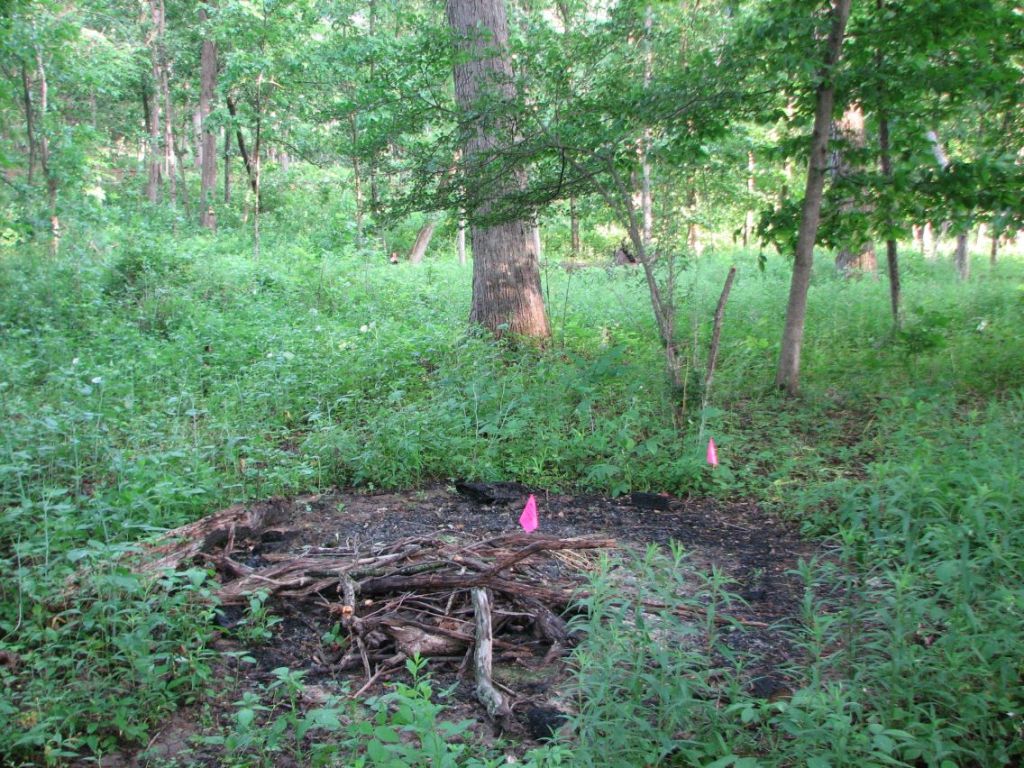
South on 6/11/2023

West on 2/11/2023
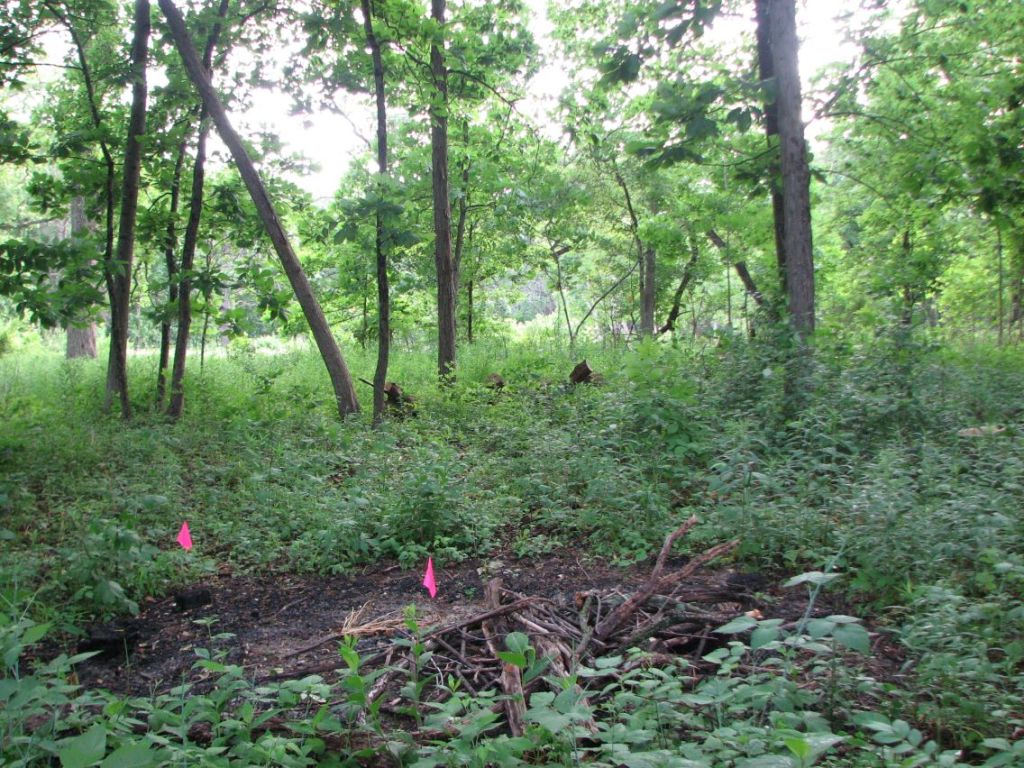
West on 6/11/2023
Eastern Burn Pile
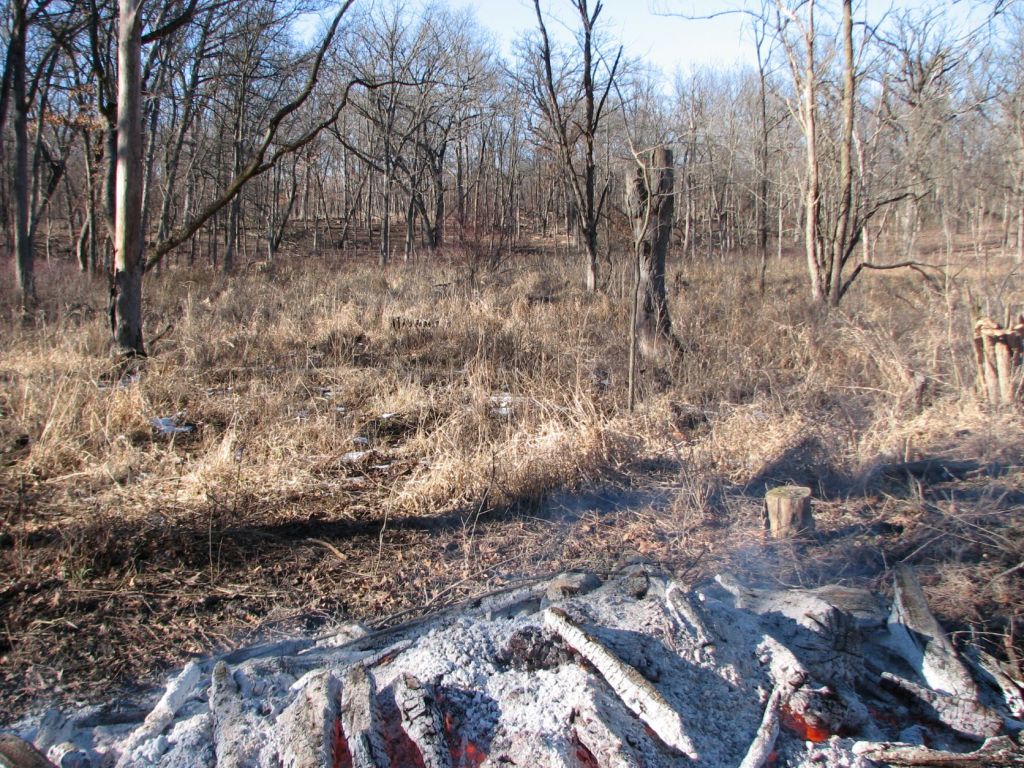
North on 2/11/2023

North on 6/11/2023: Lots of reed canary grass is visible despite much of it further east of the view shown having been sprayed.

East on 2/11/2023

East on 6/11/2023

South on 2/11/2023

South on 6/11/2023: In this image you can see where the vegetation is thinner near the burn scar in the area where lots of small stems were treated versus farther away. This is from off-target damage when the triclopyr ester is splashed off the cut stumps during rain. I checked the National Weather Service weather data and the Chicago area received rain three days after herbicide was applied. The damage visible here is consistent with the level of damage I have observed when rain occurred three days after I have applied triclopyr ester in basal oil. The longer until rain occurs after triclopyr ester in basal oil is applied the less damage will be observed up until about a week.
At a different site, I have seen a better vegetation response the following year when glyphosate has been applied to frills (cuts around stems) rather than triclopyr ester in basal oil applied to basal bark. Likely, glyphosate applied to cut stumps would also have reduced off target damage. See the previous image of numerous small stumps that had been treated with herbicide for a closer view of the area shown in the above photograph.
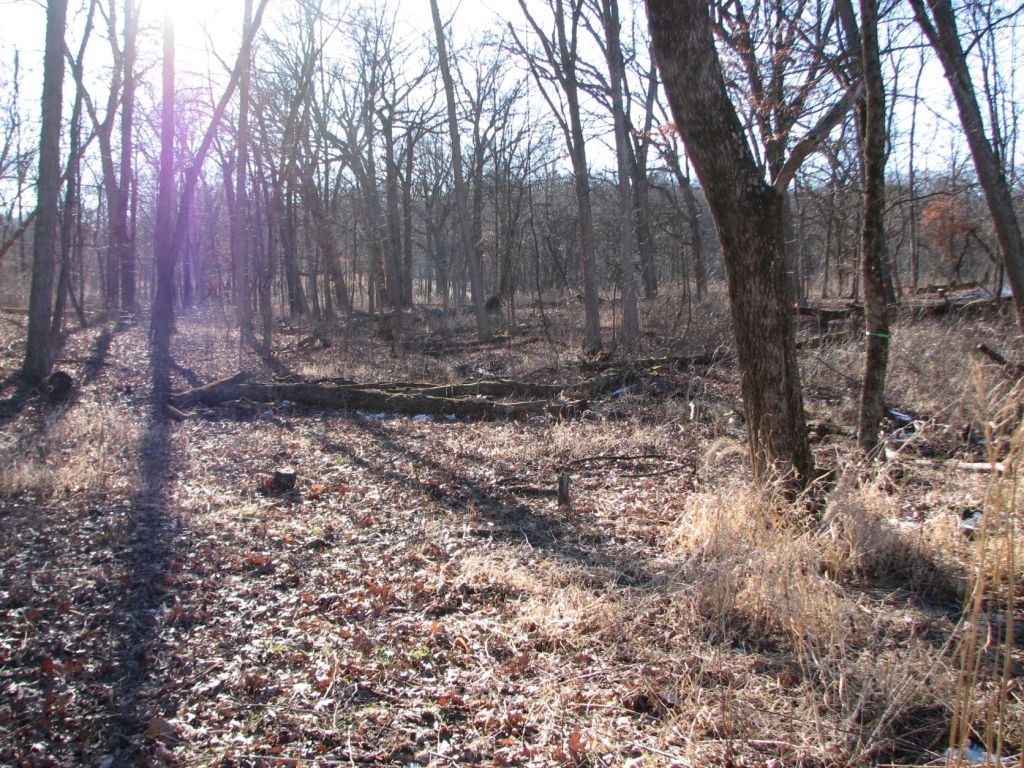
West on 2/11/2023
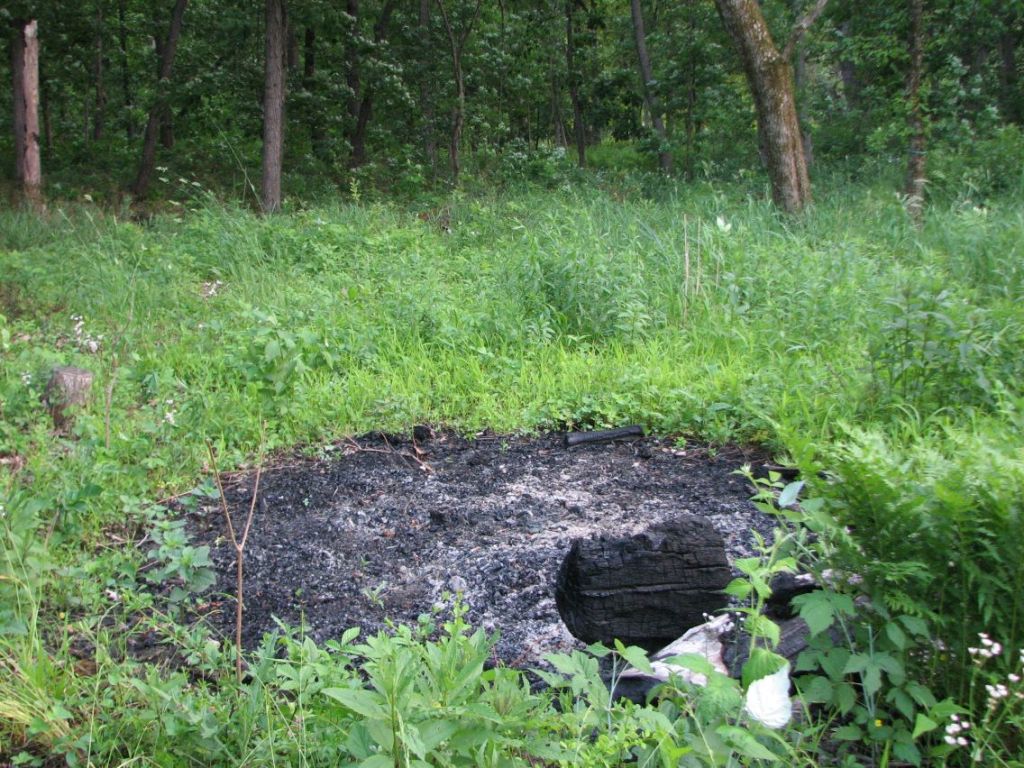
West on 6/11/2023
Plants Growing in a Previous Season’s Burn Scar (6/26/2023)

Field Thistle growing in a previous season’s burn scar with garlic mustard around the edge.

American burnweed (Erechtites hieraciifolius) growing in a previous season’s burn scar.

Smartweed (Polygonum sp.) growing in a previous season’s burn scar.

 Stewardship Chronicles
Leave a reply to “Ring of Death” – Stewardship Chronicles Cancel reply