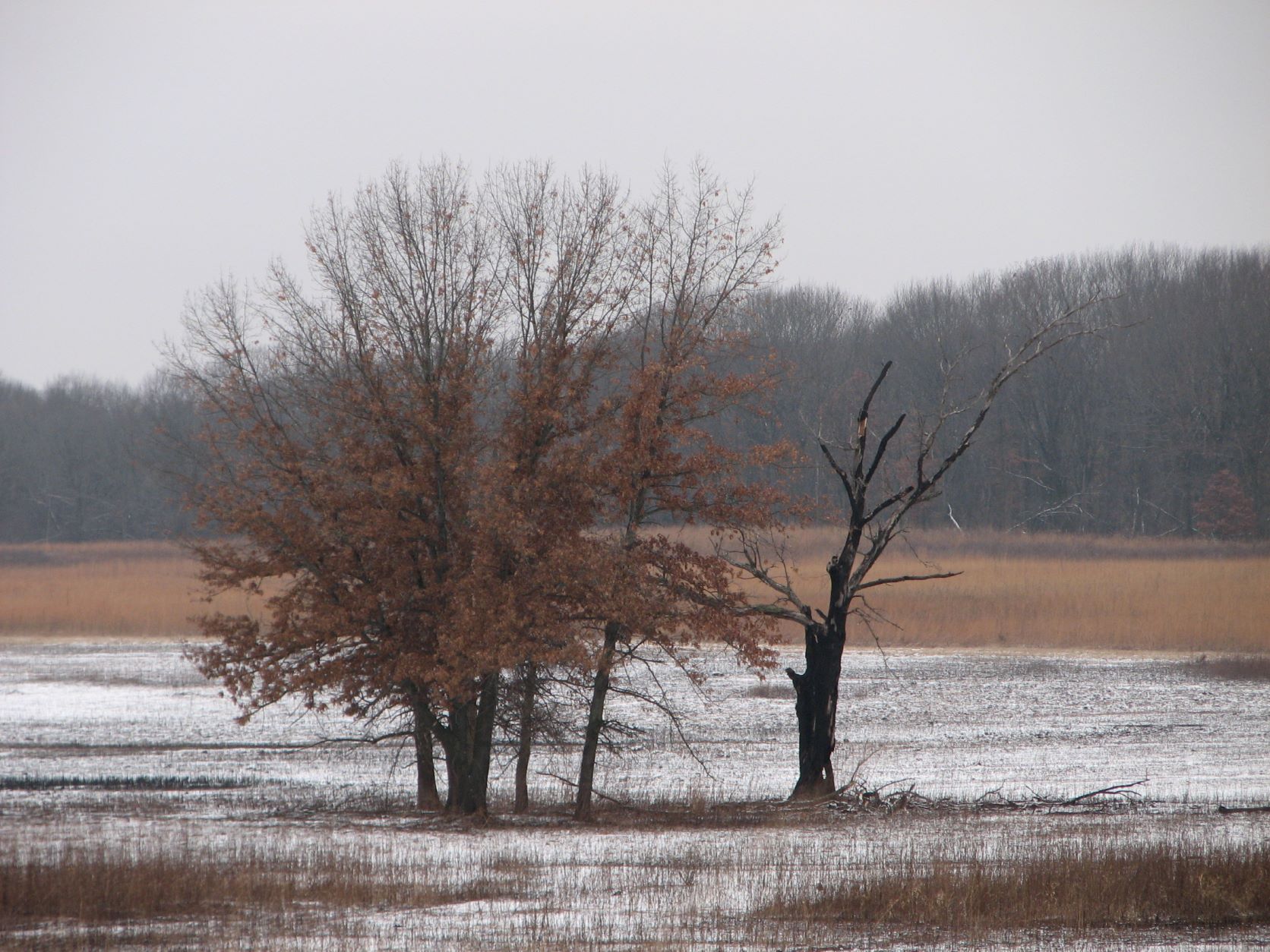
Learn about Bluff Spring Fen at the below link.
https://dnr.illinois.gov/inpc/area.area2cookbluffspringfen.html
Summary
A wide view and closer view of the work area are presented.
Images of damaged vegetation are shown. Discussion on if this was caused by herbicide or drought is presented.
A chart recording number of buckthorns killed or sprouting in different size classes after the herbicide application is presented. The larger number of small diameter buckthorn sprouting is discussed.
Images of controlled and sprouting barberries and oriental bittersweet are discussed. The oriental bittersweet appeared to have formed root sprouts.
Images of spotted knapweed being sprayed are presented with discussion on overspray that was observed.
Miscellaneous images are presented. One showing an out of focus small buckthorn that shows impacts from herbicide application but was not killed. A second image shows a reed canary grass clump after being treated with herbicide.
Work Area
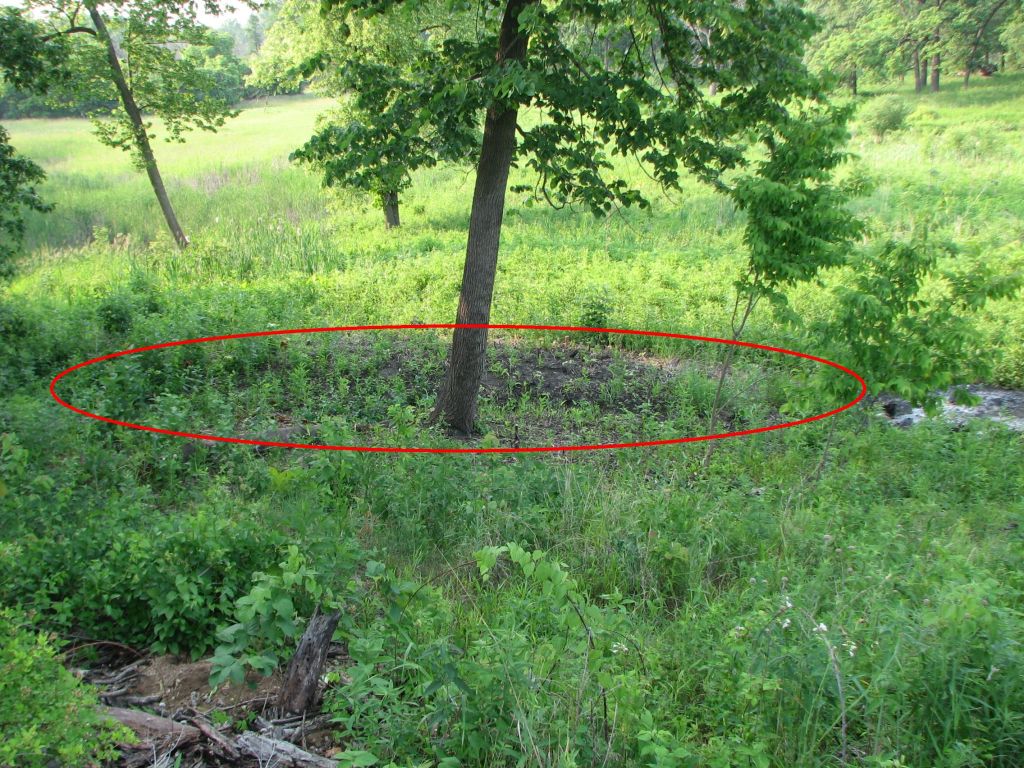
The red line outlines the portion of the work area from the 2/18/2023 workday where I made observations. See the post titled “Bluff Spring Fen 2/18/2023” for a map showing this location in the preserve.
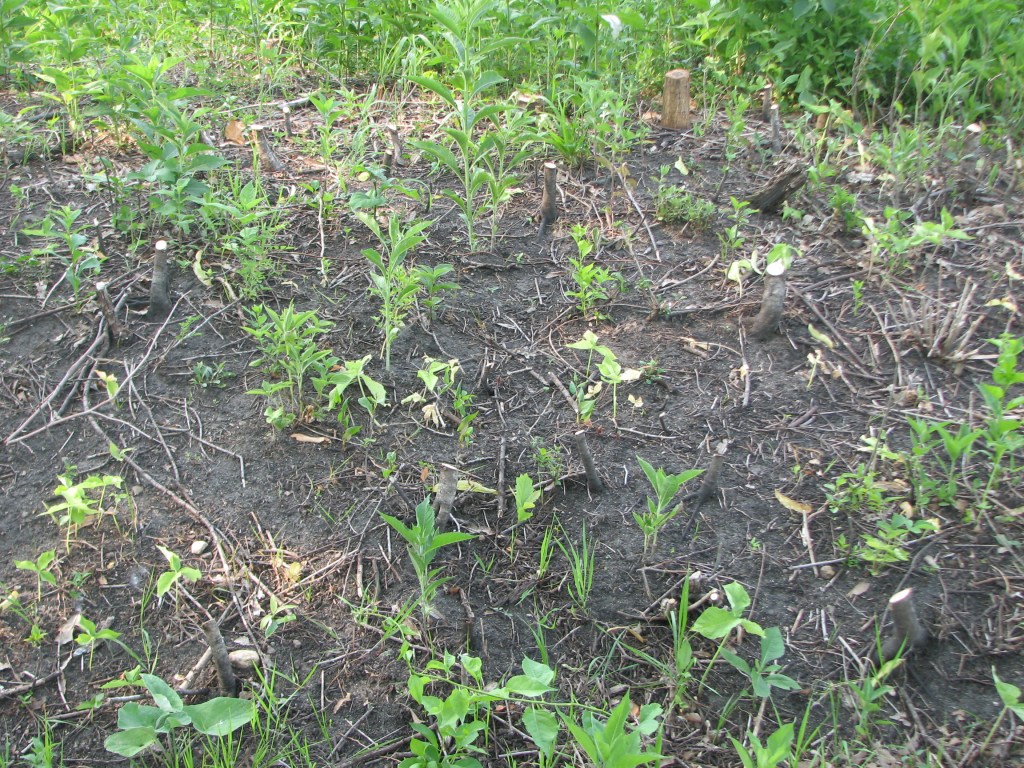
Here is a closer view of the area previously outlined in red. I saw the herbicide applicator applying herbicide. The application was meticulous and thorough. A picture showing the coverage of the stumps can be viewed on the post titled, “Bluff Spring Fen 2/18/2023.” I checked the National Weather Service website and rain occurred in the Chicago area four days after the application.
Off-Target Damage
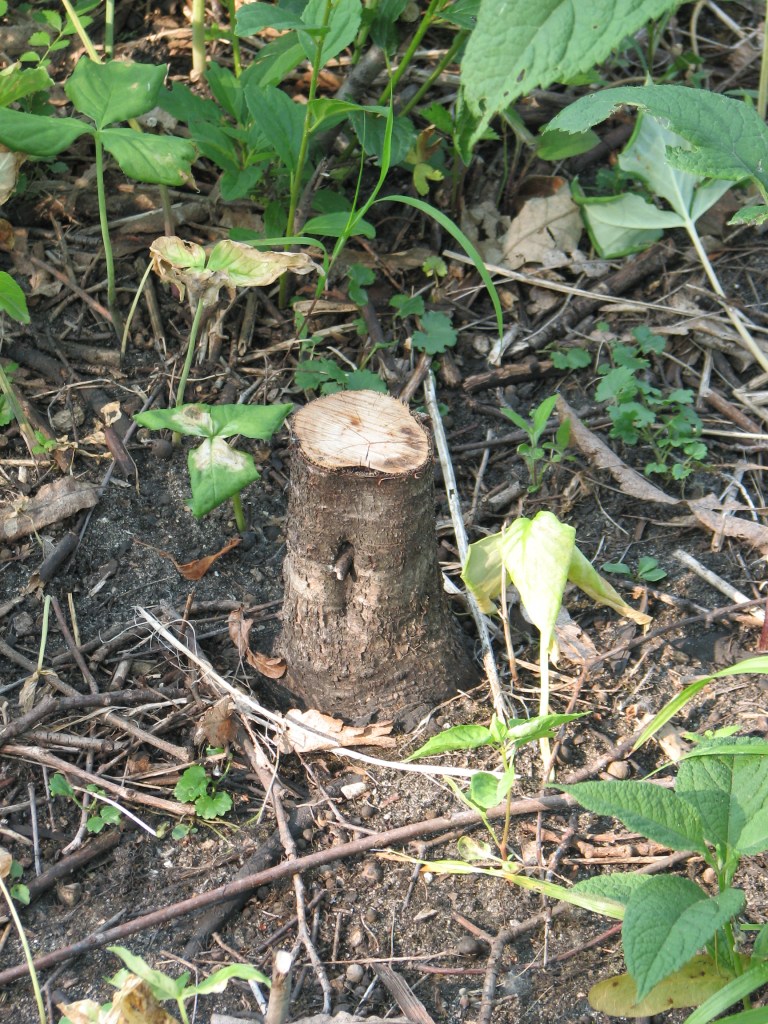
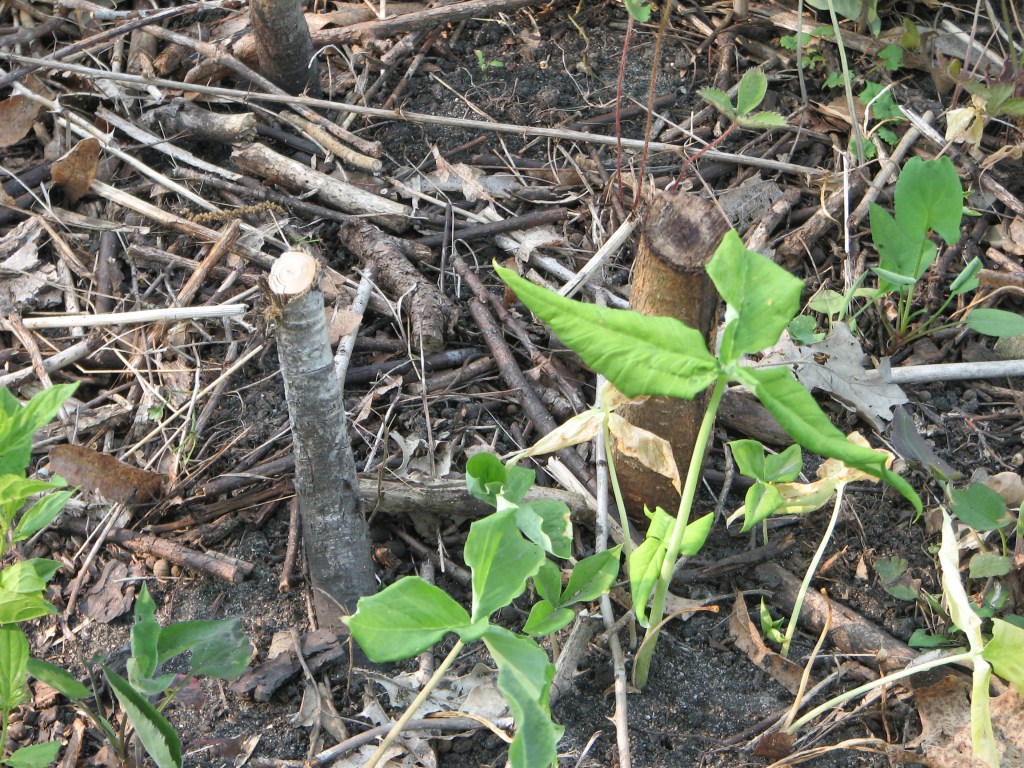
In the above images you can see some curling and yellowing of the leaves of jack-in-the-pulpit near treated stumps. We are in a prolonged drought. I cannot be sure if the impacts I am observing on the Jack-in-the-pulpit are from herbicide being splashed off stumps by rain, the drought, or increased sunlight from the invasive woody species being removed. Looking at plants further from treated stumps, it would appear herbicide damage is the cause. Although, in another preserve I saw similar yellowing of jack-in-the-pulpit leaves where herbicide was not applied which I attribute to the drought.
You can compare the off-target damage in these photos (rain four days after application) to an application that was done three days before rain occurred if you look at the post titled “Deer Grove Preliminary Results.”
Effectiveness of Herbicide Application
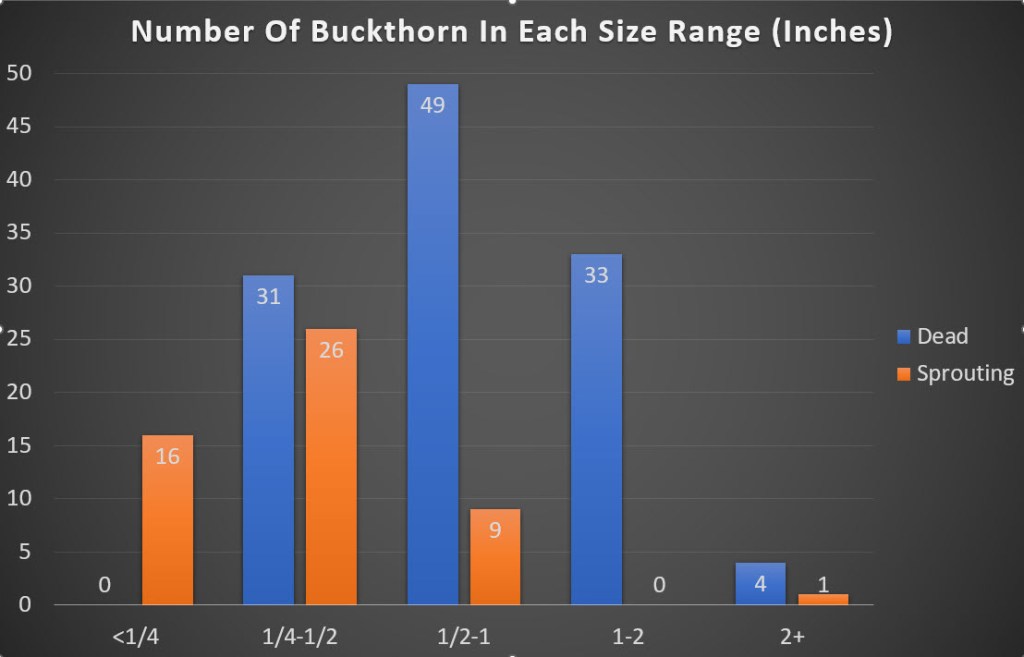
I counted the common buckthorn stumps in the work area shown in the red outline that appeared dead or were sprouting for different size classes. The size classes are less than 1/4 inch, 1/4 inch to 1/2 inch, 1/2 inch to 1 inch, 1 inch to 2 inches, and 2 inches or larger. In this graph, you can see that the center of the curve of common buckthorn stumps that are sprouting is at 1/4 to a half inch in diameter. The applicator was very meticulous and many of the sprouting common buckthorns showed herbicide damage to the leaves. I do not think most of the sprouting stumps being smaller is only because smaller stumps were more likely to miss having herbicide applied. I think the problem is that a higher proportion of herbicide needs to be applied to the stem, in addition to the cut stump, when woody invasive species are smaller. In my own work, I apply to a larger proportion of stem length when woody invasive species are small. I have noticed smaller diameter invasive species were not being killed when I applied herbicide to the same proportion of stem length relative to diameter as larger invasive woody species.
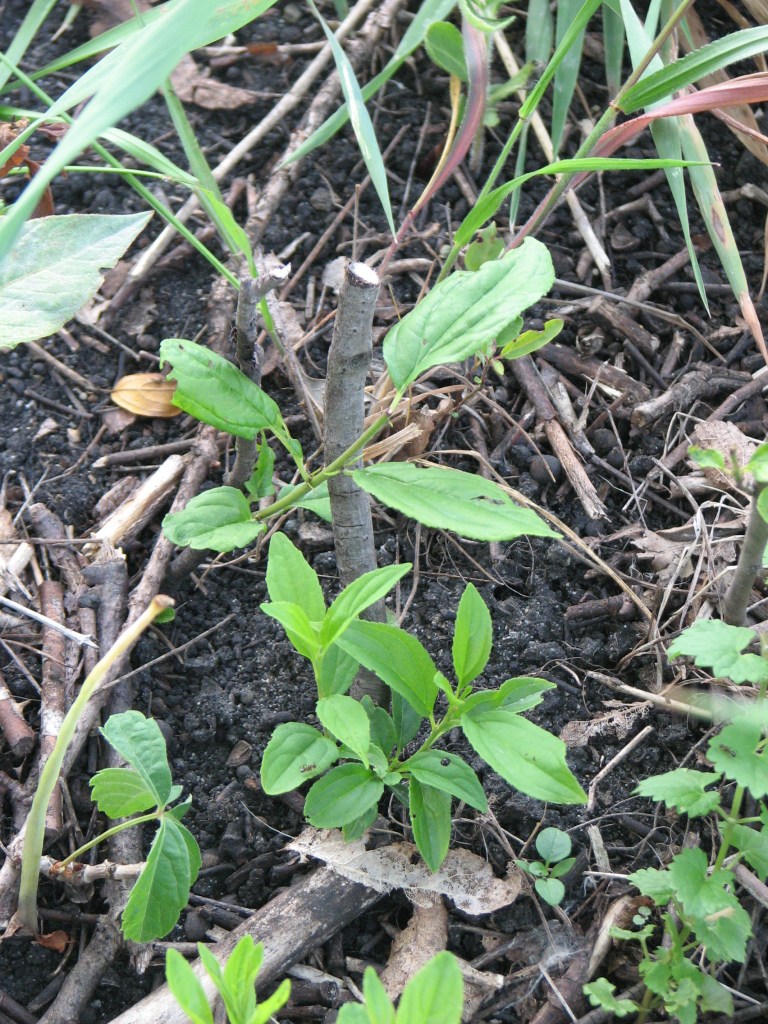
This image shows a few of the smaller buckthorn stumps sprouting. Possibly these missed getting herbicide applied because they were near the fire.
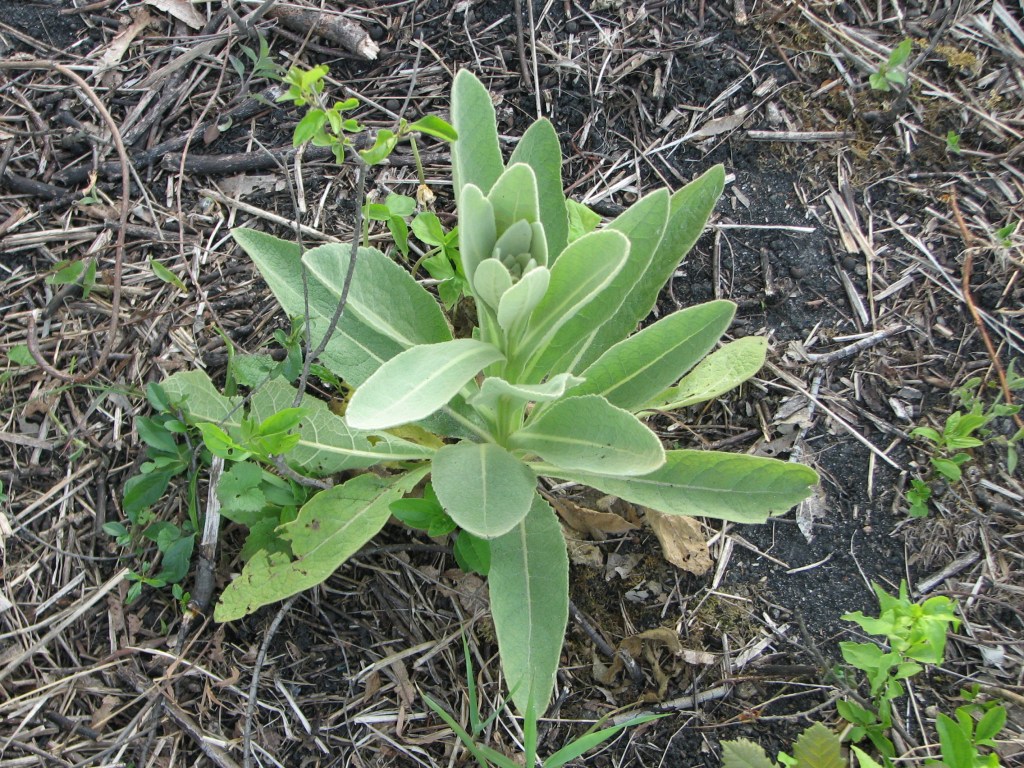
In contrast, the small buckthorn in this image show yellowing of the leaves and appear to have been treated with herbicide. The large plant in the middle of the photo is a common mullein. This was the only common mullein I saw at Bluff Spring Fen on this day. Common mullein appears after woody invasive species have been treated with herbicide. I don’t know if this is because of the sudden increase in light or because common mullein is more resistant to herbicide. In the post, “Spring Creek On 1/14/2023” I posted a photo of an entire slope full of pokeweed (on one side) and common mullein (on another side) where Asian bush honeysuckles had been previously treated with herbicide. Whatever the reason, common mullein seems to like invasive woody species removal.
Barberries and Oriental Bittersweet
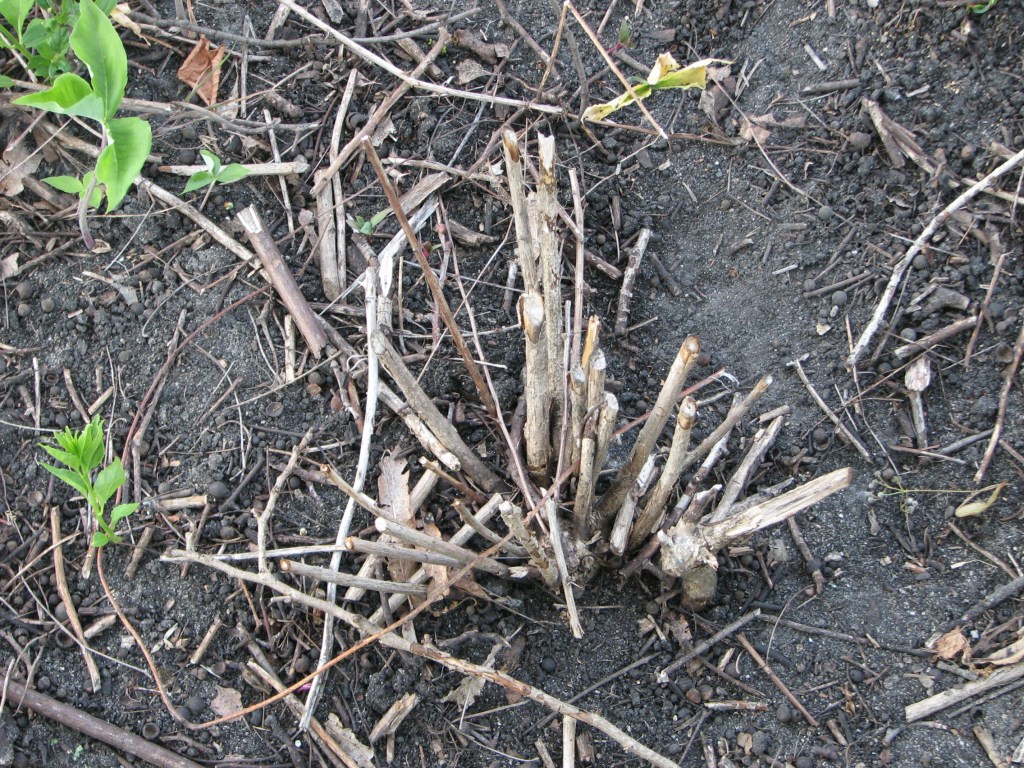
This is one of four barberries that were killed by the herbicide treatment.
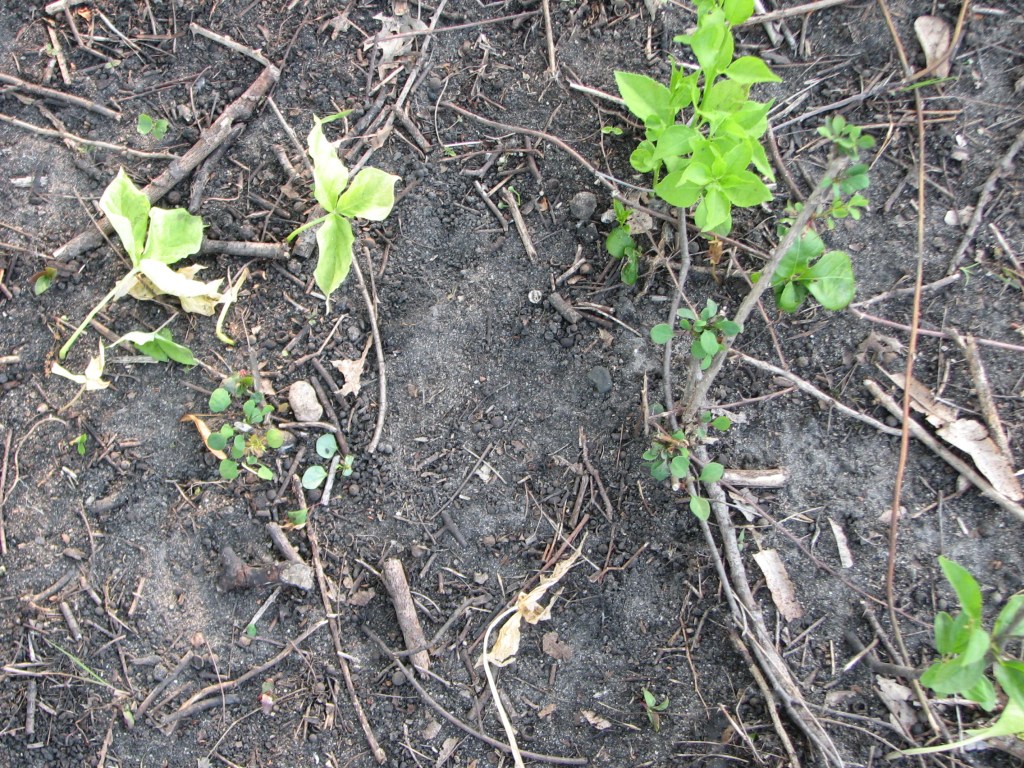
The photo above shows two barberries that survived the herbicide treatment.
Also visible in the above photo is an Oriental bittersweet that appears to have sprouted from roots. I counted eleven Oriental bittersweet stumps that were dead and seven stumps that had sprouted. All the Oriental bittersweet stumps that had sprouted were small. I did not count the many Oriental bittersweet plants that were sprouting out of the ground presumably from roots. I did not know Oriental bittersweet created root sprouts before I looked at this area. This explain why the Forest Preserve District in the county where I live often clears all vegetation under Oriental bittersweet infestations. The Forest Preserve District staff must be repeatedly spraying all the ground vegetation until the Oriental Bittersweet stops sprouting.
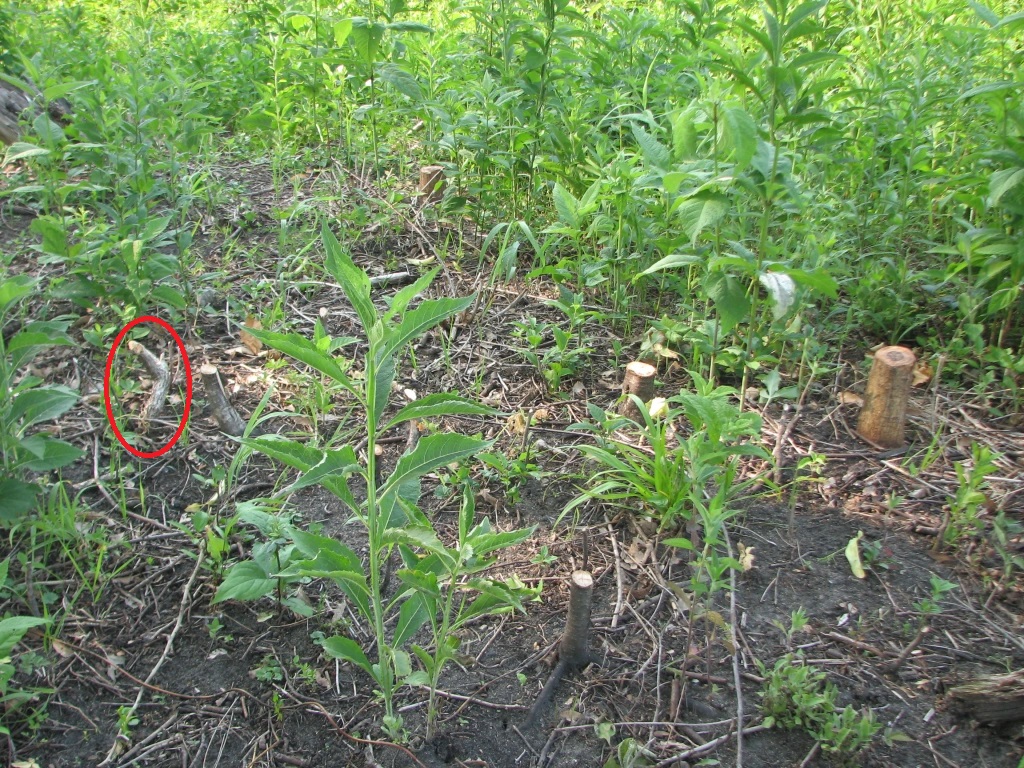
In the above image (a closer view of the work area), you can see one of the eleven Oriental bittersweet stumps that I counted as dead. Also visible are white mulberry stumps that appear dead.
Spotted Knapweed
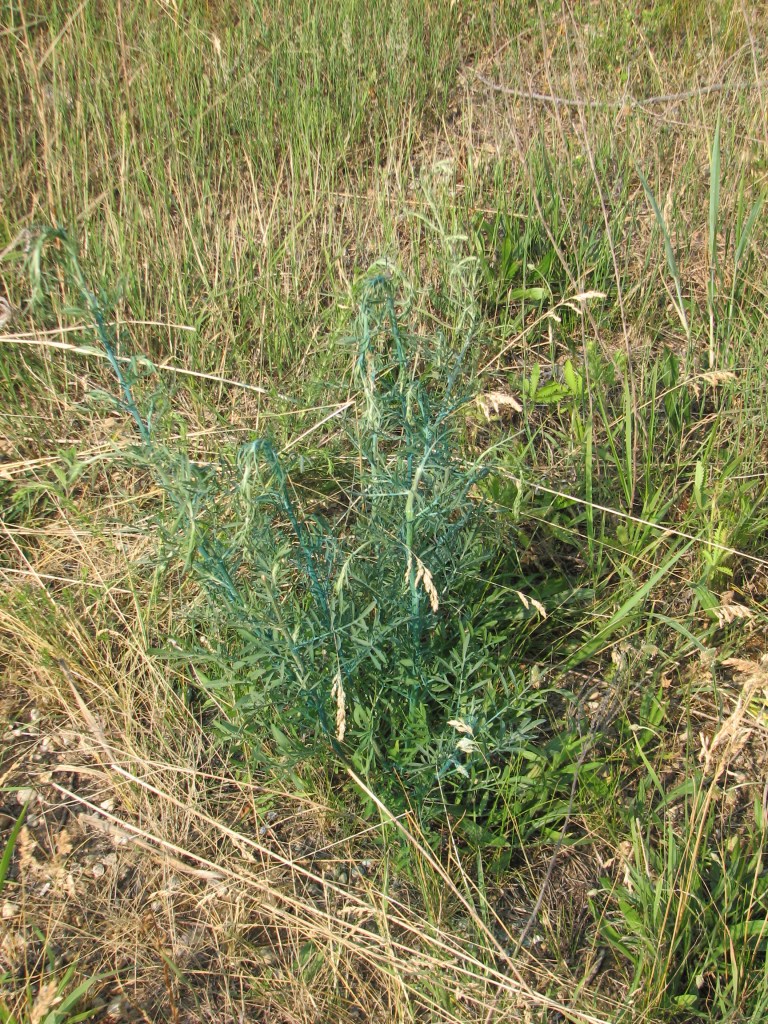
When I first walked along the lane (no longer being used) at the back of the preserve, I saw this spotted knapweed that had been treated with herbicide. I thought this was a great application. I did not see any blue dye on adjacent plants.
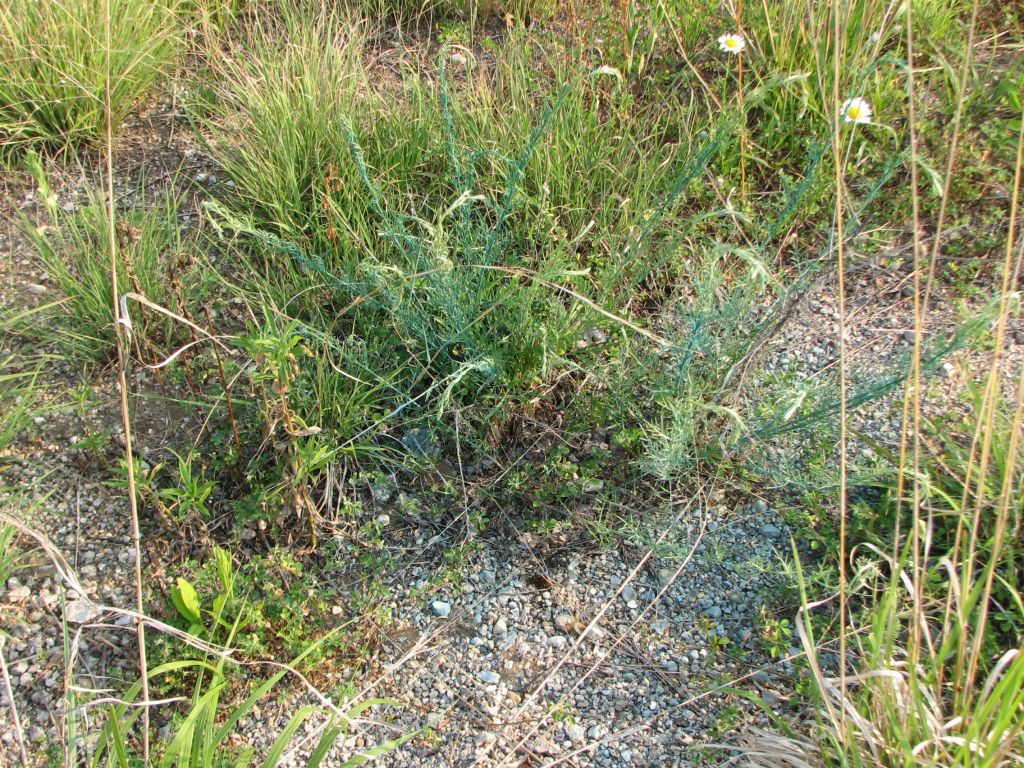
However, as I was leaving, I saw several spotted knapweeds with the blue dye from herbicide spraying all around them. Herbicide overspray often kills quality native plants and selects for more herbicide tolerant weedier species.
Other Images
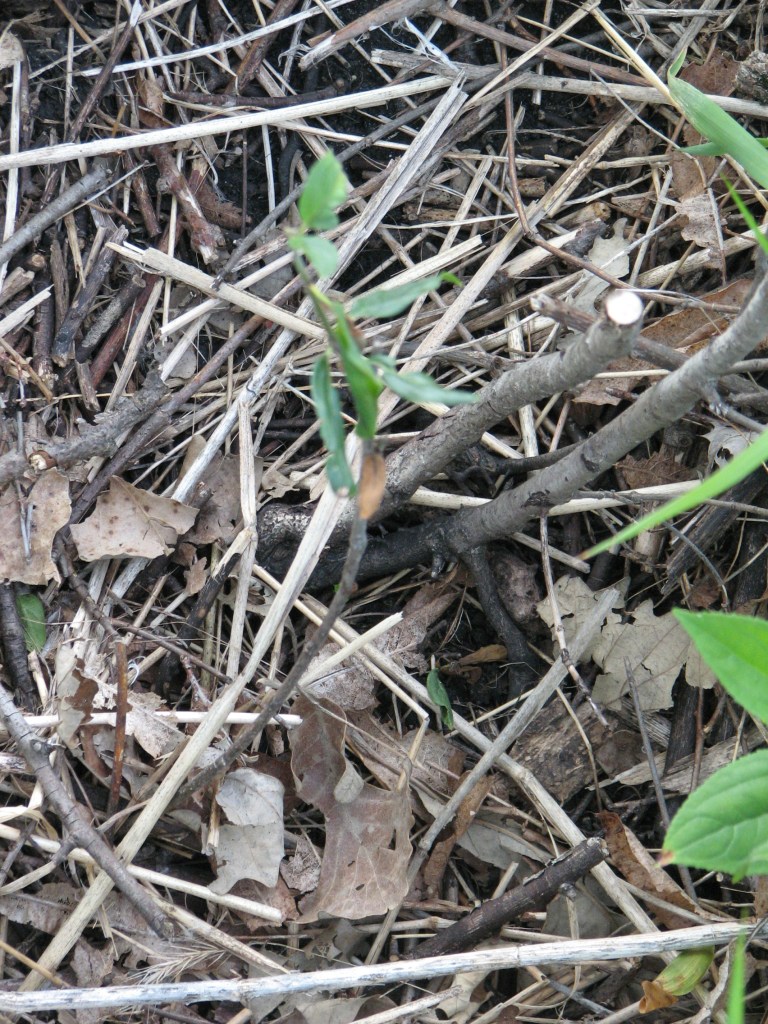
This is a out of focus photo of a small common buckthorn showing impacts from herbicide application.
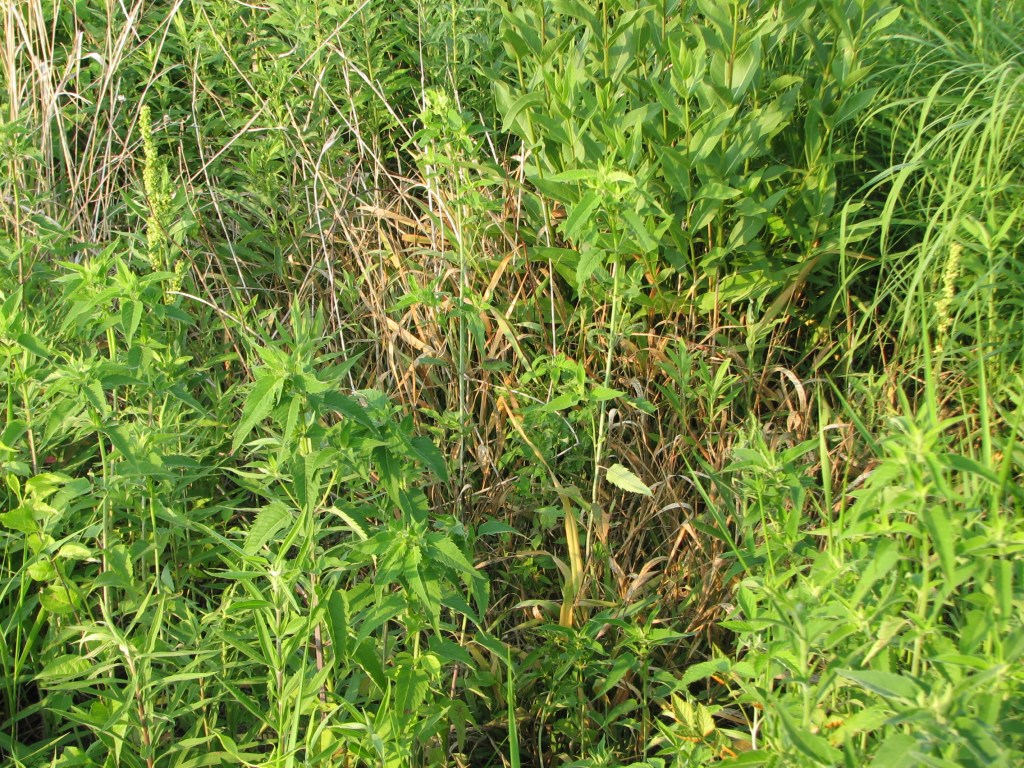
Reed canary grass treated with herbicide.

 Stewardship Chronicles
Leave a reply to “Ring of Death” – Stewardship Chronicles Cancel reply