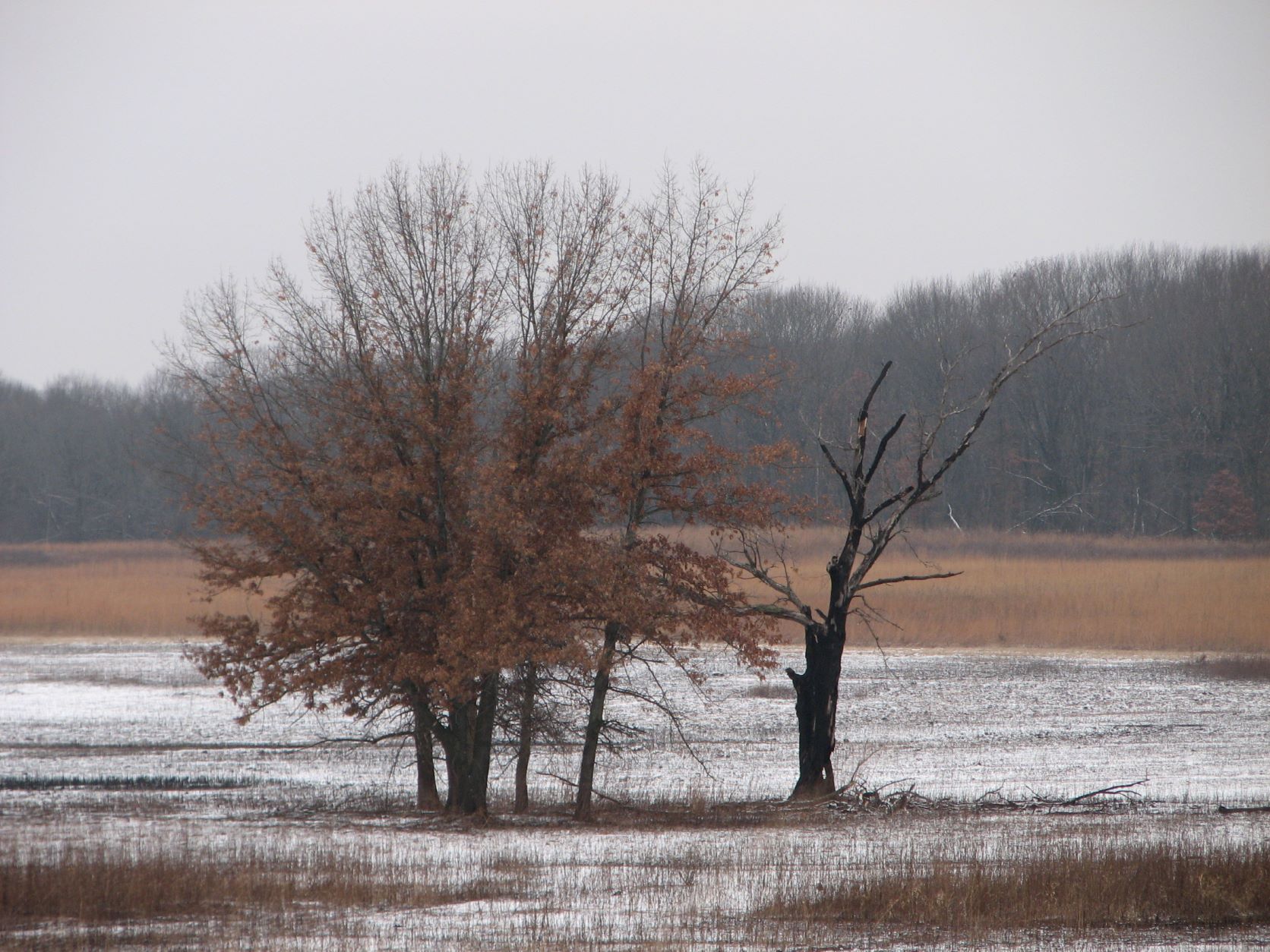
Learn more about the nature preserve at Illinois Beach State Park in the below link.
https://dnr.illinois.gov/inpc/area.area2lakeillinoisbeach.html
Summary
This post discusses the control of white sweet clover and crown vetch at Illinois Beach State Park. It ends with images of an interesting beetle.
Sweet Clover
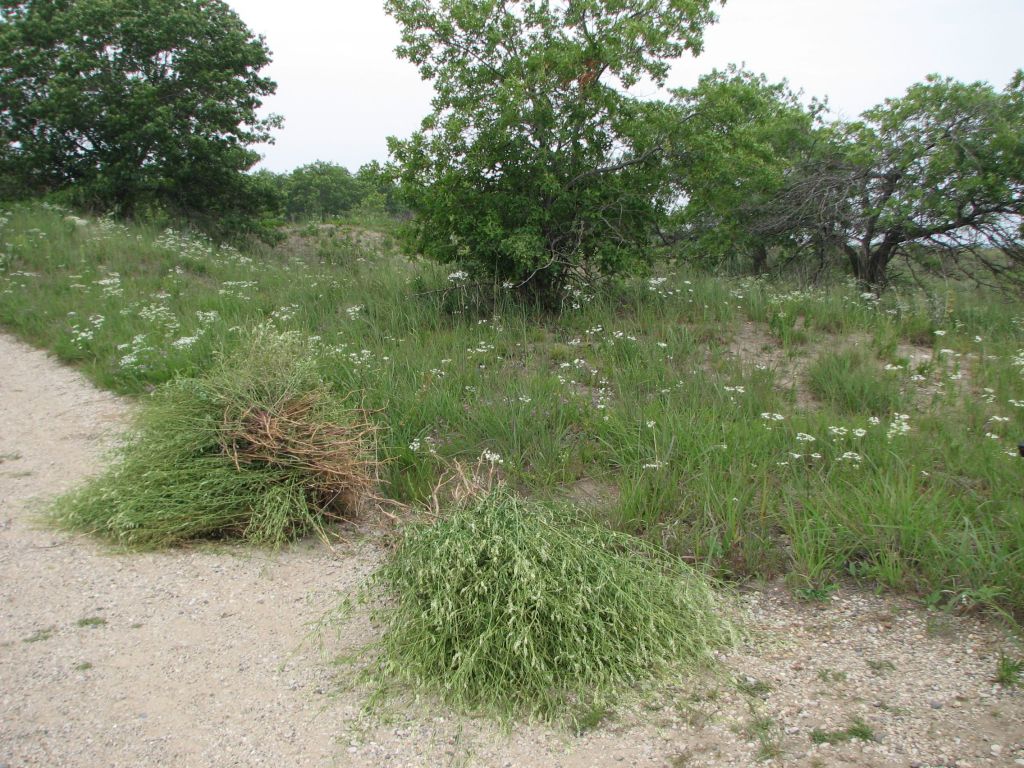
These are piles of white sweet clover. After the sweet clover was pulled, it was piled, and placed along the trail. During the workday, I pulled about 180 sweet clover. Others who were working in the larger patches pulled more stems. I focused on areas with sparse sweet clover. The sparse invasive species are a priority for me because each one can turn into a new sweet clover patch. The dense patches will require at least another year of work to get the density down to low numbers.
I had left my umbrella and a tool by these piles. On my way back to retrieve my umbrella and tool from the parking lot, I pulled another 75 first year sweet clovers in the savanna area. These were in an area I (and everyone else) walked past this workday and twice during another earlier workday I attended. There are plenty of first year sweet clover out there if you can find them. If not, they will be easier to see when they bloom next year.
Crown Vetch
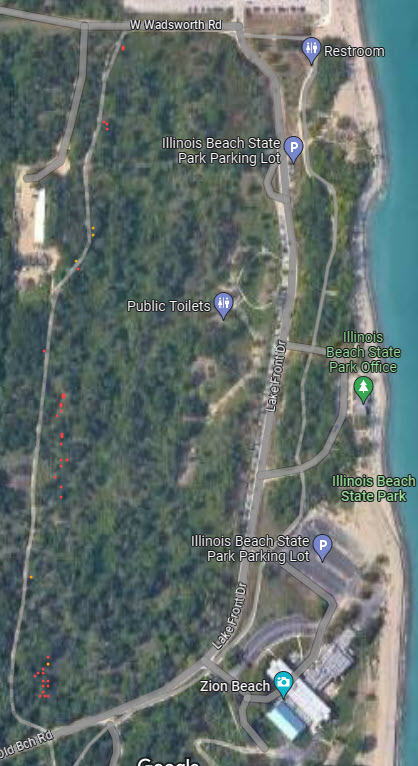
Retrieved August 9th, 2023
https://www.google.com/maps/@42.4271142,-87.8074256,975m/data=!3m1!1e3?entry=ttu
The above map shows some of the patches of crown vetch that were treated weeks ago. I marked the completely treated patches in red and the untreated patches (or where some was left unsprayed) in yellow.

This is a flag marking a patch of crown vetch. The crown vetch foliage is difficult to see because it was sprayed a few weeks ago and is dead.
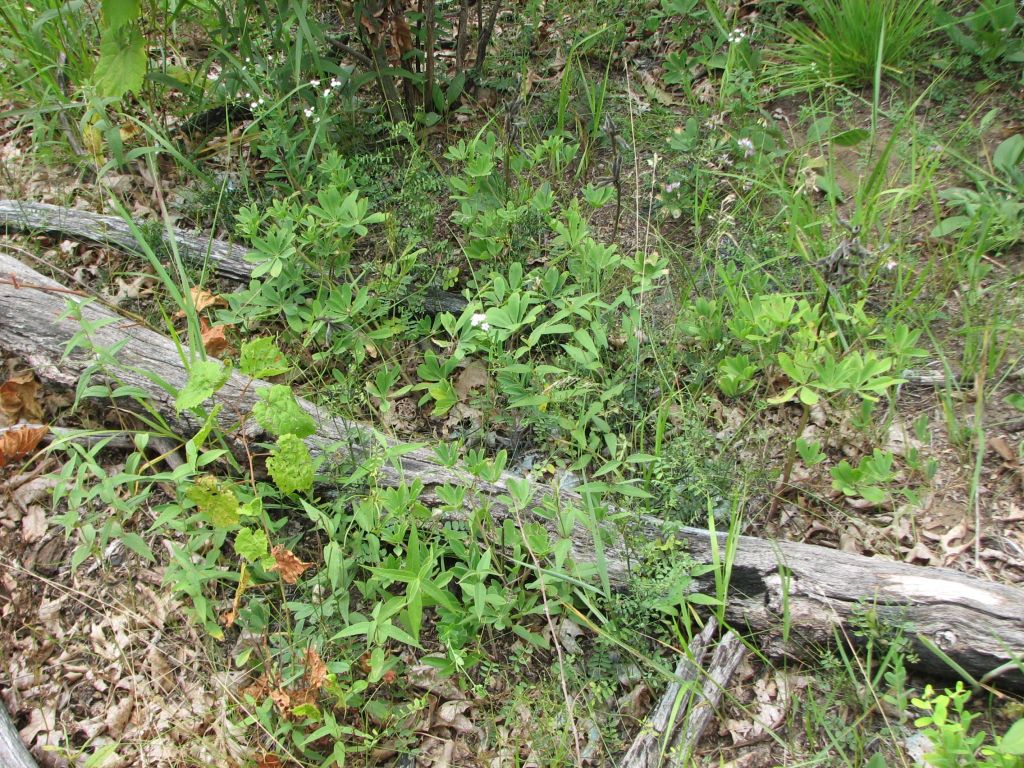
Here is a patch of wild blue lupine with crown vetch among the lupine plants. I think the crown vetch in the middle of the lupine patch was left unsprayed, until a later date when more effort could be put into preventing harming the lupines. Minimal damage to the lupine plants is visible along the edge of the patch.

This image shows a butterfly milkweed, Asclepias tuberosa, that has been damaged by spraying herbicide.

This image shows Euphorbia corollata that has been impacted by herbicide spray. The dead crown vetches are visible. Euphorbia corollata is a common plant. Still, it would be desirable to avoid spraying it so it can help fill the space once the crown vetch has died.
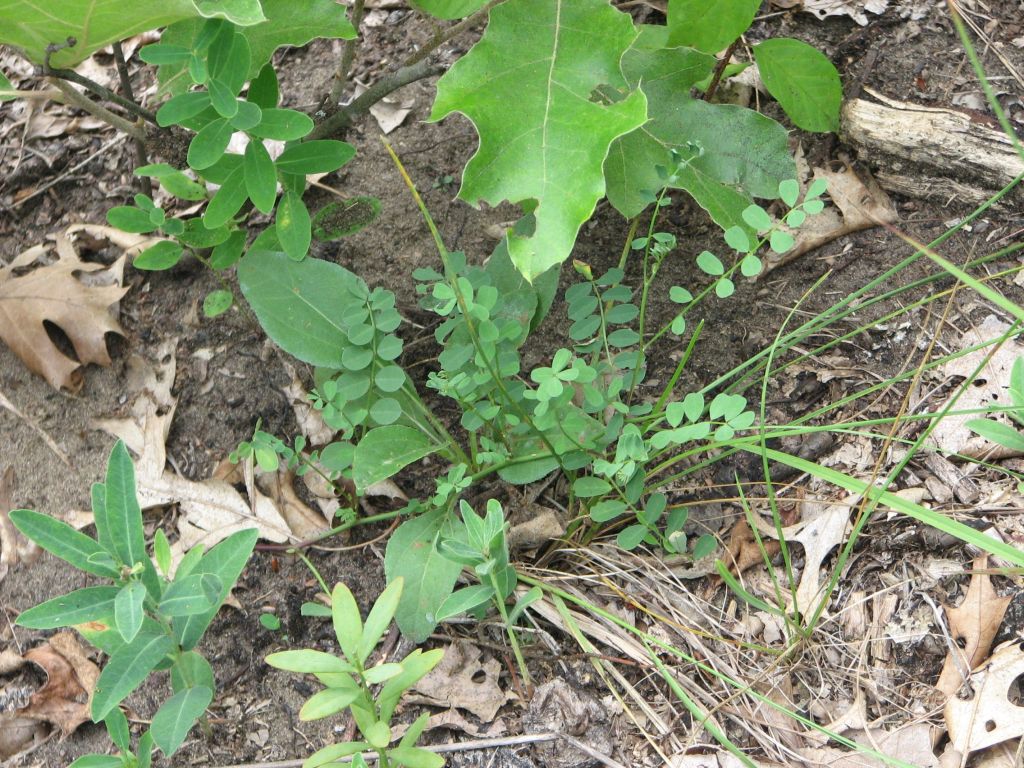
This is a crown vetch stem in a patch that was sprayed that did not have herbicide applied. This happens frequently when I apply herbicide. I first go over the patches I had treated a few weeks earlier to treat the stems I missed before moving on to new patches.
Also, a possibility is this stem was not sprayed because the applicator did not want kill the western sunflower under the crown vetch stem until more effort could be put into control later.
Beetle

Interesting beetle found on the foredune.
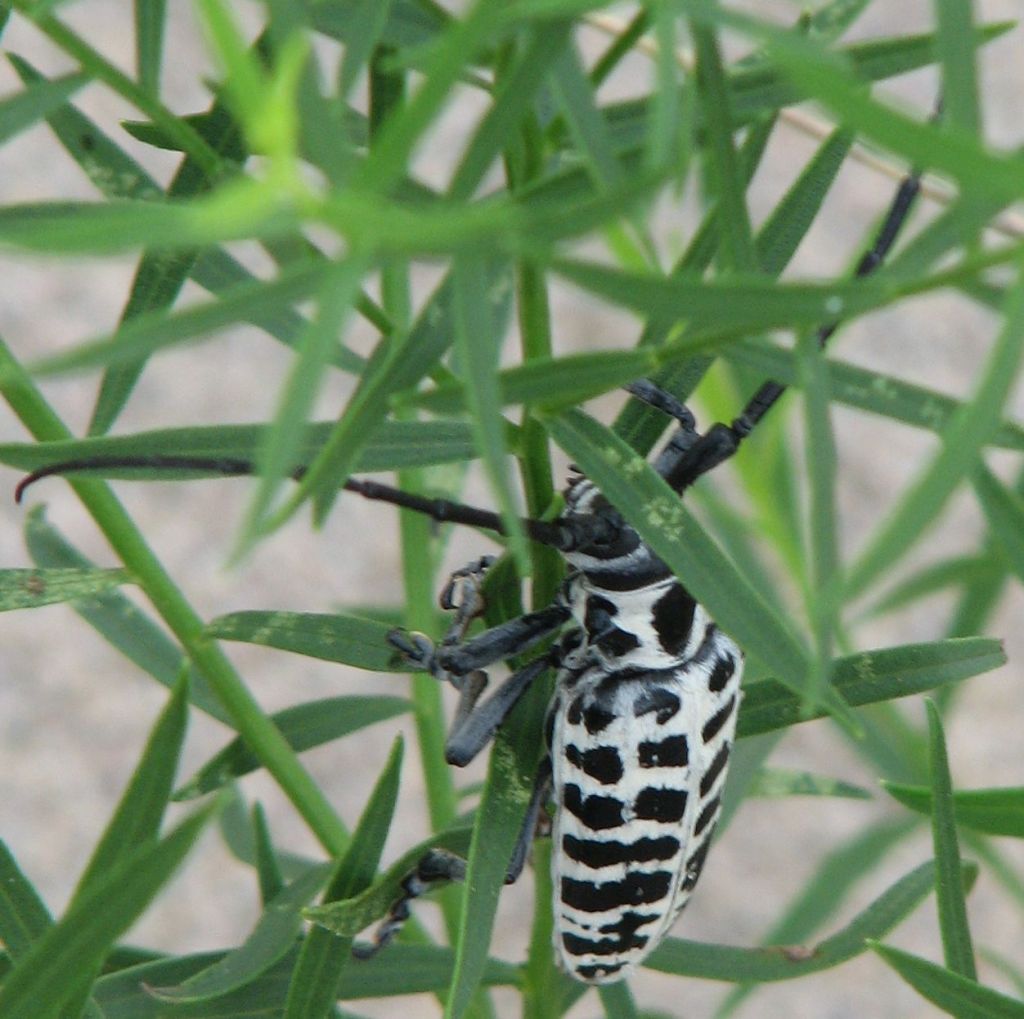
Another picture of the above beetle.

 Stewardship Chronicles
Leave a reply to Crown Vetch Control – Applying Glyphosate Foam to the Base of Stems – Stewardship Chronicles Cancel reply