Summary
This post compares the labor-intensive method of applying herbicide to each crown vetch stem, or group of stems, versus spraying that has been done to control crown vetch at a nearby location under different management. The final set of images show where this former remnant prairie is now mostly just crown vetch which has been sprayed to control it.
Unsprayed Remnant Prairie
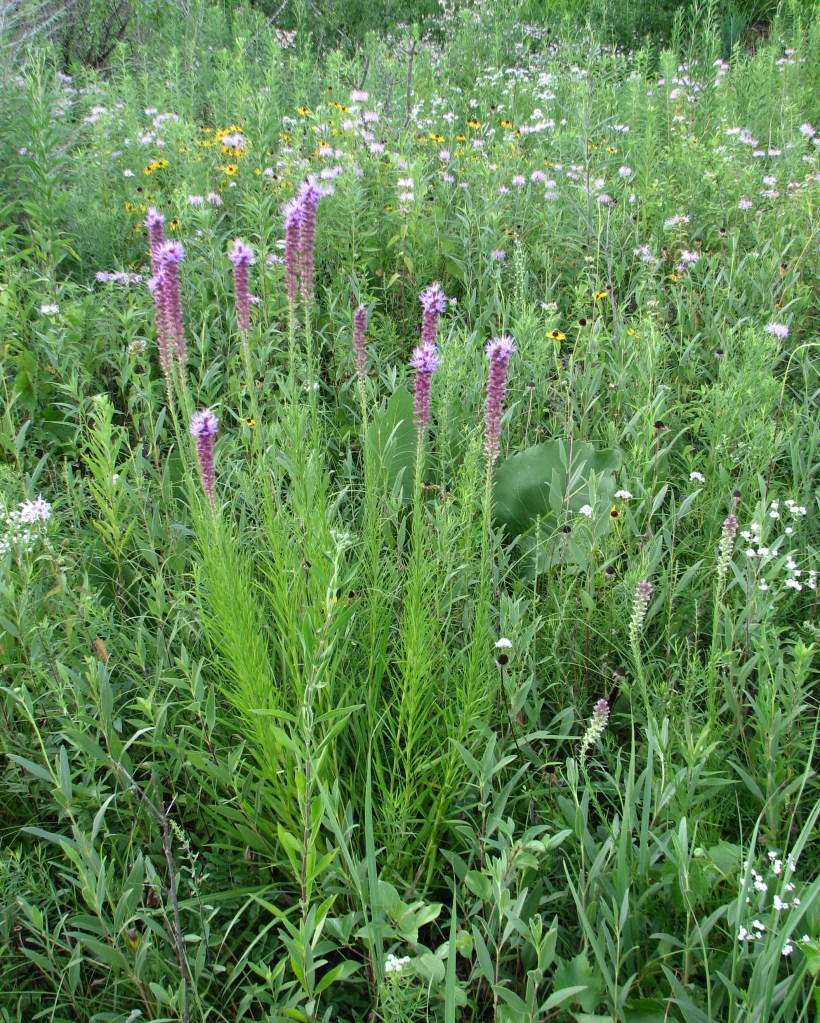
This is remnant prairie where crown vetch is infrequent. Behind the remnant prairie is an area where common buckthorn invaded, was controlled by applying glyphosate to frills, then left standing to decompose. This buckthorn control area is filling in with early successional prairie species, but also has lots of crown vetch. The top most part of the image shows a disturbed bank that is periodically sprayed with herbicide that is mostly just crown vetch, teasel, and other weeds.
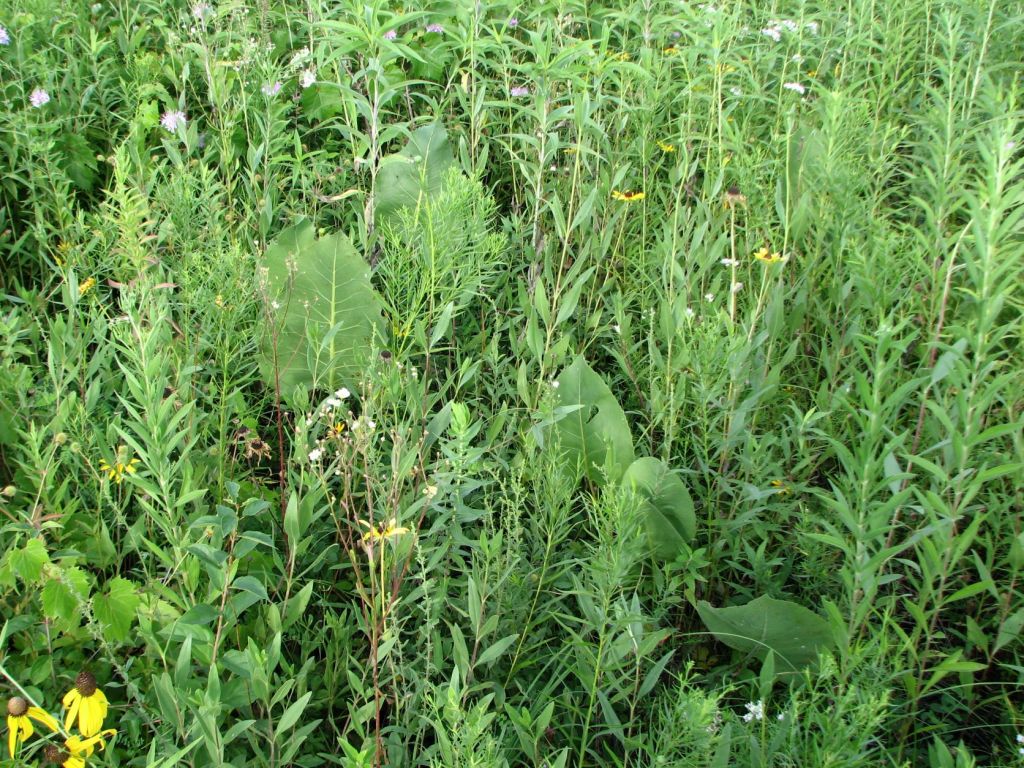
This is another image of remnant prairie. Compare the vegetation in this image to later images in the blog of a nearby area of remnant prairie where crown vetch has been sprayed with herbicide.
Applying Herbicide to Each Stem/Group of Stems

This is a plot on the edge of quality remnant prairie invaded by crown vetch. Crown vetch is the plant with pink flowers and compound leaves. I had not yet worked on controlling the crown vetch in this plot when this image was taken. In this plot, you can see prairie dock and lots of prairie sunflowers. In some areas of this remnant prairie are areas with this level of infestation and other areas where the crown vetch is sparse to infrequent. This location is not receiving prescribed fire. This level of infestation should be compared with the nearby location under different management that has received prescribed fire and foliar spraying of various invasive species, particularly common teasel.
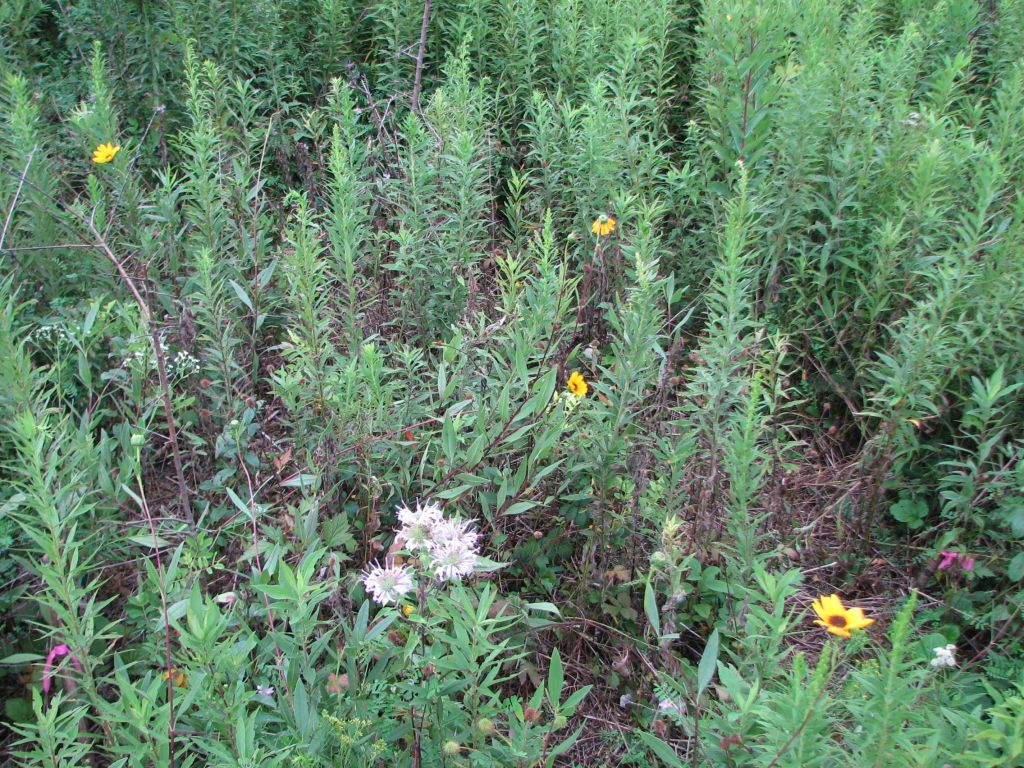
This is an adjacent plot after I applied glyphosate foam to a length of about four inches at the base of each stem. The plot is marked by pink surveyor’s tape tied onto sticks. This herbicide application took about an hour to complete. The treated crown vetch foliage within the plot has all been killed. I won’t know the success of this application until next year. Hopefully, next year little to no crown vetch will grow within this plot.
In the past, I have gotten excellent control (over 95 %) from applying four to five percent active ingredient glyphosate foam to the entire plant. I am trying to apply a higher concentration to four inches of stem at the base of the crown vetch to see if I can reduce off-target impacts further.
So far, my experience has been applying four to five percent glyphosate foam to the entire plant is not significantly harder or more time consuming than applying a higher concentration to four inches of stem length at the base. I am not noticing off-target impacts being reduced from applying a higher concentration of glyphosate foam to four inches of stem length at the base of the plant.
In this plot, native prairie sunflower, wild rose, and yellow Avens are visible. This plot is near where a large cottonwood was killed. The area under the cottonwood filled with crown vetch and then later tall goldenrod, both integrating into the adjacent quality prairie. Also visible are dead common buckthorn that had been controlled and many living seedlings that will need to be controlled in the future. The small/seedling common buckthorns are frequent because this area is not receiving prescribed fire.
Sprayed Nearby Location Under Different Management
This location has been receiving prescribed fire every few years and foliar herbicide application to invasive species, especially common teasel. The infestation of crown vetch in this area is more dense and extensive than in the area which is not receiving prescribed fire and which herbicide is being applied selectively. By applying herbicide selectively, I mean using dormant season no-drip basal bark applications with rain not occurring soon after (common buckthorn), hand-applied glyphosate foam to stems and/or foliage (crown vetch, flowering spurge, reed canary grass, purple loosestrife), and cutting seedheads off teasel. I cannot definitely say that crown vetch has expanded more in the locations shown because of earlier herbicide impacts or fire since I was not following the work being done closely enough. However, the difference in the two areas under different management is clear.
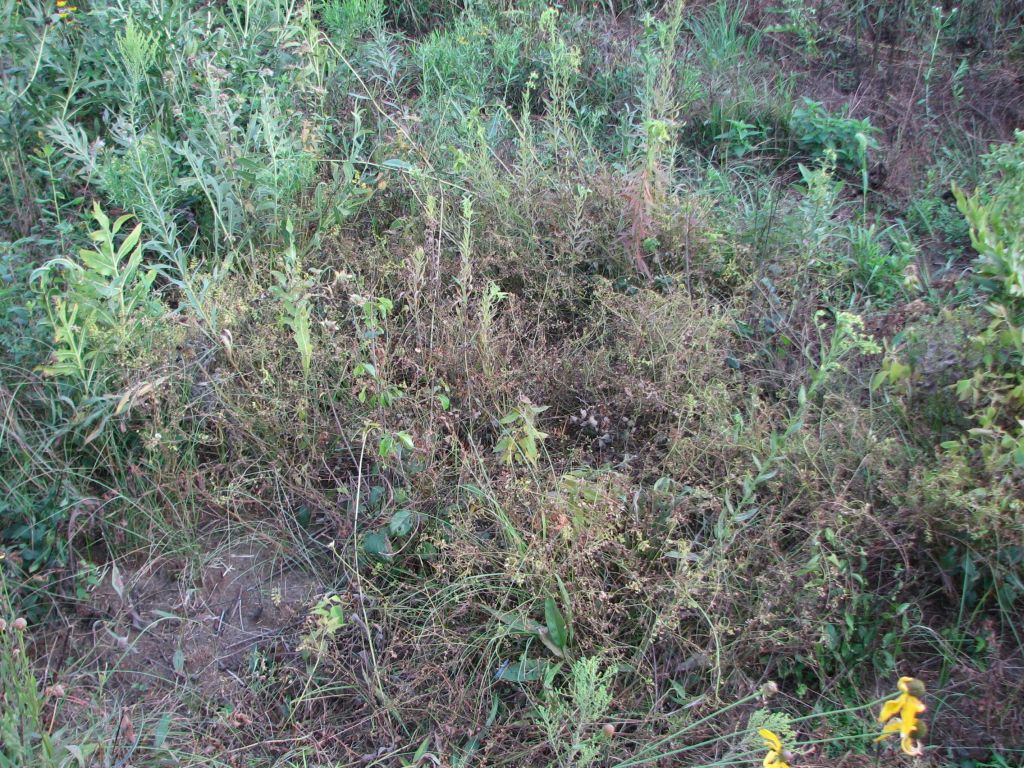
A patch of crown vetch dying after being sprayed. The spraying must have been done carefully to avoid various members of the Asteraceae that show only moderate impacts.
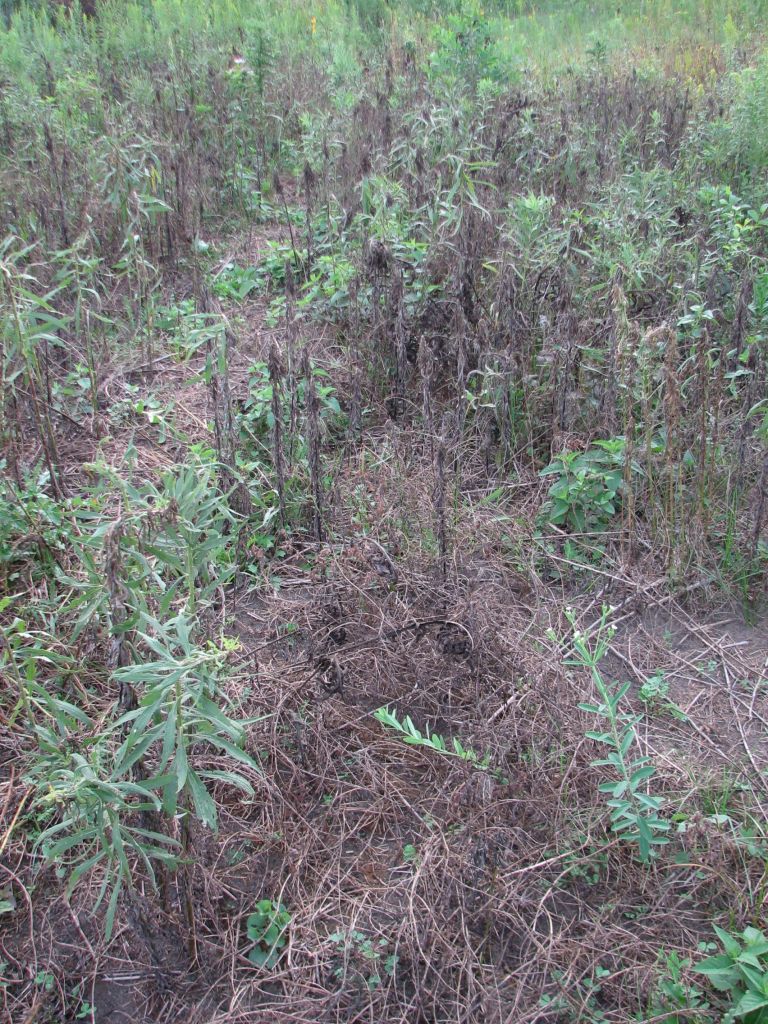
Crown vetch killed back to the ground with lots of off target impacts, but also several native plants appearing unaffected by the herbicide application. The unaffected plants include flowering spurge, wild bergamot, and violet. It is possible they survived the spraying well because they were purposely avoided by the applicator or under a canopy of crown vetch.
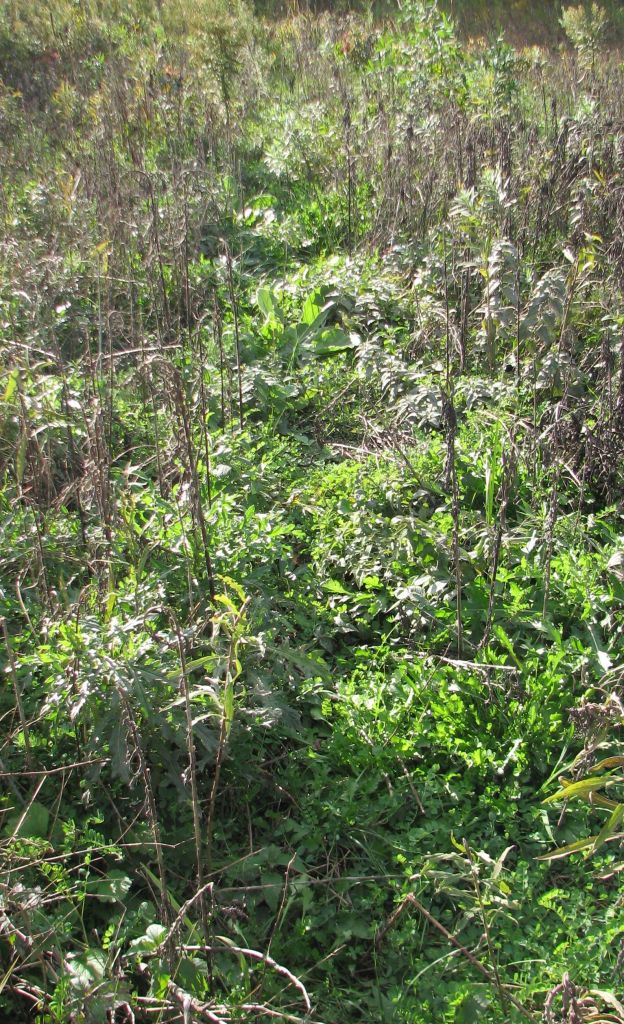
Update: Image of same area shown above but on October 15th. The crown vetch has returned. Much of the tall goldenrod was at least killed back to the ground for the season. Opportunistic field thistle is taking advantage of the surge in nitrogen from so much dying vegetation. Common mullein has put on a lot of growth. An abundance of common daisy has also taken advantage of the lack of competition.
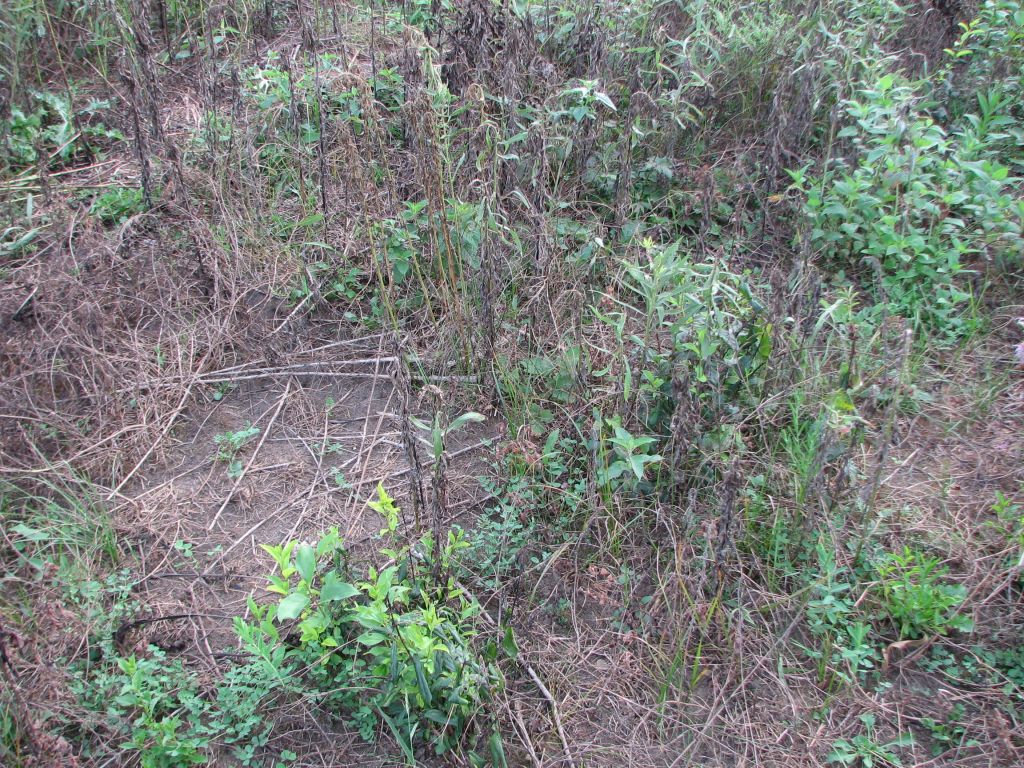
Flowering spurge, sedges/grasses, and wild bergamot appear unaffected. In this picture, you can see some crown vetch already growing back after the treatment.
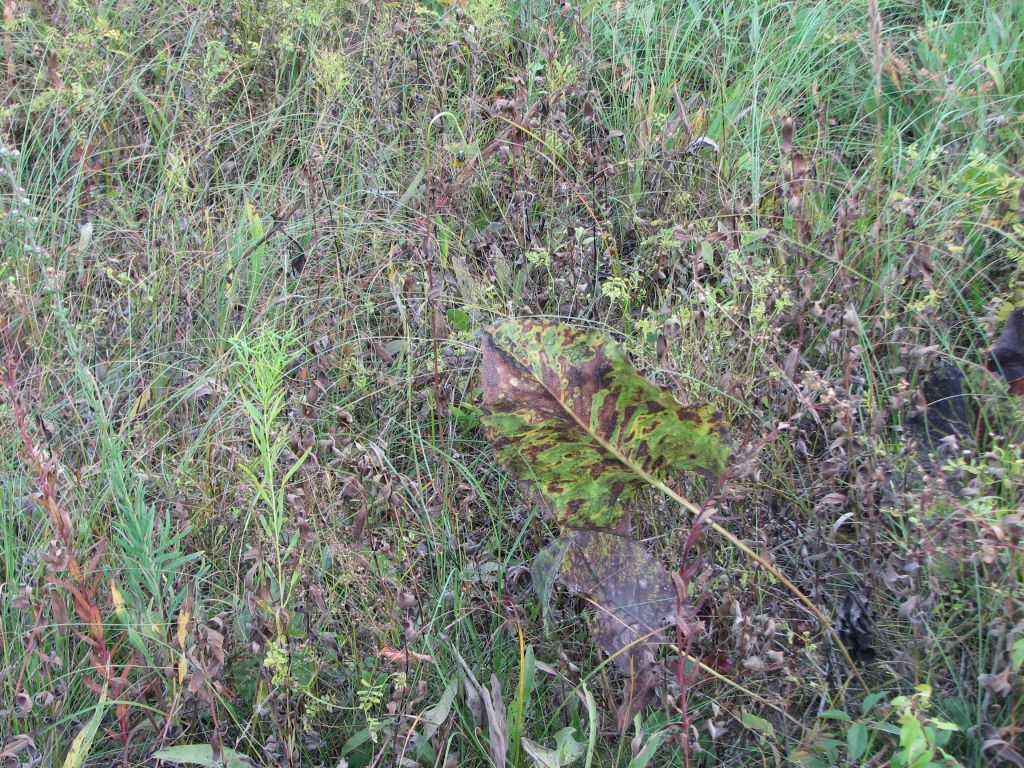
Several members of the Asteraceae are impacted by spraying crown vetch in this high-quality lightly-infested area. The impacted members of the Asteraceae include grass-leaved goldenrod, prairie dock, prairie sunflower, rough blazing star, and others so damaged that I cannot identify them.
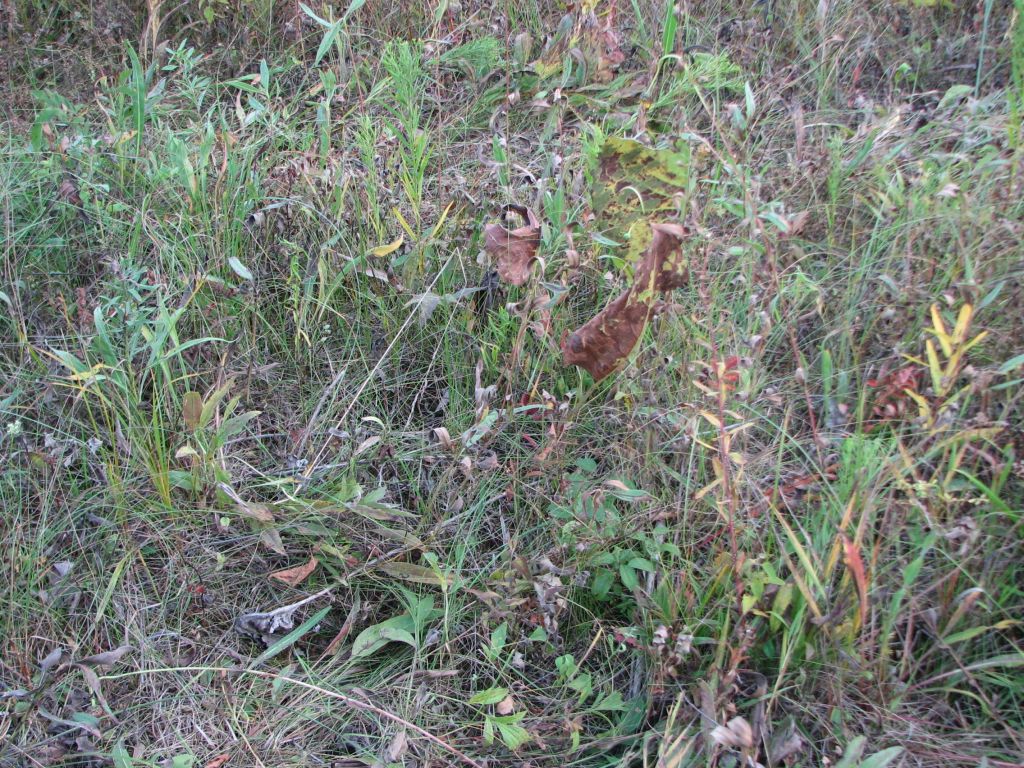
This is another image of members of the Asteraceae showing herbicide damage. It is likely areas more heavily infested with crown vetch started out like this and became more infested over time as herbicide eliminated the native plant community.
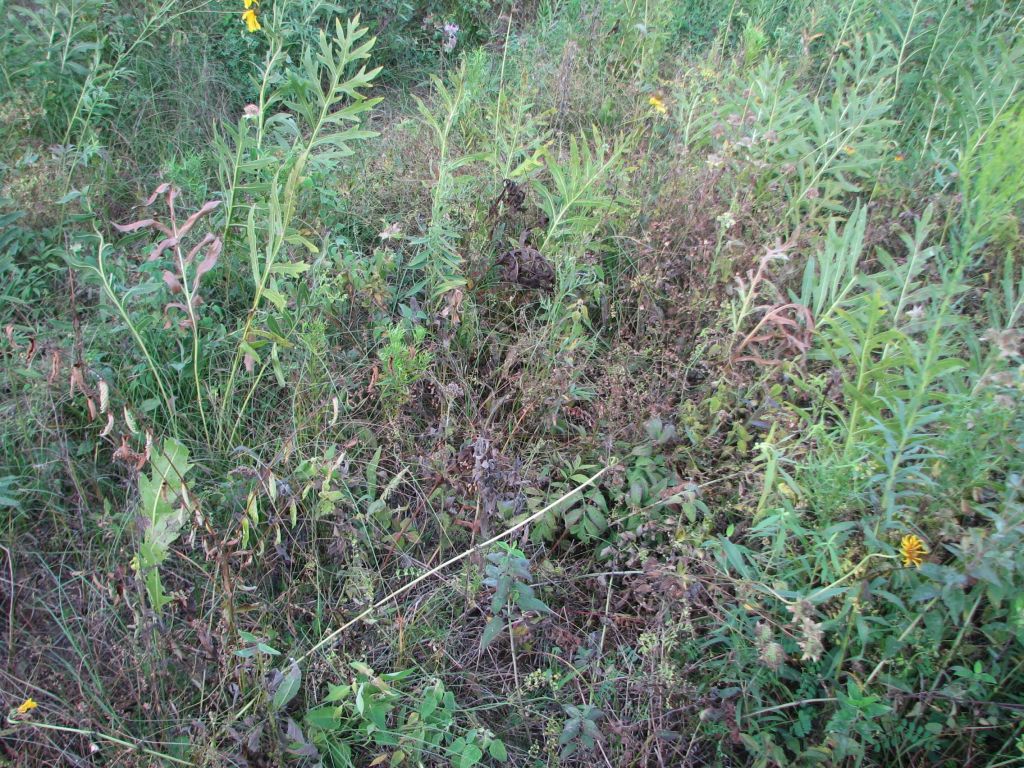
Compass plants damaged by herbicide spraying.
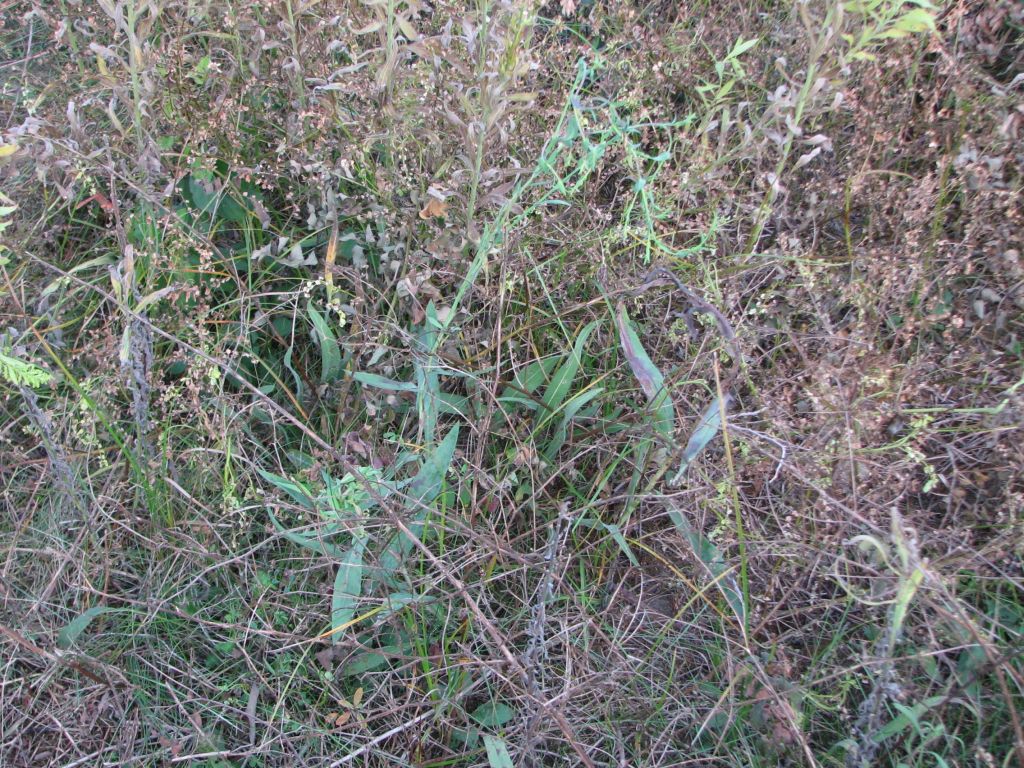
An Asteraceae that withstood herbicide spraying all around it. This smooth blue aster may have been able to withstand the herbicide better because of its glaucous (waxy) leaves.
Update: I was unable to relocate this smooth blue aster. It may have been killed by the herbicide application.
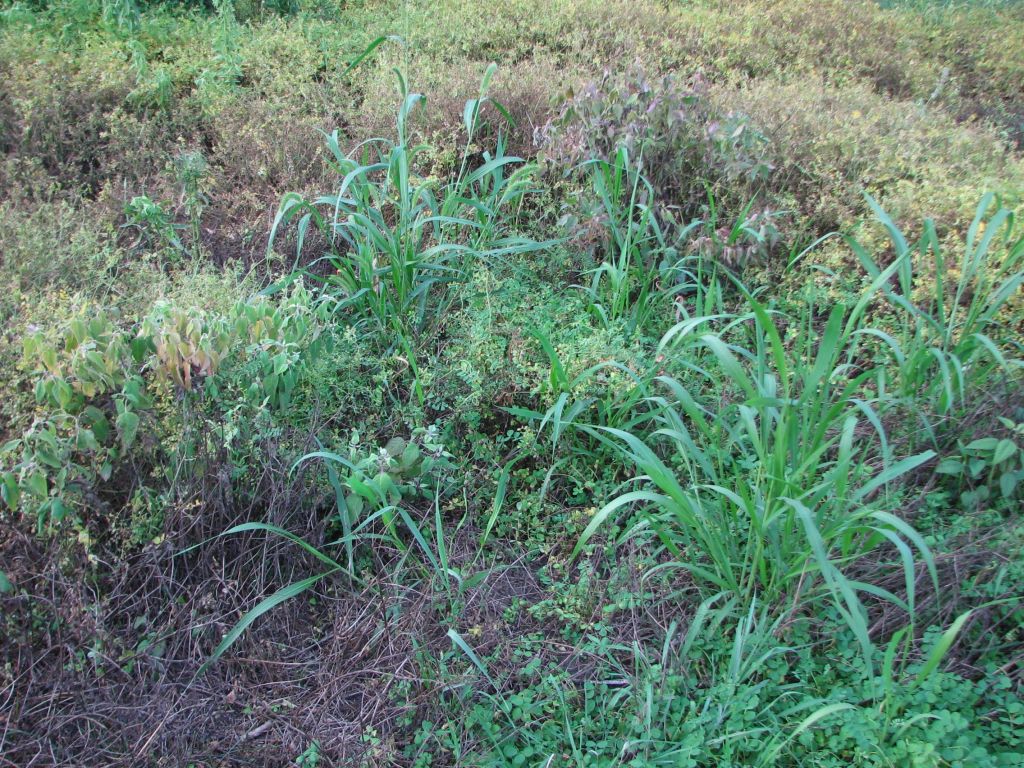
Here the spraying has killed so much vegetation that foxtail grass is growing. Even the wild bergamot that was unimpacted in other images is heavily impacted in the above image. The wild bergamot was heavily impacted from the spraying done here to control this near monoculture of crown vetch.
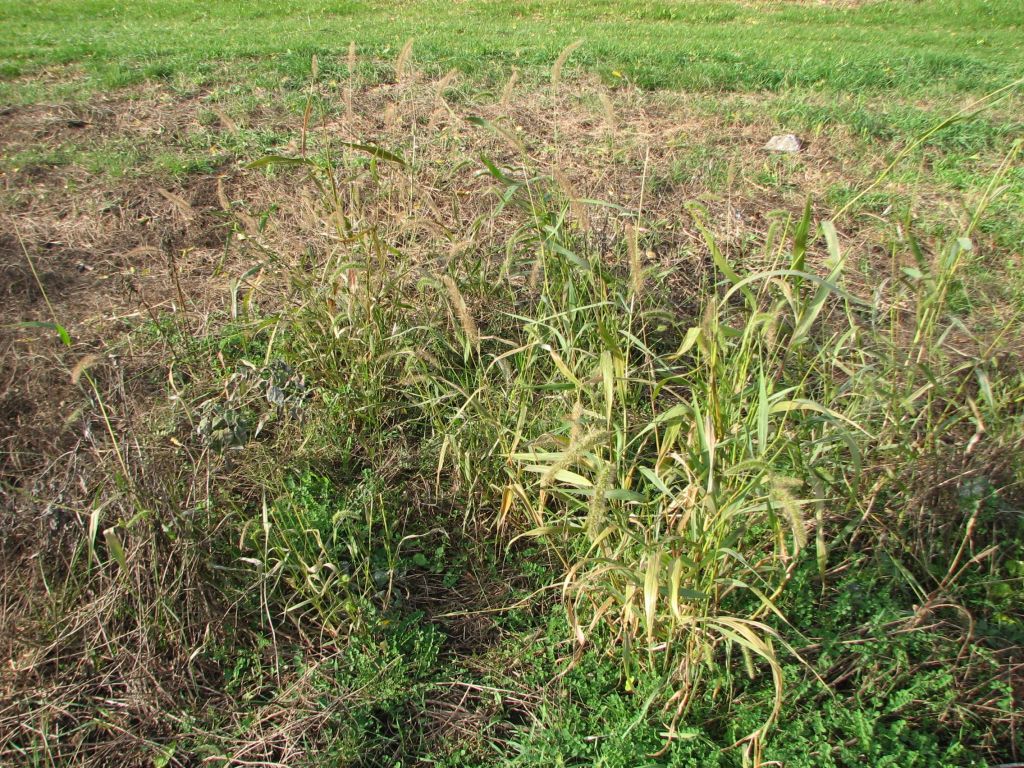
Update: Image of same area shown above but on October 15th. There is a lot of bare looking ground where the crown vetch had been sprayed. However, shoots of crown vetch have already appeared.
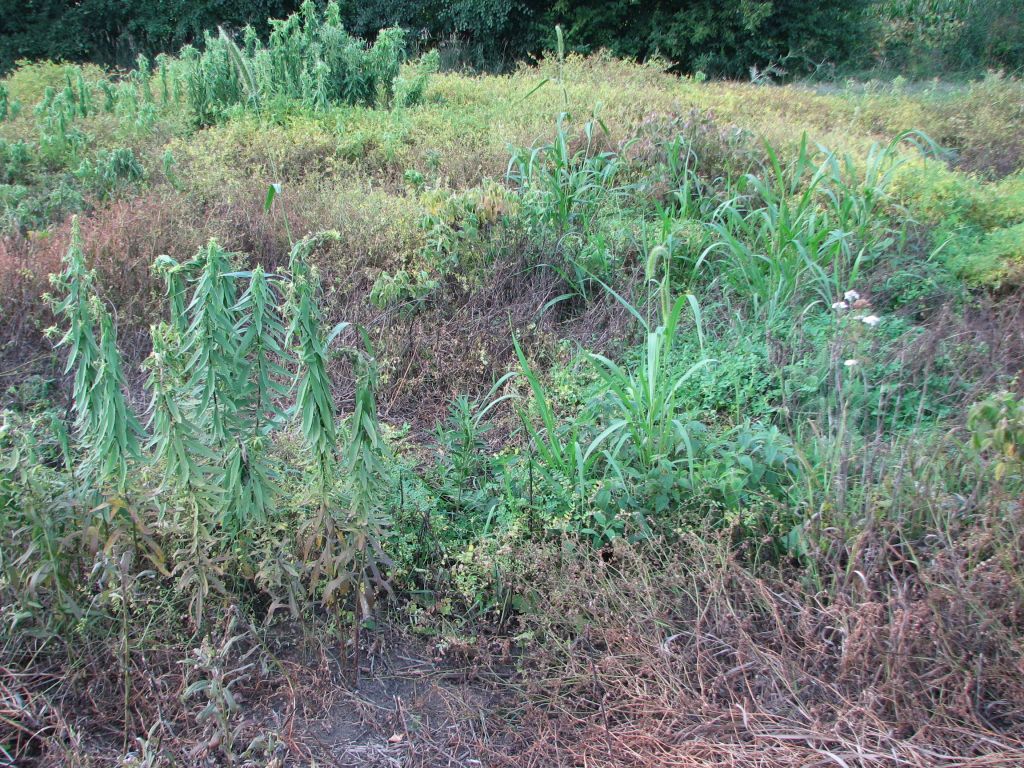
Wider view of a crown vetch invaded and sprayed area. I would no longer even call what is shown in the above image prairie.
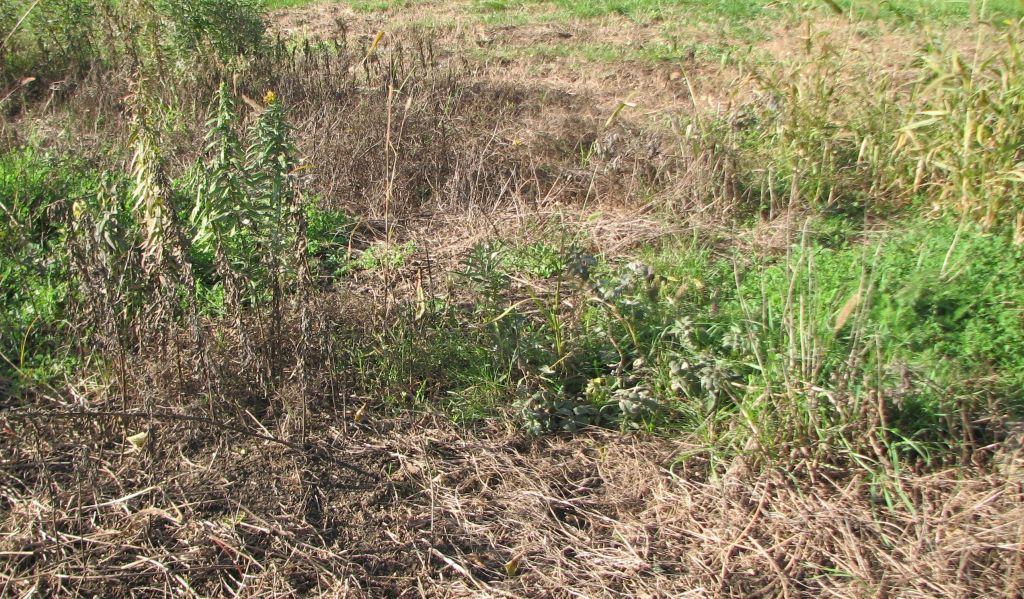
Update: Image of same area shown above but on October 15th. Again, there is a lot of bare looking ground where the crown vetch had been sprayed. However, shoots of crown vetch have already appeared.

 Stewardship Chronicles
Leave a reply to Selectivity of Glyphosate Foam – Stewardship Chronicles Cancel reply