Summary
Spraying Versus Using a Mini-Paint Roller
Comparison of applying triclopyr ester in basal oil to stems with a backpack sprayer versus applying this herbicide with a mini-paint roller.
Treating Even One Seedling Can Have an Impact
Non-target vegetation impacted when rain occurred two days after treating a buckthorn seedling with triclopyr ester in basal oil.
Rain Occurring at Different Lengths of Time After The Application
These images show the “ring of death” decreasing with a longer period until rain occurred after treating common buckthorn with triclopyr ester in basal oil.
Snow
These images show no visible ring of death when triclopyr ester in basal oil was applied over snow. Additional snow fell two days after the applications, but this did not cause a “ring-of-death” to occur because the ambient temperature was cold enough that the snow did not melt.
Conclusion
Applying triclopyr ester in basal oil four days (more is better) before rain or wet snow occurs using a method that does not cause overspray or runoff onto the ground can prevent visible impacts to off-target vegetation.
Spraying Versus Using a Mini-Paint Roller
Volunteers used backpack sprayers to apply triclopyr ester in basal oil to each stem of these invasive honeysuckle bushes. The “ring-of-death” from runoff and/or over spray is apparent the next growing season despite the care they took in doing this treatment.
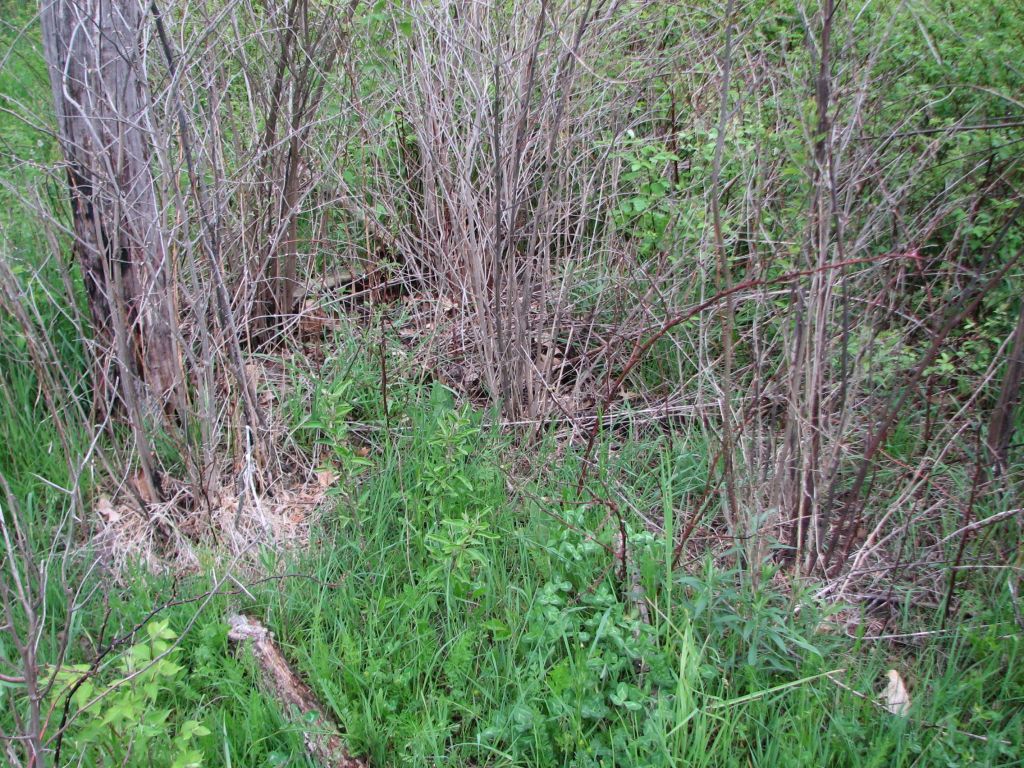
In contrast to the above, the below pictures shows where I did a treatment at the same time. I used a mini-paint roller to prevent overspray and/or runoff. I put the mini-paint roller up against a stem. I then sprayed a little of this herbicide into the mini-paint roller. Lastly, I rolled the mini-paint roller down and around all sides of the stem.
I covered the full circumference of each stem for a length of about six inches. This amount of herbicide killed the invasive honeysuckles quickly. For these thin-bark sprouts, covering the circumference of stems for a length of four inches would probably have been enough.
Treating Even One Seedling Can Have an Impact
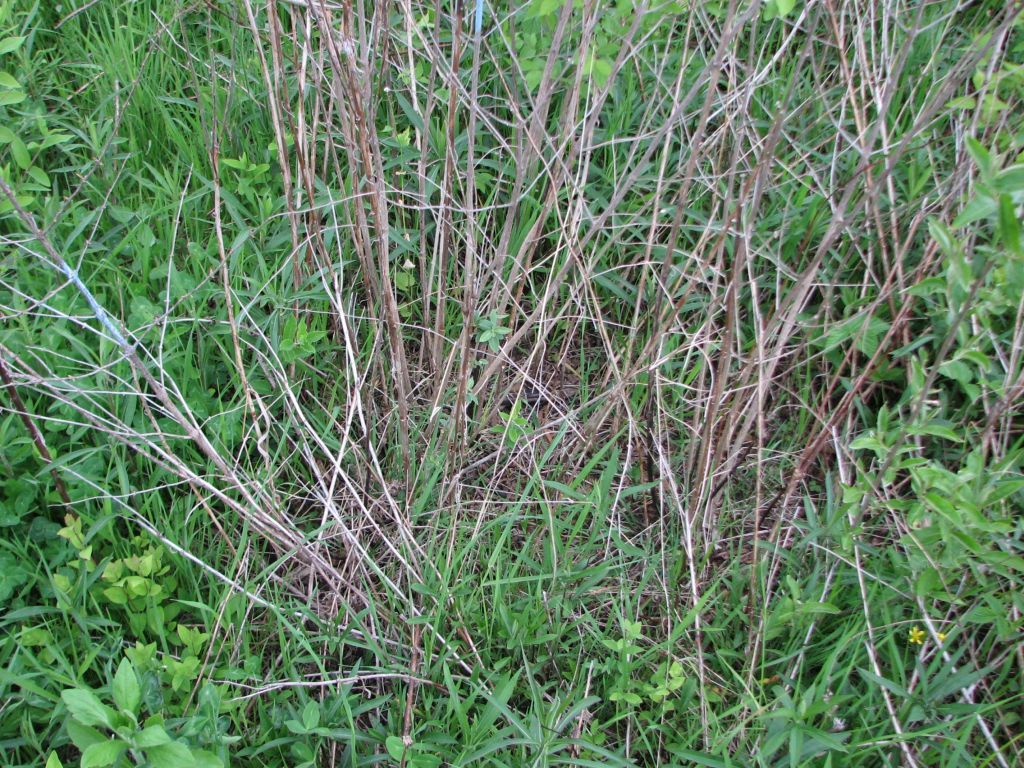
In the center of the below image is a common buckthorn seedling that had triclopyr ester in basal oil applied to it in the fall. The seedling was only a few inches tall and is difficult to see. I wiped the herbicide onto the seedling with a mini-paint roller being careful not to get herbicide on other vegetation. The seedling was so small little more than a drop of herbicide could have been wiped onto the seedling. Rain occurred two days after this application. Rain splashing the small amount of herbicide I applied to this common buckthorn seedling was enough to cause the damage to surrounding vegetation visible as yellow leaves in the below image. What was impacted was crown vetch. I do not care if crown vetch is impacted since it is an invasive species. However, this image illustrates the damage that can occur if rain occurs too soon after applying triclopyr ester in basal oil in even the smallest amount.

Rain Occurring at Different Lengths of Time After an Application of Herbicide With a Mini-Paint Roller
The images showing the “ring-of-death” from when rain occurred within a few days of the application are from lower quality or disturbed areas. I expected there would be damage and only applied in higher-quality areas when rain was not expected soon after the herbicide application.
Rain One Day After an Application
The common buckthorn in the below image had triclopyr ester in basal oil applied on December 4th. Rain occurred the next day. The next season the ring-of-death is visible, but not very large. I believe this is likely because this small buckthorn was near larger buckthorns that reduced the force of rain so herbicide was not splashed onto adjacent vegetation.
Rain Two Days After Application
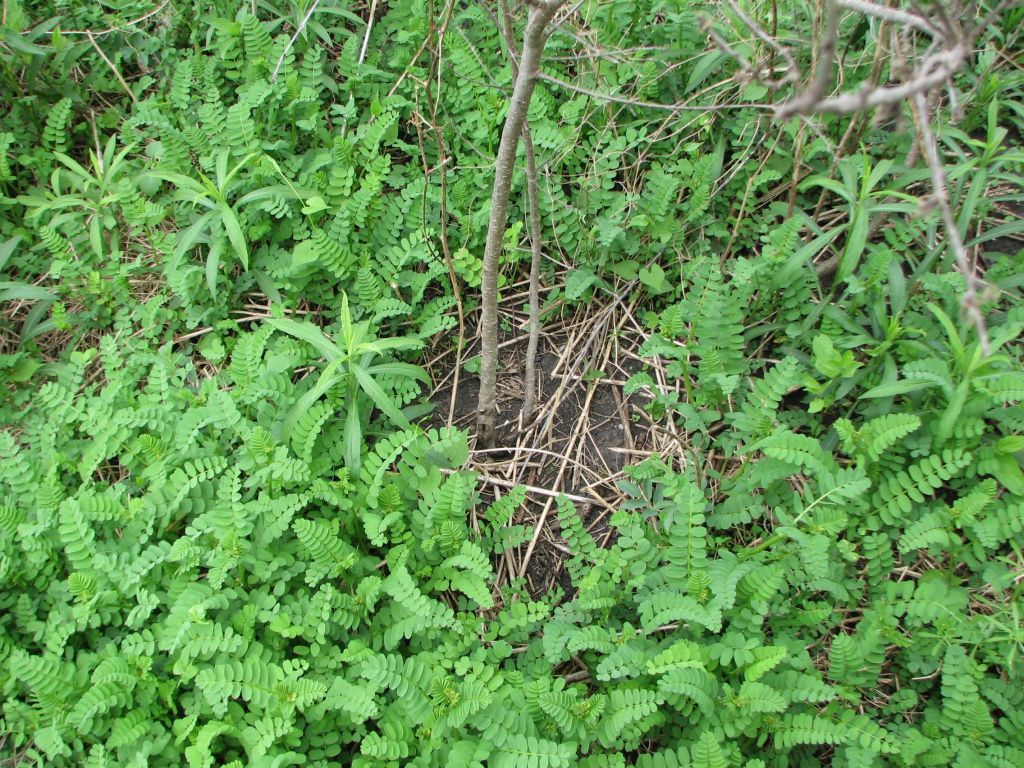
The common buckthorn in the below images had triclopyr ester in basal oil applied two days before rain occurred. The ring-of-death is large. These buckthorns were in a more open area where rain would have splashed the herbicide off their stems onto adjacent vegetation. Where there are a lot of small woody invasive species this level of damage to non-target vegetation will impact a substantial fraction of an area.


The below invasive high-bush cranberry also had triclopyr ester in basal oil applied two days before rain occurred. The ring-of-death is smaller because this invasive high-bush cranberry was under the canopy of common buckthorn and not on a slope.

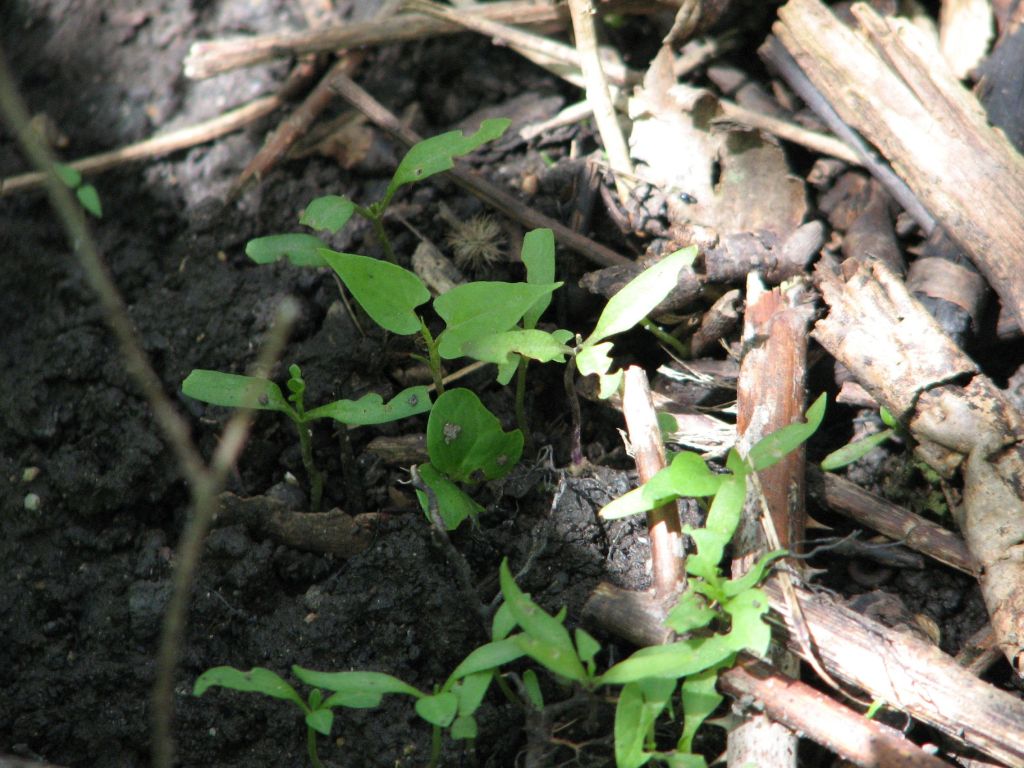
The below picture is a close-up of seedlings on the edge of the ring-of-death around the treated invasive high-bush cranberry. These are bittersweet nightshade seedlings. I get a lot of bittersweet nightshade in areas where I have controlled common buckthorn. My observations from a few treatment areas is there are more bittersweet nightshade plants when I apply triclopyr ester in basal oil to control common buckthorn versus applying glyphosate to frills/cut stumps.
Rain Three Days After an Application
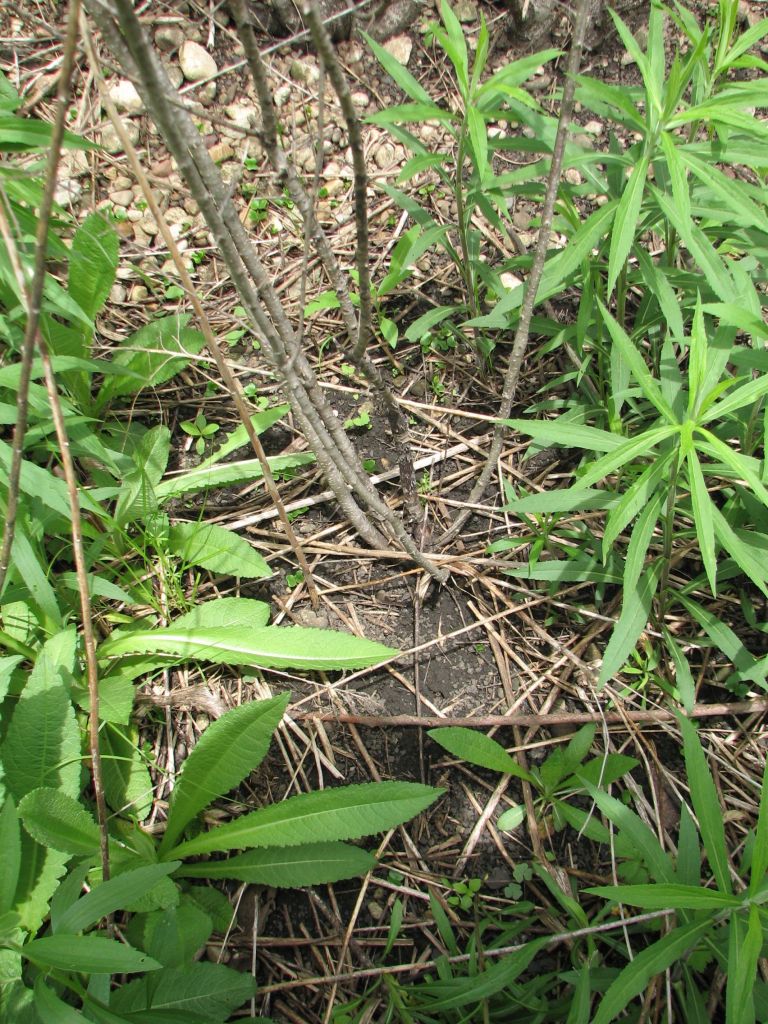
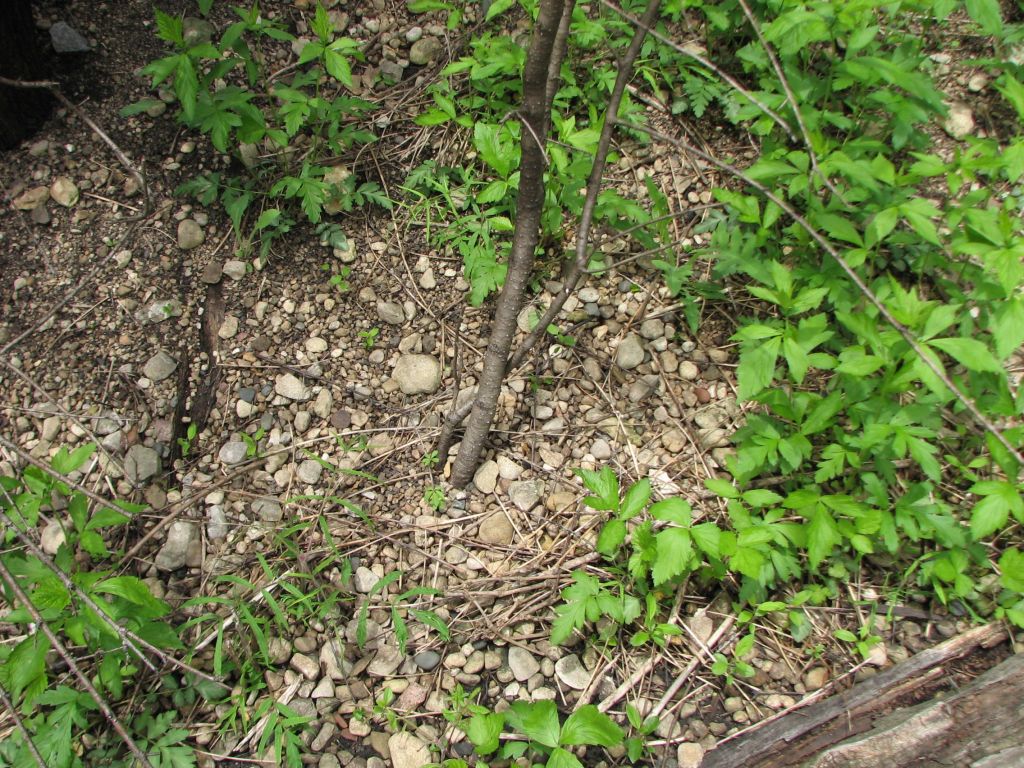
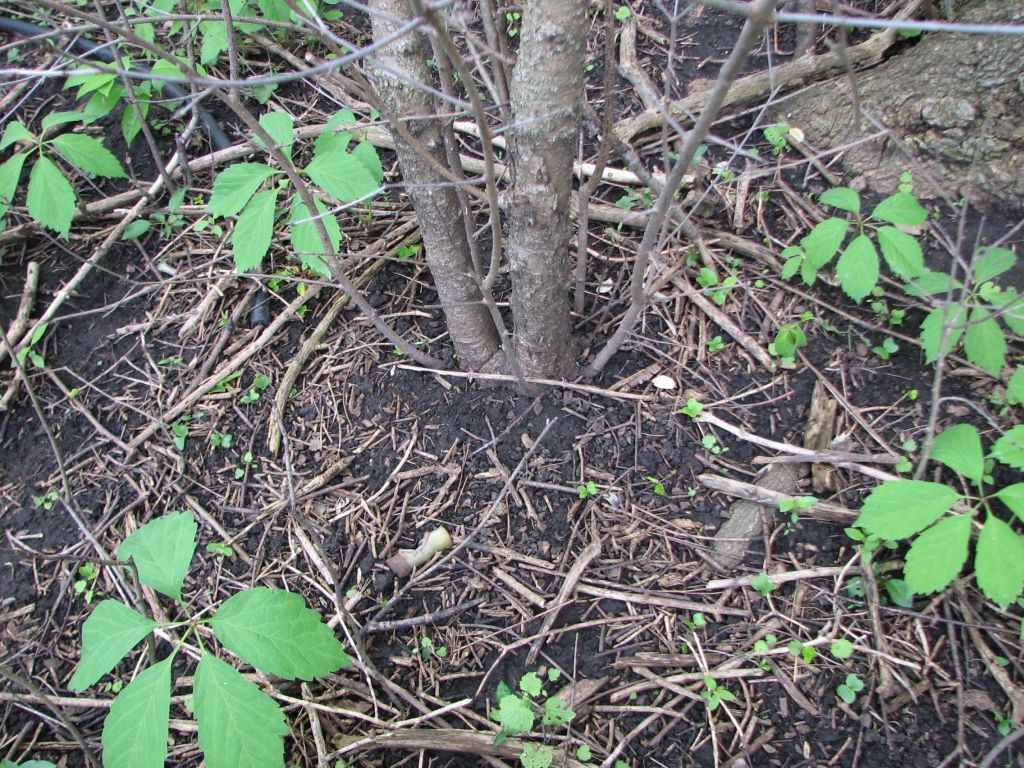
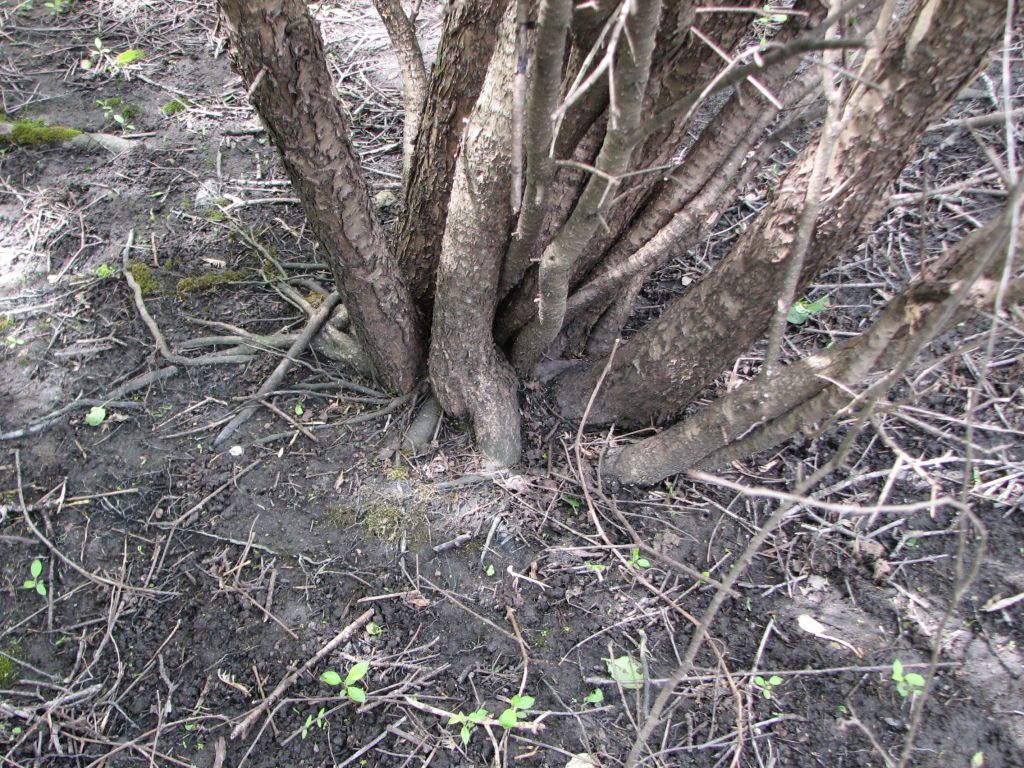
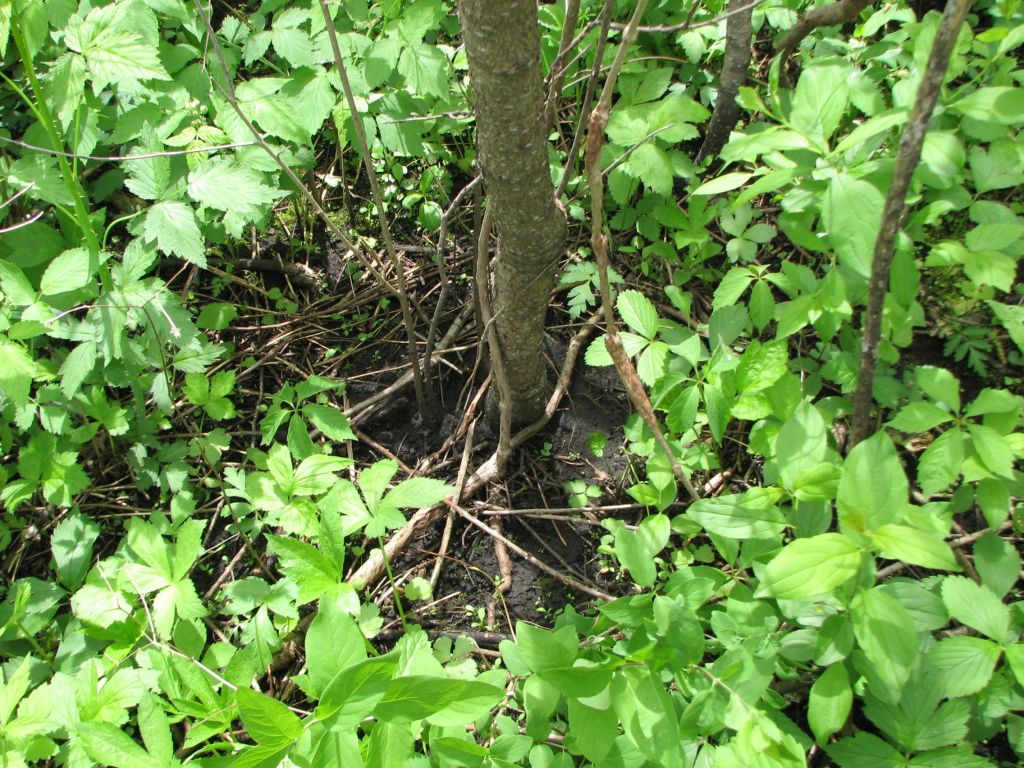
The below images show common buckthorn treated three days before rain occurred. The seedlings around these treated common buckthorns are fewer and less robust near the treated stems. In some images Virginia creeper is near a treated stem and appears stunted. In one image, staghorn sumac near a treated stem is showing apparent herbicide impacts.



Rain Seven Days After an Application
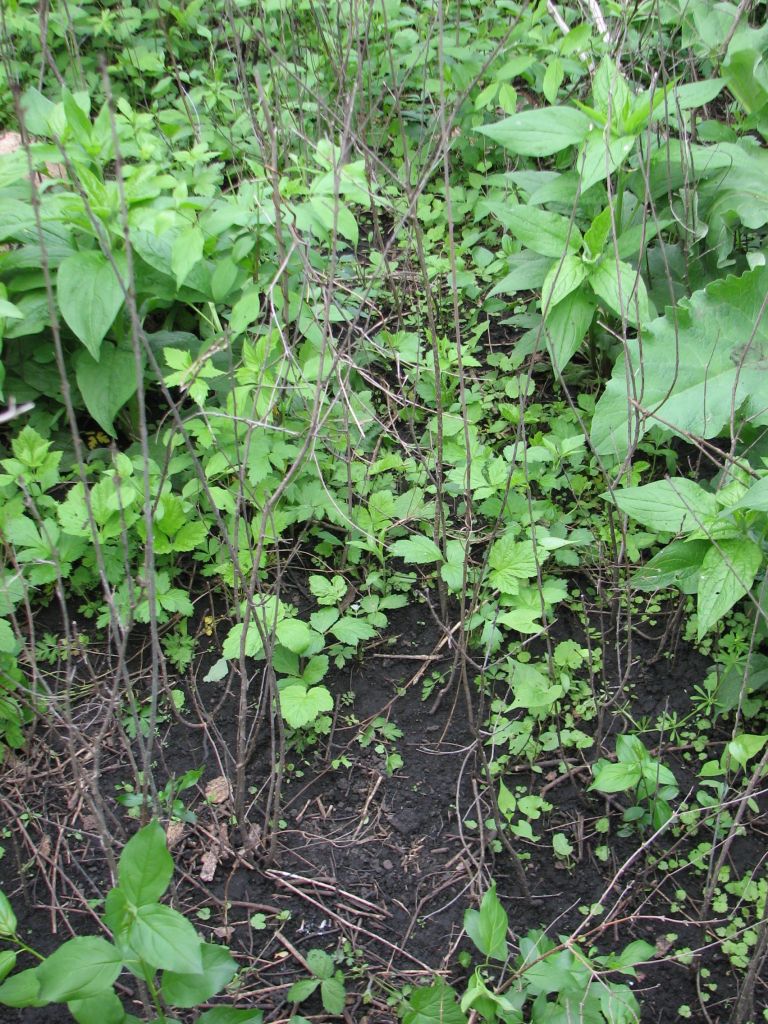
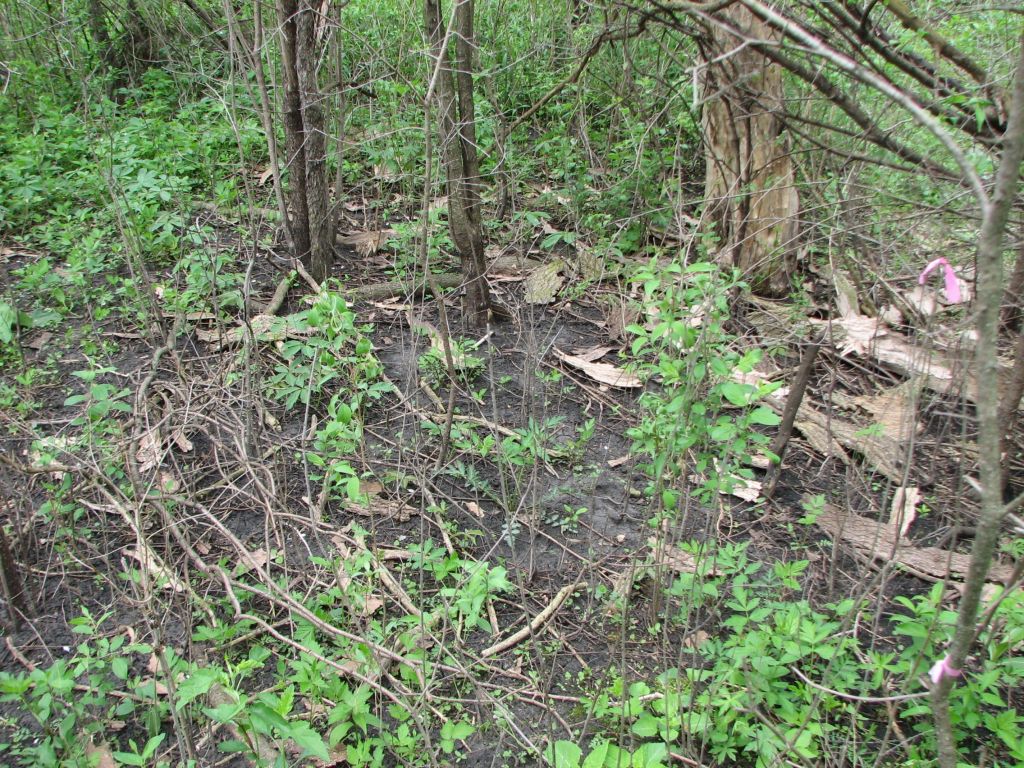
White avens seedlings coming up around the base of treated common buckthorns. I don’t see any evidence of the “ring-of-death” in this group of images.


Rain Thirteen Days After Application
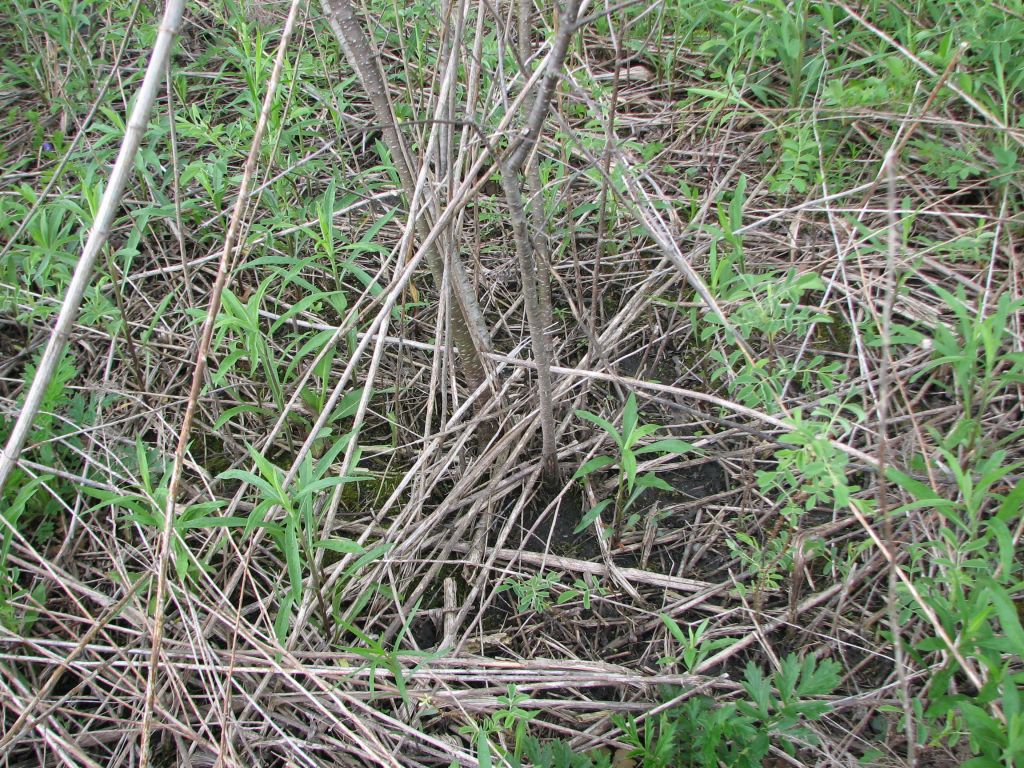
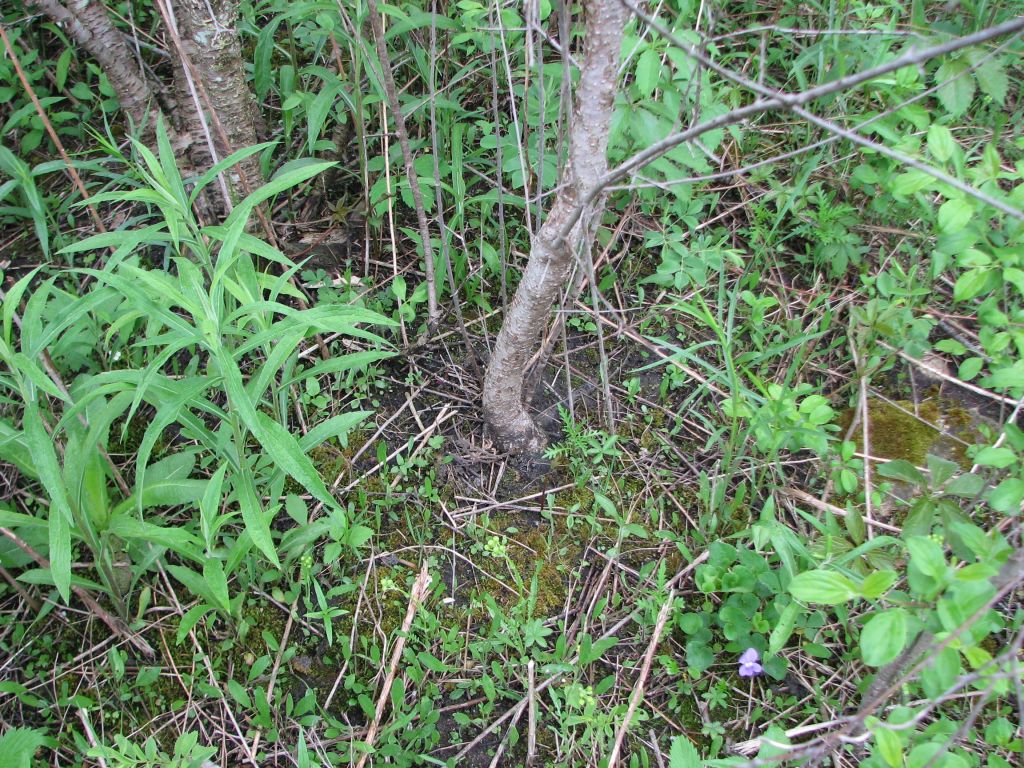
The common buckthorn in the below images had triclopyr ester in basal oil applied to their basal bark on November 21st. Rain did not occur for thirteen days after the herbicide application. I don’t see impacts to non-target vegetation. Wild roses are particularly sensitive to triclopyr ester in basal oil. If wild rose had been impacted its leaves would be partially brown.
This series of images is the highest quality area where I have applied triclopyr ester in basal oil. I only apply this herbicide in this location on days when rain is not forecasted for the longest periods.




Snow
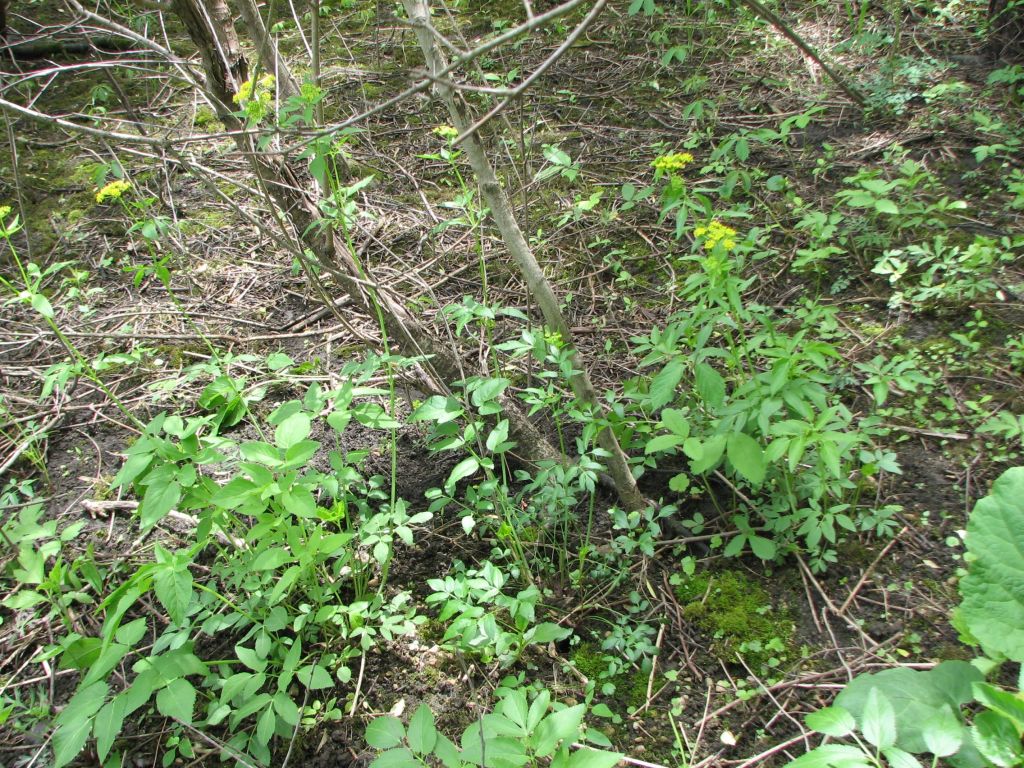
The below image shows an area where triclopyr ester in basal oil was applied to common buckthorn stems with a mini-paint roller when there was 3 to 4 inches of snow on the ground. I was careful to minimize dripping herbicide on the snow by allowing the mini-paint roller to stop dripping in a bucket before the herbicide application. I do not see a “ring-of-death.” More snow fell two days later. However, the temperature was cold and the snow did not melt. As long as falling snow does not melt, it does not appear to contribute to the “ring-of-death.”


Conclusion
The above observations, along with observations I have made at other sites including Deer Grove (rain occurring three days after the application) and Bluff Spring Fen (rain occurring four days after the application), leads me to conclude a minimum of four rain-free days is necessary after applying triclopyr ester in basal oil for there to be no visible “ring-of-death” or no visible herbicide damage to non-target vegetation.
A longer period with rain not occurring after an application of this herbicide is probably better. The applications of triclopyr ester in basal oil I had done in the years after the above images were taken have all followed the same pattern.
My observations were not made in the highest-quality habitats remaining in the state. Testing should be done, and records kept, to make sure the observations I have made are true in higher-quality habitats before applying triclopyr ester in basal oil during the dormant season broadly in these locations.
The below post follows up on this post.
Related Post


 Stewardship Chronicles
Leave a reply to prairiebotanist Cancel reply