Summary
Herbicide
I give the details of the herbicide applications.
Applications
Images are shown of application areas from different dates with discussions of my observations. The applications are ordered in an increasing amount of time until rain occurred after the application.
Conclusion
I discuss more observations that need to be made on site. I will update this post when I have more information.
Herbicide
The common buckthorns (Rhamnus cathartica) in the below images were treated with triclopyr ester in basal oil (20 % V/V of a 61.6 % active ingredient product) using a mini-paint roller. The mini-paint roller was allowed to stop dripping in a bucket before the application to reduce dripping herbicide on the ground.
The below list gives the length of the full circumference of a stem I coated with triclopyr ester in basal oil for different basal diameters of common buckthorn stems.
- Diameter
- 1/4″ – Two and a Half Inches of Stem Length Covered
- 1/2″ – Three Inches of Stem Length Covered
- 3/4″ – Four Plus Inches of Stem Length Covered
- 1″ – Four Plus Inches of Stem Length Covered
Looking at the below images, I could likely reduce the length of stem I cover with herbicide for common buckthorn with a basal diameter of 1/4 inch or less.
After visiting the site on 6/23/24, I saw better control could occur if stems with a diameter of 1/2” had more herbicide applied.
Application
February 11th, Rain Occurred 3 1/4 Days After the Application
In the area shown in the below image, I moved a mini-paint roller back and forth in a rocking motion to coat one to two inches of stem length on two sides of these small buckthorn saplings. Rain was predicted for four days after the application. This was near where I finished applying herbicide for the day. Rain arrived just after midnight on the fourth day. The result was the time between when I finished the application and rain was only about 3 1/4 days. This is less than my rule of a four-day minimum until rain occurs when I am applying triclopyr ester in basal oil. The purple meadow rue (Thalictrum dasycarpum) just left of the middle of the image is showing impacts from the herbicide application. Areas where I applied herbicide earlier in the day did not show off-target impacts. My rule of not applying triclopyr ester in basal oil unless rain is not forecasted for at least four days still appears to be sound. It is possible herbicide dripped where this meadow rue was located causing it to show damage. When I return to this area, I will look more closely to see if I am able to locate other plants showing damage indicating that rain washing herbicide off of treated stems was the cause of the damage to this meadow rue. My precursory observation is that I do not remember seeing any other native plants showing damage in this treatment area on this visit.

The area shown above had good control of the small buckthorn saplings. The entire application area had patchy control. When I did this application, the leaves had long fallen off these small common buckthorn saplings. I will treat this area again next November when the leaves are still on the common buckthorn saplings, and I can easily find the patches and smaller individuals that I missed.
Update 6/30/2024: I took some more images of damage to meadow rue that occurred from the herbicide application when it was done later in the day.
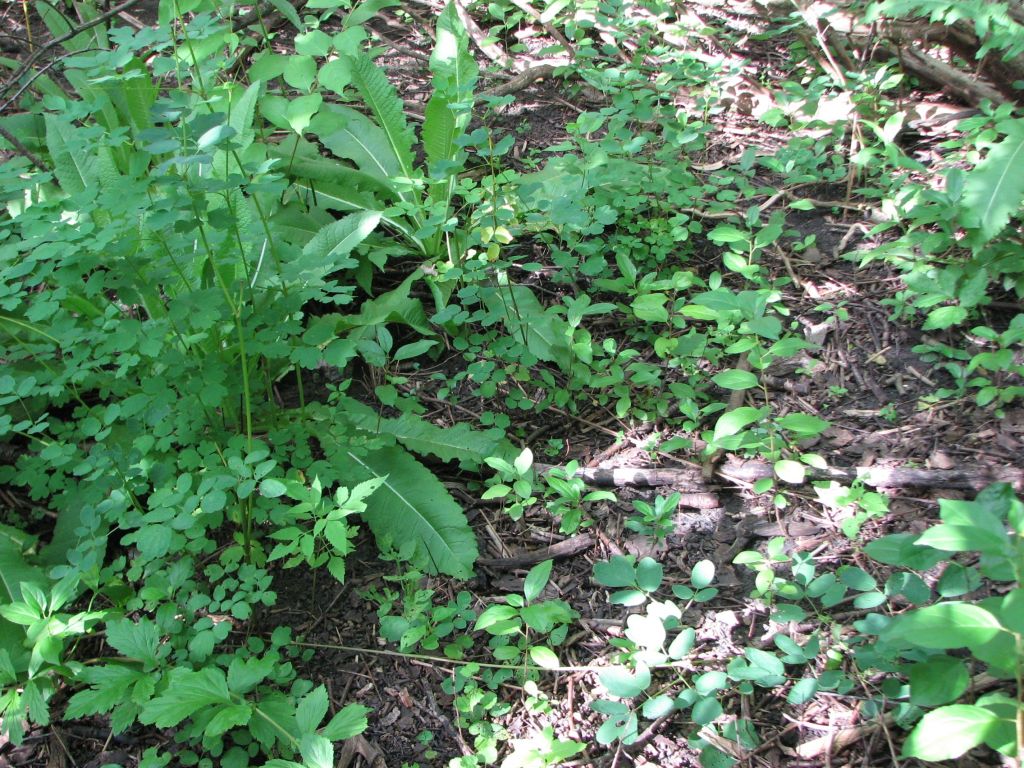
The damage is minor.
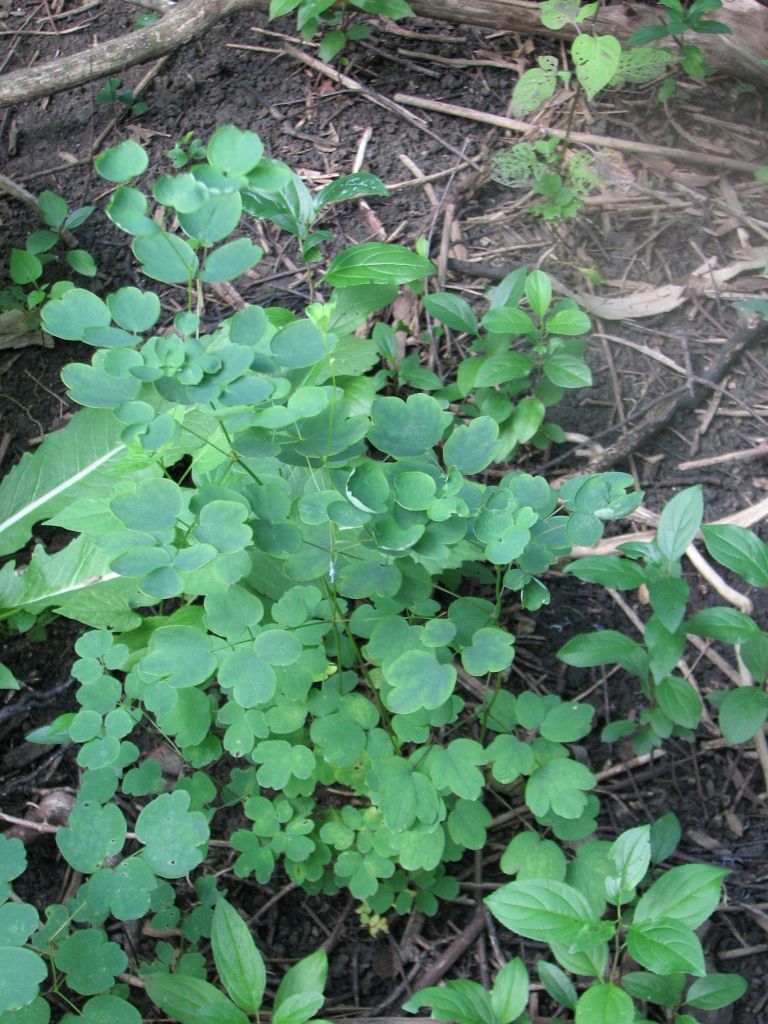
Slight damage is visible.
It is surprising that damage is visible since the small buckthorn in this area seemed to missed having herbicide applied.
December 10th, Rain Occurred Five Days After the Application
The below image shows a common buckthorn that grew some herbicide impacted leaves after I had applied triclopyr ester in basal oil to the basal bark. I have been trying to minimize the amount of herbicide I apply. Growing herbicide impacted leaves commonly happens before treated buckthorns die later in the summer. This response is a good indicator that just about the minimum amount of herbicide has been applied to kill the target woody invasive species.
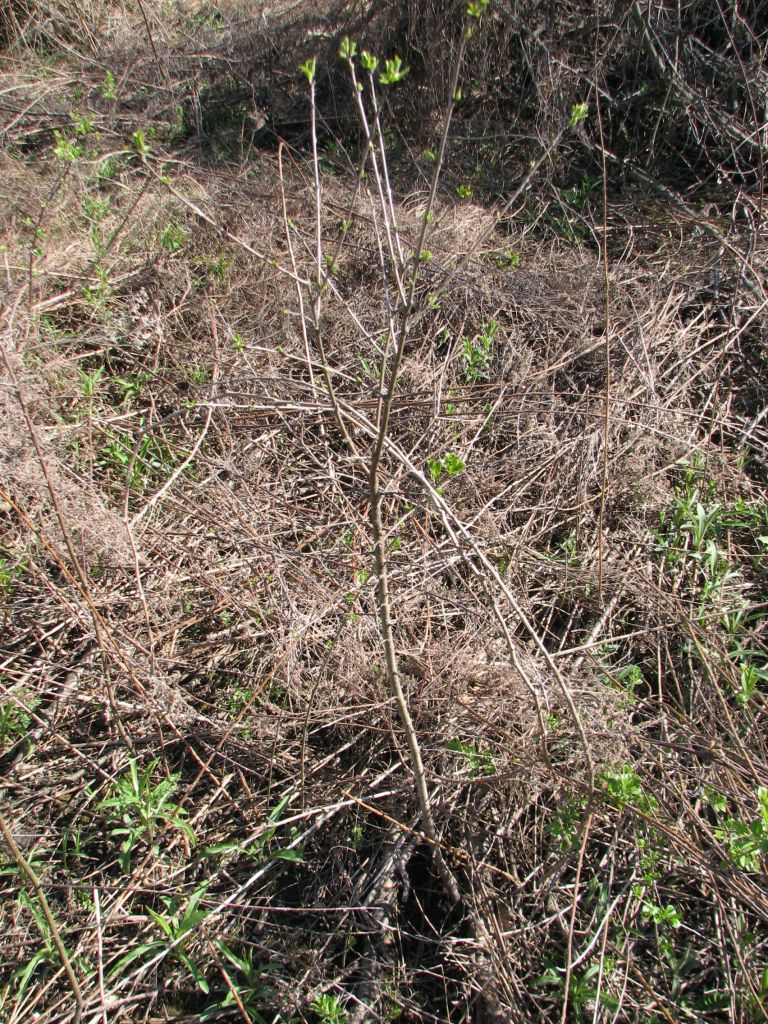
The below group of common buckthorns were even more impacted by the amount of herbicide they received. For the smaller common buckthorns, I could apply less herbicide in the future and still get excellent control.
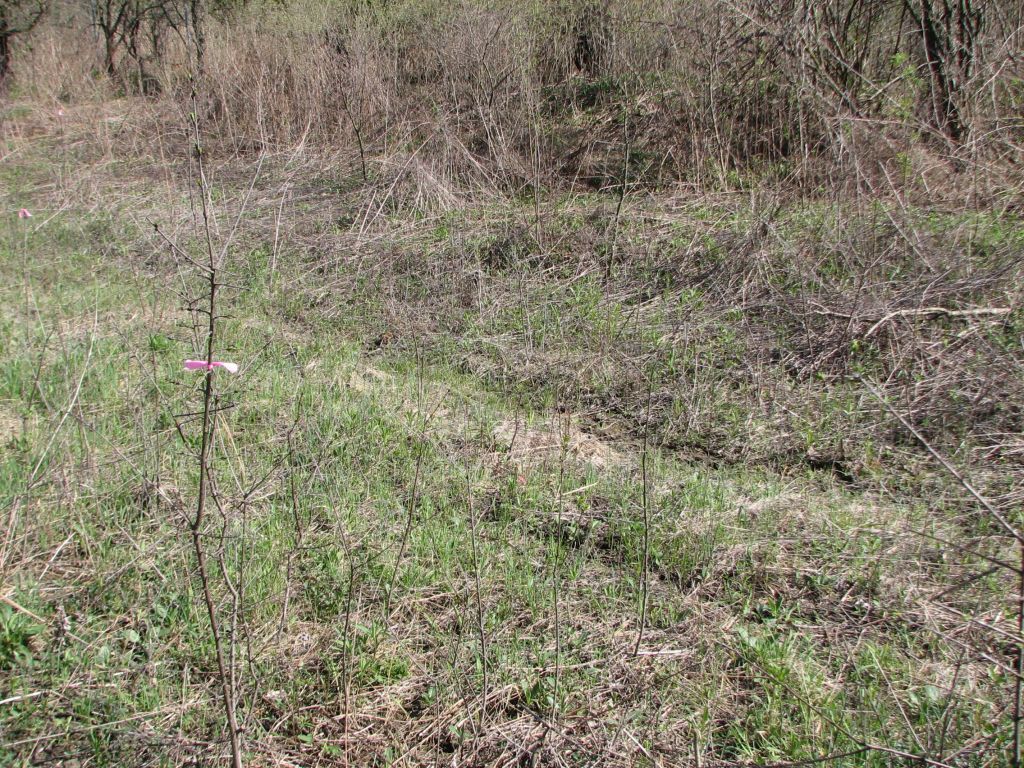
In the above image, the common buckthorn to the right of the common buckthorn marked with surveyors’ tape were treated on December 10th. The common buckthorn marked with surveyors’ tape, and farther left, were treated on Nov. 12th.
The below image shows the base of the common buckthorn in the above image that has pink surveyors’ tape tied to it. It is difficult to tell if there is a ring-of-death because the vegetation is sparse around the base of this common buckthorn.
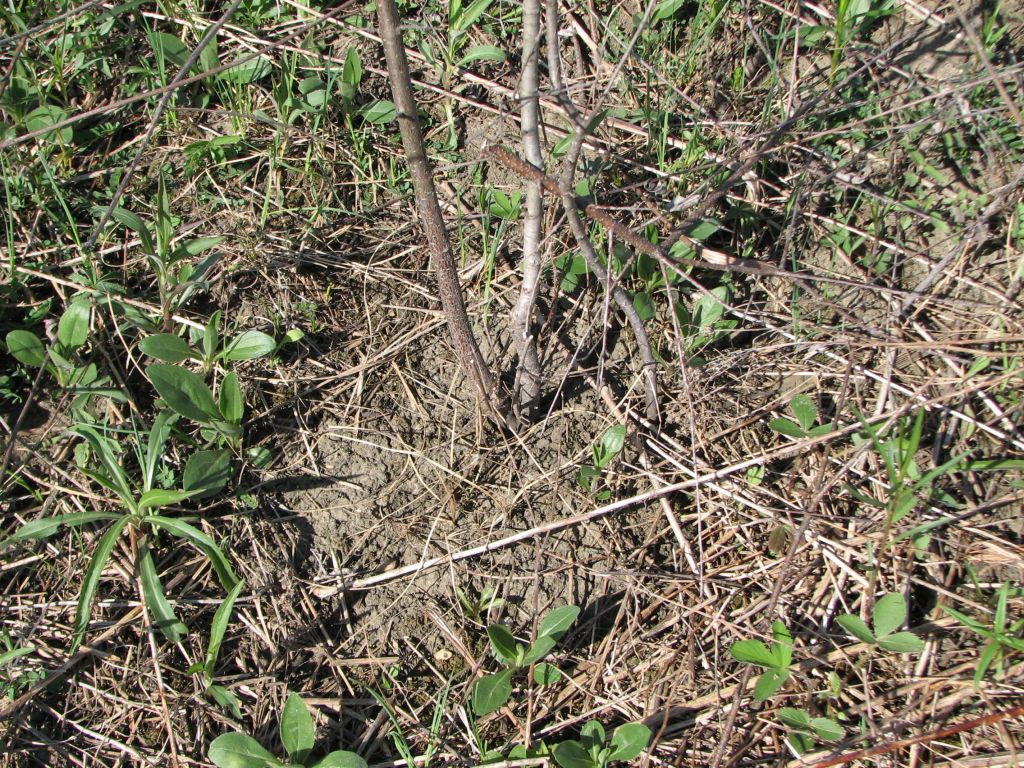
Common buckthorns that were also treated on this date.

The below is a closeup of the base of the common buckthorn shown in the above image. The Liatris near this common buckthorn does not look impacted.

November 12th, Rain Occurred Seven Days After Application
A common buckthorn treated on this date.
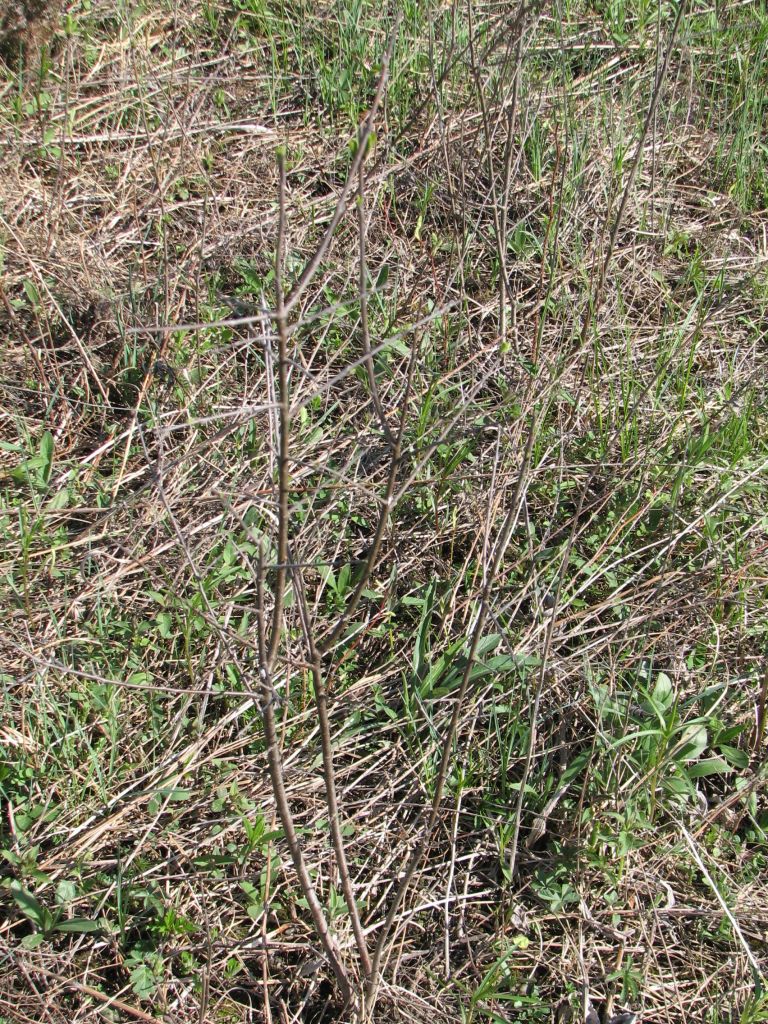
The below image is of the base of the common buckthorn shown in the above image. I do not see herbicide impacts on any of the Asteraceae near the base of this common buckthorn.
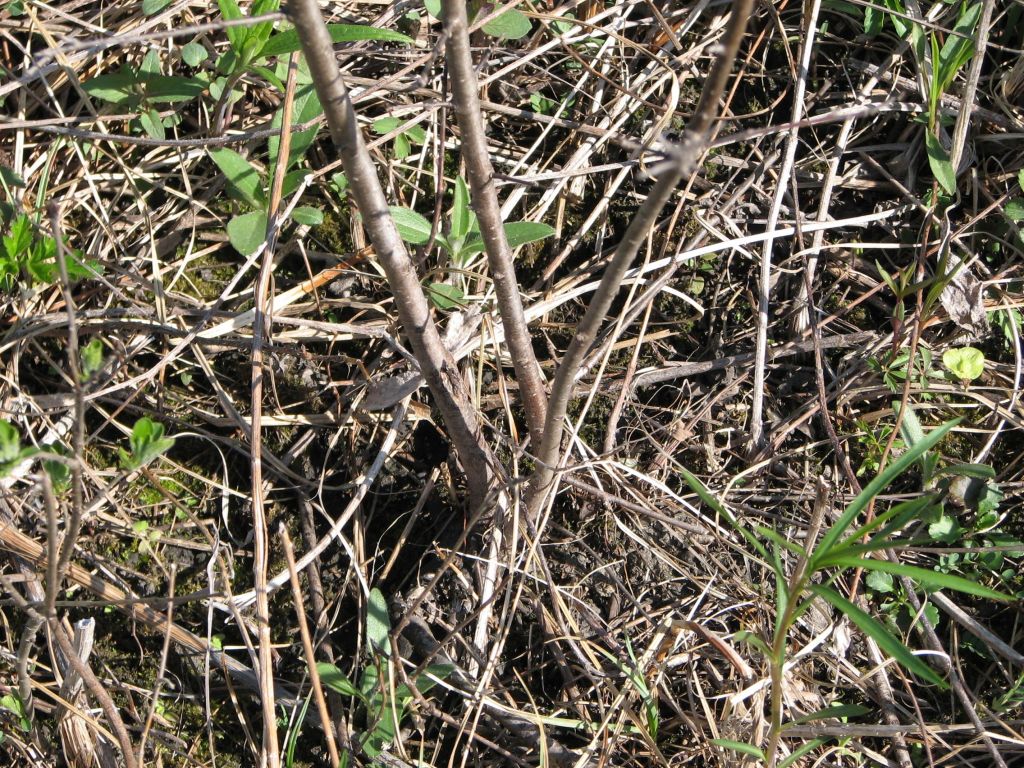
More common buckthorns treated on this date.
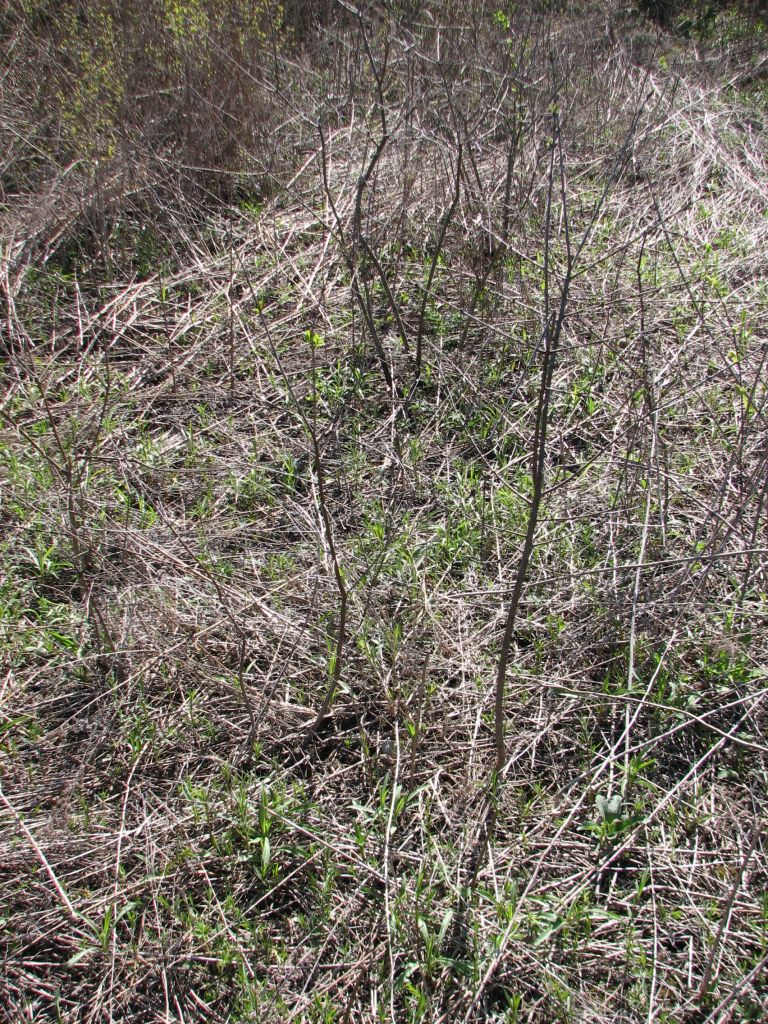
The bases of the common buckthorns shown in the above image.

A final common buckthorn treated on this date growing right next to an untreated non-native crabapple.
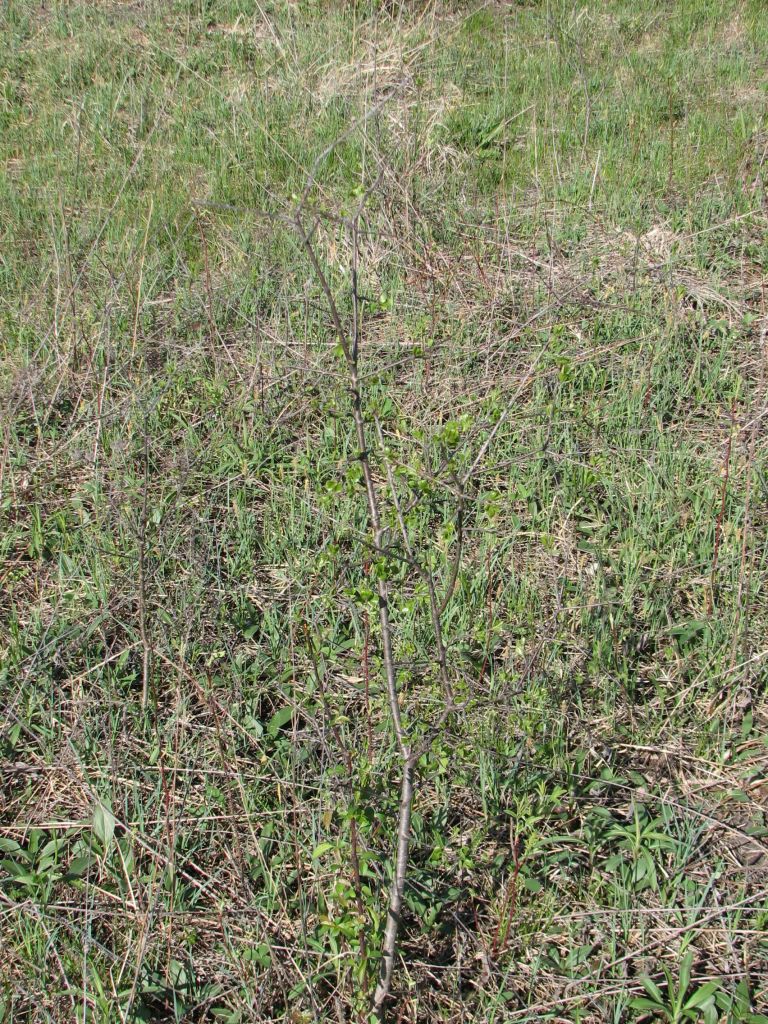
The below image is of the base of the above common buckthorn and crabapple. I see no ring-of-death. Pasture rose (Rosa carolina) is particularly susceptible to herbicide impacts. If there were any off-target herbicide impacts the pasture rose growing next to this common buckthorn would be impacted. When I took this picture, I believed this common buckthorn was treated on November 12th with rain not occurring for seven days. However, in the image I see broken branch tips that indicate this buckthorn might have been treated the dormant season of 2022/2023. When I get back to the site, I will relocate this common buckthorn and scratch the bark to see if it is green which will let me know if it was treated during the 2023/2024 dormant season.
I believe I see herbicide impacted leaves on the above treated common buckthorn. This indicates it was treated during the 2023/2024 season with rain occurring seven days later.

Conclusion
I am not seeing a ring-of-death around the base of the last common buckthorn that was treated on either November 12th (seven days before rain) or on December 10th (five days before rain). I will make more observations and update this blog post when I am sure this common buckthorn was treated in the 2023/2024 season and not the 2022/2023 season.
Added 11/29/2024 – While doing more treatments in the area, I located the above shown common buckthorn with the non-native crabapple next to it. It must have been treated in the 2023/2024 season since when I broke small branches this common buckthorn still appeared to be alive. Since this, and other common buckthorns treated during the 2023/2024 season were still alive, I decided to increase the stem coverage for common buckthorns between 1/2” and 1” in diameter by 50 percent during the 2024/2025 season. This is still much less than the 12 to 18 inches recommended on the label. I’ve only found the stem coverage recommended on the label to be necessary for larger common buckthorn with diameter of five to seven inches.
Added 2/18/2026: I am now applying triclopyr ester in basal oil to a stem length equal to three times the diameter at ground level. This is for common buckthorns with a diameter at ground level of over 2 inches. Invasive bush honeysuckle requires an even longer ratio of stem length coverage to diameter at ground level. This is necessary to achieve control.
I do not believe the increased herbicide I am applying this season will lead to more off-target impacts. My experience has been time until precipitation occurs and getting herbicide on the ground is what drives off-target impacts.
This post is a continuation of the post on the following link titled, “Ring of Death.”
Related Subsequent Post

 Stewardship Chronicles
Leave a reply to Getting Basal Bark Application Right (Draft) – Stewardship Chronicles Cancel reply