Update on 6/19/2025: All glossy buckthorn with herbicide applied to frills sprouted and about half that had herbicide applied to cut stumps sprouted. See following blog post.
Summary
View of Thicket
Small Glossy Buckthorn
Frilled Glossy Buckthorn
Cut Glossy Buckthorn
Black Pine
Discussion
Summary
Treatise on Frilling (Link)
View of Thicket
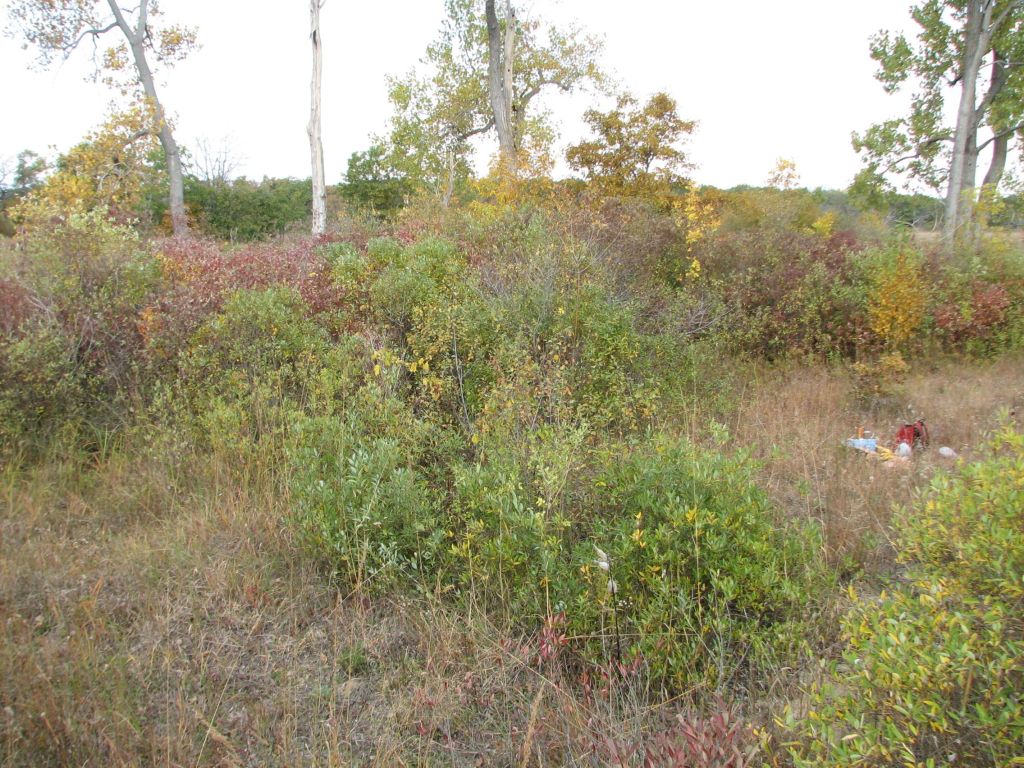
Thicket where frilling was done on glossy buckthorn (Rhamnus frangula) on 10/22/2023.
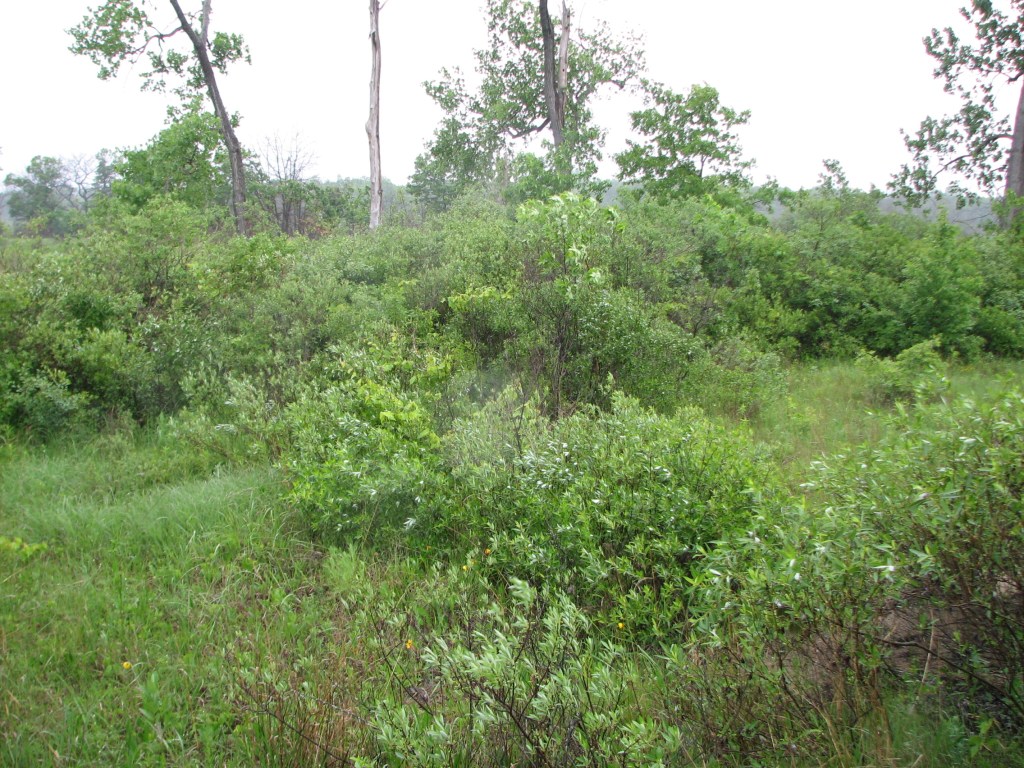
The same thicket on 6/8/2024. The dead glossy buckthorns are hard to see.
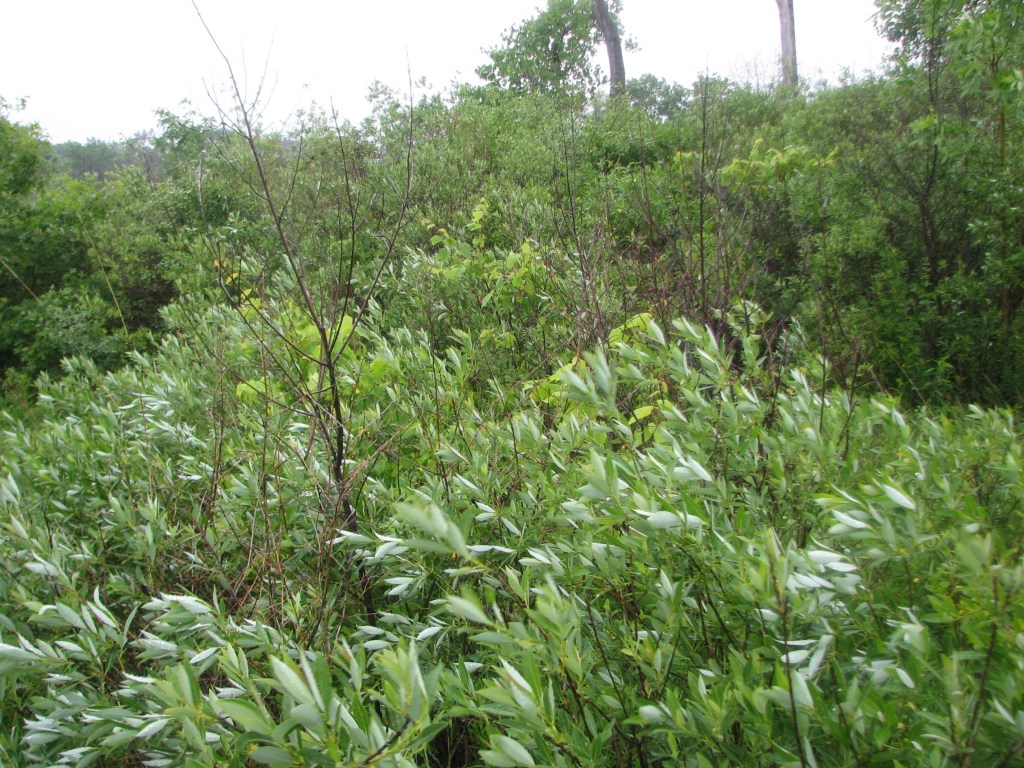
A closer view of the above thicket. The dead glossy buckthorns are sticking up above the willows.
Small Glossy Buckthorn
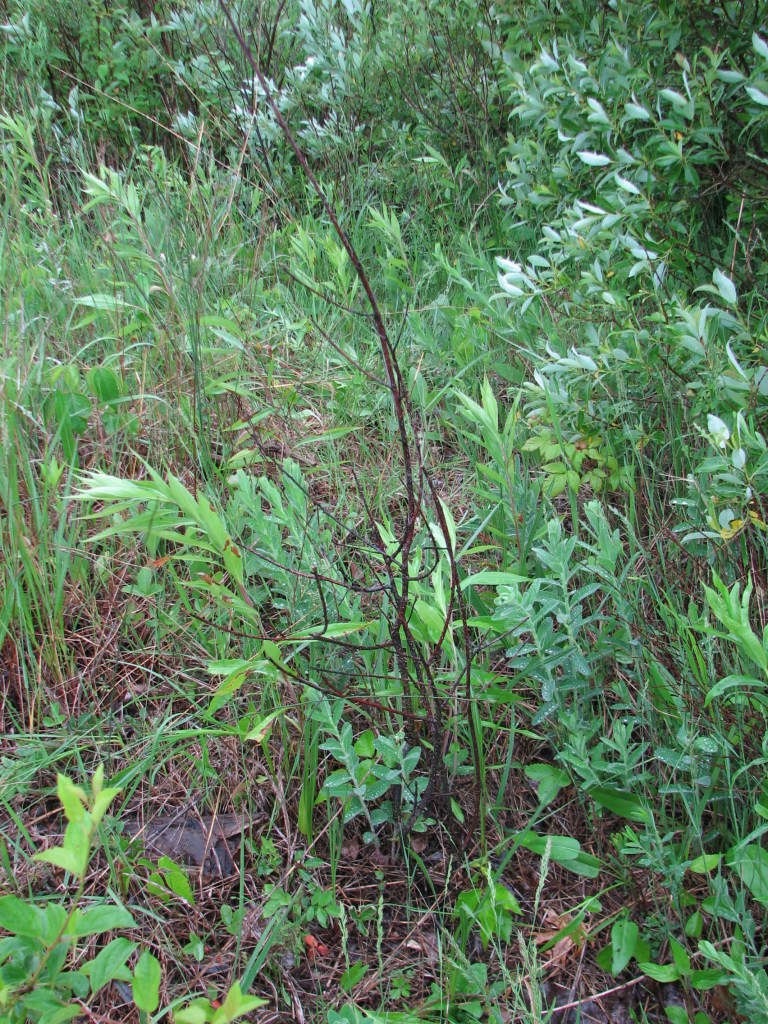
This is one of a few smaller glossy buckthorn that had 50 percent active ingredient glyphosate placed into frills around each stem. Applying the herbicide to frills (versus cut stump) is more effective as stems get smaller.
Frilled Glossy Buckthorn
One
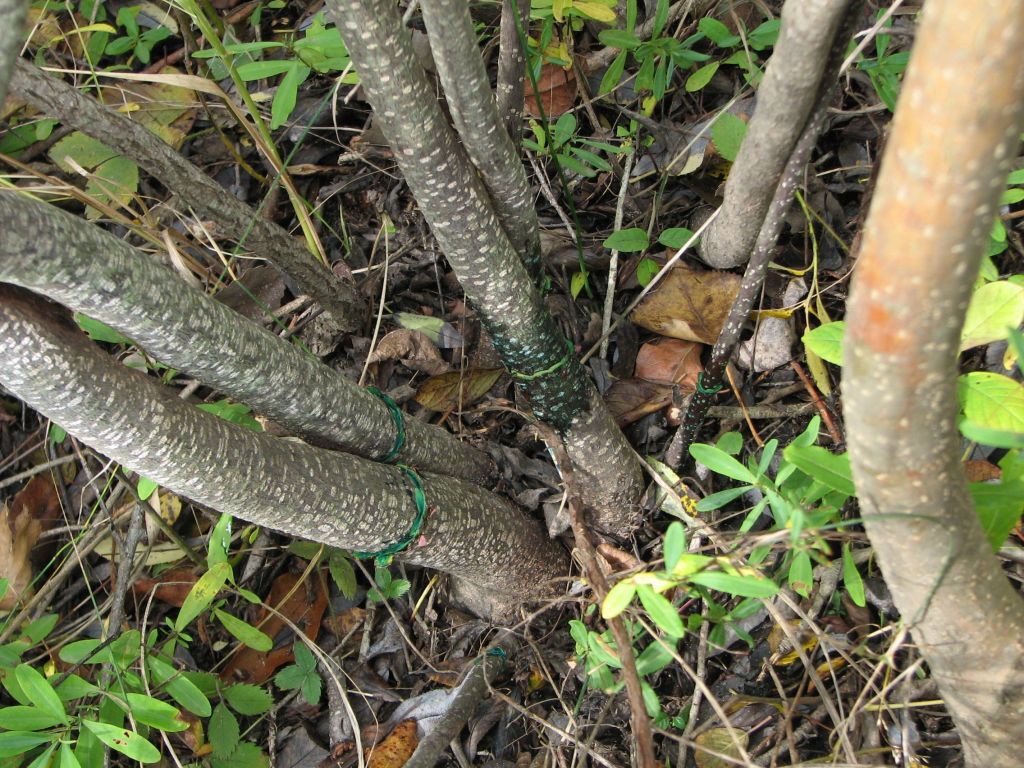
Frill on a glossy buckthorn after 50 percent active ingredient glyphosate had been applied on 10/22/2023. The two left most stems had herbicide squirted into the frill with a gooseneck bottle and the stems to the right had herbicide applied with a paintbrush. The applicator preferred applying the herbicide with the paintbrush.
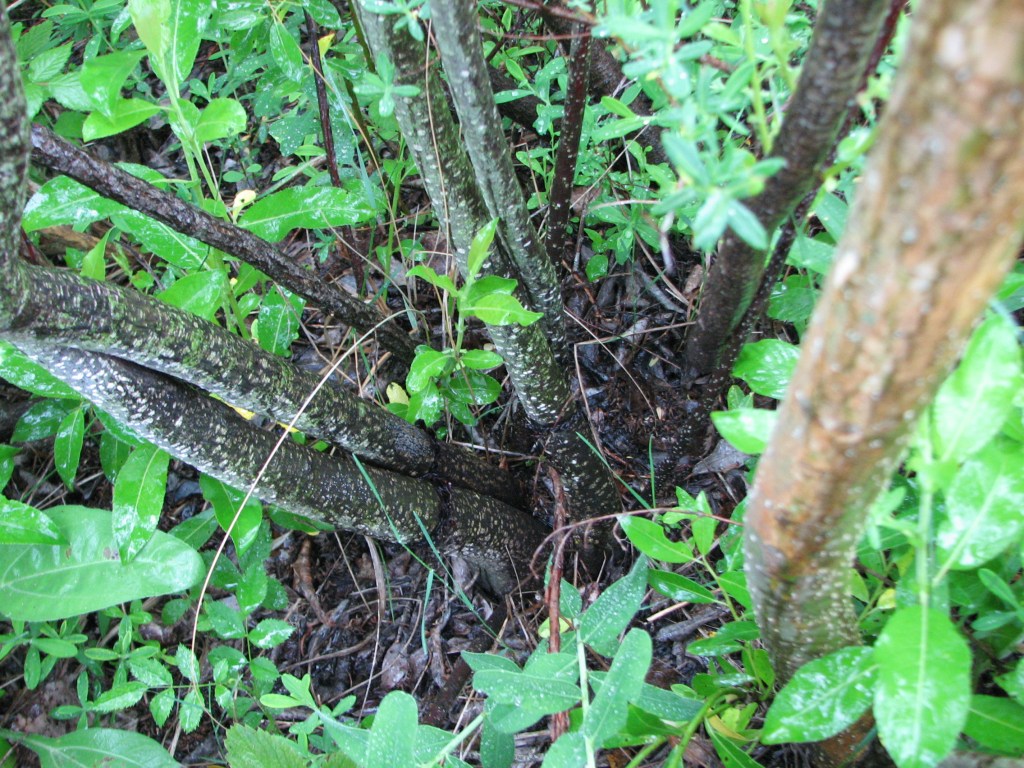
This is showing the above glossy buckthorn, dead, on 6/8/2024. Regardless of if the herbicide was applied with a gooseneck bottle or paintbrush, the stems were killed. The shoot coming up through the middle of this glossy buckthorn is from an adjacent willow spreading toward light from the newly opened canopy. Please observe how much happier the flowering spurge (Euphorbia corrolata), wild rose (Rosa carolina), and shrubby cinquefoil (Dasiphora fruticosa) are after the glossy buckthorn has been killed. Even in early June, these plants are larger than they were last October.
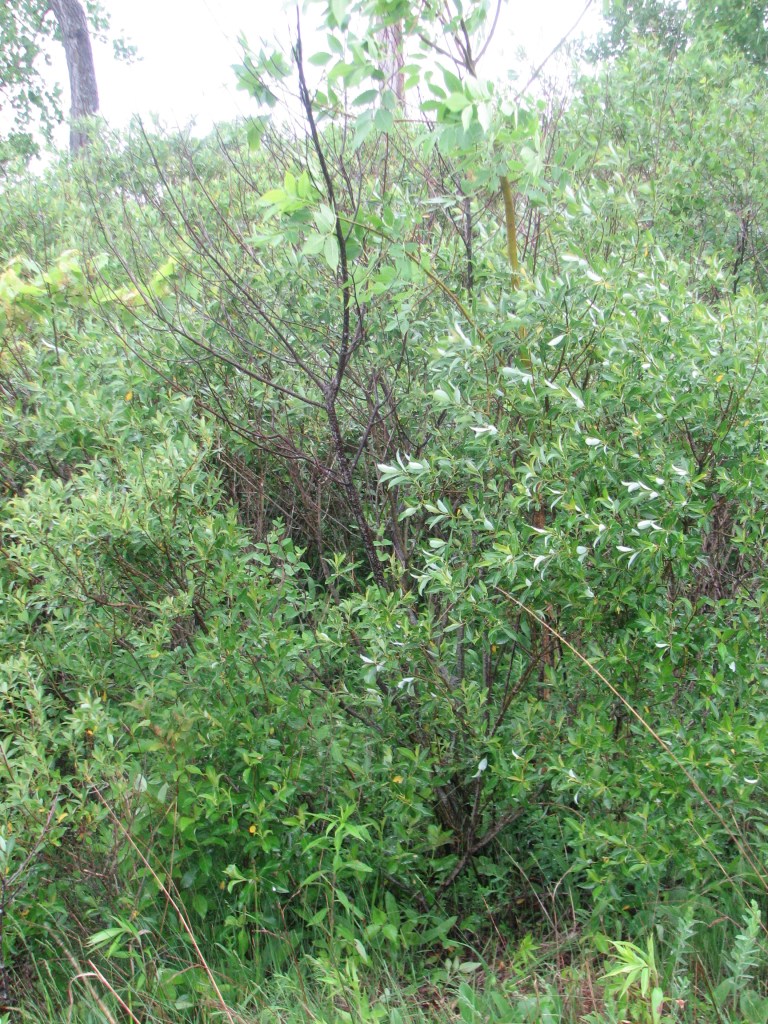
View of the top of this dead glossy buckthorn.
Two
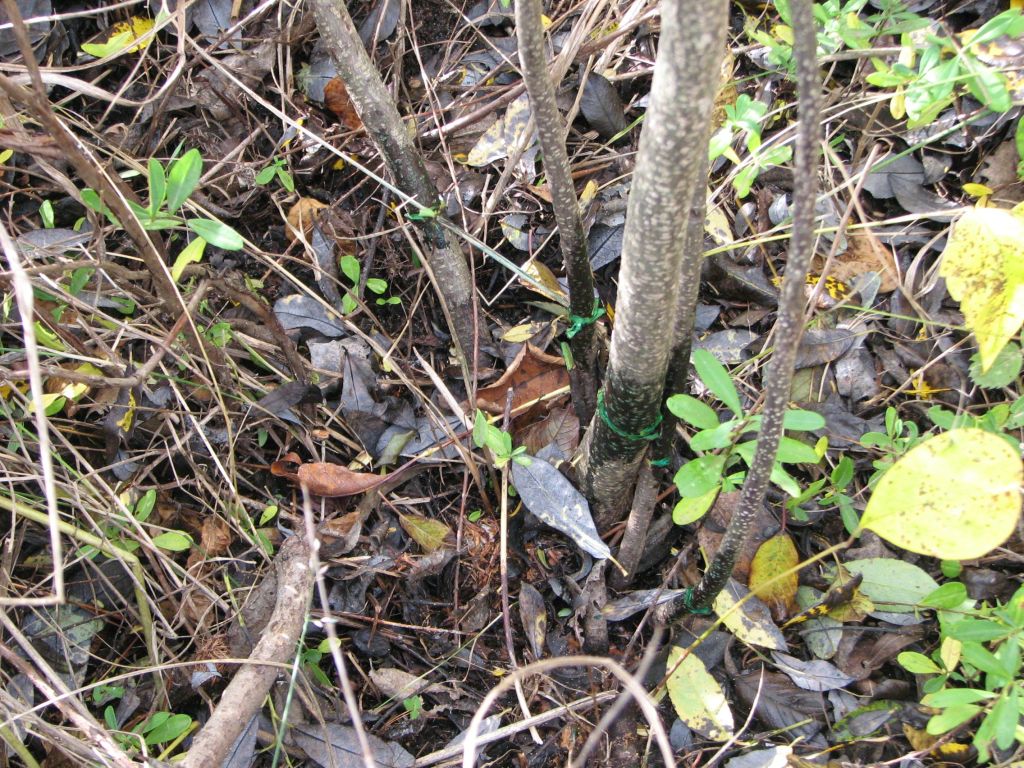
Another glossy buckthorn that was frilled and had 50 percent active ingredient glyphosate applied on 10/22/2023.

The above frilled glossy buckthorn, dead, on 6/8/2024.
Added 6/18/2024 – The vegetation has not grown as much under the second frilled glossy buckthorn shown as it has under the first frilled glossy buckthorn shown. This is because the first frilled buckthorn shown was on the eastern facing side of the thicket and the above (second) frilled buckthorn shown is on the north facing side of the thicket. The increase in light from the buckthorn controlled on the north facing side of the thicket will occur further north than the base of this glossy buckthorn. This is the reason the native plants at the base of the second frilled glossy buckthorn shown (above) have not responded with as much increased growth as the first frilled glossy buckthorn shown.
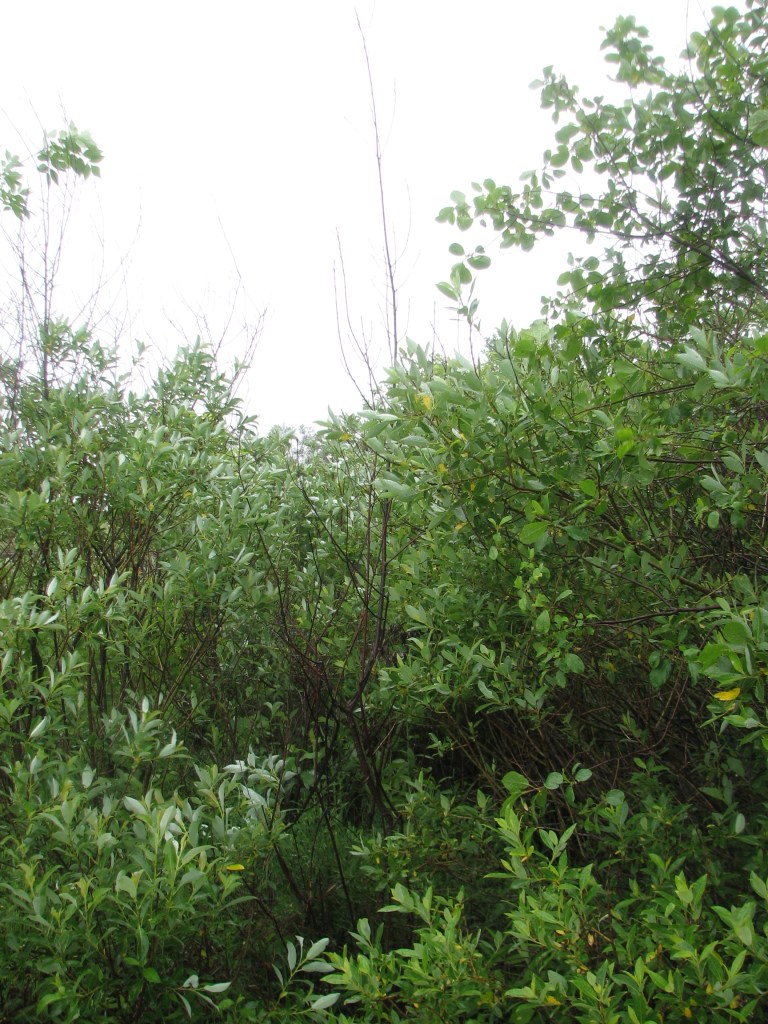
The top of the above shown dead glossy buckthorn.
Cut Glossy Buckthorn

Here are glossy buckthorns that had been cut and the stems piled on 10/22/2023. This was done by other volunteers. A third group of volunteers removed berries from glossy buckthorns.
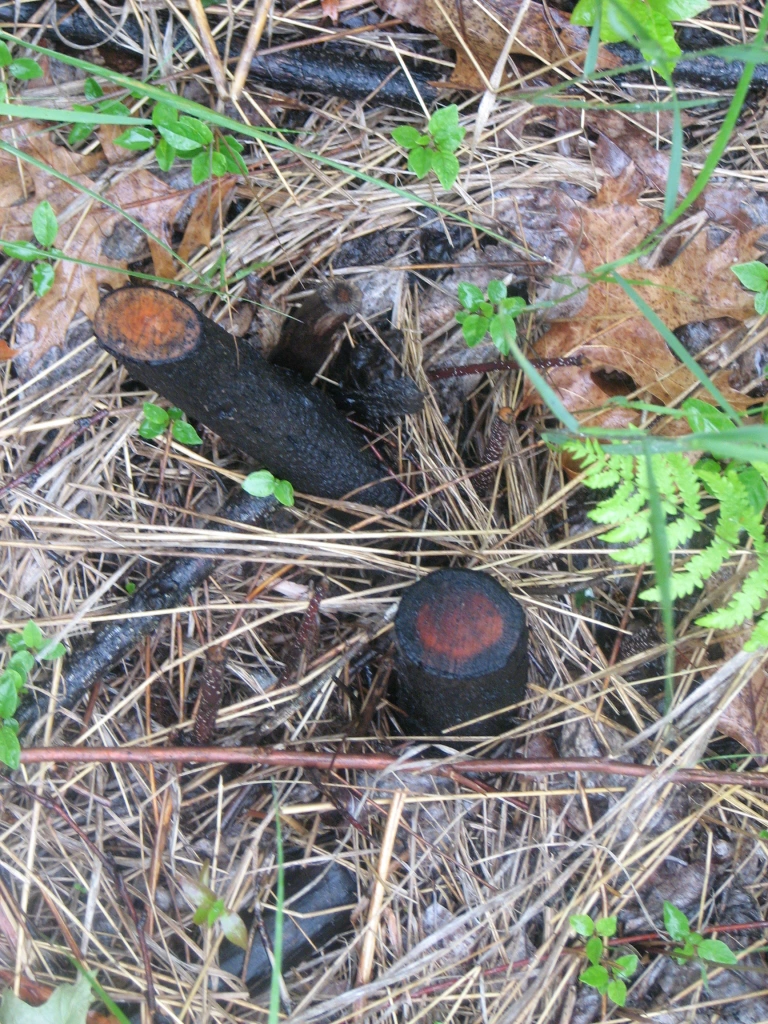
On 6/8/2024 most of the glossy buckthorn stumps that were cut and treated with 50 percent active ingredient glyphosate are dead.
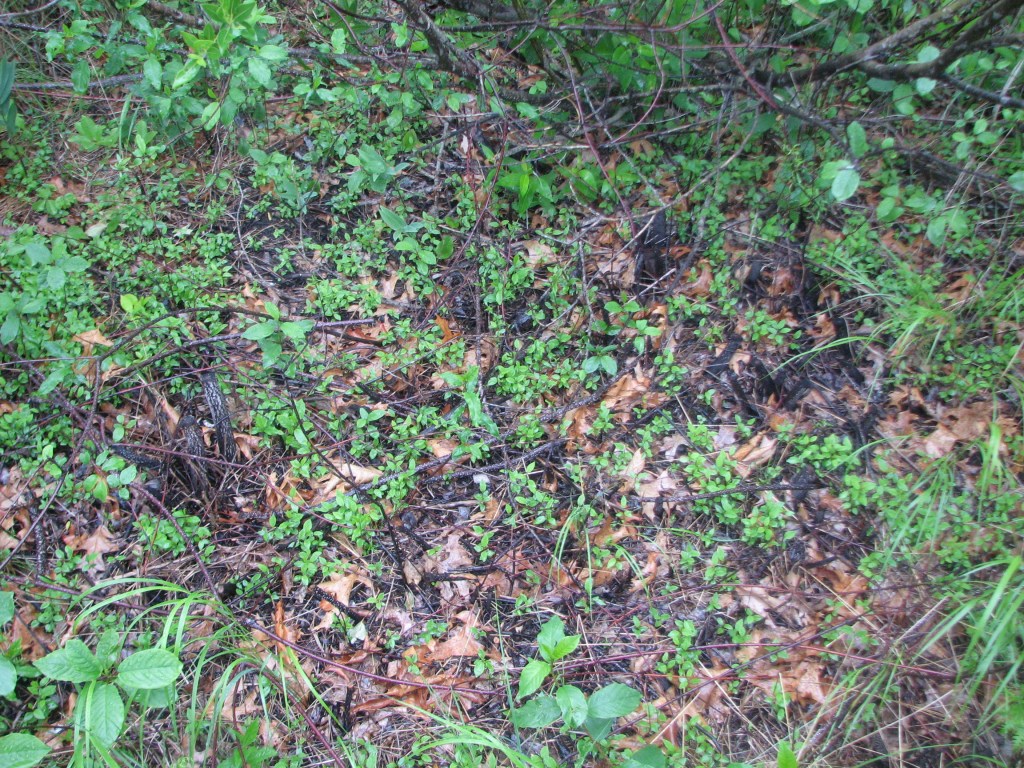
This image shows a lot of glossy buckthorn stumps that have been killed by cut stump herbicide treatment.
Even more noticeable are all the glossy buckthorn seedlings. Most organizations would not think it possible to pluck out all of these seedlings. However, on 6/8/2024 I saw a volunteer pull up first year sweet clover seedlings in a quality prairie area much larger than what is shown in this image. I not only think plucking out each of these seedlings can be done, I think that is likely how the volunteers working in this area will deal with the carpet of glossy buckthorn seedlings.
If you zoom in the above image and look closely in the upper right-corner, you will see a small diameter herbicide impacted stem from a glossy buckthorn which had all other stems cut and treated with herbicide. This one small diameter stem missed getting cut and treated and survived. This is the reason it is important to treat every stem.
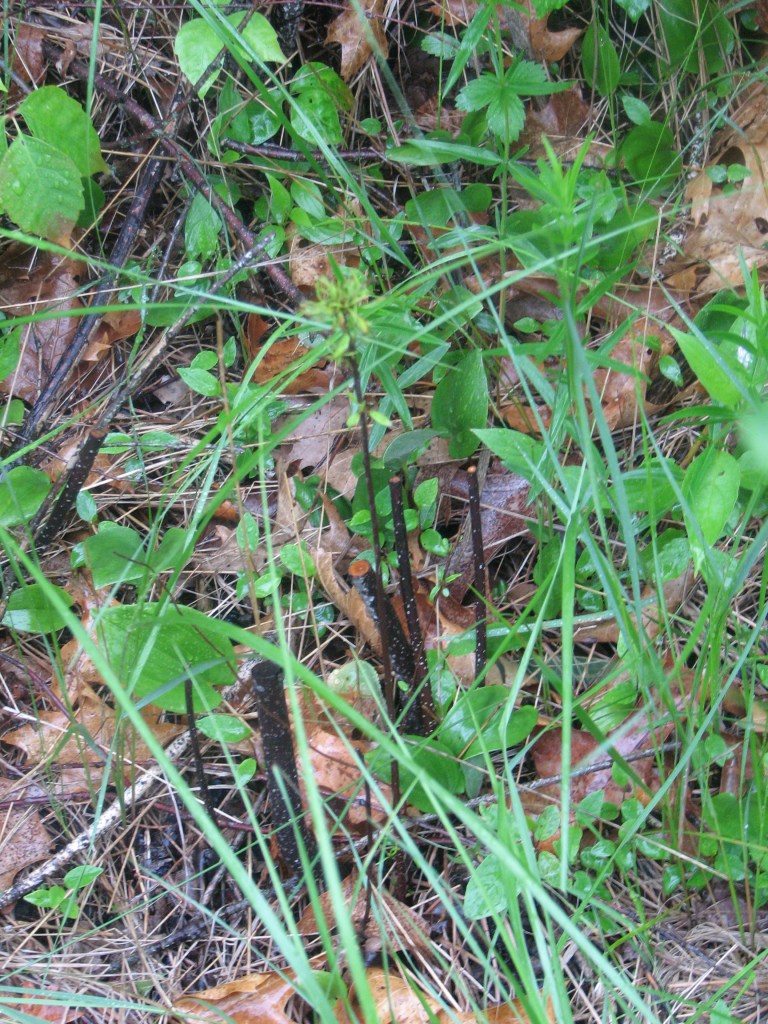
Another small stem on a glossy buckthorn that missed getting cut and treated and has produced herbicide damaged foliage.
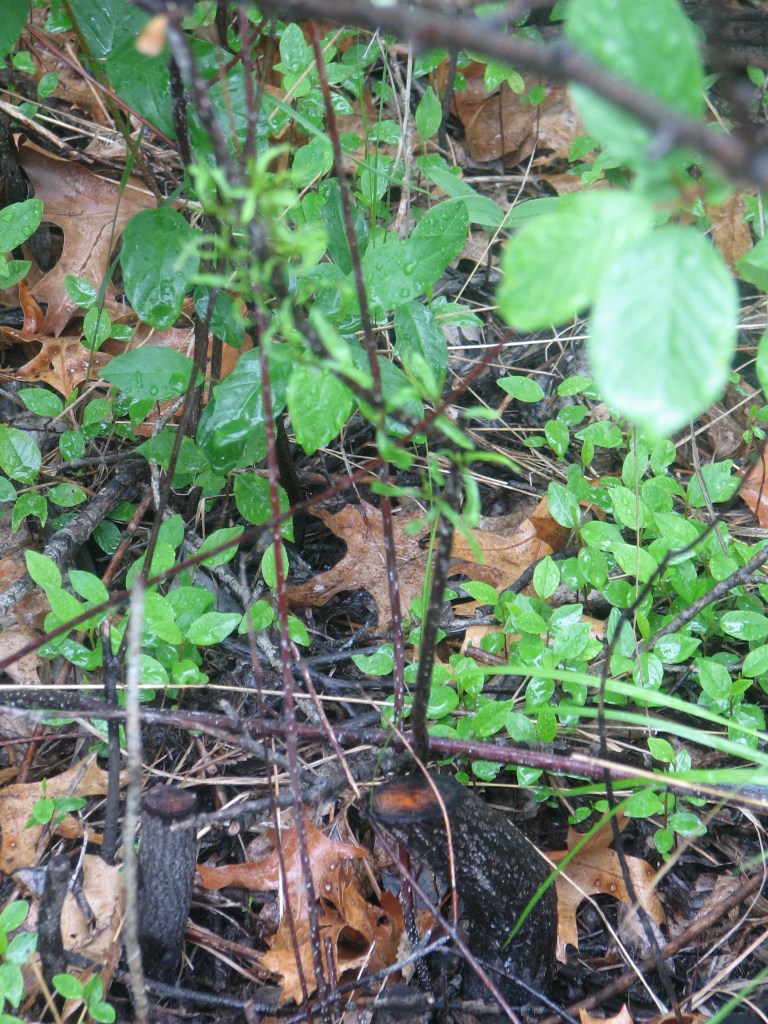
A third small diameter stem that missed getting cut and treated that is growing herbicide impacted leaves. There were more but these are enough to show the theme.
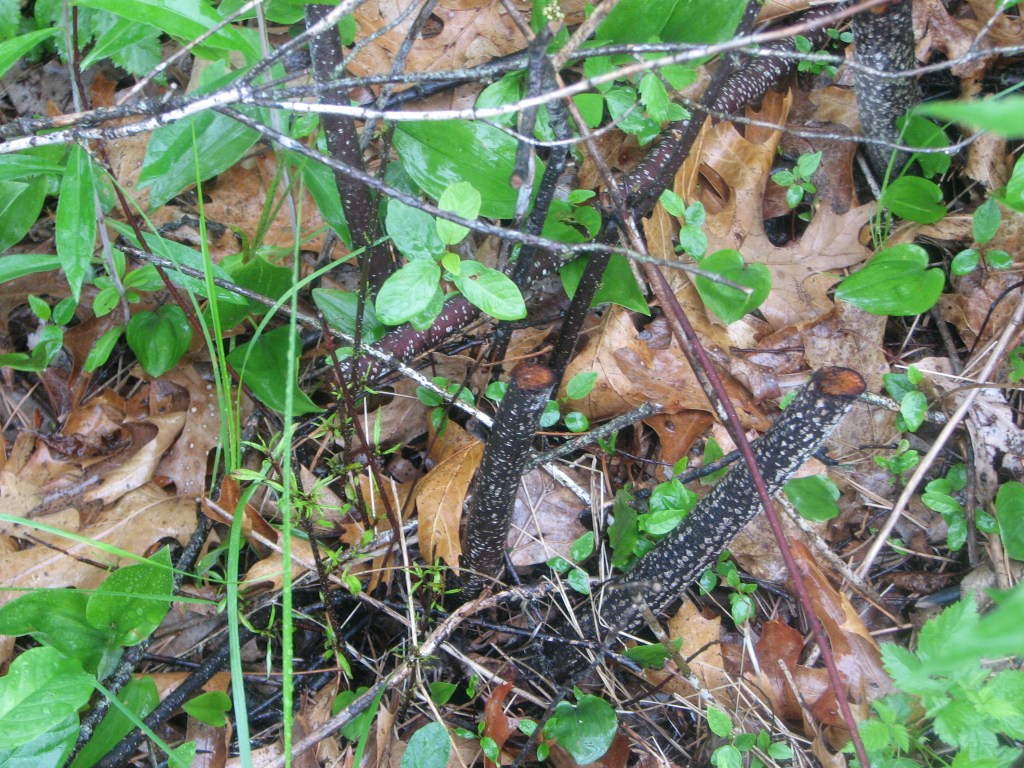
This glossy buckthorn had the stems cut several inches above the ground. The small stems on the left show herbicide impacted growth. Even though these stems were cut, and likely treated with herbicide, they were not killed. It is difficult to get enough herbicide on the cut surface of small stems to kill them. I learned this at Bluff Spring Fen.
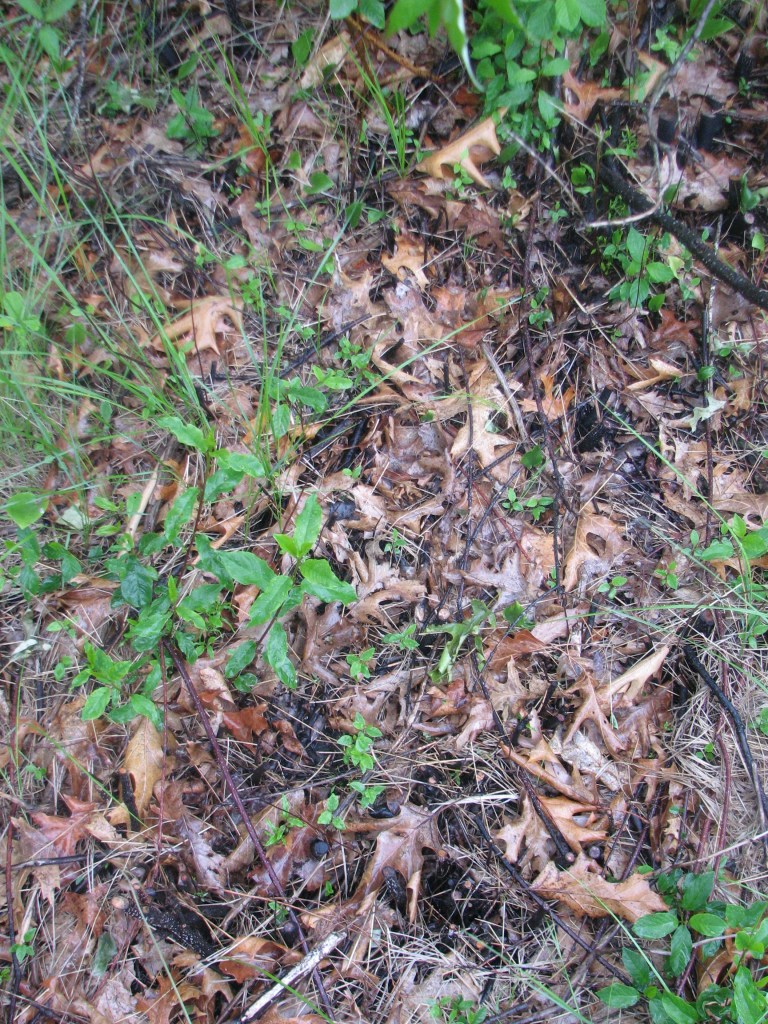
In the above image, there are a lot of dead glossy buckthorn stumps. However, if you look in the upper right hand corner there is a stump that was not killed by the treatment showing herbicide impacted sprouts.
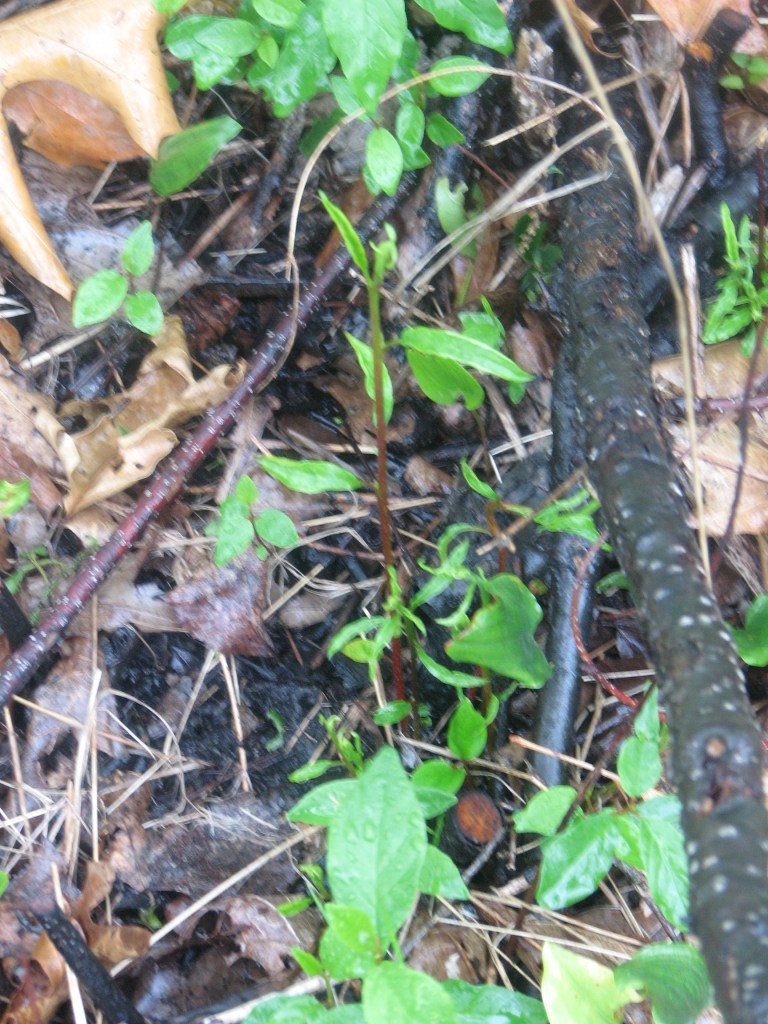
A different stump that was cut and had 50 percent active ingredient glyphosate applied but is producing herbicide impacted sprouts.
Black Pine
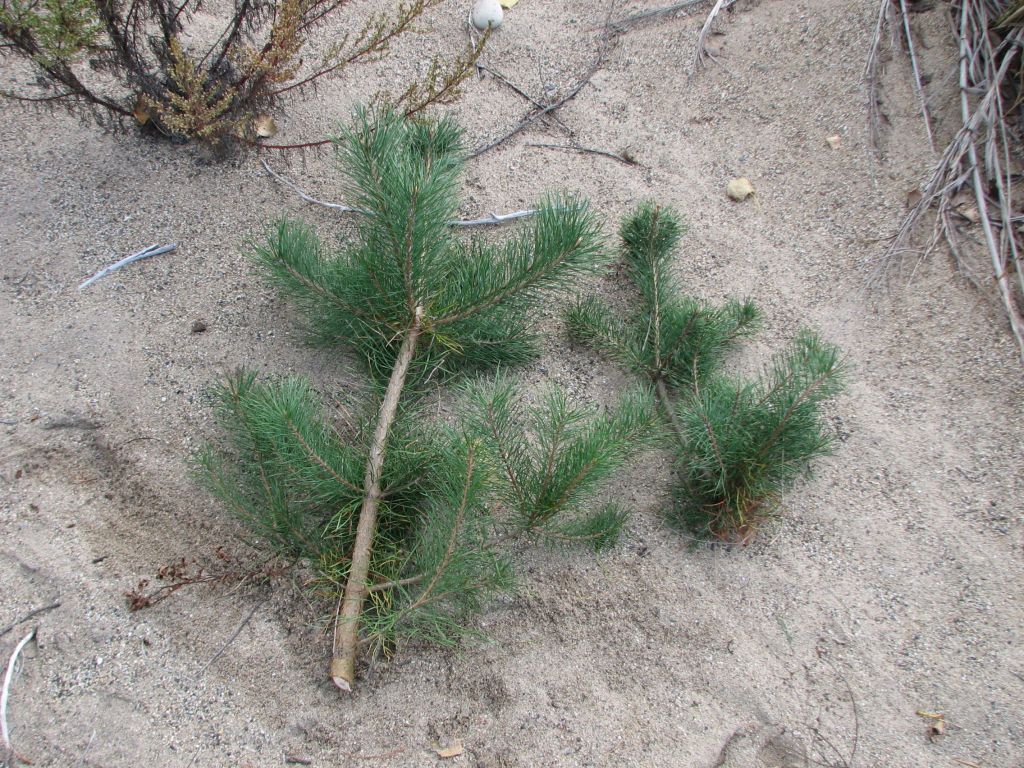
Two small black pine (Pinus nigra) that were cut and left on the bare sand.
Discussion
Glossy buckthorns that had 50 percent active ingredient glyphosate applied to frills (every stem) were all killed. In contrast, some of the glossy buckthorns that were cut and had this herbicide applied to cut stumps produced herbicide damaged sprouts the following year.
My experience applying glyphosate to frills on common buckthorn (Rhamnus cathartica) is about half the concentration used, or around 25 percent active ingredient, is sufficient for complete control. The reason 50 percent active ingredient was applied was the steward had this concentration available for cut stump treatment. The concentration applied to frills could be reduced decreasing herbicide costs.
The sprouting stump may die later, but my experience has been they tend to hold on and recover. If they live into a second season the sprouting stumps should be treated. Typically, sprouting stumps are sprayed resulting in nearby vegetation being impacted or killed by overspray. However, in this high-quality area I believe the steward will have volunteers apply herbicide by hand using a wicking method. Rain splashing herbicide off of foliage can still impact adjacent vegetation. However, the impact from rain splash after wicking herbicide onto foliage will be less than if spraying sprouts was done.
Cutting stems immediately opens the canopy. Applying herbicide to stumps, after the canopy has been removed, leaves the surface of the herbicide coated stump exposed directly to rain. Rain can splash herbicide off treated stumps impacting nearby vegetation. Frilling leaves the canopy intact, so rain does not fall directly from the sky onto the surface where herbicide has been applied. With frilling, the amount of surface covered by herbicide that is exposed to the sky, and therefore falling rain, is much smaller than with cut stump treatment. I have not yet observed damage to adjacent vegetation from rain splashing herbicide off the application area when herbicide has been applied to frills around a stem/s. Although I did not see damage to adjacent vegetation from rain splashing herbicide off cut stumps from the herbicide application at the 10/22/2023 Hosah workday, this could have been because I did not visit again until the next growing season.
My experience is about four times as many medium size woody invasive species can be treated if herbicide is applied to frills rather than cutting stems using a hand saw, bucking larger individuals, hauling the wood, then treating the stumps.
The standing dead wood fills with fungi. The parts underground rot away. The stems then fall over and deteriorate fastest where they contact the ground, from the outside inward, until nothing is left.
Wood takes a long time to decompose until it is completely gone but leaving the wood standing also allows many times the amount of control work to get accomplished.
Summary
Applying herbicide to frills does not lead to a portion of the stumps sprouting as occurs with cut stump treatment. Since with frilling, stems are not cut through all the way, there is no sprouting response.
Applying herbicide to frills eliminates the chance of nearby vegetation being damaged when sprouts from stumps are treated with herbicide or if rain splashes herbicide off of herbicide treated cut stumps.
Applying herbicide to frills is more effective than cut stump treatment especially as stems get smaller.
More stems can be treated when applying herbicide to frills compared to cutting, hauling, and then treating stumps with herbicide. Volunteers are less tired after spending a workday applying herbicide to frills compared to cutting, hauling, and then treating stumps with herbicide.
A lower concentration of glyphosate gives complete control when applied to frills. This is compared to a much higher concentration of herbicide needing to be applied when treating cut stumps with some sprouting from stumps occurring the following year. Reducing the concentration applied and therefore overall herbicide usage saves money.
Added 6/19/2025 – The above is no longer consistent with sprouting observed the second year after a herbicide application. See Update and link at beginning of blog.
The downside of frilling is leaving the dead wood standing. It can take from several years, to a few decades (for very large trees), for woody species to decompose. Fallen woody stems create difficulty in getting through an area to complete work as they become increasingly dense.

 Stewardship Chronicles
Leave a reply to Crown Vetch Control At Hosah Park on 9/14/2024 – Stewardship Chronicles Cancel reply