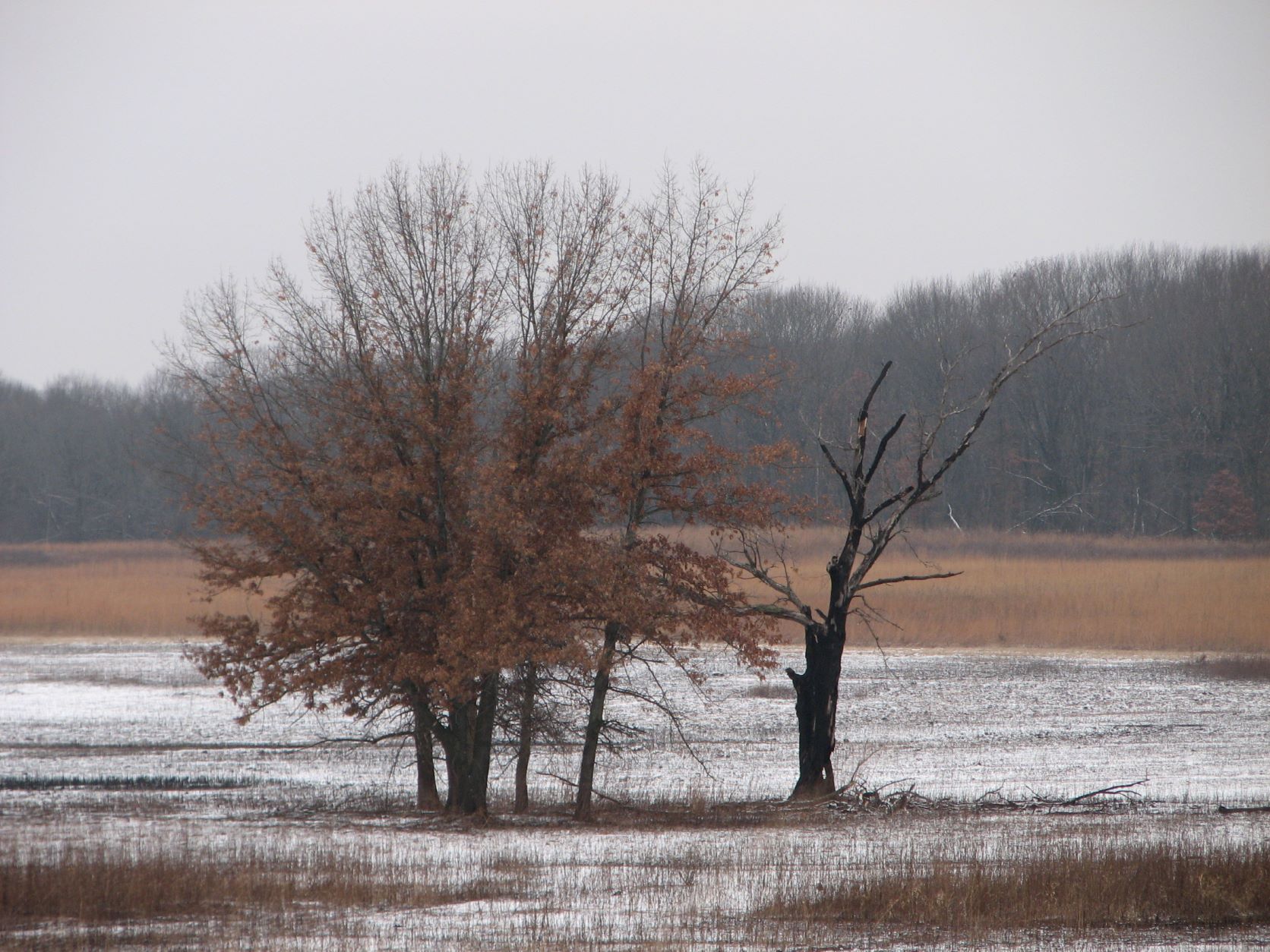
A Lawn Down the Block
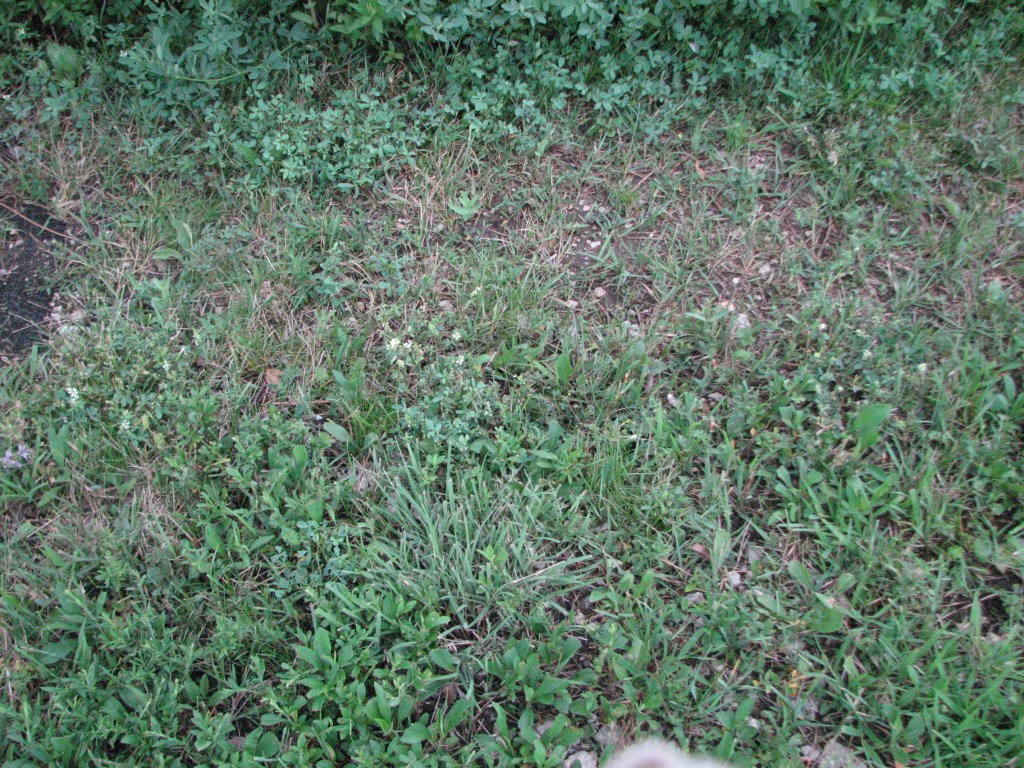
Yellow sweet clover growing and flowering in a mowed lawn.
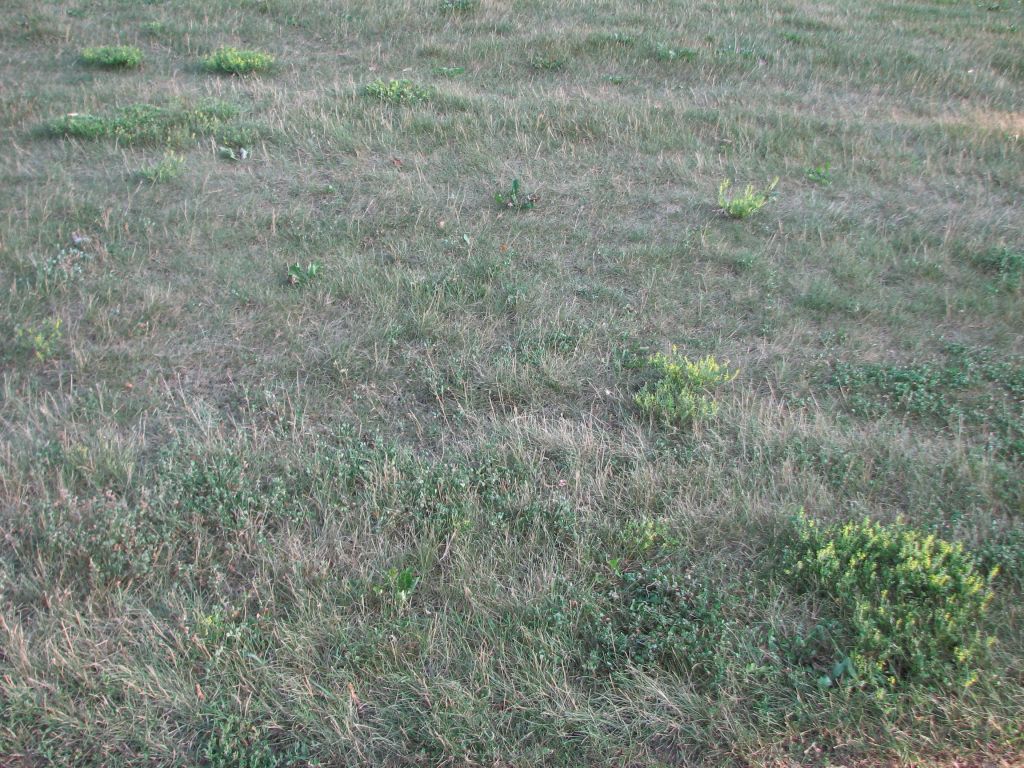
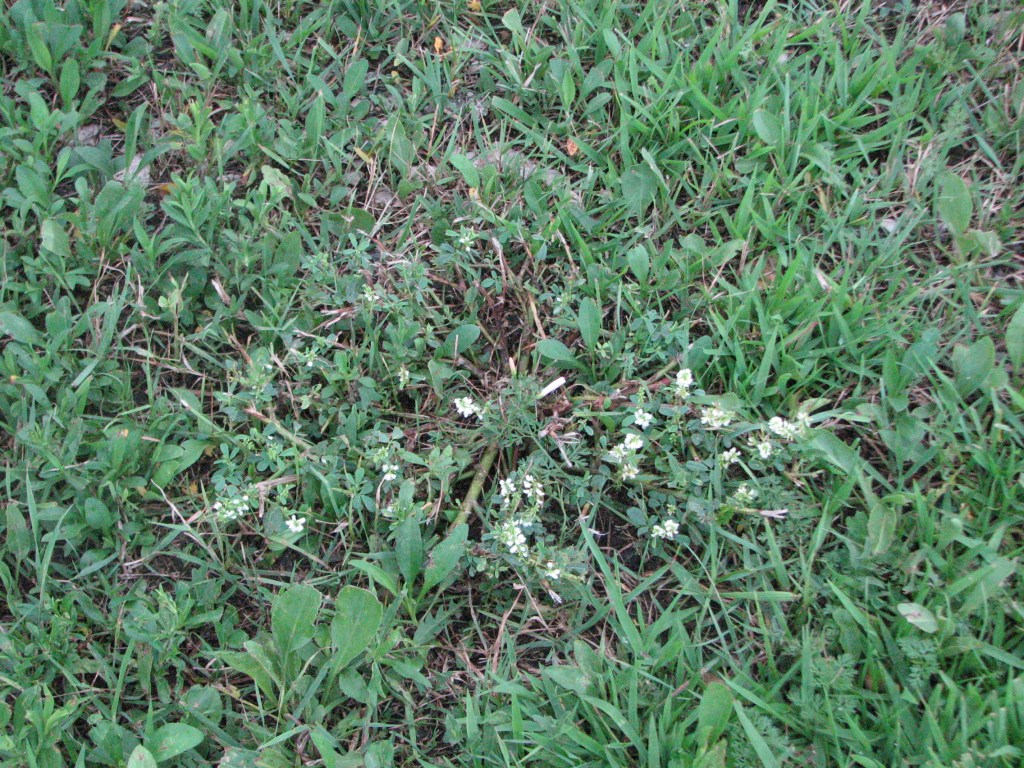
Closer view of some yellow sweet clover plants in a mowed lawn.

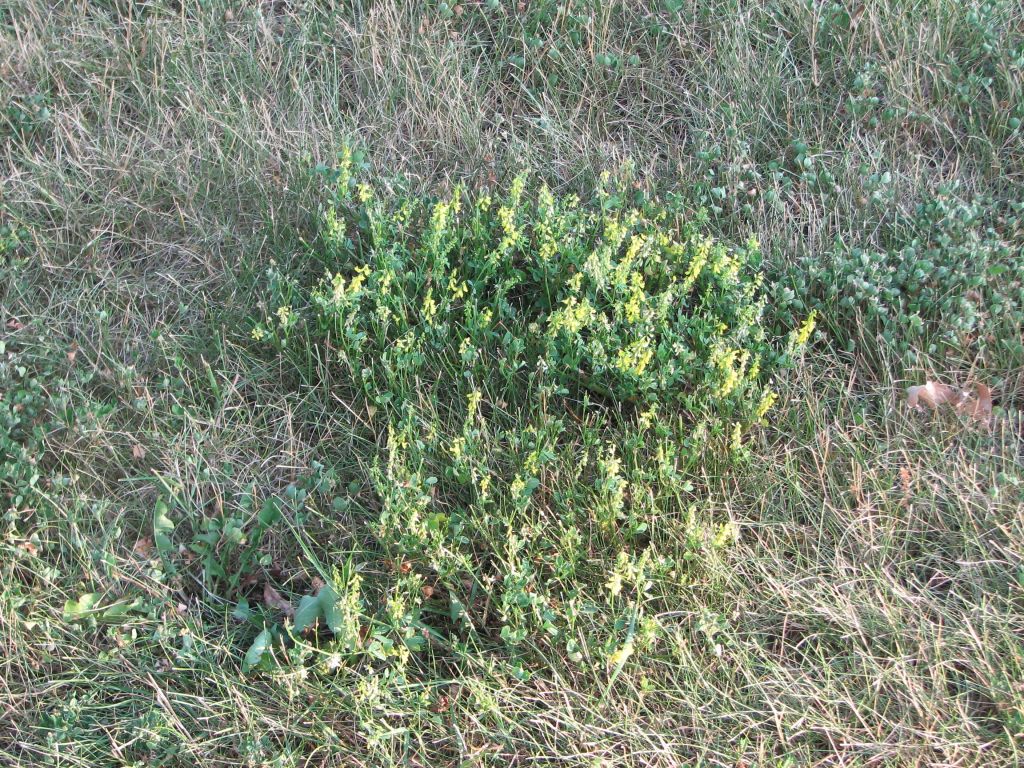
White sweet clover will also send up sprouts when mowed in a lawn. I will add images of this when I have taken some.
Added 8/9/2025
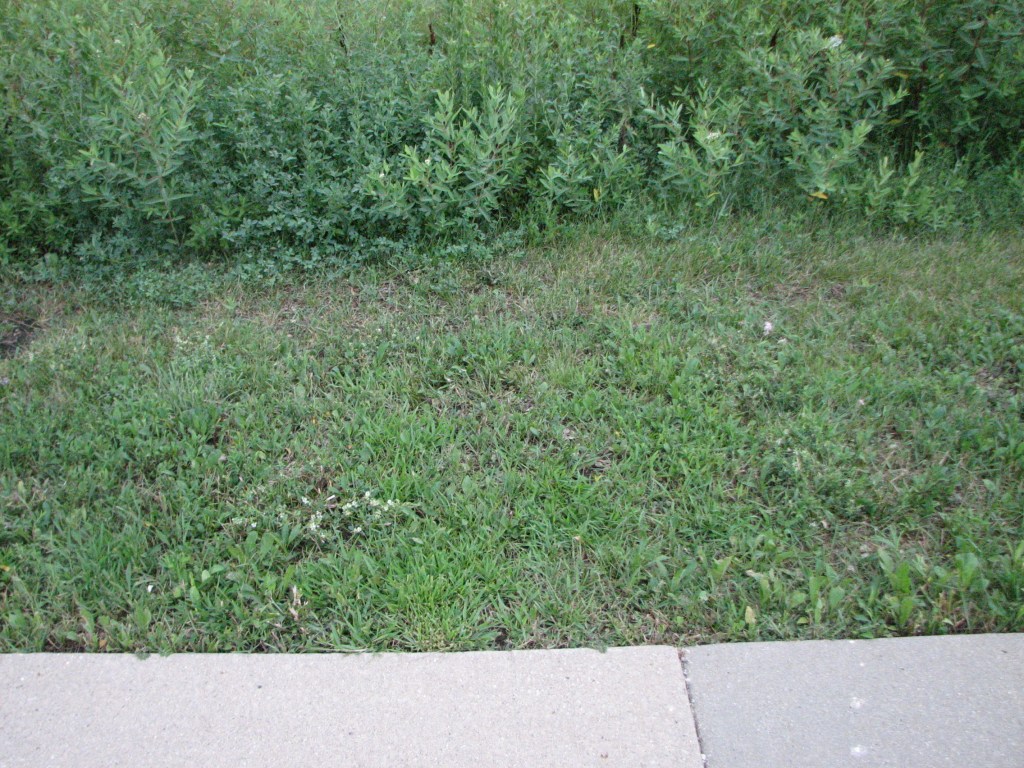
A Nature Sanctuary
Yellow sweet clover I removed where it had been mowed along a trail in a nature sanctuary. The mowing was done below the lowest leaves but shoots sprouted and bloomed. Some of these shoots grew from below ground level. The plants were mowed a second time and sprouted again.
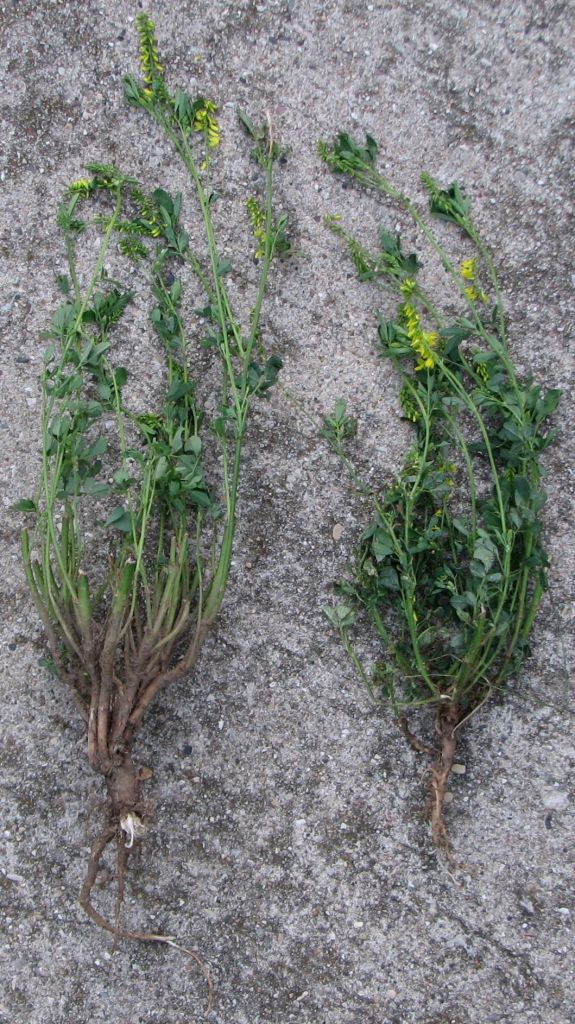
Image of white sweet clover I had removed by the roots. I did this every other day while the sweet clover were blooming and continued bagging plants in other areas of the preserve until the seed had dropped. I was able to eliminate sweet clover from a two acre prairie restoration area at the nature sanctuary where I was volunteering within three years.
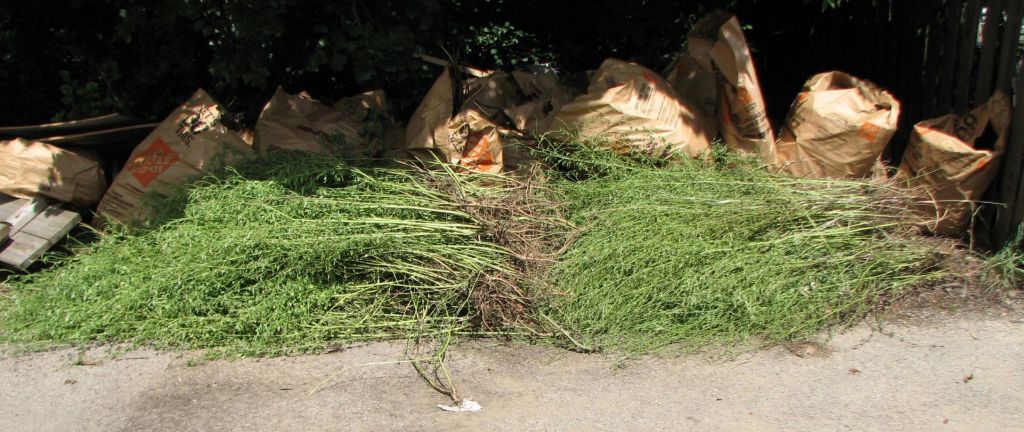
I have not seen a sweet clover plant in the location where I originally started removing them since 2019. Sweet Clovers were eliminated from other restoration areas by 2021.
My observation has been that mowing to control sweet clover weakens the perennial vegetation allowing more sweet clover to grow. You may think you are controlling the sweet clover by mowing it because it is hidden in other vegetation, but it grows back and still sets seed. Removing sweet clover by the root will eliminate it, instead of hiding it and creating a continuing problem as occurs with mowing.
Added: 7/26/2025
For small taproot invasive species, I use a dandelion weeder to break the bond between the weed and the soil. This makes it easy to put out the weed. I can remove small sweet clovers from a dense infestation every 20 seconds using a dandelion weeder.
More Added: 2/24/2025
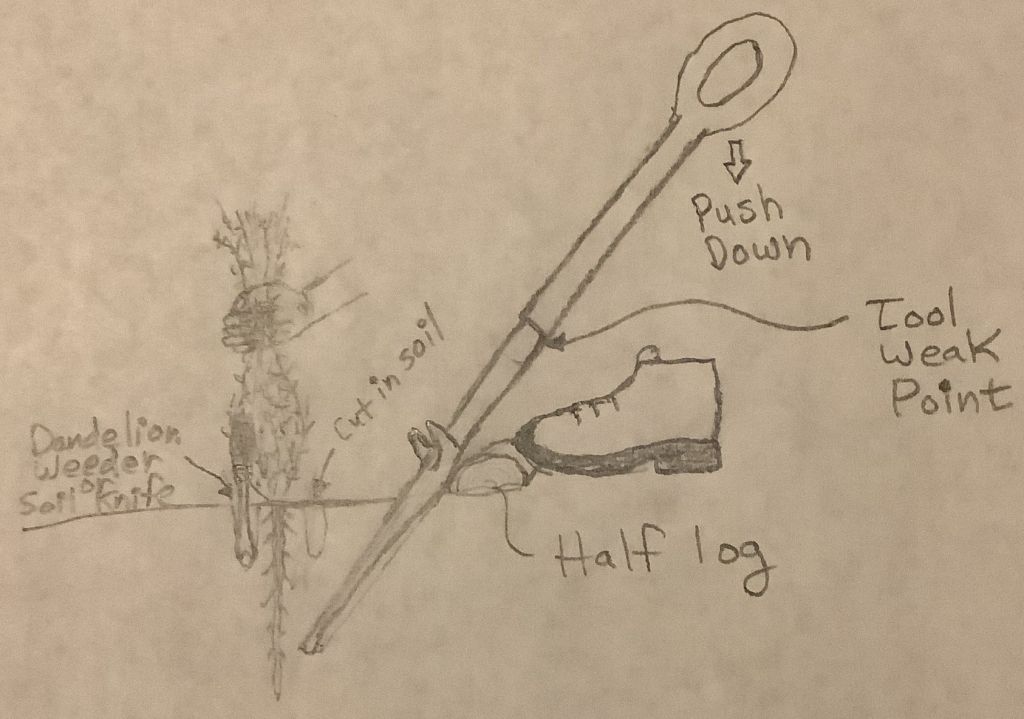
When using a dandelion weeder, remove taproot invasive species by pushing the weeder nearly straight down into the soil. Insert the dandelion weeder into the soil between the root surface and the soil. Continue doing this around the circumference of the root. The idea is to break the bond between the root and the soil. For smaller plants, this makes it easy to pull the root out of the ground. Do not use the dandelion weeder to dig up the soil. Avoid trying to pry the root out of the ground. This disturbs the soil more than merely breaking the bond between the root and soil.
For larger taproot invasive species, like large sweet clovers, I use the NRG Pro Weeder (shown in the following illustration). The half-log acts as a fulcrum for the tool so the weed can be lifted from underneath, while minimizing soil compaction. Lifting the weed from underneath pulls the soil away from the root of the weed, so the weed can easily be pulled out of the soil. I have found making cuts with a dandelion weeder on either side of the weed causes the soil to cleave in the desired location. As the cleave in the soil separates, the soil is pulled away from the weed. This allows the weed to easily be extracted. Over the course of a few hours, I can remove a larger sweet clover about every minute, depending on how quickly I can find them. The denser the infestation, the more sweet clover I can remove in a given amount of time.
To control sweet clover, I suggest working about two hours every other day. This will allow the sweet clovers to be eliminated from an area within a few years, giving you confidence to move on to new areas. If you have a lot of volunteer manpower, then working once every week or two might be enough to allow sweet clover to be eliminated from an area.
If the sweet clovers have gone to seed, and are beginning to die, then I cut them. This is faster than removing them by the root. Once plants have gone to seed, they must be bagged, so seed is not dropped while carry the plants. The bag must be removed from the site.
Cutting is easier than removing sweet clover by the root. However, it is only effective during a limited time frame, from when the plant begins to die until the seeds drop. Therefore, to have enough time to make progress, I remove plants by the root before cutting is effective.
Comments on Soil Disturbance – When the NRG Weeder is pushed into the soil, some roots get cut. I try to do this work after rain when the soil is moist. This makes it easier to push the weeding tool into the soil and allows any plants that have had some roots cut to recover more quickly. The way the tool is used, the soil is lifted up from underneath the weed but not churned up as occurs when digging a hole. After the weed has been pulled out of the soil, the soil can be gently pressed back into place. Soil layers are not mixed, as occurs when digging a hole. I have not observed weeds growing where I have used this tool as occurs with major soil disturbance. This method eliminates weeds while not encouraging them.

 Stewardship Chronicles
Leave a reply to jamesandrewmcgee Cancel reply