Contents
Downspout Garden
Tree Underplanting
Woody Species Control
Weather Conditions
Future
After a previous post, “Fire’s Impact on Moss in a Prairie Planting,” I wanted to see if I could burn in a manner that would reduce impacts.
I had previously burned at below freezing temperatures. The brown-dead tips of Carex sprengelii burned off, leaving the green part of the leaves mostly intact. I had already burned off my prairie/sedge meadow garden for the year. Therefore, I burned some smaller areas where native plants had been established to see the result.
Downspout Garden
The sedge is Carex crawei. There is also Solidago ptarmacoides, Viola sororia, and a few other native plants in this garden. This garden would not carry fire when I burned my prairie/sedge meadow garden on November 14th. At that date, the fuel needed more time to “cure.”
Image of garden before burning.
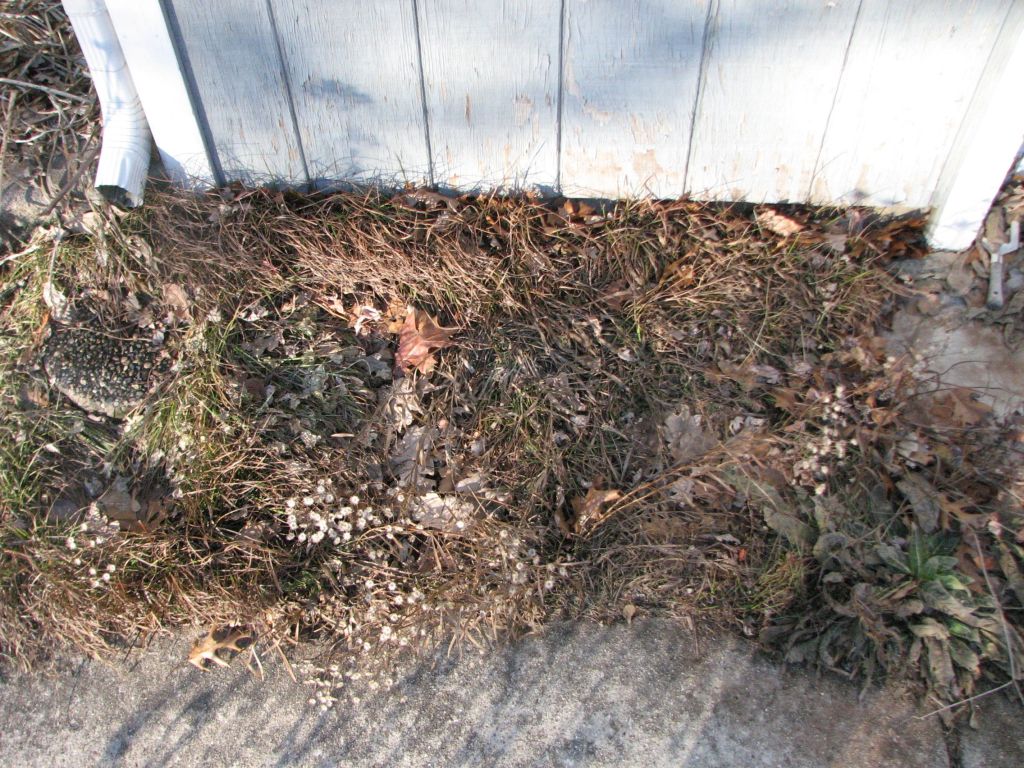
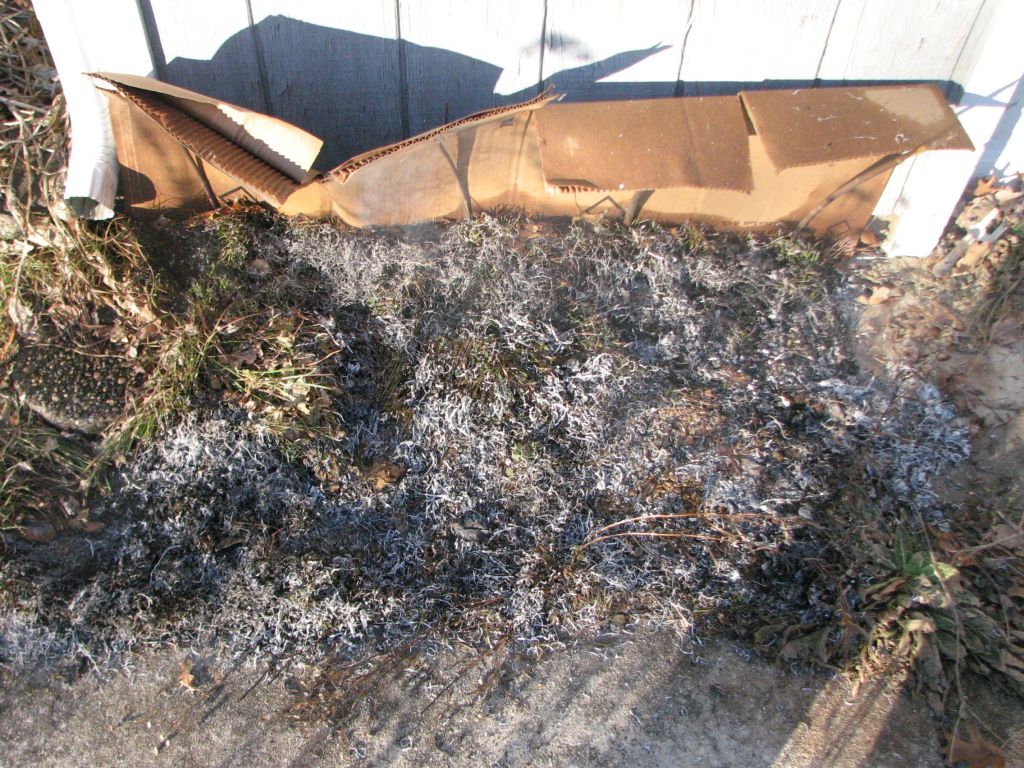
Image of garden immediately after burning (below).
Notice the wet cardboard against my house. I had submersed this cardboard in water totally saturating it. I then used sticks stuck in the ground to keep the wet cardboard between my house and the area being burned. This successfully protected my house from the small flames. The fire dried out the surface of the cardboard facing the fire. However, completely wetting the cardboard prevented it from catching fire and burning.
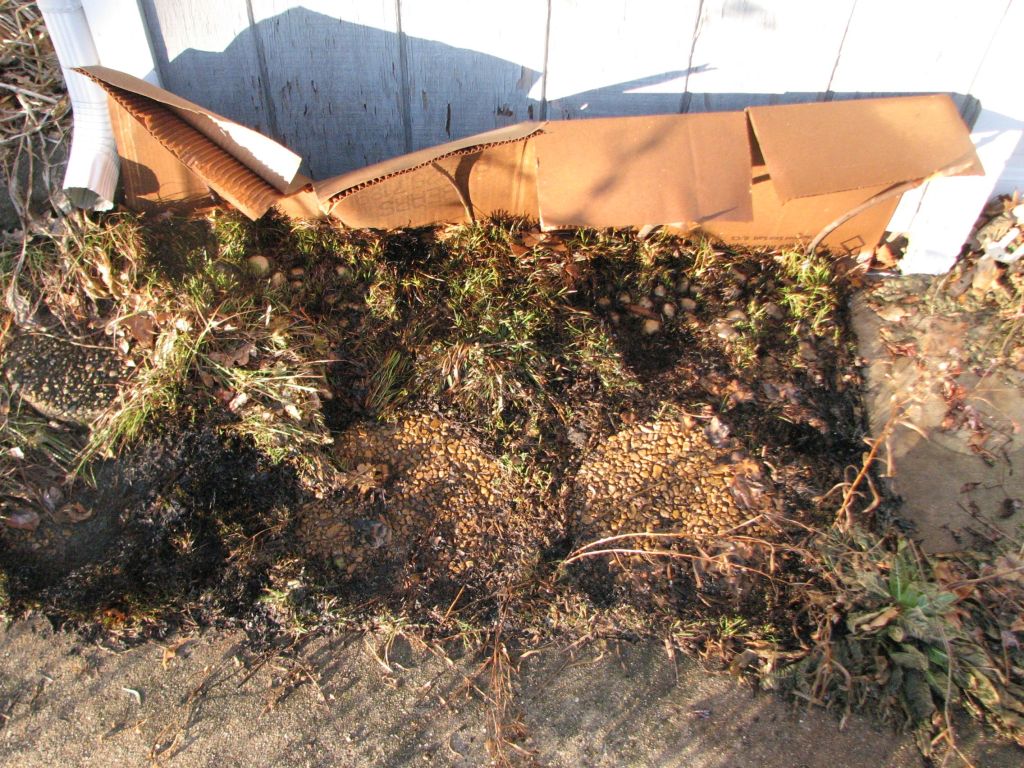
Here is a photo after I completely sprayed down the garden with water. You can see that some of the green parts of the sedges remained unburned.
I had put about a foot of gravel between my house and the planting. The gravel was to act as a firebreak. However, the sedges spread into the gravel, eliminating the firebreak. I plan to fix this in the future. Burning off this planting mitigates the fire hazard until I get a more permanent fix in place. I think concrete pavers along the house will be a permanent solution.
Tree Underplanting
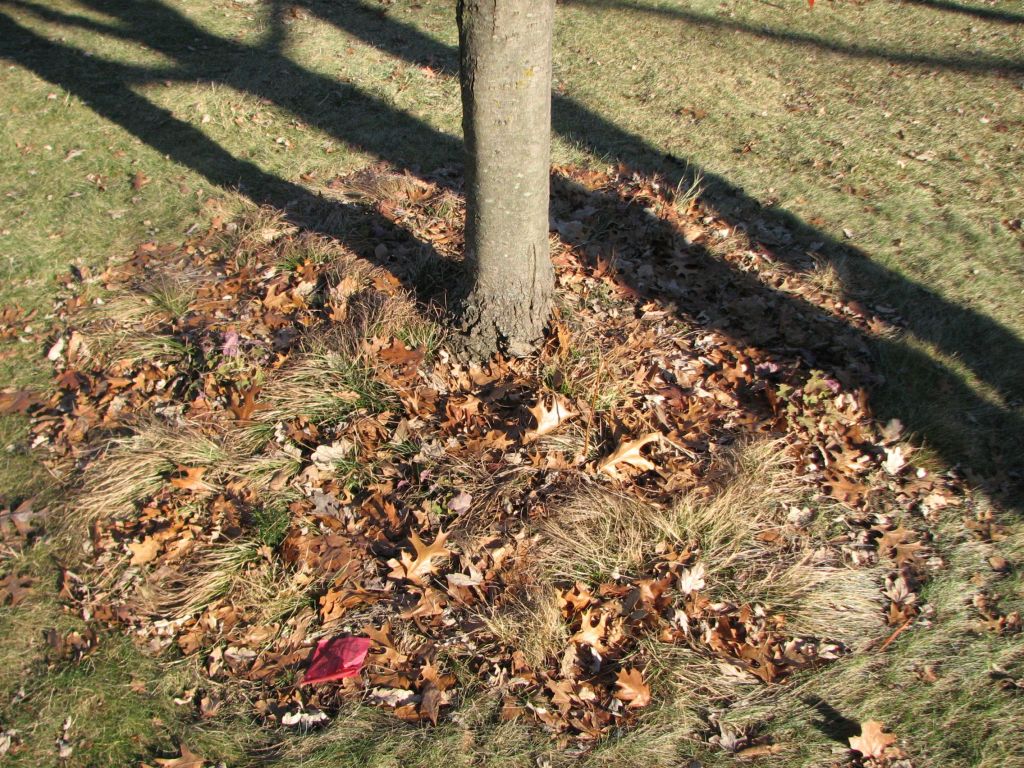
This planting around a tree has Carex pensylvanica and Carex rosea along with other native plants and a Heuchera cultivar.
Garden before burning.
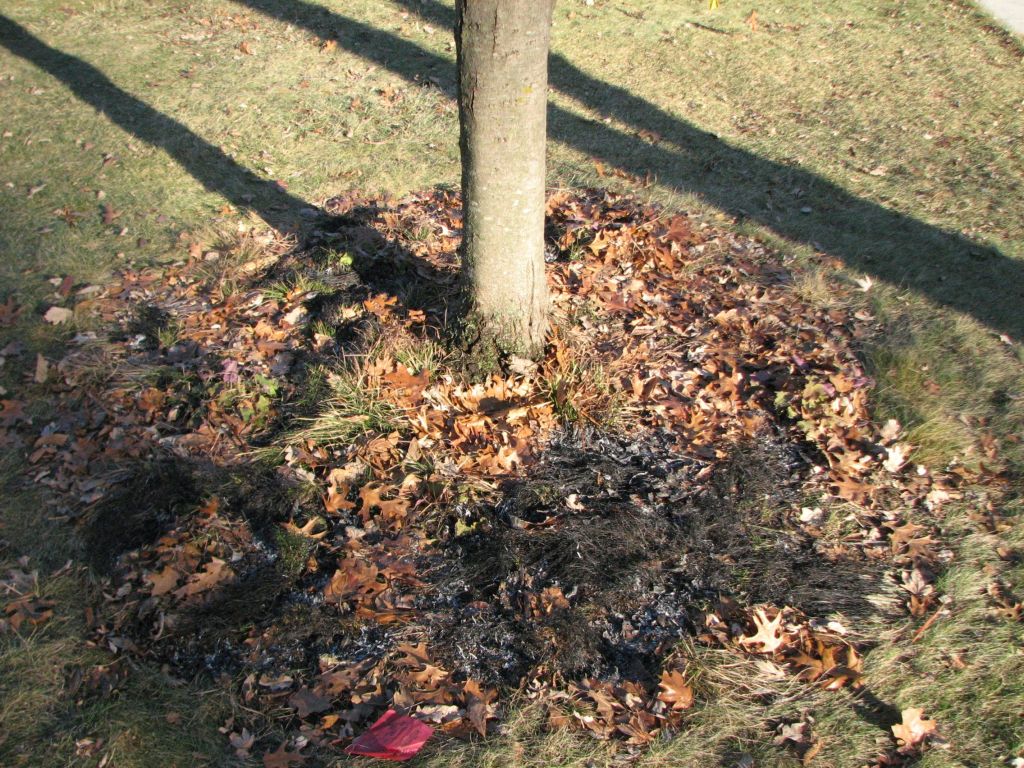
Garden after burning. The dead sedge leaves carried fire. The oak leaves did not carry fire. Oak leaves only burned when they were between the sedges.
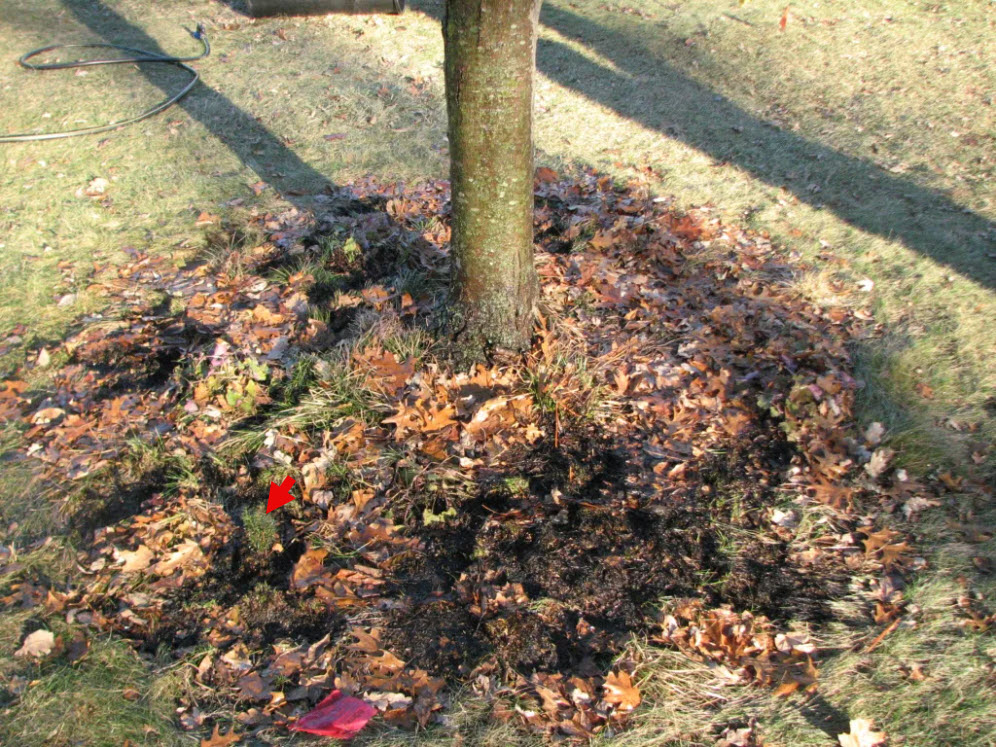
Garden after being sprayed down with water. The sedges on the down wind side burned all the way down to the sheaths. Further into the garden, a significant amount of the sedges’ green leaves remained intact. The green leaves of the Heuchera cultivar did not burn. Some of the edges of the Heuchera leaves were singed by fire. However, the Heucheras were not completely burned back to the ground, as has occurred when I burned in more favorable conditions. This is desirable. The Heucheras do not grow as well the next season if they have to grow back from the roots.
Woody Species Control
The red arrow in the above image points to an English yew that grew from seed. After burning, this English yew had some singing on the tips of its leaves. A few days later, and the leaves of this English yew all looked dead.
In the future, I will have to look in my prairie garden for common buckthorn and invasive bush honeysuckle seedlings. I will mark them to later see if burning during below freezing conditions will kill seedlings of these small invasive woody plants. I know burning during more typical weather conditions can kill common buckthorn seedlings. Controlling invasive woody species is an important benefit of fire. If fire under less favorable conditions does not kill small invasive woody species, then trade-offs will need to be considered. I may have to control the invasive species manually (if small) or with herbicide (if large) to still get the expected benefit to soil crust species from burning during below freezing temperatures.
Weather Conditions
The burning was started when the temperature was 26 degrees F. The temperature rose as high as 31 degrees F on this day. The relative humidity was listed in the forecast as 40 percent. Data from throughout the day gave the relative humidity getting as low as 37 percent.
Future
I will burn my prairie garden/sedge meadow planting in below freezing conditions in future seasons. This appears to not kill as much of the green-living material of the sedges. Also, I hope it will keeps soil crust species, like moss, from being killed. By burning in below freezing conditions, I can get the benefits of dead vegetation being removed and charcoal created, while minimizing impacts on living vegetation. I look forward to seeing how this management change will change my garden in the future. I am hopeful this change will benefit smaller species that grow near the ground and are impacted by hotter burns.
In gardens with deciduous tree leaves, I think these leaves would burn if they had an additional day of low humidity to dry them further. I still want to try to burn areas with leaves as fuel during below freezing conditions, or at least when the ground is still frozen. I will just have to wait until they have had more time to dry. Where the leaves burned, they did not burn completely. There are a lot of partially burned leaves covering the ground. This is what I will be aiming for in the future.


 Stewardship Chronicles
Leave a comment