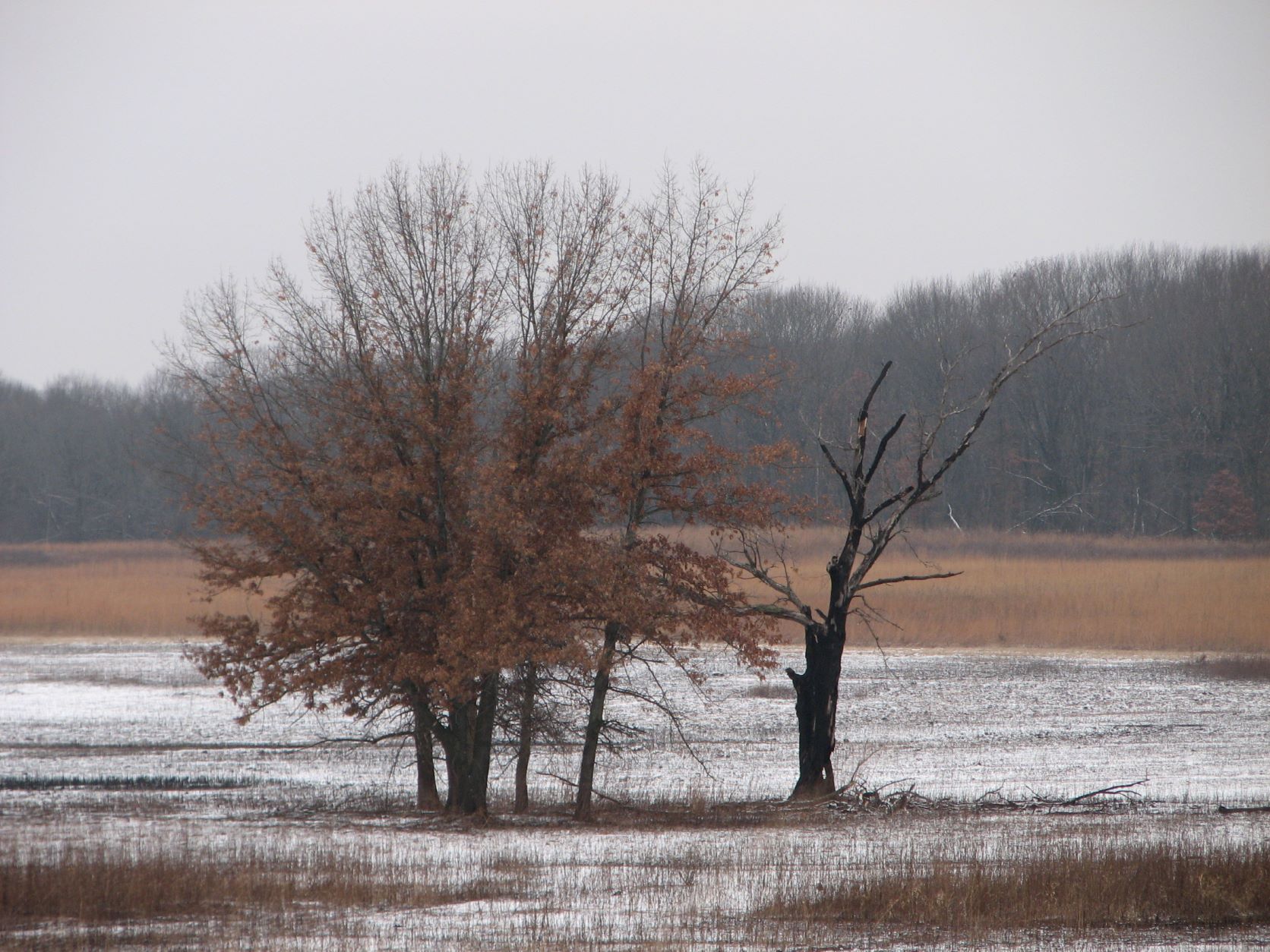
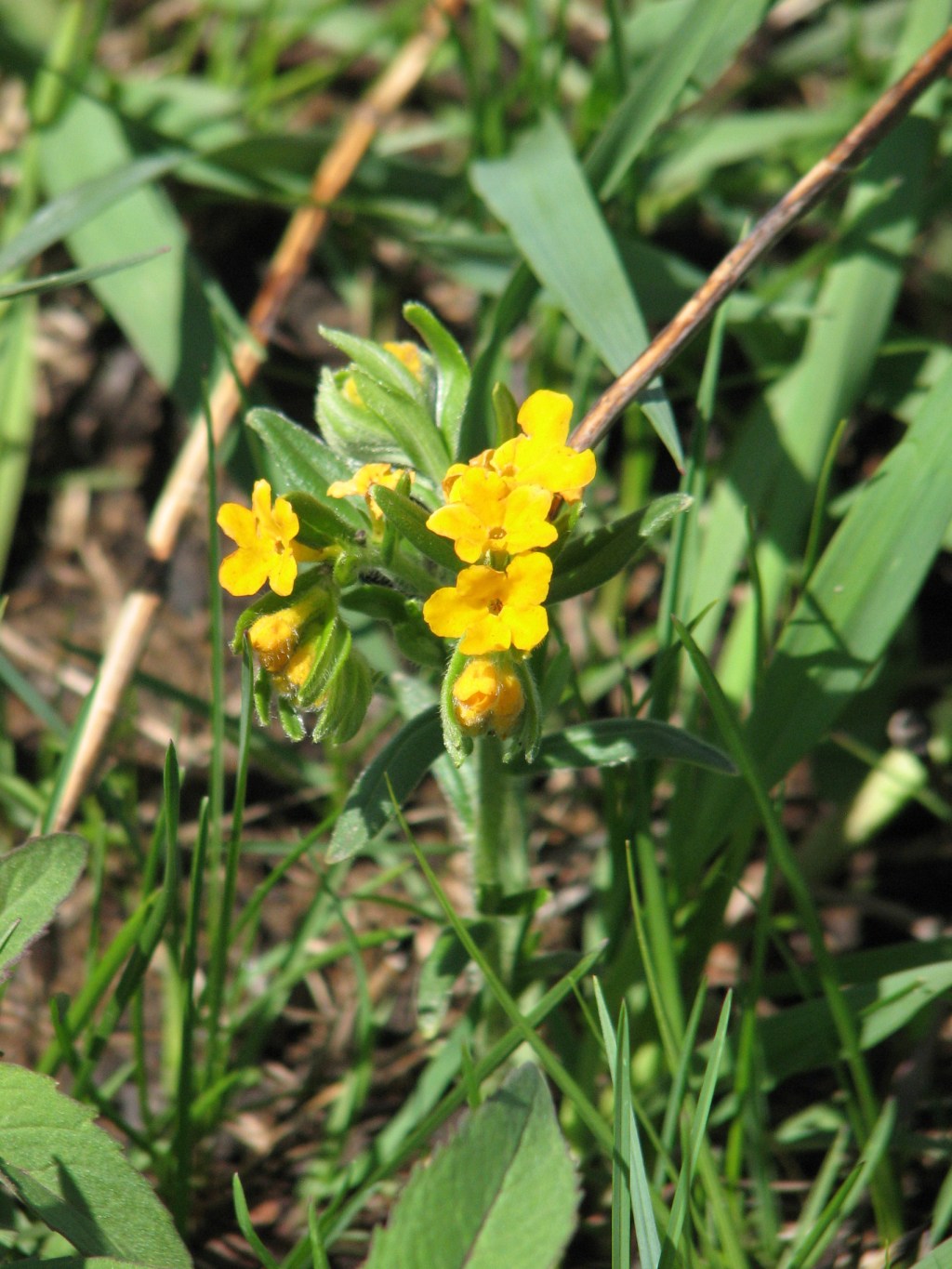
Contents
Introduction
Fire Intensity
Maps
Images From Site
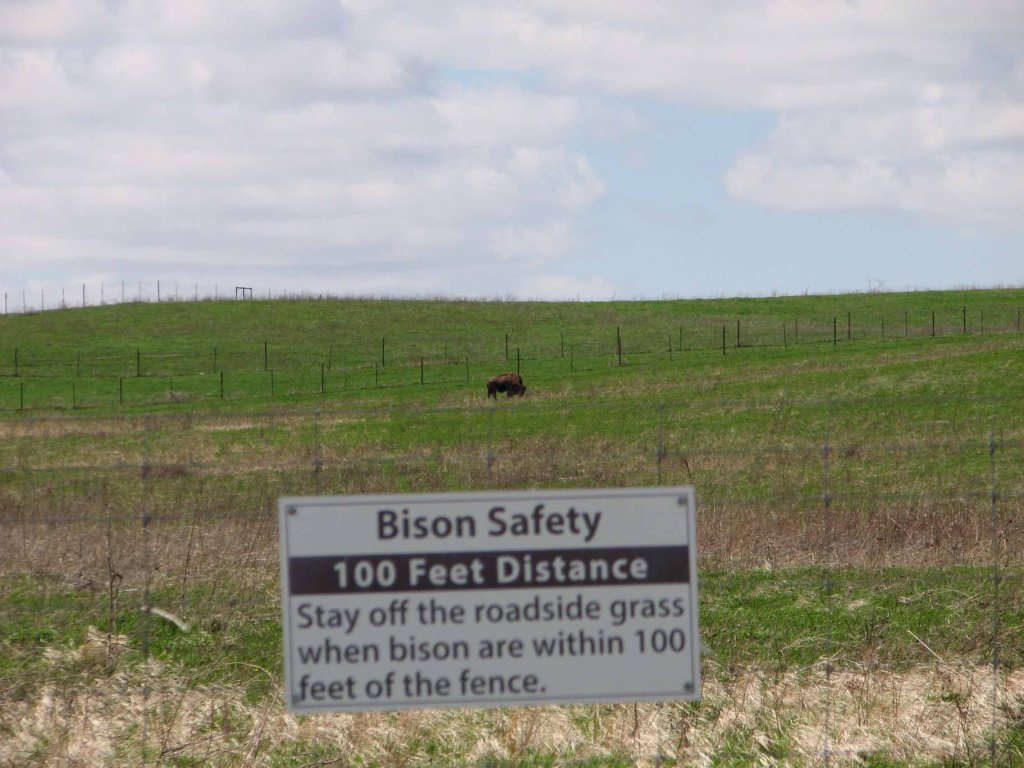
1. Bison in Distance (South Lowden Road)
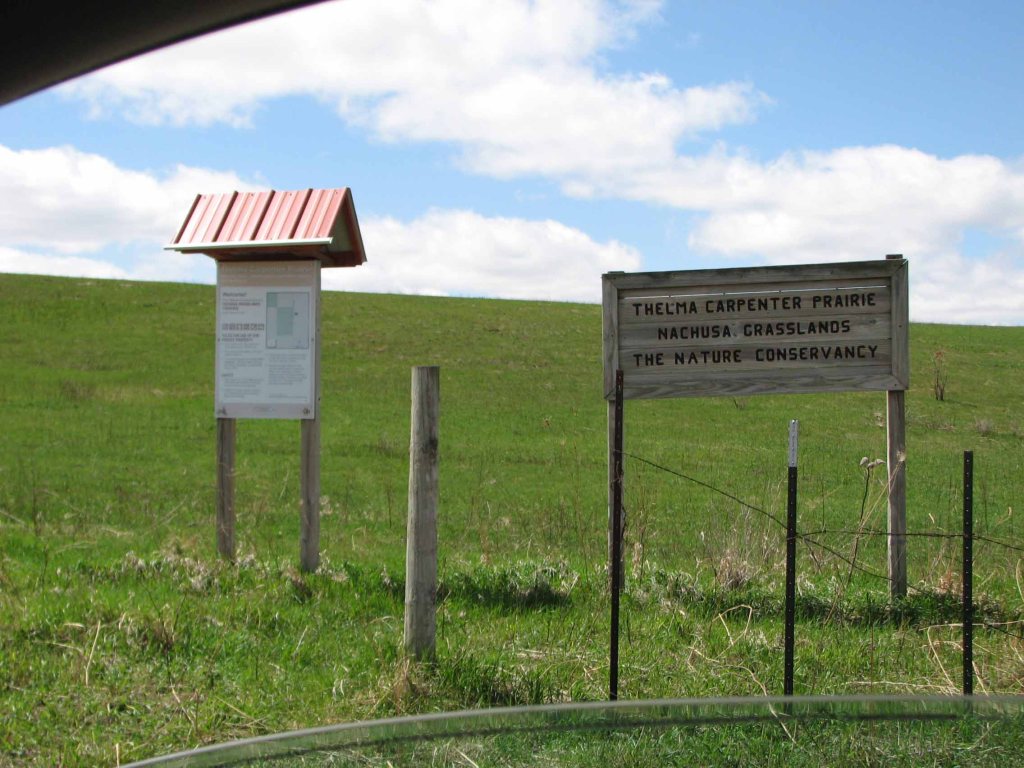
2. Sign
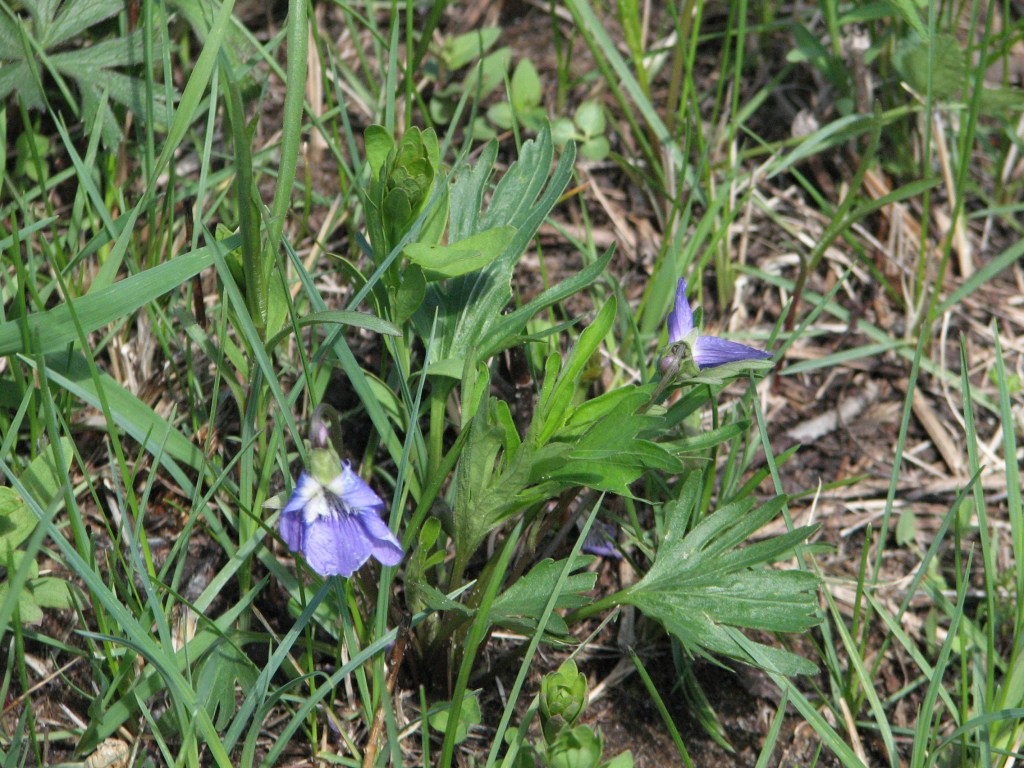
3. Prairie Violet (Viola pedatifida)
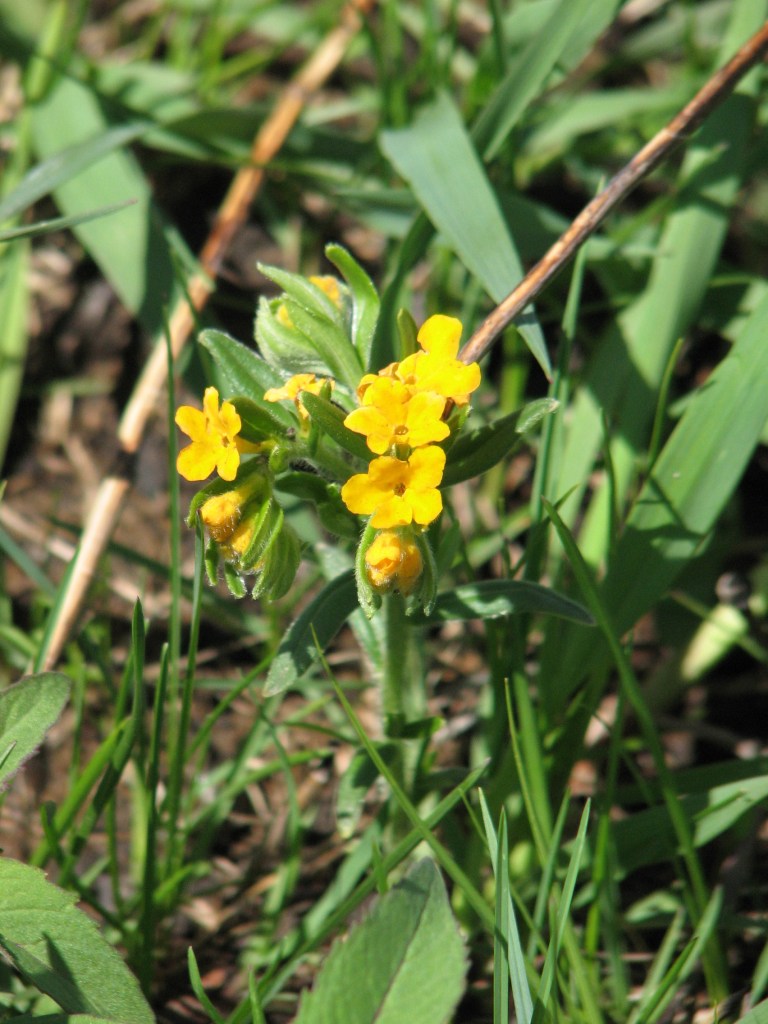
4. Hoary Puccoon (Lithospermum canescens)
5. Pasture Thistle (Cirsium discolor)
6. Thimbleweed (Anemone cylindrica)
7. Arrowleaf Violet (Viola sagittata)
8. Bird’s-foot Violet (Viola pedata)
9. Early Buttercup (Ranunculus fascicularis)
10. False Toadflax (Comandra umbellata), Carex richardsonii, and Thimbleweed
11. Shooting Stars (Primula meadia), Not Yet in Bloom
Discussion
I discuss the succession that is occurring on the badger mounds.
12. Badger Mound One
13. Badger Mound Two
14. Badger Mound Three
15. Carex meadii
16. Creamy False Indigo (Baptisia leucophaea)
Discussion
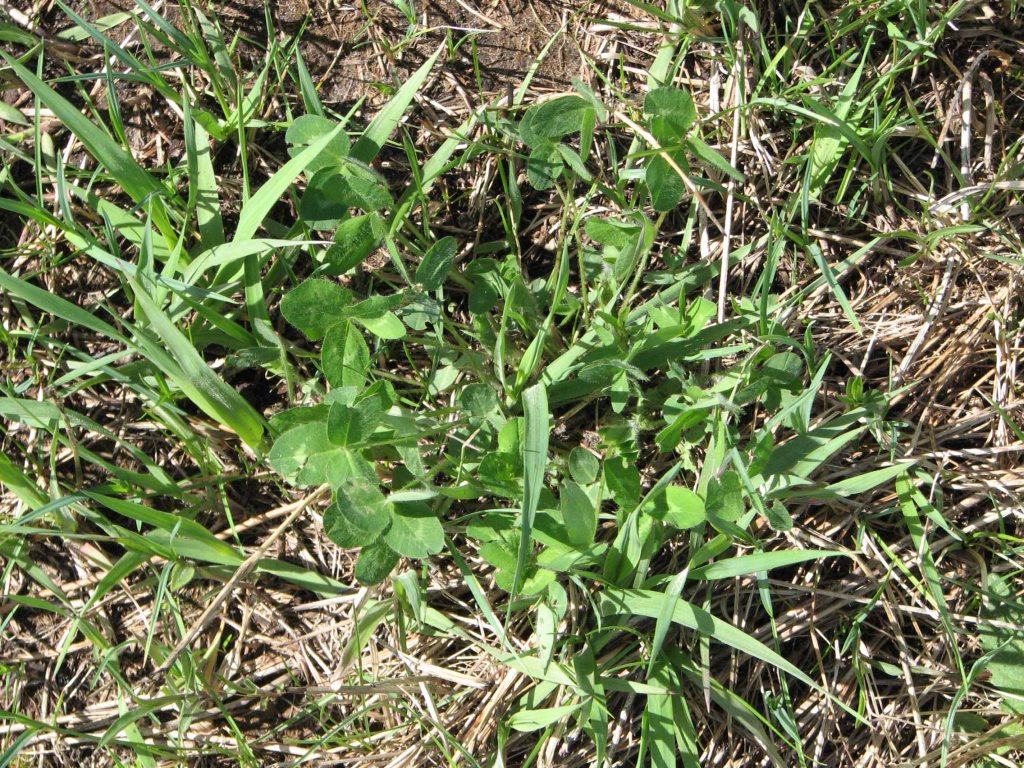
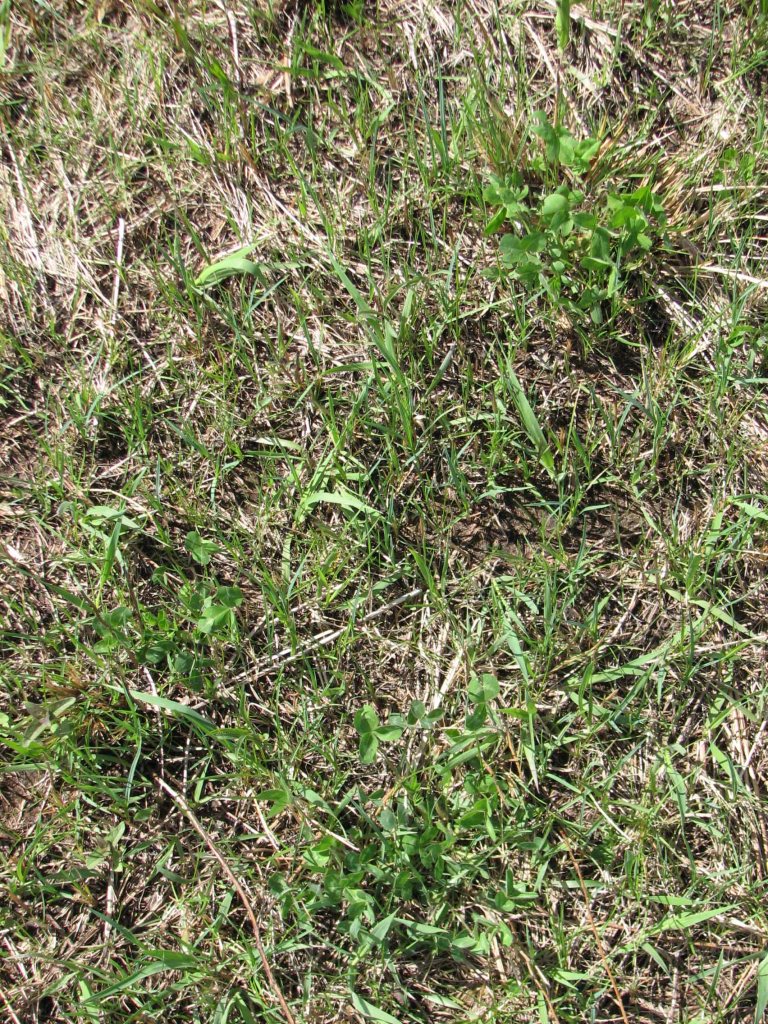
I discuss the images of red clover.
17. Red Clover (Trifolium pratense), Close View
18. Red Clover, Wider View
Introduction
I visited Thelma Carpenter Prairie five years after having removed red clover (Trifolium pratense). I removed the red clover, and some other weeds, with a dandelion weeder. I started at the higher quality areas on the top of the hill and on the slope. I continued working down the slope to the lower quality areas at the base of the hill. I was hoping to see if red clover had reestablished in the areas where I had removed red clover. In the area where I had removed red clover, I only found one on an old badger mound. In the area beyond where I had removed red clover, the red clover were still abundant. Some of these red clover are shown in the last images.
Fire Intensity
This prairie was burned last year. As you look through the images, please observe the dead leaves and stems that remain on the ground. Dead leaves and stems remaining on the ground indicates the burn was not of a high intensity. This is good. A lower intensity burn should help the regal fritillary (Speyeria idalia) eggs survive the fire.
Maps
Area Visited
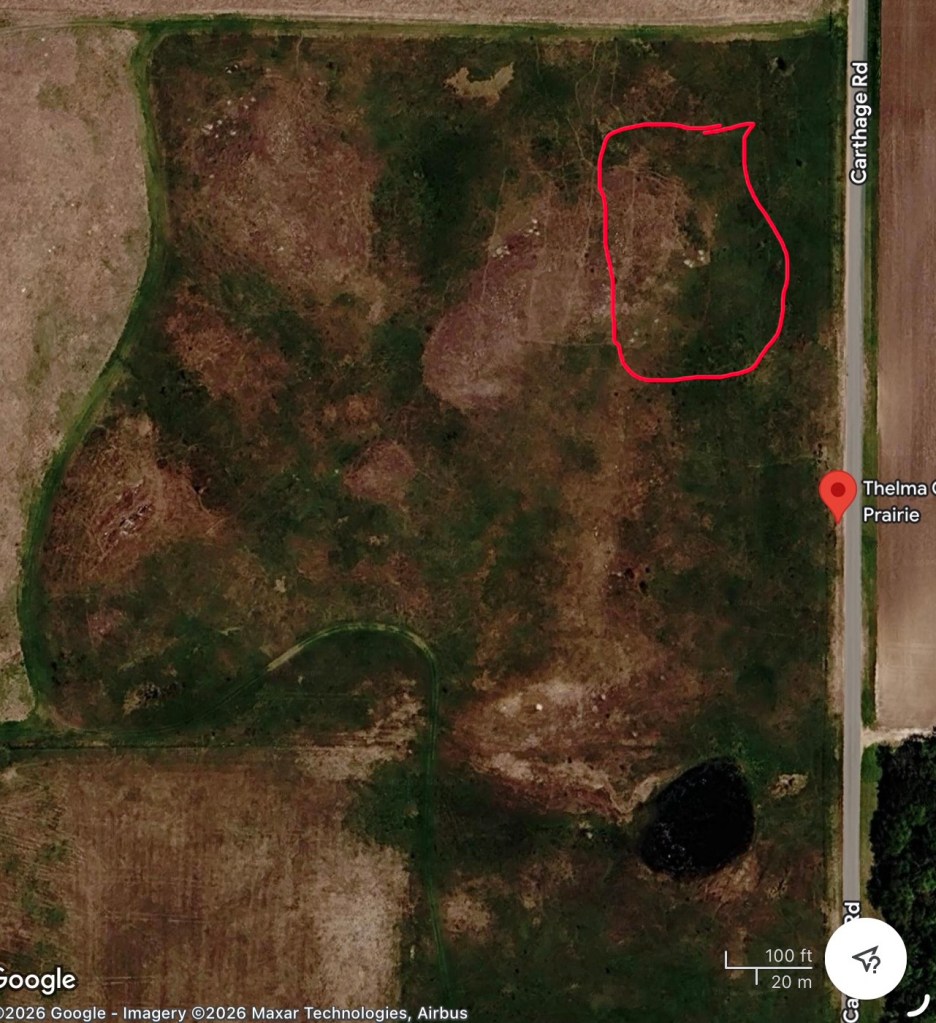
Google Maps. (n.d.). Thelma Carpenter Prairie,
Retrieved April 27th, 2026
Arrows Pointing to Approximate Location Where Numbered Images Were Taken
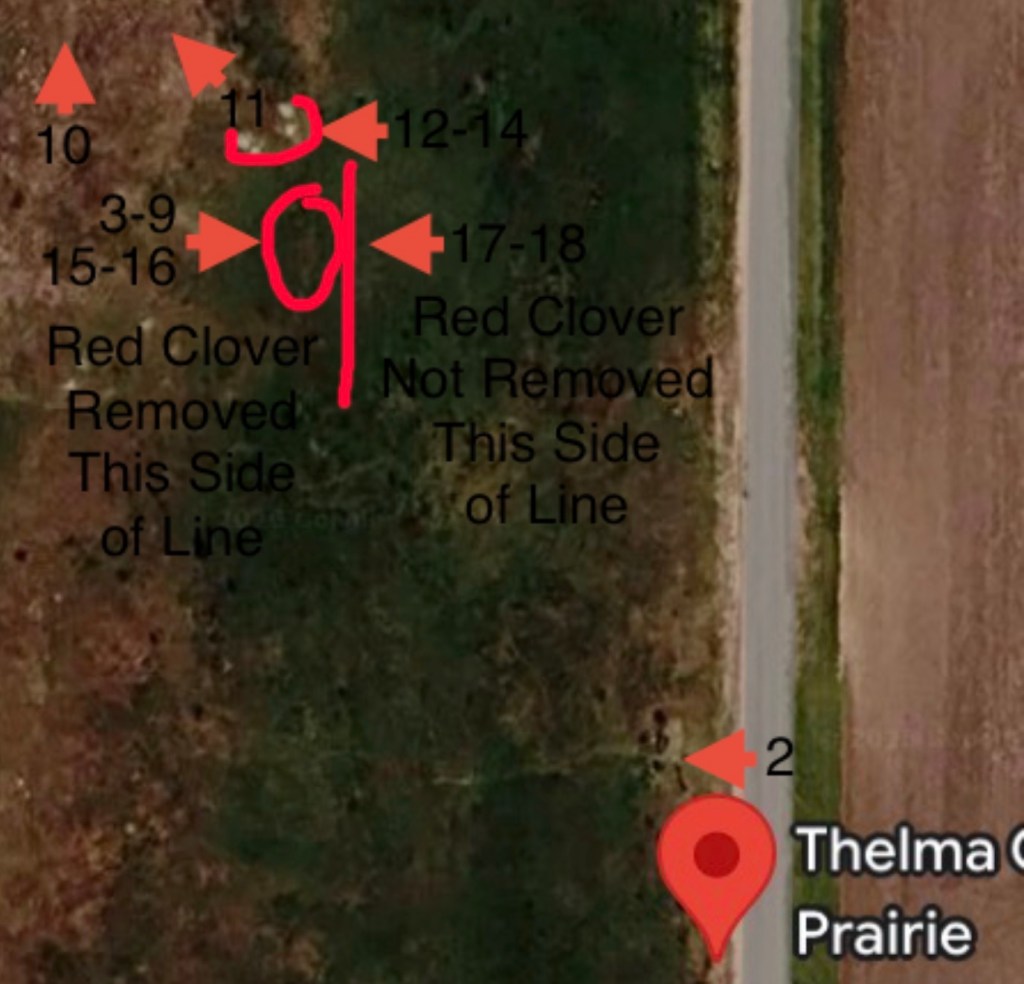
Retrieved April 27th, 2026
1. Bison in Distance (South Lowden Road)
2. Sign
3. Prairie Violet (Viola pedatifida)
4. Hoary Puccoon (Lithospermum canescens)
5. Pasture Thistle (Cirsium discolor)
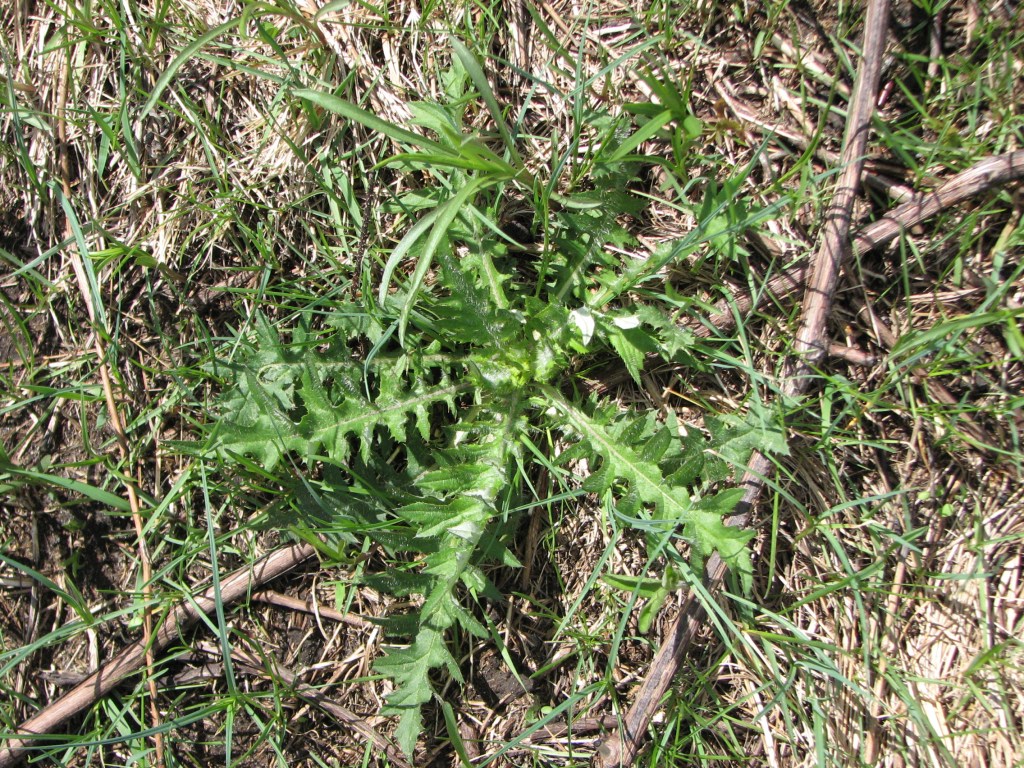
6. Thimbleweed (Anemone cylindrica)
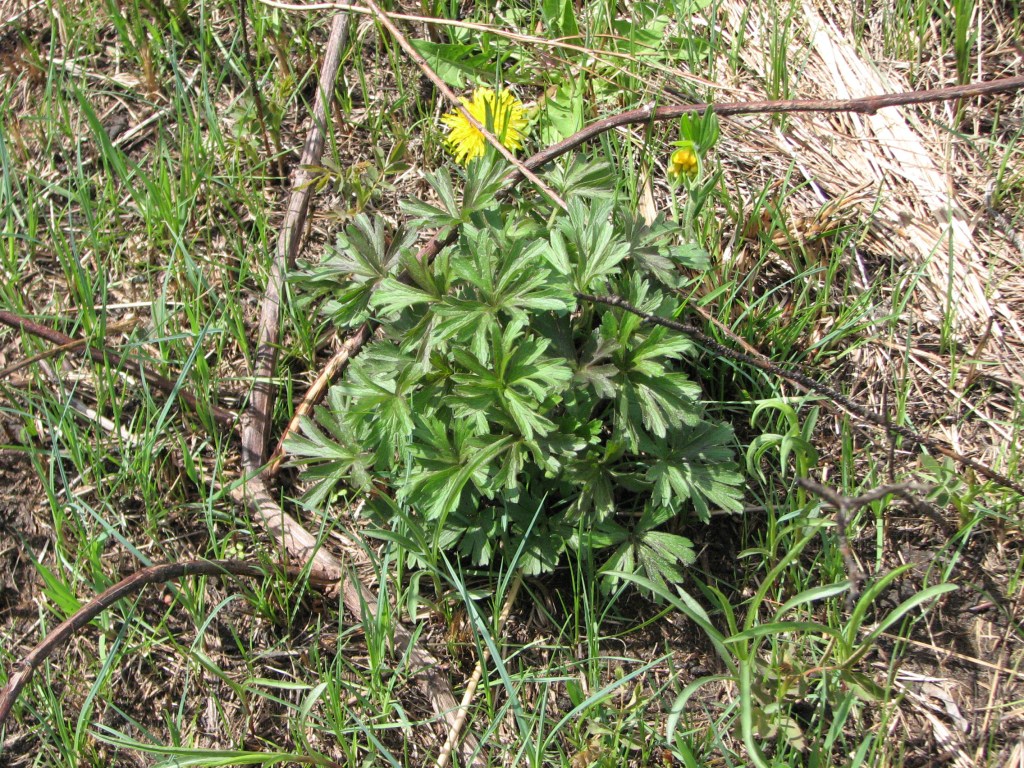
7. Arrowleaf Violet (Viola sagittata) – This was a first for me. I have never seen prairie violet, bird’s-foot violet, and arrow-leaf violet all growing in the same area before.
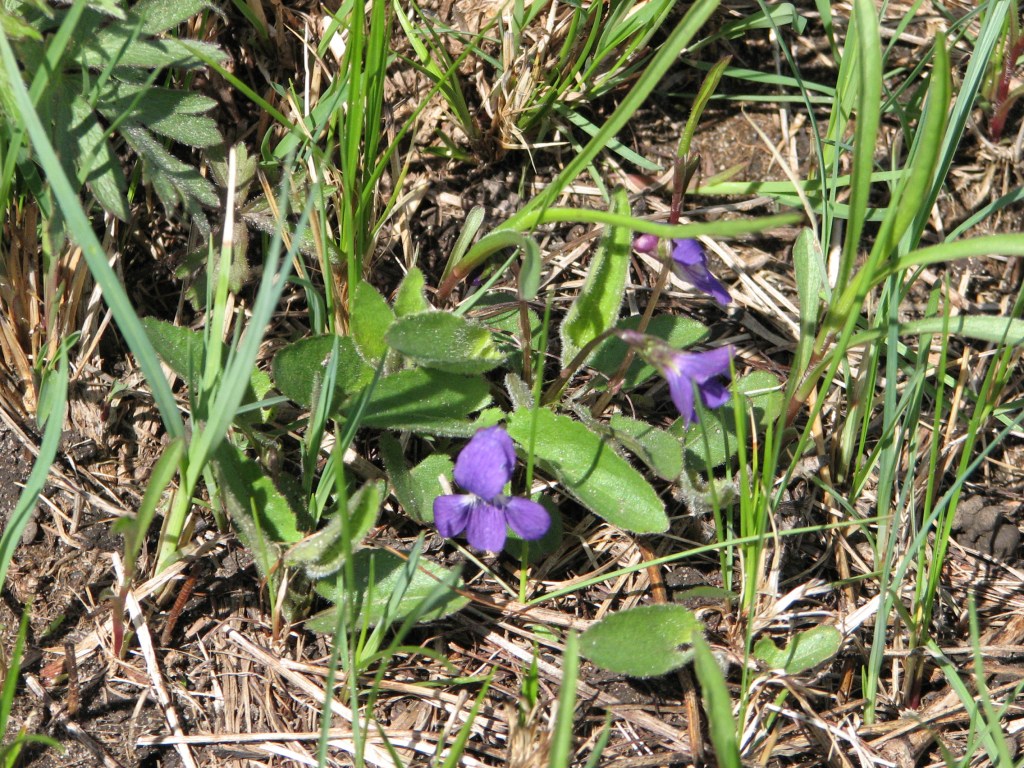
8. Bird’s-foot Violet (Viola pedata)
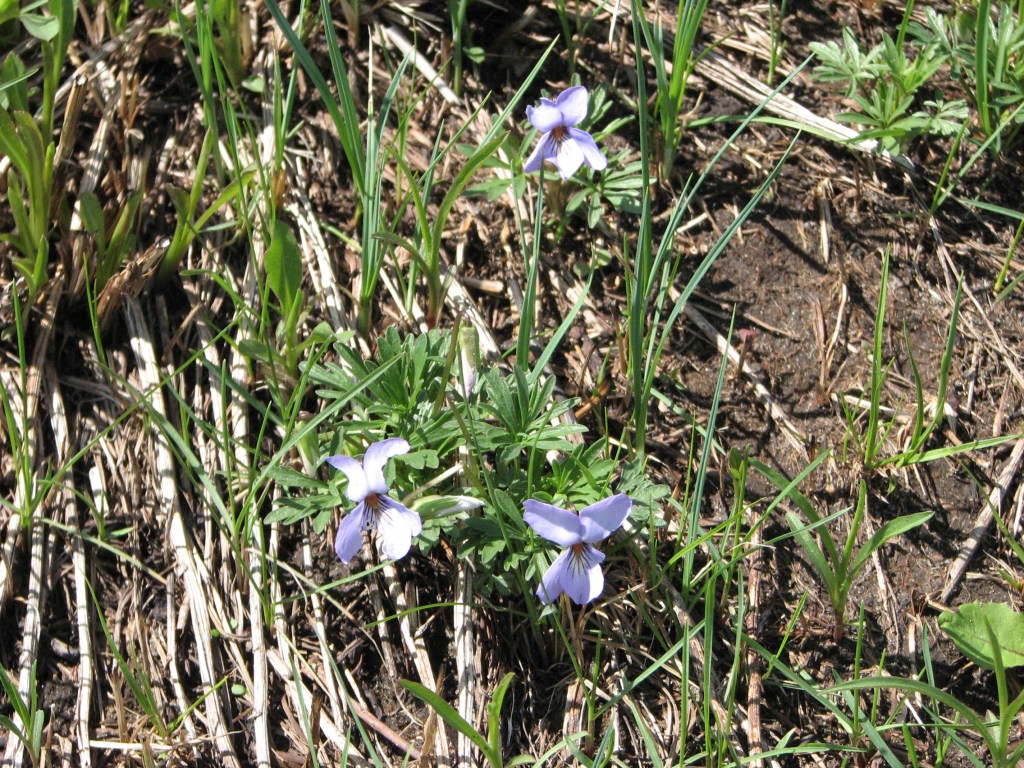
9. Early Buttercup (Ranunculus fascicularis)
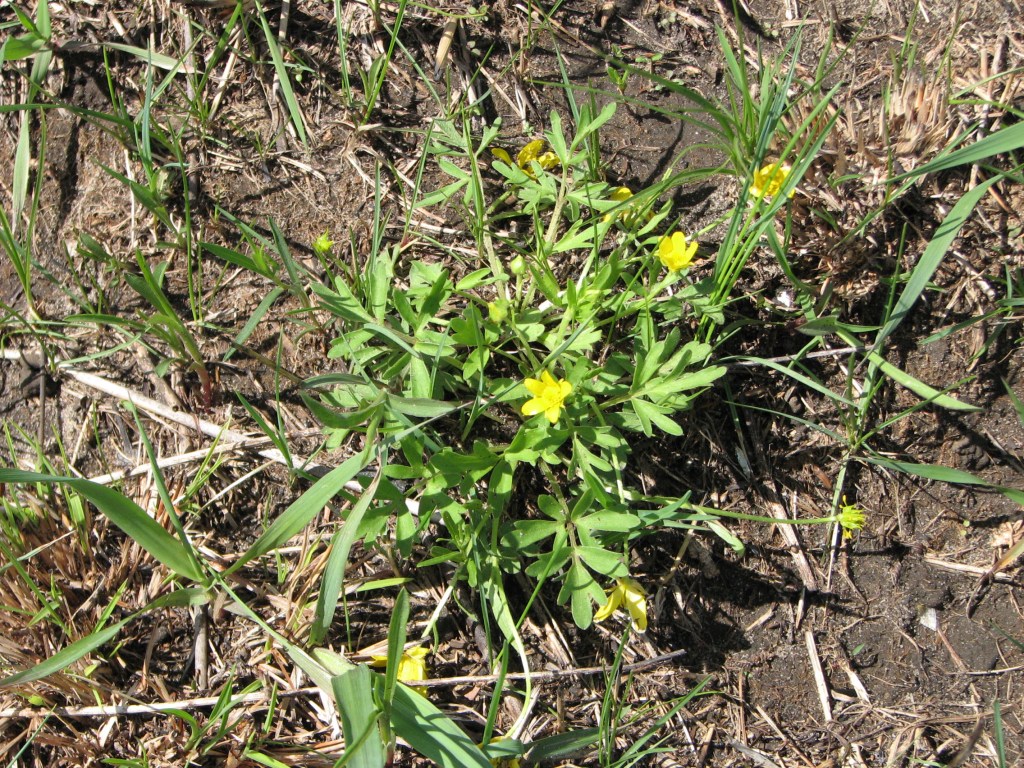
10. False Toadflax (Comandra umbellata), Carex richardsonii, and Thimbleweed
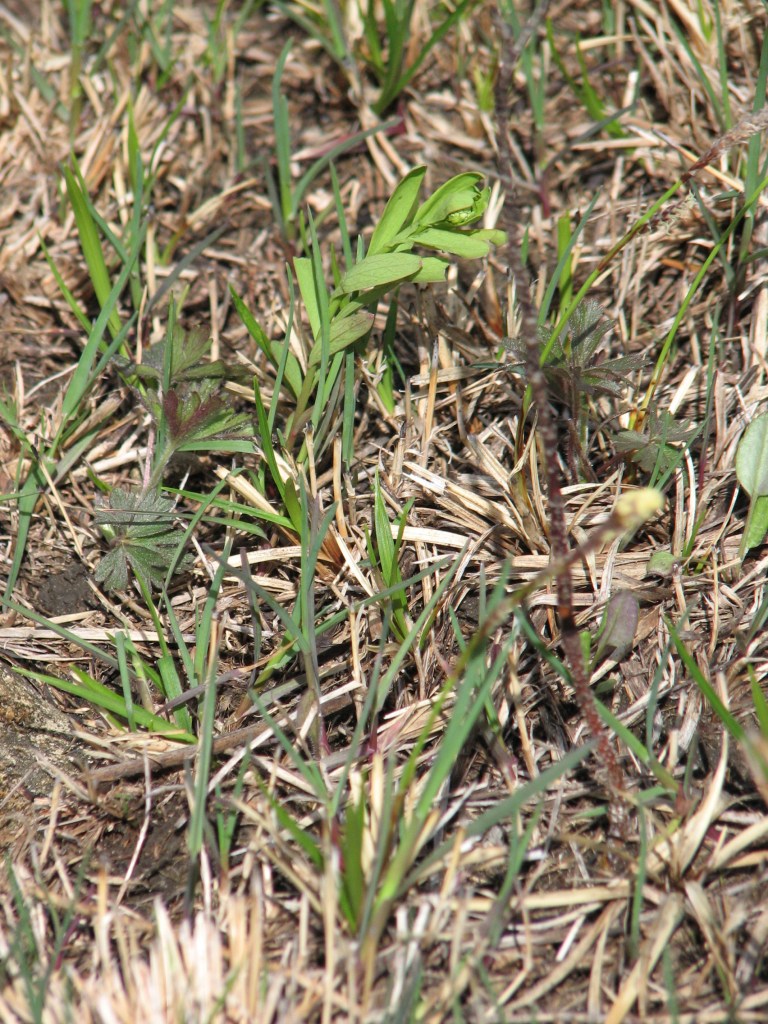
11. Shooting Stars (Primula meadia), Not Yet in Bloom
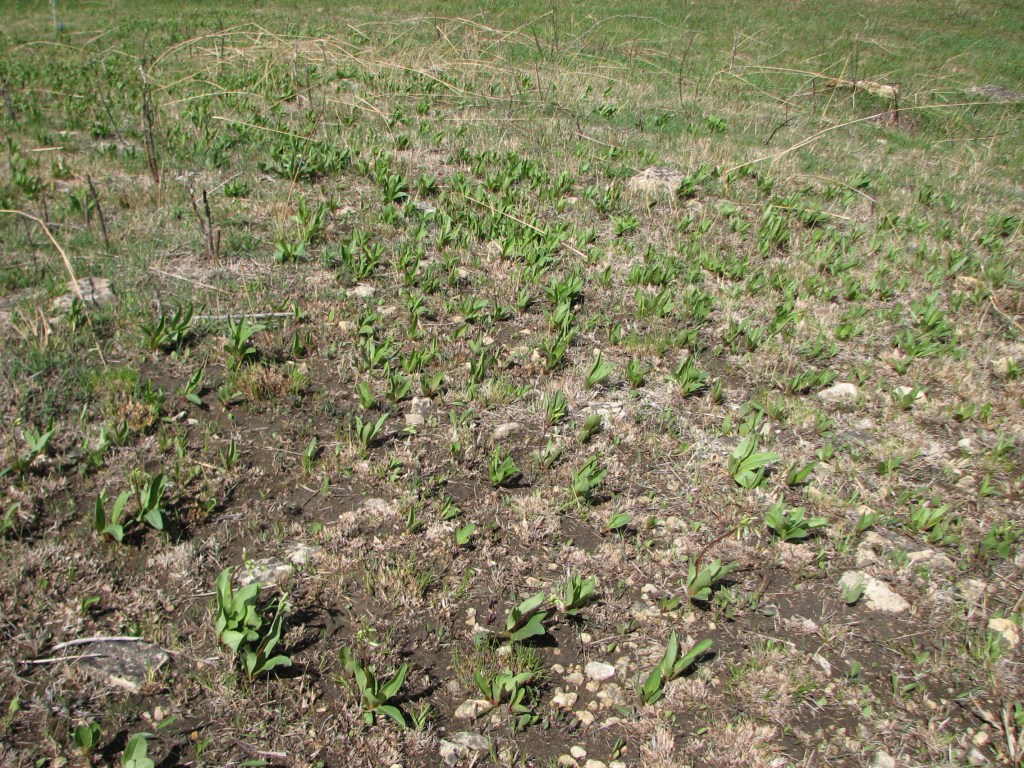
Discussions
When I did the red clover removal five years ago, these badger mounds were full of red clover. I wanted to see if red clover had reestablished on these badger mounds. As I looked closely at these badger mounds, I found only one red clover. If you look closely, you can see it on image 14 labelled “Badger Mound Three.” Other species that have colonized the raw soil include prairie sunflower (Helianthus petiolaris), wild bergamot (Monarda fistulosa), thimbleweed (Anemone cylindrica), and prairie dropseed (Sporobolus heterolepis). My guess would be that seed was spread onto these badger mounds. The grass covering these badger mounds is mostly non-native smooth brome (Bromus inermis).
12. Badger Mound One
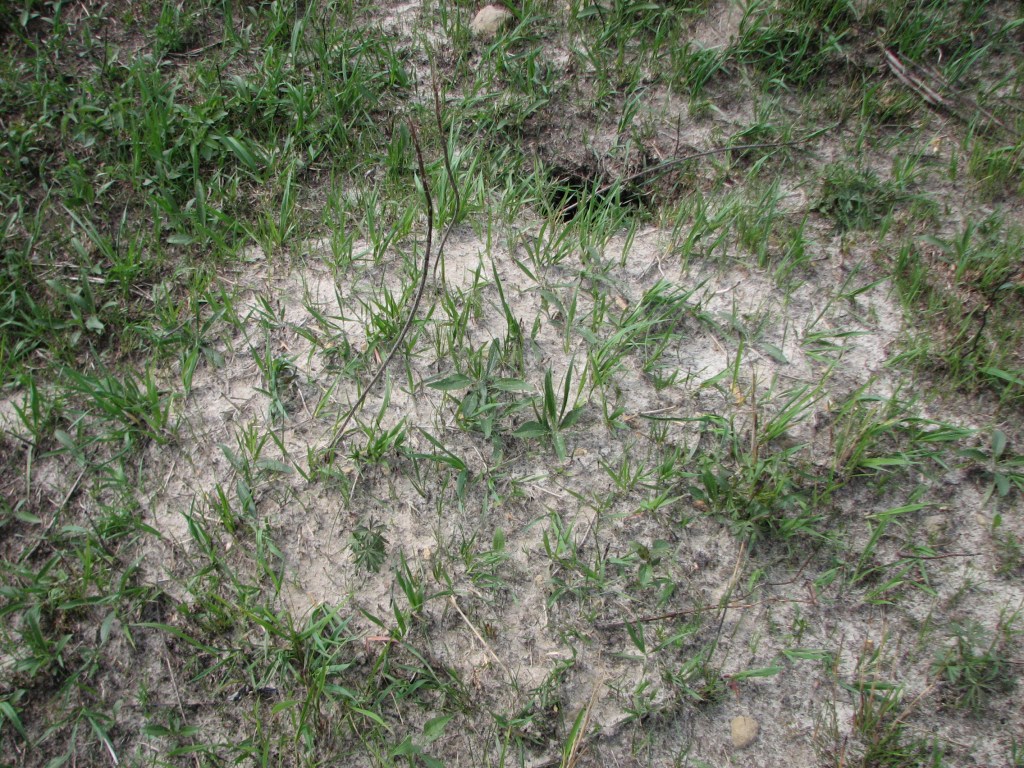
13. Badger Mound Two
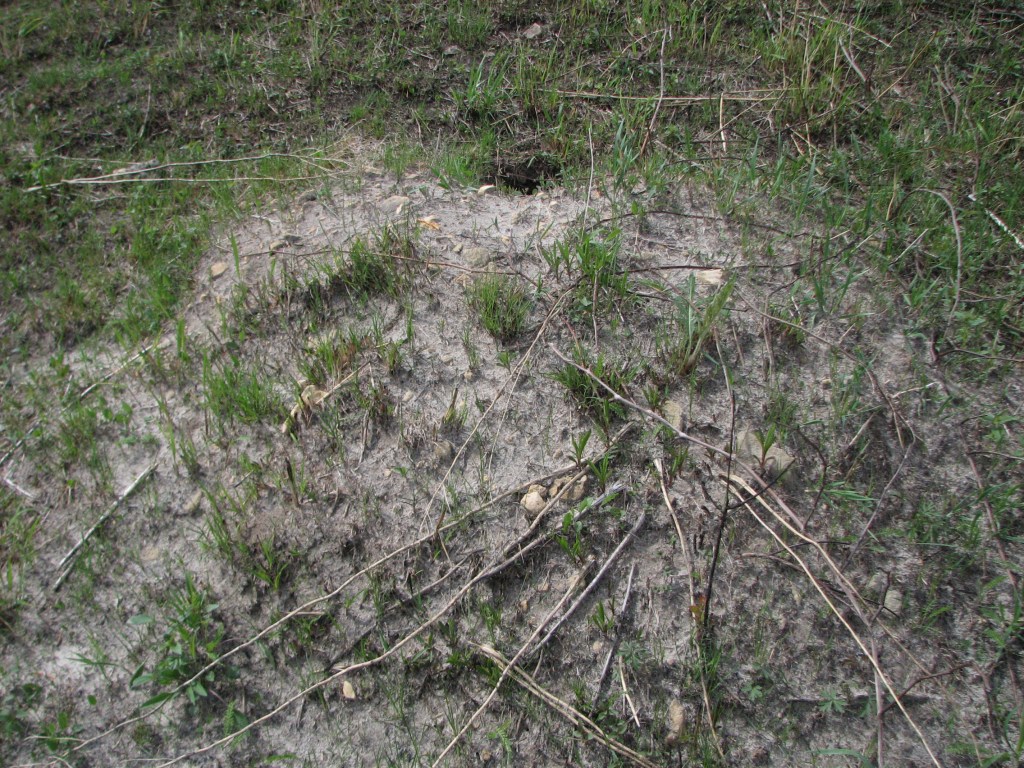
14. Badger Mound Three
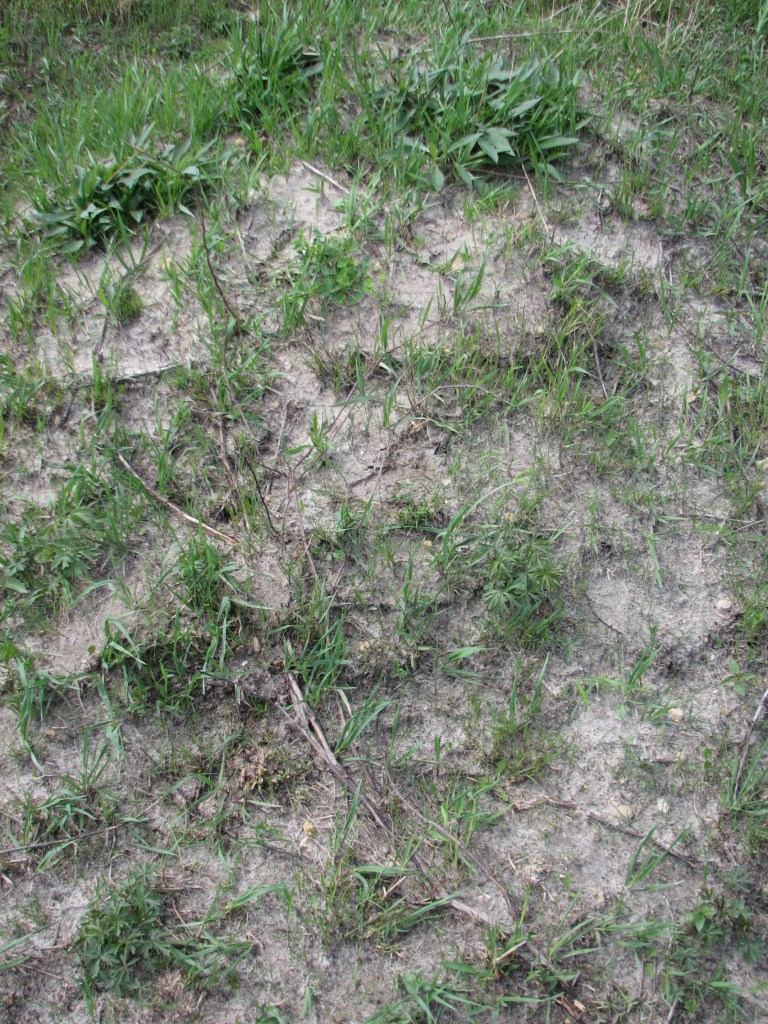
15. Carex meadii
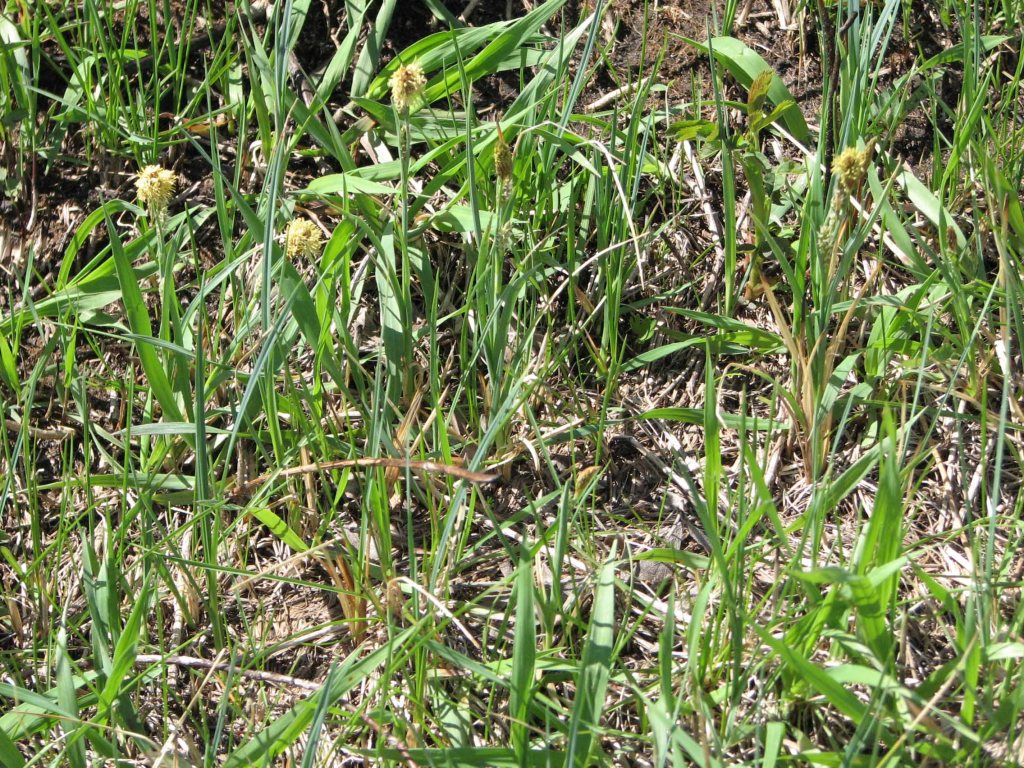
16. Creamy False Indigo (Baptisia leucophaea)
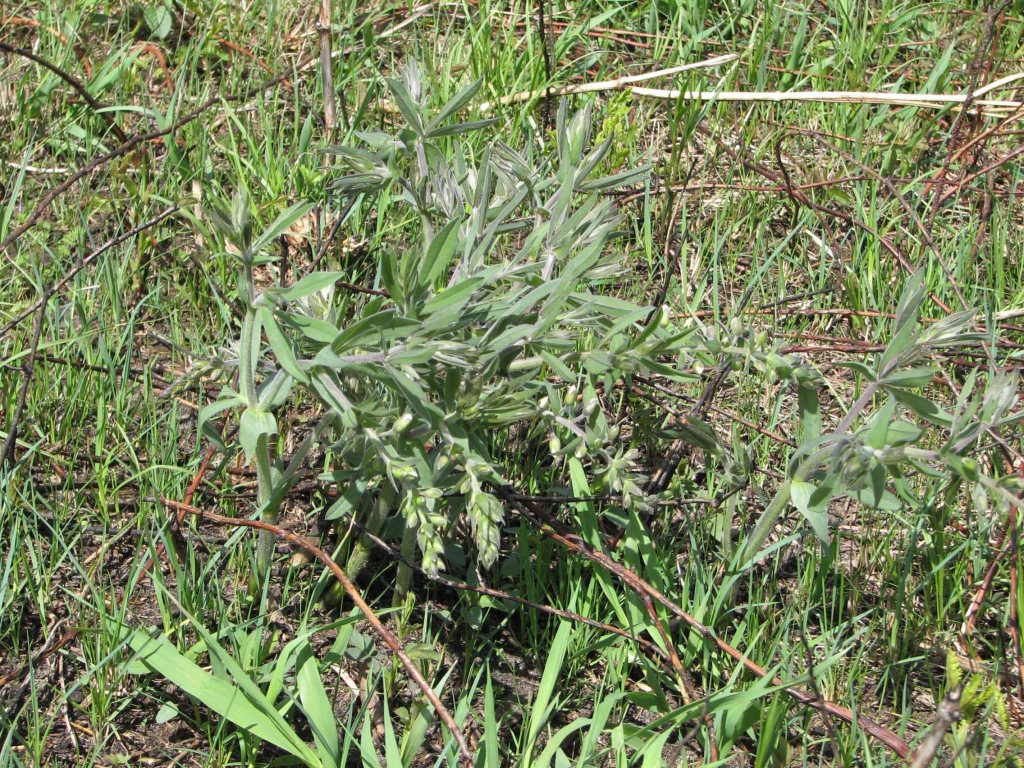
Discussion
The images below are of red clover. These images are from a lower quality area where I had not removed red clover. When the red clover is in bloom, you should be able to easily see the line beyond which removal efforts had stopped
17. Red Clover (Trifolium pratense), Close View
18. Red Clover, Wider View


Leave a Reply