Summary
Herbicide
Application Method
Application Amount
Stems That Were Not Forestry Mowed
Stems That Were Forestry Mowed
Weather Conditions
Gloves
Image
1. Gloves
Additional PPE
Applications
Controlling Small Common Buckthorns
Images
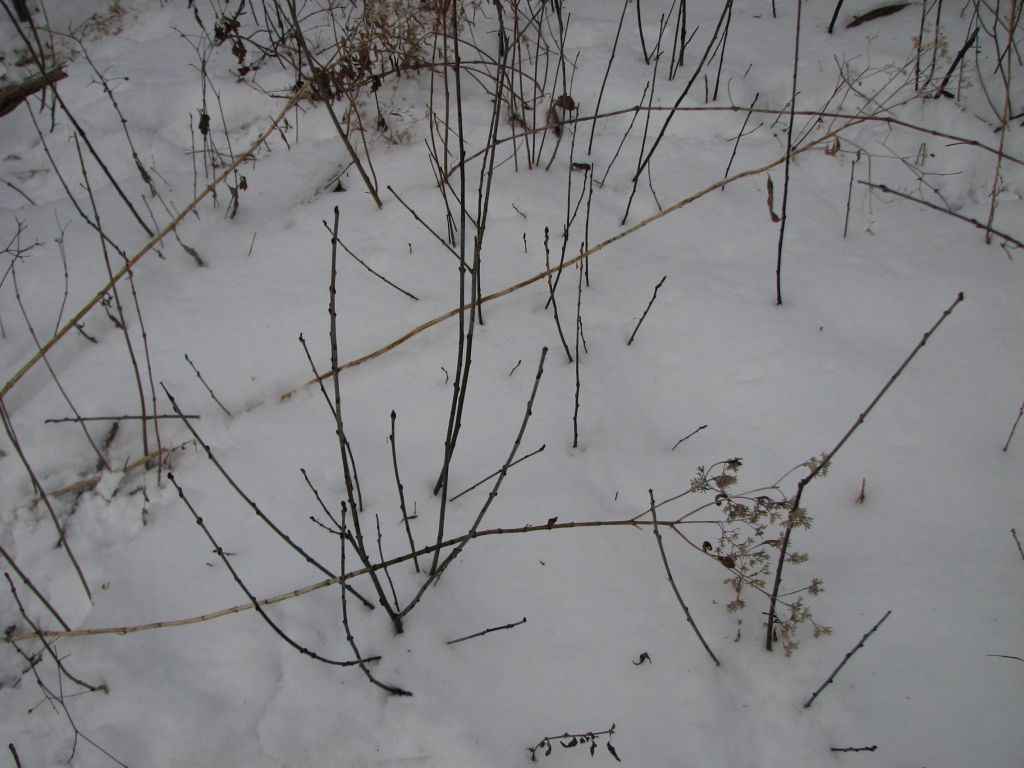
2. Wider View of Area One in Winter on 1/25/2026
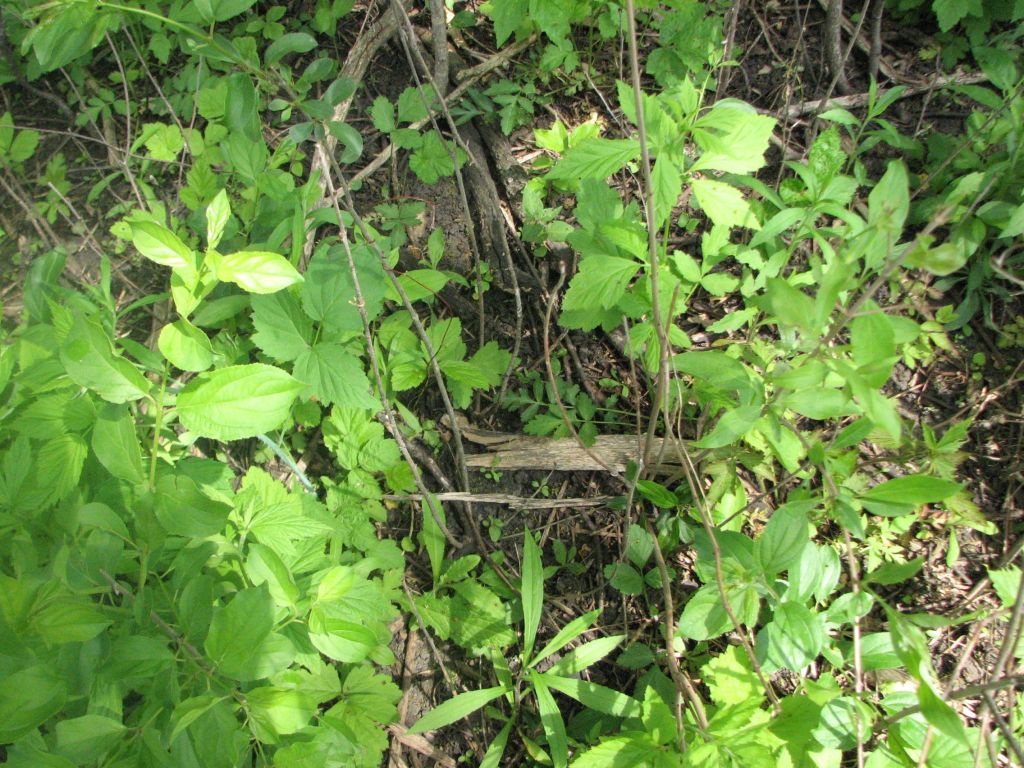
3. Wider View of Area One on 5/16/2026
4. Closer View in Area One on 1/25/2026
5. Closer View in Area One on 5/16/2026
6. Area Two on 1/25/2026
7. Area Two on 5/16/2026
8. Treated buckthorn on 1/25/2026
9. The treated buckthorn, shown above, on 5/16/2026
10. The buckthorn, shown above, on 5/16/2026 with the vegetation pulled away from the base
Forestry Mowed Area
An Invasive Bush Honeysuckle
Images
11. Invasive bush honeysuckle after herbicide was applied on 1/25/2026
12. Above invasive bush honeysuckle on 5/16/2026
13. Overhead view of the above invasive bush honeysuckle on 5/16/2026
Five Common Buckthorns
Images
14. First forestry mowed common buckthorn shown after herbicide treatment on 1/25/2025
15. First forestry mowed common buckthorn shown on 5/16/2026
16. View of base of first forestry mowed common buckthorn shown
17. Second forestry mowed common buckthorn shown after herbicide treatment on 1/25/2026
18. Second forestry mowed common buckthorn on 5/16/2026
19. View of the base of the second forestry mowed common buckthorn
20. Third forestry mowed common buckthorn shown after herbicide treatment on 1/25/2016
21. Third forestry mowed common buckthorn on 5/16/2026
22. Base of third forestry mowed common buckthorn
23. Fourth forestry mowed common buckthorn shown after herbicide application on 1/25/2026
24. Fourth forestry mowed common buckthorn on 5/16/2026
25. Base of the fourth forestry mowed common buckthorn
26. Fifth forestry mowed common buckthorn shown after herbicide application on 1/25/2026
27. Fifth forestry mowed common buckthorn on 5/16/2026
28. Base of fifth forestry mowed common buckthorn
Native Plants Growing Near Previously Treated, and Now Dead, Forestry Mowed Invasive Woody Species
Images
29. A bottle gentian (Gentiana andrewsii) at the base of a successfully controlled common buckthorn
30. Violet wood sorrels (Oxalis violacea) growing near the base of successfully controlled common buckthorns
31. Spotted touch-me-not (Impatiens capensis) and wild strawberry (Fragaria vesca) growing near the base of a successfully controlled common buckthorn
32. The largest invasive bush honeysuckle I applied herbicide to this season
Area That Did Not Receive Forestry Mowing Where Invasive Woody Species Had Basal Bark Herbicide Applied
Images
33. This image shows the vegetation response in an area where common buckthorns and a multiflora rose were successfully controlled by a winter basal bark application
Pretty Picture
Image
34. Golden Alexanders (Zizia aurea) that have filled in an area where invasive woody species had been controlled
Discussion
Herbicide
The herbicide applied was triclopyr ester in basal oil. I applied a generic that is available. The name brand for this herbicide is Garlon 4. The triclopyr ester generic (61.6 percent active ingredient) had basal oil added until the volume was five times the original volume of the triclopyr ester. This is a 20 percent dilution (Volume to Volume).
Application Method
This herbicide was applied to stems using a mini-paint roller. I first learned about this technique from the Volunteer Stewardship Network (VSN) and Natural Area Stewards in the Chicago Region. Bill Kleiman has covered applying basal bark herbicide on his blog “Grassland Restoration Network.”
The applications covered in this post were NOT done using a backpack sprayer. Applicators using backpack sprayers either have overspray that falls to the ground or excess herbicide running down the stem to the ground. This is especially problematic when smaller stems are treated with herbicide. The people who use backpack sprayers to apply herbicide to the basal bark of woody invasive species have found that applying the herbicide when the ground is frozen, or over snow, leads to significant off-target damage. It is believed the frozen ground causes the herbicide to spread laterally leading to a significant area being impacted.
The results in this post were all achieved using a mini-paint roller to apply herbicide to stems. The mini-paint roller was allowed to stop dripping in a bucket before larger stems were treated. For smaller stems, only the tip of the mini-paint roller was dipped into the herbicide bucket. Applications were started at the top of where I wanted to apply herbicide to each stem working downward. As the application proceeded down the stem, the mini-paint roller held progressively less herbicide. This method of applying the herbicide allows runoff to be completely avoided.
To avoid getting herbicide on the snow, I stopped applying the herbicide about an inch above the snow.
Warning: When using an open bucket of herbicide, you have to take extra care to prevent the bucket from being knocked over and spilled. I use a small painting bucket I hold in one of my hands. I only put enough herbicide in this bucket to allow me to apply for about 30 minutes. It is easy to add more herbicide to the bucket from a jug. Do not put a mini-paint roller into a bucket and leave the bucket on the ground. As the herbicide in the bucket is used, the weight keeping the bucket upright will continue to be reduced until the bucket tips over. This can be avoided by putting the bucket on the ground, putting the handle of the mini-paint roller on the ground, and hanging the mini-paint roller over the edge inside of the bucket to drip.
Application Amount
Stems That Were Not Forestry Mowed
For common buckthorns, that had not been forestry mowed, I applied the triclopyr ester in basal oil herbicide to the complete circumference of each stem. I applied this herbicide to a length of stem that was dependent on the diameter of each respective stem near ground level.
For stems that were about 1/4 inch in diameter, I would apply herbicide for a length of about two inches.
For stems that were about 1/2 inch in diameter to 3/4 inch in diameter, I would apply herbicide for a length of about four and a half inches.
For stems that were about one inch in diameter, I would apply herbicide for a length of about five inches.
For stems with a diameter near the ground of over two inches, I would apply herbicide to a length of stem that was three times the diameter of the stem near the ground.
Stems That Were Forestry Mowed
Just as was done for the stems that were not forestry mowed, for stems that were forestry mowed I applied the triclopyr ester in basal oil to the complete circumference of each stem.
For the stems that were forestry mowed, I initially applied the herbicide to a length of six inches. Later in the winter, I applied herbicide to a length of five inches. Both lengths gave complete control. Therefore, for common buckthorns or invasive bush honeysuckle that have been forestry mowed, I am currently suggesting five inches of stem length be coat with herbicide.
Weather Conditions
The main advantage of applying basal bark herbicide in winter is rain will not occur if the temperature is cold enough. Rain, too soon after an application, causes herbicide to runoff from where it has been applied and onto the ground. This causes off-target damage. I have documented this in the following blog post.
In winter, I apply basal bark herbicide when the feels like temperature is above zero. Below this temperature, the gloves I wear are not insulated enough to keep my hands warm. The gloves I wear are discussed further under the below heading “Gloves.” I could double up on insulated gloves and wear an even larger size of chemical resistant gloves. However, I have not found this to be necessary. Where I live, the temperature does not have a long period with feels like temperatures below zero during the day. I simply do not apply basal bark herbicide during the coldest days of the year. I have enough days to get this work done.
An ideal day for me to apply herbicide in winter is a temperature of about 15 degrees F, with low wind, and sun. The sun helps me feel much warmer. I do not want the temperature to be too close to freezing because then rain, or freezing rain, becomes a possibility.
Gloves
The image below is of the gloves I wear when applying triclopyr ester in basal oil to the basal bark of invasive woody species in winter. The black gloves are polar fleece. I bought them at L.L.Bean. I wear these insulating gloves under chemical resistant nitrile gloves. I wear Showa Atlas 730 nitrile chemical resistant gloves when applying basal bark herbicide. I have found the thickness of these gloves is a good balance between protection and dexterity. When I am not applying herbicide in winter, I wear size 9 (large) chemical resistant gloves. To fit the polar fleece gloves under the chemical resistant gloves, I have to wear chemical resistant gloves that are one size larger. The gloves shown are a size 10 (extra large) chemical resistant glove.
1. Gloves
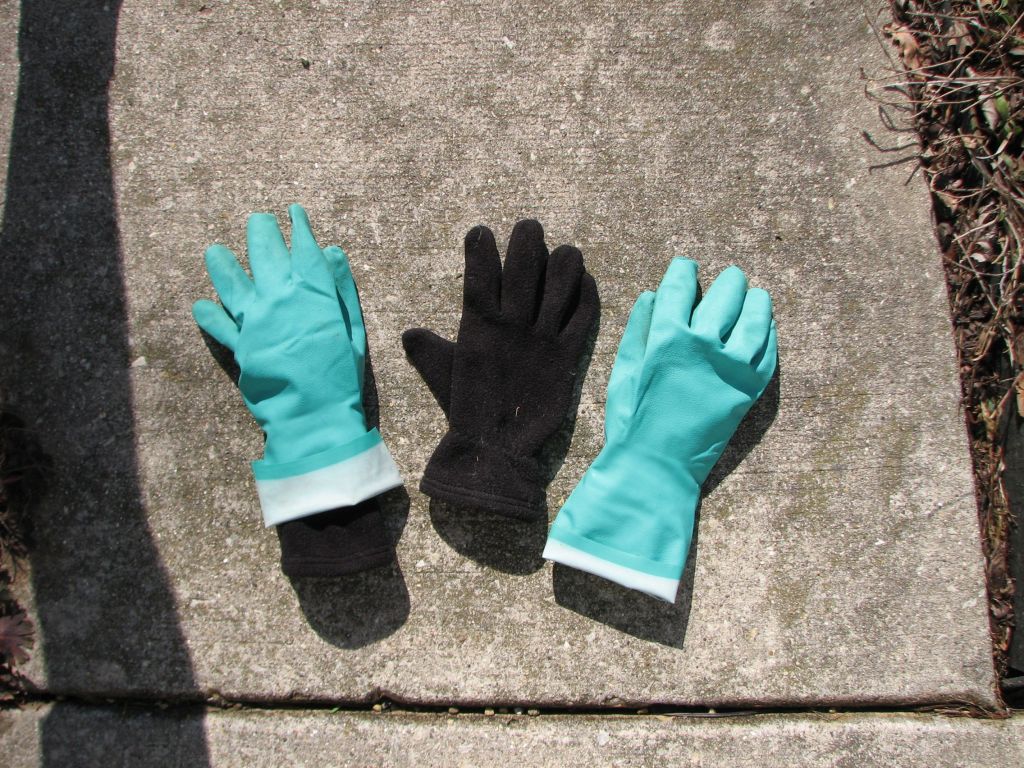
I suggest bringing extra polar fleece gloves. The chemical resistant gloves do not breathe. This results in moisture building up in the polar fleece gloves. As moisture builds up in the polar fleece gloves, they lose their insulating properties. Changing to fresh dry polar fleece gloves will keep your hands warm when working for a few hours, or more, in the cold.
Additional PPE
In addition to the PPE listed on the label, I suggest wearing a chemical rated respirator when applying triclopyr ester herbicide. These respirators can be purchased in the Safety or Paint departments of home improvement stores.
Applications
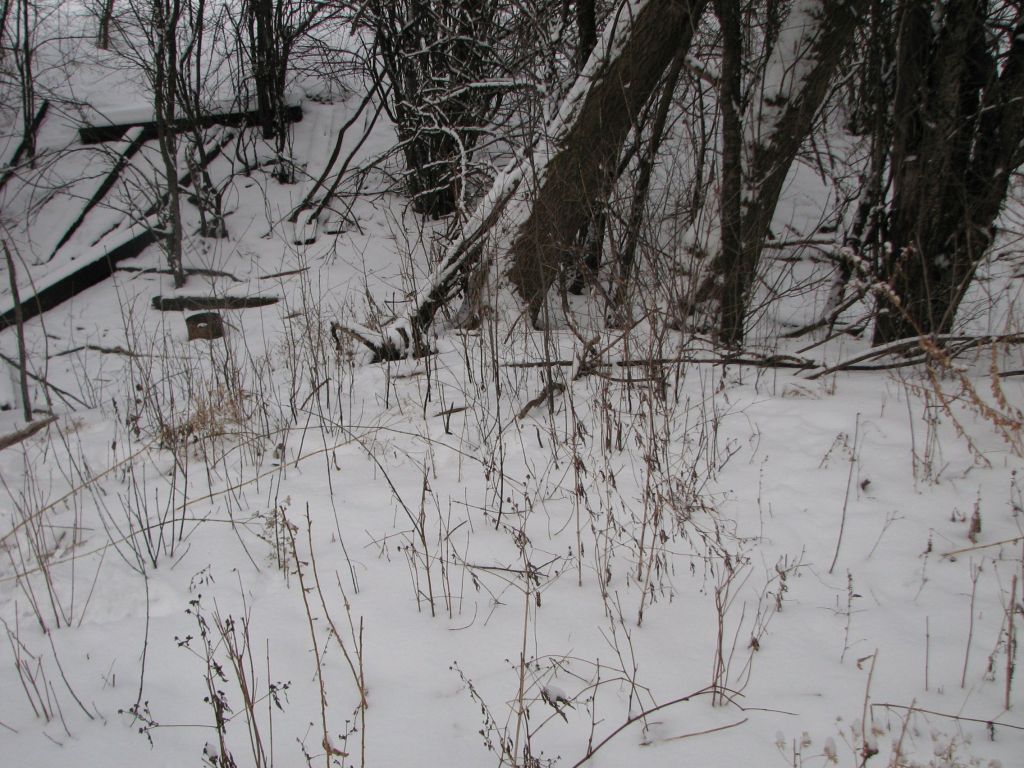
The images below are of areas where basal bark herbicide was applied over snow.
Controlling Small Common Buckthorns
2. Wider View of Area One in Winter on 1/25/2026
3. Wider View of Area One on 5/16/2026
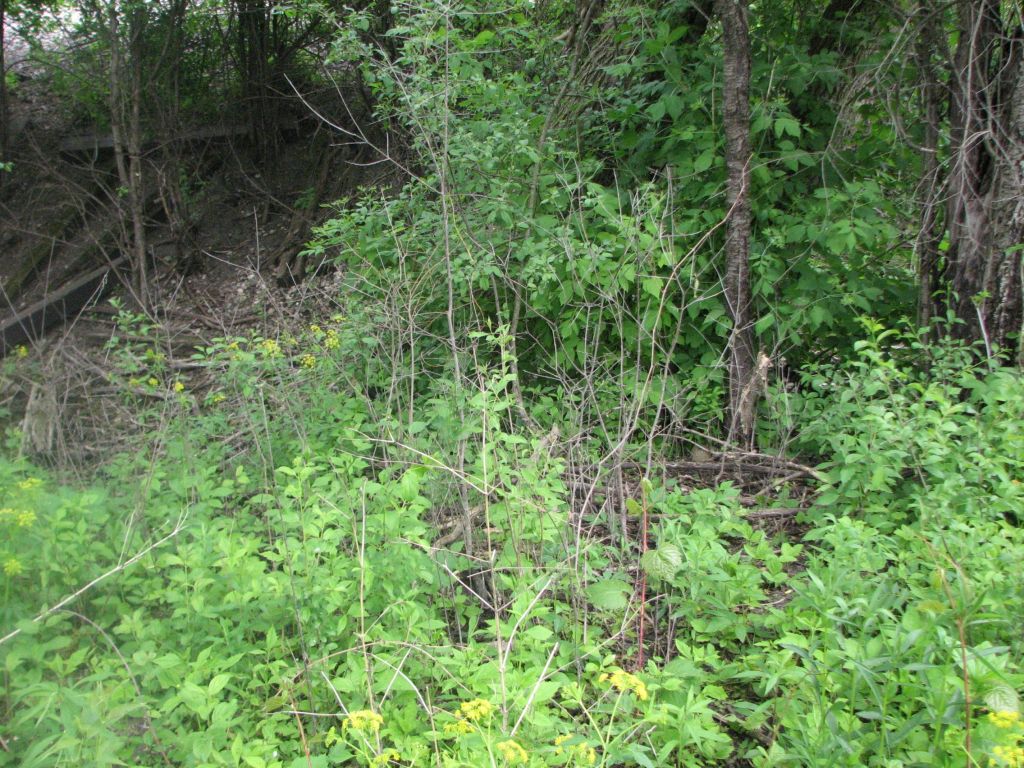
In the above image, the non-target vegetation does not look impacted by the herbicide application.
In the below image, if you look closely, you can see a few blue dots by the treated stems. If I roll the mini-paint roller too fast then some herbicide is gotten on the ground, or snow. I try to work slowly to prevent this from occurring. However, the herbicide I had gotten on the snow is such a small amount that in the image taken in May, I cannot see any off-target damage.
4. Closer View in Area One on 1/25/2026
In the below image, leaves of common buckthorn are visible. I could not apply herbicide to the stems that were under the snow. If a stem originating from the base of a common buckthorn is not treated then that stem will grow the following season. This is a handicap for those applying herbicide when snow is covering the ground. The number of stems, that did not get treated, and are growing is not terribly large. These living buckthorn stems should be easily treated the following season.
5. Closer View in Area One on 5/16/2026
6. Area Two on 1/25/2026
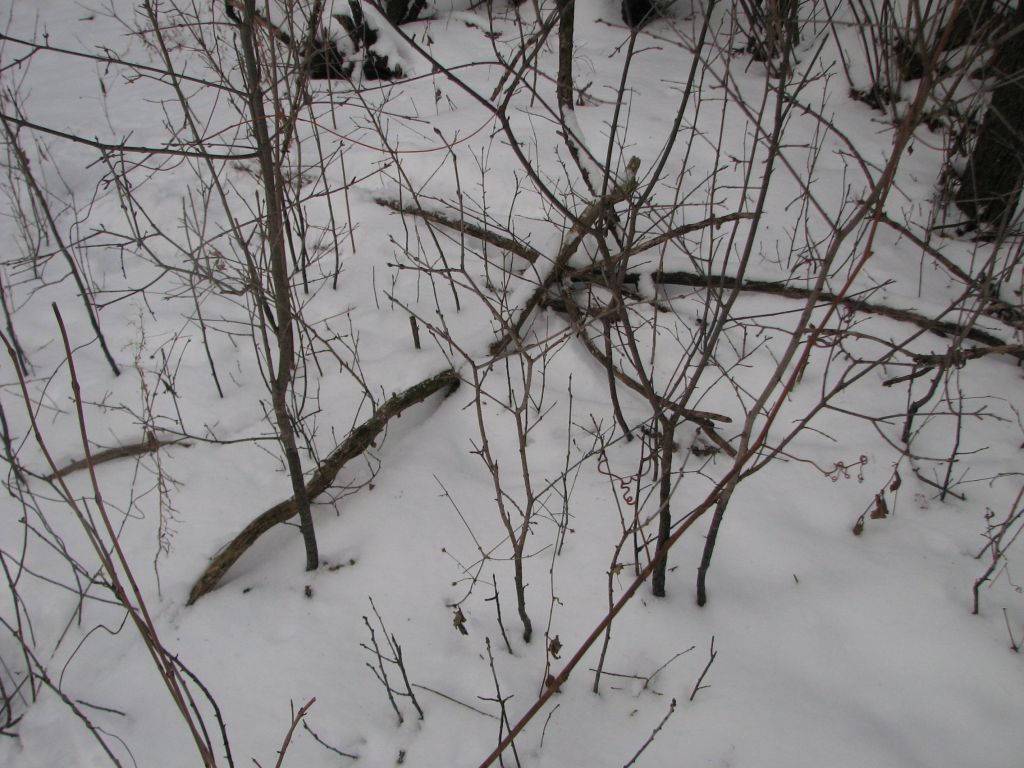
Again, some buckthorn leaves are visible. What missed getting treated should be easily treated the following season.
7. Area Two on 5/16/2026
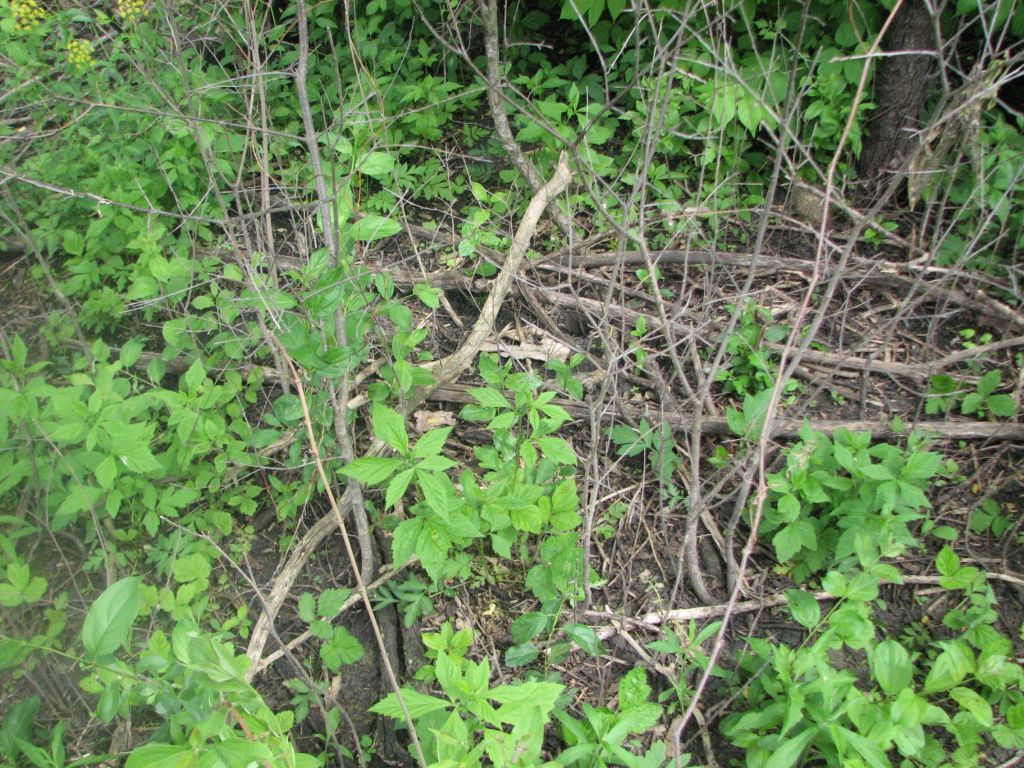
In the below image, you can more easily see blue dots on the snow. This is herbicide I got on the snow while doing the application. When there are lots of stems sticking out everywhere, it can be difficult to apply the herbicide without getting any on the snow.
8. Treated buckthorn on 1/25/2026
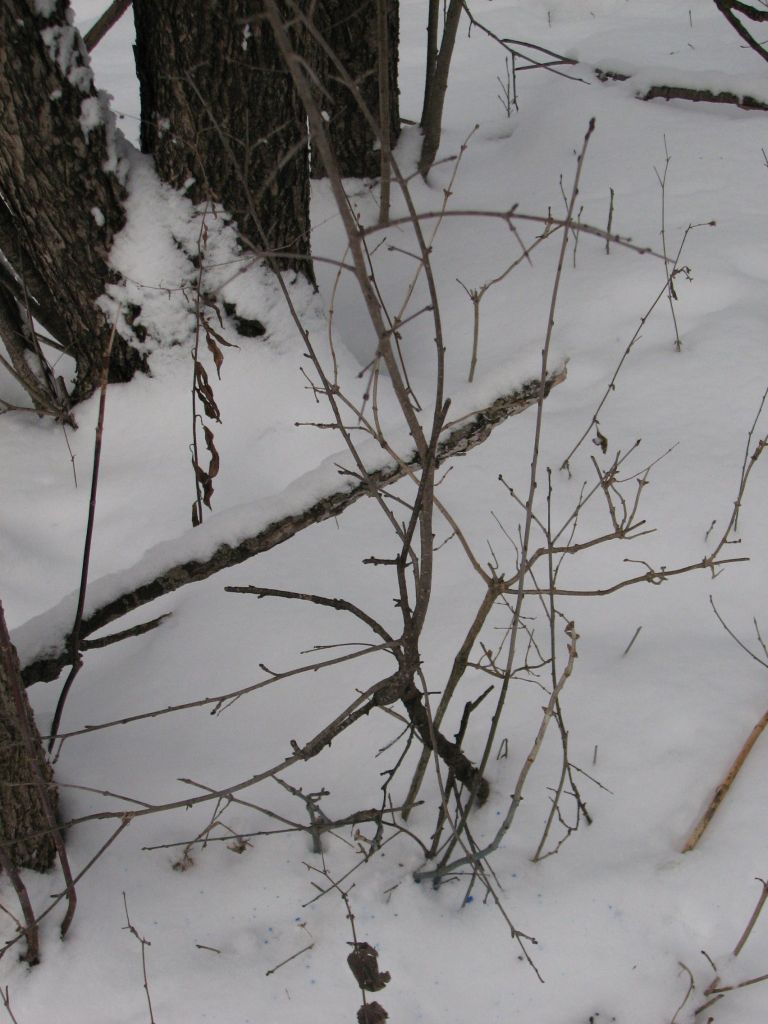
9. The treated buckthorn, shown above, on 5/16/2026
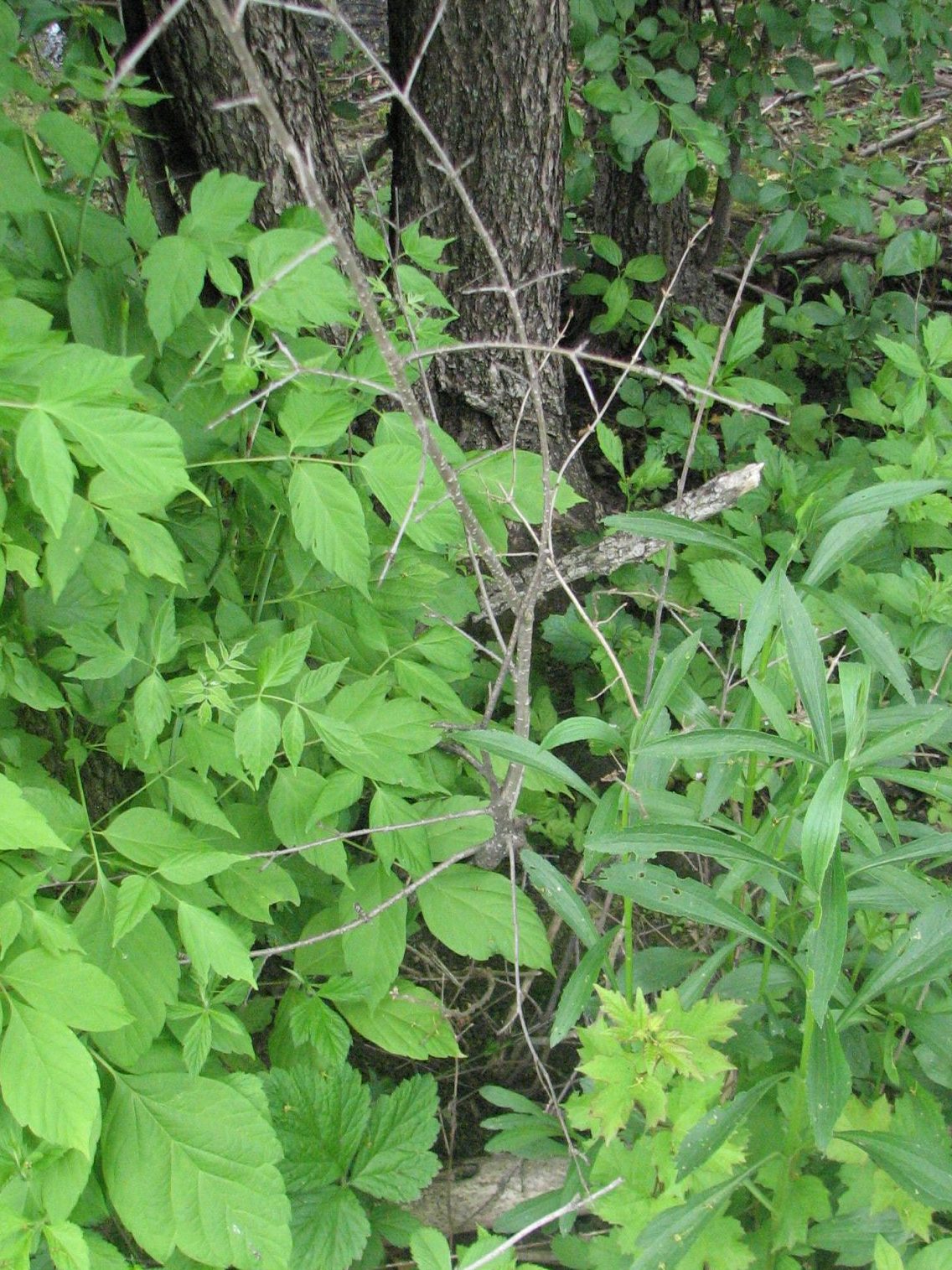
10. The buckthorn, shown above, on 5/16/2026 with the vegetation pulled away from the base
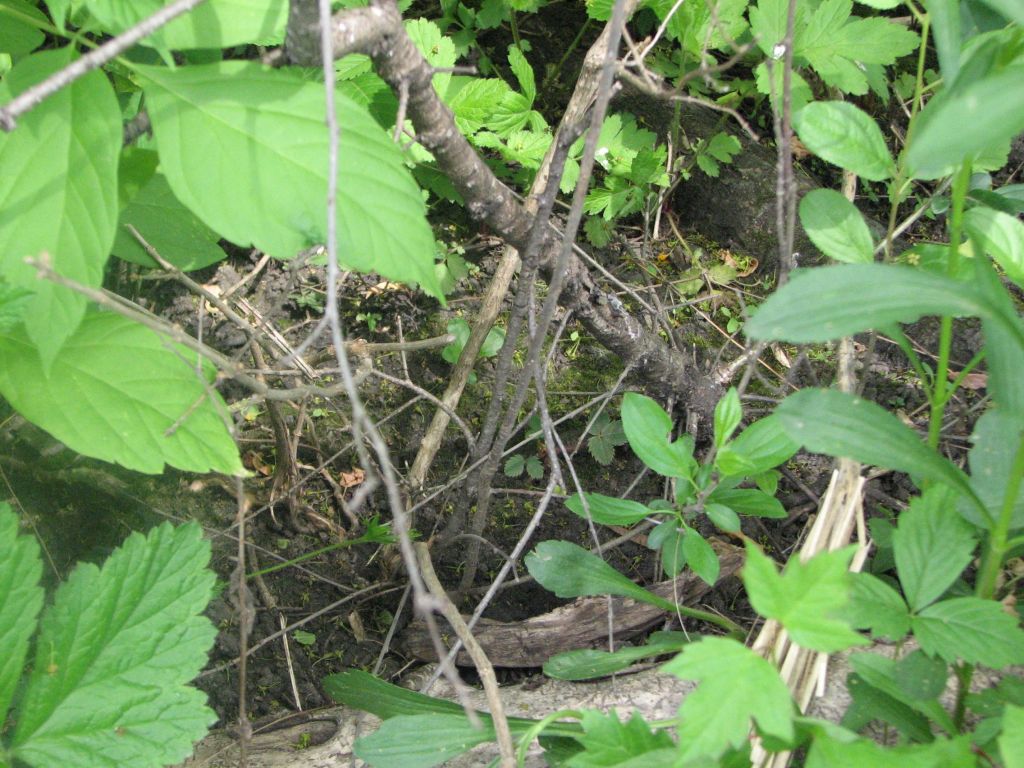
There are buckthorn seedlings visible. However, the treated buckthorn is dead. Even though some herbicide was gotten on the snow, the ring-of-death was avoided. You can even see a wild strawberry growing under the above treated common buckthorn.
Forestry Mowed Area
An Invasive Bush Honeysuckle
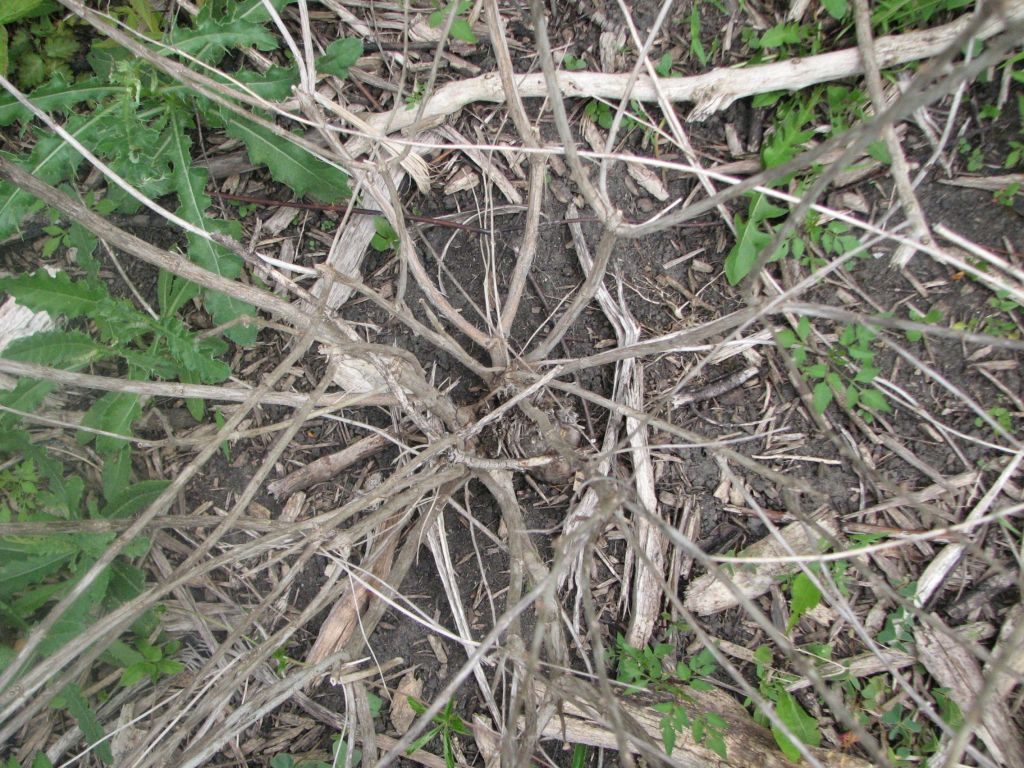
11. Invasive bush honeysuckle after herbicide was applied on 1/25/2026
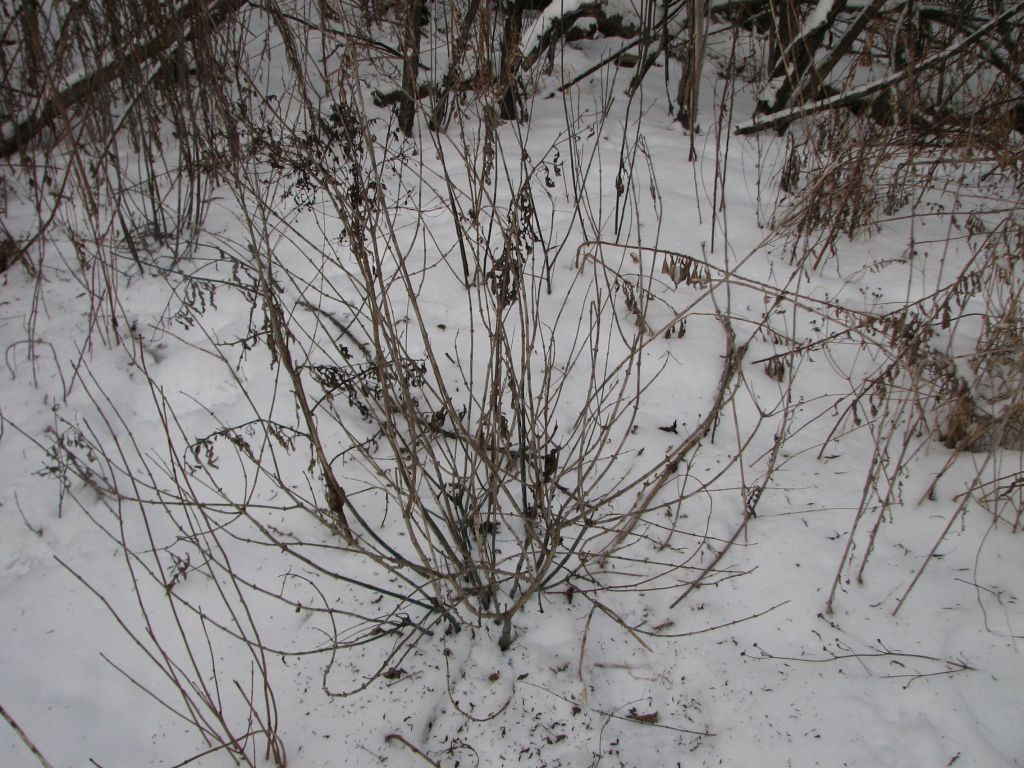
12. Above invasive bush honeysuckle on 5/16/2026
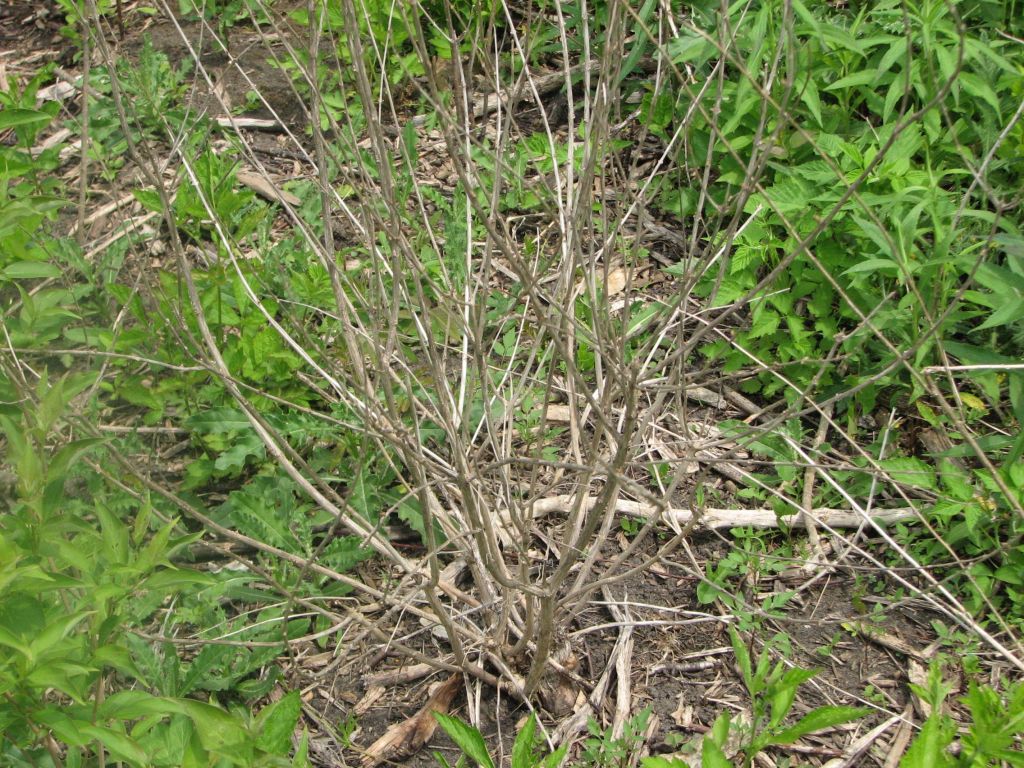
13. Overhead view of the above invasive bush honeysuckle on 5/16/2026
Five Common Buckthorns
The five common buckthorns shown below were along the edge of where extreme damage had occurred from ATVs. I had hoped that since these common buckthorns were on the edge of this damage that there might be some quality native plants present. However, this proved not to be the case except for some Allium canadense (coefficient of conservation of 3).
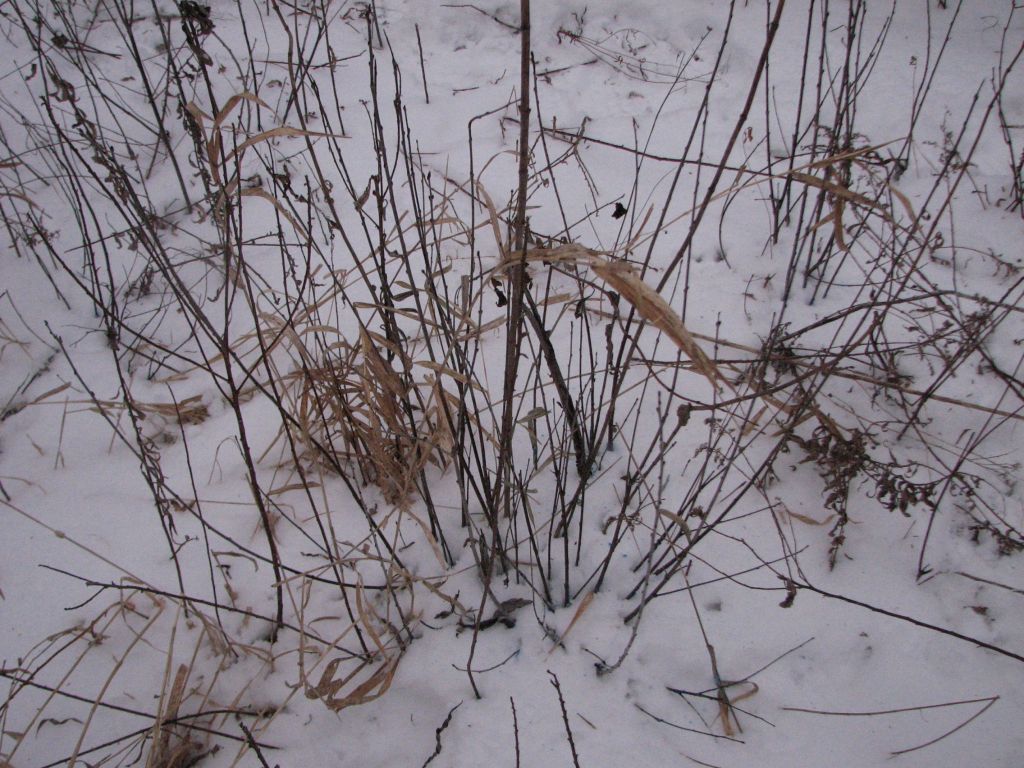
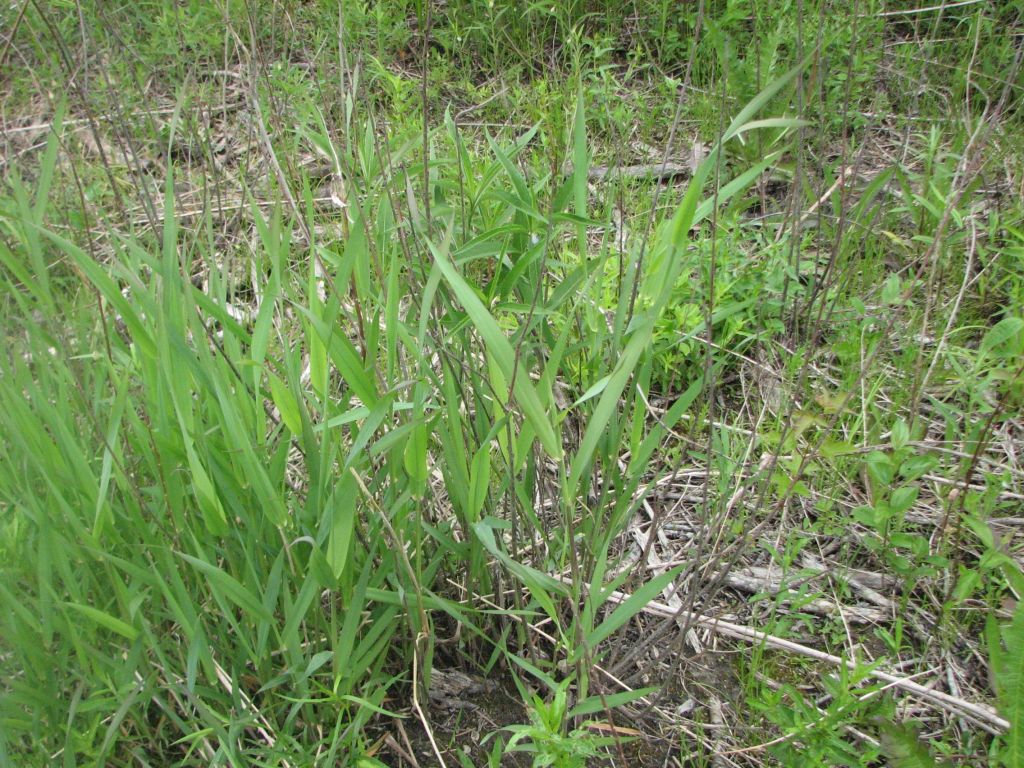
The images of the five common buckthorns that were forestry mowed and treated with herbicide were taken to show the herbicide application, effectiveness of the application, and off-target damage. Unfortunately, there were no high-quality plants near these forestry mowed common buckthorns. What is growing in the images that were taken to show potential off-target damage is mostly reed canary grass and common buckthorn seedlings. In these images there is also purple loosestrife, common teasel, and tall goldenrod. Since these images failed to show that my application method was able to avoid off-target damage, I looked for other forestry mowed common buckthorns or invasive bush honeysuckle that had native plants growing near the base. These images are included in the next section.
14. First forestry mowed common buckthorn shown after herbicide treatment on 1/25/2026
15. First forestry mowed common buckthorn shown on 5/16/2026
16. View of base of first forestry mowed common buckthorn shown
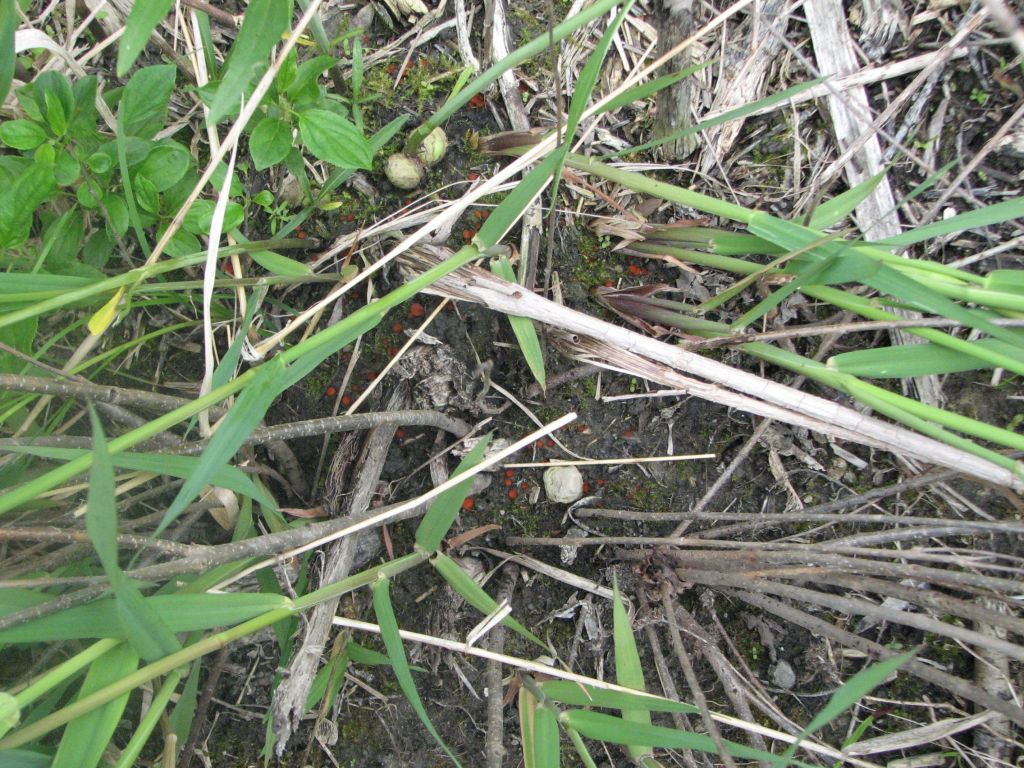
17. Second forestry mowed common buckthorn shown after herbicide treatment on 1/25/2026
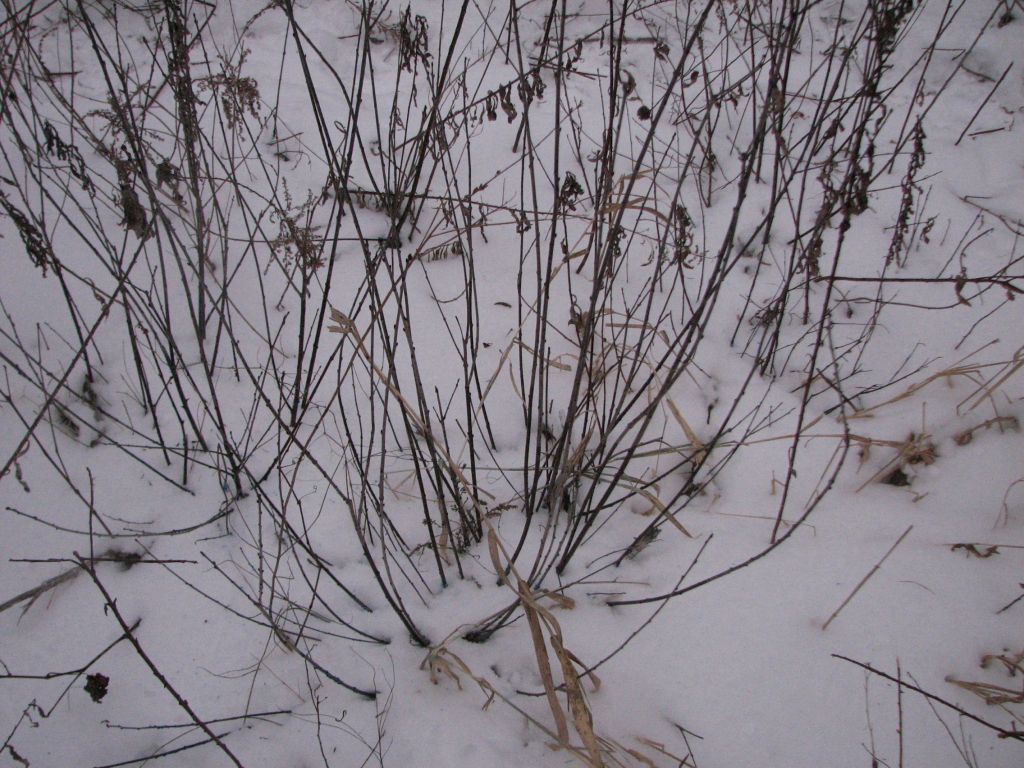
18. Second forestry mowed common buckthorn on 5/16/2026
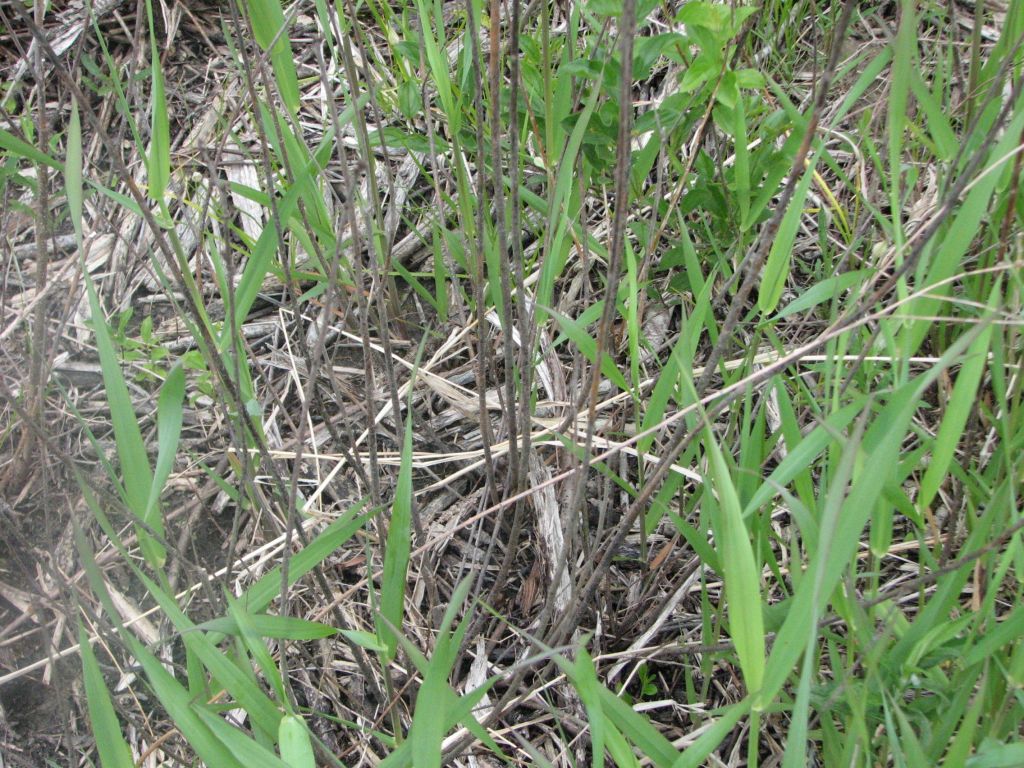
19. View of the base of the second forestry mowed common buckthorn
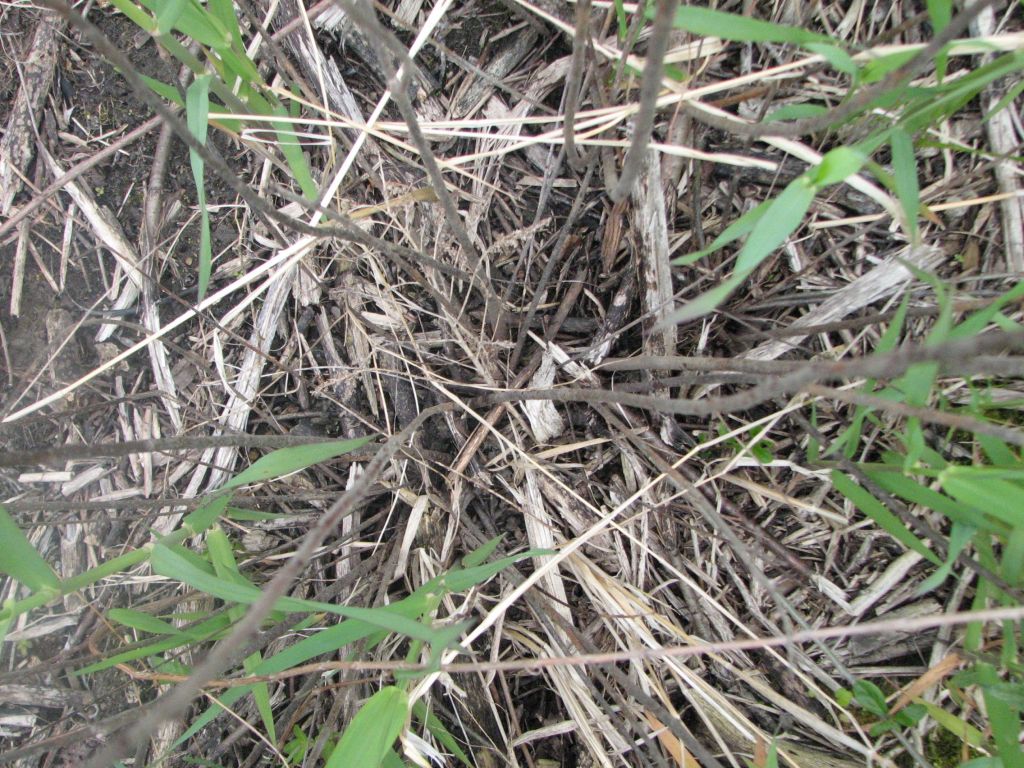
20. Third forestry mowed common buckthorn shown after herbicide treatment on 1/25/2026
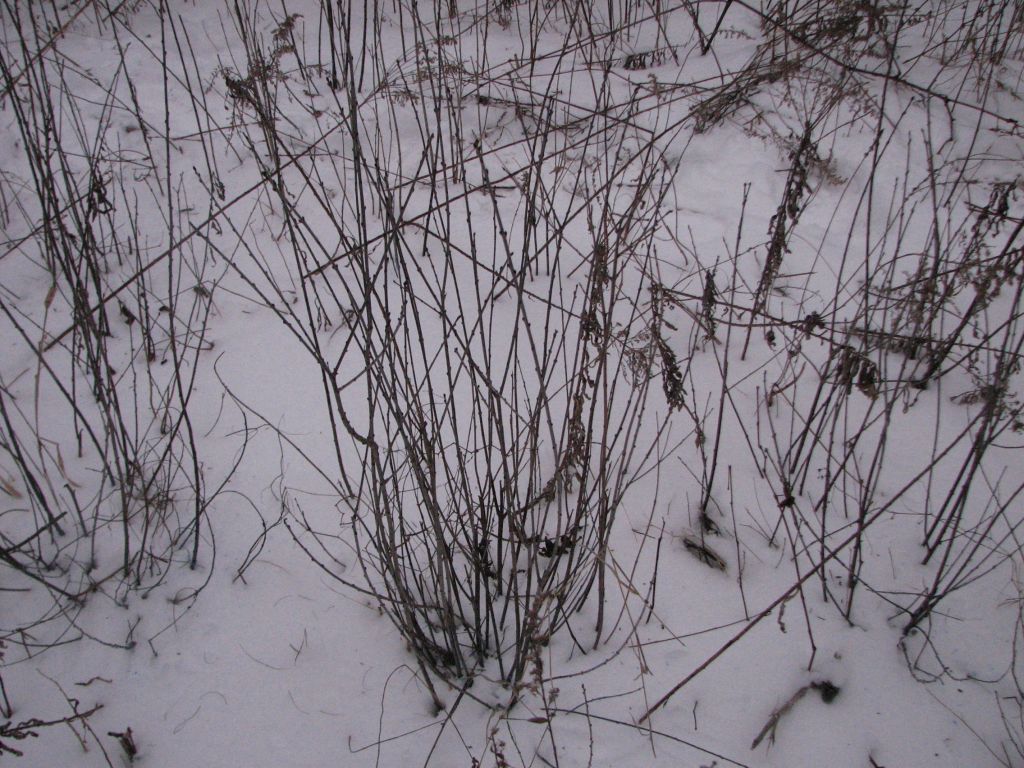
21. Third forestry mowed common buckthorn on 5/16/2026
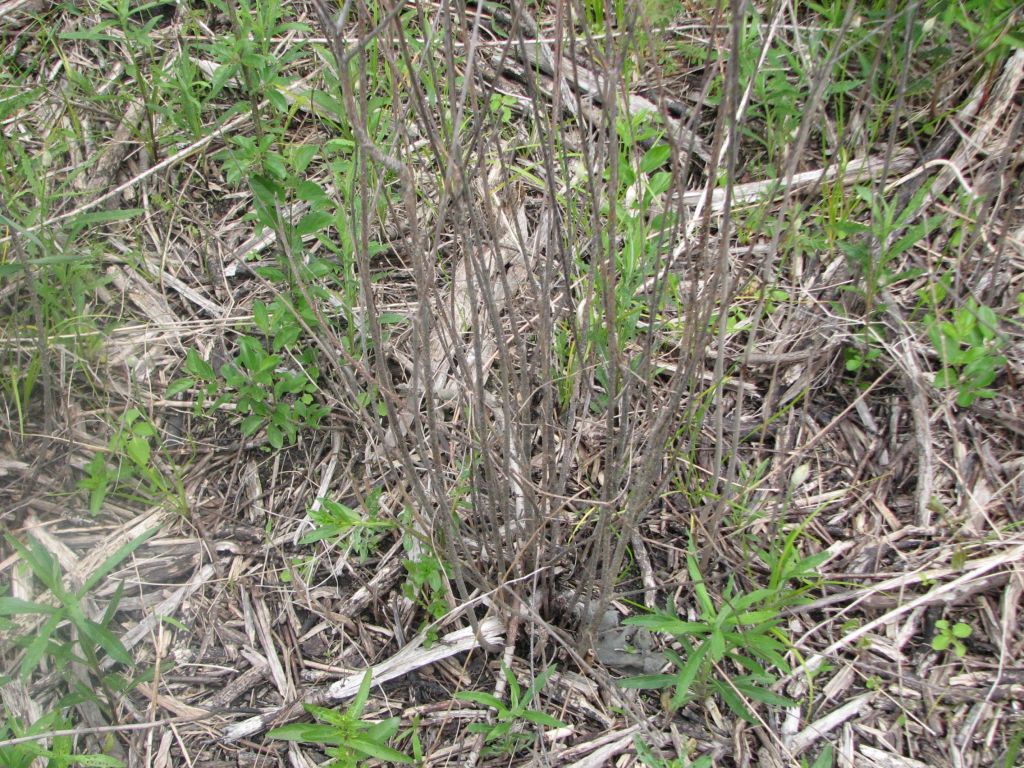
22. Base of third forestry mowed common buckthorn
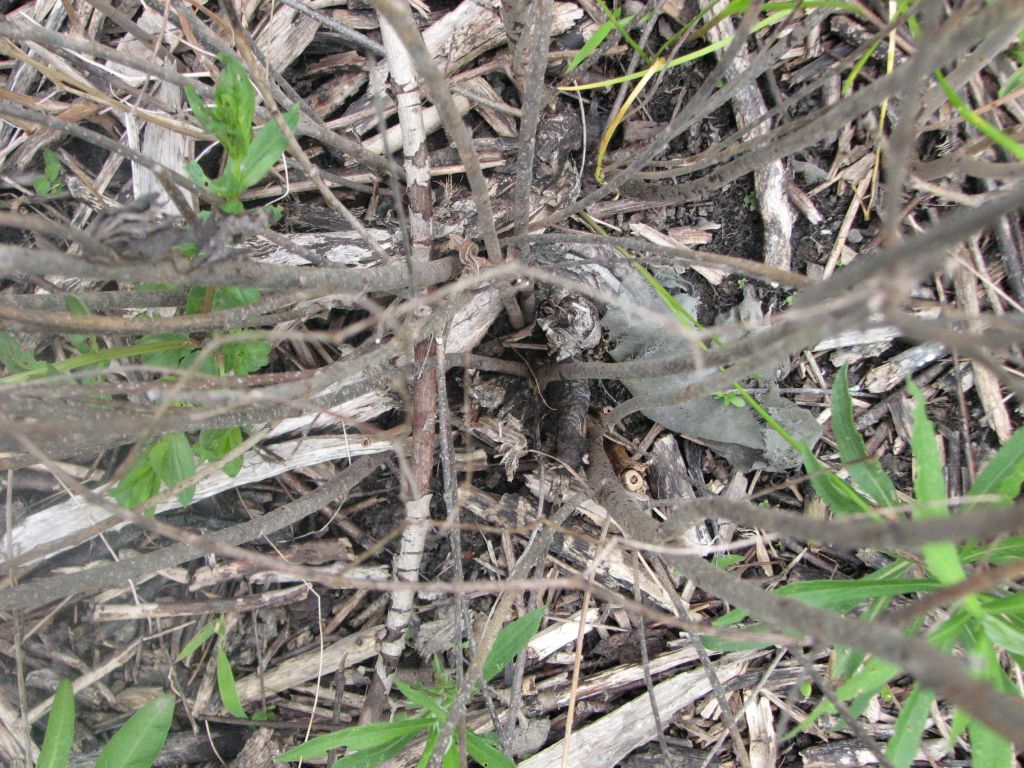
23. Fourth forestry mowed common buckthorn shown after herbicide application on 1/25/2026
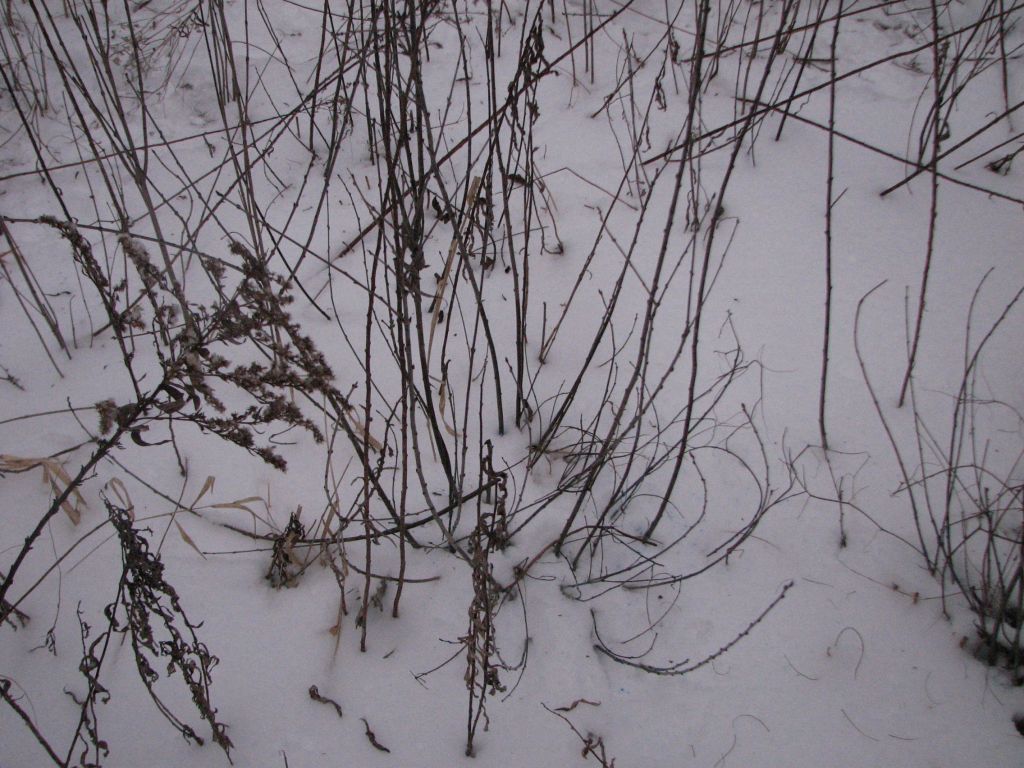
24. Fourth forestry mowed common buckthorn on 5/16/2026
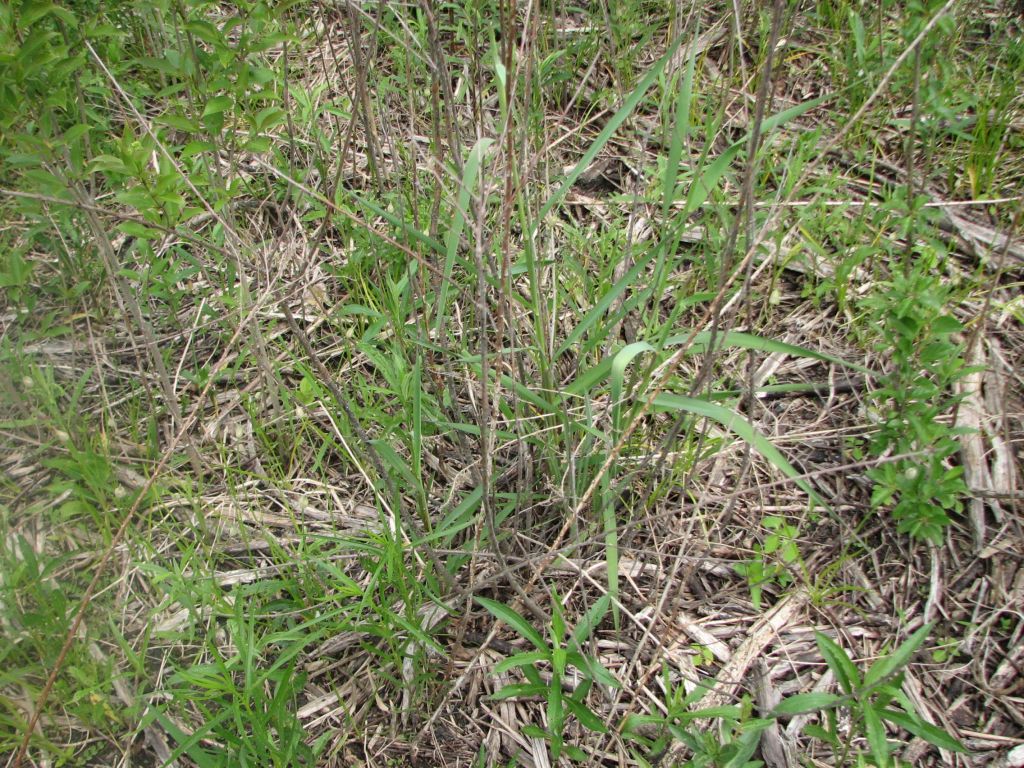
25. Base of the fourth forestry mowed common buckthorn
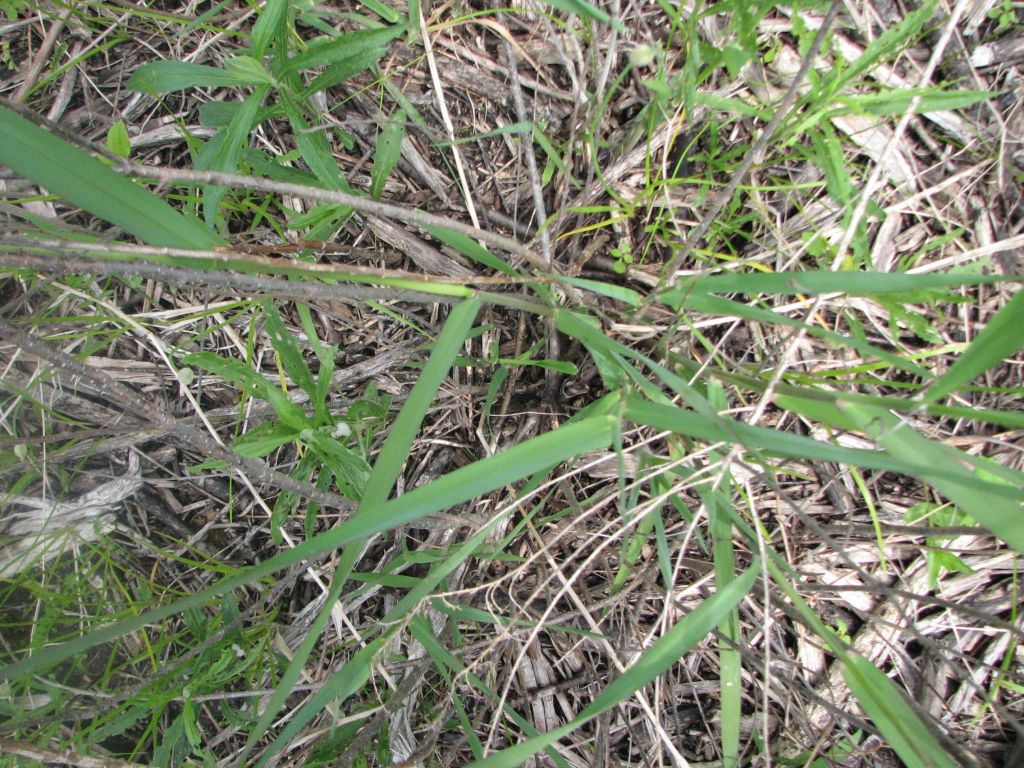
26. Fifth forestry mowed common buckthorn shown after herbicide application on 1/25/2026
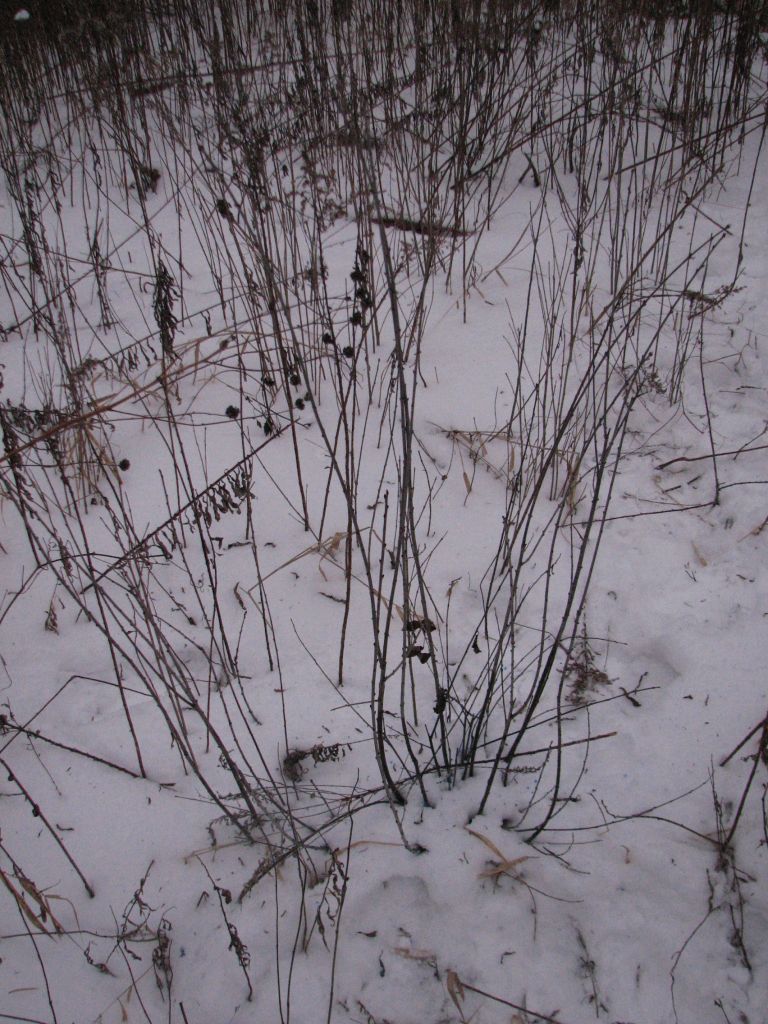
27. Fifth forestry mowed common buckthorn on 5/16/2026
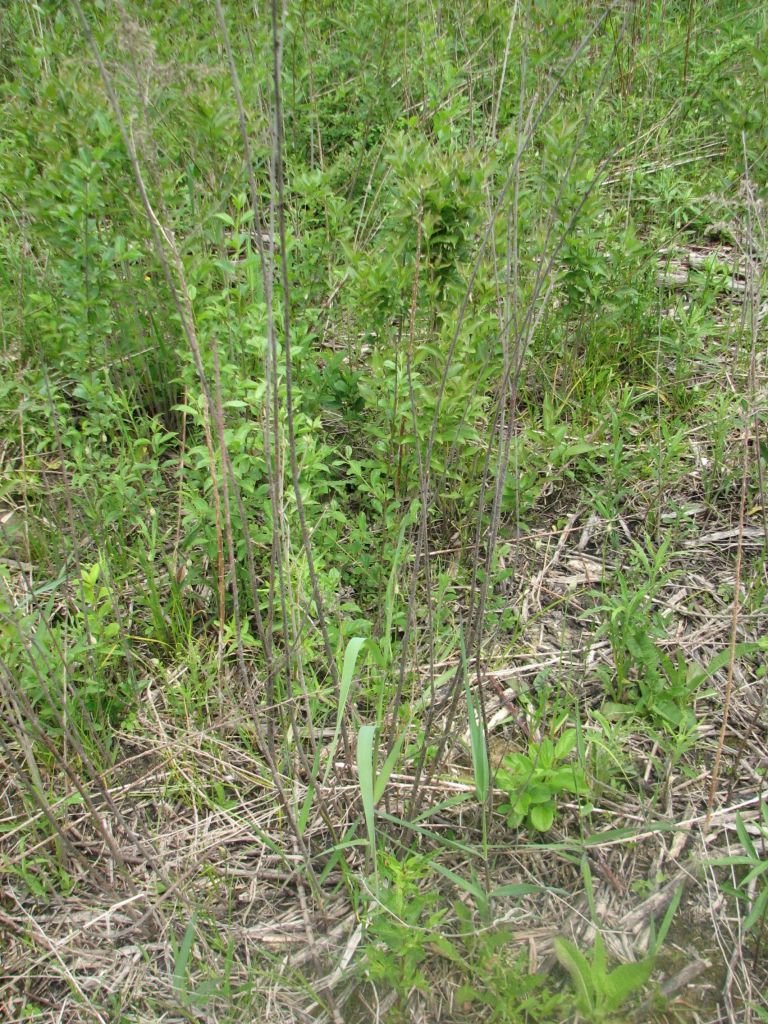
28. Base of fifth forestry mowed common buckthorn
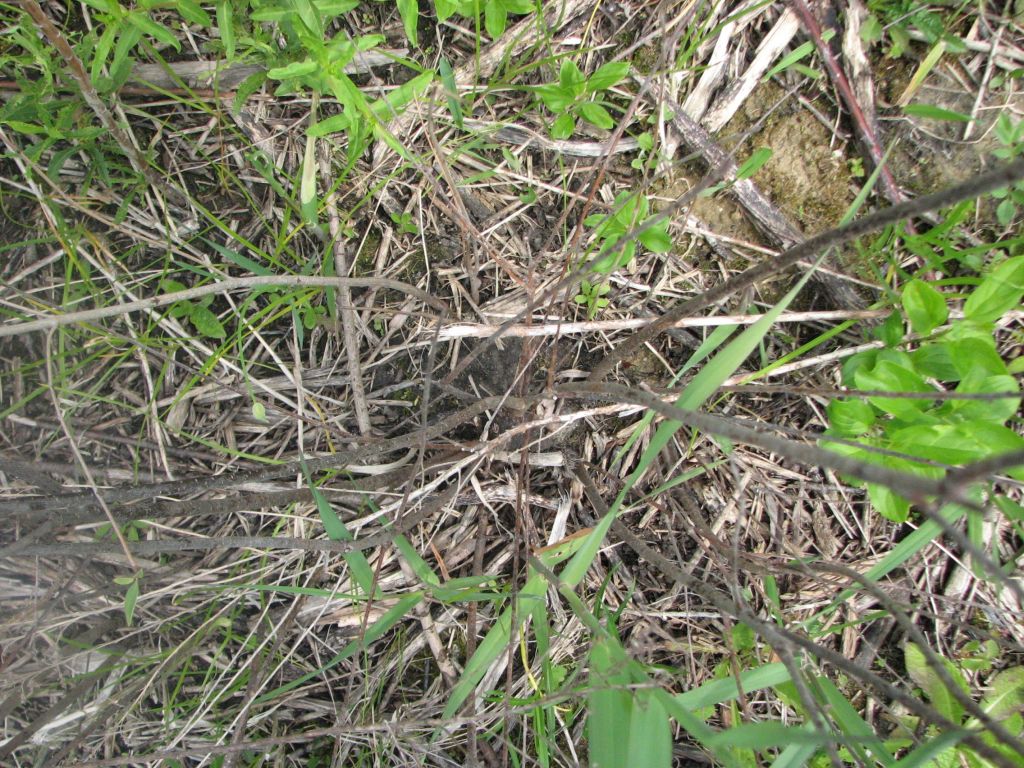
Native Plants Growing Near Previously Treated, and Now Dead, Forestry Mowed Invasive Woody Species
These images were included to show vegetation recovering at the base of these invasive woody species that had been killed by the herbicide application.
29. A bottle gentian (Gentiana andrewsii) at the base of a successfully controlled common buckthorn
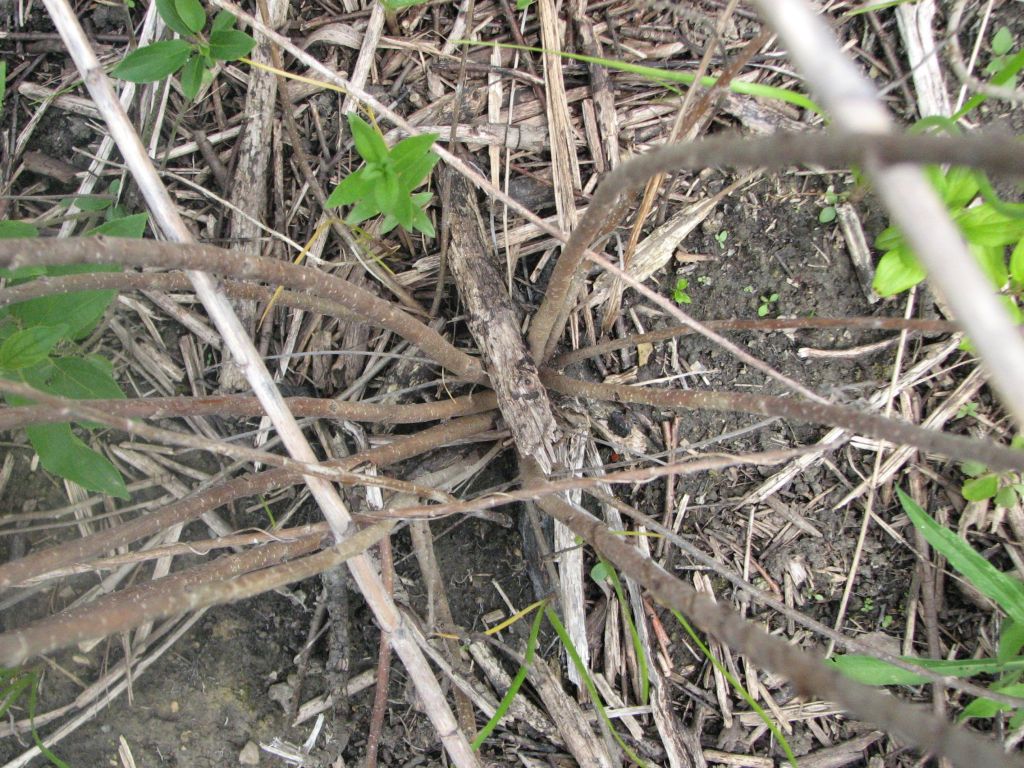
30. Violet wood sorrels (Oxalis violacea) growing near the base of successfully controlled common buckthorns
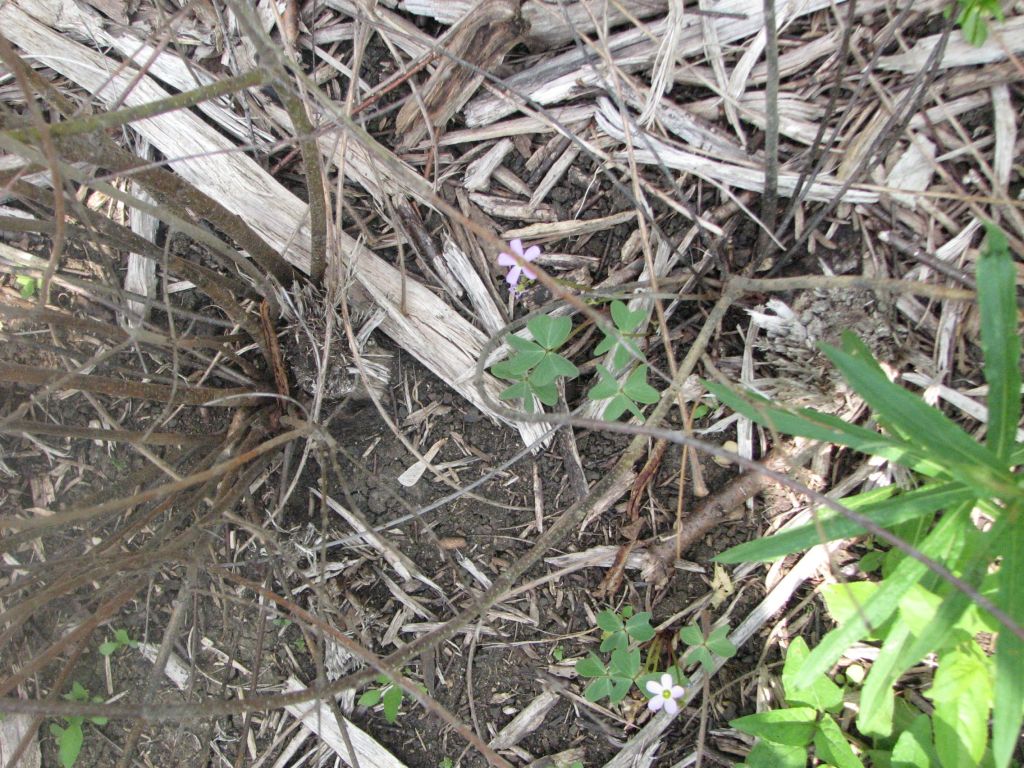
31. Spotted touch-me-not (Impatiens capensis) and wild strawberry (Fragaria vesca) growing near the base of a successfully controlled common buckthorn
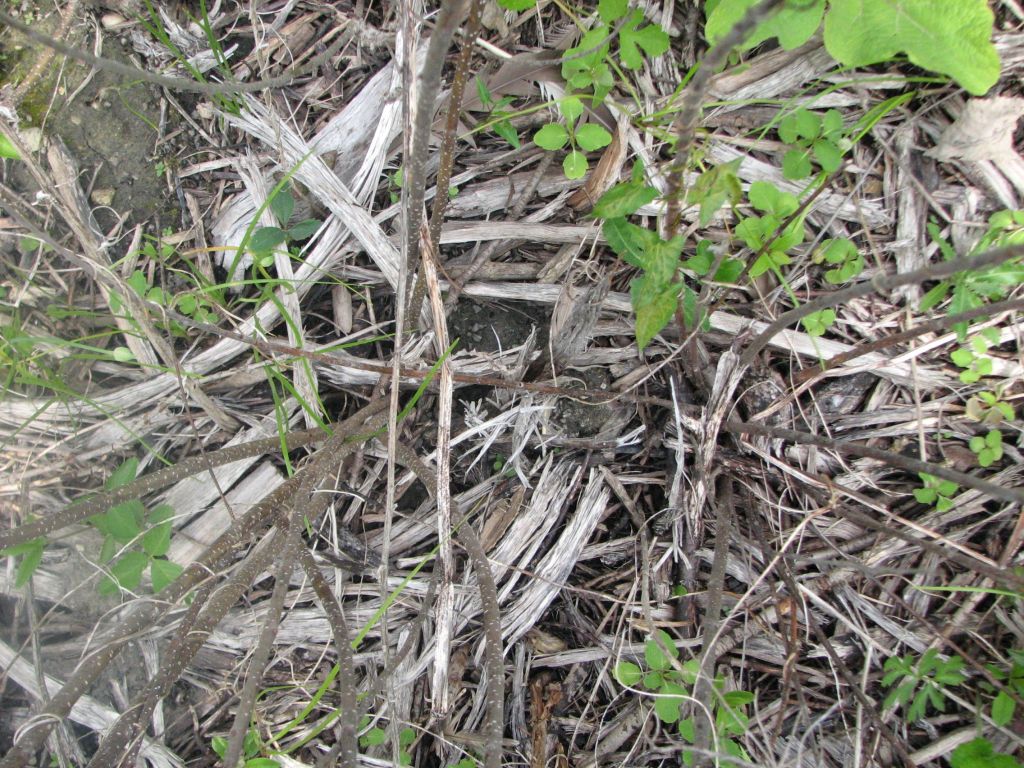
32. The largest invasive bush honeysuckle I applied herbicide to this season
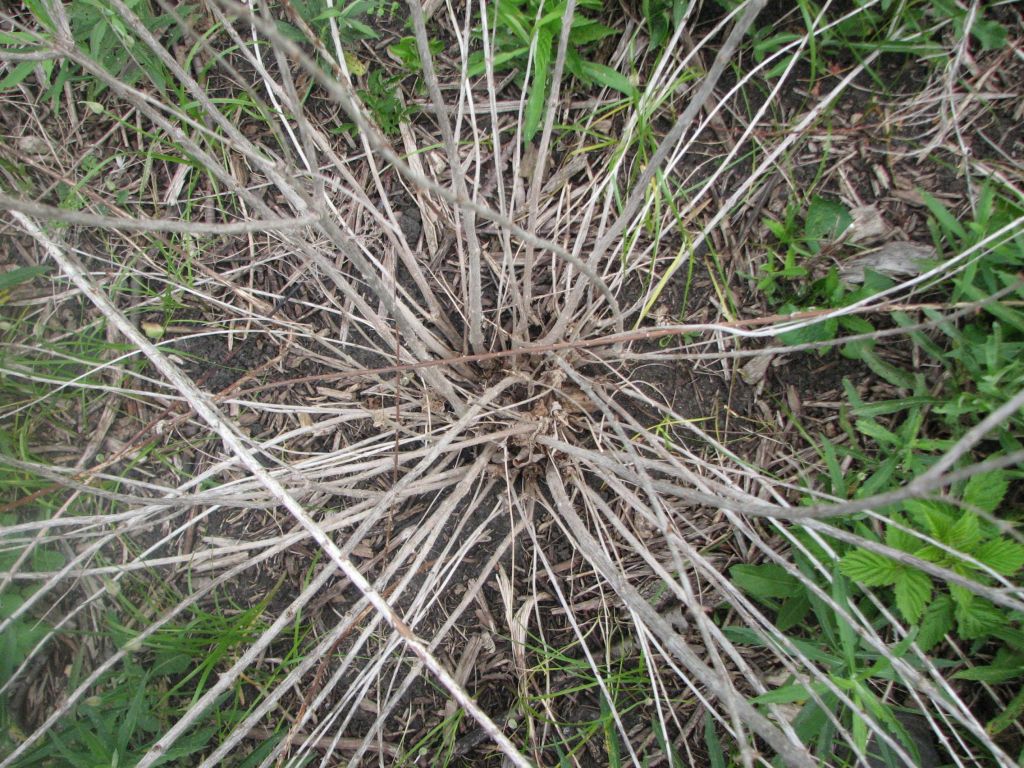
The only potential off-target impacts I see in the above image are to wild garlic (Allium canadense) that have yellow leaves. These wild garlic are to the right of the sprouting invasive bush honeysuckle that had been treated with herbicide
Area That Did Not Receive Forestry Mowing Where Invasive Woody Species Had Basal Bark Herbicide Applied
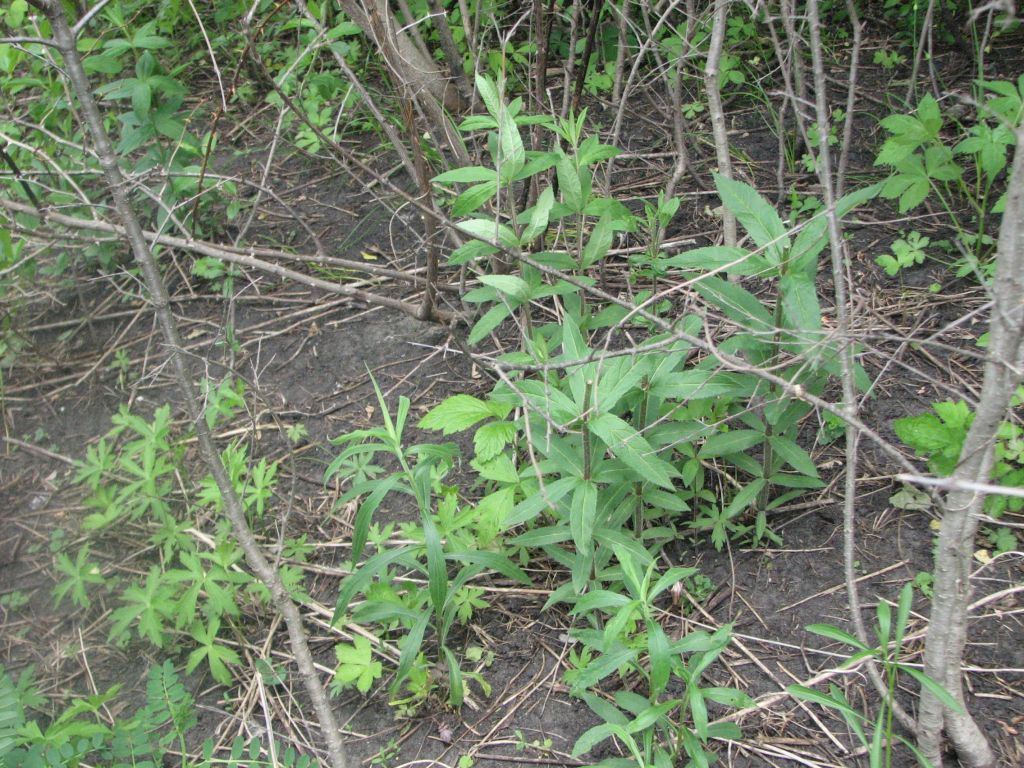
The below image was included to show the vegetation that is responding. There is Canada Anemone (Anemone canadensis), Culver’s root (Veronicastrum virginicum), and an unidentified black snakeroot (Sanicula species).
33. This image shows the vegetation response in an area where common buckthorns and a multiflora rose were successfully controlled by a winter basal bark application
Pretty Picture
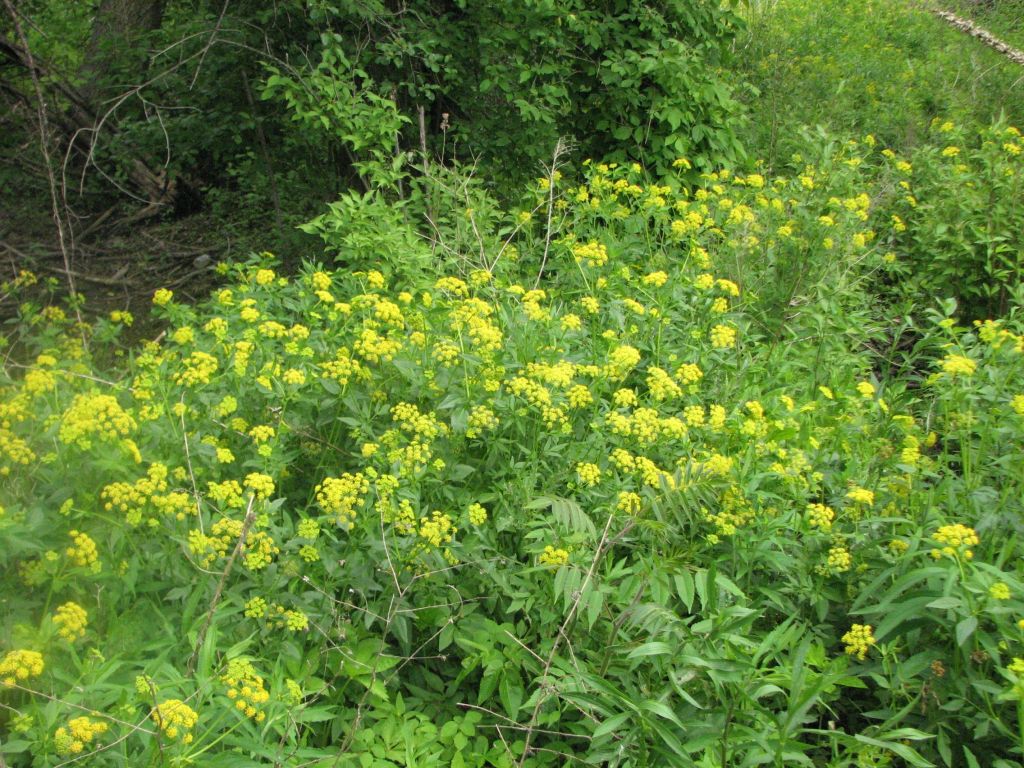
34. Golden Alexanders (Zizia aurea) that have filled in an area where invasive woody species had been controlled
Discussion
Applying herbicide to invasive woody species that have been forestry mowed has both advantages and disadvantages.
Forestry mowing is typically done to make an area more accessible. Forestry mowing is a necessity when an area is a dense thicket of multiflora rose. If an area is only common buckthorns and invasive bush honeysuckles then I have not had a problem getting through it. Thick duck cotton helps protect me from the thorns of common buckthorns.
For those applying herbicide to basal bark, an advantage of applying to sprouted forestry-mowed invasive woody species is the bark on the sprouts is thinner. For larger invasive woody species, less herbicide has to be applied than if the invasive woody species had not been forestry mowed.
The above has to be balanced with the increased number of stems that all must be coated with herbicide when treating invasive woody species that have sprouted after forestry mowing.
My preference is to treat the woody invasive species in an area before forestry mowing is done. This way, I do not have to treat as many stems. However, treating the sprouts after forestry mowing has occurred works well too, as long as the sprouting stems have herbicide applied the following season.
 Stewardship Chronicles
Leave a comment