This post is being released now because brush removal workdays are beginning. It is my hope that this post helps stewards get a higher rate of control from their herbicide applications.
Contents
Maps
Discussion
Images
Work Area
1. Image from immediately after 4/22/2023 Workday.
2. Image of same area as above but taken on 5/2/2026.
3. Wider view of work area immediately after 4/22/2023 workday.
4. Image of same area as above but taken on 5/2/2026.
Small Common Buckthorns in the Prairie
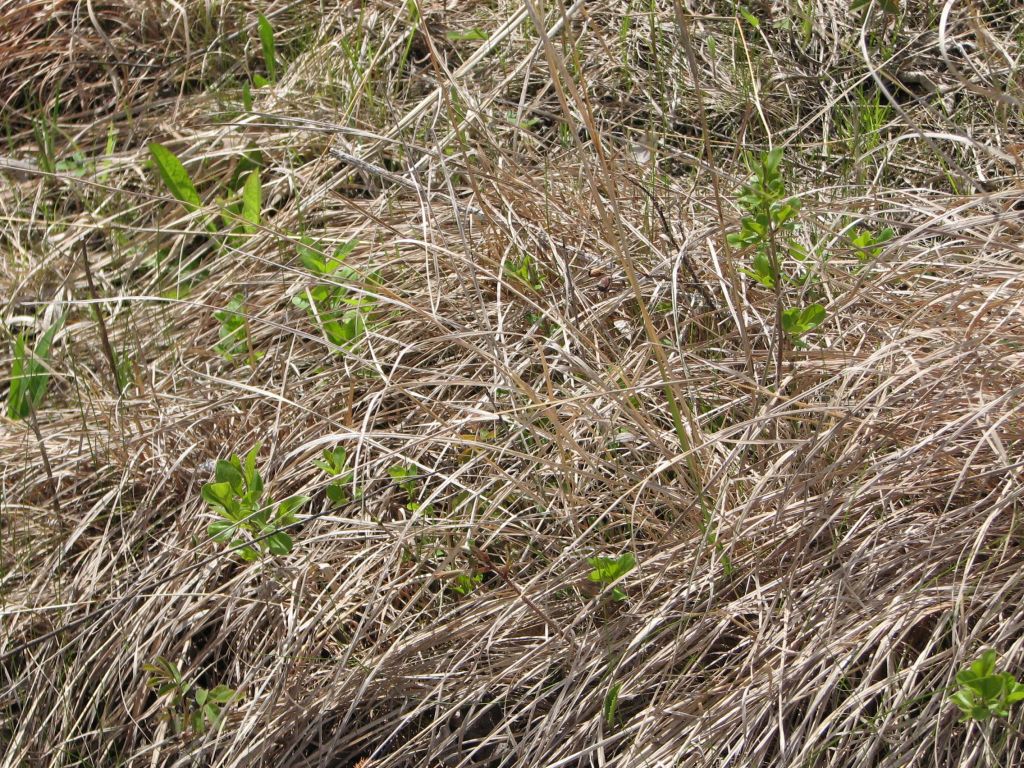
5. Closer view of above prairie area showing the small common buckthorns.
Views From Previous Work Area
6. View of previous work area looking towards 4/22/2023 work area.
7. Same view as above but on 5/2/2026.
Treated Small Stemmed Common Buckthorns
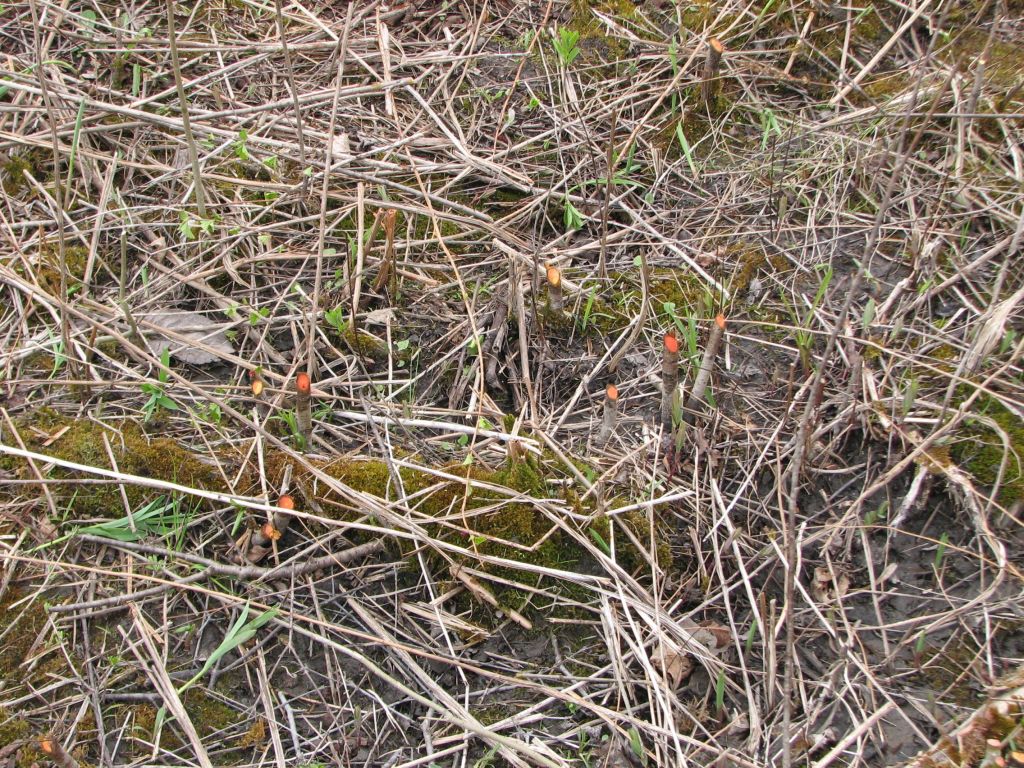
8. This image shows the smaller stemmed common buckthorns between the prairie area and disturbed slope. This image was taken after the common buckthorns had been cut and herbicide had been applied to the cut stems during the workday on 4/22/2023.
Invasive Woody Species That Sprouted And Grew
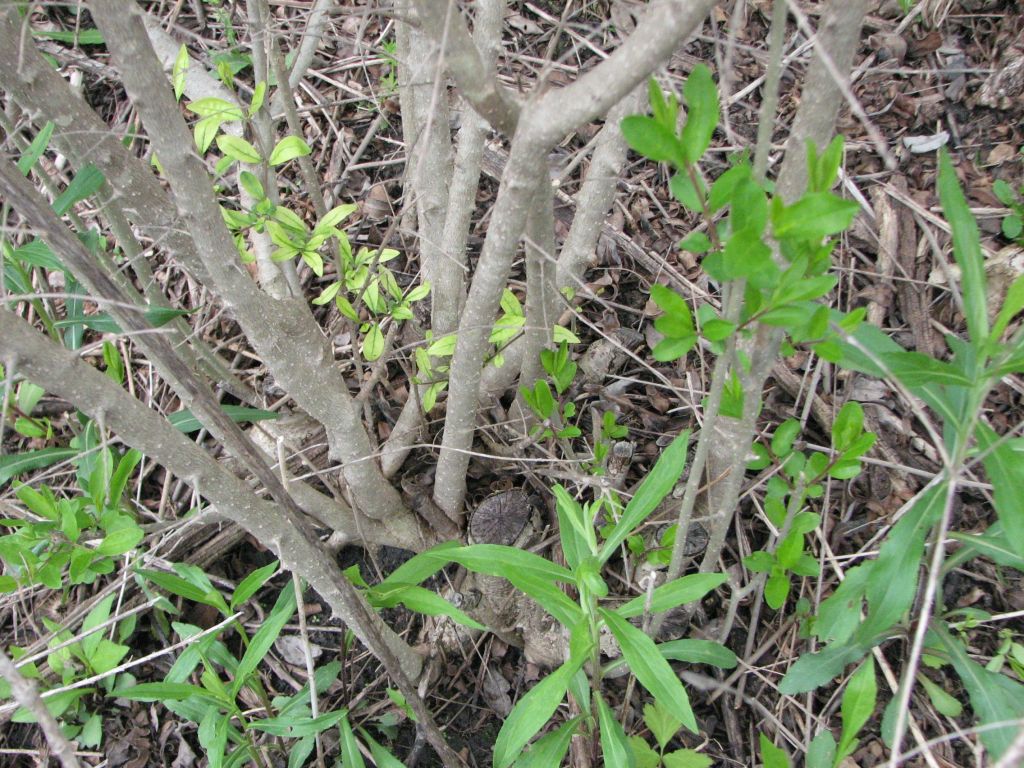
9. This is a privet on the slope that was not killed by the herbicide application.
10. These are invasive bush honeysuckles that were not killed by the herbicide application.
Surprise Flowers on the Disturbed Slope
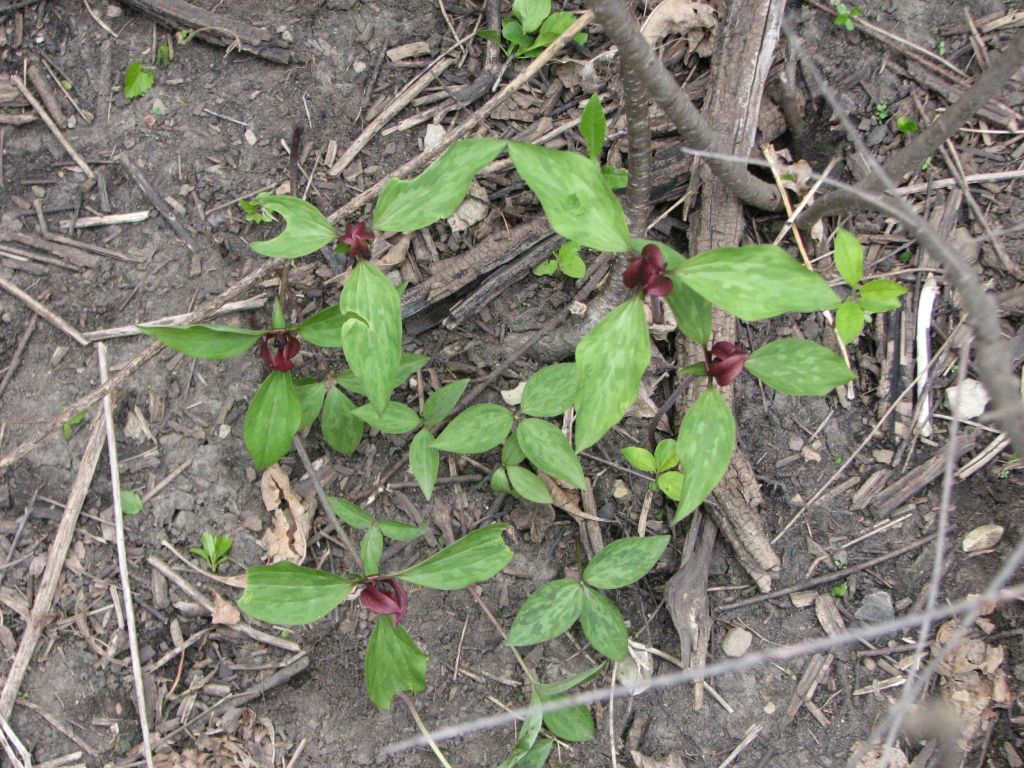
11. Prairie trillium (Trillium recurvatum) found under the sprouted invasive brush.
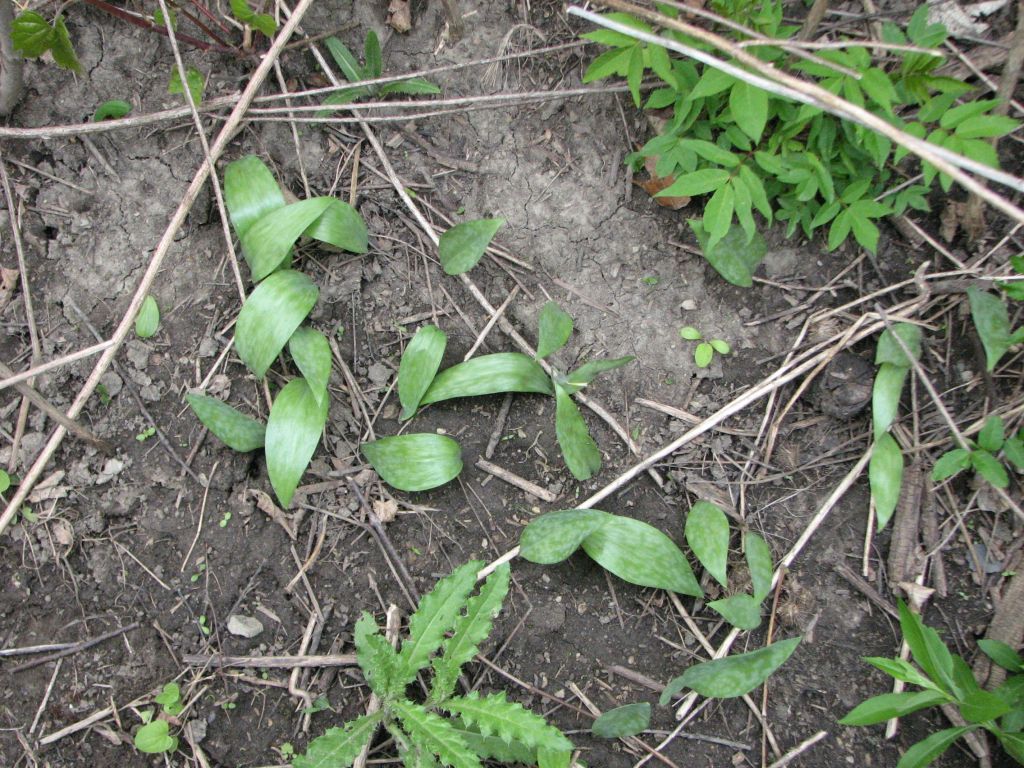
12. White trout lily (Erythronium albidum) growing on the disturbed slope.
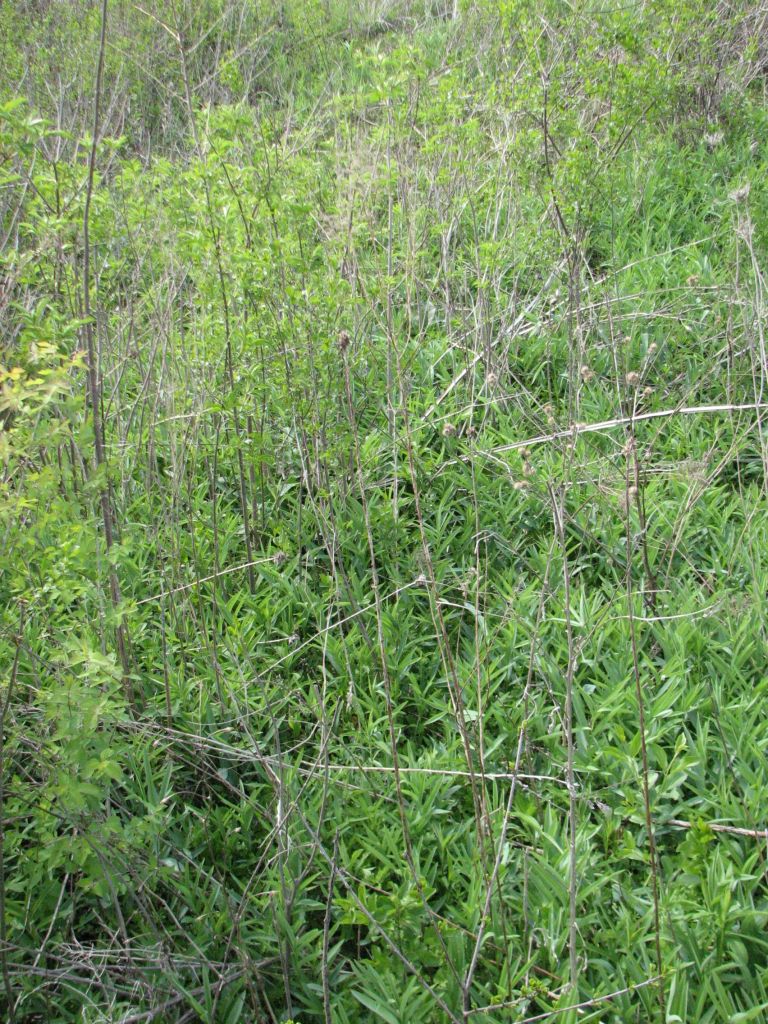
13. This patch of starry Solomon’s plume (Maianthemum stellatum) has completely covered the ground well up into the disturbed slope.
14. Closer view showing flower of Starry Solomon’s plume.
Controlled Woody Invasive Species
Before and After
15. Invasive bush honeysuckle treated with herbicide after having been cut during the workday.
16. The same invasive bush honeysuckle shown above on 5/2/2026.
17. Invasive bush honeysuckle treated with herbicide after having been cut during workday.
18. The same invasive bush honeysuckle shown above on 5/2/2026.
19. Common buckthorn treated with herbicide after having been cut during workday.
20. The same common buckthorn shown above on 5/2/2026.
Bonus
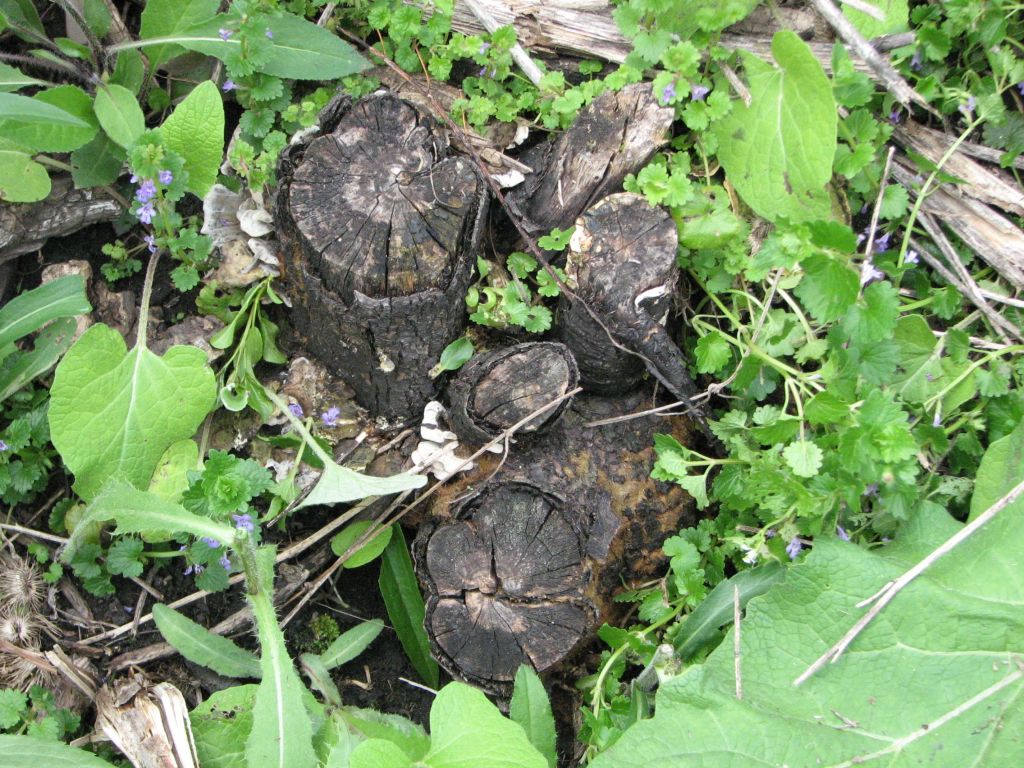
21. Woody invasive plants controlled by the herbicide application.
22. Common buckthorn controlled by the herbicide application.
23. Woody invasive plant controlled by the herbicide application.
Burn Scar
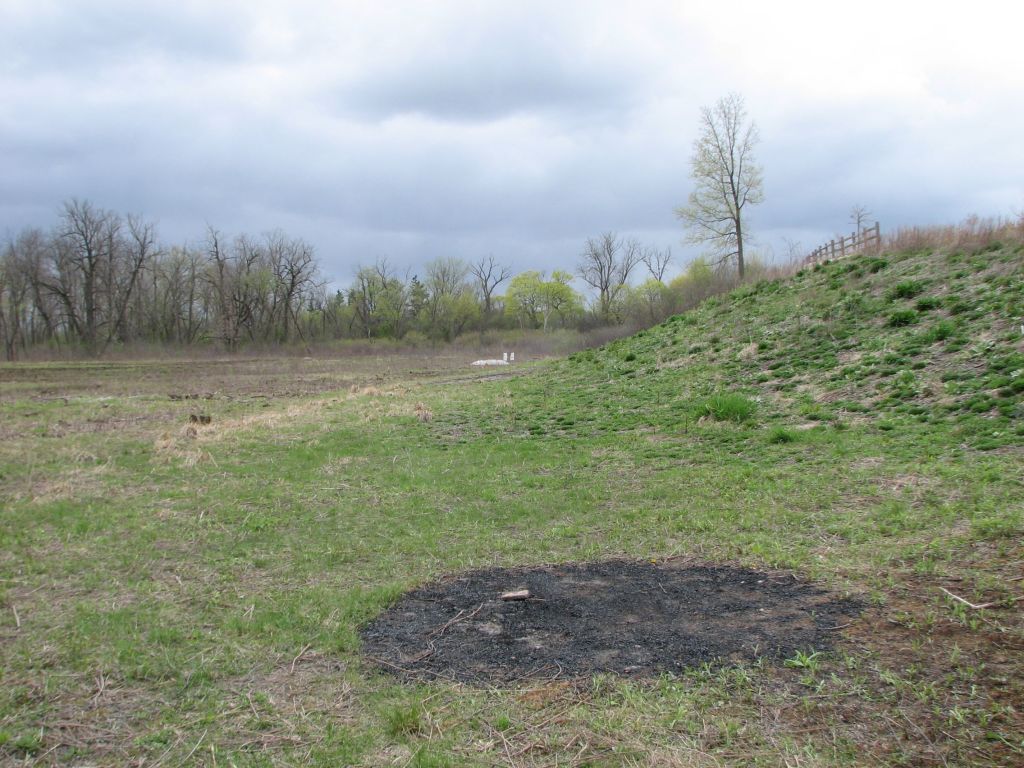
24. View of burn scar looking east.
25. Closer view of above image showing the vegetation that has developed.
26. View of burn scar looking towards the west.
27. Closer view of above image showing vegetation that has developed.
Summary
Maps
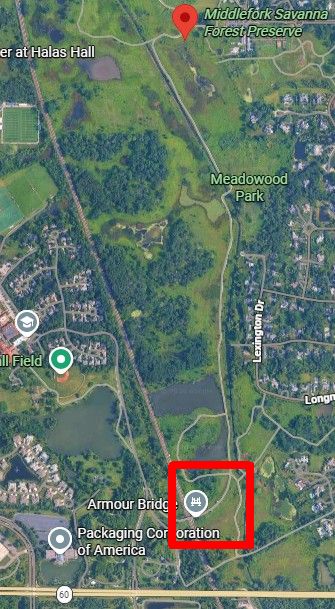
Retrieved August 10th, 2026 from Google Maps. (n.d.)
https://www.google.com/maps/place/Middlefork+Savanna+Forest+Preserve/@42.2520423,-87.8868023,1541m/data=!3m1!1e3!4m6!3m5!1s0x880f94ff1fffafab:0x8115c1c5e6b7b92!8m2!3d42.2576208!4d-87.8837331!16s%2Fg%2F1tlqql4y?entry=ttu&g_ep=EgoyMDI2MTEwMS4wIKXMDSoASAFQAw%3D%3D
Closer view of work area in above map.
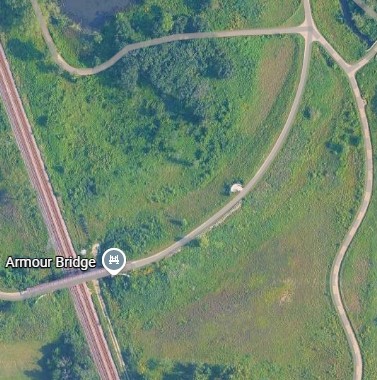
Retrieved August 10th, 2026 from Google Maps. (n.d.) https://www.google.com/maps/place/Middlefork+Savanna+Forest+Preserve/@42.2426603,-87.8841087,305m/data=!3m1!1e3!4m6!3m5!1s0x880f94ff1fffafab:0x8115c1c5e6b7b92!8m2!3d42.2576208!4d-87.8837331!16s%2Fg%2F1tlqql4y?entry=ttu&g_ep=EgoyMDI2MTEwMS4wIKXMDSoASAFQAw%3D%3D
Discussion
The most important observation is that three years after the workday occurred, the area is now worse than it was initially. A great majority of the invasive woody plants were not controlled by the herbicide application at the workday. Despite this failure, the sprouting invasive woody species did not have herbicide applied the following year. Rather, the sprouting stumps were allowed to grow. These invasive woody species now have more stems than had been initially present. Cutting all these additional stems, and applying herbicide to them, will require more effort than the first attempt at control.
This failure could be understandable if there was a lack of resource to do follow-up work. However, this is not the case. New areas have had invasive species cut, piled, and burned. New areas were worked on rather than completing follow-up in areas where work had already occurred.
My assessment is that experienced people are needed to advise this group. Expert advice to volunteers would allow for higher control rates to be achieved. Expert advice would also prevent hard work from being undone from a lack of follow-up.
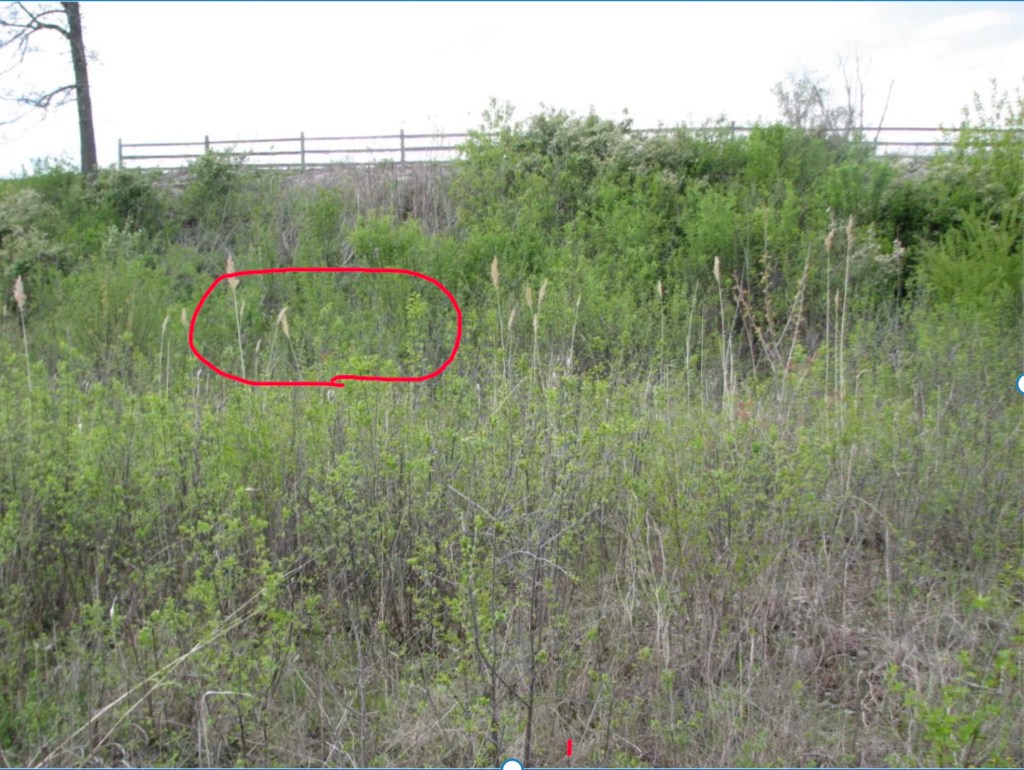
As for the successes, one of the herbicide applicators achieved a high rate of control. This herbicide applicator applied more herbicide to the cut stems than the other herbicide applicators. The increased amount of herbicide applied can be seen if you zoom in on image one, labelled “Image from immediately after 4/22/2023 Workday.” The invasive woody species that were controlled had cut surfaces that are more red in color after the herbicide application. The invasive woody species that were not controlled by the herbicide application had cut surfaces that are more pink in color after the herbicide application. The area where a herbicide application was effective is outlined in red in image two.
The small stemmed common buckthorns that were treated had a low rate of control. For a previous blog post about Middlefork Savanna, I counted common buckthorns of different sizes that had either survived or been killed by the herbicide application. This data was presented in a graph in the below blog post. The area of small-stem-diameter common buckthorns at the base of the slope only had a control rate of 34 percent. This data was skewed so a higher percentage of larger stemmed common buckthorns had been controlled compared to smaller stemmed common buckthorns.
The control rate of smaller stemmed common buckthorns could be increased if herbicide is applied to the basal bark, in addition to the surface of cut stems. In the following post, I give lengths of stem coverage for different stem diameters of common buckthorns when performing basal bark applications. Applicators can use these numbers as a starting point and make adjustments based on the control rates they are achieving.
The methods described in the above post would also control the “Small Common Buckthorns in the Prairie” shown under that respective heading. This method would provide control, while also minimizing impacts to non-target prairie plants.
The burn scar has common reed (Phragmites australis) growing in it. However, common reed is also growing thinly along the base of the slope. Some native plants, like wild strawberry, have colonized the burn scar. The burn scar may recover better than others because the soil was still cold from winter. Only time will tell how the burn scar recovery progresses.
Images
Work Area
1. Image from immediately after 4/22/2023 Workday.
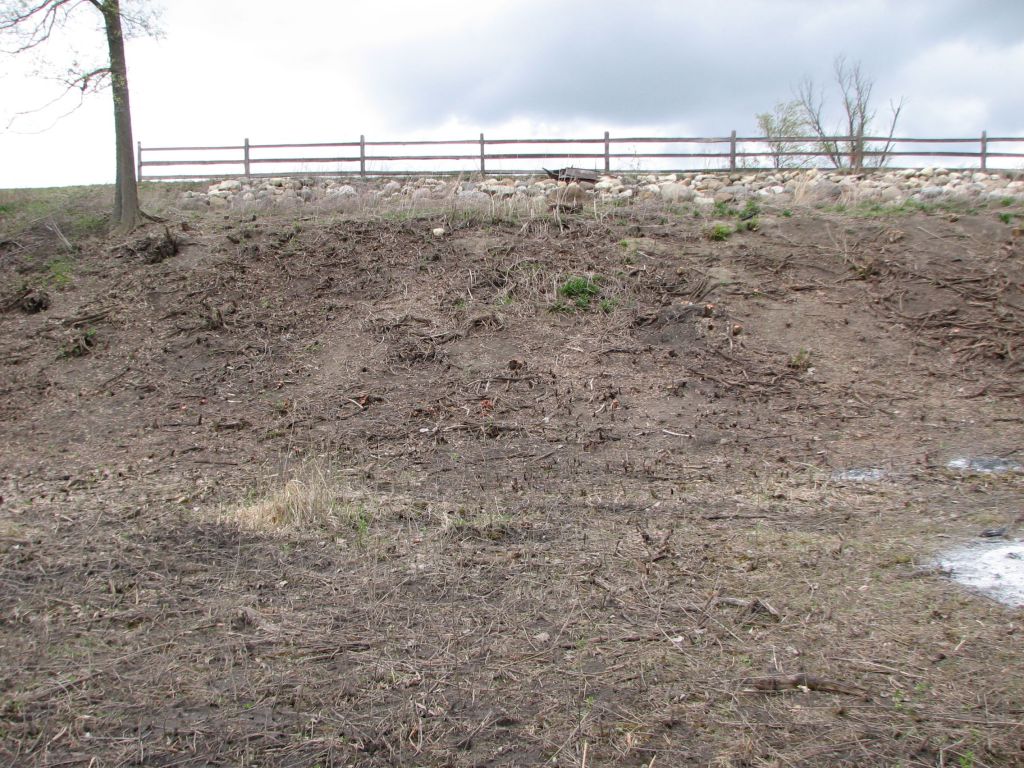
2. Image of same area as above but taken on 5/2/2026. All the woody invasive species that were cut and had herbicide applied sprouted and grew back. The only exception being the part of the work area on the lower left of the slope marked in red. This was an area where a very experienced applicator had applied the herbicide.
3. Wider view of work area immediately after 4/22/2023 workday.
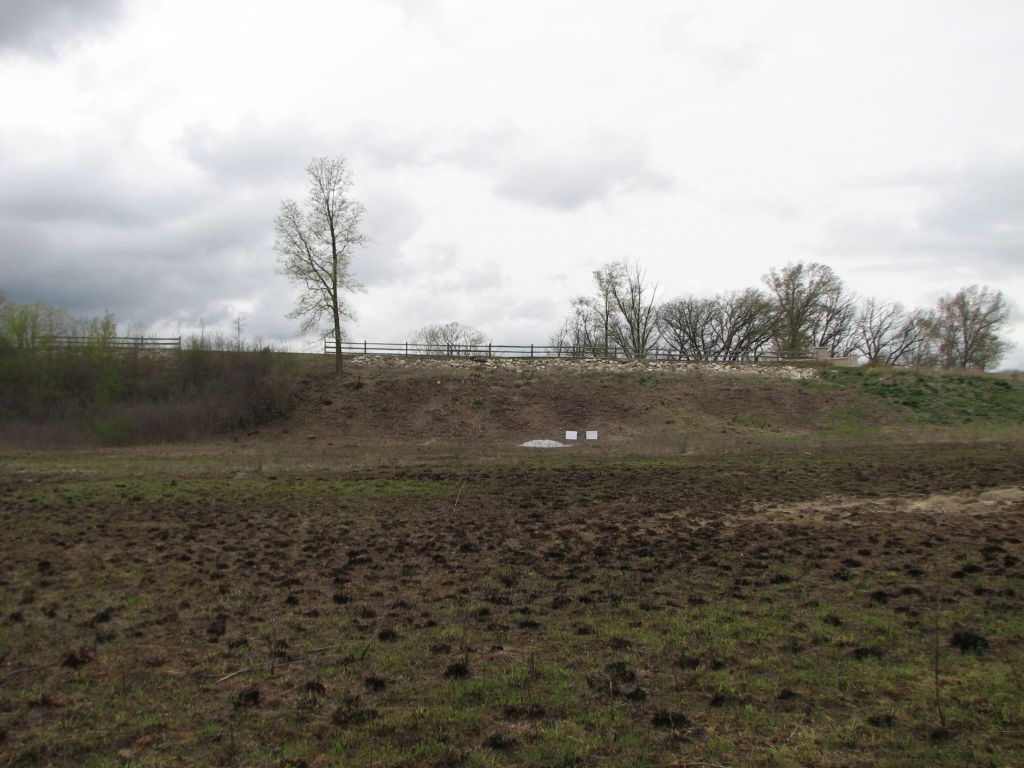
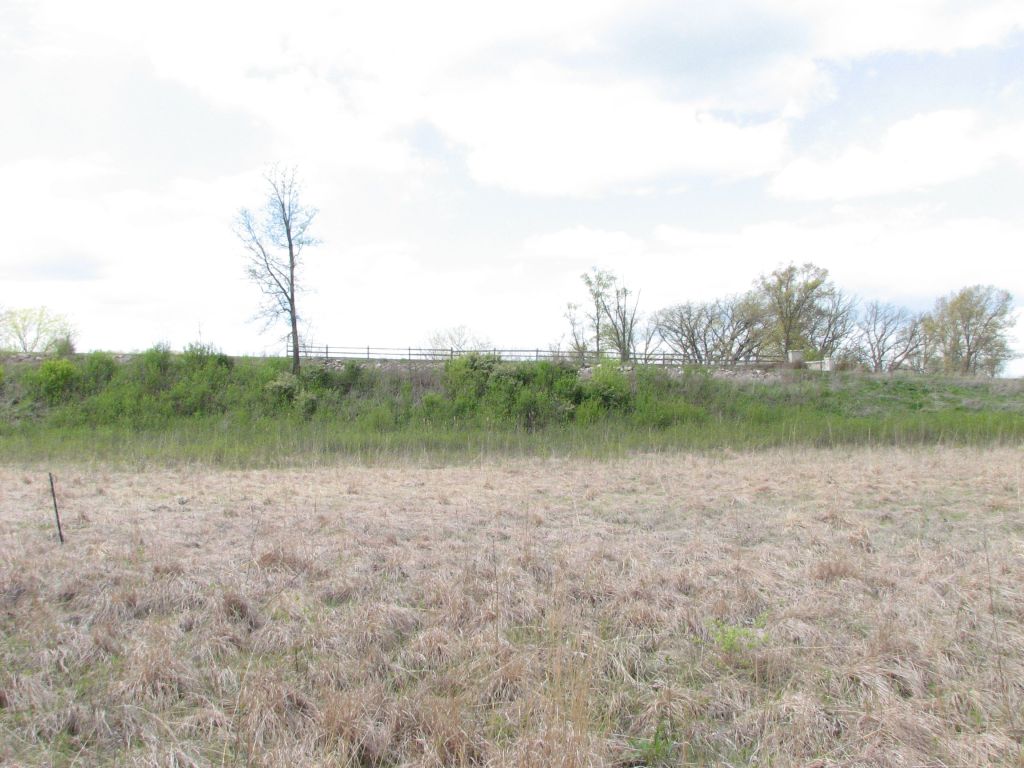
4. Image of same area as above but taken on 5/2/2026. In the foreground, there are green leaves in the otherwise brown prairie grass. These green leaves are common buckthorns. The prairie is thick with small common buckthorns.
Small Common Buckthorns in the Prairie
5. Closer view of above prairie area showing the small common buckthorns.
Views From Previous Work Area
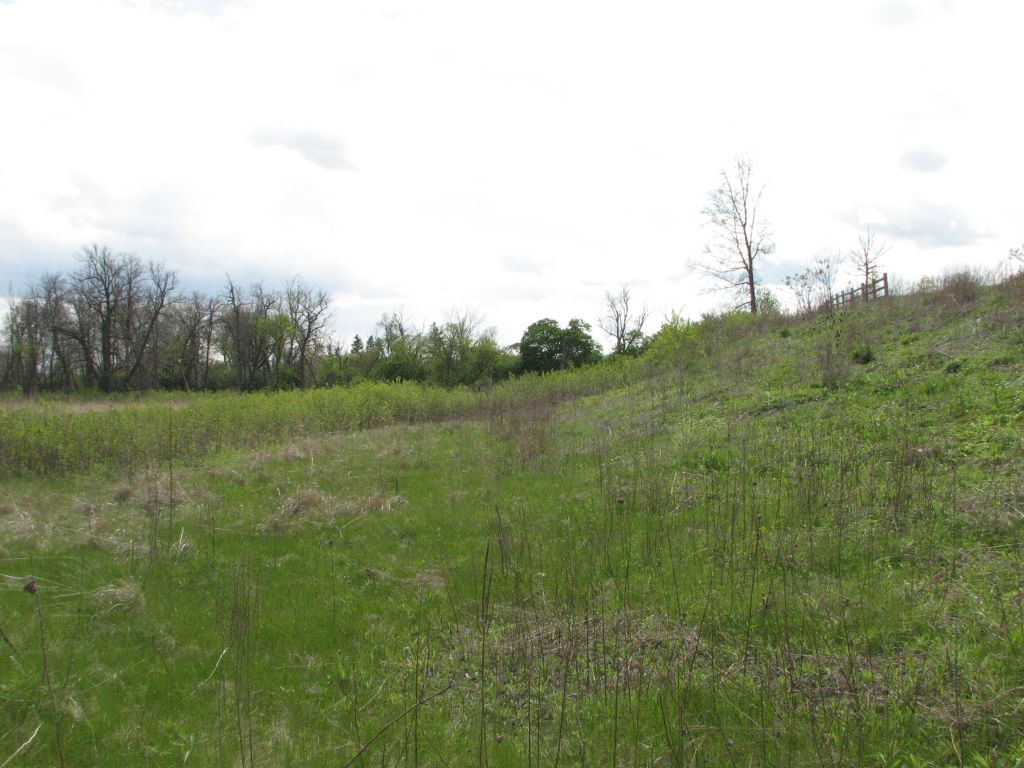
6. View of previous work area looking towards 4/22/2023 work area.
7. Same view as above but on 5/2/2026. Notice the line of small buckthorn between the prairie area and the disturbed slope. Applying triclopyr ester in basal oil to only the cut surface of small stemmed woody invasive species does not provide good control. To apply enough triclopyr ester in basal oil to kill woody invasive species with stem diameters less than roughly one inch, herbicide also needs to be applied to the basal bark. See discussion.
Treated Small Stemmed Common Buckthorns
8. This image shows the smaller stemmed common buckthorns between the prairie area and disturbed slope. This image was taken after the common buckthorns had been cut and herbicide had been applied to the cut stems during the workday on 4/22/2023. Some herbicide flowed from the cut down the stem. However, it was not enough to provide a high rate of control. I had previously counted alive and dead stems. I calculated a control rate of 34 percent, with the curve being skewed towards a higher rate of control for larger diameter stems.
Invasive Woody Species that Sprouted and Grew
9. This is a privet on the slope that was not killed by the herbicide application.
10. These are invasive bush honeysuckles that were not killed by the herbicide application.
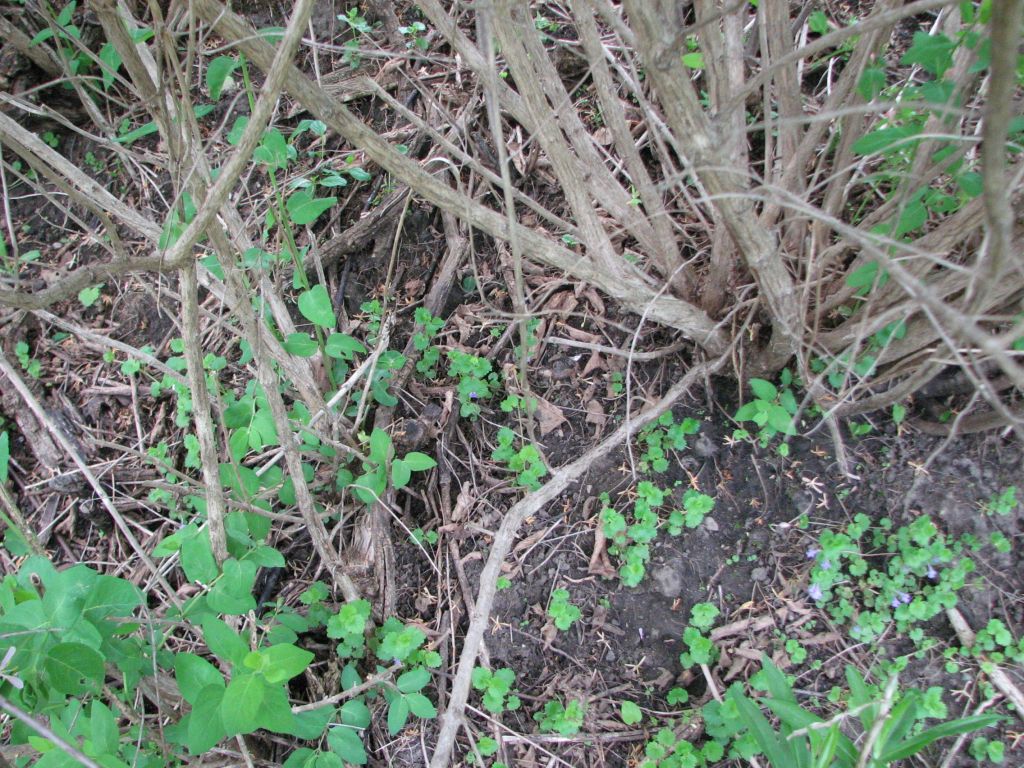
Surprise Flowers on the Disturbed Slope
11. Prairie trillium (Trillium recurvatum) found under the sprouted invasive brush. These trilliums were on the disturbed slope. My guess is that these trilliums came along with soil put on top of the fill when the bike path ramp was constructed.
12. White trout lily (Erythronium albidum) growing on the disturbed slope. My guess is that like the trilliums, these trout lilies came along with soil put on top of the fill when the bike path ramp was constructed.
13. This patch of starry Solomon’s plume (Maianthemum stellatum) has completely covered the ground well up into the disturbed slope.
14. Closer view showing flower of Starry Solomon’s plume.
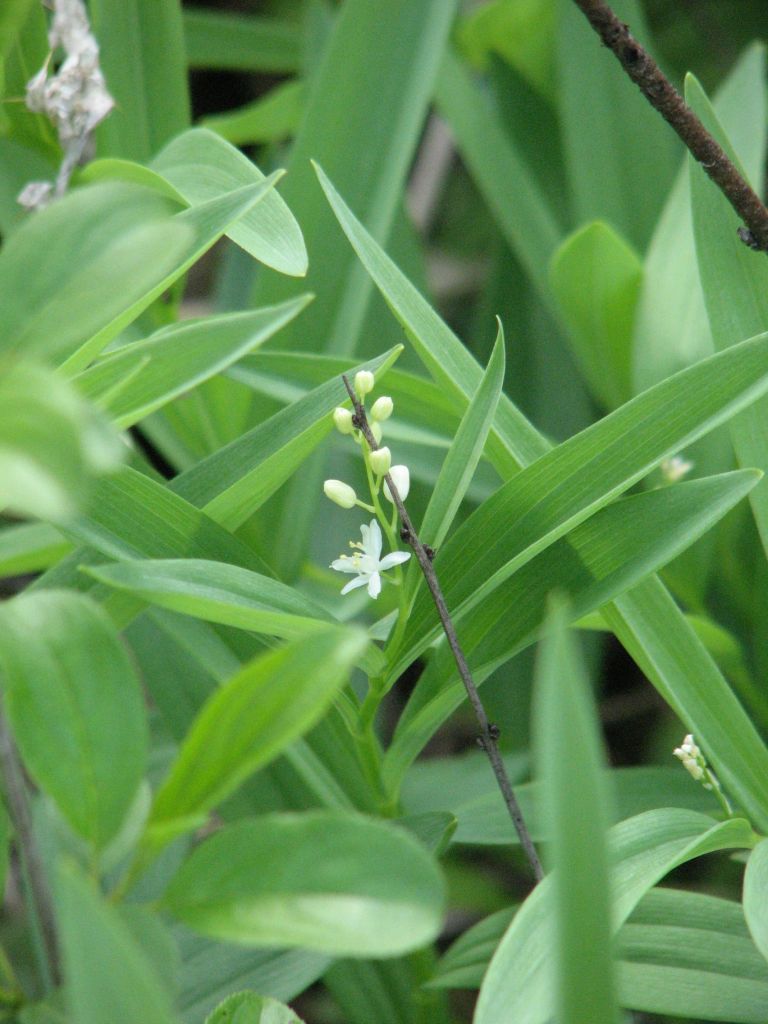
Controlled Woody Invasive Species
Before and After
15. Invasive bush honeysuckle treated with herbicide after having been cut during the workday.
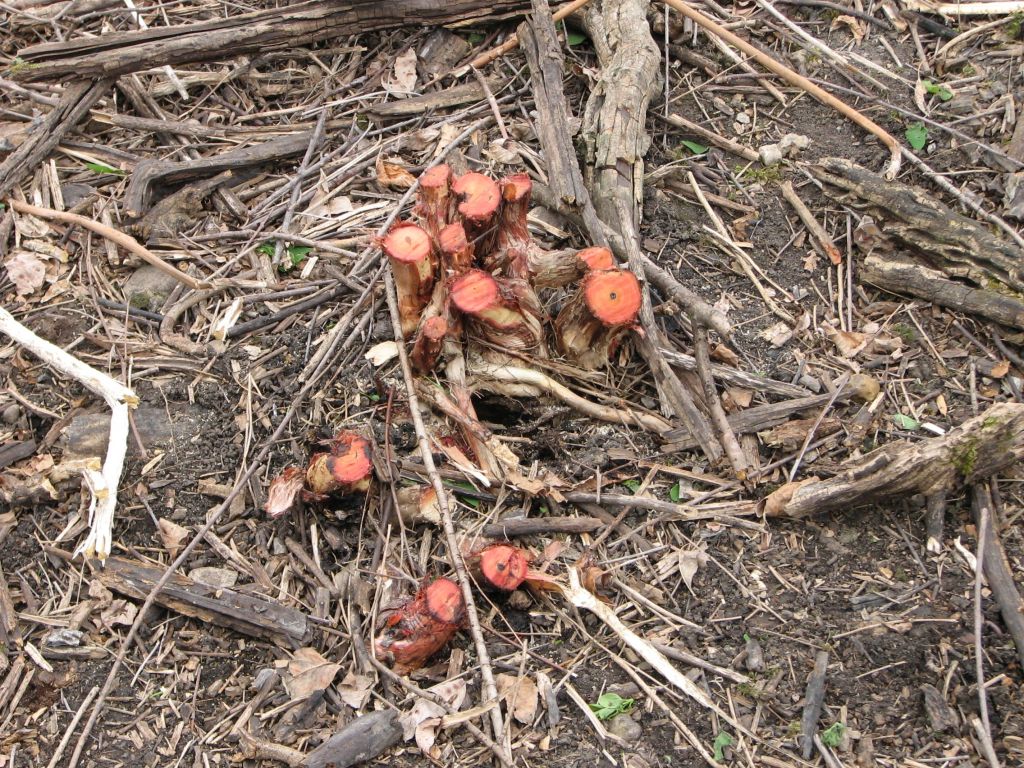
16. The same invasive bush honeysuckle shown above on 5/2/2026.
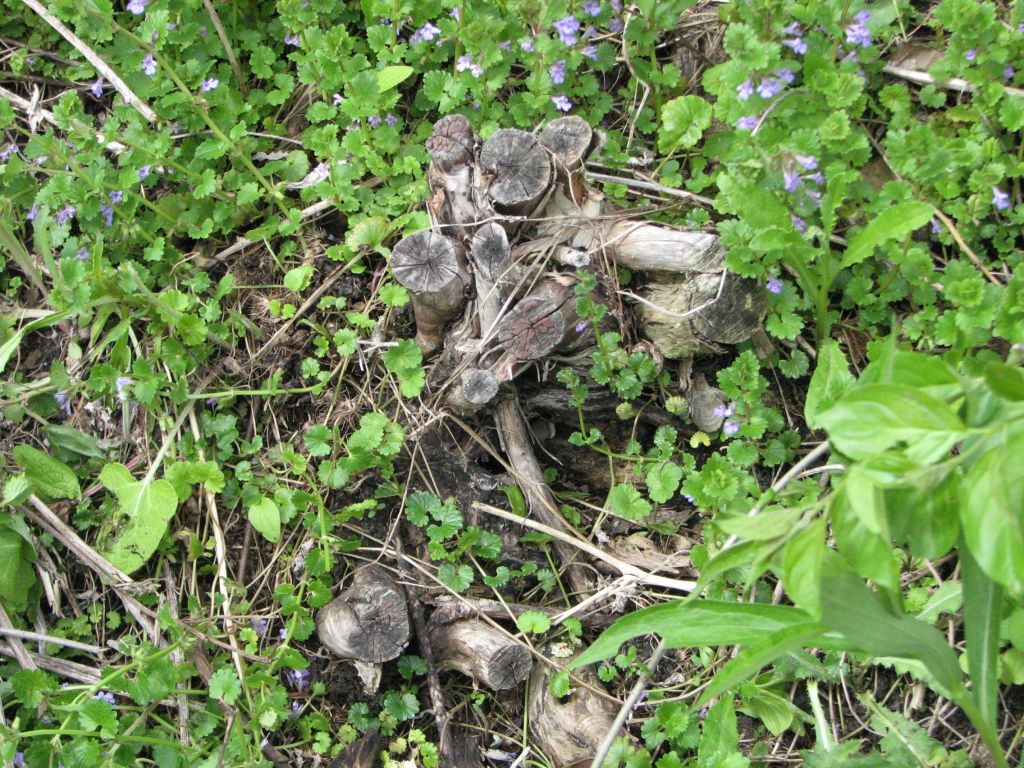
17. Invasive bush honeysuckle treated with herbicide after having been cut during workday.
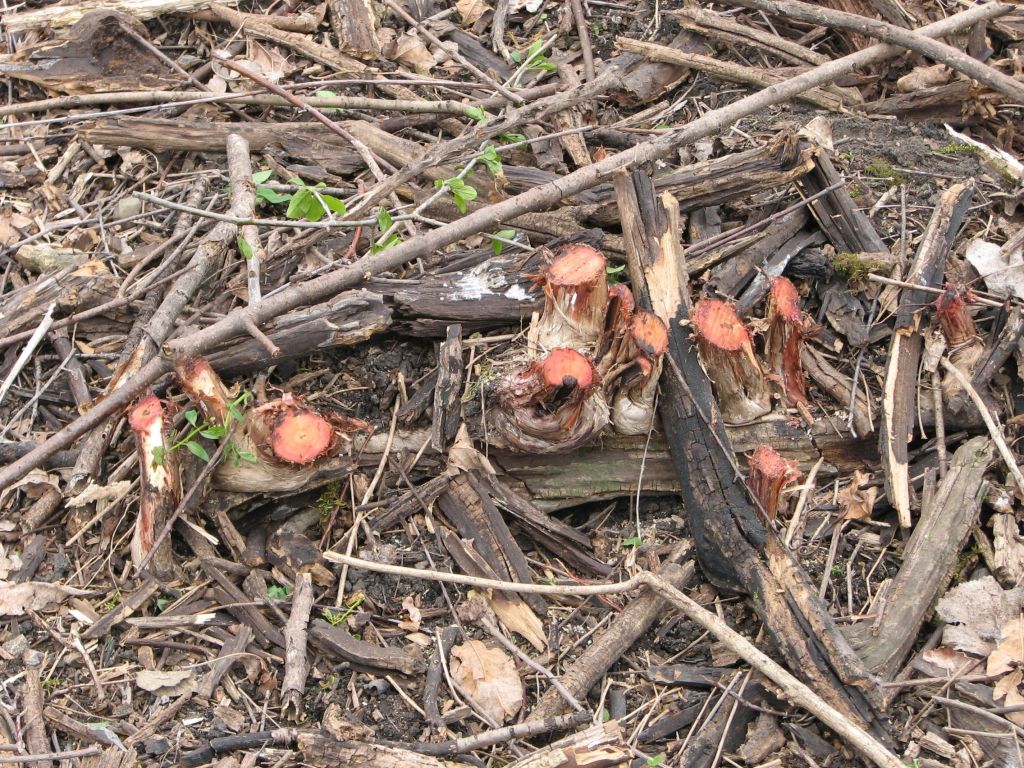
18. The same invasive bush honeysuckle shown above on 5/2/2026.
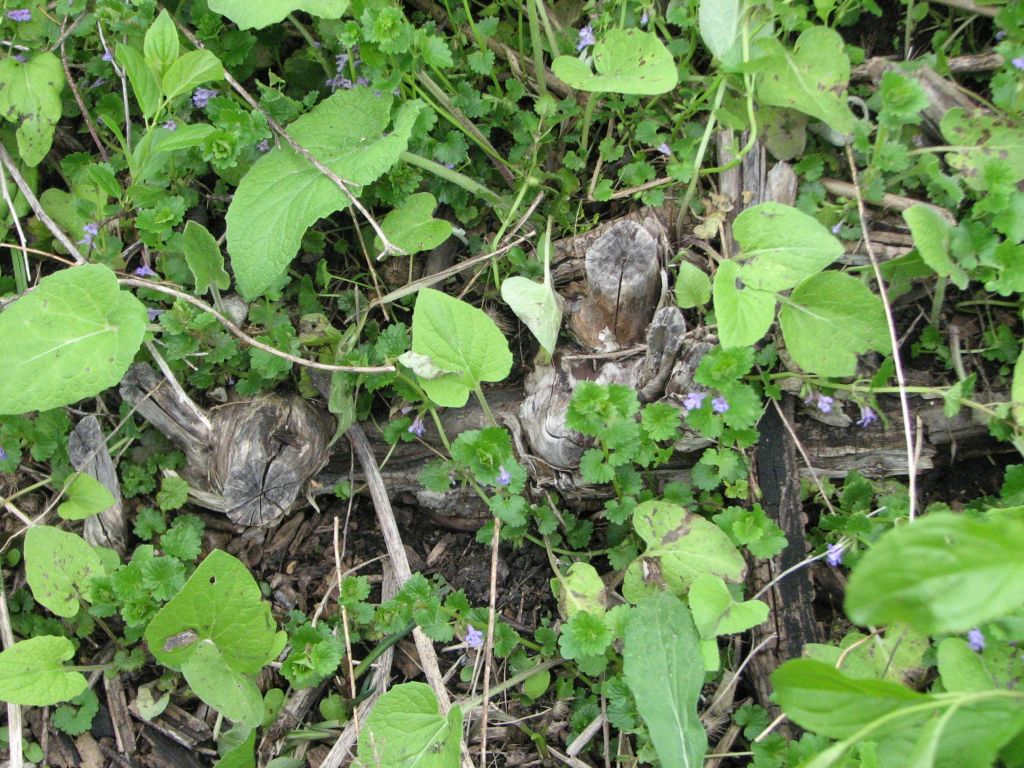
19. Common buckthorn treated with herbicide after having been cut during workday.
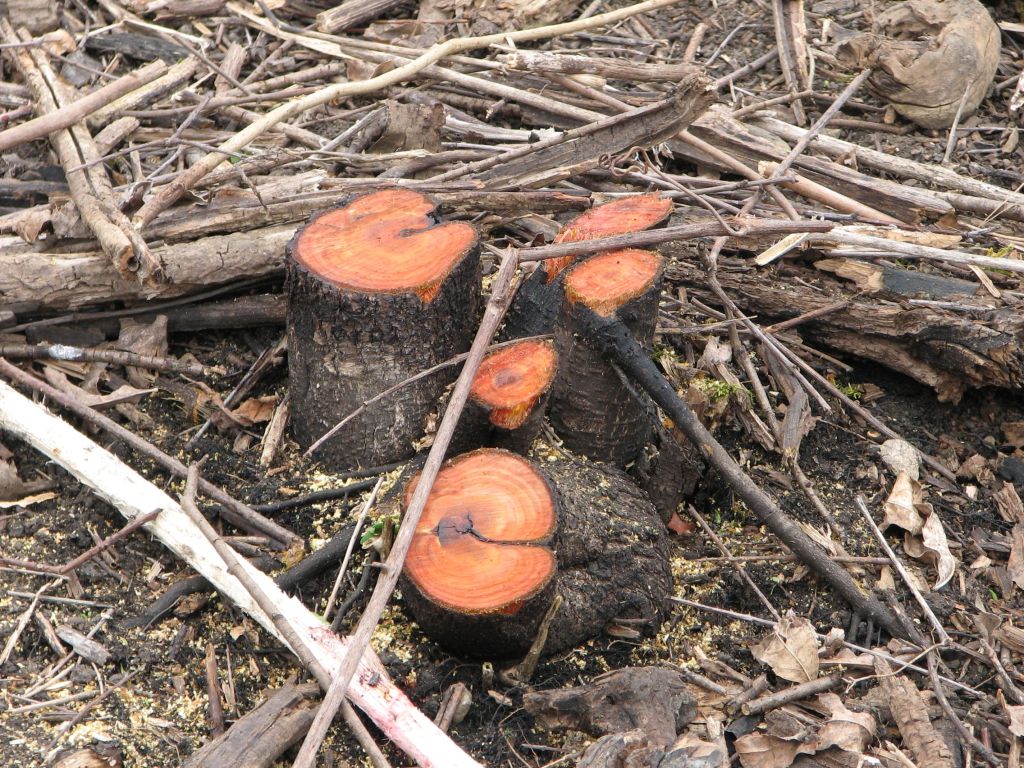
20. The same common buckthorn shown above on 5/2/2026.
Bonus
21. Woody invasive plants controlled by the herbicide application.
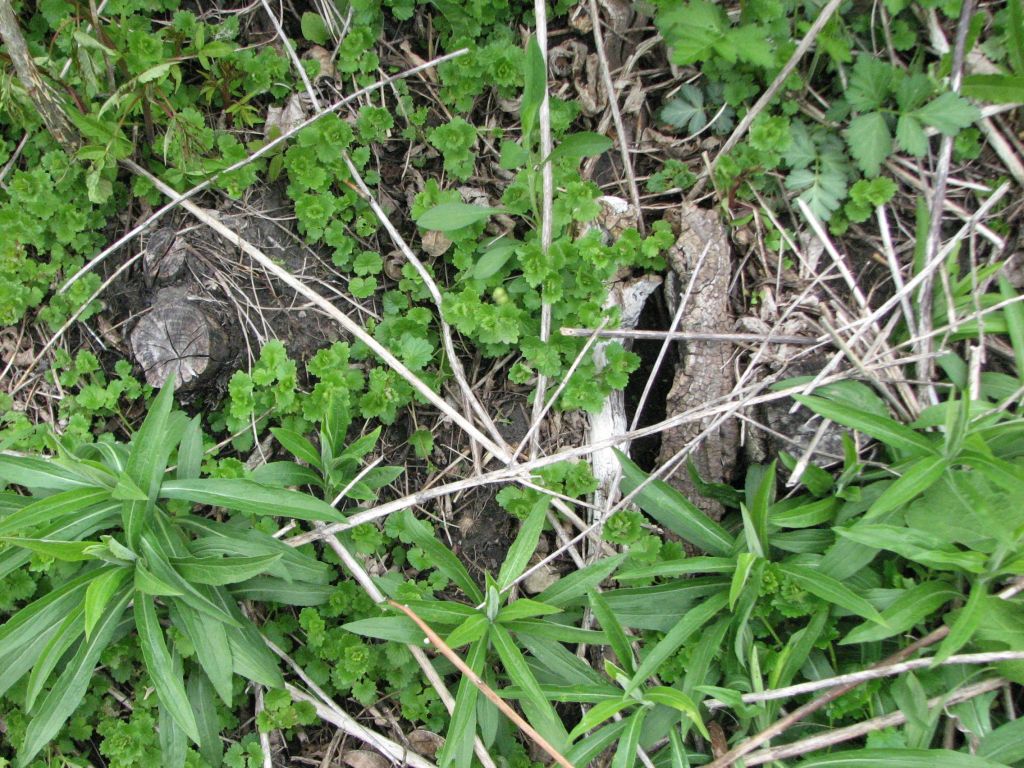
22. Common buckthorn controlled by the herbicide application.
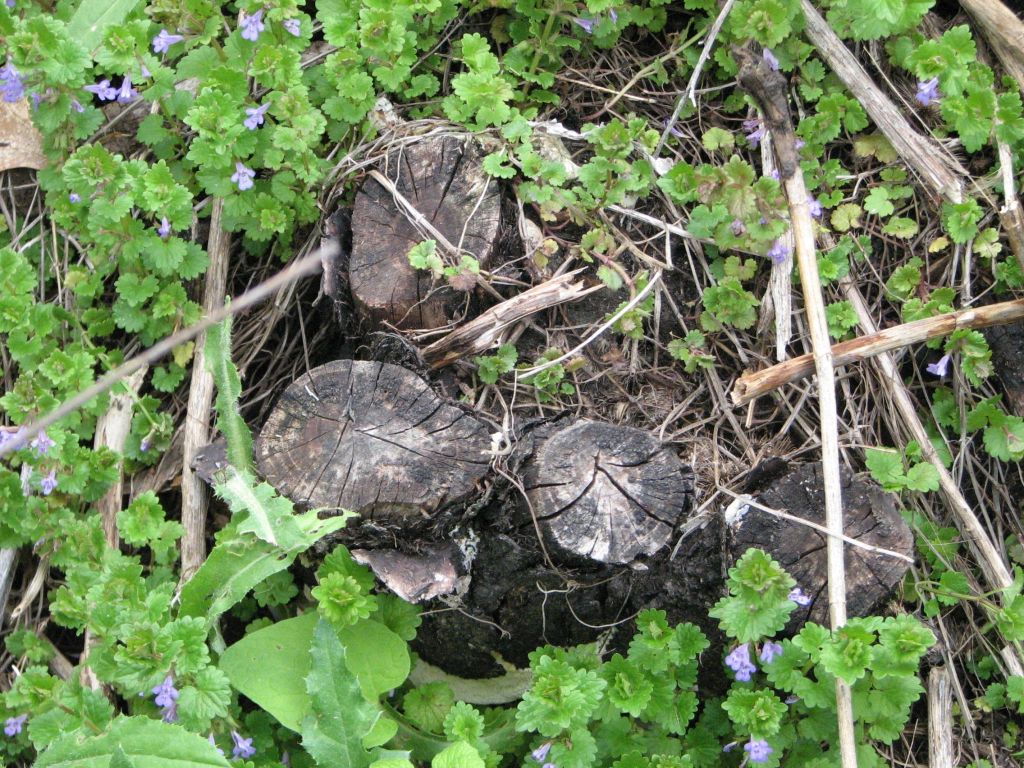
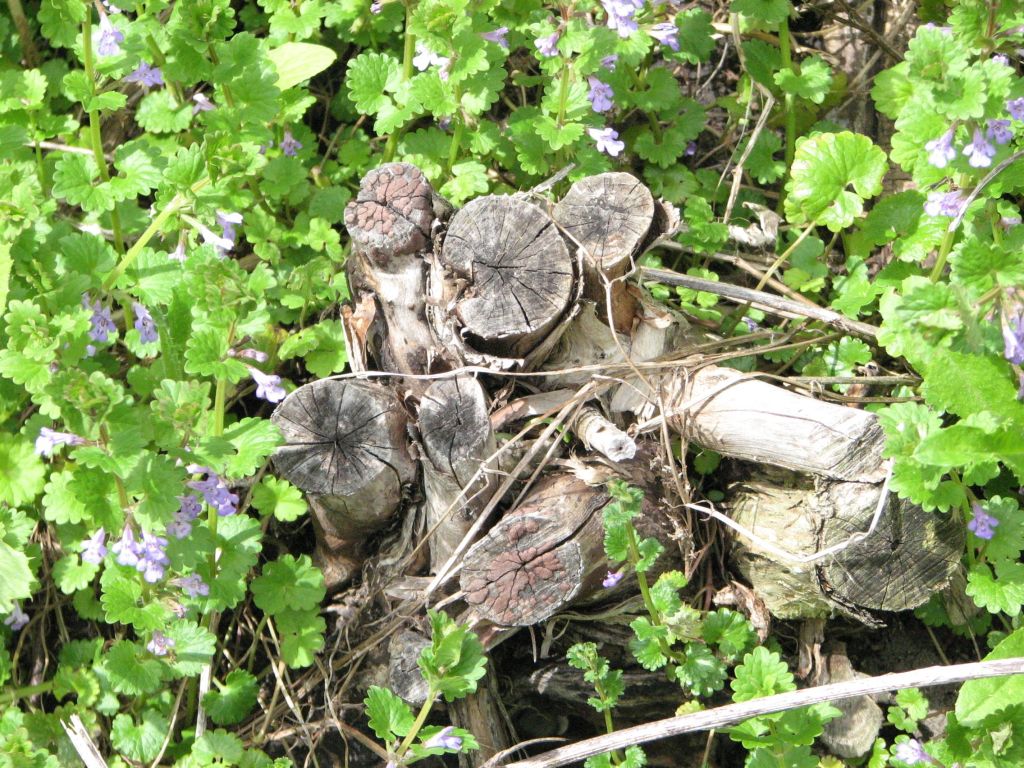
23. Woody invasive plant controlled by the herbicide application.
Burn Scar
24. View of burn scar looking east.
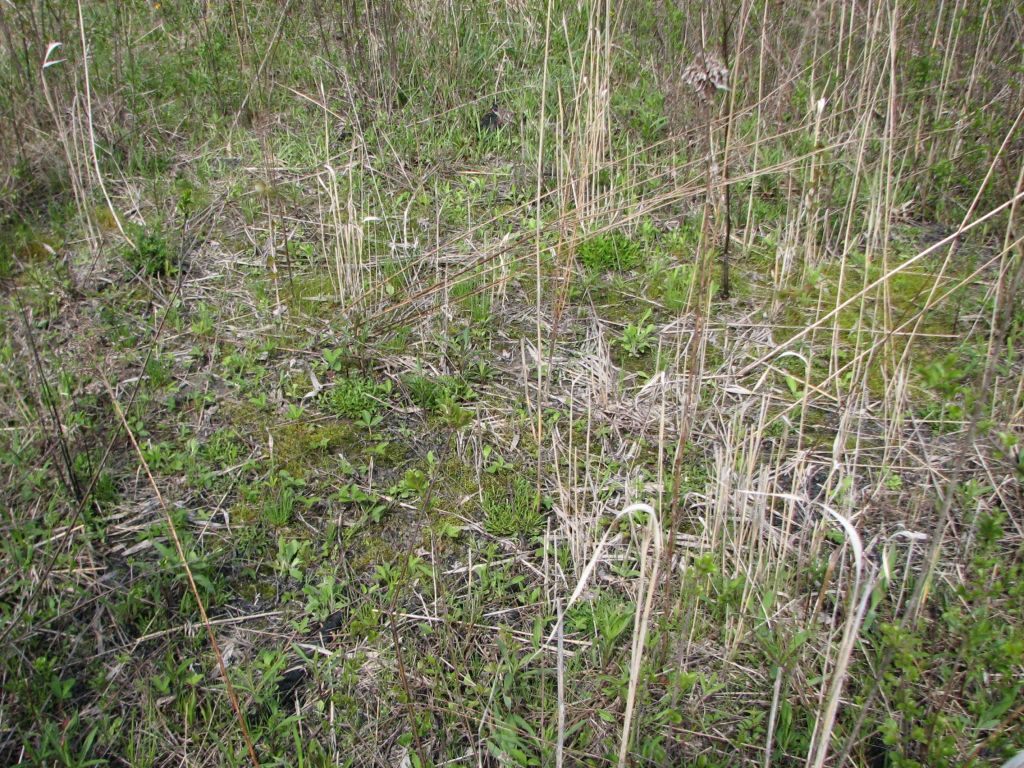
25. Closer view of above image showing the vegetation that has developed.
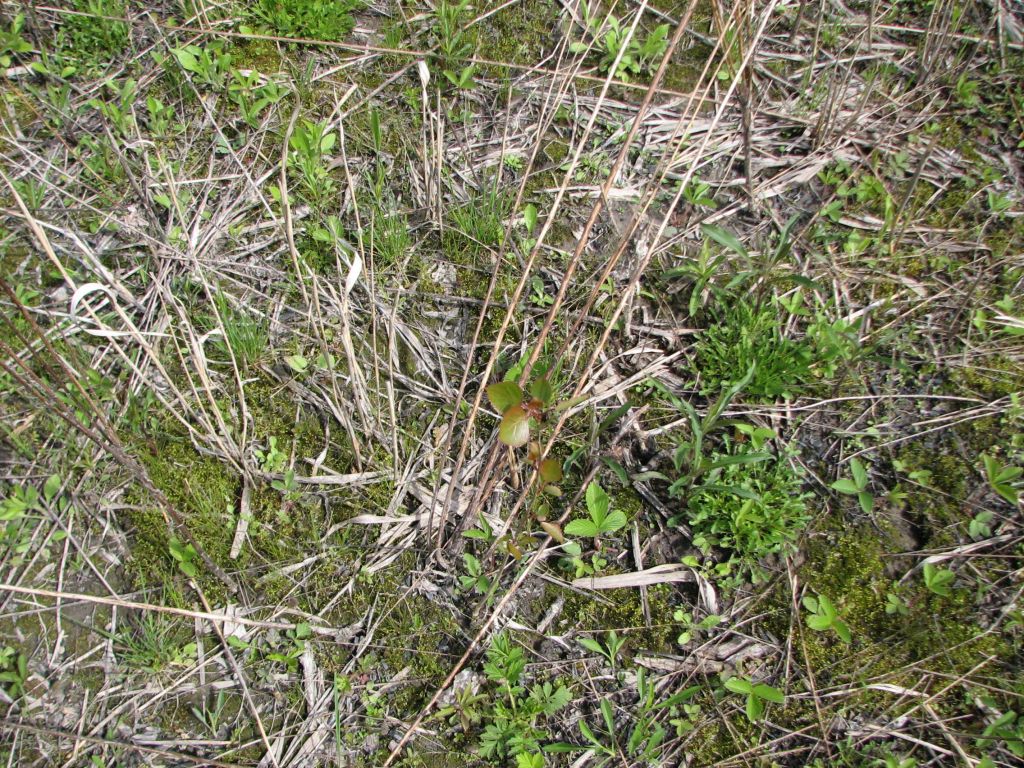
26. View of burn scar looking towards the west.
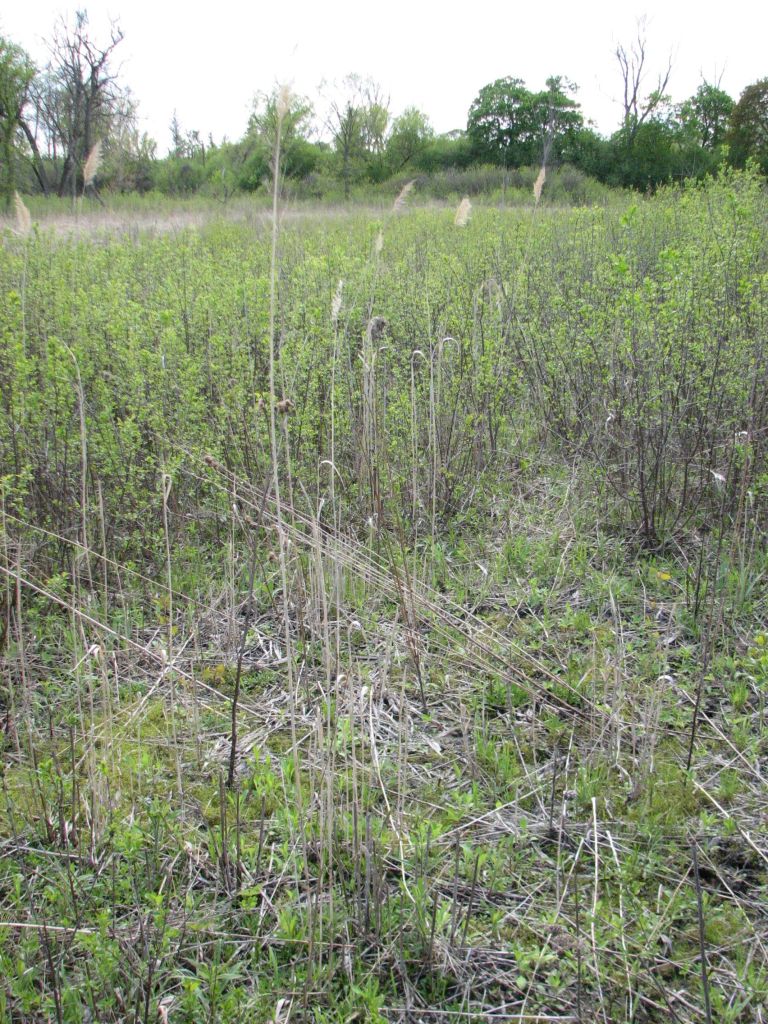
27. Closer view of above image showing vegetation that has developed.
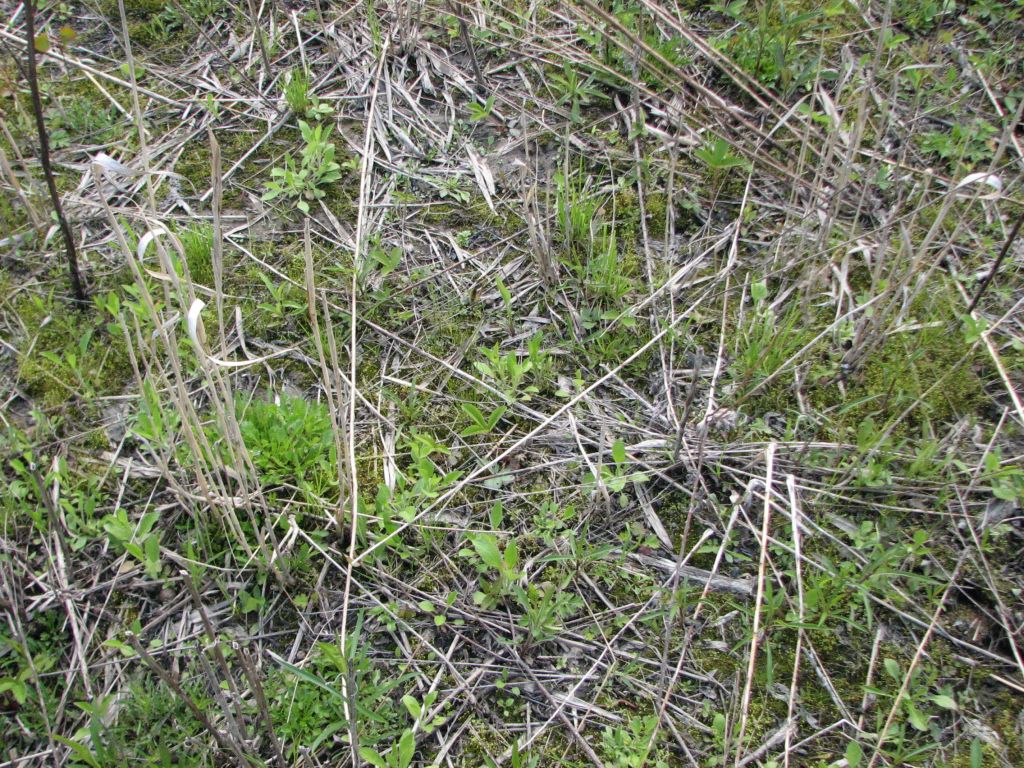
Summary
1. A higher control rate from herbicide applications is needed.
2. Follow-up to control sprouting stumps is needed.
3. Expert advice should allow for higher initial control rates and high control rates when follow-up is being done.
4. I suggest the small buckthorns in the prairie area be treated with the technique described in the blog post “My Best Basal Bark Herbicide Application: Winter Applications to Invasive Bush Honeysuckles and Common Buckthorns.”
5 The burn scar will need to be watched to see how it recovers.


Leave a Reply