Contents
Introduction
Big Jump Map
Images From Big Jump
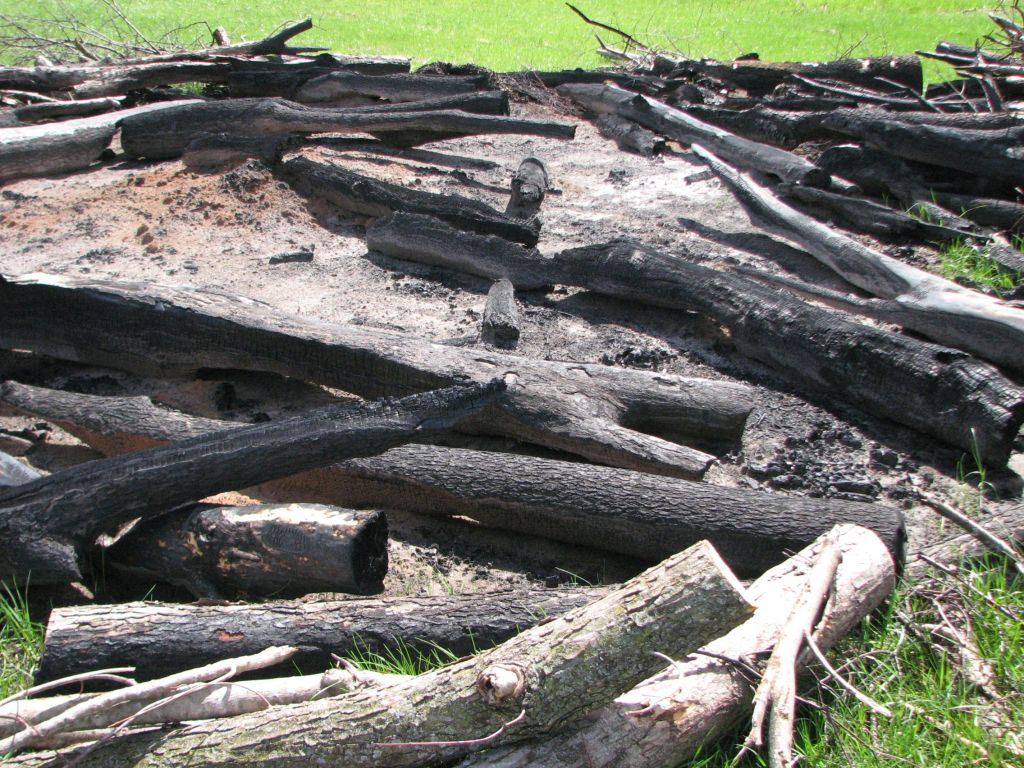
1. Burn scar near work area
2. A closer view of the burn scar
Discussion
3a. Controlled invasive bush honeysuckle with a wall of multiflora rose in the background
3b. Area above after forestry mowing
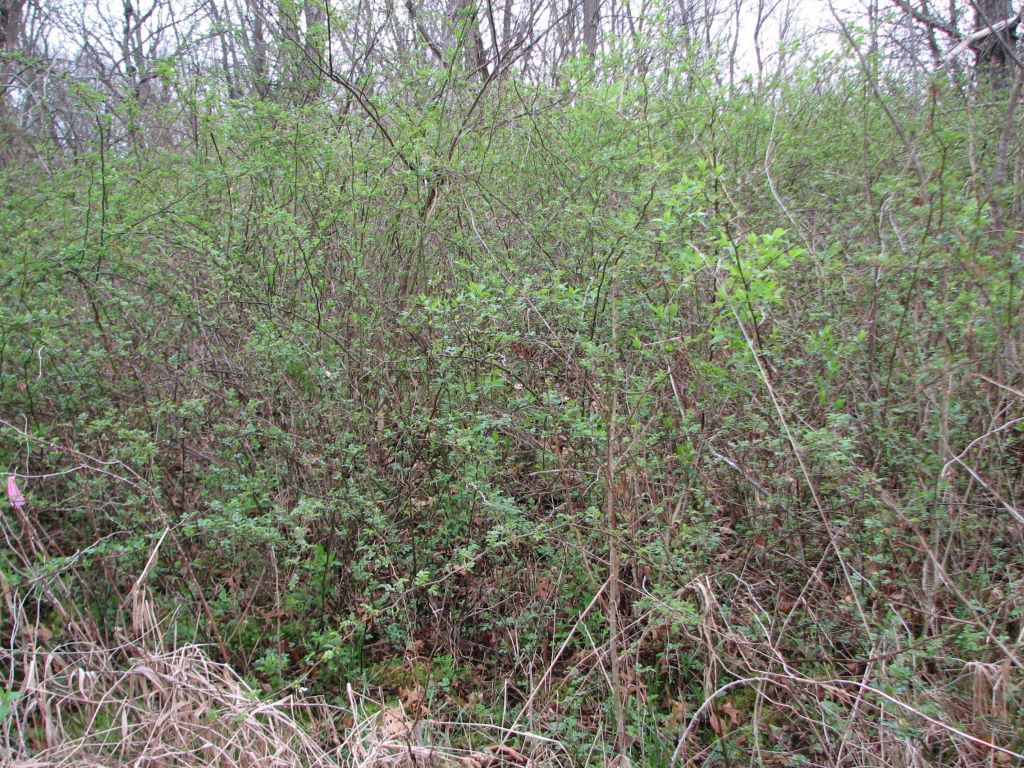
4a. Thicket of multiflora rose
4b. Above area after forestry mowing
5a. Looking down a north facing slope after invasive bush honeysuckle had been controlled
5b. The same slope as above, four years later
6a. Looking southwest toward the thicket of multiflora rose
6b. Above area after forestry mowing
7a. Looking up a north facing slope
7b. Area above after forestry mowing
8a. Woodland wildflowers on north facing slope four years ago
8b. Woodland wildflowers in above location on 4/18/2026
9a. Wider view of the area with the woodland wildflowers
9b. Image of same area, as shown above, on 4/18/2026
10a. A copse of invasive bush honeysuckle on the crest of a ridge
10b. Same copse of invasive bush honeysuckle on 4/18/2026
11a. Large-dead invasive honeysuckle in the middle of the copse
11b. The same large-dead invasive bush honeysuckles as shown above
12a. View of open pasture on top of the ridge
12b. Same view, as shown above, after forestry mowing
13a. Looking down the west facing slope
13b. Image of same area, shown above, on 4/18/2026
14a. A gooseberry (Ribes) at the base of the slope
14b. The same gooseberry four years later
15a. Looking at the entire west facing slope above the creek on 5/1/2022
15b. Five years after control, the invasive bush honeysuckle has recolonized the area
16a. Closer view looking up the southern part of the west facing slope above the creek on 5/1/2022
16b. The same view as above four years later
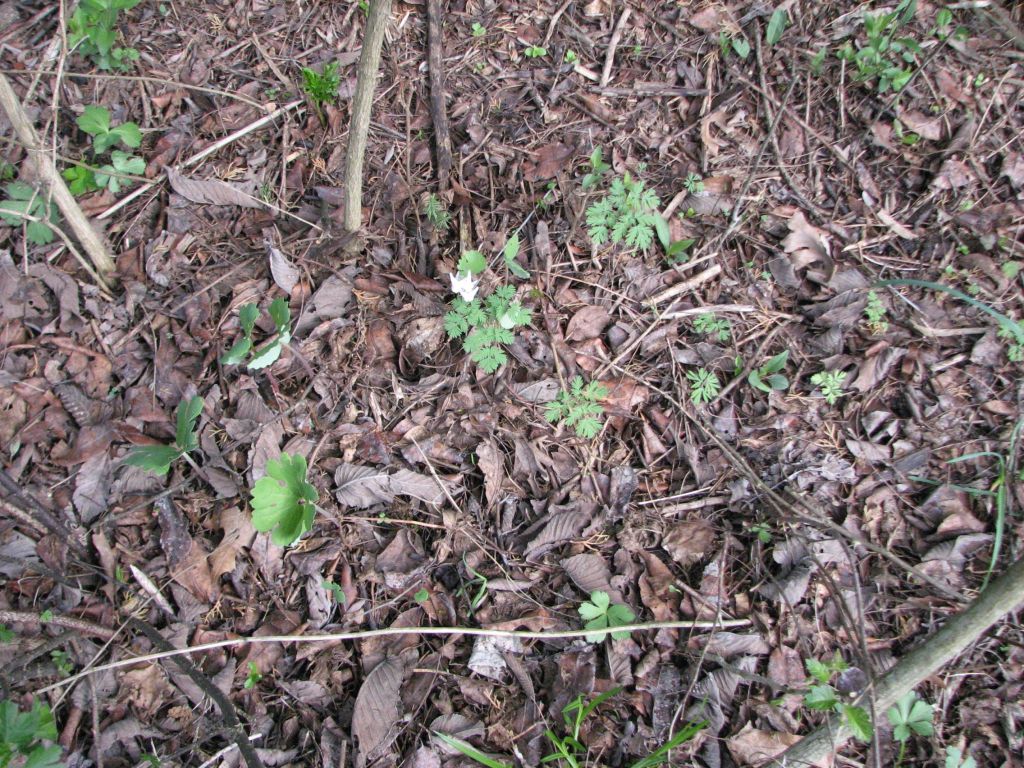
17a. Woodland wildflowers at the base of the western facing slope on 5/1/2022
17b. Woodland wildflowers at the base of the western facing slope four years later
18a. Closer view, looking up the northern portion of the western facing slope on 5/1/2022.
18b. Closer view, looking up the northern portion of the western facing slope four years later
19a. Looking south towards the western facing slope on 5/1/2022
19b. Looking south towards the western facing slope four years later
20a. The ground under the invasive woody species on the south facing slope the spring following control
20b. The ground under where the invasive woody species had been controlled four years later
21a. A wider view showing the ground layer under the invasive woody species the spring following control
21b. A view from the same general area shown above, four years later
22. Looking from within the thicket on the west facing slope toward the north
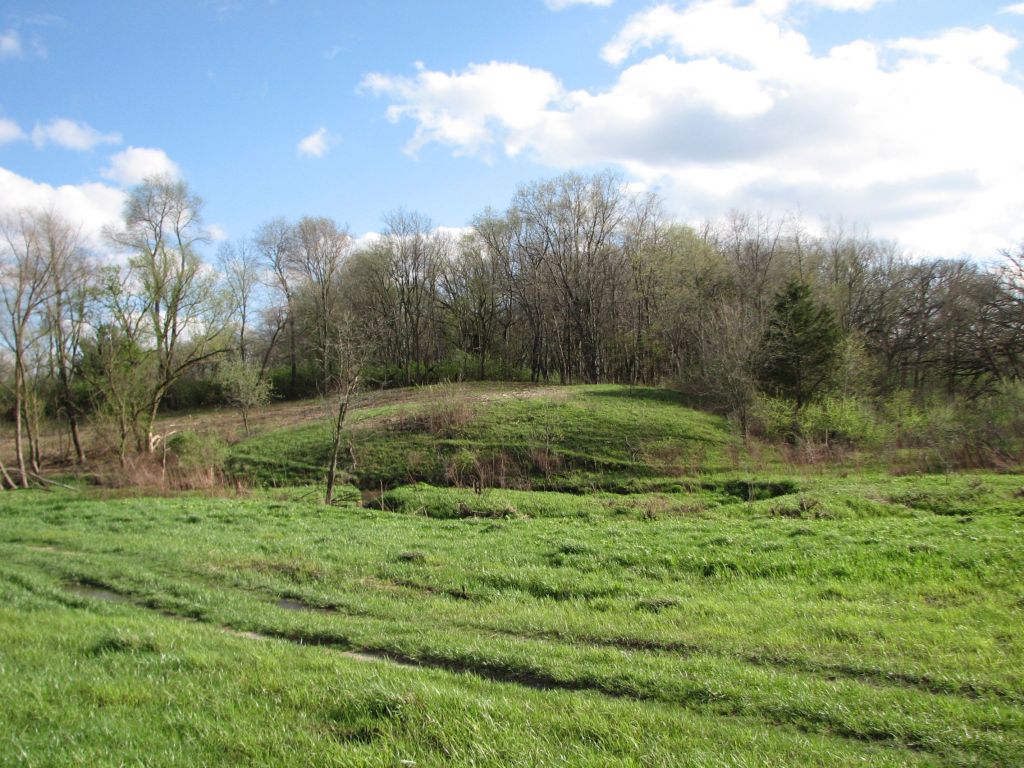
23a. Wide view of the knoll, shown in the above images, on 5/1/2022
23b. The same view as above, four years later, on 4/22/2026
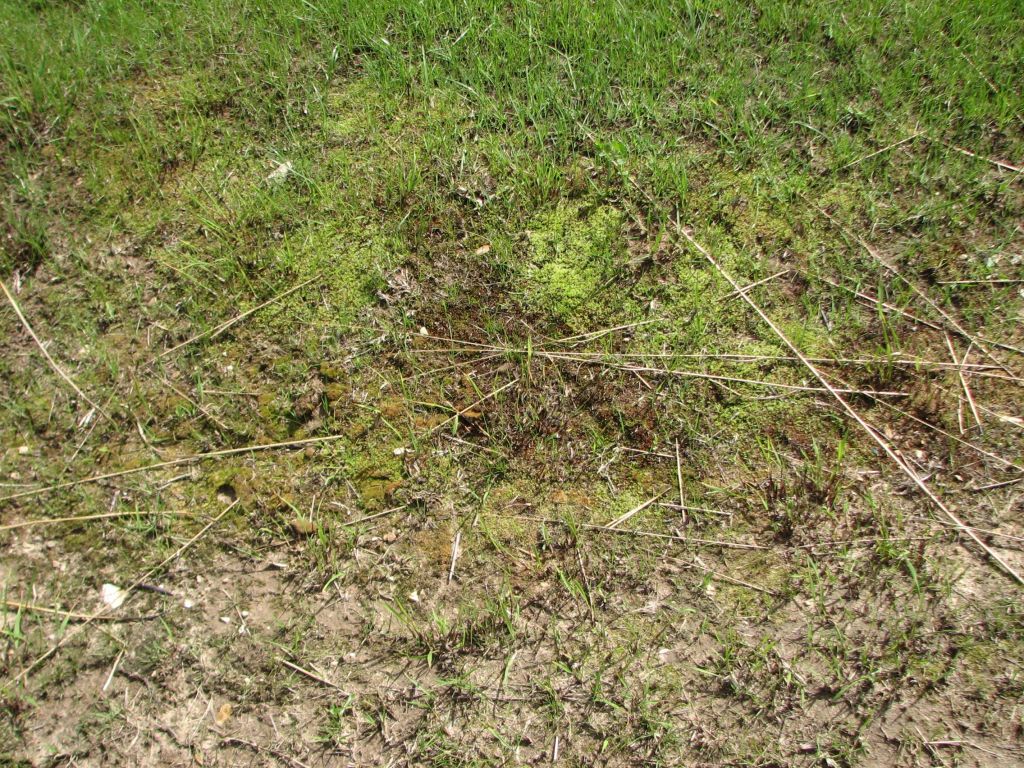
24. A road cut where water seepage has allowed moss to grow
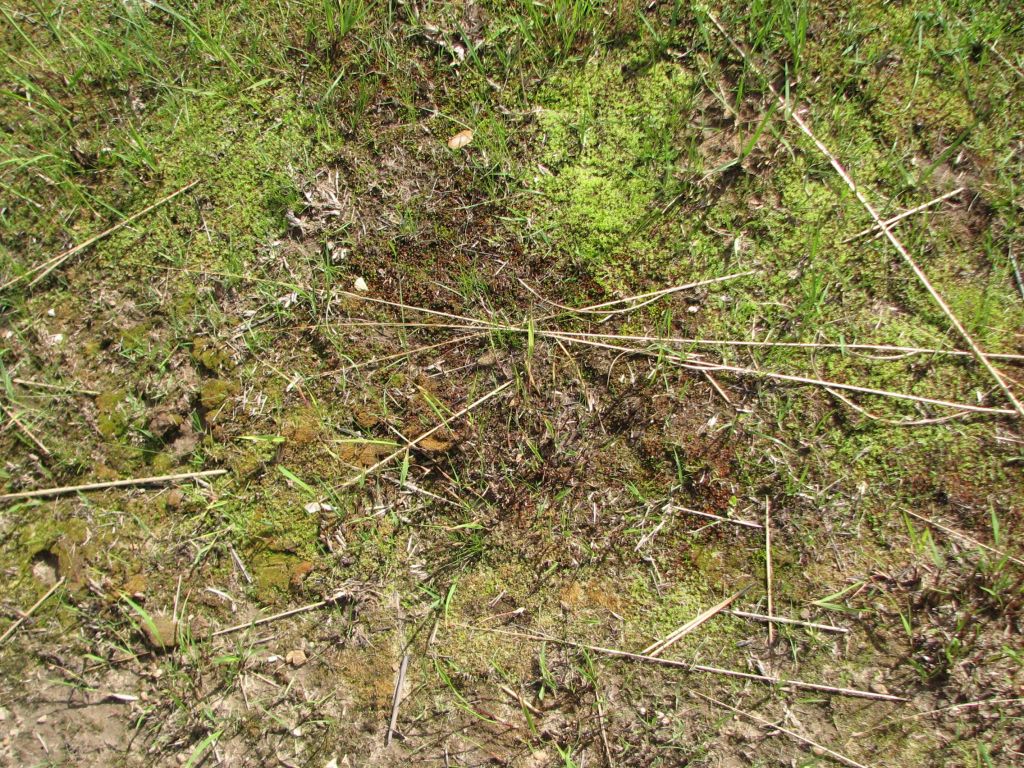
25. Closer view of the moss in above shown road cut
Orland Grasslands Map
Images from Orland Grasslands
26a. View showing an area the spring following herbicide application to woody invasive species
26b. Same view as above, about five years after herbicide was used to control woody invasive species.
27a. This image is looking toward an area where herbicide application to invasive woody species did not occur
27b. This image is from the same direction as above, but was taken on 4/22/2026
28a. This image shows an area where invasive woody species had herbicide applied
28b. This image shows the same area as image 28a, but was taken four years later
29a. Looking towards another area where invasive bush honeysuckle was not controlled
29b. The same area above, four years later
30a. Looking the opposite direction of image 29a and 29b into an area where invasive woody species had herbicide applied
30b. The same area as above, four years later
Introduction
I volunteered at The Nature Conservancy’s Nachusa Grasslands from 2019 to 2021. This post has images labelled with numbers followed by an “a” or “b.” Images marked with an “a” were taken on 5/1/2022. Images marked with a “b” were taken on 4/22/2026. This spring was two weeks ahead of previous springs. Therefore, the phenology when the images were taken should be comparable.
A number of the images show areas before forestry mowing and after forestry mowing. This was not planned. The forestry mowing just happened to occur before my visit. My opinion is the forestry mowing is a good thing. Before forestry mowing, the multiflora rose thicket was impenetrable. Now, if control work is done soon, then the multiflora rose will be easier to control. The only negative from the forestry mowing that was done is the area now smells like diesel fuel. The only explanation I have for this was the forestry mower must have been leaking fuel while doing the work.
Map
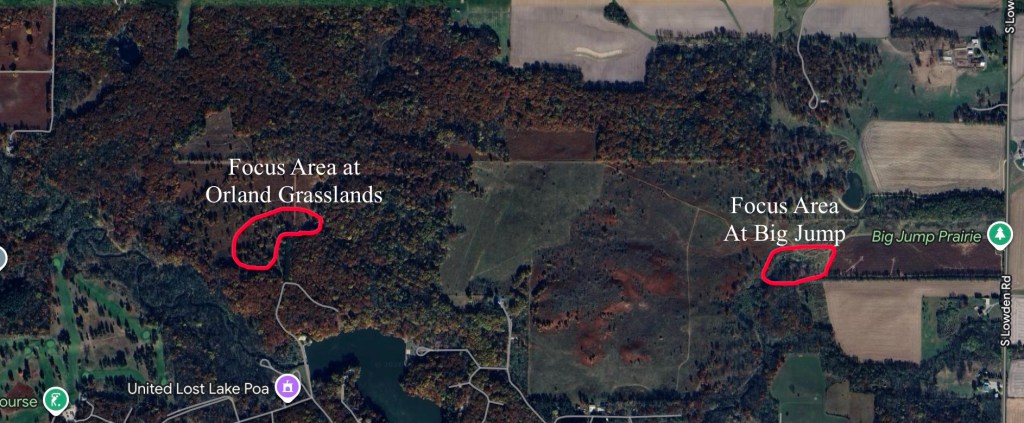
Big Jump Map
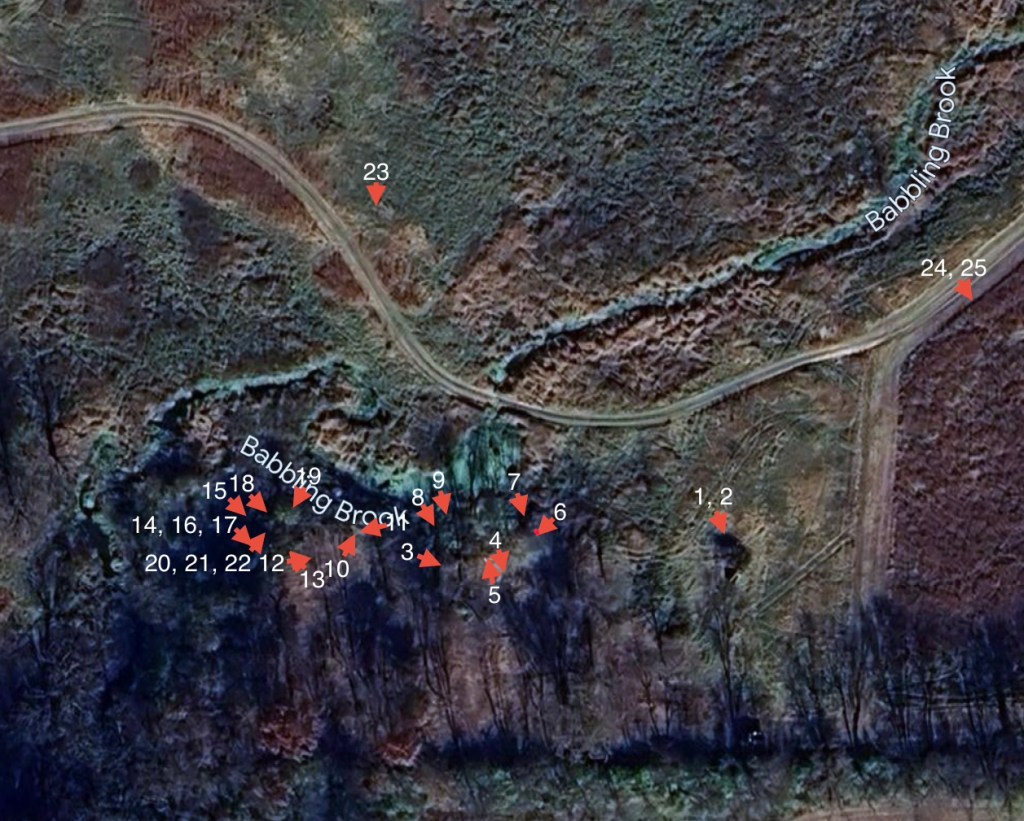
Images From Big Jump
1. Burn scar near work area
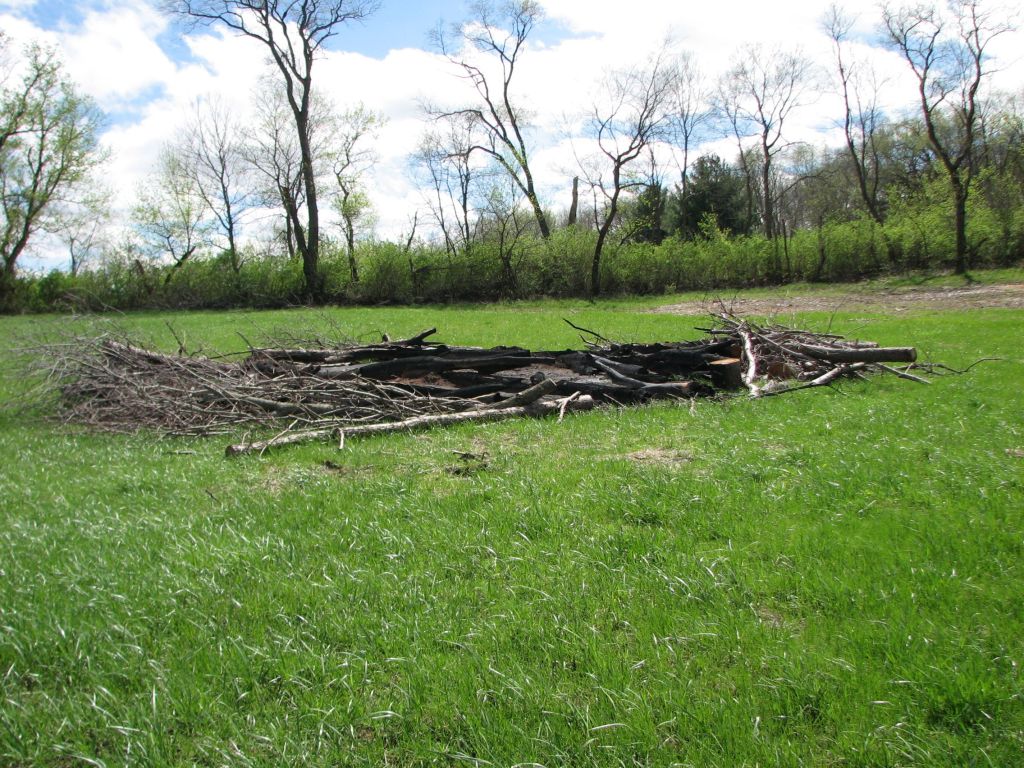
2. A closer view of the burn scar.
Discussion
I disagree with piling wood and burning it. I think dead wood should be left to catch fire and burn, or decompose. My observation has been burning brush piles leaves long lasting damage to the soil. Although, this is not a high-quality area, but rather cool season grass pasture.
3a. Controlled invasive bush honeysuckle with a wall of multiflora rose in the background
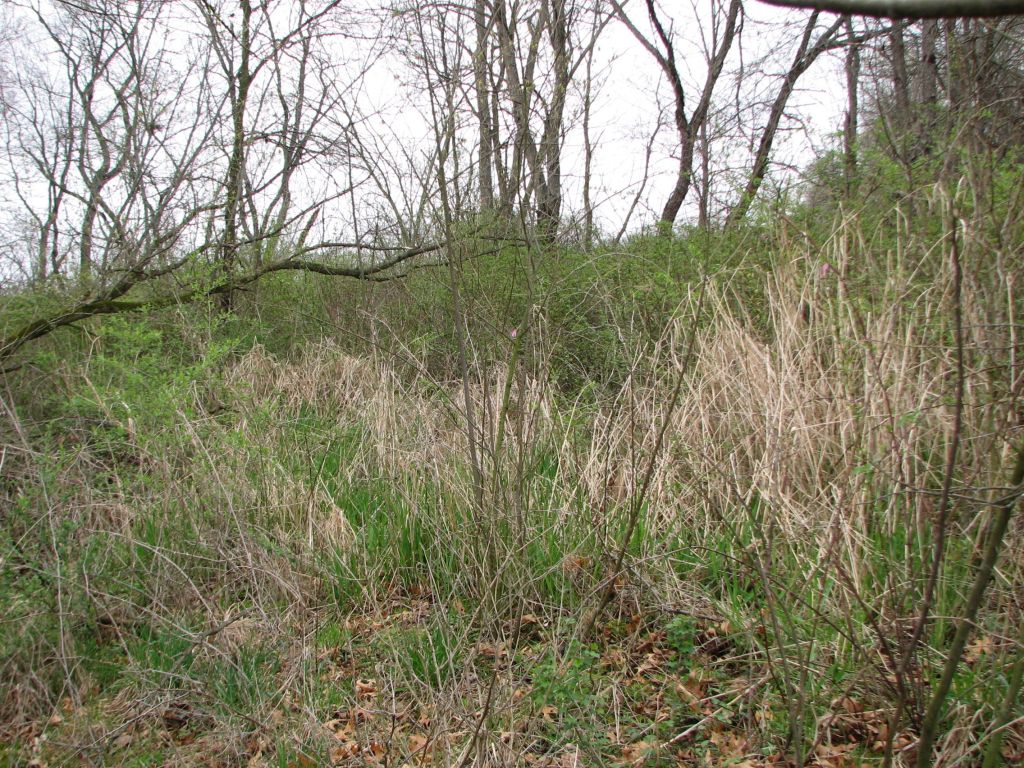
3b. Area above after forestry mowing
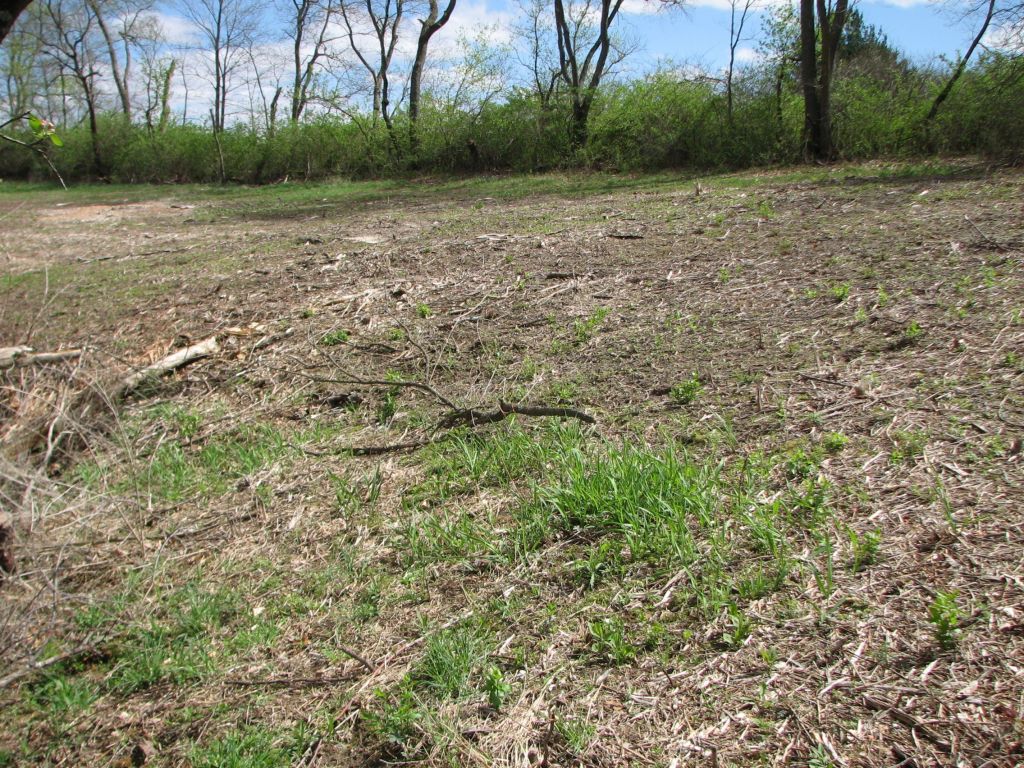
4a. Thicket of multiflora rose. Control work had been done along the edge of this thicket of multiflora rose. Some dead canes are visible. The multiflora rose only had herbicide applied as far as I could reach into the thicket with a long-handled mini-paint roller.
4b. Above area after forestry mowing
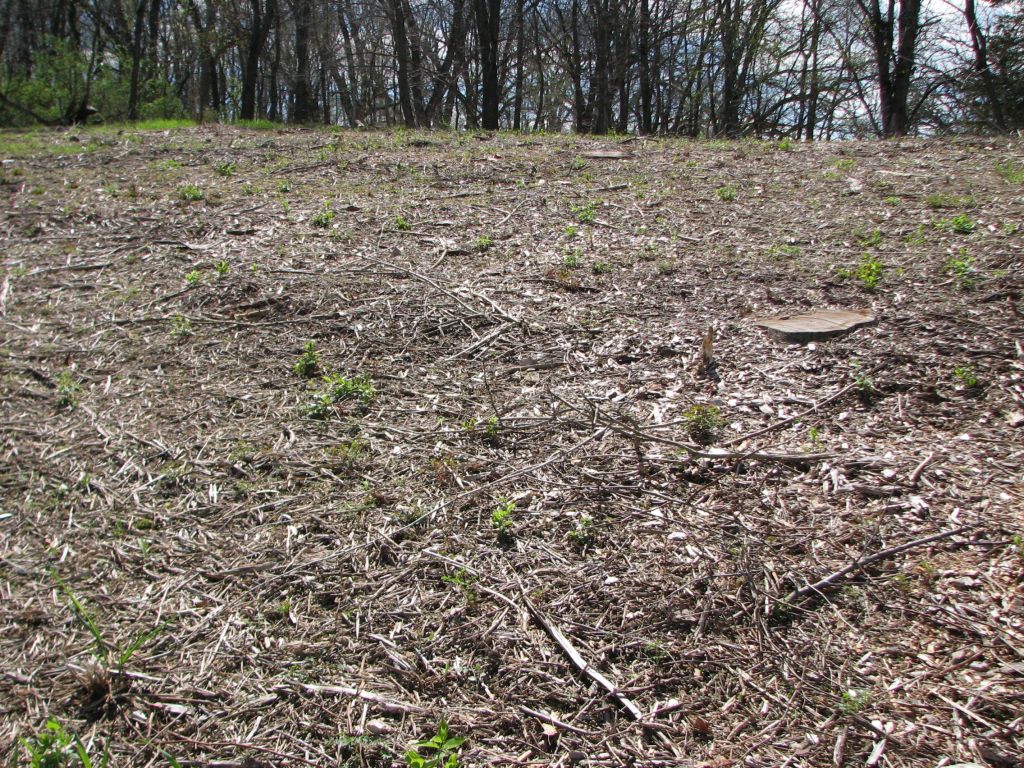
5a. Looking down a north facing slope after invasive bush honeysuckle had been controlled
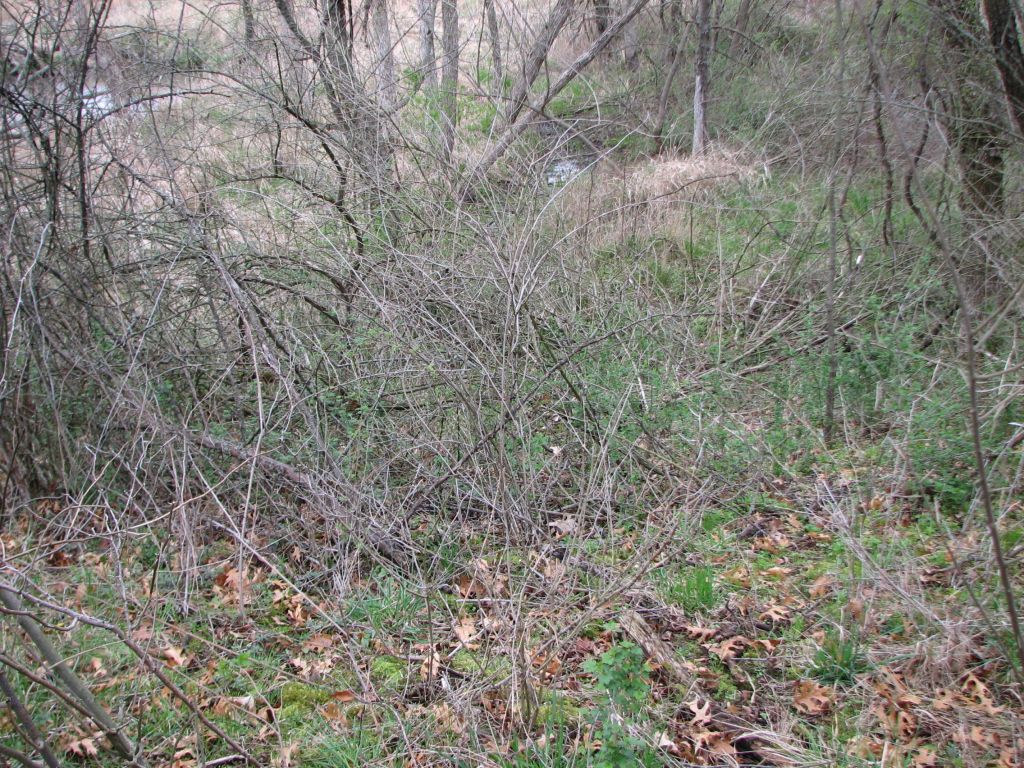
5b. The same slope as above, four years later. New dead wood is continually falling over and decomposing.
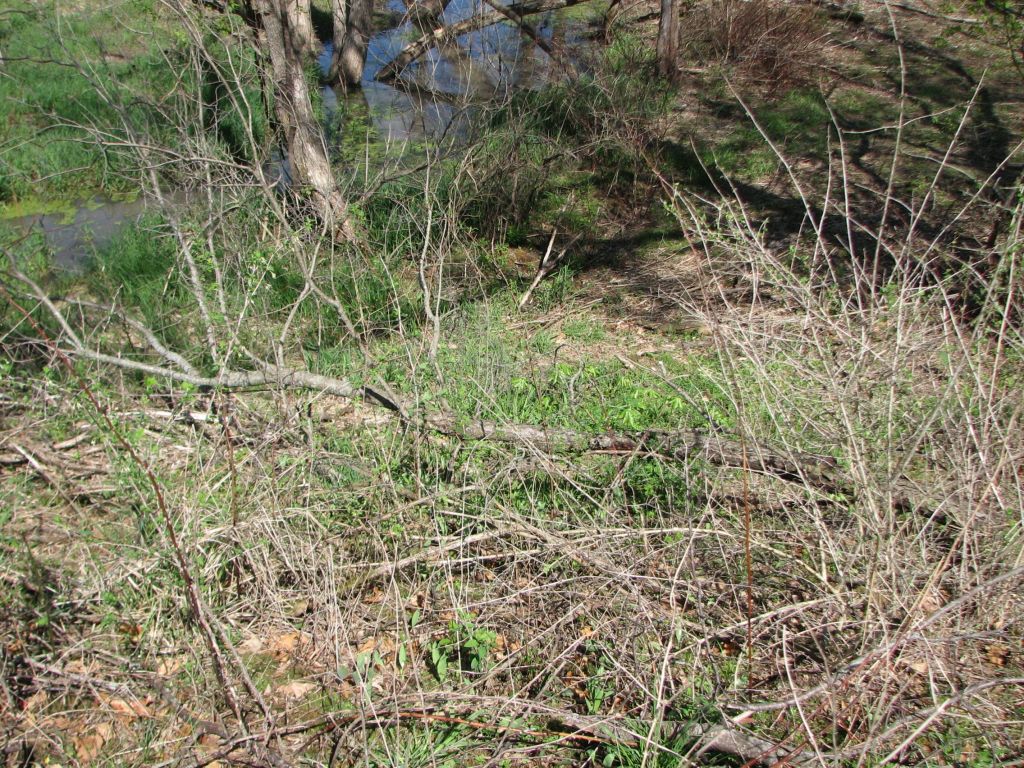
6a. Looking southwest toward the thicket of multiflora rose
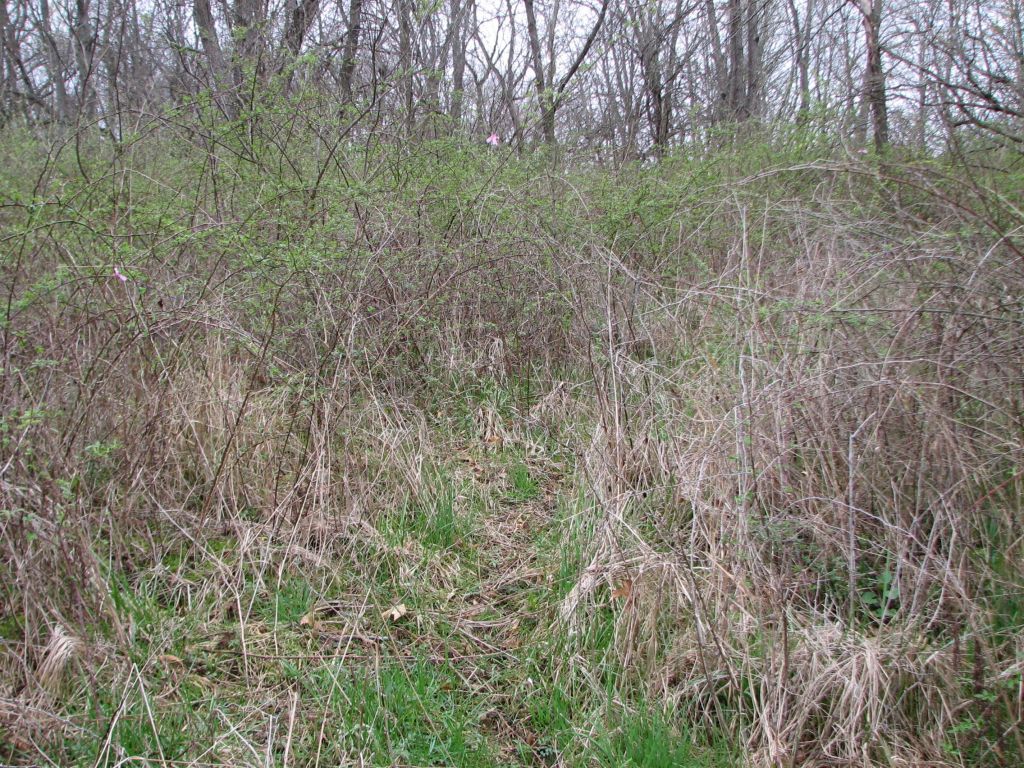
6b. The above area after forestry mowing.
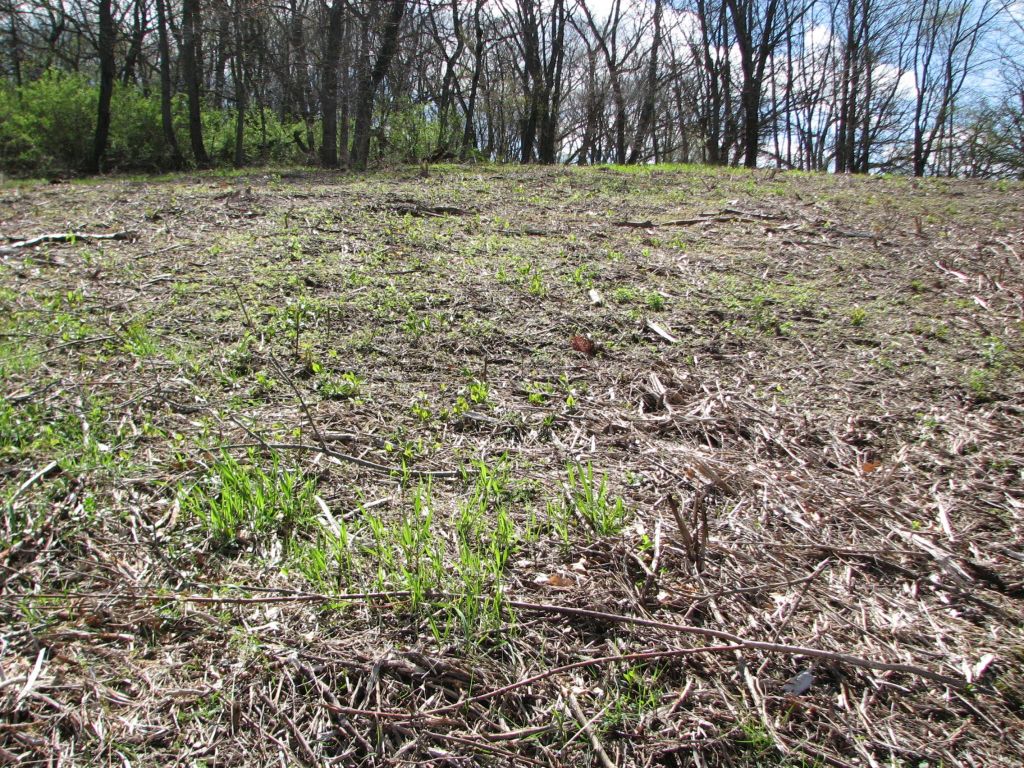
7a. Looking up a north facing slope. Most of the invasive woody species have been killed. There is one very noticeable invasive bush honeysuckle that missed being treated on the left side of the image.
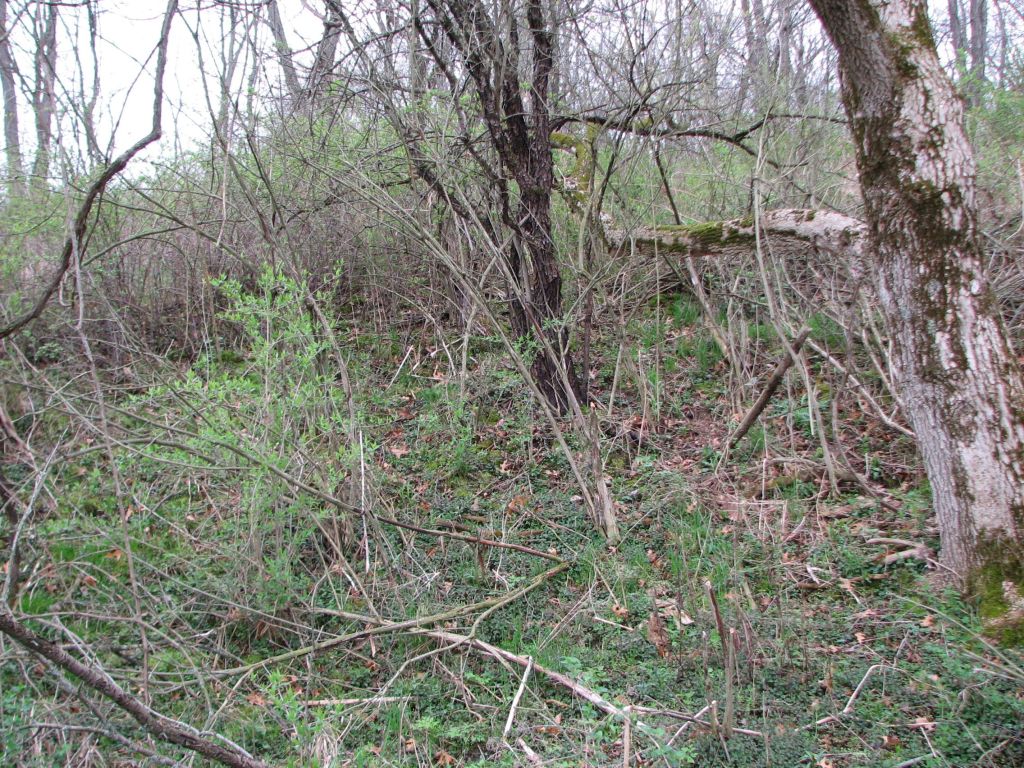
7b. Area above after forestry mowing.
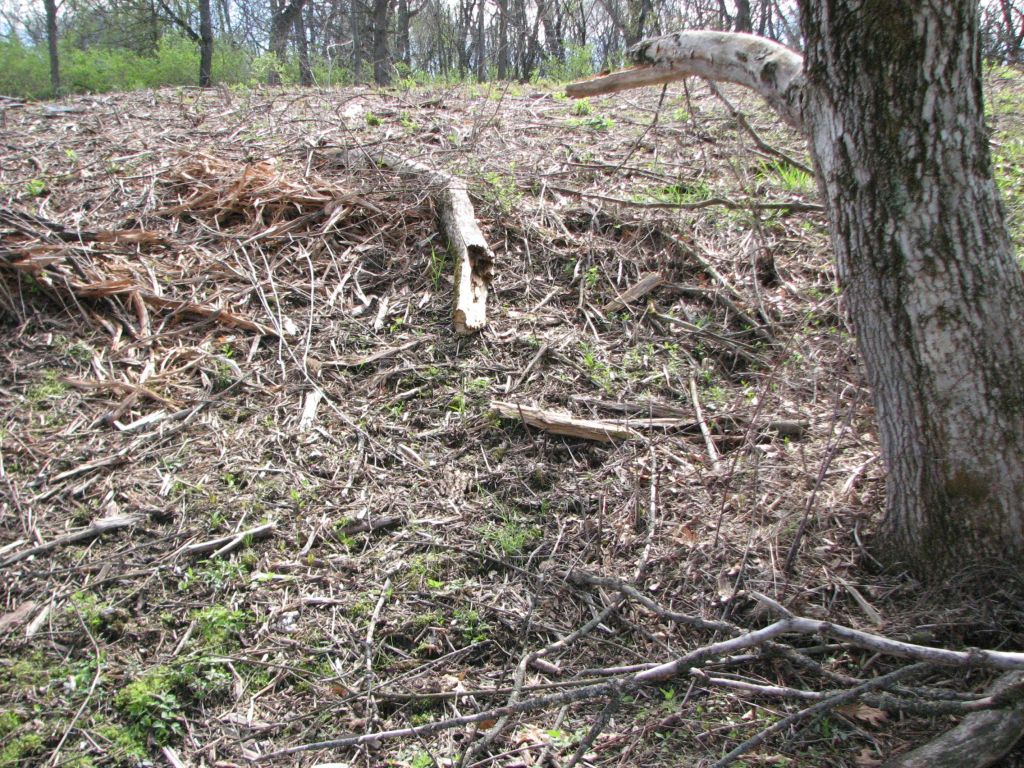
8a. Woodland wildflowers on north facing slope four years ago.
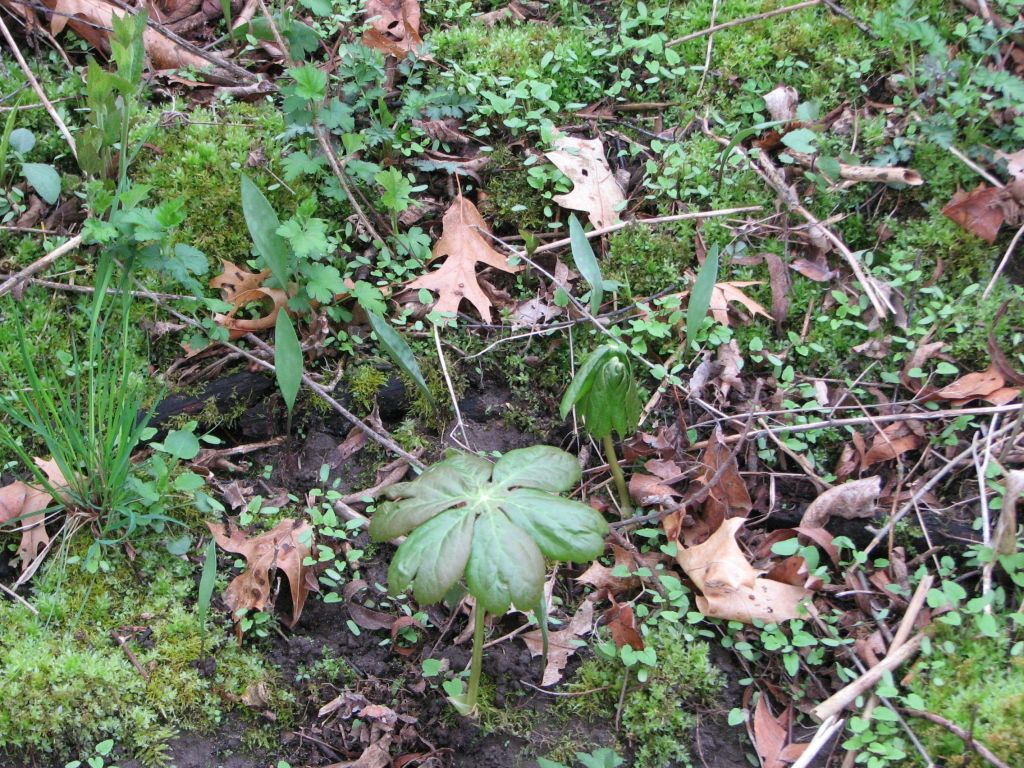
8b. Woodland wildflowers in the above location on 4/18/2026. Controlling the invasive woody species has allowed the woodland wildflowers to increase. The pasture grasses have increased too.
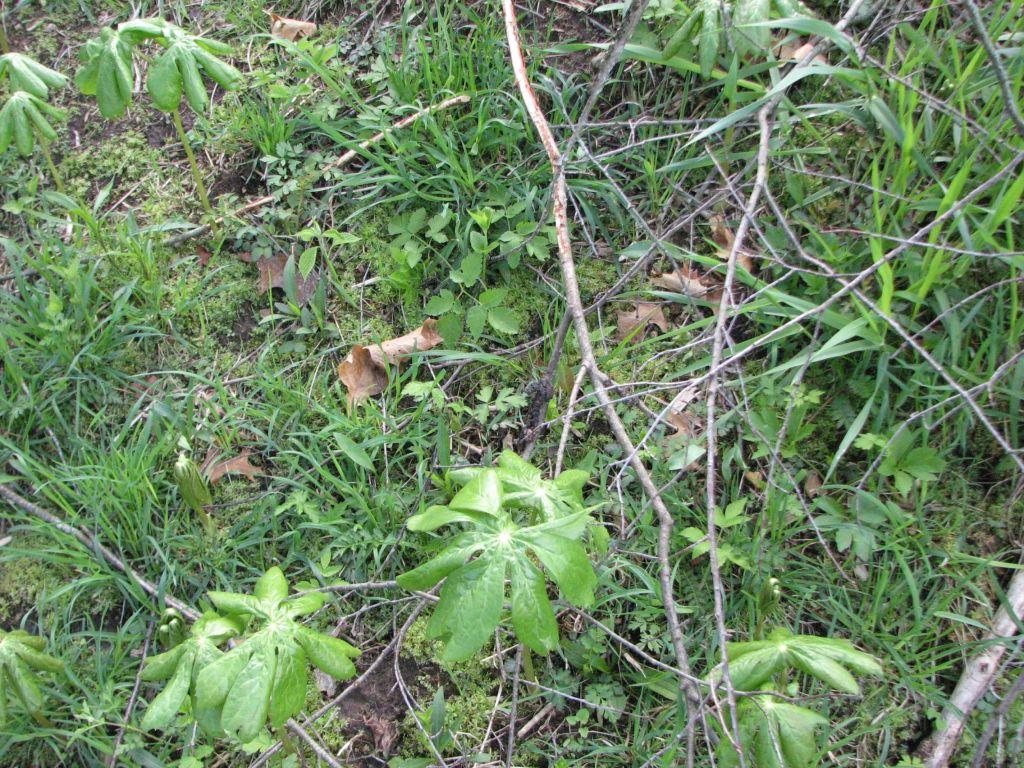
9a. Wider view of the area with the woodland wildflowers that is shown in the two above images. This image was taken the spring after invasive species control was done five years ago.
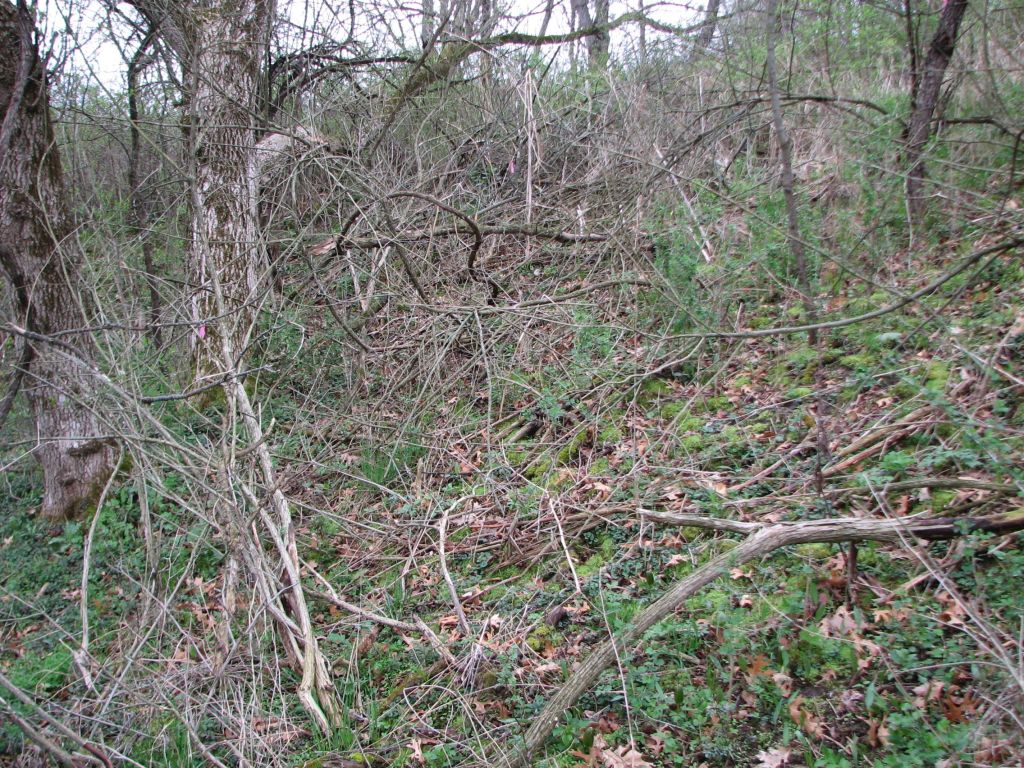
9b. Image of the same area, as shown above, on 4/18/2026. The right side of the image, where the woodland wildflowers are located, was not forestry mowed.
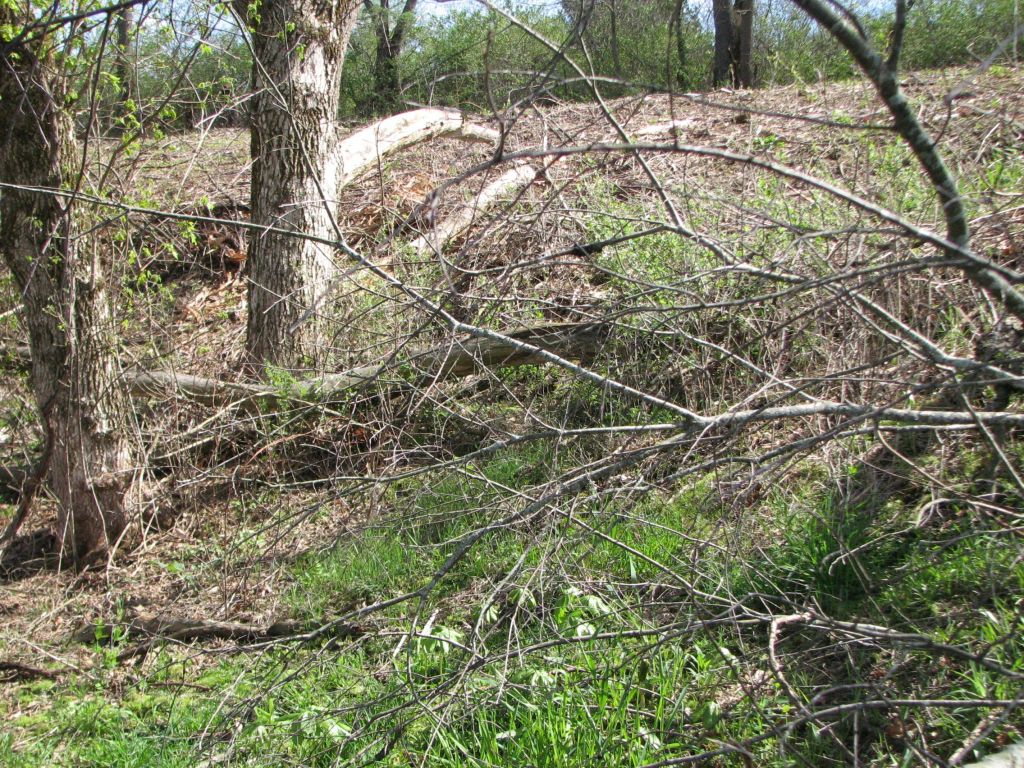
10a. A copse of invasive bush honeysuckle on the crest of a ridge. This image was taken after most of the invasive bush honeysuckles were treated with herbicide about five years ago.
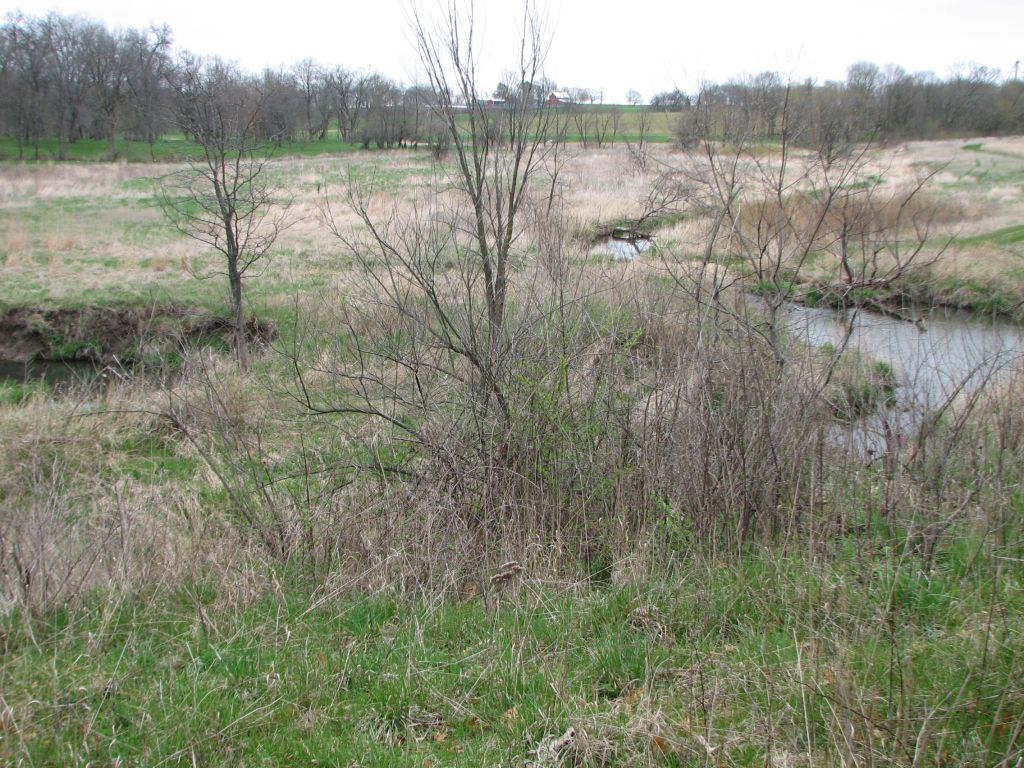
10b. Same corpse of invasive bush honeysuckle on 4/18/2026. The invasive bush honeysuckles that missed getting treatment have grown. More invasive bush honeysuckle grew from seed. Without follow-up, the invasive woody species retook the ground. Fuel species were not able get established. Fire can suppress invasive woody species and keep them from establishing. However, plants that carry fire have to get established first in order for this to happen.
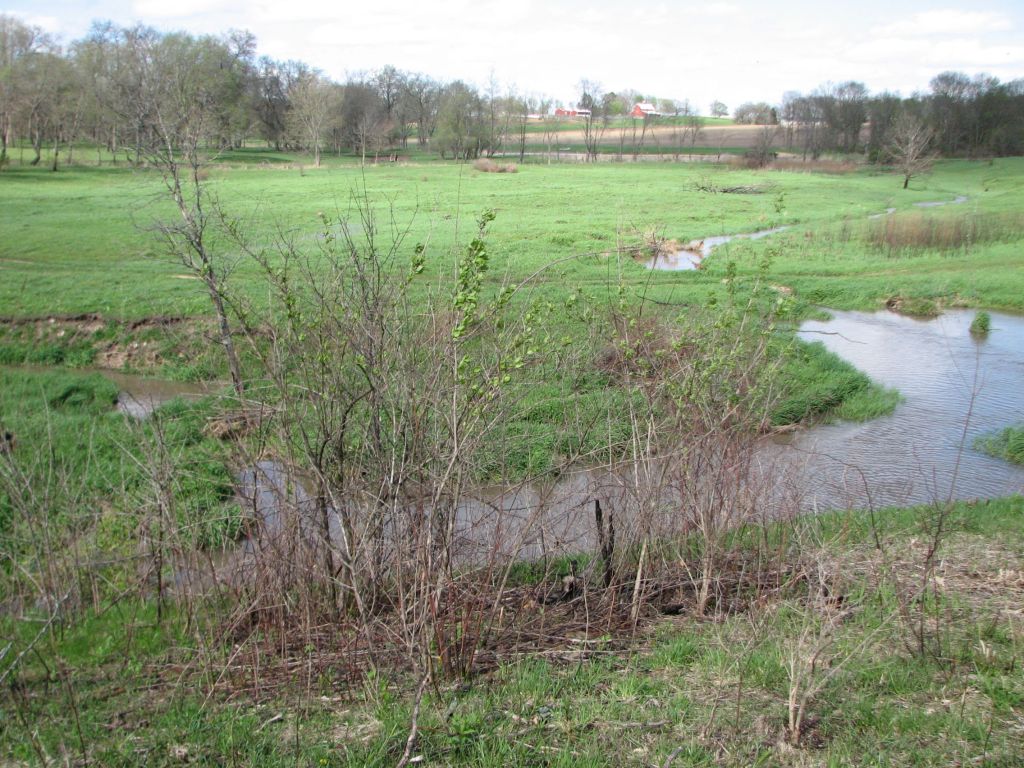
11a. Large-dead invasive bush honeysuckle in the middle of the copse shown in image 10a.
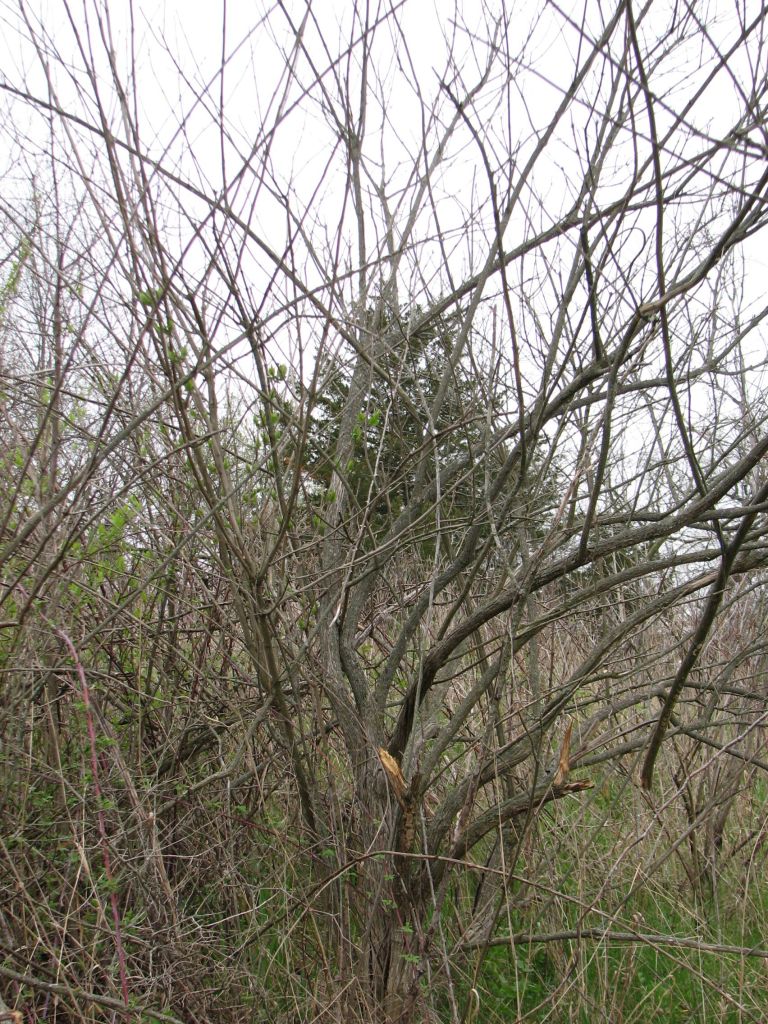
11b. The same large-dead invasive bush honeysuckles shown above. It is now a greatly reduced charred stump. This image was taken four years after the above image.
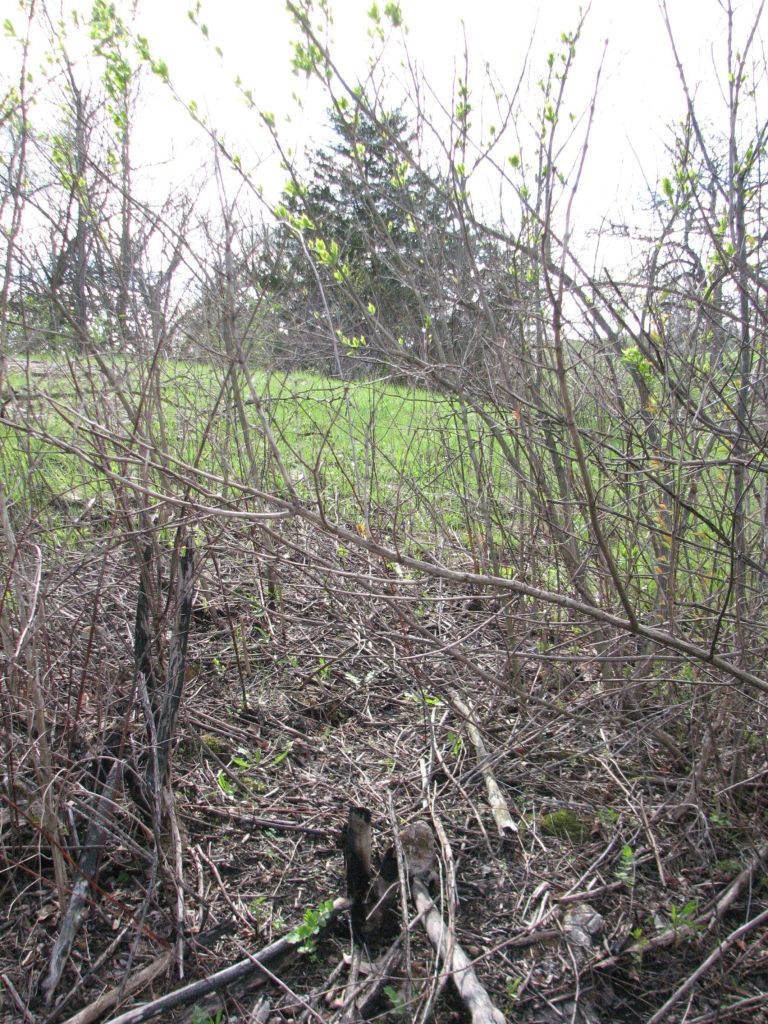
12a. View of open pasture on top of the ridge. This image was taken four years ago.
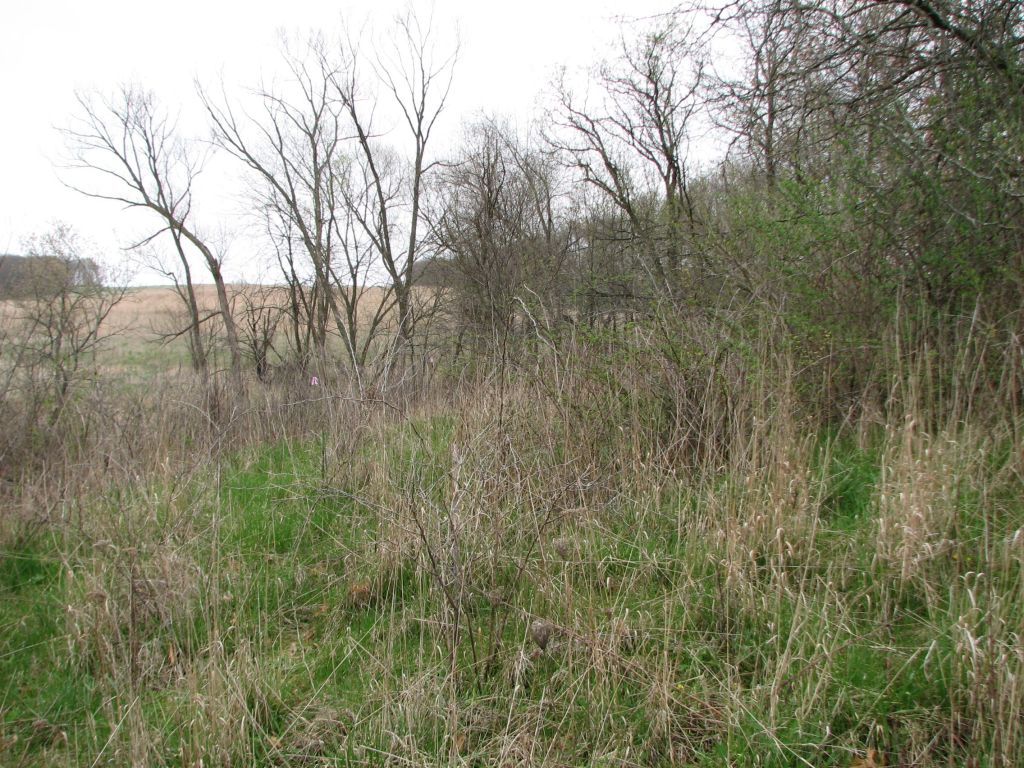
12b. Same view, as shown above, after forestry mowing. This image was taken on 4/18/2026.
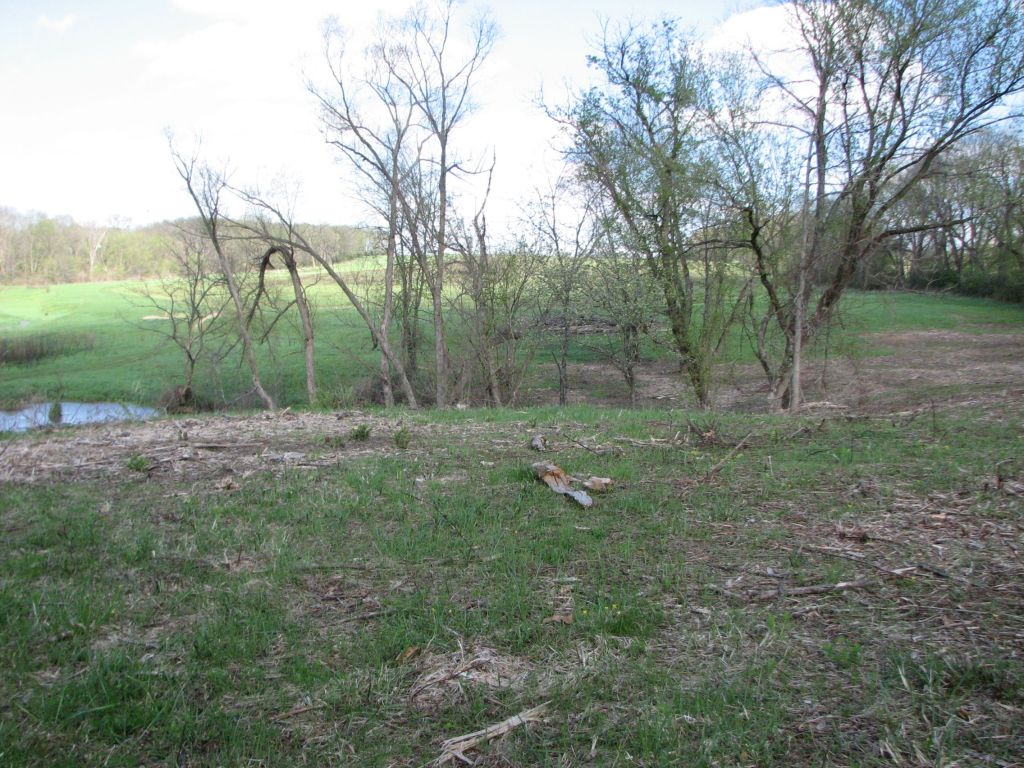
13a. Looking down the west facing slope. This image was taken four years ago, after invasive woody species had been controlled.
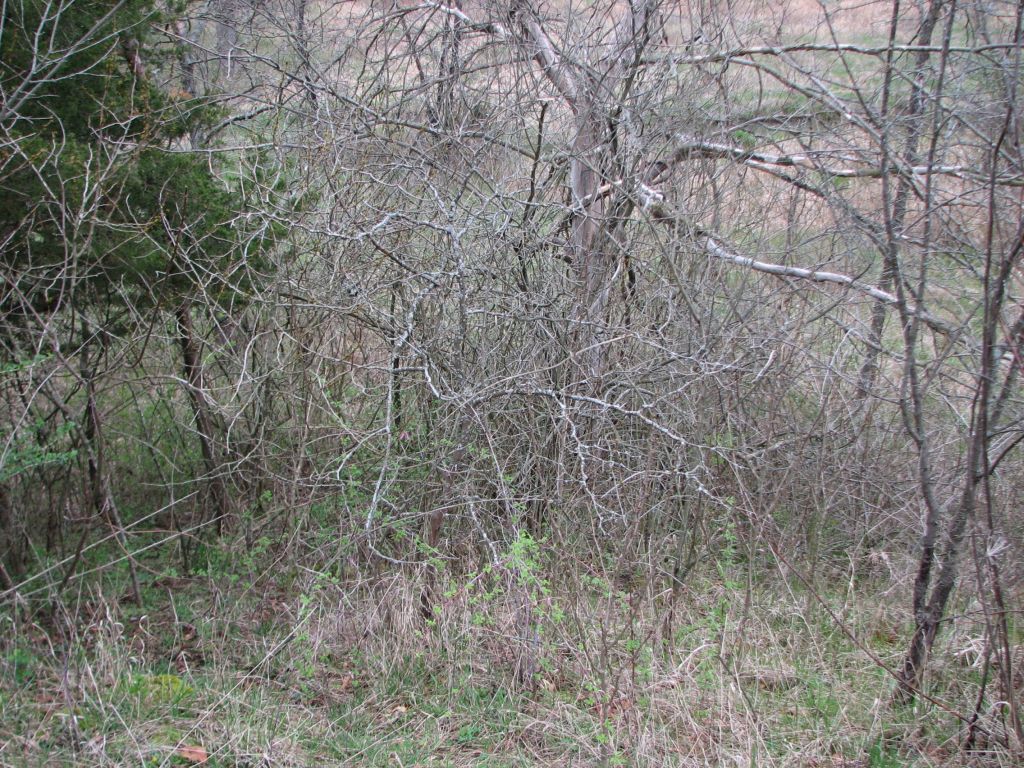
13b. Image of same area shown above on 4/18/2026. Notice the dead tree in the center of the above image is now gone. It must have caught fire and burned down to a stump. Invasive bush honeysuckle has reestablished. This is particularly noticeable on the left side of the image. The edge of where control work did not occur is near the left side of the image. The shrub in the center of the image, that has just begun to leaf out, is prickly ash.
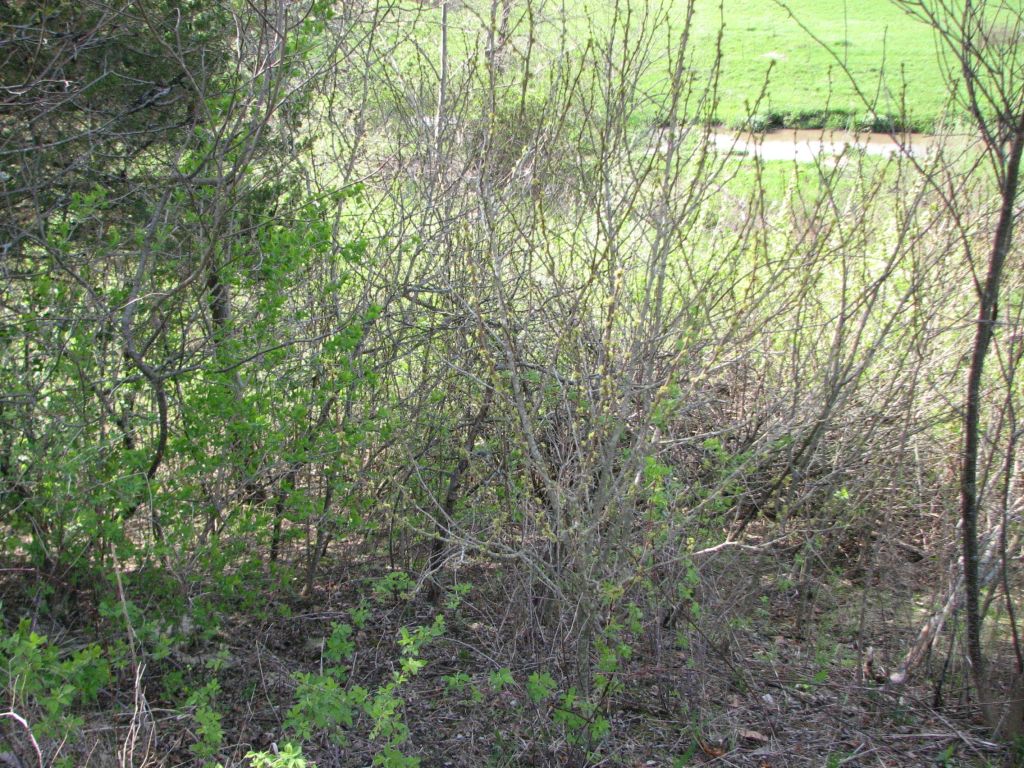
14a. A gooesberry (Ribes) at the top of the slope with an eastern red cedar (Juniperus virginiana) in the background.
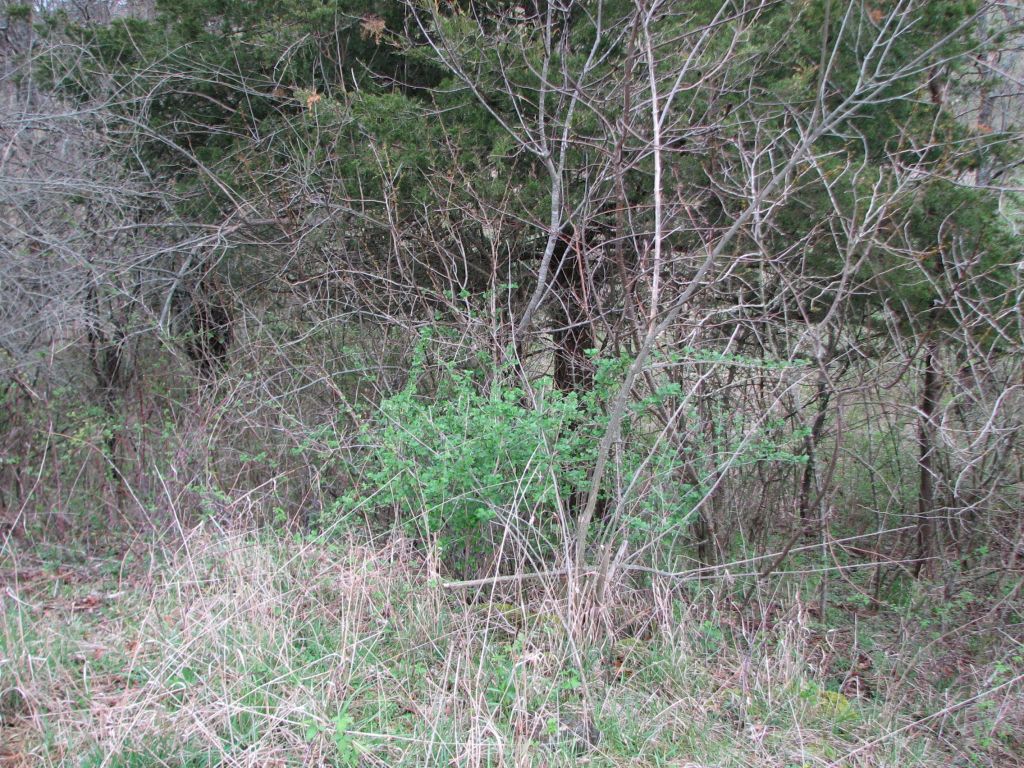
14b. The same gooseberry four years later. Invasive bush honeysuckle has again established.
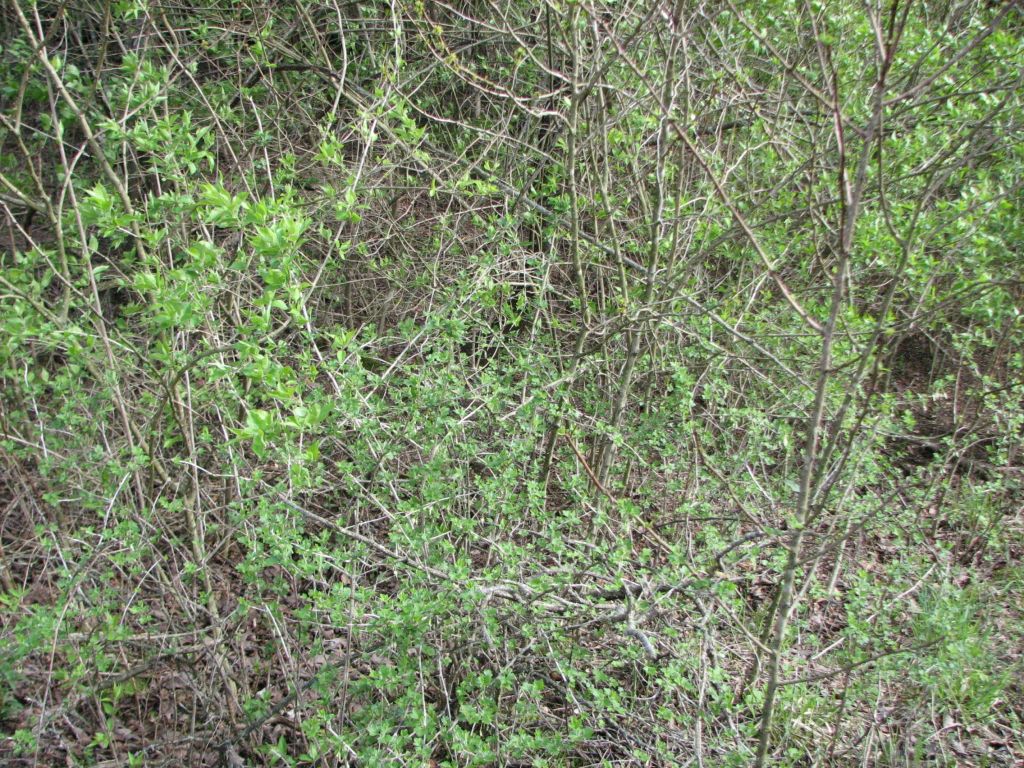
15a. Looking at the entire west facing slope above the creek on 5/1/2022. To the left, the dead invasive bush honeysuckle is noticeable. Also, notice the largest dead tree with Y shaped branches.
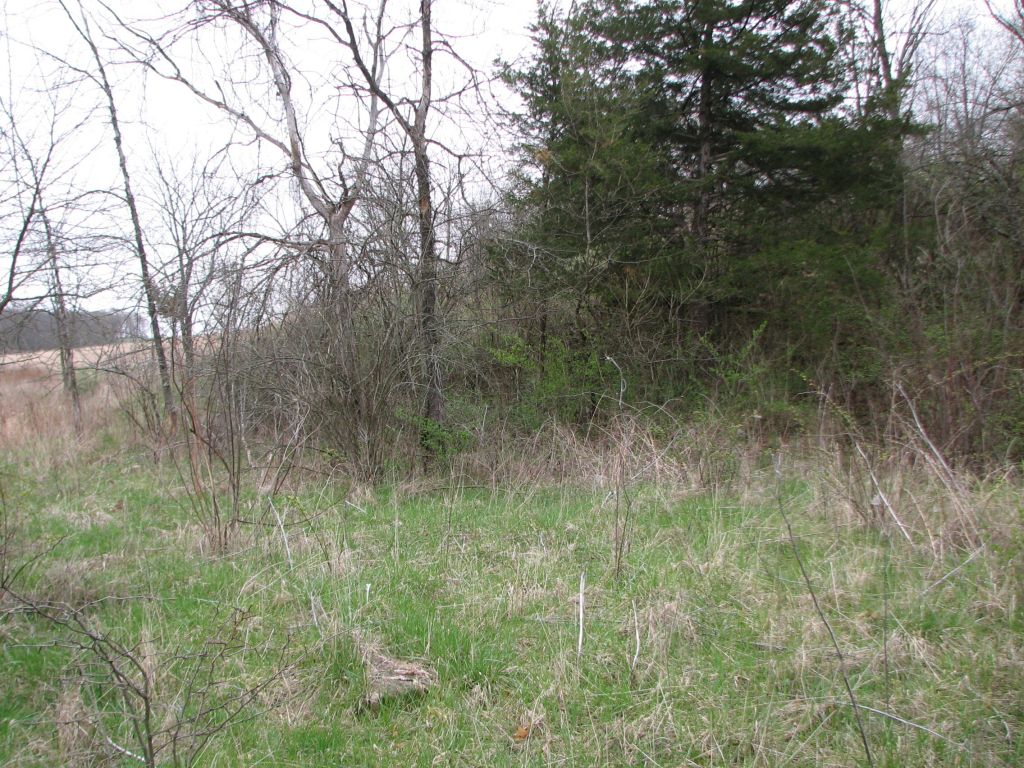
15b. About five years after control, the invasive bush honeysuckle has recolonized the area. The largest dead tree, with a Y in the branch is gone. I believe it caught fire and burned. The smaller dead tree further into the invasive woody thicket has partially fallen over. Also, notice the willows in the flooplain of the creek are now growing thicker. I believe this may be due to beavers creating a dam immediately upstream. I think the increased density of willows is a response to increased soil moisture.
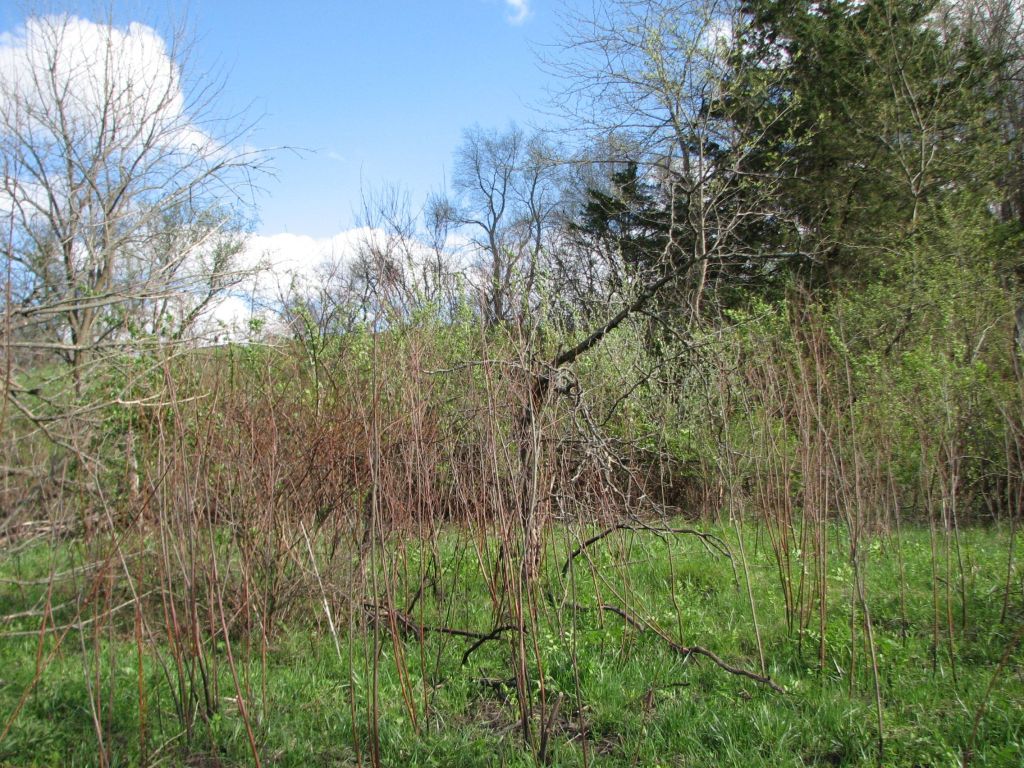
16a. Closer view looking up the southern part of the west facing slope above the creek on 5/1/2022. Invasive bush honeysuckles that did not have herbicide applied are visible in this image.
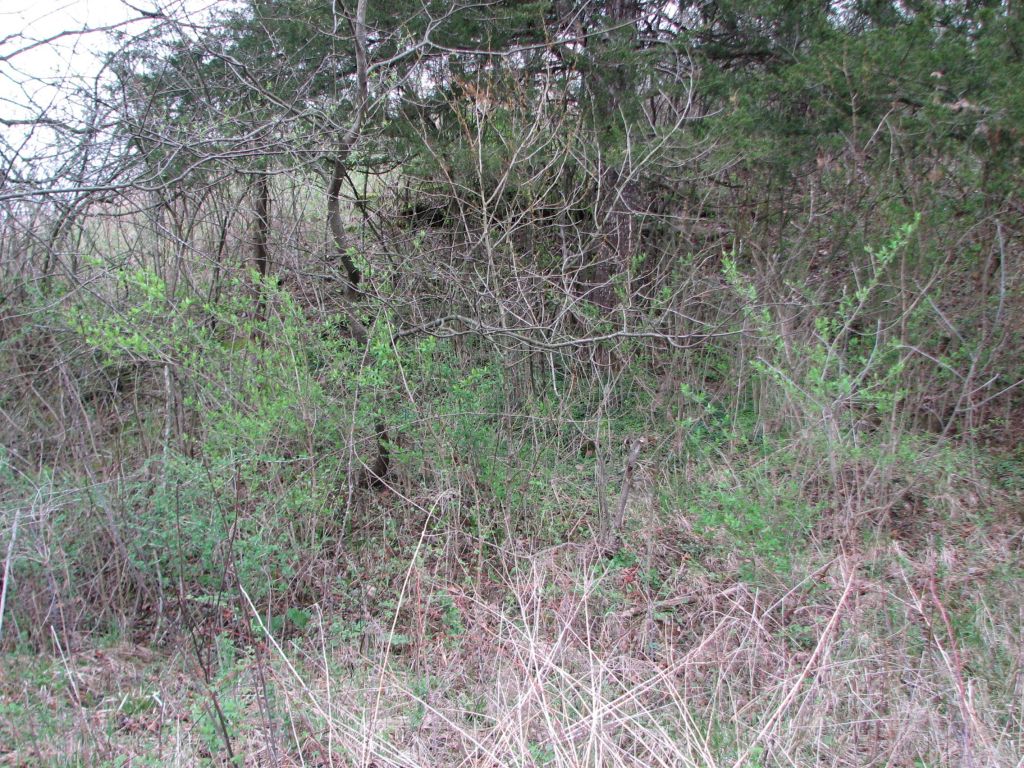
16b. The same view as above four years later. The invasive bush honeysuckle that had not had herbicide applied have grown significantly. A black cherry, visible in the image, has also increased in diameter.
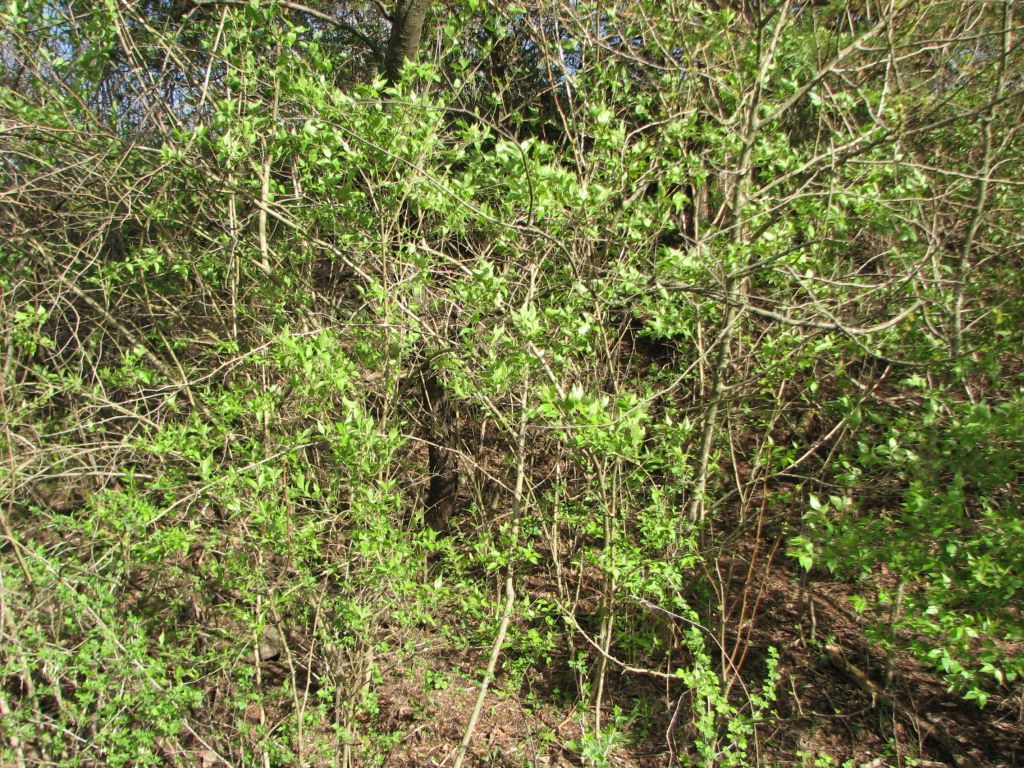
17a. Woodland wildflowers at the base of the western facing slope on 5/1/2022.
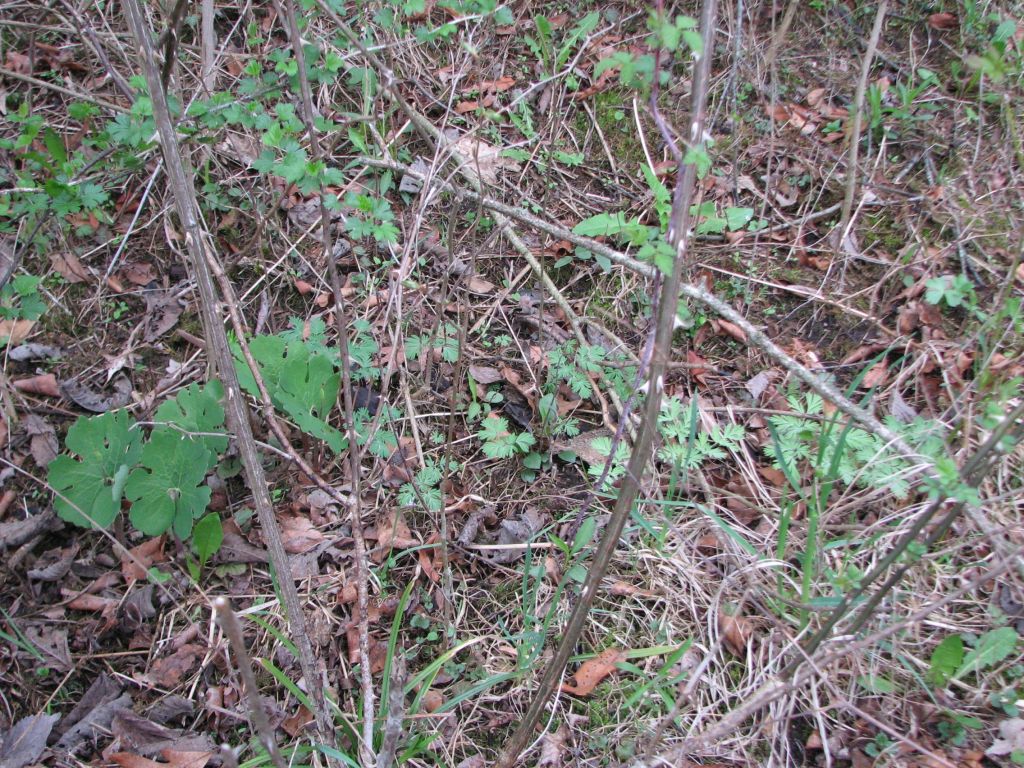
17b. Woodland wildflowers at the base of the western facing slope four years later. The amounts look about the same as they did four years ago.
18a. Closer view, looking up the northern portion of the western facing slope on 5/1/2022. There are lots of dead woody invasives species following control efforts.
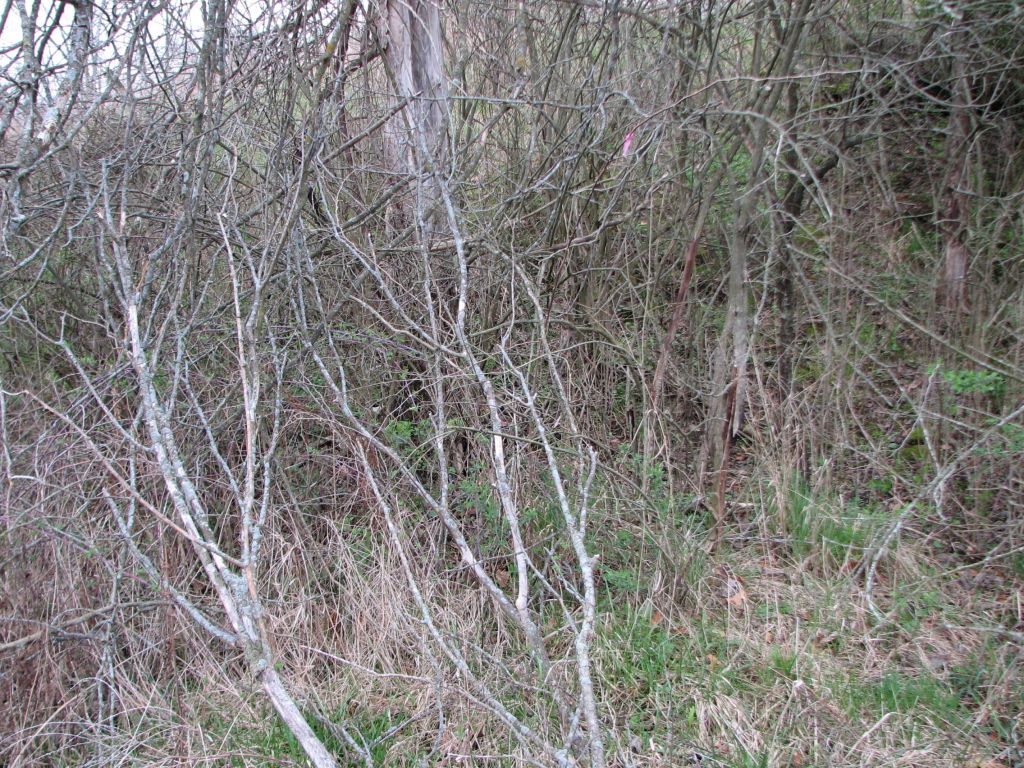
18b. Closer view, looking up the northern portion of the western slope four years later. The invasive bush honeysuckle has re-established. I think the invasive bush honeysuckle is even thicker than it was before. Now there are lots of smaller invasive bush honeysuckles. Before, there were fewer-larger invasive bush honeysuckles.
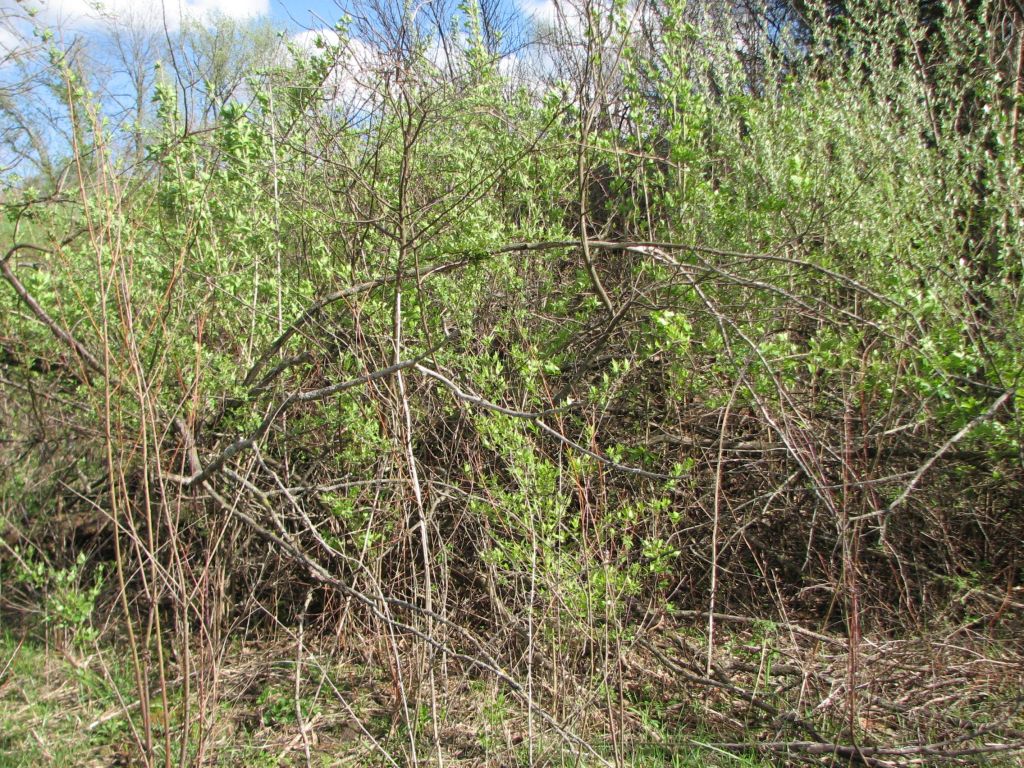
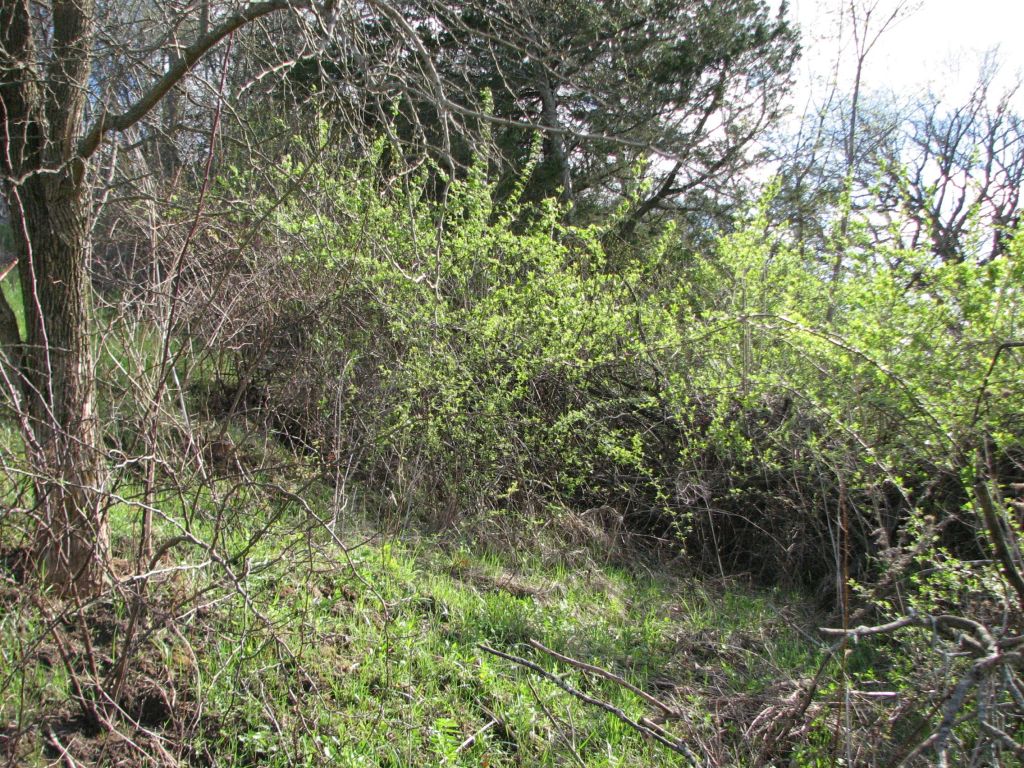
19a. Looking south toward the western facing slope on 5/1/2022.
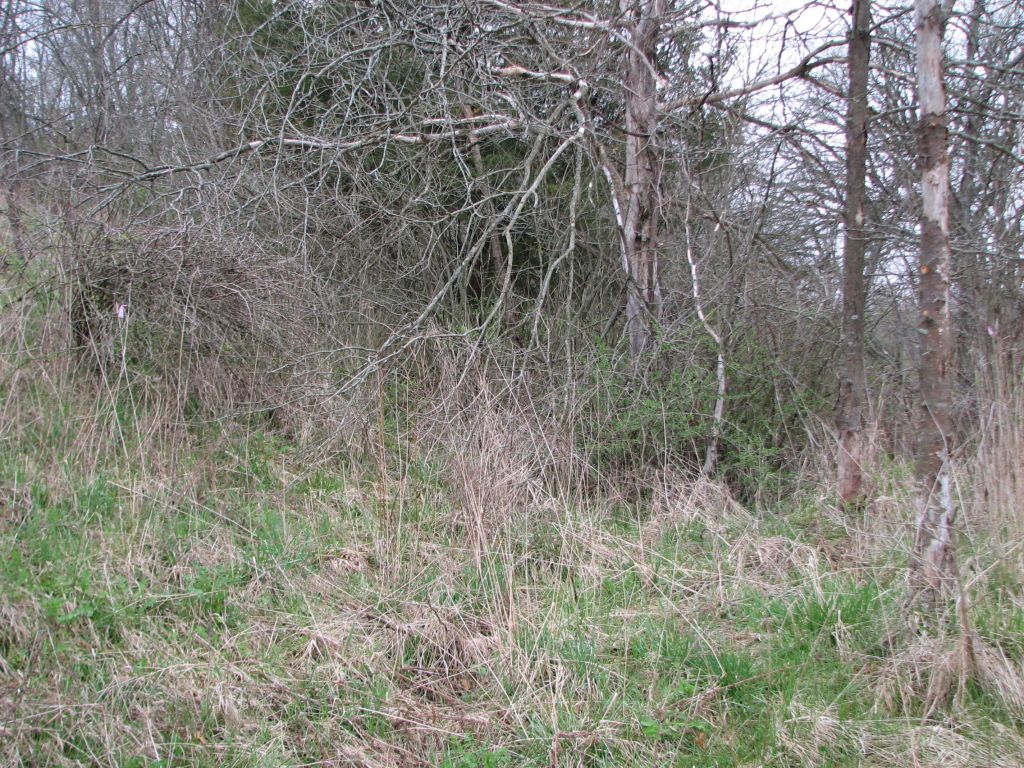
19b. Looking south toward the western facing slope four years later. Invasive bush honeysuckle has re-established even thicker than it was before.
20a. The ground under the invasive woody species on the south facing slope the spring following control. The creeping Charlie (Glechoma hederacea) has expanded. The carpet of seedlings is garlic mustard.
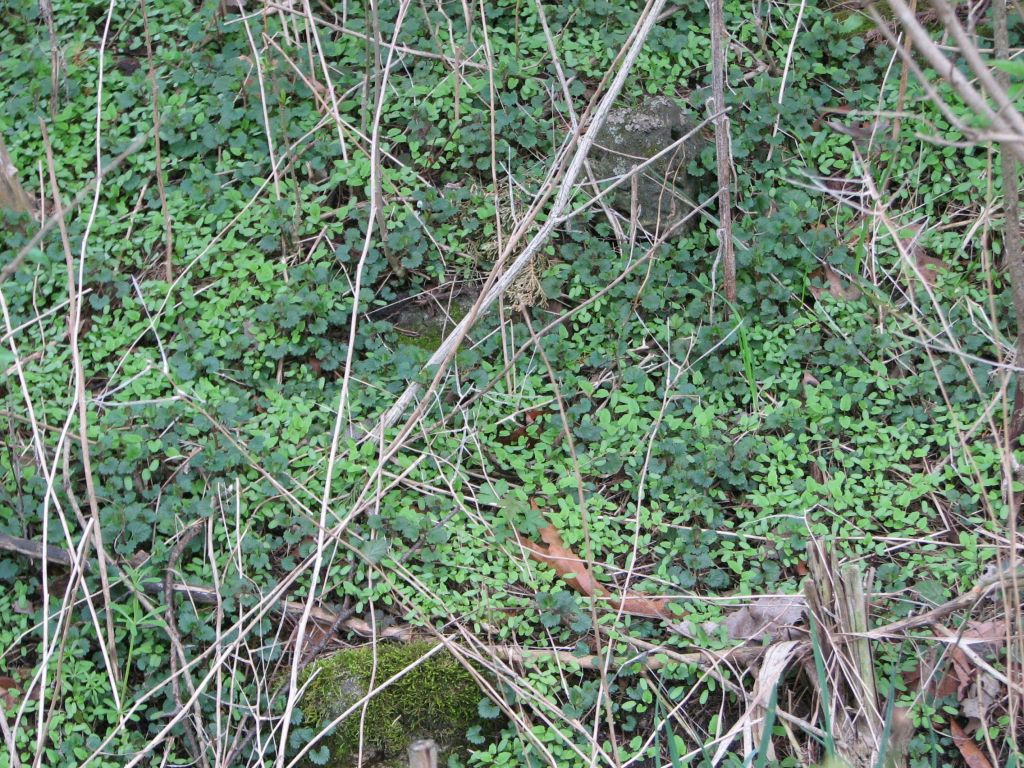
20b. The ground under where the invasive woody species had been controlled four years later. Shade developed from the invasive bush honeysuckles that grew from seed. In the more shaded conditions, the creeping Charlie is much thinner. Also, the garlic mustard seedlings are sparse.
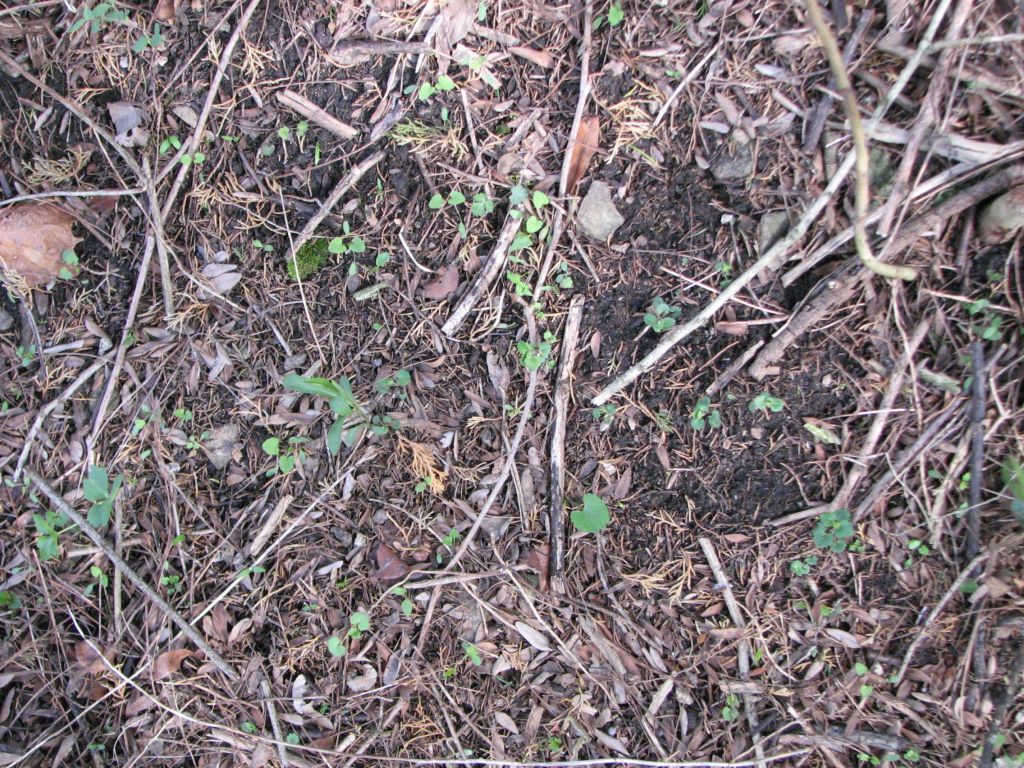
21a. A wider view showing the ground layer under the invasive woody species the spring following control.
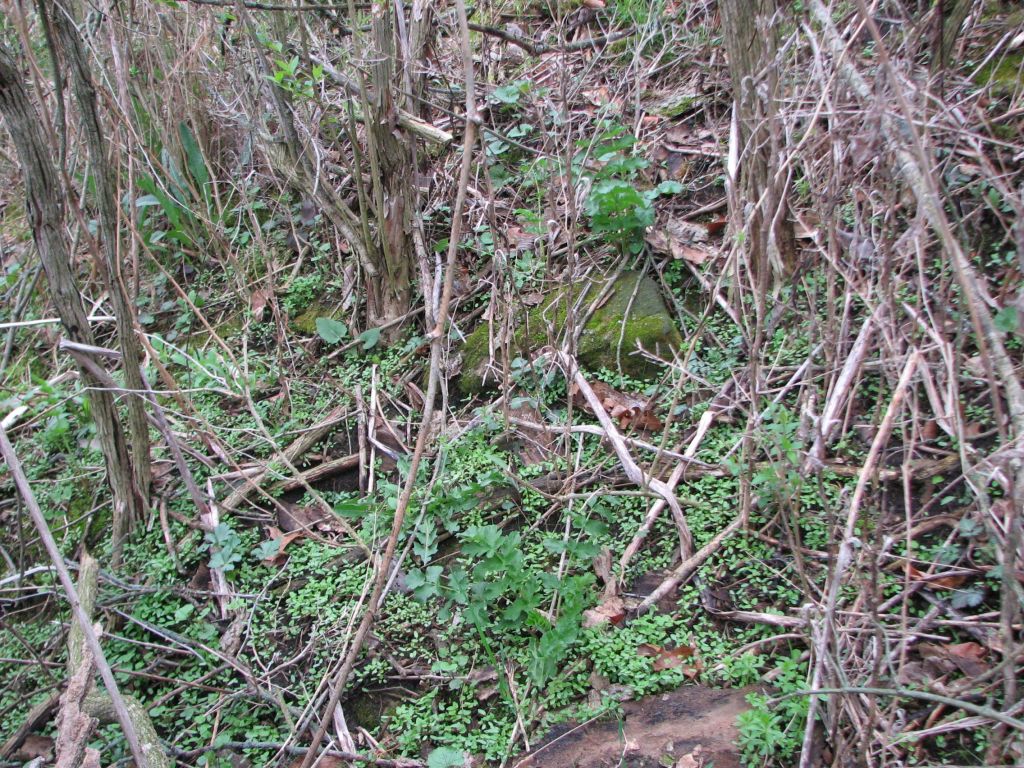
21b. A view from the same general area shown above, four years later. The creeping Charlie and garlic mustard seedlings are now sparse. Invasive bush honeysuckle seedlings had established and are now large. In this more fire protected slope, the invasive bush honeysuckles that were killed with herbicide five years ago are still standing. One is visible on the right side of the below image.
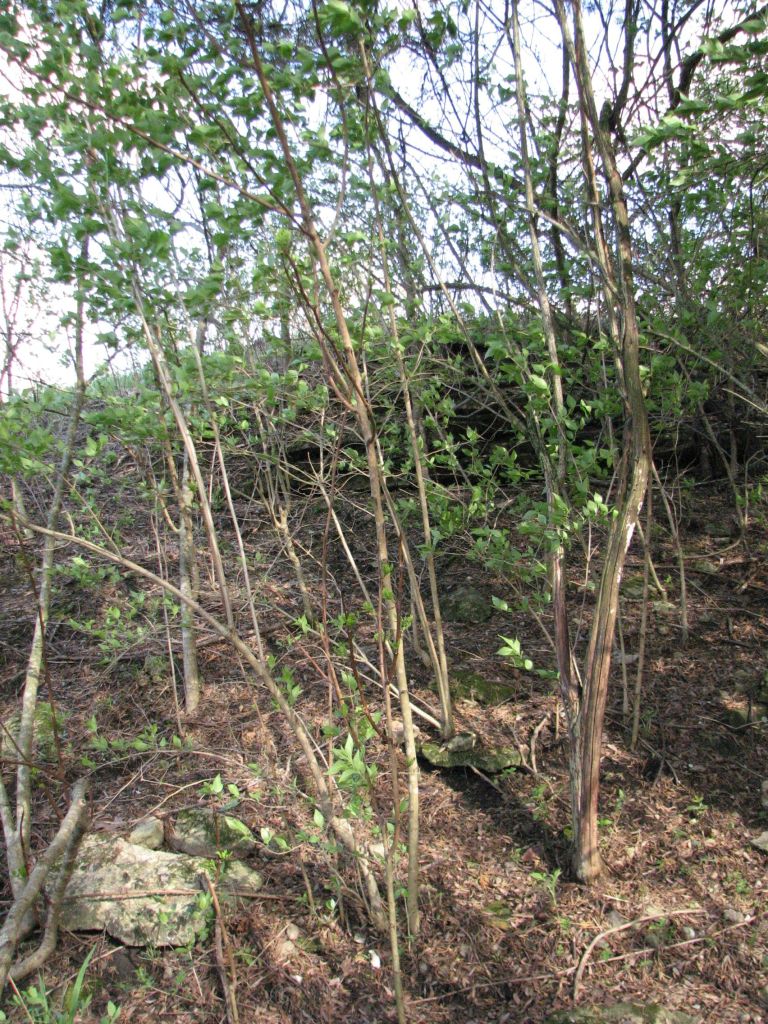
22. Looking from within the thicket on the west facing slope toward the north. This image was taken on 4/22/2026. There is a lot of downfall. A large invasive bush honeysuckle, that had been killed by herbicide five years ago, is still visible.
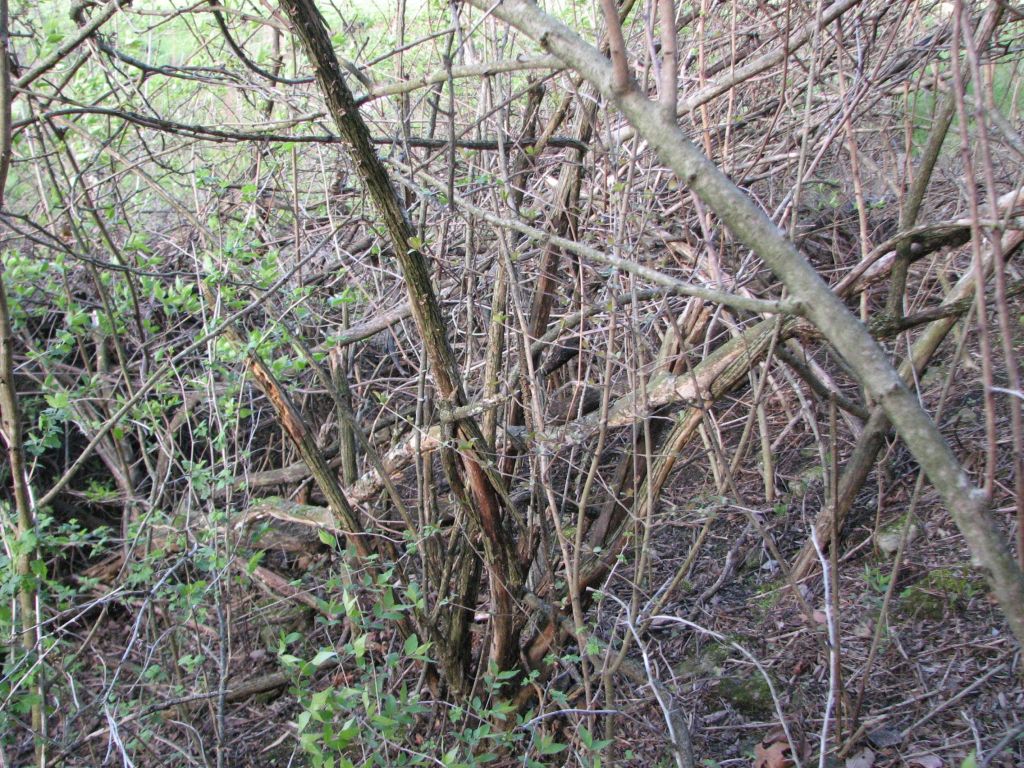
23a. Wide view of the knoll, shown in the above images, on 5/1/2022.
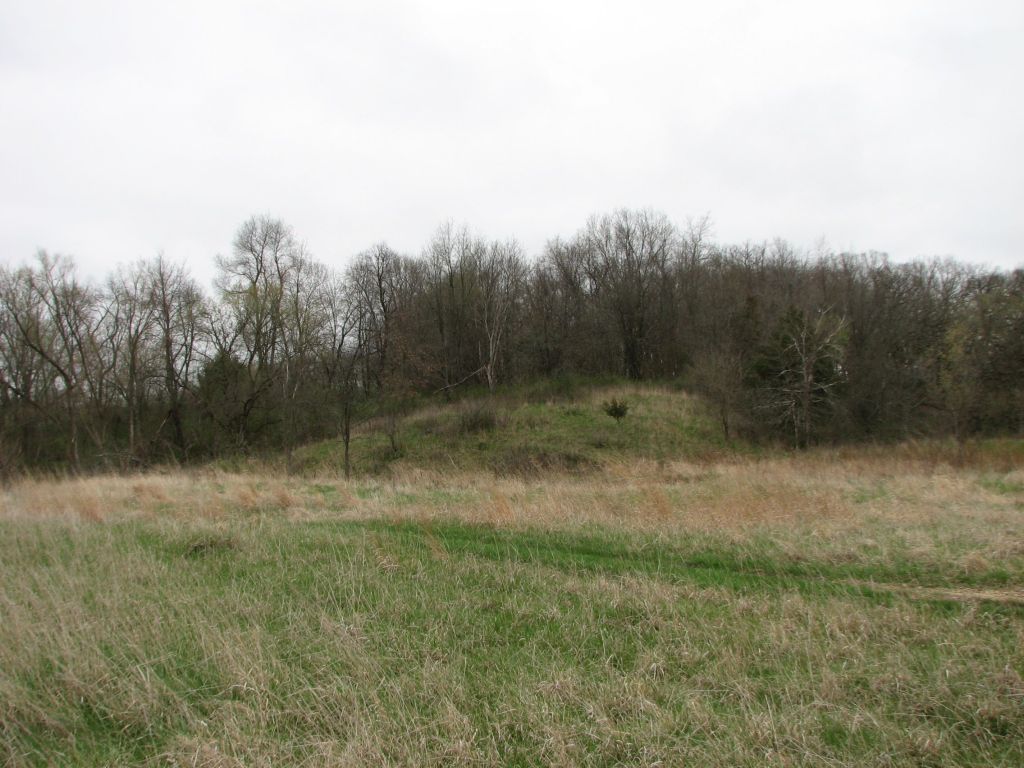
23b. The same view as above, four years later, on 4/22/2026.
24. A road cut where water seepage has allowed moss to grow.
25. Closer view of the moss in above shown road cut.
Orland Grassland Map
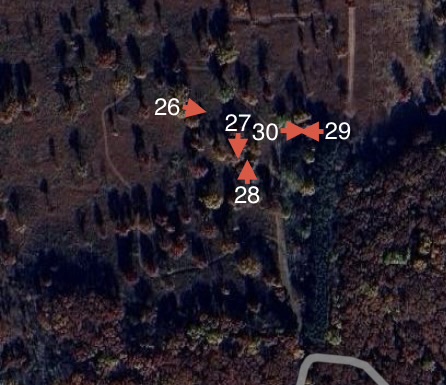
Images From Orland Grasslands
26a. View showing an area the spring following herbicide application to woody invasive species. The darker colored stems are wafer ash.
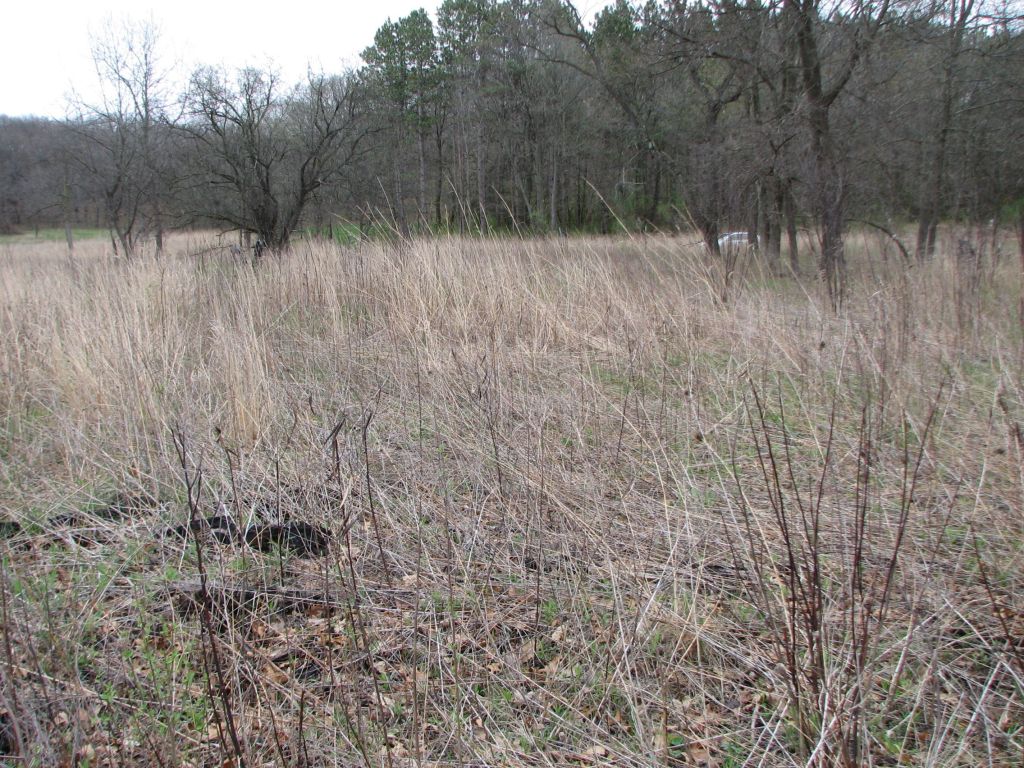
26b. Same view as above, about five years after herbicide was used to control woody invasive species. Invasive bush honeysuckle is not visible in this image. Invasive bush honeysuckle will be readily visible in some of the following images showing areas where herbicide application did not occur. The herbicide application controlled the invasive bush honeysuckles in this area. The regular fires kept the invasive honeysuckles from re-establishing.
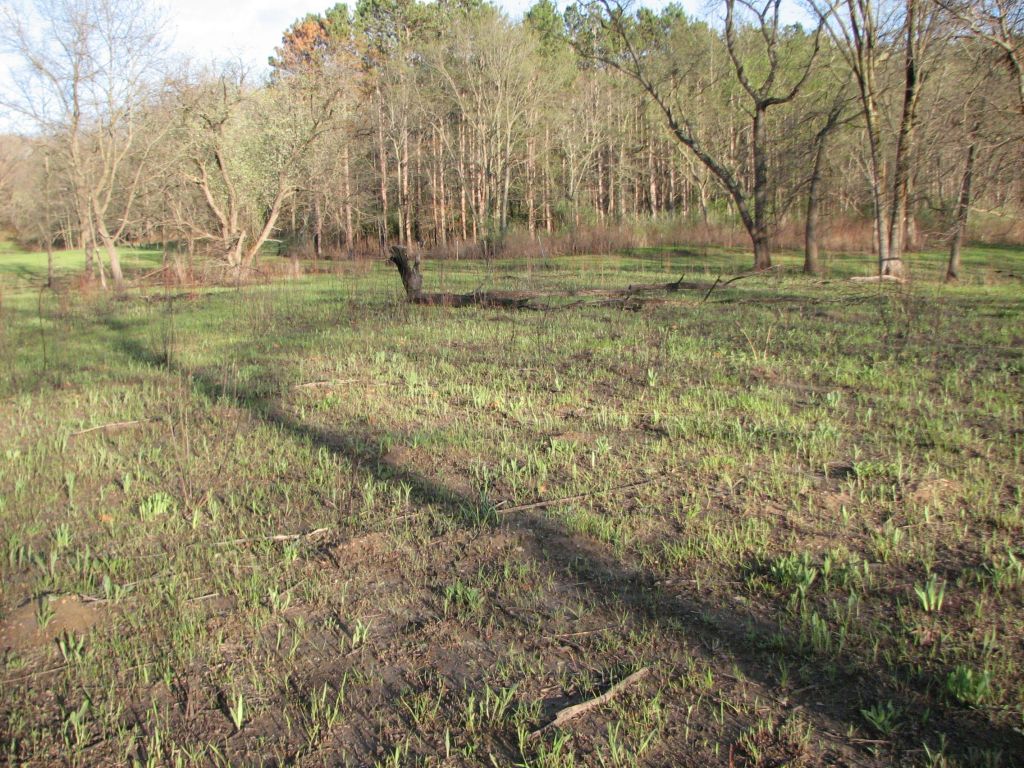
27a. This image is looking toward an area where herbicide application to invasive woody species did not occur. This image is from 5/1/2021. The green in the image is invasive bush honeysuckle.
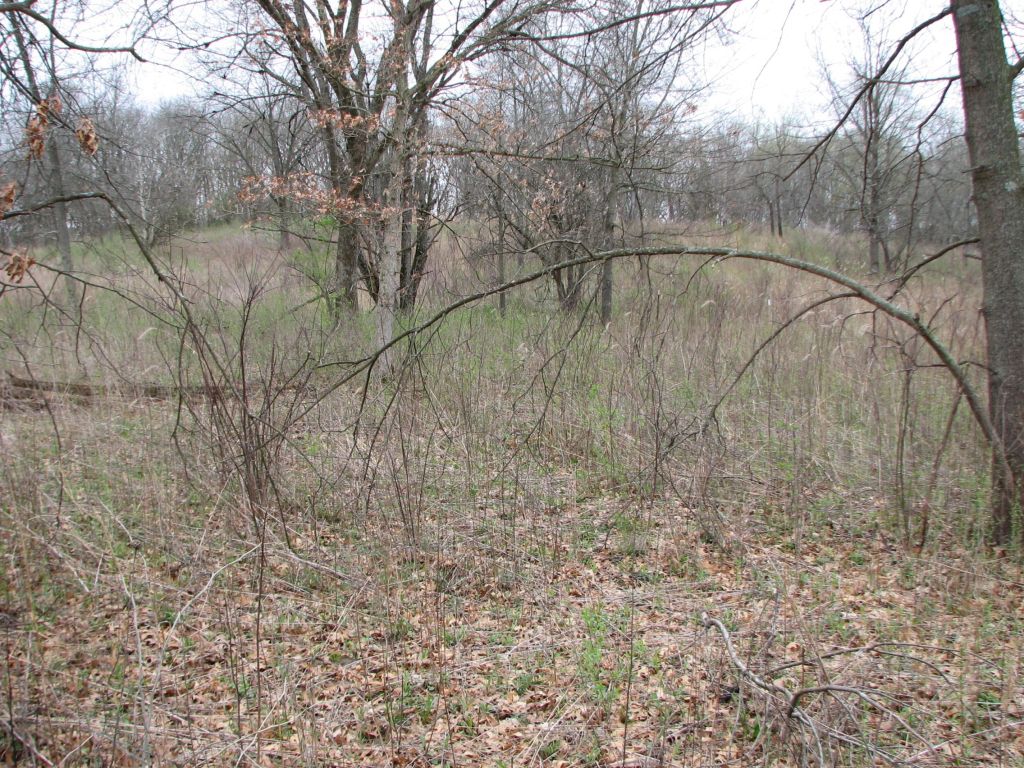
27b. This image is from the same direction as above, but was taken on 4/22/2026. This image was taken further back than the image above. The invasive bush honeysuckles visible in the above image are still present. They are the straw colored stems. Regular prescribed burning has kept the invasive bush honeysuckles suppressed and has kept new ones from establishing.
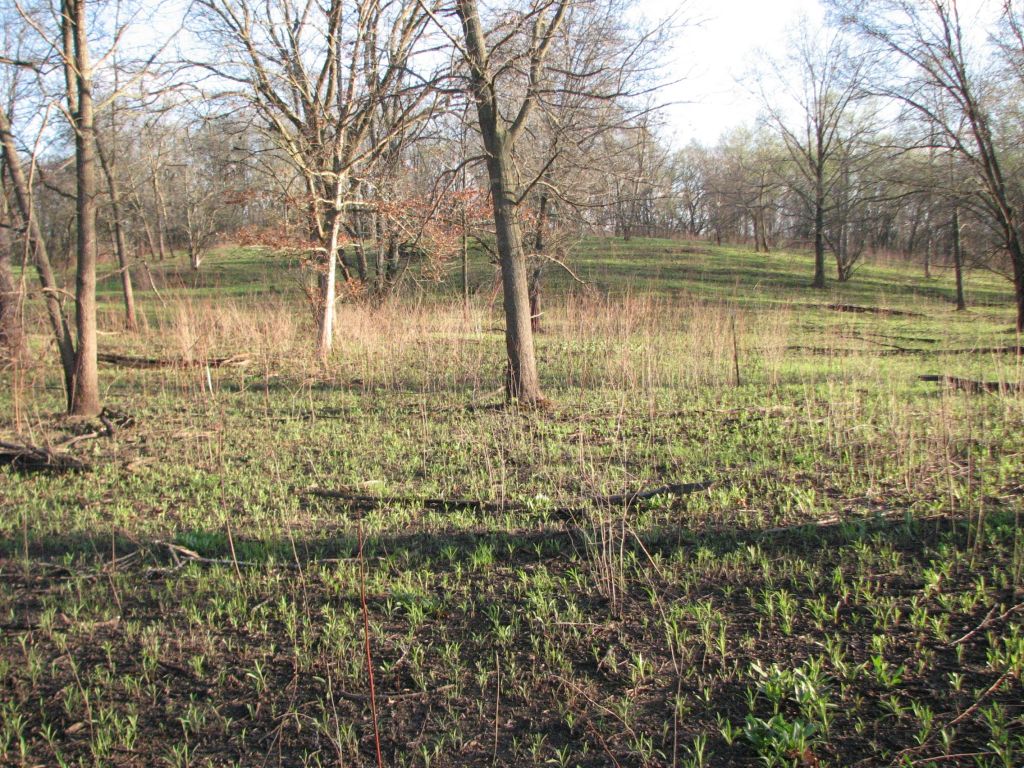
28a. This image shows an area where invasive woody species had herbicide applied. It was taken at the same location as image 27, but in the opposite direction. You can see the invasive bush honeysuckles that missed getting treated with herbicide. These are the small shrubs with green leaves.
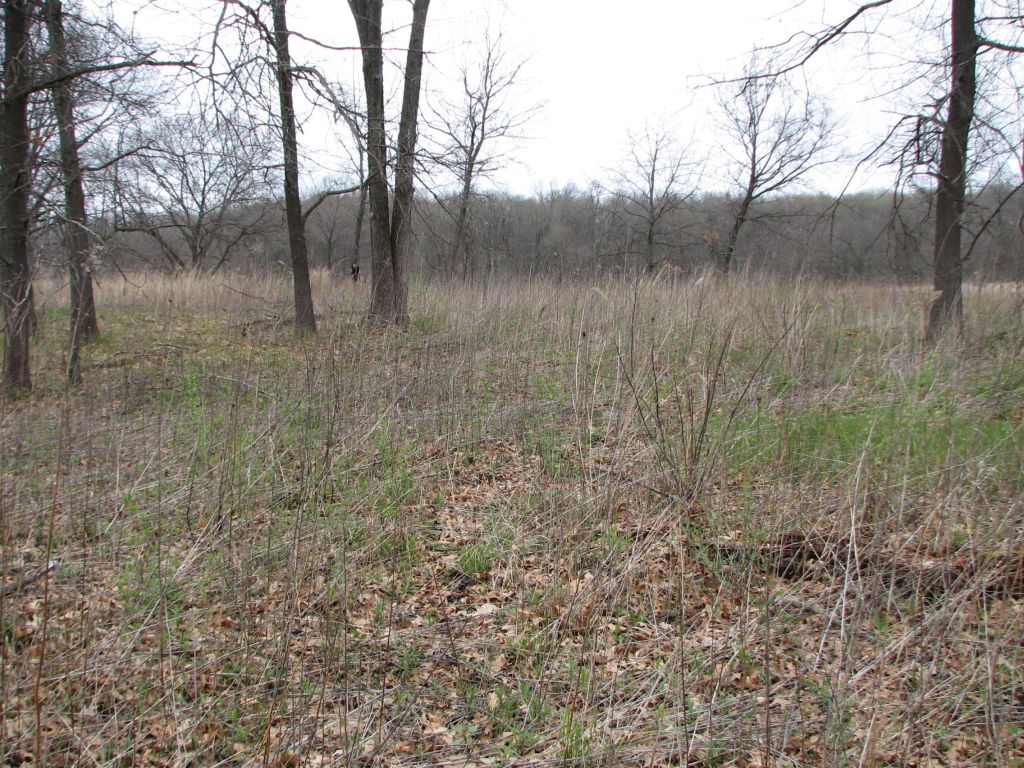
28b. This image shows the same area as image 28a, but was taken four years later. The below image was zoomed in on the left group of trees. In this image you can see the fire killed stems of the invasive bush honeysuckles visible in image 30. As previous images show, regular prescribed fire has kept the invasive bush honeysuckles suppressed and has kept new ones from establishing.
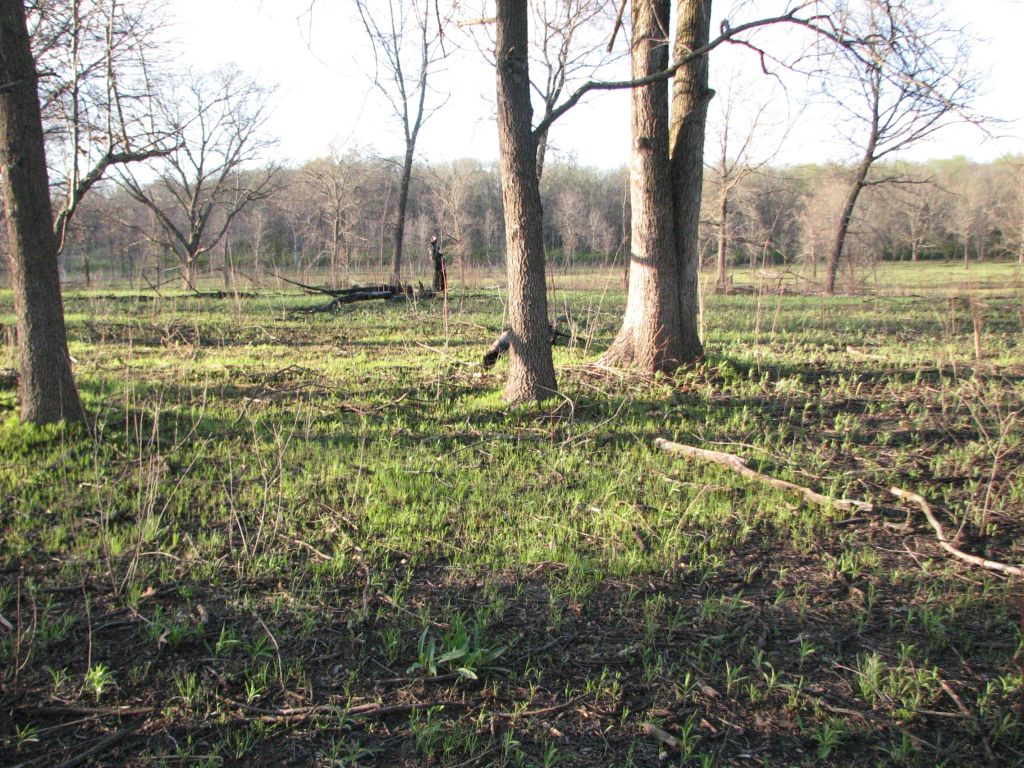
29a. Looking towards another area where invasive bush honeysuckle was not controlled. The invasive bush honeysuckle is the shrub with the green leaves.
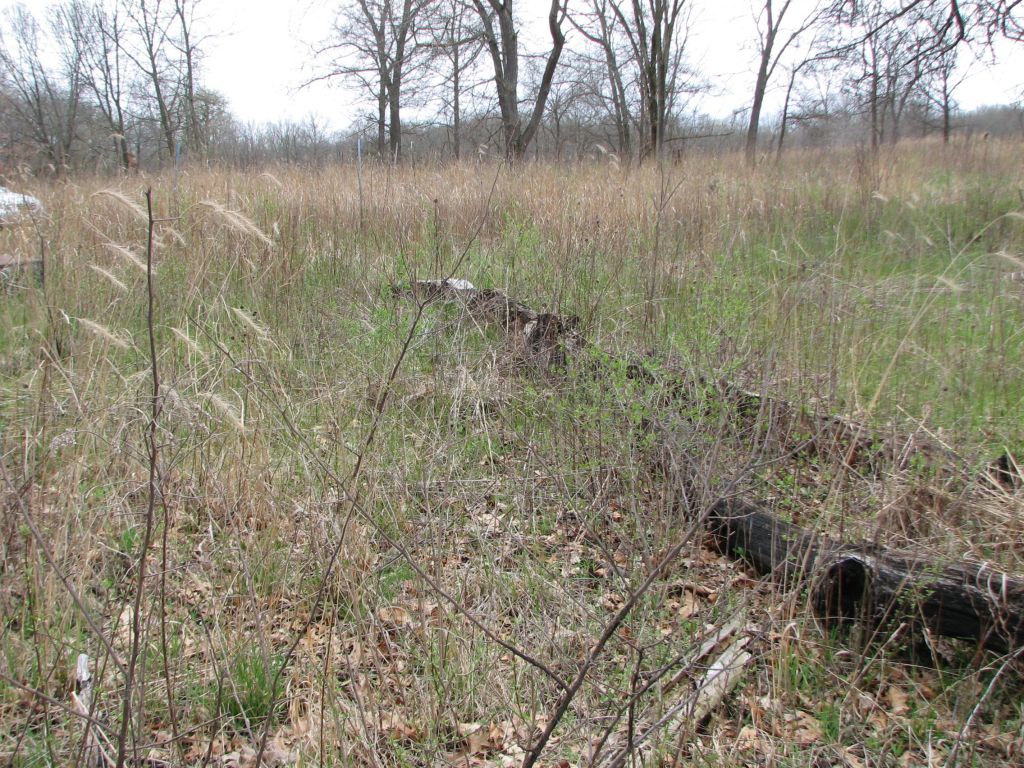
29b. The same area above, four years later. Prescribed burning has suppressed the invasive bush honeysuckle and has kept new invasive bush honeysuckle from establishing.
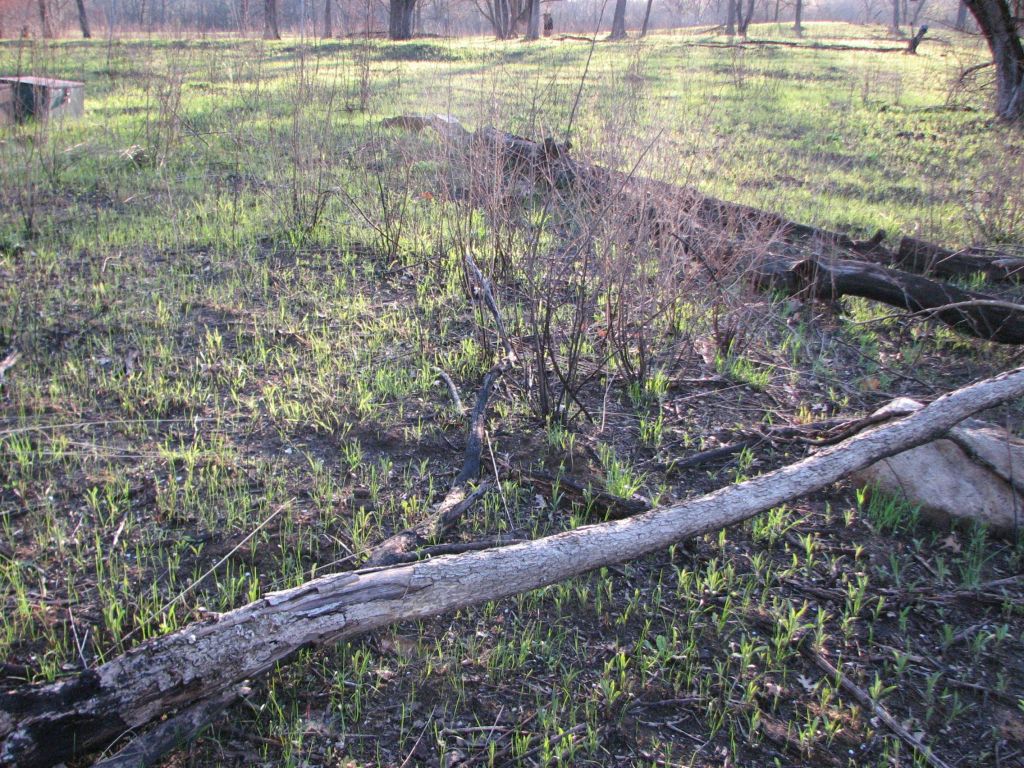
30a. Looking the opposite direction of image 29a and 29b into an area where invasive woody species had herbicide applied.
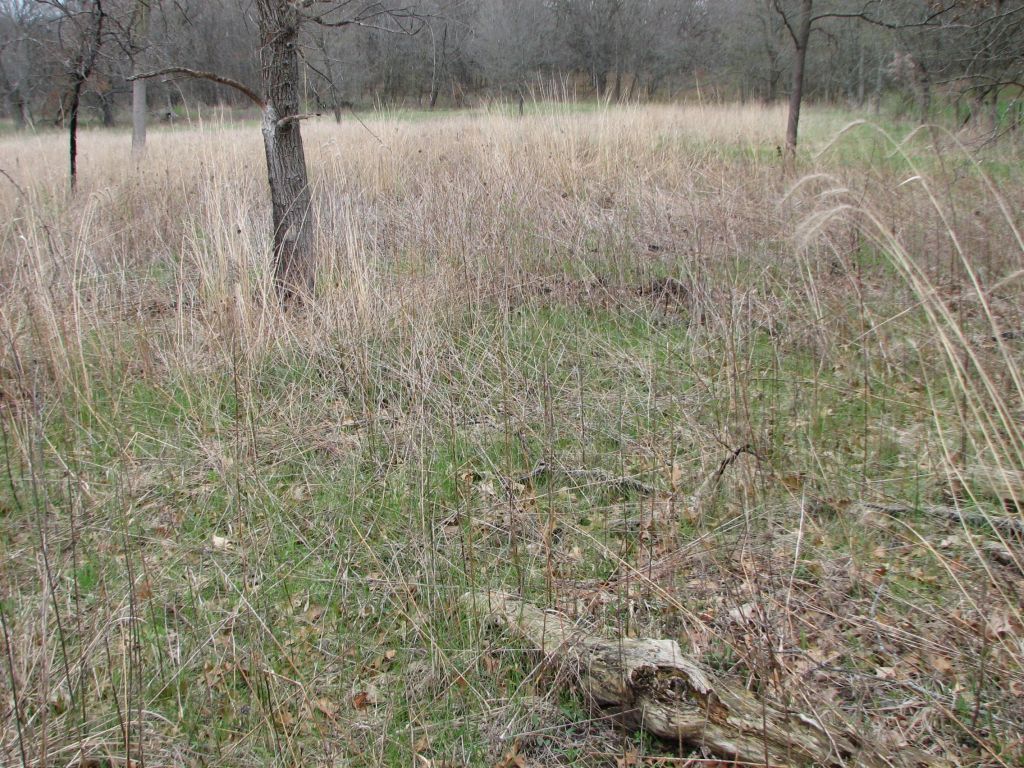
30b. The same area as above, four years later. The fire killed stems of invasive bush honeysuckle in the below image are the same as the invasive bush honeysuckles in the above image. In other words, the only invasive bush honeysuckle in the below image are ones I missed when I had applied herbicide. The invasive bush honeysuckles have not grown larger since they are suppressed by fire. Fire has also kept new invasive bush honeysuckles from establishing.


Leave a comment